

15 Most Underrated Sci-Fi Shows Of All Time
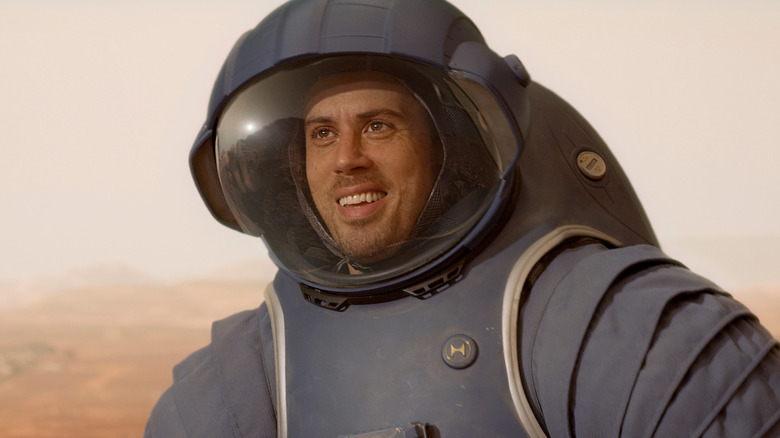
Sci-fi shows are everywhere these days. Prestige series like Apple TV's "Severance" and "Pluribus" aren't afraid to explore ambitious concepts in their storytelling, while Charlie Brooker's Netflix anthology series "Black Mirror" has broached dystopian sci-fi and speculative fiction subjects since 2011. Virtually every streaming platform nowadays has a great high-concept sci-fi on the menu. Fans, in other words, have it better than ever.
Unfortunately, this wealth of content also means that some great shows simply aren't getting noticed as well as they might have during leaner days. Back in the day, groundbreakers like "Star Trek" and "The X-Files" stood out from the crowd, while every innovative sci-fi show today has to compete for attention with countless other incredible projects. Because of this, even the most dedicated sci-fi fan has very likely missed at least some great works that shine on their own, but haven't managed to break into the pop culture zeitgeist well enough to be widely known. Here's a closer look at 15 of the best underrated sci-fi shows out there.
Sense8

To decide whether Netflix's "Sense8" is worth watching, you only need to know the wealth of talent behind it: "The Matrix" creators Lana and Lilly Wachowski, and J. Michael Straczynski of cult sci-fi show "Babylon 5" fame (more about that show later). With such an iconic writing team at the helm, "Sense8" is a gorgeous and original story that artfully explores a complicated but interesting sci-fi concept: a mysterious mental connection that joins eight people together in unforeseen ways.
The eight "sensates" of the show retain their own identities but form a type of hive mind that allows them to communicate and share knowledge and emotions. Unfortunately, they have to figure out this new situation in a hurry, because they're not the only ones with special powers out there... and some of the others are looking to hunt them down. "Sense8" was canceled by Netflix after two seasons, but it remains a beautiful, well-made show that's absolutely worth watching.
Torchwood
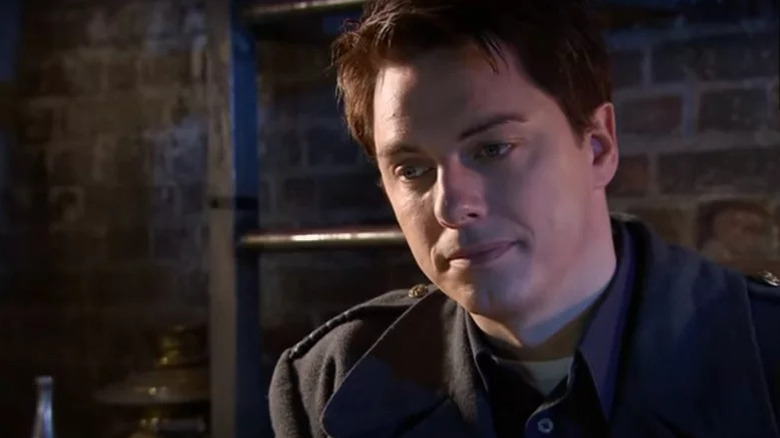
"Doctor Who" has plenty of spin-offs that don't get talked about enough. This is somewhat understandable, given the franchise's built-in ability to soft reboot itself with the main character's regeneration cycles. Still, offshoots like "Torchwood" deserve way more love than they get.
Arguably the best of the assorted "Doctor Who" spin-offs, "Torchwood" is to its parent show what "Angel" is to "Buffy the Vampire Slayer." A dark reprise that isn't afraid to delve deep into the pain inside its characters' souls, the spin-off focuses on the titular team, led by recurring "Doctor Who" character Captain Jack Harkness (John Barrowman).
The immortal trickster gets to show whole new sides of himself, thanks to the responsibility of heading a squad of alien threat investigators who don't have nearly the same resources or powers as the Doctor. Because of the comparative squishiness of most every non-Captain Jack character on the show, and the fact that the threats the Torchwood Institute investigates tend to be very dark even by "Doctor Who" standards, the show has a real sense of stakes throughout its run... and indeed, no character is ever truly safe.
Red Dwarf
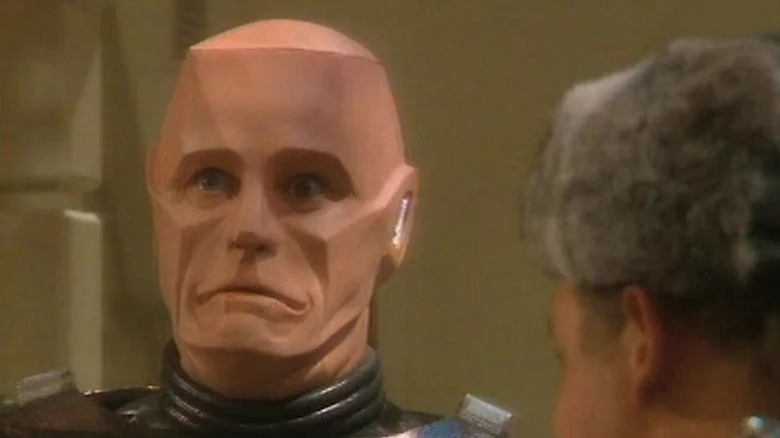
"Red Dwarf," in many ways, was "The Orville" before "The Orville" existed — only, the award-winning British sci-fi comedy classic carries a very particular charm for which few recent shows have an answer. Simultaneously comfortable and irreverent, Rob Grant and Doug Naylor's series focuses on Dave Lister (Craig Charles), the bottom rung on the hierarchy of the mining ship Red Dwarf. Thanks to a radiation mishap, everyone else on the vessel dies and the ship keeps him in suspended animation for three million years before waking him up to a new reality of holograms, androids, mutant cat people, and absurd misadventures.
Somewhat overlooked by critics but well-liked by the viewers who are aware of it, the show premiered in 1989. It's notable for remixing its format and character gallery over the seasons, introducing new concepts, problems, and solutions in sci-fi serial style while still retaining its distinct identity as what just might be the most lovingly crafted space-faring parody series out there.
For All Mankind
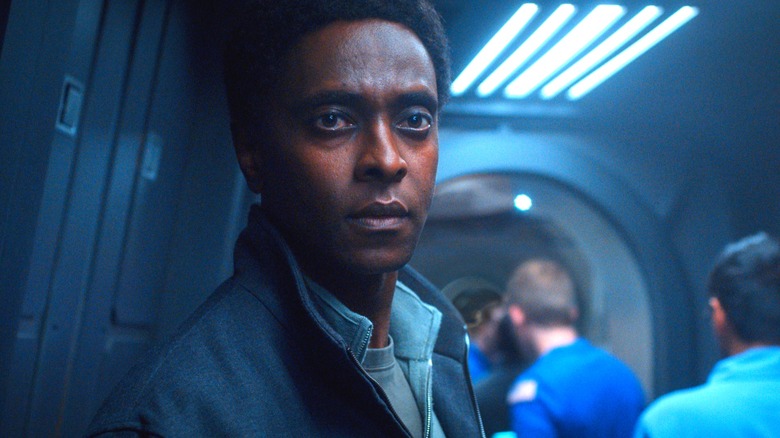
"For All Mankind" is an ongoing show at the time of writing, yet it's already somewhat lost in the stellar Apple TV sci-fi mix. It's a sprawling and ambitious look into a radically different version of the Cold War-era Space Race that ends up transforming the world for the better, at least in some very particular ways that our version of reality struggles with. With each season covering one decade of human history, the show grows in scale and stakes as it propels humanity to ever greater accomplishments ... and some surprising crises.
A gorgeous show with a large, consistently great cast, "For All Mankind" is a critical darling that starts out strong but becomes truly wonderful after its debut season. The fact that its name isn't on everyone's lips is a testament to the abundance of great sci-fi out there. On a positive note, at least, this makes the show a perfect hidden gem that you can introduce to your friends who aren't in the know when it comes to the best shows currently streaming on Apple TV.
Devs
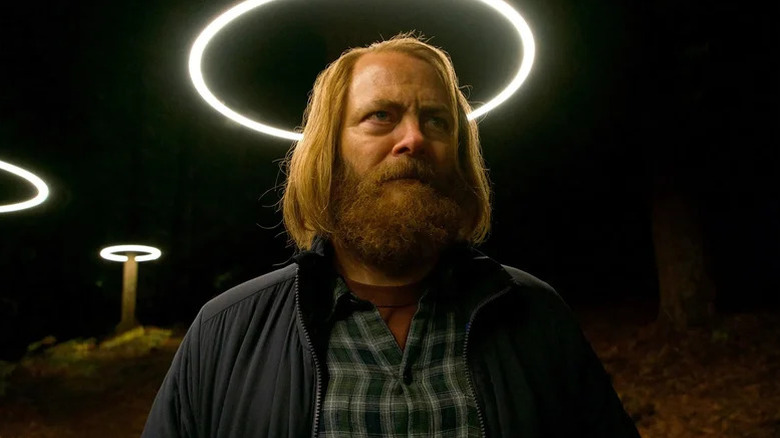
A sci-fi show that doesn't reveal itself as a sci-fi show until fairly late in the game, "Devs" is a slow-burning delight that surprises at every turn. Alex Garland's sleek, moody Silicon Valley miniseries explores quantum technology and free will in unforeseen and unpredictable ways, delighting in pulling the rug from under the viewer just as they get comfortable.
There's no way to even start to describe the plot of "Devs" without going into spoiler territory, but the very first shots of the gigantic child statue at tech mogul Forrest's (Nick Offerman) Amaya compound are enough to convince the viewer that something truly extraordinary is on the way. As is par for the course for Garland ("Ex Machina," "Annihilation"), the visual feast both delights the eyes and services the plot at every turn.
The show's unique visual language may seem curious at times, but trust the process. When "Devs" finally reveals all its cards, it does so in a way that will imprint on the viewer's mind for a long time. It might not be an easy watch, but it's a must-watch.
Humans

In this day and age of artificial intelligence, Jonathan Brackley and Sam Vincent's "Humans" is simultaneously an unnerving and illuminating watch. In its world, human-like but AI-powered synths are common and are widely used for just about every task a human being can do (and more). This, of course, leads to its share of issues, as some people feel threatened by these machines taking over all walks of life and stripping people of their livelihoods. Meanwhile, sentient synths start to show increasing concerns about the way humans treat them. Can a conflict be avoided?
An examination of the issues that arise between humans and AI creations that are virtually indistinguishable from humans, the show ran on AMC from 2015 to 2018 but works well as a metaphor for events that are unfolding a decade later. Moody, brilliantly acted and critically lauded, "Humans" is the kind of science fiction that seems just a few years removed from potentially becoming ominous scientific fact.
Raised by Wolves
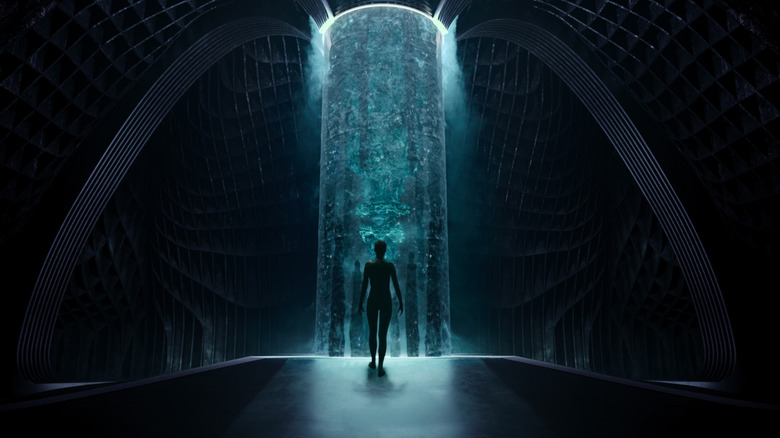
Take two androids, a group of children being raised as an atheist colony, and a desolate planet. Add in a bunch of people determined to break down this unconventional set-up. Have Ridley Scott direct a couple of episodes and executive-produce the whole thing. These are the ingredients of Aaron Guzikowski's "Raised by Wolves," a true original among today's ever-growing sci-fi landscape.
"Raised by Wolves" — which was canceled by HBO Max after two seasons — is visually impressive and grounded by commanding performances from Amanda Collin and Abubakar Salim (who play the androids), with "Vikings" star Travis Fimmel balancing the scales as the mysterious and unbalanced Ark of Heaven soldier known as Marcus. The show is unafraid to take bold swings and get genuinely ruthless when it must, and while it might not always quite measure up to the absolute finest representatives of the genre, it's still a worthy show that should be talked about far more than it actually is.
Babylon 5
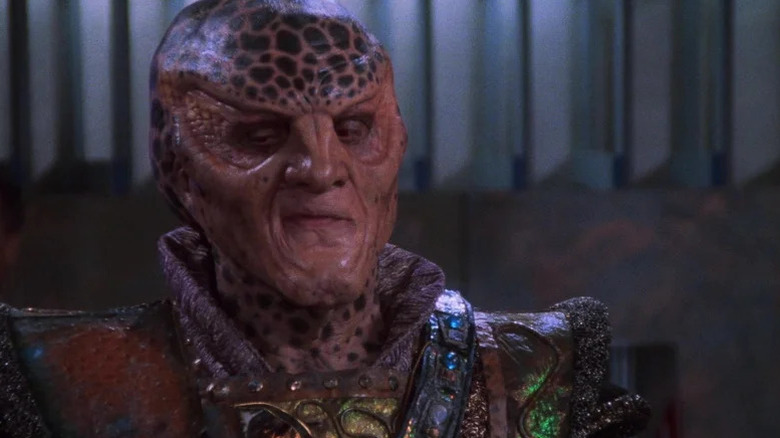
When "Babylon 5" begins, pay careful attention to generic-seeming characters like the boisterous Klingon-esque semi-villain G'Kar (Andreas Katsulas) or the wacky Centauri Londo Mollari (Peter Jurasik), and try to guess where their character arcs take them. Then proceed to stare in disbelief as the show takes them above and beyond anything you could have expected.
"Babylon 5" is the granddaddy of all space station operas for those in the know. J. Michael Straczynski's sci-fi gem begins unfolding an elaborate five-season arc from the very first episode. Yet, despite such intricate weaving, the show never skimps on the fun (apparent) filler that makes space operas like "Star Trek" so likable. It's a trick, of course: "Babylon 5" really wants you to become emotionally invested in its characters, so when the stakes start rising, you're on the edge of your seat.
To say anything about the actual plot of "Babylon 5" would be telling, so let's just reveal that it takes place on the fifth iteration of an important space station that acts as a diplomatic haven and neutral territory for various factions that are otherwise on uncomfortable terms with each other. This fascinating starting point soon launches into a story that, in a fair world, would have placed the show on the same pedestal as the likes of "Star Trek" and "Star Wars." Yet, "Babylon 5" lingers in cultural semi-obscurity... but those who find it are in for a ride like no other.
1899
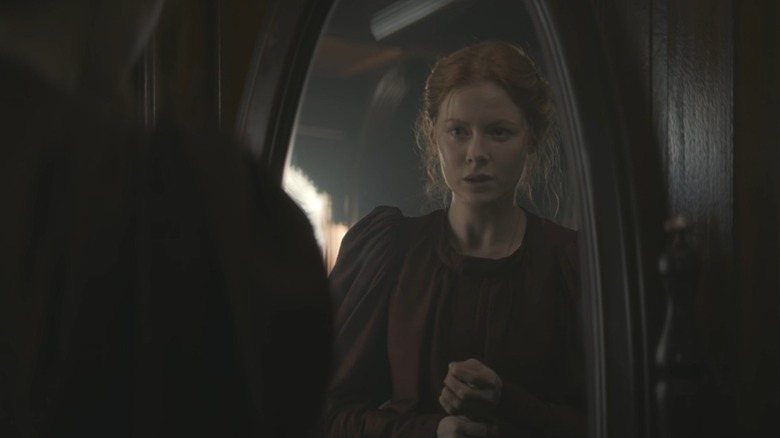
Whatever you think "1899" is about when it begins, that's not it. This, of course, is only to be expected of a show that comes from the makers of the Netflix hit mindbender "Dark," but this combination of period drama and steampunk-tinted sci-fi mystery takes things even further with the many inexplicable events that take place during the voyage of the passenger ship Kerberos.
Episode by episode, minute by minute, "1899" piles mysterious events and tense scenes on top of each other, until it's impossible to know what's next — or what's even real. It's not until the very end that the show allows the intricate tapestry of conundrums to slightly unravel... but unfortunately, the show never got the chance to solve all its mysteries. Despite being one of the most atmospheric and consistently mind-blowing sci-fi shows out there, the series turned out to be so underrated that even Netflix itself ended up canceling "1899" after just one season. Still, this abrupt stop doesn't make "1899" any less watch-worthy, if you're in the market for a world-class mindbender.
Counterpart
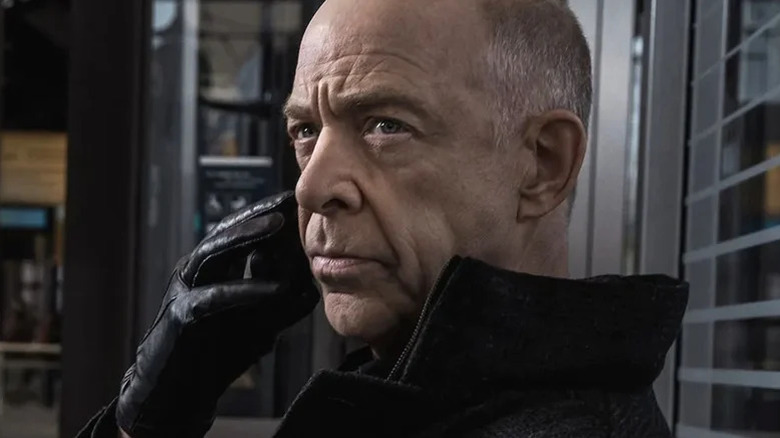
Ever since the days of HBO's prison drama "Oz," Academy Award winner J.K. Simmons has established himself as one of the most intense and engrossing actors in the game. The Starz sci-fi thriller "Counterpart" is fully aware of this fact, and builds upon a simple foundation: What if there were two of him?
Yes, "Counterpart" is all about Simmons pulling double duty as low-ranking United Nations special operations worker Howard Silk and his considerably more capable and dangerous parallel universe... well, counterpart. As events conspire to create a passage between parallel worlds known as "Alpha" and "Prime," the two Howards (and assorted other operators) collaborate and scheme to de-escalate tensions and prevent a potential war between the two universes.
Appreciated by critics and audiences, "Counterpart" combines grounded espionage with a generous scoop of alternate-universe science fiction, all anchored by a dual dose of Simmons. With just two seasons and 20 episodes, the show is an easily bingeable high-stakes affair that'll offer plenty of thrills despite its comparative obscurity.
12 Monkeys
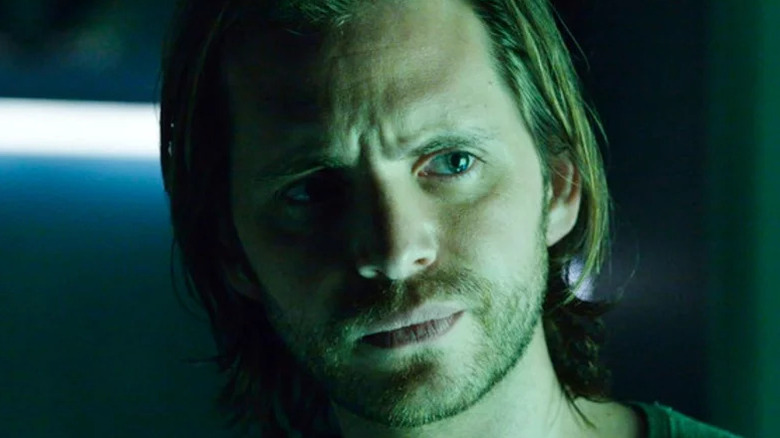
Fans of Terry Gilliam's intensely atmospheric 1995 sci-fi thriller "12 Monkeys" would be forgiven for not realizing that a television version of the story also exists. Syfy's well-regarded but comparatively little-known small screen incarnation of the story ran for four seasons between 2015 and 2018, both adapting the story of the movie and expanding on it in a number of ways.
Created by Terry Matalas and Travis Fickett, the "12 Monkeys" series focuses on the time-traveling James Cole (Aaron Stamford, taking over the role played by Bruce Willis in the movie), a shady survivor from the future who ends up traveling to the year 2015 to stop the release of a virus that's destined to all but wipe out humanity. Early on, the plot stumbles somewhat. However, with the help of Stamford's spectacular performance, it eventually finds its footing and establishes its own identity, taking viewers down some dark paths that the film never had the opportunity to explore.
Dark Matter
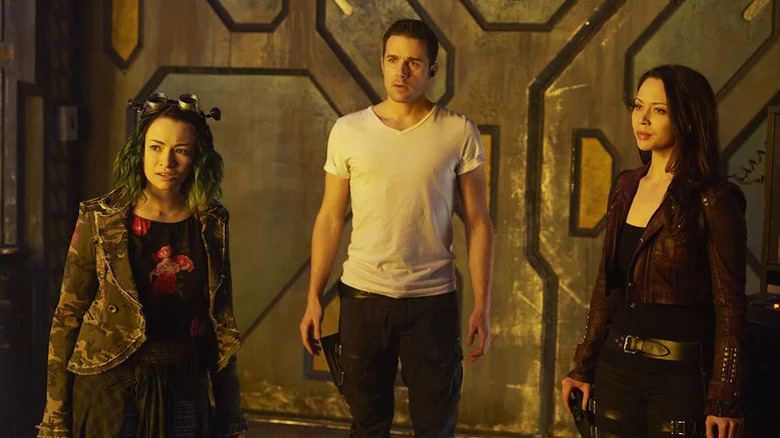
There are actually a couple of sci-fi shows called "Dark Matter" around. One of them is the 2024 Apple TV alternate reality series starring Joel Edgerton, which is still establishing its legacy. The other, however, has already made the halls of underappreciated sci-fi gems its home. This "Dark Matter," which ran on Syfy from 2015 to 2017, delivers a space-faring story with a twist. Instead of a capable crew navigating the stars, the show simply puts six amnesiac people onboard a battered cruiser, where they have apparently been in suspended animation.
The mystery of what exactly is going on soon gives way to the revelation that most of these people are extremely villainous mercenaries whose minds have been wiped. What follows is a horrible (and downright entertaining) case of identity crisis, which in turn leads to three seasons filled with seething drama and endless star-hopping adventure. Enjoyed by both viewers and critics, "Dark Matter" is quality science fiction that's not afraid to soar with its storytelling.
The Sarah Jane Adventures
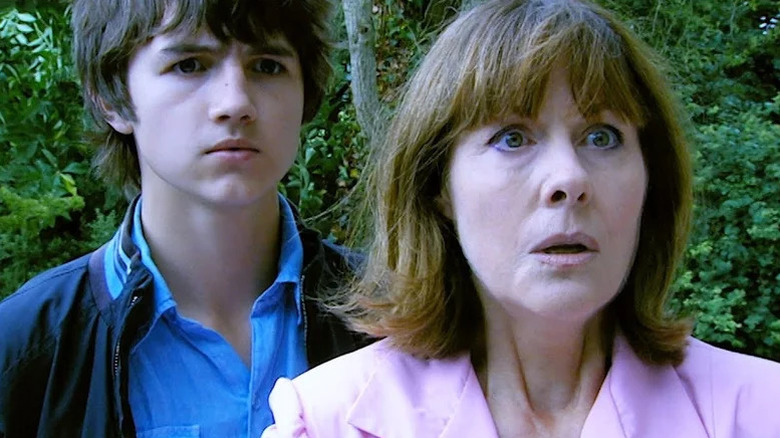
The second "Doctor Who" spin-off on this list, "The Sarah Jane Adventures" is an exciting tale that focuses on beloved companion Sarah Jane Smith (Elisabeth Sladen) and her post-TARDIS adventures. Cleverly, the show uses Sarah Jane's experience from her days with the Doctor in conjunction with her current profession as a journalist to throw her from one alien-themed escapade to another.
Charming and inventive, "The Sarah Jane Adventures" ran from 2007 to 2011. It utilizes a combination of familiar "Doctor Who" elements (such as the fan-favorite robot dog K-9 and a number of classic alien enemies) and original creations to fantastic effect throughout its run, even winning a BAFTA Cymru award for Best Children's Program in 2009. Ultimately, however, the show came to an end after tragedy struck: Sladen died in 2011 at just 63 years old, which caused the BBC to retire "The Sarah Jane Adventures."
The Expanse
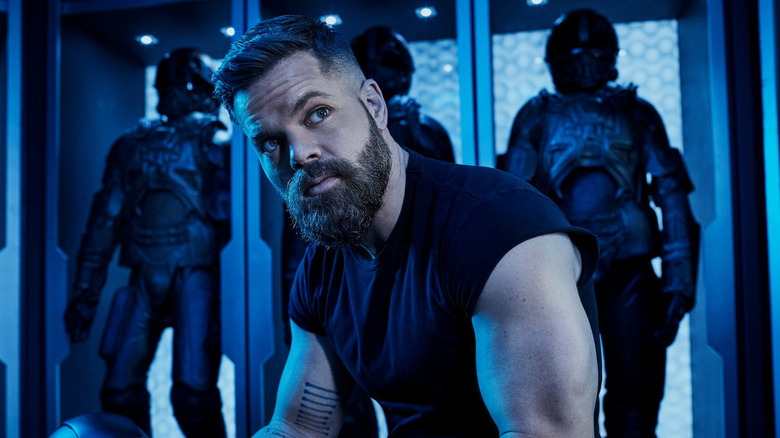
"The Expanse" is a comparatively grounded look (read: greedy and petty) into what a human colonization of the stars would actually look like. Taking place within the confines of our own solar system, the show is part crime drama, part political thriller, and part spacefaring adventure.
From the missing person investigation of classic grizzled detective type Josephus Miller (Thomas Jane) to the political machinations of United Nations bigshot Chrisjen Avasarala (Shohreh Aghdashloo), the show jumps between genres while still maintaining its own style and identity throughout. Even the obligatory crew of outcasts led by Steven Strait's James Holden feels fresh, and their explosive personal dynamics reflect the gravity of the situations in which they keep finding themselves. Eventually, the storylines all combine into something much larger than the individual pieces of the puzzle would have you believe.
Whether it keeps things up close and personal or offers glimpses of the big picture, "The Expanse" never ceases to impress. Its themes of overcoming insurmountable challenges extend to the lifespan of the show itself, too. When Syfy canceled it after three seasons, Amazon rescued "The Expanse" and ultimately allowed the series to run all the way to its sixth and final season.
Farscape
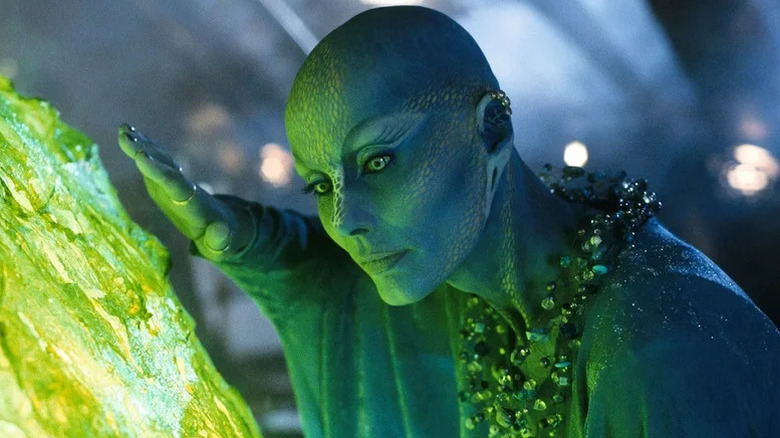
Rockne S. O'Bannon's "Farscape" is an ambitious show that centers around John Crichton (Ben Browder), an astronaut from Earth who gets thrown in the middle of galactic conflicts on the other side of the universe after a wormhole incident. Here, he slowly accumulates a ragtag band of colorful alien friends and allies from all walks of life, and soon enough the team and their living ship become entangled in the grander conflict. Fun storylines, a well-acted cast of memorable characters, and some incredible practical effects by the Jim Henson Company make "Farscape" a memorable adventure that also happens to feature one of TV's best slow-burn romances (Crichton and Claudia Black's Aeryn Sun, represent).
On its own, the show has arguably left a shallower pop culture footprint than it would have deserved. Still, it's not all bad. Though "Farscape" itself seems lost in the sea of canceled TV shows we'd want to see return, it did make a lasting impression in a roundabout way. Current DC Studios co-head and former Marvel Cinematic Universe notable James Gunn was a massive "Farscape" fan, and it's easy to see the show's influence on the ragtag space team of his "Guardians of the Galaxy" trilogy. As a fun homage, Gunn even cast Browder to play one of the villainous Sovereigns.