

15 Best Western Shows Not Set In The Yellowstone Universe
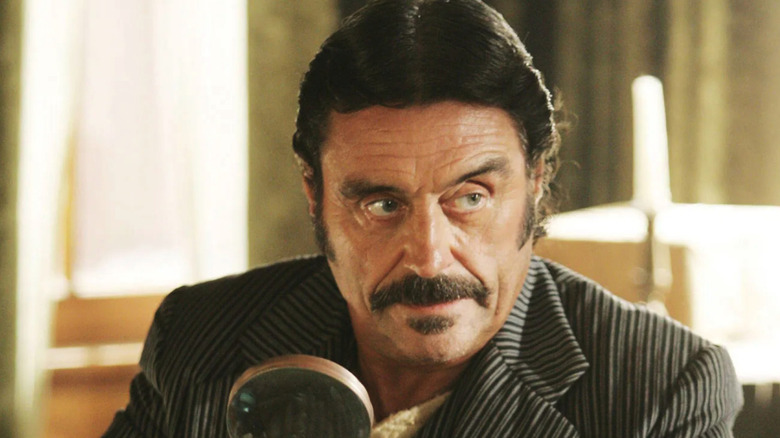
For nearly a decade, Taylor Sheridan has all but revived the Western genre, restoring it to its former popularity through a steady output of content that shows no signs of slowing. Television series like "Yellowstone," "Landman," and "Tulsa King" offer modern spins on classic tropes — the rugged cowboy, land disputes, violent outlaws, and themes of justice and power — and feel like echoes of a bygone era, clamoring to remain relevant in an increasingly complex world.
Still, some viewers may yearn for something outside of Sheridan's wheelhouse. Praise aside, much of his work feels oddly similar, steeped in familiar Western archetypes borrowed from better shows. To that end, we've assembled a list of the 15 best Western shows not set in the "Yellowstone" universe for those seeking a more classical approach to the formula. Some of these offerings were crafted in the modern era, while others hail from previous decades. All are worth your time, providing a thrilling journey through the Old West, as seen through the eyes of various heroes and villains. Saddle up, partner, and read!
Rawhide
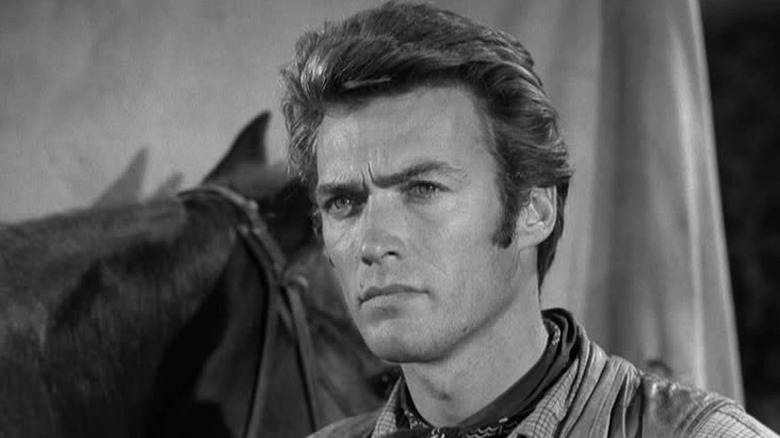
First up, Eric Fleming and Clint Eastwood star in "Rawhide," a gritty series about a grueling cattle drive from Texas to Missouri led by trail boss Gil Favor (Fleming) and his right-hand man, Rowdy Yates (Eastwood). Sounds simple enough, right? Well, "Rawhide" lasted eight seasons and stretched its premise as far as it could go without breaking. It's the purest Western ever created, with an emphasis on working individuals rather than smoky saloons, battle-hardened sheriffs, or cozy houses on the prairie. On a cattle drive, heroism takes a backseat to responsibility and work.
Still, "Rawhide" is perhaps best remembered as a series that inspired other, better works — like those listed below. The series is sturdy and often entertaining, but fairly simplistic in execution. Each episode presents a challenge that our heroes must overcome, often without breaking a sweat. "Rawhide" is about discipline and endurance, and doesn't concern itself with morality tales.
For some, that no-frills approach, coupled with Eastwood's star power, is enough to push this influential tale higher on the list. We just like our Westerns served with a little more sauce.
Dark Winds
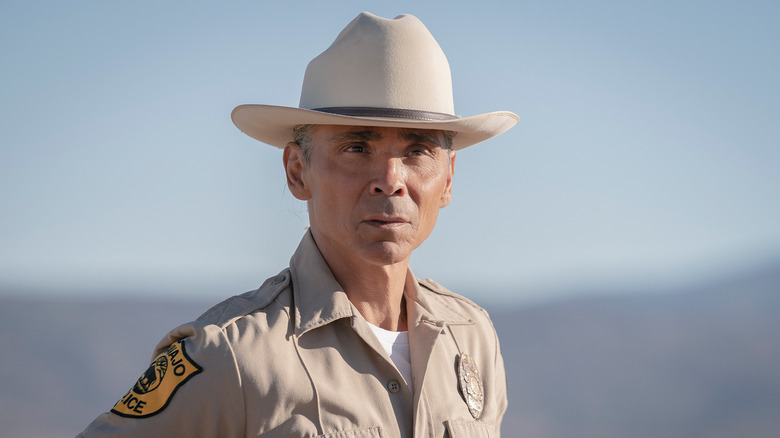
One of the best modern Westerns currently on TV, "Dark Winds," will likely cement a powerful legacy once it concludes (a fourth season kicks off in February). Up to this point, however, this crime thriller has provided solid, thought-provoking entertainment, strong performances from its main cast, and a sturdy blend of the Western and crime genres.
Set in the early 1970s on the Navajo Nation, "Dark Winds" follows tribal police lieutenant Joe Leaphorn (Zahn McClarnon), Bernadette Manuelito (Jessica Matten), and young officer Jim Chee (Kiowa Gordon) as they investigate murders, robberies, political corruption, and spiritual unease. The twist is that these stories are told from the perspective of Indigenous people rather than cowboys, culminating in a clash between modern law enforcement and tradition.
"Dark Winds" goes hard on its subject matter and is most interested in highlighting the consequences of conquest. Throughout, we see the remnants of a powerful people trying to survive in a world that has all but forgotten them. That perspective lends what is ostensibly a procedural thriller far more weight than is usually found in shows of this ilk.
Bonanza
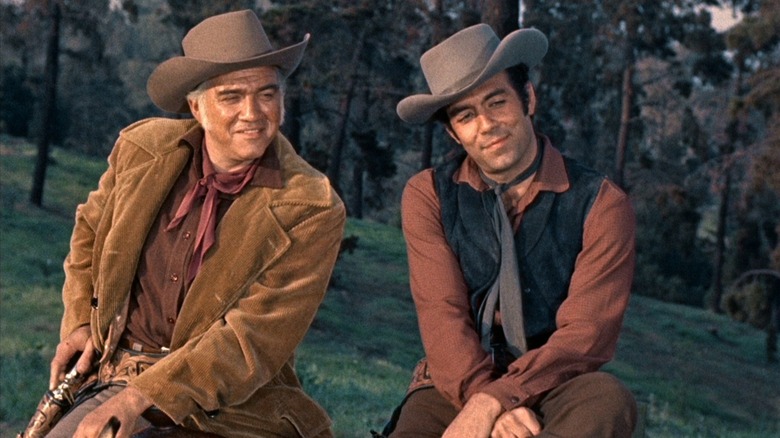
"Bonanza" can best be described as a Western for everyone. Set in the rugged West, the series lacks the intensity of others on this list, instead focusing on family matters. Taking place on the sprawling Ponderosa Ranch near Virginia City, Nevada, this popular series centers on its core heroes — Ben Cartwright and his three sons, Adam (Pernell Roberts, who exited after six seasons), Hoss (Dan Blocker), and Little Joe (Michael Landon) — as they deal with land disputes, injustices, and other trappings of frontier life. Yet none are lawmen or lone gunmen, and their primary concern is doing right by their family.
Essentially, "Bonanza" made the genre warm and accessible to audiences who had grown weary of petty disputes between outlaws and rangers. In Ben Cartwright, they discovered a strong father figure, enriched by Lorne Greene's sturdy gravitas. Each week, the Cartwrights teamed up to lasso everything from racism to land exploitation, with every confrontation leading to an enriching life lesson. Yes, like many shows of its era, "Bonanza" is relatively safe and harmless — but it's also deeply comforting.
The Rifleman
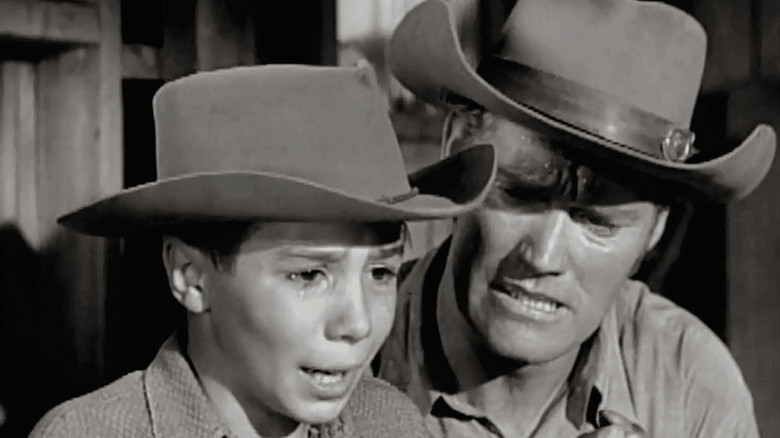
A terrific throwback to the earnest Westerns of yore, "The Rifleman" certainly boasts its share of violent standoffs and encounters, but is far more interested in parenting and principles than endless shootouts. It's "Father Knows Best," except this poppa carries a customized rapid-fire rifle and isn't afraid to unleash a hail of bullets on ruffians — but only when absolutely necessary.
Lucas McCain (Chuck Connors), a former gunfighter and widowed rancher, is trying to live a moral, peaceful life in the frontier town of North Fork with his young son, Mark (Johnny Crawford). Unfortunately, each episode brings a dangerous threat into Lucas' midst, forcing him to settle conflicts he would just as soon walk away from. Oh, sure, he can blast baddies to bits, but Lucas also harbors the responsibility of serving as an example to his son. After all, it's one thing to mow down outlaws, bandits, and thieves, and it's something else entirely to do so in front of a child.
It's a captivating dilemma that helped establish the reluctant gunfighter trope we see so often today, making "The Rifleman" a classic, influential — though dated — television series.
Walker, Texas Ranger
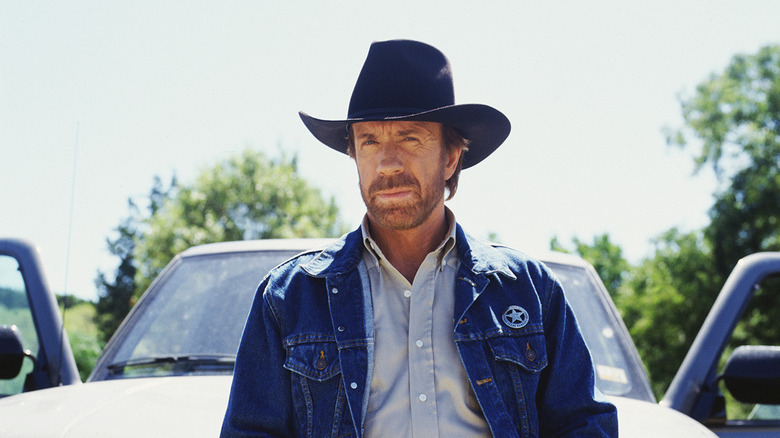
You've seen the clips, read the memes, weaponized the GIFs on your friends, and probably even participated in a joke fest about Chuck Norris' near-mythical abilities — Chuck Norris isn't afraid of the dark; the dark is afraid of Chuck Norris. But don't let that stop you from enjoying "Walker, Texas Ranger," a goofy yet ultimately entertaining crime drama about a stoic Texas Ranger named Cordell Walker (Norris), a lawman who fights crime with his formidable martial arts skills.
Chock-full of '90s energy and an eye toward Western values of honor and justice, "Walker" kept the cowboy tradition alive on television when the genre had all but stalled out in pop culture. One could argue that Norris' steely do-gooder paved the way for modern fare like "Yellowstone" and "Deadwood." No doubt, Walker's conscience-centered approach would clash with today's batch of morally ambiguous antiheroes, and so it's actually kind of fun to go back and watch a show with little on its mind beyond law and order.
Longmire
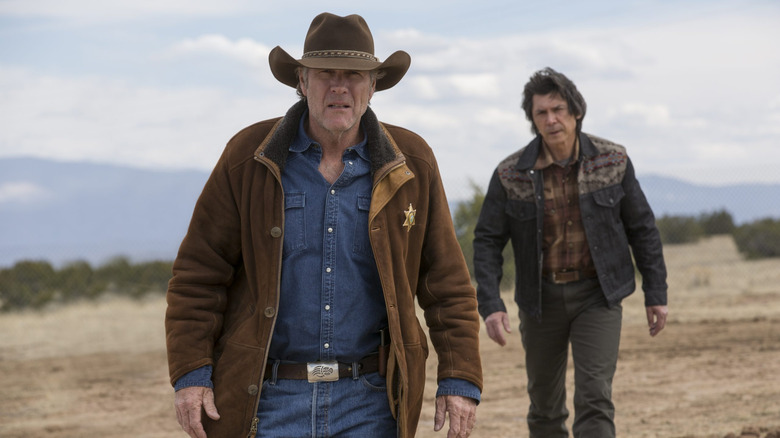
As we've seen so far, many Western TV shows fall into two camps: revenge-driven and episodic, or ponderous deconstructions of the American myth. "Longmire" lies squarely in the middle, as it's largely procedural while also addressing modern issues in the wider world.
Robert Taylor stars as Walt Longmire, a widowed county sheriff investigating murders, disappearances, and land disputes in rural Wyoming with his pal Henry Standing Bear (Lou Diamond Phillips). His day-to-day activities serve as a gateway into a deeper exploration of grief, loyalty, and endurance. Despite its case-of-the-week structure, "Longmire" is ultimately the story of a man trying to hold onto decency amid ethical decay.
Notable for Phillips' terrific performance, which elevates Henry Standing Bear from an average sidekick to a virtuous counterweight, this A&E-turned-Netflix series does just enough to soar as a genre heavyweight, even if it fails to capture the same raw intensity as some of the other shows on this list.
Have Gun - Will Travel
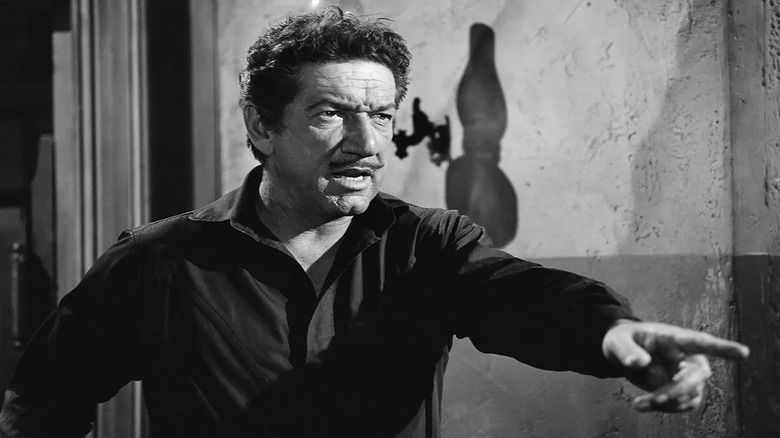
Another self-contained, episodic adventure series, "Have Gun – Will Travel" stars Richard Boone as Paladin, a highly educated gunfighter-for-hire who travels the Old West solving problems — for a price. Each episode begins with Paladin in the Hotel Carlton in San Francisco, where he's visited by a stranger in need of his services. Typically, his assignments require him to protect a client, intimidate someone, or kill a violent individual, which he does with little concern for moral hand-wringing or ethical debate. Our boy has a gun, and he uses it. End of story.
Premiering in 1957, Paladin is one of the first true TV antiheroes, paving the way for the likes of Al Swearengen and Raylan Givens. He's not a good guy or a bad guy, just a man looking to make his way in the Old West — albeit one who dresses like a gentleman and enjoys quoting literature. Like "Walker, Texas Ranger," its episodic formula bogs it down, preventing any real character evolution for our lead, but those who like their Westerns easy and uncomplicated will have a blast with this classic.
Justified
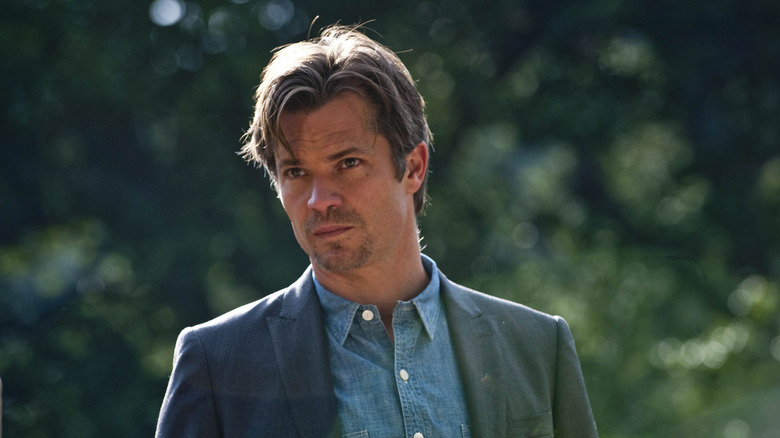
Set in modern-day Harlan County, Kentucky, "Justified" follows the exploits of U.S. Marshal Raylan Givens (Timothy Olyphant) as he combats corruption in his rugged and violent hometown. The FX series showcases a gritty and raw aesthetic and allows Olyphant and his various co-stars — specifically Walton Goggins' scene-stealing Boyd Crowder — to expand beyond their two-dimensional shells. What starts as a procedural slowly evolves into a serialized Western about loyalty, ambition, and whether a man can outrun his past.
Don't worry, it's not all grime and grit. Givens, while emotionally detached, oozes charisma and lightning-fast wit. This cowboy packs sidearms rather than six-shooters and rides a Lincoln Town Car instead of a horse, reinforcing the show's core idea that the Old West never left — it merely evolved.
All praise aside, "Justified" starts a little slow. The first season adheres to the villain-of-the-week formula, but once it finds its groove, this FX series rivals some of the genre's best.
The English
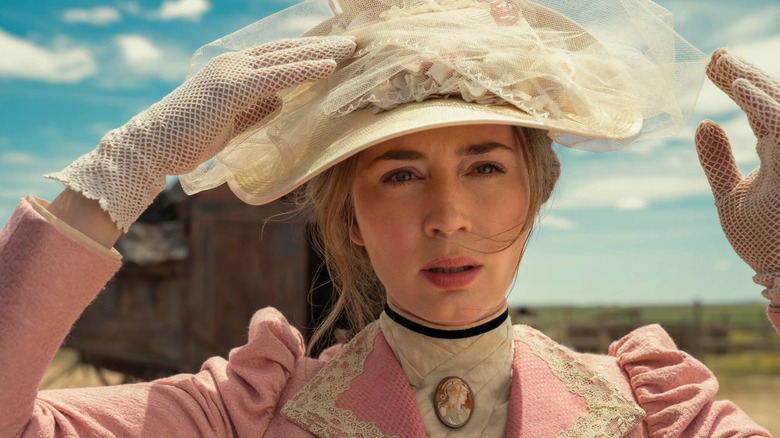
Moody and effective, "The English" stars Emily Blunt as Cornelia Locke, an English aristocrat who travels to the frontier seeking revenge against the man who tore her family apart. Aiding her pursuit is a Pawnee former U.S. Army scout named Eli Whipp (Chaske Spencer), whose personal quest to attain the land promised to him for his service intersects with Locke's mission.
Visually arresting and brimming with wide, painterly shots, "The English" unfolds like a tragic poem, building toward a powerful conclusion that recontextualizes everything that came before. Yeah, this isn't your normal, run-of-the-mill Western adventure, and writer-director Hugo Blick aligns more with arthouse cinema than episodic television, resulting in a grounded, at times slow, mournful meditation on the lies percolating beneath the myth of the American frontier.
Predictably, Blunt delivers a strong performance, playing Cornelia with restraint and suppressed fury. She's not a gunslinger, just a young woman coming to grips with the nature of vengeance in a cruel world.
Hell on Wheels
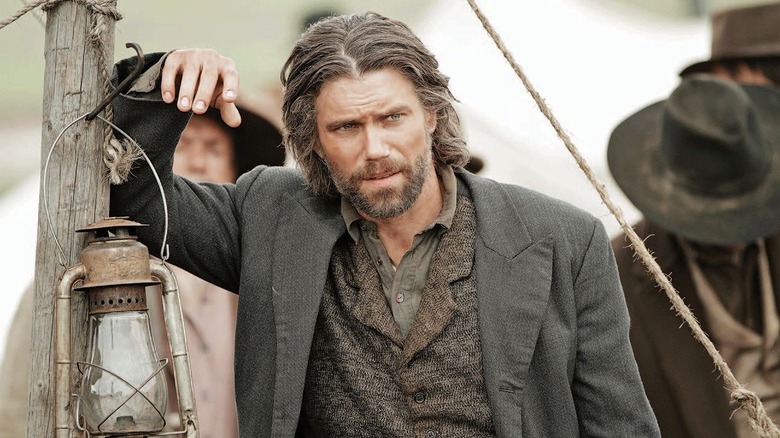
A great show that flew under the radar is AMC's "Hell On Wheels," a gripping revenge thriller set after the Civil War about a former Confederate soldier who sets out to find and kill the Union officers responsible for his wife's death. His mission leads him to join the construction of the Transcontinental Railroad, where he encounters desperate Native tribes, greedy capitalists, and freedmen seeking autonomy. As a result, our hero, Cullen Bohannon (Anson Mount), morphs from an atypical revenge archetype into an idealist constantly at odds with who he wants to be. In many respects, the railroad is the show's true villain, as its expansion signals opportunity but also ushers in a new form of civilization with its own list of problems.
Co-starring Common (who left the show in Season 4 to focus on his music career) as Elam Ferguson, a former slave navigating freedom in a corrupt system, "Hell On Wheels" always seems to find exciting new ways to tap into its universe. Admittedly, later seasons aren't as strong as the first batch, and some mid-series arcs are a little shaky; Cullen's emotionally closed-off demeanor may also put off some viewers. Overall, this is a solid, thought-provoking look at the creation of America — good and bad.
Broken Trail
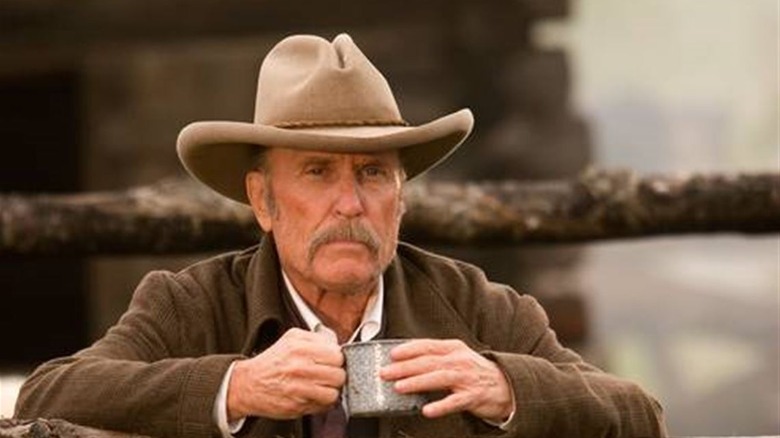
Robert Duvall and Thomas Haden Church star in this terrific miniseries about two aging cowboys, Prentice Ritter and his nephew, Tom Harte, hired to drive horses from Oregon to Wyoming. En route to their destination, they happen upon a human trafficking operation involving a group of abused Chinese women and choose to abandon their job to do the right thing.
Unlike other entries on this list, "Broken Trail" isn't concerned with land, revenge, or outlaws. Here, the story is about helping others, even in the face of insurmountable odds. Our leads aren't traditional heroes. Prentice, for example, is weary but principled. He's already lived a long life and now yearns to leave the world a little less cruel — a far cry from the atypical gunfighter romanticism seen in other, more traditional Westerns.
Of course, this straightforward approach may be too simple-minded for some. The villains lack dimension and don't challenge our heroes ideologically. The stakes are relatively small, but deeply human. "Broken Trail" focuses on a smaller, self-contained conflict featuring big emotions, but doesn't exactly reshape the genre in the same way the remaining shows do.
Gunsmoke
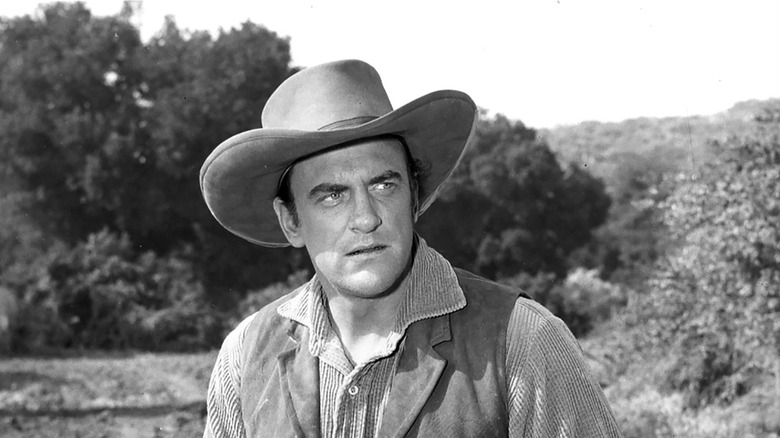
No TV Westerns list is complete without "Gunsmoke." An old-fashioned, serialized series in the vein of "Rawhide," this classic radio drama-turned-television tale follows U.S. Marshal Matt Dillon (James Arness) as he hunts down criminals in Dodge City, Kansas, in the Old West. Uniquely, Dillon isn't your standard John Wayne cowboy, brimming with swagger and confidence. Rather, he's a weary professional whose approach to justice tests the limits of his character. He's principled but emotionally guarded, and sees his position of power as a burden.
On the opposite end, the villains introduced in each episode are largely sympathetic — a fascinating approach given the straightforward Western tales of the day — making Dillon's job all the more difficult. Given its episodic nature, the series lacks an overarching bad guy; its throughline centers on loneliness, pride, fear, and desperation.
One could label "Gunsmoke" as the fork in the road from which all other serious Westerns either mimicked or openly opposed. Even by today's standards, it remains a highly watchable piece of television.
Godless
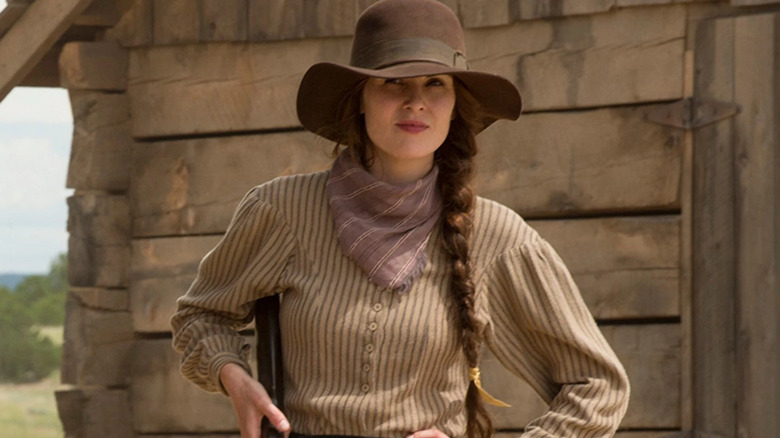
Lean, mean, and perfectly executed, Netflix's seven-part series "Godless" explores the aftermath of the Wild West through the eyes of a town run almost exclusively by women. Starring Jack O'Connell, Michelle Dockery, Scoot McNairy, Merritt Wever, and Jeff Daniels, this violent tale follows Roy Goode (O'Connell), an injured outlaw who takes refuge in La Belle among a group of widows whose husbands died in a mining accident. As Goode's former gang, led by the terrifying Frank Griffin (Daniels), closes in, the women of La Belle must take up arms to protect their families, their actions culminating in an epic showdown.
Ripe with strong performances and the usual assortment of stunning landscapes, "Godless" is about the end of the outlaw era and the moment the American West shifted hands from lawless, violent men to the survivors they left in their wake. Drawing on classic Westerns such as "The Magnificent Seven" and "Unforgiven," this terrific drama is the very definition of prestige television.
Lonesome Dove
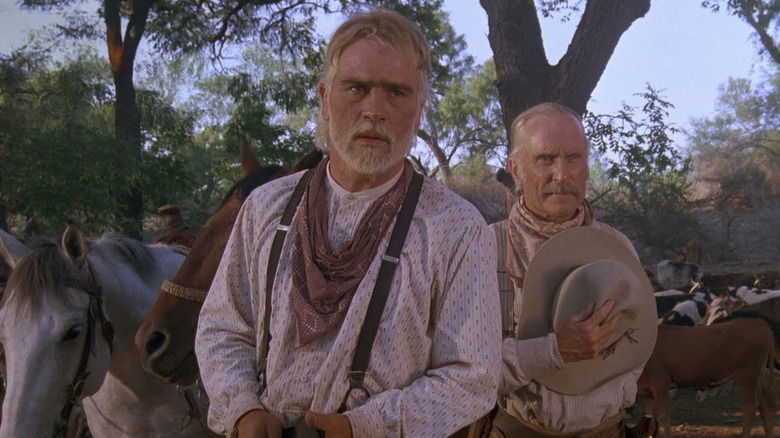
Equal parts tender and brutal, "Lonesome Dove" stands tall in the saddle as an all-timer, thanks in no small part to the legendary pairing of Tommy Lee Jones and Robert Duvall. Based on the sprawling novel by Larry McMurtry, this epic miniseries honors classic Western tropes — it's filled with cattle drives, shootouts, and lush cinematography — while also revealing their darker truths. The fast-draw, fearless lawman who rose in a time of lawlessness is regarded as a legend, but is then unveiled as old, sore, and emotionally stunted. Epic cattle drives are more a test of endurance than a glorious adventure, and frontier violence is rife with consequence. People die in horrible ways, shootouts lead to more problems, and romance is practically nonexistent.
"Lonesome Dove" captures the spirit of an old-fashioned Western but is more interested in exploring the complications of old age. Our two leads were once great Texas Rangers who must now come to terms with the ramifications of choices made long ago. It's an utterly compelling and heartbreaking exploration of friendship, aging, and the myth of the Old West.
Deadwood
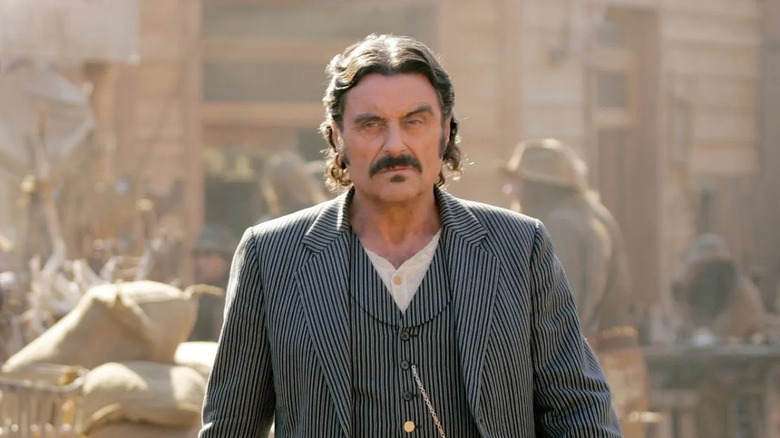
Well, duh! "Deadwood" isn't just a great Western; it's one of the all-time great shows. Period. And really, its greatness boils down to a single name: Al Swearengen (Ian McShane), the ruthless and cunning owner of the Gem Saloon, and the de facto power broker of the blossoming town of Deadwood, South Dakota. Laced with a surprising blend of intelligence and philosophy — not to mention thick, Shakespearean prose — this savvy entrepreneur lies, kills, and manipulates, but always in the service of keeping the camp alive. He's not a villain, per se, but it's hard not to root for this crusty old codger, especially when his goals — whether intentional or not — serve the common good.
Co-starring Timothy Olyphant, among others, this HBO classic doesn't mince words — it's unabashedly R-rated, loaded with gratuitous violence, sex, and language — but the authentic grime and grit make it all the more captivating. As the saying goes, this ain't your granddaddy's Western. "Deadwood" offers a cold reality check about civilization and how progress is often messy, unfair, and soaked in blood.