

12 Game Of Thrones Storylines The Show Never Fully Explained
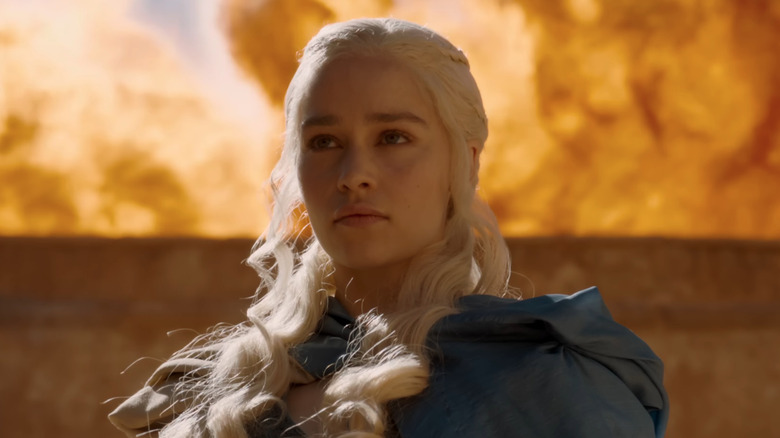
In May of 2019, millions of eager viewers tuned in to see the final episode of HBO's "Game of Thrones," hoping the numerous questions and mysteries posed throughout the series would finally receive answers. Considering the 30% "Popcornmeter" for the final season on Rotten Tomatoes, based on 10,000-plus user reviews, it's safe to say a good number of people walked away disappointed.
Lost amidst the spectacular battle sequences and onslaught of CG dragons, "Game of Thrones" Season 8 left a lot of meat on the bone. Compelling plot lines were scrapped or tossed aside, fan-favorite characters behaved in ways that made them unrecognizable, and the complex human drama that propelled George R.R. Martin's gritty fantasy epic into must-watch television fell by the wayside in favor of routine, though visually appealing, action.
The failure of the final few seasons stings to this day, and if you need to be reminded how the show dropped the ball, check out these 12 "Game of Thrones" storylines that were never fully explained.
The Purpose of the Lord of Light
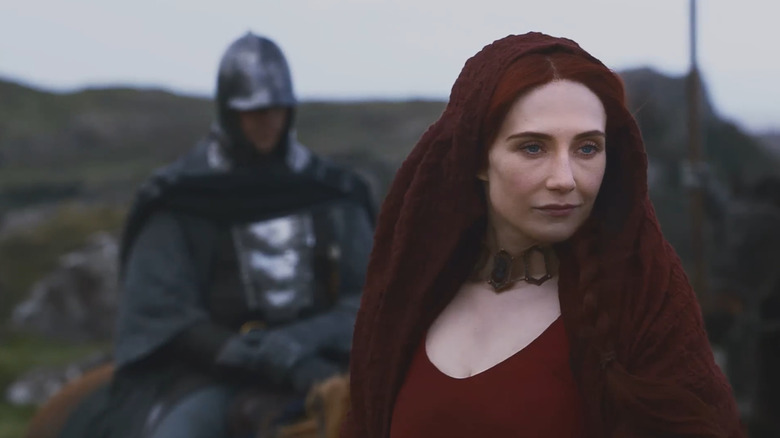
A massive storyline running through "Game of Thrones" centers on the mysterious Lord of Light, aka R'hllor. Indeed, for the first six or seven seasons, we're told that R'hllor is far from a false deity and is, in fact, an actual force directly influencing events. This ancient god literally brings characters like Beric Dondarrion (Richard Dormer) and Jon Snow (Kit Harington) back from the dead and delivers crucial information through prophetic visions seen by Melisandre (Carice van Houten).
Unlike the largely passive Old Gods, R'hllor actively intervenes at key moments and plays an integral role in the narrative. The implication is that the Lord of Light is a powerful opponent to the forces of darkness, interacting in ways that give humanity an upper hand in the war against the Night King. Yet, following years of buildup, this strange entity never receives a full explanation. Numerous prophecies tied to the Lord of Light — including those surrounding Azor Ahai and the Prince That Was Promised — never come to fruition, and it's never confirmed whether R'hllor is an actual being or mere belief.
In the end, these supernatural elements are used primarily to move characters where the plot needs them, while the deeper implications of a god actively choosing sides are quietly brushed aside or reduced to a loose justification for narrative convenience.
The Azor Ahai Prophecy
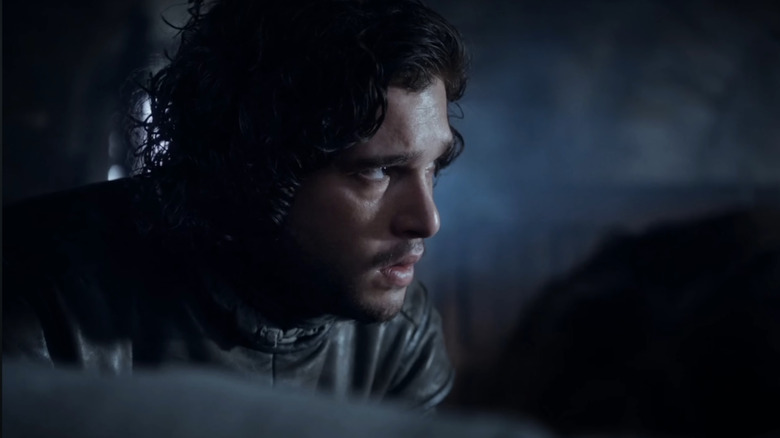
The Azor Ahai prophecy remains one of "Game of Thrones'" most confusing and unfulfilled storylines. Introduced early and referenced repeatedly, this myth states that a chosen, legendary hero lives thousands of years before the events of the show during the first Long Night. Wielding the fiery sword Lightbringer, Azor Ahai sacrifices everything to halt the advance of darkness, dies, and is foretold to return when evil rises again.
Priests of R'hllor treat Azor Ahai as a historical fact, while other cultures offer parallel legends meant to explain the end of the Long Night. He could just as easily be a symbolic archetype — a story later literalized by religion. Either way, Azor Ahai is deemed significant enough for the show to repeatedly tease his return, priming viewers to expect a meaningful payoff.
That payoff never arrives.
Instead, Azor Ahai is quietly discarded. Oh sure, Melisandre — the prophecy's chief interpreter — eventually concedes she was wrong in believing Stannis Baratheon (Stephen Dillane) to be the chosen figure, but she offers no clarity about which elements of the prophecy still matter, and which do not. She later turns her attention to Jon Snow, but even he's never confirmed as the de facto Azor Ahai. Either we missed something, or the show fails to provide a definitive answer — leaving "Thrones" fans with a large number of burning questions.
Bran's True Powers and Intentions
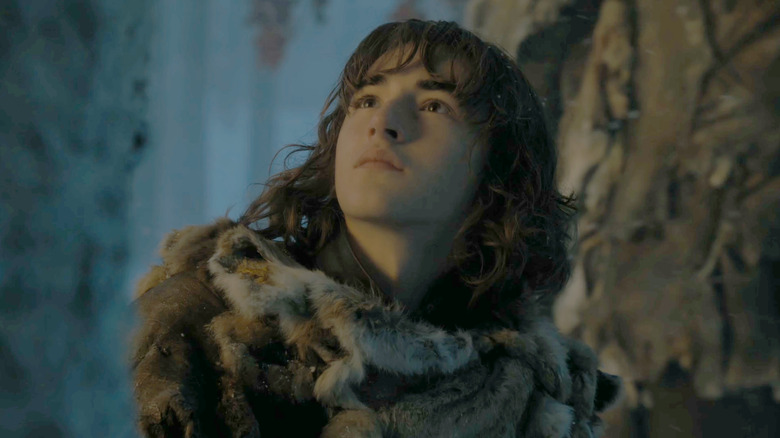
What exactly was the point of Bran Stark's (Isaac Hempstead Wright) incredible journey? The show builds a rich, mystical framework around this arguably annoying character, propping him up as one of the most essential figures in the series outside of Jon Snow, only to refuse to explain or pay it off once it matters most. Remember all of those episodes when Bran learns about the origins of the White Walkers, speaks to a young Ned Stark (Robert Aramayo) in the past, and gets marked by the Night King? All signs point to a powerful being whose revelations could quite literally change the course of history.
Unfortunately, once Bran finally becomes the Three-Eyed Raven, "Game of Thrones" doesn't seem to know what to do with him. We never understand the full extent of his powers — can he see the future, or only the past? Can he prevent disasters, or manipulate events as he sees them? Can he warg into dragons, or only crows? Ultimately, he mostly sits around, making strange faces at anyone who passes by.
The Night King's Deeper Goal?
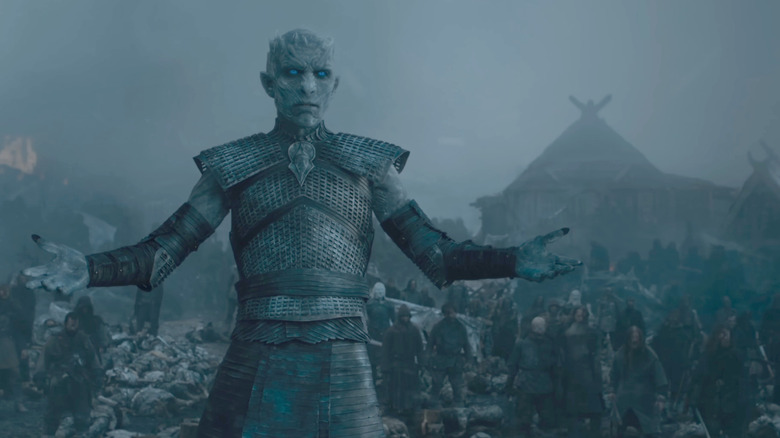
The Night King fueled years of speculation, theories, arguments, and endless YouTube breakdowns, only to be revealed as a basically standard zombie with no discernible motive beyond wiping out humanity. That alone isn't really a problem, but the show never explains why he wants to end the world. Is he reacting to Westeros' corrupt politics? Does he have some warped ideological goal? Or is he simply eager to rule over a frozen wasteland from a very nice snow castle?
For seven seasons, "Game of Thrones" positions the Night King and his White Walkers as the ultimate harbingers of doom — an existential threat dwarfing all crowns, wars, and betrayals. He leaves behind cryptic symbols, commands terrifying supernatural powers, and appears functionally unstoppable ... until a teenager stabs him with a dagger. As Forrest Gump would say: "And just like that, the apocalypse was over."
By dispatching this supposedly terrifying being halfway through the final season and immediately pivoting back to the Iron Throne, the series exposes the Night King and his army of White Walkers as little more than a minor hindrance — the Putty Patrol of "Game of Thrones," reduced to a speed bump on the way to fan service-y romance and increasingly silly politics.
Tysha and Tyrion
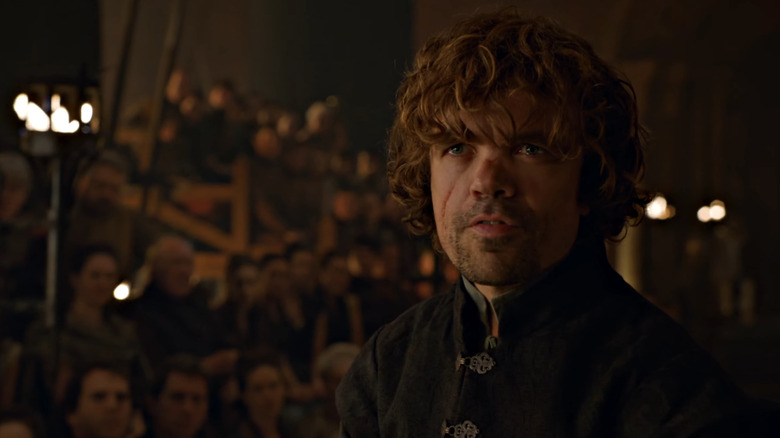
Tyrion Lannister (Peter Dinklage) is perhaps the best character in "Game of Thrones," but oddly, the show fumbles an interesting aspect of his story. In the books, we learn that a teenage Tyrion meets and falls in love with a woman named Tysha. All is well until Tywin (Charles Dance) breaks the news that Tysha is actually a prostitute Jaime (Nikolaj Coster-Waldau) hires as part of a cruel punishment meant to break Tyrion emotionally and shape his lifelong belief that no one can truly love him.
In "A Storm of Swords," Jaime eventually tells Tyrion the truth: Tysha was not a prostitute and did, in fact, love him — a revelation that shatters Tyrion and explains why he murders his pop on the loo.
In a baffling move, the show gives us Tysha's tragic backstory but never allows Jaime to reveal the truth to his brother. As far as the show's canon is concerned, Tysha really was a prostitute, and Tyrion's trauma is treated as tragic but never fully understood. It's a deeply confusing omission — particularly for book readers — and one that robs Tyrion's familial betrayal of its darkest and most compelling motivation.
The Faceless Men's True Endgame
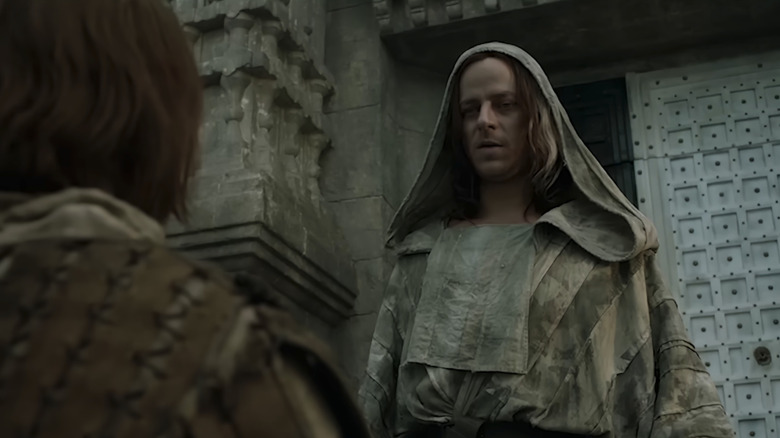
"Game of Thrones" spends quite a bit of time on the Faceless Men — a shadowy organization led by the enigmatic Jaqen H'ghar (Tom Wlaschiha) that helps shape Arya (Maisie Williams) into a deadly warrior over the course of multiple seasons.
Still, by the end of the series, viewers are left to decide whether these third-person-speaking killers truly matter to the story at all. The show never explains why the Faceless Men — an order supposedly devoted to neutrality and strict doctrine — take such a special interest in Arya to begin with.
Why does Jaqen repeatedly bend the rules for her? Why train someone so openly defiant of their core philosophy? Are Jaqen and the Many-Faced God even aware of the looming White Walker threat, or are they operating in complete narrative isolation?
Later seasons follow Arya as she trains in the Hall of Faces, a deeply unsettling locale. Its lack of backstory feels like a missed opportunity to delve deeper into the darker world lingering on the outskirts of Westeros. Instead, the Faceless Men are primarily used as a narrative shortcut to give Arya superpowers, and their purpose remains a frustrating mystery.
Jon Snow's Lineage
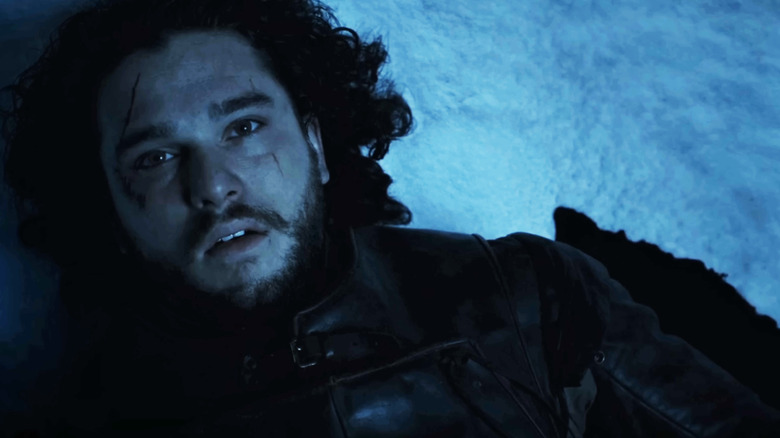
Jon Snow stands atop the list of fumbled "Game of Thrones" characters. Presented as the story's main protagonist, the bastard son of Ned Stark (Sean Bean) heads to The Wall in Season 1 and becomes a member of the Night's Watch. From there, he embarks on a powerful journey that culminates in his rise as a humble yet formidable leader against the Night King.
But that's not all. As it turns out, Jon is the son of Rhaegar Targaryen and Lyanna Stark and thus the rightful heir to the Iron Throne. In other words, he's important enough for the Lord of Light to resurrect after sustaining a fatal injury. His true lineage should give Jon even more weight as a character.
Except, it doesn't.
After learning the truth and returning from the dead, Jon doesn't pursue the Throne or meaningfully grapple with his identity. In fact, the revelation has little effect on his character and results in almost no political fallout. He learns the truth and then shrugs it off like an inconsequential piece of gossip.
On a personal level, Jon should be devastated. His entire life is built on a lie. Everything about his place in the world changes. And yet, absolutely nothing stems from this storyline, to the point that if the writers discarded it entirely, nothing in the show would have to change at all.
Why Did the White Walkers Ignore Craster?
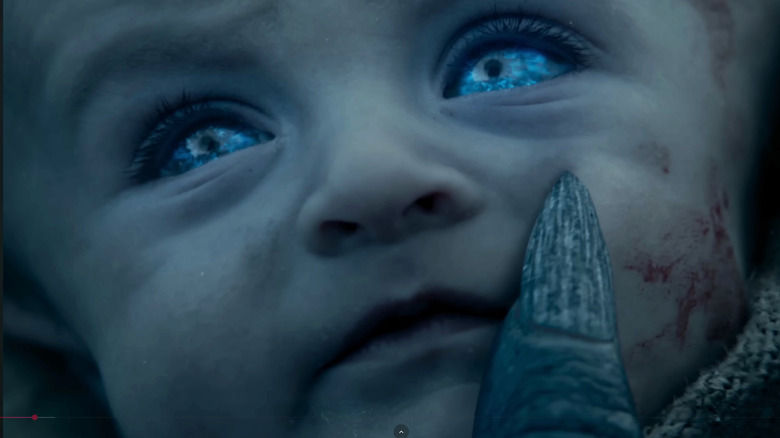
Early in "Game of Thrones," Jon Snow and the Night's Watch visit a man named Craster (Robert Pugh), a truly terrible human being living out in the boondocks. As the story progresses, we learn that Craster and his many wives have a deal with the Night King — their infant sons in exchange for protection from the White Walkers.
Why do the White Walkers need young, male infants? Are they reproducing, building an army, or preserving themselves? How long has this been happening? Are these children transformed into something akin to the Night King, or are they absorbed into the White Walker horde? And how did Craster establish this deal in the first place?
The show never answers any of these questions. In fact, this storyline vanishes altogether. We never learn the children's fate, and the practice has no impact on the final conflict. Craster's crimes don't meaningfully affect the story, and his death seemingly ends the practice without further consequence.
The White Walker Spiral Patterns
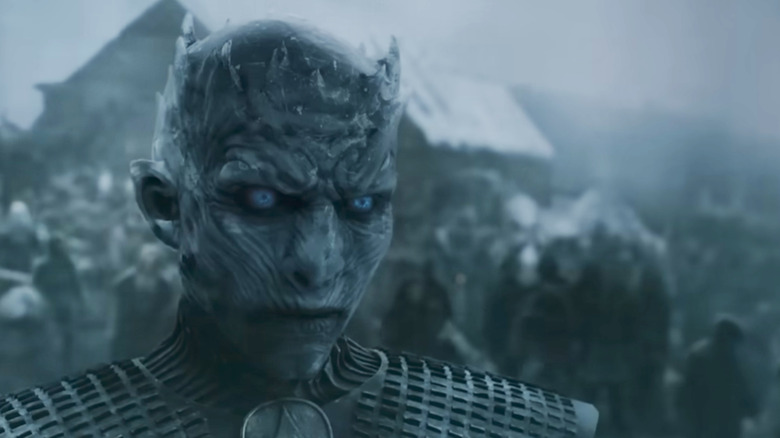
"Game of Thrones" opens with a scene that introduces the White Walkers' spiral pattern, a striking piece of symbology many viewers, at the time, assumed is significant. After all, these symbols appear across multiple seasons, are formed using dead horses or human bodies, and are initially designed by the Children of the Forest. In Season 6, we learn that these same Children of the Forest are responsible for creating the Night King. So, the big, dead, evil ruler is either carrying on the traditions of his makers or actively mocking them — the show never tells us.
Despite the emphasis placed on these strange patterns throughout the series, we never learn what they represent — whether they're religious, magical, cultural, or psychological — or why the White Walkers use them. No character ever deciphers them, and aside from a few brief mentions, they all but vanish into obscurity by Season 8 as yet another thinly explained piece of lore tied directly to the Night King.
The Political Stability of Bran's Rule
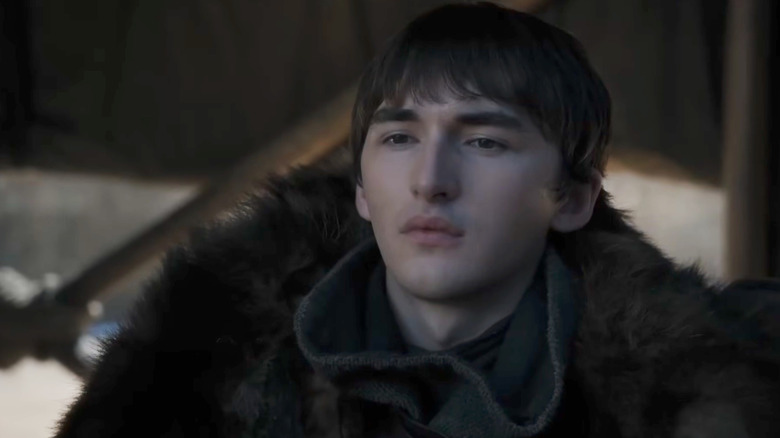
One of the most head-scratching creative decision on the show arrives with Bran's sudden ascension as ruler of Westeros. In the final episode, Tyrion proposes that the Stark child should sit atop the throne because he supposedly has "the best story." The problem is this decision comes after Daenerys (Emilia Clarke) has effectively nuked King's Landing with her dragon.
In earlier seasons, such an event would shatter the realm. Entire houses and kingdoms would scramble to seize power. Alliances would fracture. The legitimacy of any new ruler would be fiercely contested — especially one who bypasses centuries of succession rules. Instead, "Game of Thrones" barely acknowledges the political and social fallout of Dany's actions at all. A new Small Council assembles almost immediately, with Bronn (Jerome Flynn) inexplicably installed as Master of Coin. The citizens of King's Landing return to their routines without protest or revolt and quietly accept Bran's rule.
After eight seasons of war, betrayal, and bloodshed, the fate of the Seven Kingdoms is resolved through a surprisingly casual democratic vote that everyone accepts without objection. What changed? What happens when Bran dies? How does Bran rebuild King's Landing? And why would anyone accept a ruler who openly admits he no longer wants — or even understands — power?
The State of the Riverlands
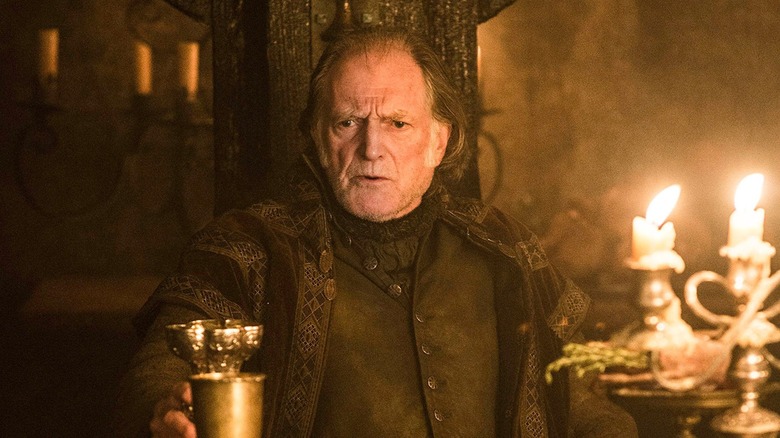
Remember Robb Stark (Richard Madden), the charismatic, fiercely passionate commander who takes up arms against the Lannisters in retaliation for his father's murder? Remember how he's forced into a dangerous pact with Walder Frey (David Bradley) to secure control of the Twins — a crucial crossing in the Riverlands that effectively shifts the tide of the war? And remember the consequences that follow when Robb breaks that oath and marries another woman? That choice culminates in his brutal murder at the Red Wedding and seals victory for the Lannisters.
Now fast-forward to Season 8. Arya Stark exacts her revenge by slaughtering every Frey at the Twins, and no one seems to care. The once-strategically vital stronghold is suddenly up for grabs, yet the show gives us no indication that anyone in the Seven Kingdoms scrambles to claim it.
Either another house quietly seizes control of the Riverlands off-screen, or the show forgot to fill in the gaps.
Quaithe's Prophecies to Daenerys
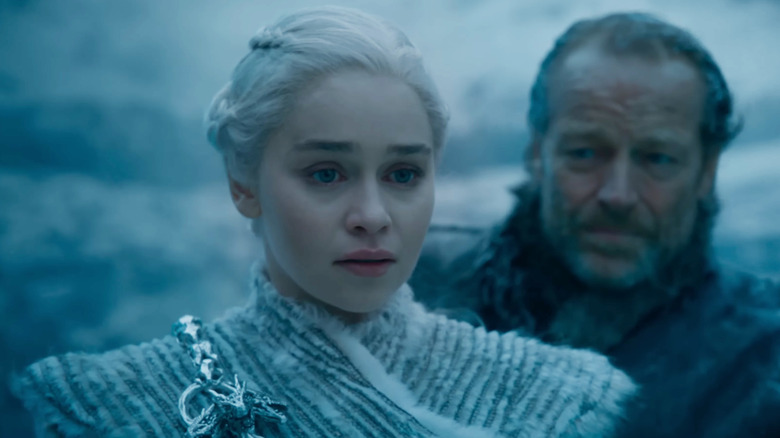
"Game of Thrones" Season 2 focuses on a series of prophecies relayed to Daenerys by a strange figure known as Quaithe (Laura Pradelska). She speaks in riddles and symbols, warns of deception and false allies, and frames Dany's journey as dangerous, cyclical, and tragic.
"To go north, you must journey south. To reach the West, you must go east," she says. "To touch the light, you must pass beneath the shadow."
Fans spent years speculating over Quaithe's warnings — most notably the "beware the perfumed seneschal" bit. Was she talking about Varys? Tyrion? Someone else entirely? In the end, viewers never received a definitive answer to any of the riddles.
Quaithe's prophecies are intentionally ambiguous, meaning you can retroactively map her words onto Daenerys' journey if you squint hard enough, or dismiss them as the ramblings of a masked weirdo. Both approaches are perfectly valid and will neither diminish nor enhance your understanding of "Game of Thrones."