

10 Most Rewatchable Episodes Of The Twilight Zone
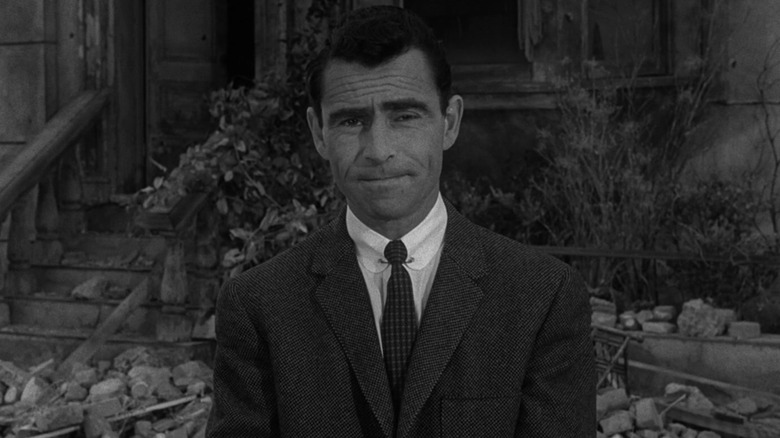
One of the best TV shows of the 1960s was "The Twilight Zone," created by Rod Serling and running for five seasons until 1964. The original series revolutionized the type of storytelling in the television medium, with creative standalone tales often punctuated by mind-blowing twist endings. The show inspired countless other sci-fi and fantasy anthology series, in addition to two revival series decades after the original "Twilight Zone" concluded. The unique world that Serling created led to some of the most memorable stories on television, many penned by prolific 20th century sci-fi writers.
While we've already ranked the best "Twilight Zone" episodes, this time we're looking at the ones best-suited for repeat viewings. This means episodes that are just excellent crafted and boast a rewatchability even for audiences who already know what the story's big twist is. And more than just focusing on the original black-and-white classic show, we're looking at the revivals that began in 1985 and 2019 too. Here are the 10 most rewatchable episodes of "The Twilight Zone" from across the franchise's various series.
Where Is Everybody?
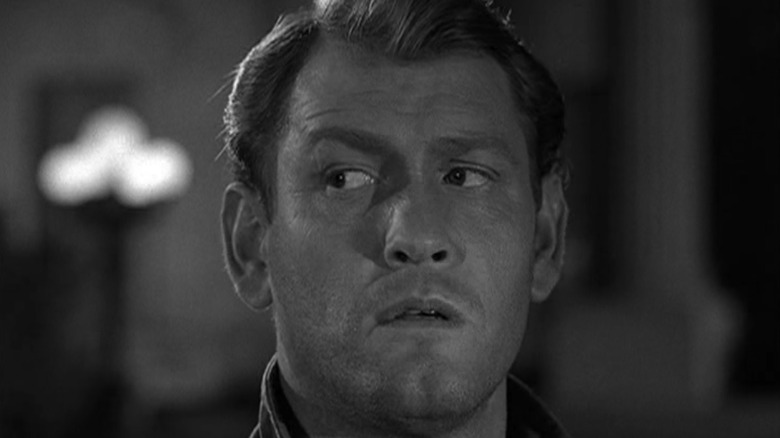
"Where Is Everybody?," the very first episode of "The Twilight Zone" to ever air, is also one of its best. The episode centers on an apparent drifter (Earl Holliman) suffering from amnesia, first seen walking along down a dirt road. The man comes across a diner and a town, but both are completely deserted, though he occasionally finds signs of recent activity. The prolonged isolation, completely devoid of any other human contact, takes a noticeable toll on the man as the truth behind his situation is gradually revealed.
There is a haunting quality that permeates throughout "Where Is Everybody?" which is maintained in subsequent viewings. Isolation and questions about self-identity were recurring themes in the original "Twilight Zone" and both are beautifully articulated here. The episode also effectively evokes a desolate atmosphere that holds up whenever viewers revisit the story with full knowledge of its twist. A pitch-perfect example why "The Twilight Zone" is one of the best TV shows streaming on Paramount+, "Where Is Everybody?" provides a strong start to the series.
Walking Distance
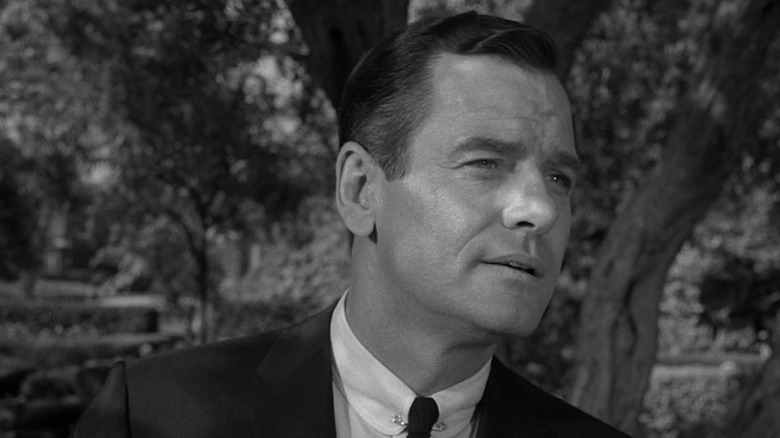
Not all "Twilight Zone" stories have to necessarily be dark and intense, with many showing a surprising amount of sentimental heart. This is exemplified by the series' fifth episode, "Walking Distance," which begins with 30-something business executive Martin Sloan (Gig Young) having his car serviced. With the service station coincidentally near Sloan's hometown, he decides to walk and visit his old neighborhood while he waits. To Martin's surprise, he is transported back to the town during his childhood, encountering the people he knew in his youth, though they don't recognize him as an adult.
One of the big reasons why "Walking Distance" is so consistently rewatchable is that the story doesn't rely on a big twist or other narrative surprises. Another reason is that the episode is just exceptionally well-made, serving as a wistful cautionary tale about getting lost in nostalgia rather than focusing on the present. Sentimental and heartfelt are odd qualities to ascribe to most "Twilight Zone" stories, but the episode earnestly brings both in full. "Walking Distance" represents "The Twilight Zone" at its gentlest, without compromising its usual quality, and the closest thing the show gets to a feel-good story.
Time Enough at Last
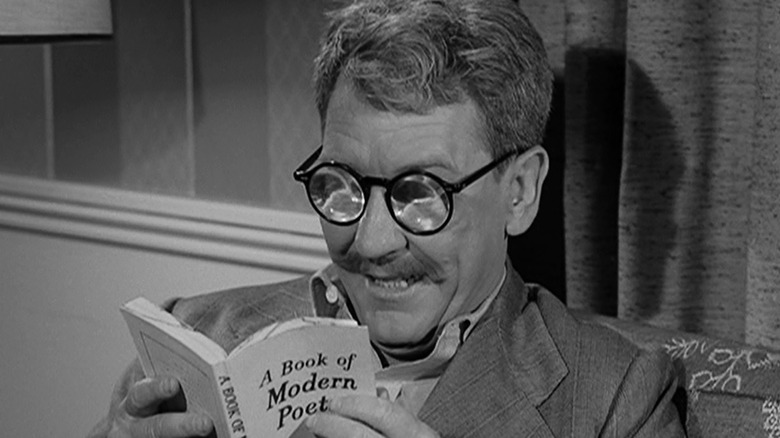
One of the most famous "Twilight Zone" episodes, "Time Enough at Last" stars Burgess Meredith as meek bookworm Henry Bemis. Ostracized by his boss and wife over how often and hyper-fixated he gets about reading, Henry reads in a bank vault during his lunch break to avoid interruptions. During this reading break, the rest of humanity is wiped out by a sudden nuclear war, with Henry apparently the last survivor on Earth. Initially falling into despair, Bemis realizes he can now read as much as he wants completely unfettered before tragedy strikes.
Of the major movie stars who appeared on "The Twilight Zone," Meredith is among the most prolific, guest-starring in three episodes. "Time Enough at Last" is easily the best of the bunch, elevated by a cruel irony that the show often tried to replicate but rarely matched. Even knowing what's coming for poor Henry Bemis, the episode is one of the most accessible for repeat viewings. A lot of that comes down to Meredith's performance, veering from comedically harried to triumphant and, ultimately, devastated while capturing what the show is all about.
The Hitch-Hiker
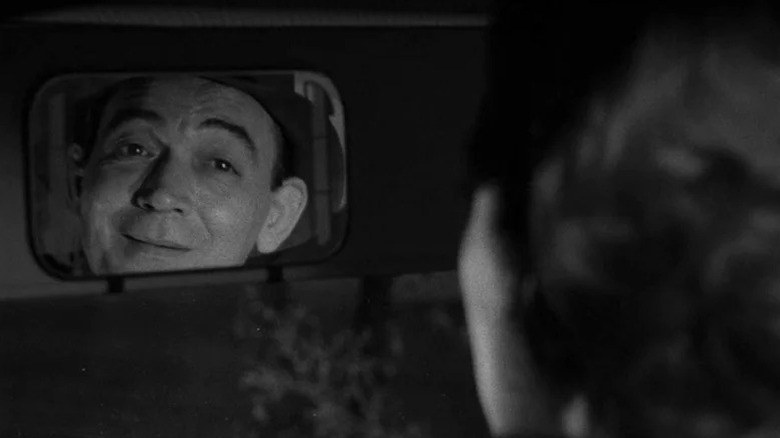
The 1960 episode "The Hitch-Hiker" features a cross-country tale following Nan Adams (Inger Stevens) on a trip from New York City to Los Angeles. After suffering a harrowing car accident while driving through Pennsylvania, Nan notices a scruffy hitchhiker (Leonard Strong) looking for a ride. No matter how far Nan progresses on her journey, the same hitchhiker appears on the road, steadily unnerving her every time he resurfaces. However, these reappearances are coupled with increasingly disturbing clues that something else may have happened during that car accident in Pennsylvania.
Even knowing Nan's fate and the true nature of its titular hitcher, "The Hitch-Hiker" is one of those episodes that benefits from a rewatch. Revisiting the episode has viewers check for clues before the story's big reveal and more time observing its two main characters. Stevens does an exceptional job at holding the audience's attention as the protagonist, fueling the paranoia and, ultimately, acceptance. Another standout episode from the original show's inaugural season, "The Hitch-Hiker" offers a gently macabre tale right in the "Twilight Zone's" wheelhouse.
Eye of the Beholder
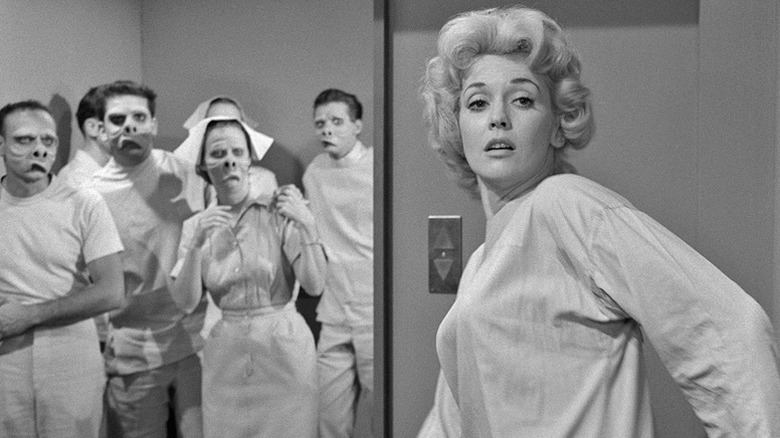
A highlight from the original "Twilight Zone's" second season is "Eye of the Beholder," written by Rod Serling himself. The episode has protagonist Jane Tyler (Maxine Stuart) repeatedly subject herself to surgery in an effort to physically fit in with the rest of her society. When her bandages are removed, Jane is revealed to be conventionally beautiful by human standards but not her grotesque peers. Because of this society's strict standards on physical appearance, Jane finds her continued presence in this community in doubt.
"Eye of the Beholder" is one of those "Twilight Zone" stories where its big twist has long become widely known by anyone with a cursory awareness of the show. But that doesn't stop the episode from being any less effective when revisited as a testament to Serling's writing. The story is a parable about the inflated importance society places on physical appearance, a message even more relevant now than it was in 1960. One of the best shows from the entire "Twilight Zone" franchise, "Eye of the Beholder" stands among Rod Serling's greatest work.
The Invaders
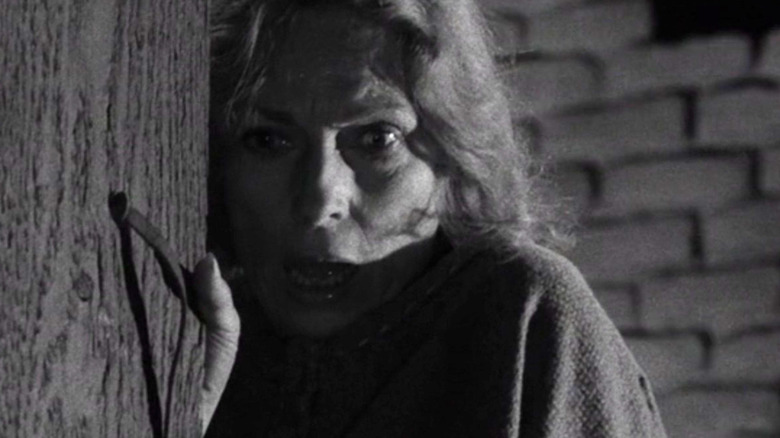
While a significant portion of "The Twilight Zone" wasn't focused on telling scary stories, when it did, it could get bone-chillingly creepy. A terrifying highlight is the second season episode "The Invaders," which centers on an unnamed woman (Agnes Moorehead) living alone in a small remote house. The woman is attacked by two pint-sized figures wearing spacesuits after they arrive at her home in a flying saucer. The lady becomes embroiled in a brutal struggle against the two otherworldly intruders to stay alive, fighting both of them to the death.
It's episodes like "The Invaders" that underscore why "The Twilight Zone" is one of the best horror shows of all time. The mounting desperation illustrated by Moorehead's performance really imbues the story with a growing unease that gives way to outright terror. The episode also features some of the most overt violence in the classic series, not stylishly staged but vicious and ugly in its execution. For any sci-fi horror aficionado, "The Invaders" is an episode to keep coming back to for additional viewings.
Nightmare at 20,000 Feet
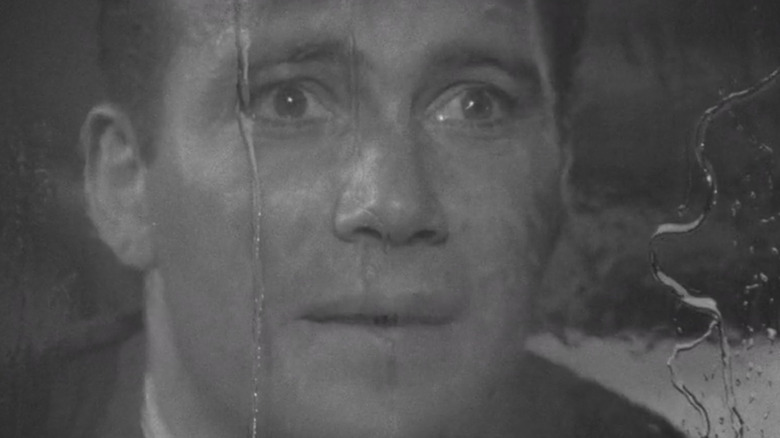
"Nightmare at 20,000 Feet" is another standout "Twilight Zone" episode written by Richard Matheson airing during the show's fifth and final season. William Shatner plays Robert Wilson, a man recovering from a severe nervous breakdown who takes a flight with his wife Julia (Christine White).
Robert begins seeing a gremlin on the airliner's wing tampering with its engines though it also hides whenever someone else looks out the window. With Julia, the other passengers, and the flight's crew doubting his sanity, Robert has to act on his own to stop the monster.
Not only is "Nightmare at 20,000 Feet" one of the most rewatchable "Twilight Zone" episodes, it's also one of the most revisited. The story has been reimagined by both the 1983 film "The Twilight Zone: The Movie" and the 2019 revival series. In the case of the latter retelling, the revival honors the original's legacy while adding modern twists to its allegory about the fear of flying. But, at the end of the day, accept no substitutes because the original "Nightmare at 20,000 Feet" is still the best version of the story and always worth rewatching.
An Occurrence at Owl Creek Bridge
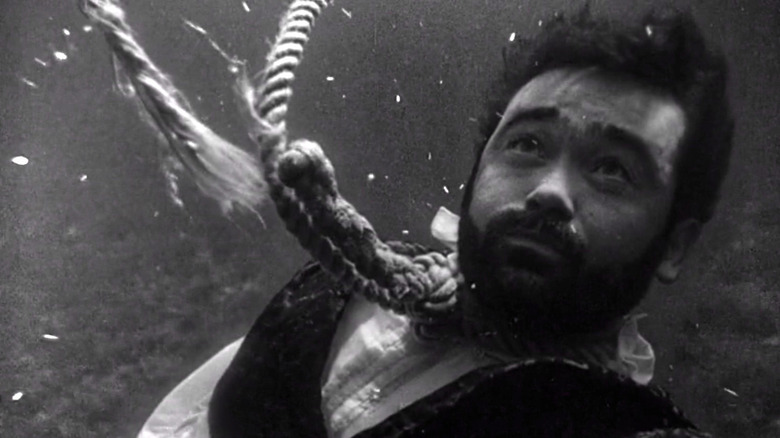
The final season of "The Twilight Zone" featured a French short film, 1962's " An Occurrence at Owl Creek Bridge," as one of its episodes. Set during the American Civil War, the story has civilian Peyton Farquhar (Roger Jacquet) sentenced to death by hanging by Union soldiers for tampering with a vital bridge. As he's hanged, the rope used for Peyton's noose seemingly breaks and he falls into the river below, fleeing from the troops. As Peyton nears his home and waiting family, the truth behind the incident and his journey comes to light.
While "An Occurrence at Owl Creek Bridge" narratively and tonally fits within the "Twilight Zone" ethos, it does feel like a standalone project because it originally was. Even with Rod Serling's usual narration added to the beginning and ending of the episode, the cinematography is markedly different from the rest of the series. This status as a stylistic outlier makes every viewing of the episode a distinct treat, separate from the standard fare couched around it in the fifth season. A moody and melancholic period piece story, "An Occurrence at Owl Creek Bridge" is always worth revisiting, even if its big twist is telegraphed clearly during a first viewing.
Shatterday/A Little Peace and Quiet
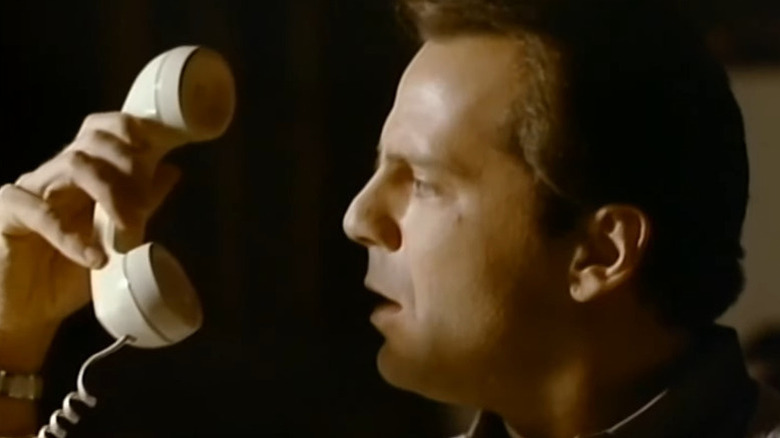
The 1985 "Twilight Zone" revival doesn't get as much appreciation and recognition it deserves for keeping the franchise's legacy alive. An interesting thing about this particular series is that it sometimes featured multiple short stories in a single episode. This format was featured in the series premiere, which included the short stories "Shatterday" and "A Little Peace and Quiet," both directed by prolific horror filmmaker Wes Craven. The first story features protagonist Peter Novins (Bruce Willis) encountering his doppelganger while the other has Penny (Melinda Dillon) gain the ability to freeze time.
The '80s "Twilight Zone" premiere features two very different kinds of stories, an externalized tale of literal self-reflection and one capitalizing on resurgent Cold War anxiety. These tales complement each other well, with "A Little Peace and Quiet" being the especially rewatchable story of the two. In terms of "Shatterday," it's always entertaining seeing Bruce Willis on TV, with the actor still years away from becoming a bona fide movie star. Showcasing how the first "Twilight Zone" revival is a TV show steeped in '80s nostalgia, the premiere episode set a high bar for the three-season series.
Blurryman
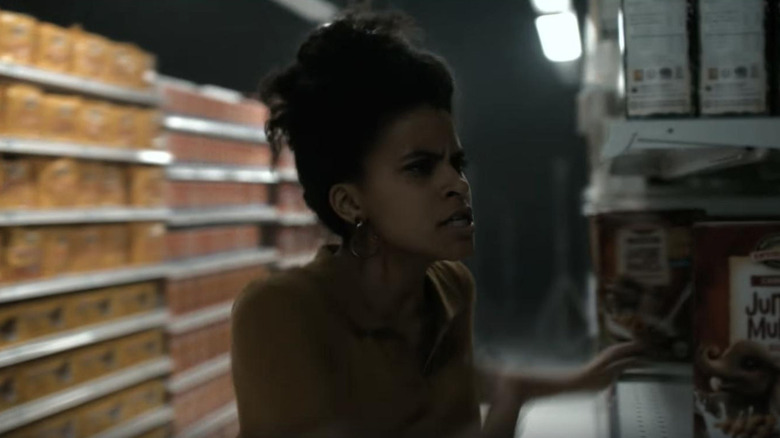
After pivoting from television comedy to silver screen horror, filmmaker Jordan Peele developed and hosted a revival of "The Twilight Zone" in 2019. The first season finale was a gleefully fourth wall-breaking episode titled "Blurryman," centered on the apparent production of the revival series. The story's protagonist is Sophie Gelson (Zazie Beetz), a screenwriter on the 21st century version of the show and a lifelong "Twilight Zone" fan. While working on the revival, Sophie is seemingly stalked by a blurred figure culminating in a fateful showdown.
Though the 2019 "Twilight Zone" relaunch was hit or miss, the first season finale is a story that only it could tell. With everyone from Seth Rogen to Jordan Peele playing fictionalized versions of themselves, "Blurryman" is a meta commentary on the franchise's legacy. That provides it with a sense of fun in a way the other episodes in the revival never quite achieved. "The Twilight Zone" didn't return for a third outing, only lasting one more season beyond "Blurryman." Still, as this episode demonstrates, the reboot had its superb moments.