

10 Best Twilight Zone Episodes Not Written By Creator Rod Serling
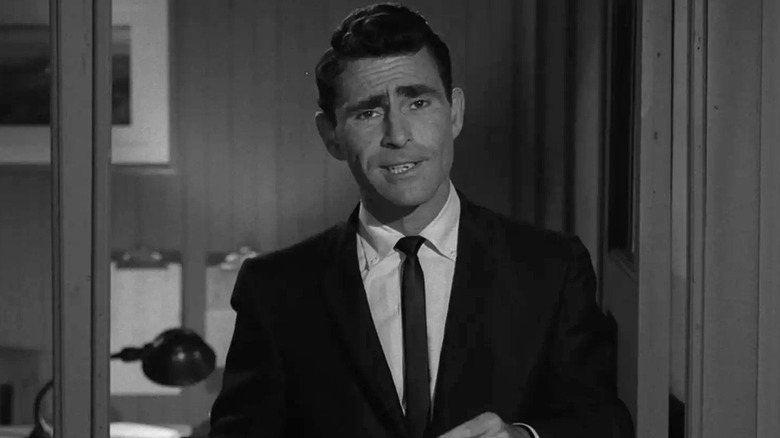
As an anthology series that defied genre constraints, exploring the possibilities of imagination, "The Twilight Zone" is one of the best TV shows of the 1960s. Created by Rod Serling, the original version of the show ran from 1959 to 1964, with each episode featuring a standalone story. In addition to hosting the series, Serling wrote 92 of the show's 156 episodes, including many of the best "Twilight Zone" episodes of all time. But numerous installments not written by Serling maintain the show's legacy of thought-provoking fantasy, horror, and science fiction tales.
With that in mind, we're highlighting the memorable "Twilight Zone" episodes not written by Serling, worthy of their own acclaim. For the sake of fairness, this list only contains stories from the original series as Serling had passed away years before its subsequent television revivals. These entries all retain the show's reputation for surprising twists and solid, self-contained storytelling that makes the series endure with audiences decades later. These are the 10 best "Twilight Zone" episodes not written by creator Rod Serling from the classic original series.
Perchance to Dream
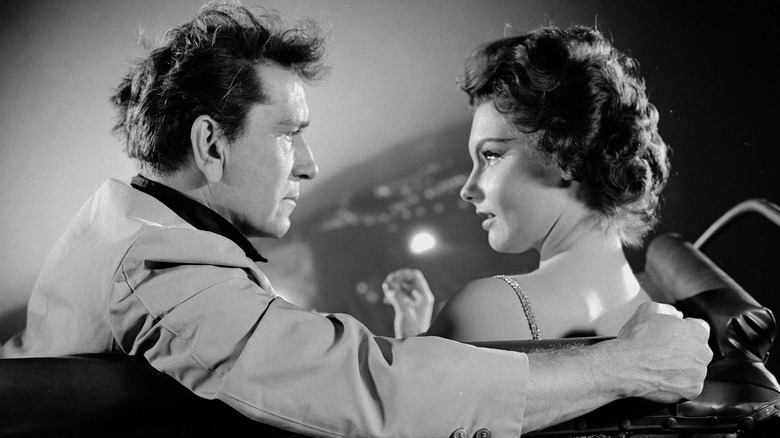
The first "Twilight Zone" episode to air that was not written by Serling is the first season installment "Perchance to Dream." Penned by Charles Beaumont, the story opens with Edward Hall (Richard Conte) coming into the office of psychiatrist Eliot Rathmann (John Larch) in desperate need of help. Hall is having vivid dreams of being stalked by a sinister woman named Maya (Suzanne Lloyd) who he believes is trying to taunt him into suffering a fatal heart attack. Convinced that Maya will kill him the next time he falls asleep, Hall comes to Rathmann only to find that his terrifying stalker isn't done with him.
"Perchance to Dream" is a moody waking nightmare earning its place among the scariest episodes of the classic series. There is a quickly escalating sense of dread driving the story forward, helping "The Twilight Zone" gain recognition as the best horror anthology TV show of all time. That unease is expertly delivered by Conte's performance, who grows increasingly frantic as he's unable to evade his dream stalker. Beaumont went on to write 22 episodes of "The Twilight Zone" in all, with "Perchance to Dream" still standing as one of his best.
The Last Flight
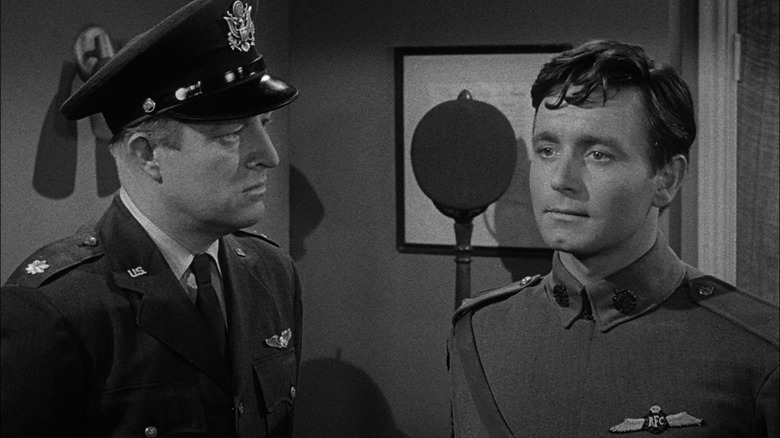
Another prolific writer who worked on "The Twilight Zone" is Richard Matheson, who penned 14 episodes while two of his short stories were adapted for the show by Serling. The first series episode that Matheson wrote himself for the series was Season 1's "The Last Flight," which has World War I pilot Terry Decker (Kenneth Haig) transported to 1959. As Decker learns that one of his presumed dead squadmates went on to have a heroic career during World War II, he realizes his own fate. However, this is complicated by the time-displaced pilot being held in military custody by the skeptical Major Wilson (Simon Scott).
Matheson went on to pen other incredible stories for "The Twilight Zone," but "The Last Flight" is a tremendous start. The episode's time-traveling military premise feels reminiscent of the narratively similar 1980 movie "The Final Countdown," albeit with a much tighter scope. Instead, Matheson's story is more of a locked room drama, with its time traveler trying to plead his case to his disbelieving detainers until the truth is revealed. As his tenure on the show continued, Matheson grew more ambitious, but the human element prominent in "The Last Flight" remained an underlying quality in his work.
Nick of Time
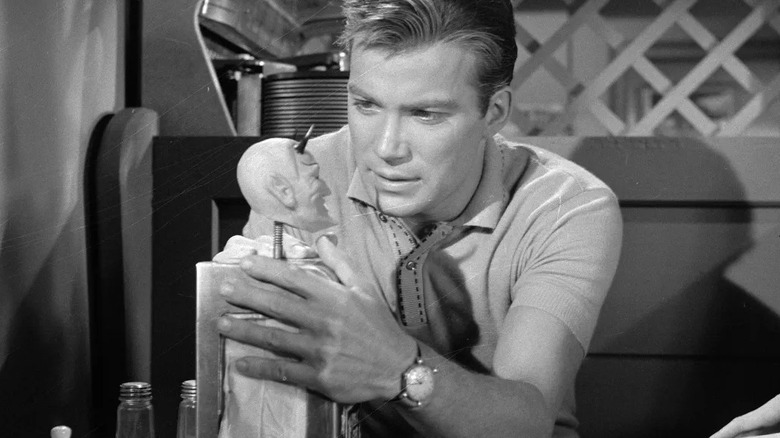
Several major movie stars appeared in "The Twilight Zone," including William Shatner, who guest-starred in two episodes that happened to be written by Richard Matheson. The first of these is "Nick of Time," which follows married couple Don Carter (Shatner) and his wife Pat (Patricia Breslin), who stop at an Ohio town for car repairs. While their car is being worked on, the pair wait in a diner with a fortune teller machine whose predictions are frighteningly accurate. Don becomes obsessed with relying on the machine to learn his future as Pat tries to talk sense into her husband.
Matheson excels at stories involving people overcome by anxieties confronted by phenomena beyond conventional understanding. Those qualities are visible throughout "Nick of Time," with the second season episode starting out innocently enough before dialing up the paranormal. Compared to his iconic role as the consistently confident Captain Kirk, Shatner offers a much more vulnerable and off-balance performance here, selling Don's desperation well. Working just as well as a marital drama as a creepy meditation on humanity's obsession with controlling their fate, "Nick of Time" is a great low-key Matheson yarn.
The Invaders
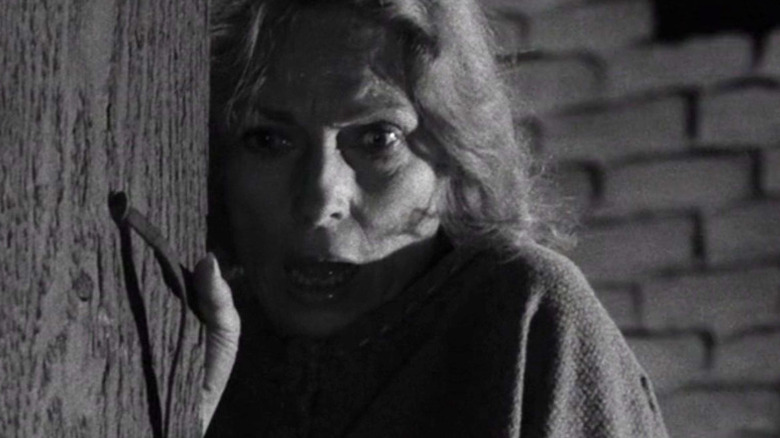
Season 2's "The Invaders" is another installment written by Richard Matheson and stands as one of the scariest stories in the series. The episode centers on an unnamed woman (Agnes Moorehead) living alone in a remote home when she's terrorized by strange, unwanted visitors. Arriving in a flying saucer, these otherworldly pint-sized beings wear pressurized spacesuits and wield futuristic weapons, quickly turning hostile against the woman. She finds herself in a brutal fight for her life as the titular invaders do everything they can to kill her.
Almost entirely devoid of dialogue, "The Invaders" offers a viciously focused story that's as terrifying as anything Serling ever wrote for "The Twilight Zone." Moorehead gives one of the best performances of her prolific career and, as the only actor seen on-screen, expertly does the story's heavy lifting. This tight narrative focus makes the story's plot twist all the more effective, revealed just as the violent tension finally explodes like a party popper. One of the best episodes in the entire series, "The Invaders" is Matheson's locked cabin masterpiece perfectly fitting in the show's wider ethos.
The Grave
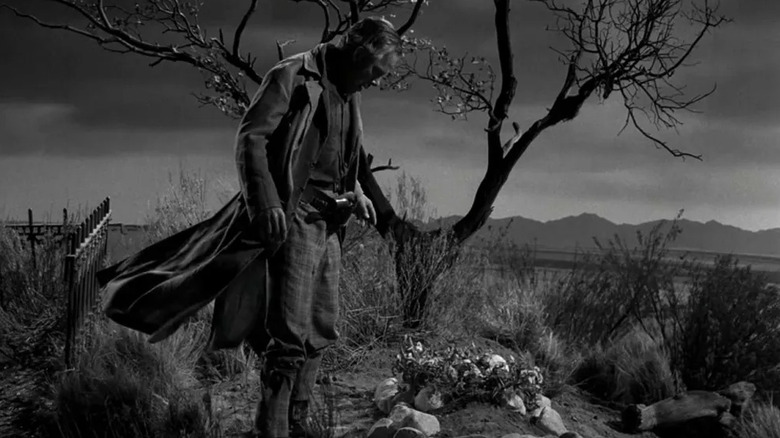
Montgomery Pittman has the rare distinction of both writing and directing for "The Twilight Zone," a creative feat even Rod Serling never accomplished on the show. The most notable instance of Pittman pulling double duty behind the camera was for the third season episode "The Grave." Set in the Wild West, the story stars Lee Marvin as gunslinger Conny Miller who failed to stop the outlaw Pinto Sykes (Dick Geary) he was hired to confront. To prove that he isn't a coward, Miller agrees to visit Sykes' fresh grave by himself in the dead of night, only for terror to ensue.
With its Western trappings, "The Grave" certainly stands out compared to more contemporary-set "Twilight Zone" episodes but within the show's broader themes. Including Marvin, the installment features Western genre mainstays Strother Martin and Lee Van Cleef, with all three actors appearing in "The Man Who Shot Liberty Valance" the following year. The graveyard setting all underscores the story's spooky qualities, made all the more evident with the episode's closing twist. Confidently written and directed by Pittman, "The Grave" is an atmospheric period piece favorite in the original series.
Nothing in the Dark
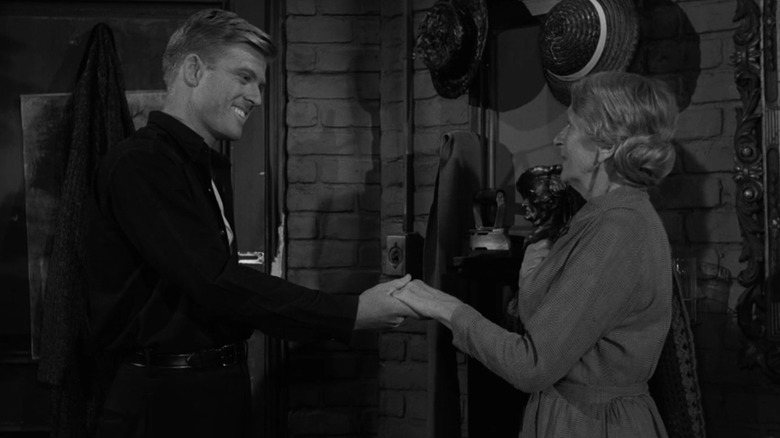
Another third season highlight is "Nothing in the Dark," which was written by George Clayton Johnson, who penned several episodes for the original series. The story centers on elderly woman Wanda Dunn (Gladys Cooper), who lives a withdrawn existence in pathological fear of death. Wanda reluctantly agrees to help out wounded police officer Harold Beldon (Robert Redford) when he happens to show up at her home. However, as Wanda assists in Harold's recovery, she realizes that death may be much closer than she anticipated.
Over 60 years later, Robert Redford's "Twilight Zone" episode is still a must-watch and a highlight from Season 3. Death's identity is telegraphed relatively early on but the actual reveal still packs a punch for viewers in the know. True to Redford's on-screen persona, he plays his otherworldly role with an easygoing charm that sells the twist and ends the story on a sentimental note. The late, great Redford was years away from silver screen immortality, but strong evidence of his star power was evident in "The Twilight Zone."
Nightmare at 20,000 Feet
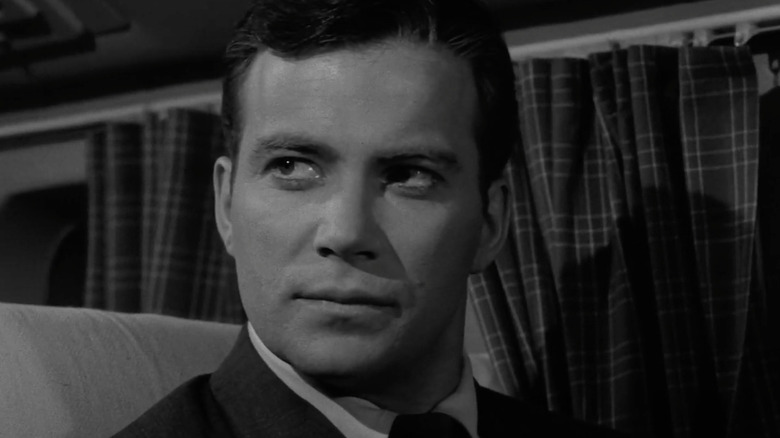
One of the most iconic "Twilight Zone" episodes not written by Serling is the fifth season installment "Nightmare at 20,000 Feet." Another classic by Matheson, the story follows Robert Wilson (William Shatner), a man taking a flight after recently enduring a severe mental breakdown. In the middle of the flight, Robert notices a large gremlin tampering with the plane's engines as it flies through a storm. With no one believing his outrageous claims, Robert desperately searches for a way to stop the gremlin before he can crash the plane.
"Nightmare at 20,000 Feet" is one of the most rewatchable episodes of "The Twilight Zone," mixing mounting suspense with a memorable pre-"Star Trek" performance from Shatner. The back-and-forth dynamic of Shatner's character increasingly distressed as he witnesses the aerial sabotage fuels the entire story. The episode also waits until its final minutes to confirm whether this supernatural sighting is to be believed, as only "The Twilight Zone" can pull off. Revisited for both the 1983 movie and the 2019 revival series, the original "Nightmare at 20,000 Feet" is still the best version of the story.
Living Doll
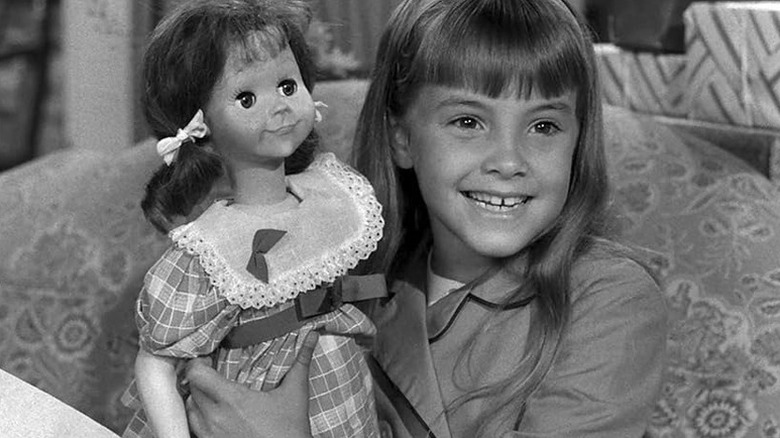
Among the most outright frightening episodes of "The Twilight Zone" is the fifth season tale "Living Doll," ghostwritten by Jerry Sohl when Charles Beaumont had taken gravely ill. Abusive Erich Streator (Telly Savalas) becomes infuriated when his stepdaughter Christie (Tracy Stratford) receives a Talking Tina (June Foray) doll. As Erich's treatment of Christie worsens, Tina begins to threaten him in private, vocally vowing to kill him and he tries to dispose of the doll. Erich contemplates whether he's hallucinating and grows more desperate as he tries to destroy Tina only for the toy's threats to continue.
"Living Doll" really is one of the most unsettling stories that the original "Twilight Zone" ever did and certainly the creepiest written by Sohl. All at once, Savalas is playing a bad man, but one that the audience can't help some sympathy for as his attempts to destroy the murderous toy invariably fail. By the episode's closing scenes, these lethal threats finally come to a head in a terrifying climax and haunting final denouement. If there are any doubts about whether Serling's series should be considered a horror show, "Living Doll" makes that distinction clear.
Night Call
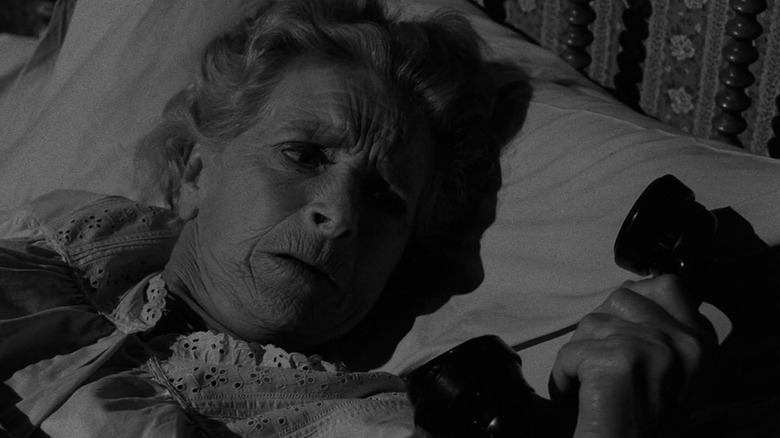
One of the last episodes Richard Matheson wrote for the original "Twilight Zone" was the fifth season story "Night Call." The episode revolves around paraplegic elderly woman Elva Keene (Gladys Cooper) who lives alone and begins receiving disturbing phone calls. Keene eventually has the source of the calls traced, with the caller being her long-dead fiancé Brian Douglas calling from the local graveyard. However, as Keene realizes the supernatural nature of this ongoing conversation, she finds herself inadvertently losing Douglas a second time.
Matheson works well when he keeps his characters isolated, fending for themselves in the face of the paranormal unknown. This is certainly true of "Night Call," which is all about loneliness and helplessness in one's twilight years, coupled with unresolved regret and loss. As with Agnes Moorehead in Matheson's "The Invaders," Gladys Cooper does phenomenal work carrying the bulk of the drama and suspense in "Night Call." Another tightly focused chiller from Richard Matheson, "Night Call" highlights his strong knack for doing more with less in terms of smaller-scaled stories.
An Occurrence at Owl Creek Bridge
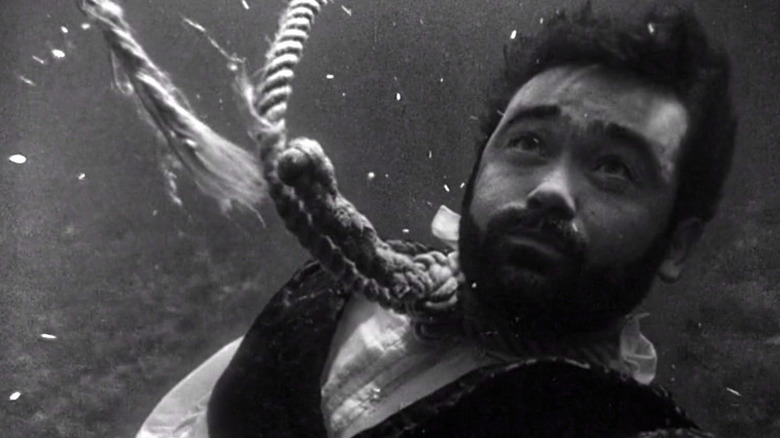
As Serling announces in its opening narration, the fifth season episode "An Occurrence at Owl Creek Bridge" wasn't even produced for "The Twilight Zone." Instead, the story is a short film adaptation of an 1890 story of the same name by Ambrose Bierce set during the American Civil War. The episode follows Peyton Farquhar (Roger Jacquet), who is sentenced to hang by the Union Army for tampering with a strategic bridge. Farquhar's execution seemingly fails and he flees home, only for the true circumstances of the incident to be revealed.
"An Occurrence at Owl Creek Bridge" was made as a French short movie that won the Academy Award for Best Live-Action Short Film in 1963. The adaptation was written and directed by French filmmaker Robert Enrico, who instills a foreboding atmosphere into the Civil War story. The movie's themes and presentation fit right within the sensibilities of "The Twilight Zone," making its repurposing for the show minimal. One the last highlights of the classic series, "An Occurrence at Owl Creek Bridge" definitely feels distinct from other episodes, but not distractingly so.