

Pluribus Had To Make A Major Change To Rhea Seehorn's Carol Early In Season 1

"Pluribus" creator Vince Gilligan and star Rhea Seehorn were determined to make Carol Sturka one of the most fascinating characters on TV. Overcome with grief when an alien hive-mind virus takes over the world and kills her wife, Carol reluctantly strives to save the human race while dealing with depression and suicidal ideation. The sci-fi Apple TV show's melancholy plot initially posed a problem for Gilligan and Seehorn, who learned that they needed to show a side of Carol beyond her despair.
During a conversation with fellow "Better Call Saul" alum Bob Odenkirk for Interview magazine, Seehorn described the process of crafting Carol's "Pluribus" Season 1 arc with Gilligan. "Vince told me from the beginning that, 'I'm not sure exactly what the show is,'" she recalled. "... There were things I knew we were going to discover together, and we did. And one of the biggest things about my character was her partner dying, and her grief was very important. It's a present burden through the whole show, constantly hovering. And my character was almost suicidal to a degree that Vince and I realized we had to pull a back a bit, because where do you go from there?"
Vince Gilligan and Rhea Seehorn shaped Carol's journey
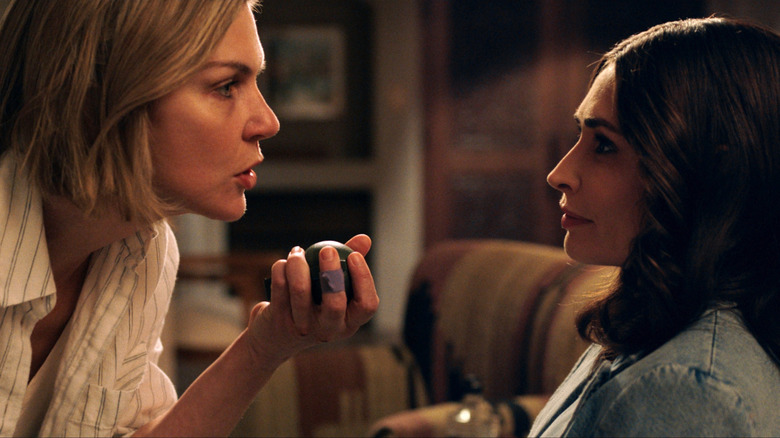
Amid the darkly comedic tone of "Pluribus," Gilligan and Seehorn decided to illustrate Carol's resilience in the face of such dreadful circumstances. Speaking with The Hollywood Reporter, Seehorn discussed the scene in Episode 3 when Carol receives a live grenade from Zosia (Karolina Wydra) and pulls the pin.
"We needed the character ... to keep getting up off the floor," she said. "But what's compelling her to get up off the floor if she's like, 'I'm done.' So we talked about withholding that because we needed somewhere to go later, and then we see that [ideation] when we get into episode seven's isolation stuff."
The moment in "Pluribus" Season 1, Episode 7, when a firework narrowly misses Carol's head was a pivotal scene for showcasing her perseverance — even though it almost seems like a passive suicide attempt. "It frightened her that she didn't even care if that rocket might hit her in the face," Seehorn explained. "That's the glimmer of hope. It wasn't, 'I do want to die.' It's, 'I am losing my care for even my own survival and that's a problem.'"