

10 Best Shows Set In The Future, Ranked
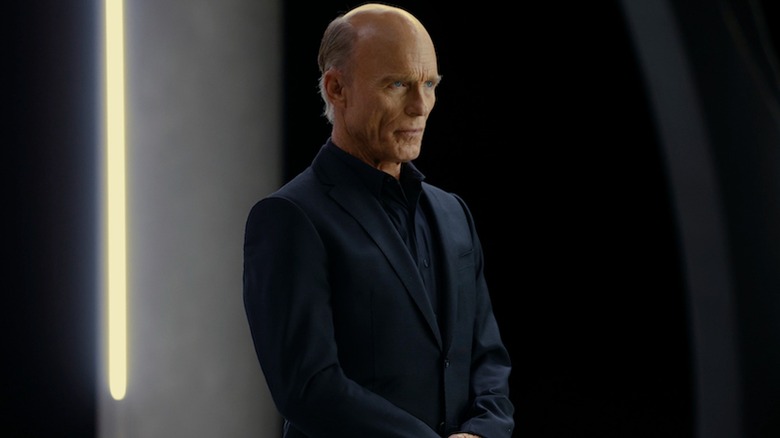
For many television series, the future opens the door to entirely new storytelling possibilities. Freed from the limitations of the present day, writers can imagine new technologies and expansive worlds that operate by entirely different rules. As a result, future-set shows often deliver some of television's most imaginative and ambitious storytelling.
From post-apocalyptic nightmares to idealistic intergalactic peace-keeping missions, the shows on this list run the gamut in terms of tone, largely depending on how horrific their vision of the future turns out to be. But whether their vision of tomorrow is optimistic or bleak, each program can be depended on to be creative, thought-provoking, and compulsively watchable. So if you're looking for an escape from the sheer chaos of the present day, take refuge in these shows set in the years to come.
10. Fallout
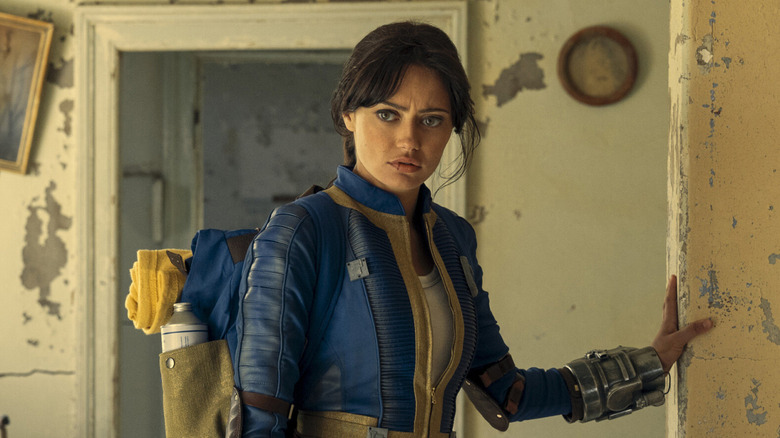
In the world of pop culture adaptations, comic books are out, and video games are in. In 2024, Amazon Prime Video brought audiences a small-screen version of the hit video game franchise, "Fallout," which takes place in a post-apocalyptic landscape. It stars Ella Purnell as Lucy MacLean, a sheltered young woman who has spent her entire life in one of society's many vaults, where the remnants of humanity have survived after a nuclear war. (They sound fine and dandy, but they're much darker than they seem, trust us.) Its depiction of life after catastrophic war offers an incredibly grim vision of the future, but one that feels all too plausible.
When she ventures out into the real world for the first time, Lucy is confronted with all manner of threats, from amoral criminals to mutated quasi-humans. But despite these various obstacles — some more horrifying than others — she maintains a positive, can-do attitude that sees her team up with the much more cynical Ghoul (a noseless Walton Goggins). Although the first season remains the stronger showcase for the series' inventive world-building, "Fallout" is a stylish adaptation that has definitely done justice to its video game origins, delivering a compelling vision of a future shaped by humanity's worst impulses while remaining faithful to a beloved gaming property.
9. The Jetsons
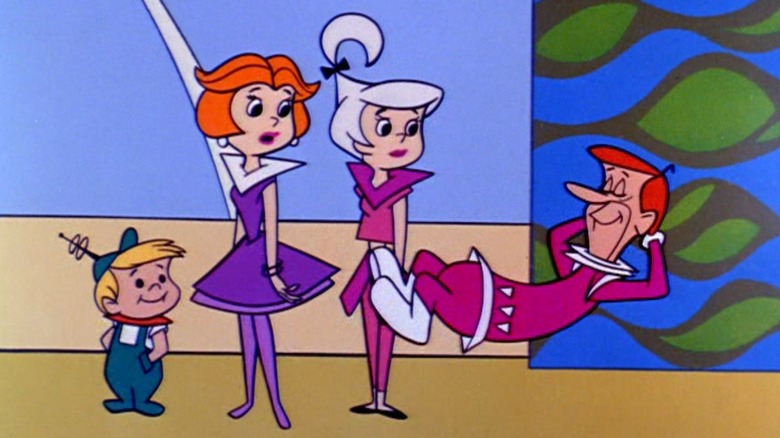
One of the classic Hanna-Barbera family sitcoms, "The Jetsons" takes the framework of their biggest hit, the prehistoric "The Flintstones," and pushes it into a 1960s vision of the atomic-era future. It revolves around George Jetson and his family, who live in the bustling landscape of Orbit City. Although "The Jetsons" features the traditional nuclear family expected on mid-20th century television, it has plenty of Space Age flourishes that make it feel fresh and exciting. The futuristic setting is its main selling point, from the design elements of the outfits to the thrilling transportation options available. Future tech has rarely been as unabashedly fun as what we see in "The Jetsons."
Unlike "The Flintstones," "The Jetsons" wasn't an instant success among audiences, even though it holds the honor of being ABC's first series broadcast in color. In fact, it only got one season during the 1960s before going off the air. But it found a new life in syndication and became so popular that more seasons were commissioned in the 1980s — an interesting twist of fate considering that it was then far removed from the space fad that made it a natural fit for an earlier decade. Since then, the show has thrived in reruns, and even viewers who grew up well after it originally aired are familiar with its catchy theme song introducing the members of the Jetson family.
8. Westworld
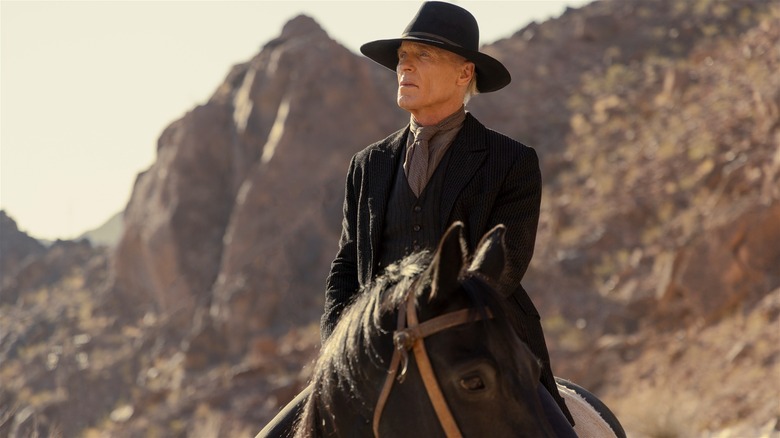
At first, it's hard to tell that "Westworld" is set in the future. After all, by all appearances, it takes place in a small town in the Old West. But that's just window dressing, friends. Westworld is actually a twisted adult theme park, where an approximation of a boom town has been built and populated with robots playing all of the characters, from the farmer's daughter to the charming outlaw. There, visitors are free to fulfill all of their Western-themed fantasies, from joining a posse to ... well, some things a little darker. In this vision of the future, humanity has used its technological advancements in pursuit of its own depravity. Surprise, surprise.
But to what extent do the robots of Westworld have minds of their own? Over the course of four seasons, "Westworld" put these mechanical beings front and center, showcasing their efforts to take control of their own lives. In doing so, the series gradually revealed a much larger futurescape of which the Westworld theme park is only a small part. Although "Westworld" becomes less compelling the longer it runs — and the more the creators attempt to outsmart the audience — the first season is nigh-on perfect.
7. Foundation
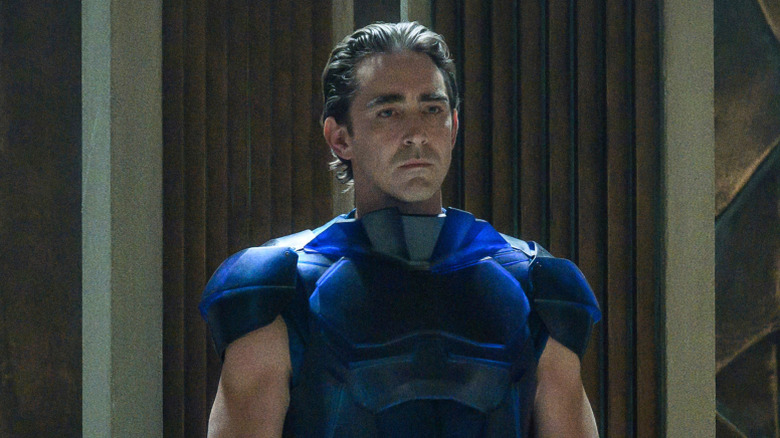
"Foundation" was dreamed up by Isaac Asimov, so it kind of goes without saying that it's a science-fiction classic, a book series that was often considered unadaptable until the fine folks at Apple TV gave it a try. A sprawling interstellar epic, "Foundation" follows disparate plotlines across a future where humanity has spread throughout the galaxy. At the center of the Empire are three rulers, Brother Dawn (Cassian Bilton), Brother Day (Lee Pace), and Brother Dusk (Terrence Mann), all clones of the initial Emperor Cleon, representing him at three different ages.
But their dynasty is well-worn by this point, and the cracks in their facade are beginning to show. Meanwhile, a group of scientists and explorers are exiled to the remote planet of Terminus, which psychohistorian Hari Seldon (Jared Harris) believes holds the key to humanity's future. Ambitious yet surprisingly accessible to audiences who may not normally gravitate toward hard science fiction, "Foundation" combines big ideas and stunning world-building, making it a must-watch on Apple TV.
6. Black Mirror
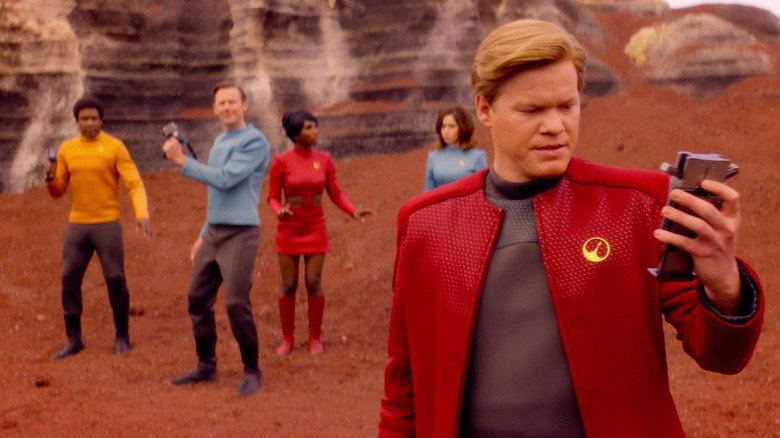
To be fair, "Black Mirror" is set in the near future rather than some unrecognizable futurescape where people are teleporting to work on another planet. But in a lot of ways, that makes it all the more unsettling, as it showcases the insidious ways that technology — some unnervingly plausible — can turn our lives into a horror movie. From stories that envision a digital afterlife to thrillers that capture the real-life terrors of social media gone awry, the anthology format of "Black Mirror" gives it carte blanche to tackle pretty much any tech-related anxiety.
Additionally, because virtually every episode is a self-contained story, "Black Mirror" has been able to attract top-tier talent who might not otherwise be able to commit themselves to a television series. In that arena as well, "Black Mirror" doesn't disappoint — actors like Jon Hamm, Jesse Plemons, Domhnall Gleeson, and Daniel Kaluuya do some of their best work here, making "Black Mirror" one of the best anthology series on television.
5. The Expanse
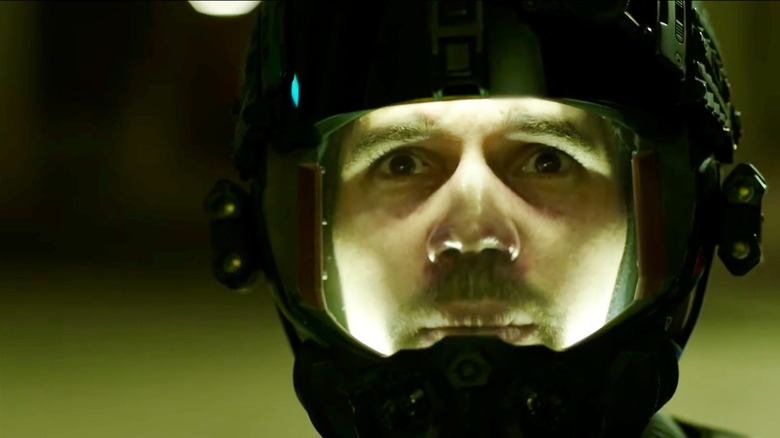
When we look far enough into the future, we have to wonder if Earth will remain humanity's only home, or if we'll eventually reach out into the stars. "The Expanse," adapted from a book series by James S.A. Corey, envisions a future where space travel has advanced enough for humans to not just reach other planets, but fully colonize the solar system. Alas, while our technology has improved by leaps and bounds, our penchant for political corruption remains intact.
"The Expanse" revolves around a crew of outcasts who uncover a conspiracy that threatens to destroy the delicate, wary balance of power between the United Nations of Earth and Luna, the Martian Congressional Republic, and the Outer Planets Alliance. Running for six seasons, first on Syfy, then on Amazon Prime Video, "The Expanse" gives us a look at a future that blends thrilling space adventure with political intrigue.
4. Scavengers Reign
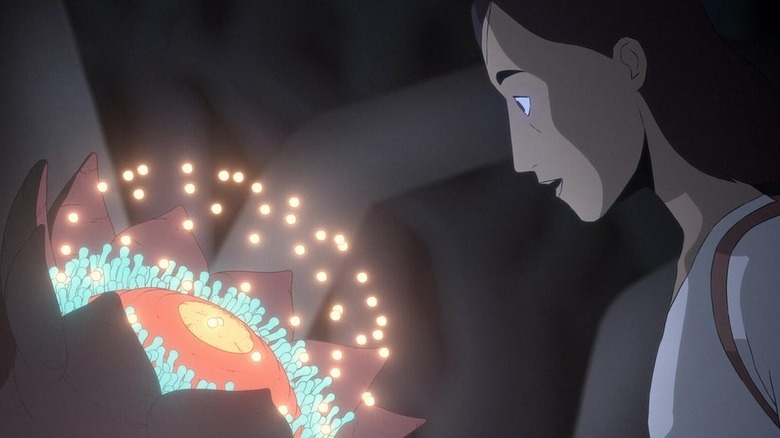
"Scavengers Reign" stands out from the competition thanks to its sheer sense of imagination. In a lot of science fiction series, you start to see patterns in the way that writers approach futuristic tech and alien planets — not so in "Scavengers Reign," which creates a world so endlessly creative and unique that it feels almost like a Willy Wonka-type mind dreamt it all up. From the lifeforms the characters encounter to the thoughtful logic behind their biology, "Scavengers Reign" presents something fully-formed in its execution.
Set in a futuristic landscape, "Scavengers Reign" follows the trials and tribulations of a crew of space travelers who have crash-landed on a beautiful, mysterious, yet foreboding planet. It's alive in every sense of the word, and as the newcomers attempt to survive, they'll be molded by the strange alien life in a thousand different ways. Despite earning praise from critics and audiences alike, "Scavengers Reign" failed to win over network executives, and was canceled after just one season. Netflix swooped in to pick up the rights to the series, though they ultimately opted not to renew it either. But even if streamers are fumbling the bag, we can still see the vision of "Scavengers Reign" as something truly special.
3. Star Trek: The Original Series
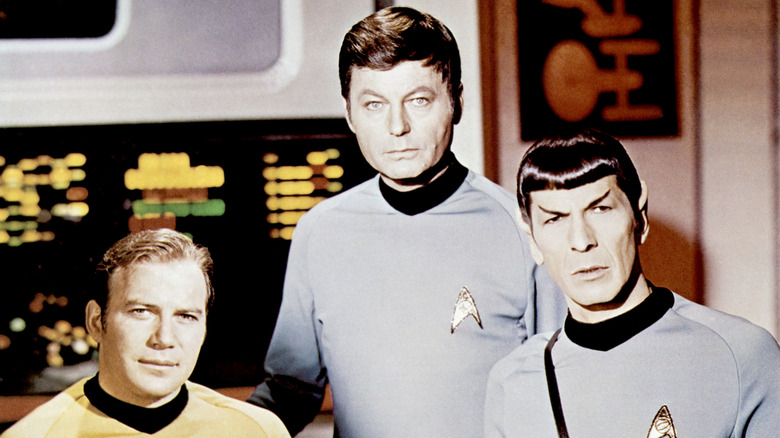
What is there to say about "Star Trek?" It's literally one of the foundational science fiction series, helping define the genre for the past 60 years. And although there are plenty of other "Star Trek" spin-off shows (we'll let you debate which one is the best), for the purposes of this list, we went with the original series.
First of all, "Star Trek: The Original Series" was ... well, first. The world-building in this show is what laid the groundwork for everything that came after it, beginning with the adventures of a single starship traversing the galaxy on a variety of peacekeeping (usually, anyway) missions. Filmed in the 1960s, this represents an optimistic vision of our future civilization, one that seeks peace and technological innovation rather than conquest in its approach to space exploration.
With William Shatner as the charismatic and dedicated Captain James T. Kirk and Leonard Nimoy as his (usually) logical science officer Mr. Spock, "Star Trek" took viewers on a captivating television journey based on the strength of its storytelling and its soon-to-be iconic characters. After all, even non-science-fiction fans have at least a passing familiarity with "Star Trek" lore.
2. Futurama
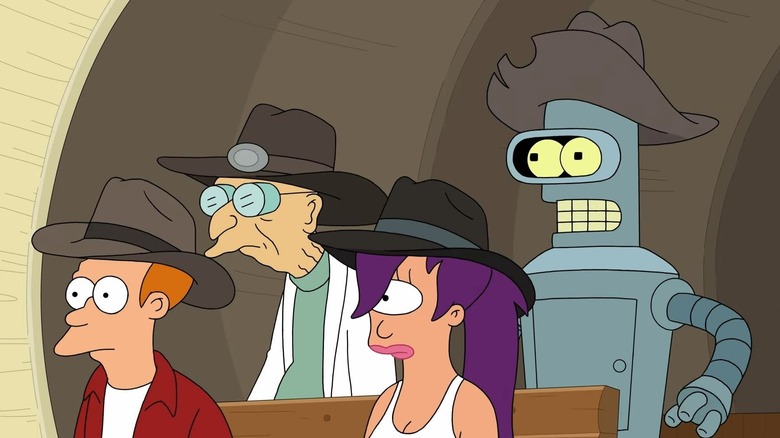
Well, come on ... it's right in the name, isn't it? If you're looking for top-notch shows set in the future, "Futurama" is a great option. Developed by the creators of "The Simpsons" (and featuring a very similar animation style), "Futurama" stars Billy West as Philip J. Fry, an underachieving pizza delivery boy whose life becomes significantly more complicated when he is accidentally cryogenically frozen at the turn of the millennium, only to be thawed in 2999. The culture shock of waking up in the future is a struggle at first, but he quickly acclimates himself to his new surroundings, even getting a job as, conveniently enough, an interplanetary delivery boy.
"Futurama" may seem like the type of adult animated comedy that plays to the lowest common denominator, but it's actually a lot more clever than it initially seems (in a 2014 article for Slate, writer and producer Patric M. Verrone referred to their team as "easily the most overeducated cartoon writers in history"). Although it initially lived a brief lifespan, canceled by Fox after four seasons, like its lead character, it would live on past its expiration date. "Futurama" was revived not once but twice, with subsequent seasons airing on Comedy Central, and its latest revival streaming directly on Hulu, as of this writing. Will the show survive for 1,000 years? We can't rule it out.
1. Firefly
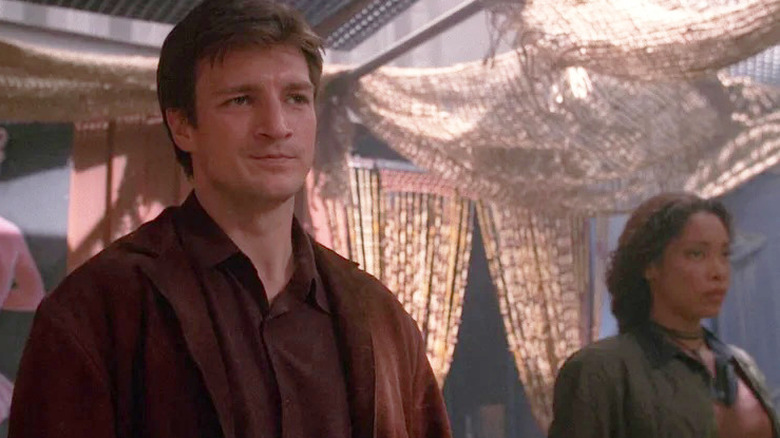
Yes, "Firefly" really is that good. And part of its charm is also its biggest tragedy — because it was unfairly canceled by Fox after just one season, it never had the chance to overstay its welcome or churn out creatively bankrupt episodes towards the end of its run when the writers were clearly on autopilot. Instead, we get one nigh-on perfect season.
Set after humanity has spread throughout a vast new star system, with colonists terraforming planets to meet their personal survival needs (classic humans), "Firefly" revolves around a hardscrabble crew on a humble spaceship called Serenity. All outsiders in one form or another, they're led by Captain Mal (Nathan Fillion), who takes them on a series of usually morally gray odd jobs wherever the money happens to be right. And although audiences only got a brief taste of "Firefly" (and eventually a follow-up film, "Serenity," to serve as a much-needed conclusion to the story), it was enough to cement the series in viewers' imaginations. "Firefly" morphed from a cancelled-too-early one-season wonder into one of the most popular science-fiction shows in television history.