

10 Western TV Shows Without A Single Bad Season
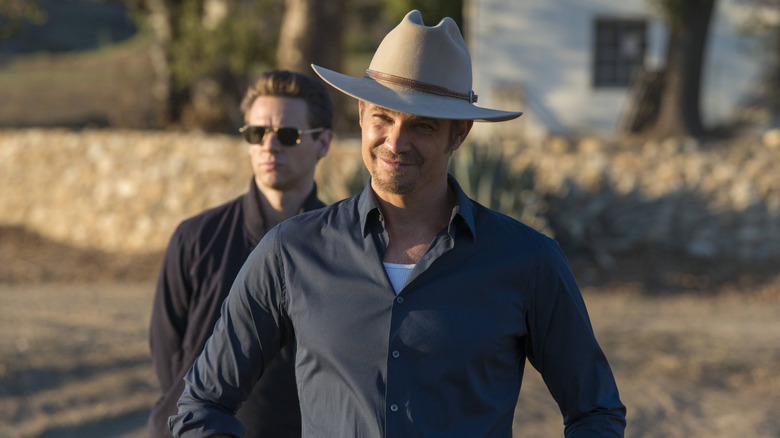
It ain't easy making a great TV Western. After all, the genre's pretty much timeless and as old as Hollywood itself.
For decades, viewers have consumed countless sprawling sagas packed with rugged heroes, dastardly villains, cattle drives, saloon brawls, and plenty of frontier justice. Like any long-running genre, many of these shows eventually overstayed their welcome. Some became repetitive; others relied too heavily on worn-out Western tropes.
Luckily, not all suffered this fate. Indeed, there are rare exceptions, or Westerns that stayed consistently great from beginning to end. That's no easy feat for a genre built on dusty, well-trodden formulas and simplistic archetypes. And so, we should take off our hats in a show of respect, honoring those series that traversed the high ground without ever hitting a gopher hole.
From classic staples like "Have Gun — Will Travel" to contemporary hits like "Longmire," these are the 10 best TV Westerns without a single bad season.
10. Gunsmoke
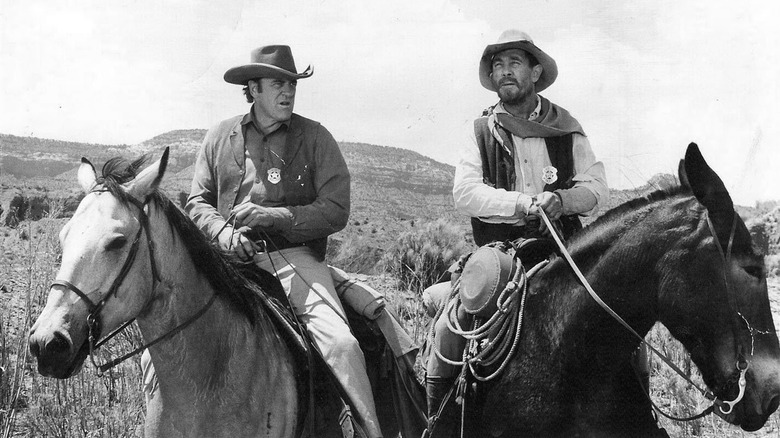
We'll start with a small-screen classic: "Gunsmoke." Hard-hitting and straight-faced, this incredible series may feel dated in 2026. Once upon a time, however, it was one of the most popular shows on television. Viewers tuned in each week to watch Marshal Matt Dillon (James Arness) serve and protect Dodge City and its colorful cast of characters.
For 20 years, Dillon performed his duty, and "Gunsmoke," despite its insane longevity, rarely faltered in terms of entertainment value. Sure, some seasons are stronger than others, and your enjoyment may vary depending on whether actors like a pre-superstar Burt Reynolds were still hanging around Dodge. Overall, though, the quality remained remarkably consistent, propelling the series near the top of the ratings for most of its run.
Heck, "Gunsmoke" even survived at the expense of shows like "Gilligan's Island"! Every time the network threatened to pull the plug, Dillon and company somehow bucked the trend and lured viewers back for a few more years — rinse and repeat. When "Gunsmoke" finally did get canceled, the decision had less to do with declining quality and more to do with CBS steering away from "rural" shows.
Alas, even after its abrupt ending, the franchise lived on through several made-for-TV movies that aired into the mid-'90s. You don't achieve that kind of longevity without maintaining a consistently high level of quality, folks.
9. Rawhide
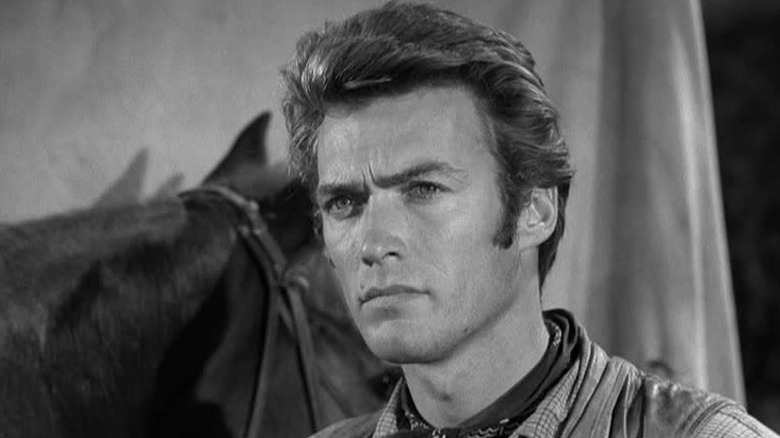
"Rawhide" was another popular TV saga that offered a much different view of the Old West than "Gunsmoke." In this case, viewers tuned in each week to watch an "eternal" cattle drive, during which trail boss Gil Favor (Eric Fleming) and young hothead Rowdy Yates (Clint Eastwood) dealt with everything from outlaws, corrupt towns, drought, disease, romance, and even lingering Civil War tensions en route to their destination.
It's all very formulaic, and some fans argue the series lost a bit of its grit after Fleming departed in Season 7. Still, Eastwood proved more than capable of carrying the show through its final stretch, sticking with the series until it rode off into the sunset in 1965.
Uniquely, the show's structure afforded "Rawhide" more variety than many westerns of the era, including "Gunsmoke." Locations changed constantly, allowing intriguing new characters — both good and bad — to enter the story each week. On top of that, our heroes frequently battled the elements themselves, providing a welcome reprieve from the typical villain-of-the-week approach.
Of course, realism is about as scarce as a good bath by today's standards. Our heroes typically survive through last-second rescues or conveniently timed decisions that ensure they'll appear in next week's episode. For its time, "Rawhide" felt surprisingly authentic, portraying the Old West as a harsh and unforgiving environment that only the strong could survive. Plus, it turned Clint Eastwood into a star — and that's the gift that keeps on giving.
8. The Virginian
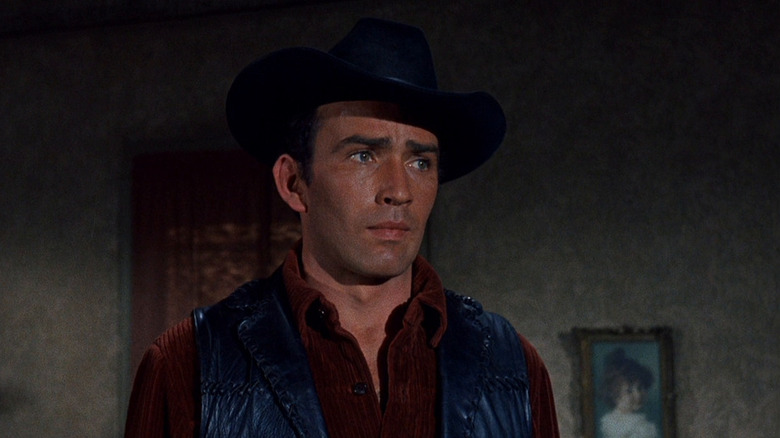
Not quite as well known is "The Virginian," another long-running western that rarely faltered in terms of quality. For nine seasons, the series captivated viewers with the ongoing drama surrounding Wyoming's Shiloh Ranch, where characters such as James Drury's mysterious Virginian and Lee J. Cobb's Judge Garth dealt with everything from cattle disputes and murder investigations to romance and political corruption.
At 90 minutes per episode, "The Virginian" often felt more prestigious and cinematic than many westerns of its era, allowing even supporting characters to receive emotional arcs not typically afforded by television at the time.
The series also provided an excellent platform for a slew of guest stars over the years, including Harrison Ford, Charles Bronson, John Astin, Robert Redford, and a very young Kurt Russell, among many others. While cast changes in later seasons occasionally disrupted the chemistry, the overall quality remained remarkably consistent.
In fact, "The Virginian" continually reinvented itself, tackling increasingly mature subject matter while introducing new characters capable of carrying the show's dramatic weight. Overall, it's a terrific piece of western television, even if it doesn't quite reach the same legendary heights as "Rawhide" or "Gunsmoke."
7. Hell On Wheels
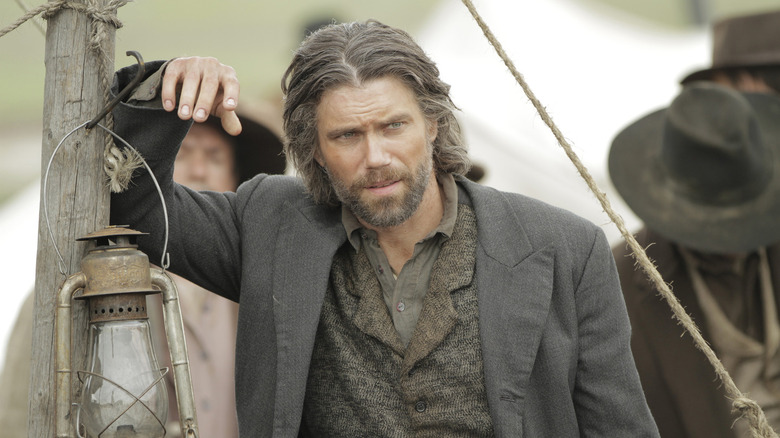
AMC's "Hell On Wheels" is one of those shows that enjoyed a lengthy run but, for whatever reason, never quite broke into the mainstream conversation. Epic in scope and brilliantly executed, the series takes place in the aftermath of the Civil War and follows a fractured United States attempting to rebuild itself through industrial expansion — namely, the construction of the transcontinental railroad.
Into this setup drops Cullen Bohannon (Anson Mount), a former Confederate soldier seeking revenge for the murder of his wife. His blood-soaked journey eventually leads him into the Union Pacific Railroad operation, where he gradually climbs the ranks and transforms from a bitter drifter into one of the railroad's key figures.
It's a fascinating look at a changing landscape, bolstered by memorable characters like Elam Ferguson (Common), the Swede (Christopher Heyerdahl), and the esteemed Thomas Durant (Colm Meaney), strong production values, and a storyline that steadily evolves into something grander than a simple revenge thriller. That evolution keeps the series from growing repetitive, and while the earlier seasons are arguably the strongest, the later years still offer plenty of compelling drama.
Also, unlike something like "Yellowstone," "Hell On Wheels" rarely dips into outright melodrama. Instead, its historical backdrop and character-driven storytelling provide a sturdy foundation for the show to explore mature themes while still delivering plenty of gritty western violence and adventure. Simply put, "Hell On Wheels" is one of the best AMC shows of all time.
6. Have Gun - Will Travel
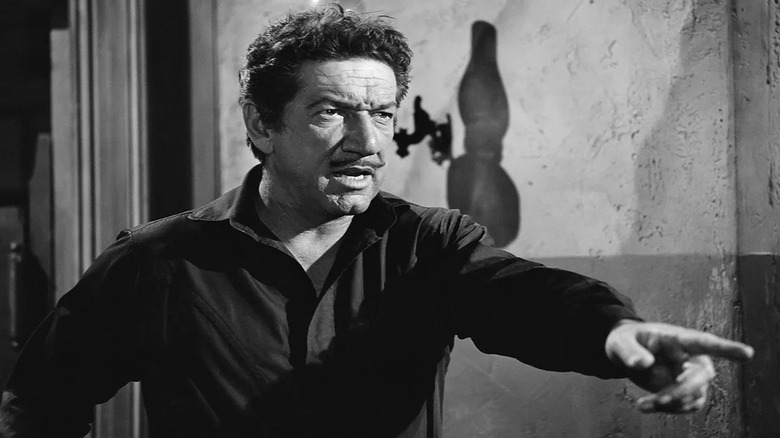
Sometimes all it takes is a great character to carry a show across the finish line. Such was the case with "Have Gun – Will Travel," another '50s series centered around the mysterious Paladin (Richard Boone), a gun-for-hire whose weekly adventures brought him face-to-face with some of the frontier's most dangerous outlaws.
Dressed entirely in black and prone to quoting Shakespeare while philosophizing about life, Paladin could speak multiple languages, flaunt his high-brow intelligence, and consider himself more of a problem solver than a vigilante. He adhered to a strict moral code — and for good reason. Many of the conflicts he became embroiled in involved deeply flawed people rather than simplistic victims or villains. As such, violence became a last resort rather than the focal point of his adventures, with gunfights often feeling more tragic than heroic and often leading to bittersweet endings — a surprisingly mature approach that separated the series from the rest of the pack.
Even so, Boone's magnetic performance elevated the production to extraordinary heights. Across six seasons, the renowned actor molded Paladin into a sophisticated yet dangerous hero who exuded quiet confidence and formidable intelligence. Even weaker episodes work thanks to Boone's commitment to the role, ensuring "Have Gun – Will Travel" remained must-watch television throughout its run and stands tall as one of the best Western shows of all time.
5. Longmire
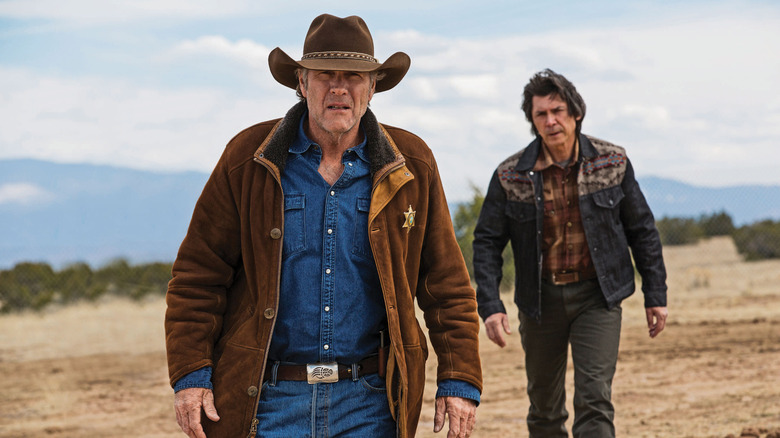
"Longmire" deserves far more love than it receives. Across six seasons, this murder mystery disguised as a modern western offered a sharply written meditation on the lingering mythology of the American frontier.
Robert Taylor stars as Walt Longmire, a grieving Wyoming sheriff desperately trying to keep the peace in Absaroka County. Aided by his fiercely loyal friend Henry Standing Bear (a sensational Lou Diamond Phillips), deputy Vic Moretti (Katee Sackhoff), and daughter Cady (Cassidy Freeman), Walt slowly uncovers the secrets surrounding his wife's death, all while becoming entangled in increasingly morally murky conflicts.
For us, Seasons 1-3 represent the show's peak. Later seasons became slower and more serialized, but remained consistently entertaining. If anything, the slight dip in momentum speaks more to the incredible quality of those early years than any dramatic decline.
No, seriously — forget "Yellowstone." "Longmire" delivers a far more thoughtful exploration of the cultural clashes that define modern Western life, in which tradition constantly grapples with shifting social and political realities. Everything about the series feels emotionally restrained, standing in stark contrast to the pulpy extravagance of Taylor Sheridan's melodramatic saga.
We don't want to spoil too much, but there are plenty of compelling twists and turns throughout — not to mention superb performances from the sturdy ensemble cast — to keep viewers invested through the very end.
4. Maverick
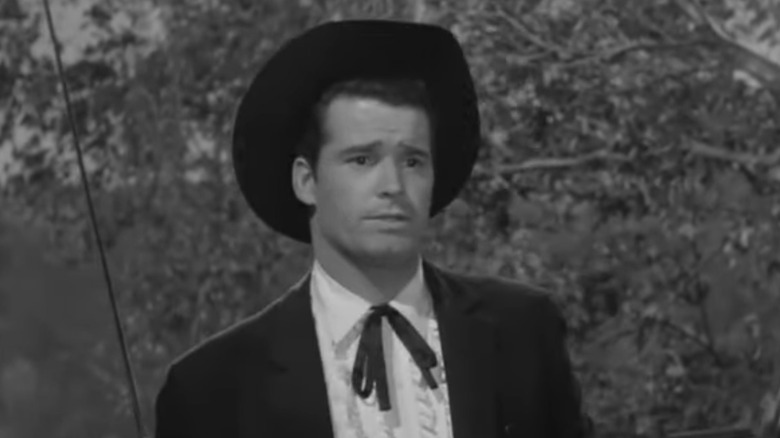
Switching gears to more lighthearted fare, "Maverick" stars James Garner as the charming gambler Bret Maverick, who travels the frontier, causing all manner of mischief. Each episode typically sees the wily cowboy stroll into town and get caught up in some sort of scam or messy romance, and somehow survive by the skin of his teeth thanks to his incredible ability to charm his way out of any situation.
Oh, sure, there are occasional violent encounters, but our hero relied more on brains than brawn, which is unique for an early Western. Other cowboys of the era were typically stoic, morally rigid, fearless gunfighters, while Bret was a lazy, smart-a** gambler who felt like an early prototype for lawless heroes like Han Solo and even Garner's own Jim Rockford.
Now, the caveat with this entry is that Garner largely stepped away from the show during Season 3 following contract disputes with Warner Bros. As such, later seasons focused on other characters, such as Bart Maverick (Jack Kelly), to lead the way. Still, even weaker episodes of "Maverick" remained entertaining thanks to the show's unique blend of humor and western action.
Garner later co-starred in the terrific 1994 film adaptation, "Maverick," alongside Mel Gibson and Jodie Foster. Even at the ripe old age of 66, the veteran star could still trade barbs with the best of 'em.
3. The Rifleman
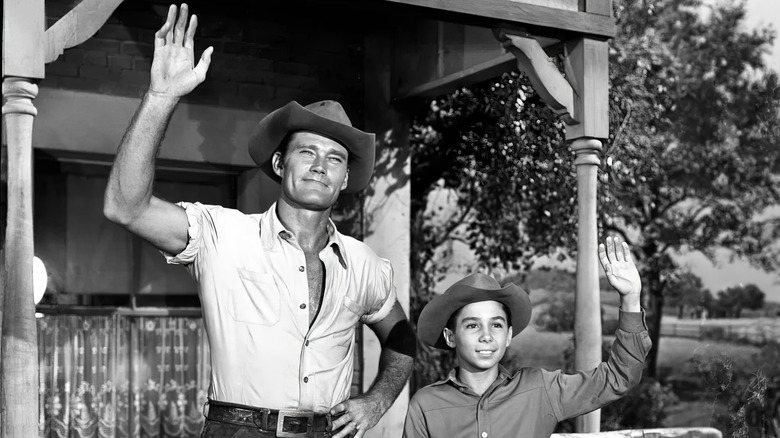
Simple, by-the-numbers, but ultimately thrilling and heartfelt, "The Rifleman," despite its title, spent most of its time exploring the relationship between the strapping Lucas McCain (Chuck Connors) and his innocent son Mark (Johnny Crawford). Oh sure, the pair get into plenty of intense shootouts and scrappy fistfights with all manner of villains, with stories that would go on to inspire the "Star Trek" franchise.
Still, the show's focus remained fixed on weightier themes. Each episode presents a villain, a moral quandary, or a frontier dilemma that Lucas and Mark must confront, often leading to hard lessons about life in the Old West.
That's what made "The Rifleman" stand out from its competitors. Not only did it offer moral complexity — Lucas, in particular, was far from perfect — but it did so without falling into the same overly sentimental territory as, say, "Bonanza." Sure, a little cheese clings to the '50s production values and acting styles of the day, but "The Rifleman" distinguished itself by adding genuine emotional weight to the usual assortment of violent encounters and gun-toting baddies.
For five seasons, our dynamic father-son duo did their part, all while gradually maturing over time. Mark becomes more independent and increasingly willing to question his father, while Lucas slowly eases his overprotective nature and allows his son to make mistakes. Modern viewers may grow tired of the repetitive story structure, but fans of classic television will likely hoot and holler at its simplistic design.
2. Justified
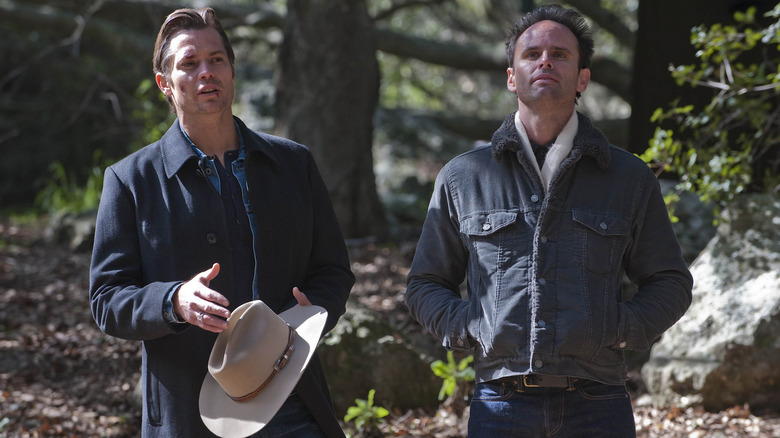
Okay, here's the thing with "Justified": the first season is good, but not great. Designed largely as a case-of-the-week crime series, we get a solid look at the charismatic Raylan Givens (Timothy Olyphant) as he hunts down criminals in rural Kentucky, rekindles old romances, and flexes his unique brand of justice.
Thankfully, showrunner Graham Yost — taking inspiration from author Elmore Leonard's work — realized he had something truly special and opted for more than just a show about a cowboy shooting bad guys. Raylan's friendship with longtime pal Boyd Crowder (Walton Goggins) — a complicated relationship that led to real offscreen tension — provided the emotional anchor, while the ruthless and cunning Mags Bennett (Margo Martindale) raised the stakes considerably in Season 2.
Later seasons maintained that momentum, with the sixth and final season delivering a satisfying conclusion to Raylan's gun-slinging adventures back home. While the 2023 spinoff "Justified: City Primeval" may have faltered a bit, we'll still stand by ranking the original "Justified" series as one of the greatest TV crime dramas of all time.
1. Deadwood
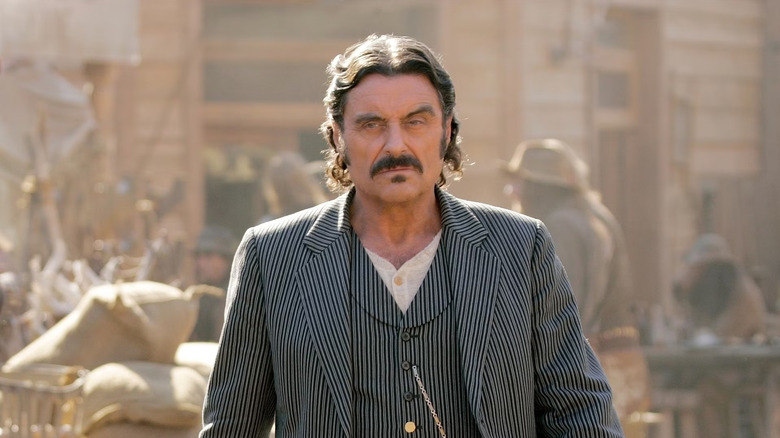
Topping our list is HBO's "Deadwood," a truly remarkable — and gritty — Western that offered quality entertainment throughout its three-season run. It helps to have history on your side. While it truncates timelines and exaggerates certain characters and events, "Deadwood" pulls much of its storyline directly from the history books.
So yes, Al Swearengen (Ian McShane) was a real person who owned the Gem Theater and saloon around which much of the action takes place. Seth Bullock (Timothy Olyphant) was a real sheriff, while characters such as Calamity Jane (Robin Weigert) and Wild Bill Hickok (Keith Carradine) were all real historical figures. Events such as Wild Bill's shocking death are rooted in fact, albeit slightly amended for dramatic purposes, while figures like Hearst — though exaggerated — still feel historically grounded.
Even if it were entirely fictionalized, "Deadwood" would still work as a meticulously crafted look at the Old West during a time when civilization was still trying to find its footing. Western fans will appreciate the rugged frontier violence, sweeping romances, and larger-than-life heroes and villains, while casual viewers can enjoy the sharp writing and finely tuned plotting. Nothing in "Deadwood" feels wasted, ensuring nearly every scene serves a purpose.
The only real downside is that HBO canceled the series after Season 3 due to escalating production costs. Thankfully, "Deadwood: The Movie" provides a satisfying epilogue for many of the dangling storylines, even if it feels a bit rushed.