

15 Best TV Plot Twists Of All Time, Ranked

A proper plot twist is a punch to the gut. One minute, you're happily watching your favorite TV show, and the next, your jaw is on the floor because a trusted ally turned out to be a villain, a beloved character died, or the entire story suddenly took on a different meaning. That's the stuff of legend.
Some twists mess with time. Some recontextualize everything that came before. Others send a series in a bold new direction or force viewers to see characters from a completely new perspective. And the best linger with the audience forever.
What are some of the best twists, you ask? Well, we've reached deep into the recesses of our brains to extract the best plot twists in TV history, ranked. Yeah, literally hundreds of staggering plot twists exist, but these are the ones that have stayed with us the longest. And yes, the final entry is indeed shocking. Let's dive in.
15. Severance: Helly's secret
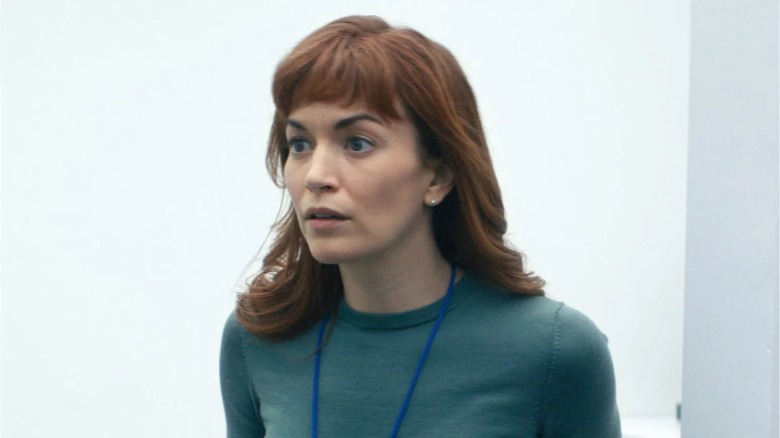
Kicking off with a newer show, "Severance" features plenty of mind-bending plot twists designed to keep viewers off balance — no, really, this show is nuts. After a first season packed with wild surprises, the series blasted viewers with this bombshell: Helly (Britt Lower), the co-lead of the series, who had spent all season attempting to escape the nightmare within the severance program, discovers that, on the outside, she's one of the people responsible for promoting and defending the procedure.
In fact, she volunteered for the procedure, making her true persona at odds with the one we know and love.
Helly and her outie, Helena, occupy the same body but don't subscribe to the same beliefs or goals. Helly's mission to expose the program suddenly becomes far more complicated. Now she has nowhere to run because the person she expected to help her turns out to be the one locking her up. In a show filled with bizarre twists, that's about as cruel as it gets.
14. Newhart: The whole series was a dream
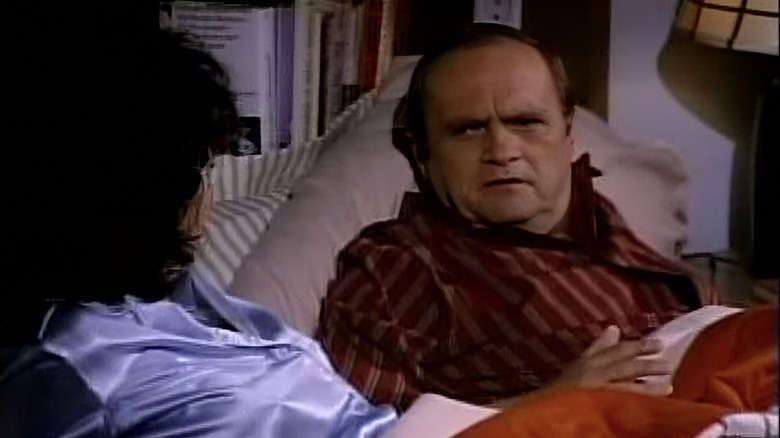
Bob Newhart starred in two beloved sitcoms: "The Bob Newhart Show" from 1972-78 and "Newhart" from 1982-90. In the final episode of the latter, Newhart's character, Dick Loudon, is knocked out by a stray golf ball. In a classic twist, he suddenly wakes up next to Emily (Suzanne Pleshette), his wife from the earlier series — meaning everything in "Newhart" was a dream experienced by the character in the previous sitcom.
Honestly, this curveball shouldn't work as it relies on an oft-used lazy trope. Yet, for "Newhart," it works beautifully.
See, "The Bob Newhart Show" follows uptight psychologist Bob Hartley as he tries to maintain his sanity while surrounded by increasingly eccentric patients. Dealing with so many oddballs would weigh heavily on Bob's psyche, making the increasingly surreal dream world of "Newhart" feel oddly fitting.
The finale celebrates both sitcoms while giving audiences a final gag to laugh about for years to come.
13. Dallas: Who shot J.R.?
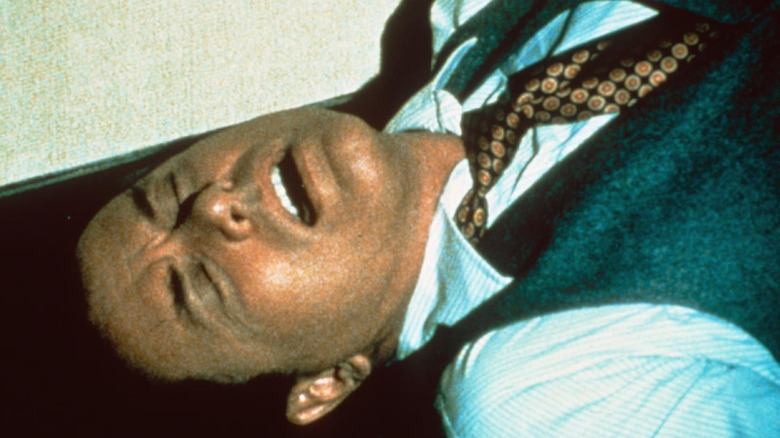
"Dallas" will forever be remembered for the Season 3 finale in which series lead J.R. Ewing (Larry Hagman) takes a bullet from an unknown attacker — a stunning twist that left viewers gobsmacked. For months, fans theorized who shot J.R., newspapers printed detailed theories; heck, even President Jimmy Carter referenced the event.
Ironically, the answer almost didn't matter compared to the hype. On November 21, 1980, 90 million viewers tuned in to Season 4, Episode 4 to learn the truth, making it one of the biggest television events in history.
What was the big deal? Imagine if someone shot Homelander at the end of a season of "The Boys" and audiences had to wait eight months to figure out who did it. In 1980, J.R. was television's biggest villain, and nearly everyone was watching his weekly shenanigans. The mystery became impossible to escape, resulting in a genuine pop-culture phenomenon that paved the way for increasingly ambitious season finales in the years to come.
12. Mad Men: Peggy was pregnant
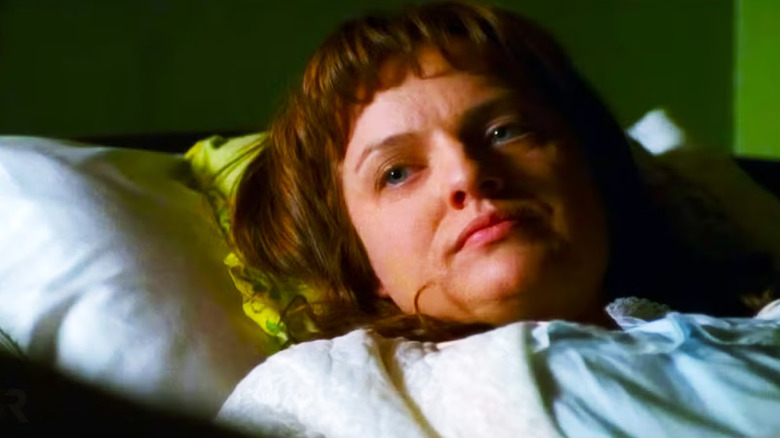
Sometimes, hiding a twist in plain sight is the best way to shock an audience. To that end, "Mad Men" deserves all the respect for deceiving viewers with a notable storyline in Season 1. Early in the series, beleaguered assistant Peggy Olson (Elisabeth Moss) sleeps with Pete Campbell (Vincent Kartheiser) and ultimately becomes pregnant with his child.
The twist is that neither Peggy nor the audience realizes she's pregnant until she literally gives birth in the final episode of Season 1. Sure, the character appears to gain weight throughout the 13 episodes, but it's so gradual we hardly notice.
And then, bam! Suddenly, much of her behavior throughout Season 1 makes a lot more sense. More importantly, the event kickstarts Peggy's transformation from an insecure secretary into an ambitious, trailblazing force. While she ultimately gives the child up for adoption, the experience hardens her resolve and helps shape the woman she becomes over the remainder of the series.
11. Squid Game: Player 001 created the games
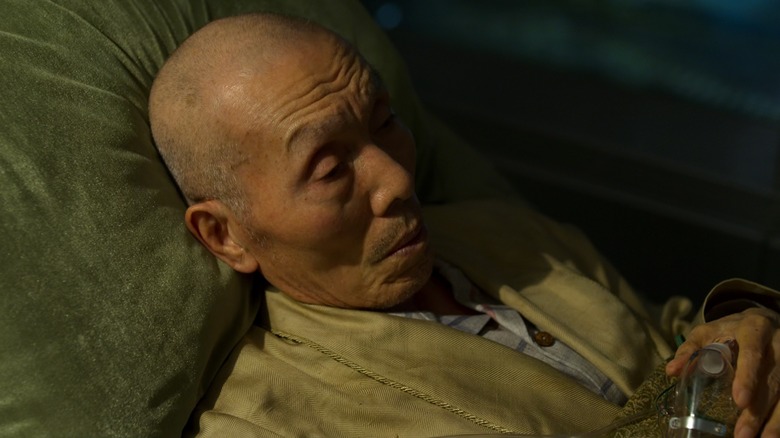
The wildly popular "Squid Game" put viewers through an emotional rollercoaster as desperate contestants fought to the death for a bunch of cash. During the competition, Seong Gi-hun (Lee Jung-jae) befriends Player 001 (O Yeong-su), a kindly elderly man with a brain tumor who ultimately lets Gi-hun win their marble match so his friend can survive.
Plot twist! After the games conclude, Gi-hun learns that Player 001 is still alive and — gasp! — is actually the creator of the deadly contest.
Yeah, this is the kind of bombshell that reshapes an entire series. From the start, we cheered on Player 001 and even cried when the man supposedly died. Now, every act of kindness, every conversation, every emotional moment between him and Seong Gi-hun carries a much darker meaning. Player 001 wasn't a feeble old man taking one last swing at success; he was a bored rich guy using desperate people for his own amusement.
It's sick, sadistic, and perfectly in line with the show's overarching point about money and power.
10. Midnight Mass: Father Paul is Monsignor Pruitt
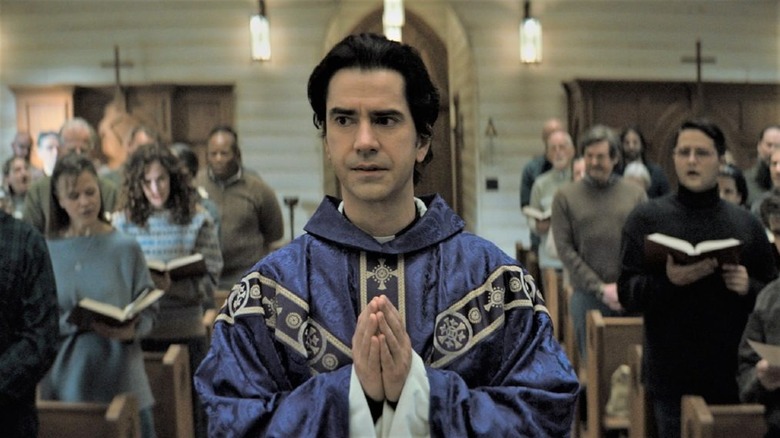
"Midnight Mass," an unsettling horror drama that even Mike Flanagan believes would never get made today, hides its twist in plain sight. The series follows Father Paul Hill (Hamish Linklater), a young priest who arrives on a small island and assumes a central role in the local church. The catch? Father Paul is actually Monsignor Pruitt, an elderly priest rejuvenated after encountering a mysterious creature capable of granting eternal life.
Believing he's witnessed a miracle, Pruitt returns home and begins sharing his newfound gift with the island's dwindling community.
In typical Mike Flanagan fashion, the big reveal changes how we see our central character. Pruitt initially comes across as a compassionate priest aiming to help the community. After learning the truth, we see that he's merely an old man willing to look past obvious warning signs and blatant contradictions to his faith to achieve a second chance at life. Suddenly, all of his supposed acts of kindness feel tragic, misguided, and very, very disturbing.
9. Game of Thrones: The Red Wedding
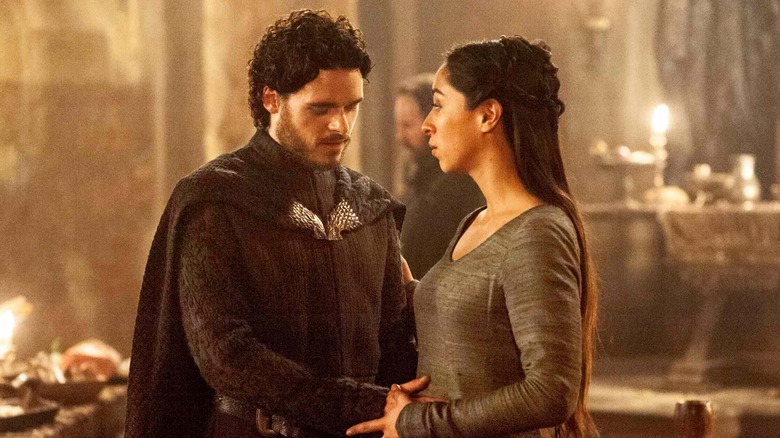
Shocking by almost every notable metric, the Red Wedding in "Game of Thrones" remains the most jaw-dropping plot twist in television history. Imagine cheering on a hero, in this case Robb Stark (Richard Madden), for nearly three whole seasons, only to see him — along with his mother and pregnant wife — slaughtered.
That's precisely what happened. Not only did the infamous "Rains of Castamere" episode throw fans who hadn't read the books into a frenzy, but it also changed the trajectory of the series. Robb's death crushed the Northern rebellion, cemented the Lannisters' position of power, and thrust characters like Arya Stark (Maisie Williams) and Jon Snow (Kit Harington) further into the spotlight.
Cleverly, the showrunners staged this harrowing event in Episode 9 rather than saving it for the season finale a week later, making it all the more shocking... and cruel. The Red Wedding comes out of nowhere. We're still reeling from this moment.
8. Twin Peaks: Laura Palmer's killer is revealed
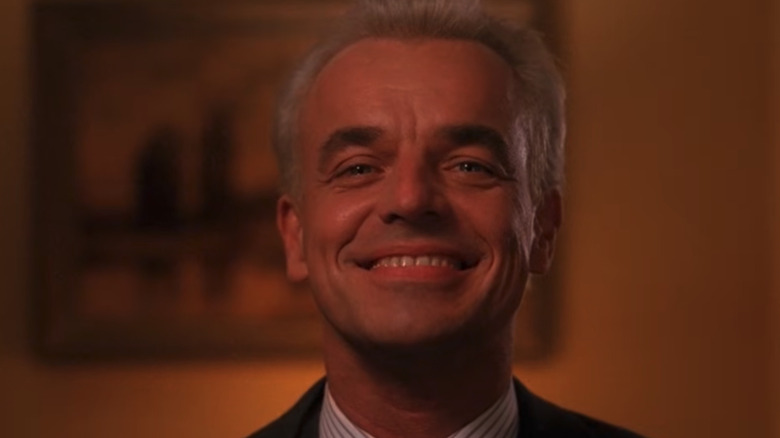
Sometimes a twist can completely change an entire show. Such was the case with "Twin Peaks," a quirky mystery centered on the murder of a young woman named Laura Palmer (Sheryl Lee). Surprisingly, the truth was revealed midway through Season 2: Laura's father, Leland Palmer (Ray Wise), was the killer — specifically because he was possessed by a demonic entity known as BOB.
The shocking turn of events pushed the series from a bizarre murder mystery into a story about abuse, trauma, and the dark secrets hiding beneath the surface of a seemingly peaceful small town. Moreover, viewers could now watch earlier episodes in a completely different light and see how moments that once felt tragic now evolved into something far more disturbing.
Granted, the twist remains somewhat controversial. Creator David Lynch famously didn't want to reveal Laura's killer. Many fans believe solving Laura's murder robbed the series of its central mystery. Still, there's no denying it left a mighty impression. More than three decades later, the reveal of Laura Palmer's killer remains one of television's most shocking surprises.
7. Westworld: William is the Man in Black
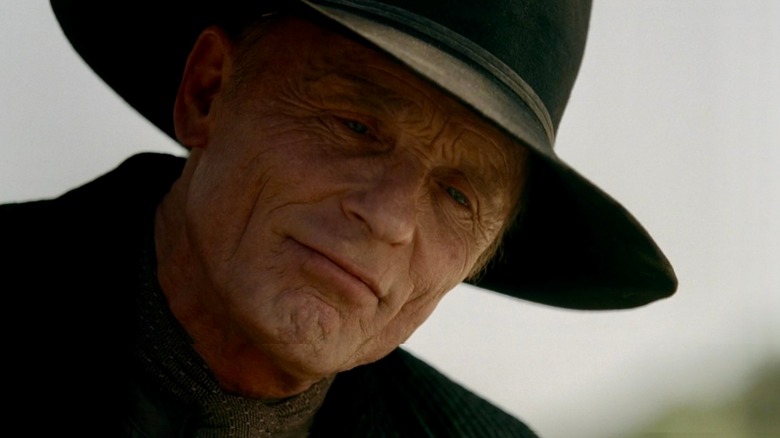
"Westworld" Season 1 rocks. No, really. Forget everything that came after. The inaugural season of HBO's intense, gritty, futuristic Western hit hard, presenting a bizarre — but not unthinkable — theme park that caters to humanity's animalistic instincts.
And the various plot twists only made it more compelling. Particularly when we discovered the series spanned three distinct time periods that converge at the end. Most importantly, that young William (Jimmi Simpson) was actually a younger version of the sadistic Man in Black (Ed Harris).
Sure, many viewers had their suspicions — and given Jonathan Nolan's involvement as co-creator, perhaps we should have known better — but the series did an excellent job concealing the truth until the right moment. Suddenly, everything we believed about the Man in Black changed, neatly underscoring one of "Westworld's" core themes that even kind-hearted people like William can gradually devolve into monsters under the right circumstances.
6. Breaking Bad: Walt poisoned Brock
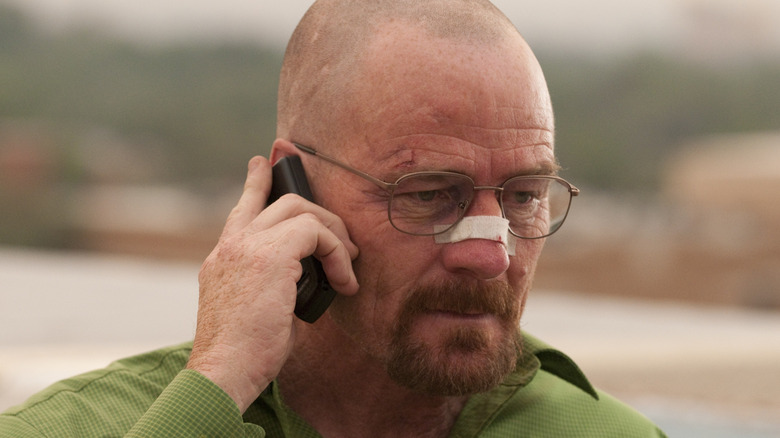
"Breaking Bad" features plenty of shocking twists and turns throughout its examination of Walter White (Bryan Cranston). Yet few moments hit harder than the revelation that Walt poisoned Brock to manipulate Jesse Pinkman (Aaron Paul) in the Season 4 finale, "Face Off."
Walt had already done some terrible things, but this action feels different because it demonstrates just how far he's willing to go to get what he wants. Determined to destroy his rival, Gus Fring (Giancarlo Esposito), Walt realizes that Jesse is the key. So, in a calculated act of deception, he poisons Brock and convinces Jesse that Gus was responsible.
It's certainly a multifaceted plan that hinges on Jesse's misplaced trust, but the real shock is what it reveals about Walt, which is why it ranks among the best episodes of "Breaking Bad." This marked his point of no return and made it all the more difficult to view him as the hero. By the time he chillingly says, "I won," the Walter White we met in Season 1 is long gone, forever corrupted by the ruthless Heisenberg.
5. The Haunting of Hill House: The Bent-Neck Lady's identity
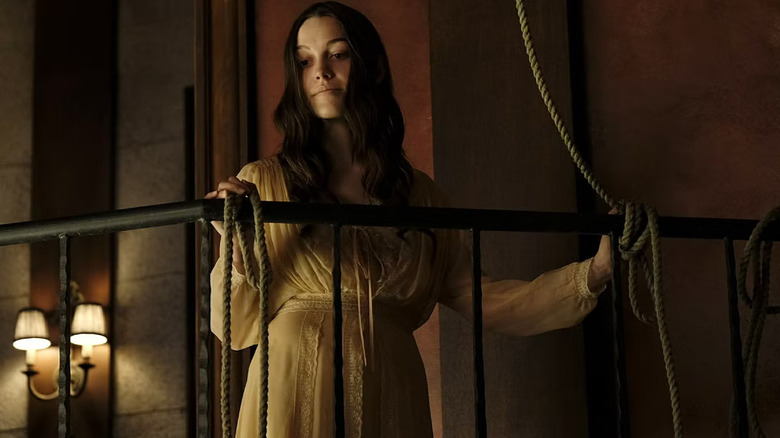
Mike Flanagan makes his second appearance on this list thanks to his dazzling miniseries, "The Haunting of Hill House." Across two timelines, Flanagan presents a ghost story centered on a family whose supernatural experiences leave them fractured and emotionally scarred.
Case in point: poor Nell Crain (Victoria Pedretti), a depressed young widow plagued by visions of an entity known as the Bent-Neck Lady. Later, we learn that the ghoulish apparition is none other than Nell herself, created after she tragically hangs herself and falls through time, revealing every time the ghost appeared throughout her life.
The shocking twist accentuates the show's unique approach to the supernatural. Ghosts certainly exist in this world, but some are born from the characters' deepest fears and personal tragedies. Throughout her life, Nell was haunted by her own death and a horrible fate she could never escape.
4. 24: Nina Myers is the mole
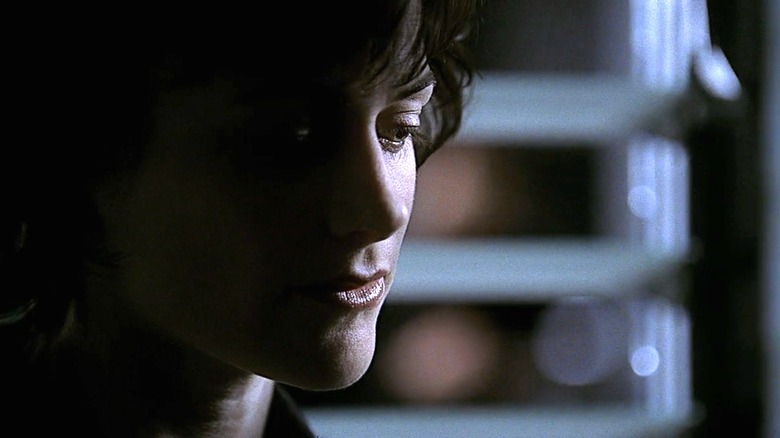
"24" hit the ground running in 2001 and immediately became one of TV's most addictive (and binge-worthy) thrillers. Throughout Season 1, Jack Bauer (Kiefer Sutherland) relies on his friend and former lover, Nina Myers (Sarah Clarke), to help stop a terrorist plot, only to discover that she's actually a mole working against him — a betrayal that culminates in her murdering his wife, Teri (Leslie Hope).
Yeah, she's bad, but Nina Myers also remains one of the show's best characters.
Crucially, this late-season twist reshaped the series going forward. While certainly not generic, "24" primarily focused on a heroic man fighting dangerous organizations. By making Nina a central villain, "24" turned into something far more personal, effectively raising the emotional stakes. Going forward, Jack felt more vulnerable than before, and viewers were forced to suspect every character on screen, even his most trusted allies.
"24" was already gripping, but that climactic piece of deception ensured we were going to be with Jack Bauer for the long haul.
3. The Twilight Zone: To Serve Man is a cookbook
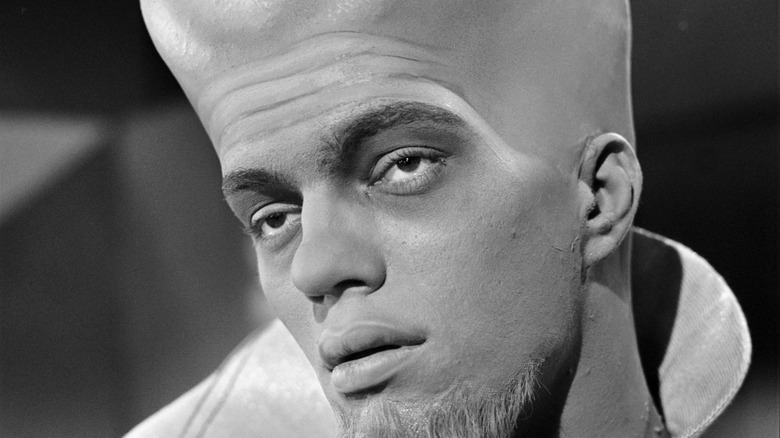
Modern viewers may laugh at the 1962 "Twilight Zone" episode "To Serve Man," but its famous twist remains one of television's craziest surprises. The story follows the arrival of the Kanamits, a seemingly benevolent alien race that promises peace and prosperity. Later, we learn the truth: a book left by an alien emissary at the United Nations titled "To Serve Man" is actually a cookbook, and humanity is the main dish.
Not only is the title's double entendre ingenious, but the twist also turns the show's initial premise on its head. The aliens arrive, promising peace, unity, and optimism, only to reveal their true diabolical goal. It's a jarring shift that hits you like a space-aged laser beam to the face.
Perhaps even more disturbing, the people in the show were so quick to trust these outsiders that they willingly lined up outside their ships to travel to their home planet before fully understanding their purpose.
That's what makes the reveal so effective. Evil aliens aside, the episode touches on humanity's willingness to trust anyone offering easy answers, making the twist as unsettling today as it was more than 60 years ago.
2. The Good Place: This is the Bad Place
Viewers likely didn't expect a mind-boggling twist in the amiable series, "The Good Place." Perhaps for that reason, it remains one of the more compelling surprises in television history. It feels like something ripped from "The Twilight Zone."
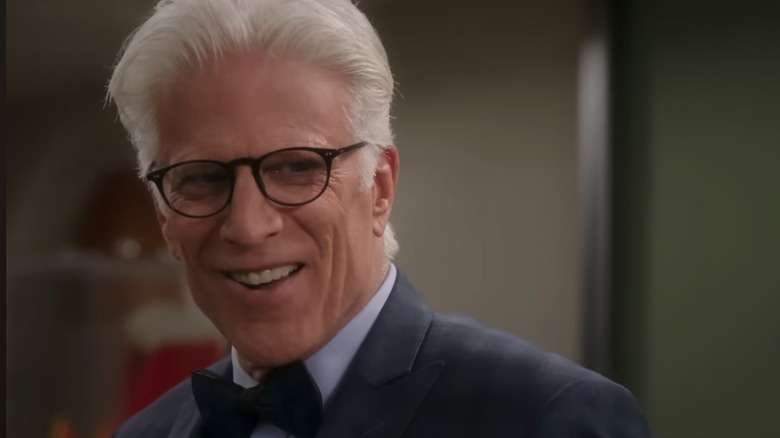
Arriving at the tail end of Season 1, Eleanor Shellstrop (Kristen Bell) suddenly realizes she and her newfound pals are not in the Good Place. In actuality, they currently reside in the Bad Place, which Michael (Ted Danson) confirms with a diabolical chuckle.
Suddenly, everything makes sense. Eleanor knows she wasn't a good person during her mortal life and thus had no reason to be in the Good Place. It also explains why everyone drives her crazy. Heaven should make people happy, but the crew in "The Good Place" is downright depressed — and it's all part of Michael's psychological ploy to prove that humans can effectively torture each other without the need for traditional demon methods.
From then on, the series shifts from a show about the Good Place to a surprisingly deep exploration of the very essence of humanity. What makes a person good? Do we deserve the fate assigned to us? Is there a way to truly change? It's all rather poignant, and one of the reasons "The Good Place" works so darned well.
1. Lost: We have to go back!
"Lost" stands as the pinnacle of mystery-box television. Not all of its puzzles were solved, much to the detriment of diehard fans, but overall, the series took viewers on a wild rollercoaster ride that led to plenty of hearty discussions around the water cooler.
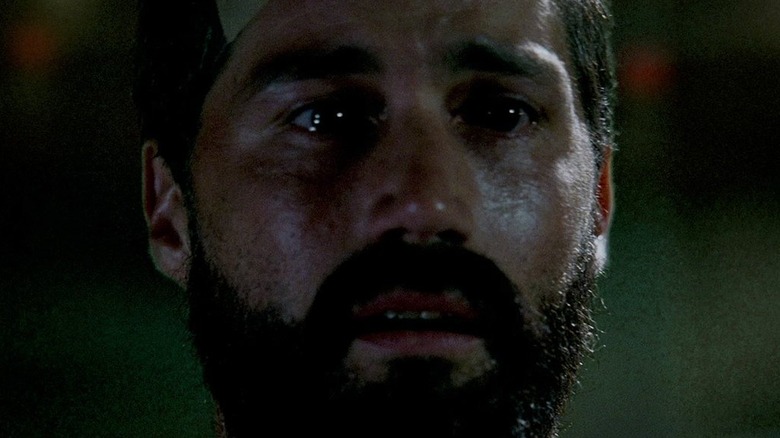
The most memorable rug pull, however, belongs to Season 3's time twist, in which viewers suddenly realize that what appears to be a flashback is actually a flash-forward. Jack (Matthew Fox) escaped the island, grew miserable, and now wants to go back.
At that point, "Lost" defied all preconceived notions and proved that anything was possible within its strange universe. Viewers could no longer take everything at face value and were forced to look even more closely at every detail to keep up with the ever-changing structure.
From a narrative standpoint, up until then, the entire plot centered around escaping this freaky island. Now the goalposts have shifted. Escape wasn't the clear-cut answer anymore. Where do we go from here?
Talk about a curveball! It's brilliant, exciting, and exactly the type of storytelling that made "Lost" so special.