

The TV Crime Show That Made People Question How Jurors Judge Cases
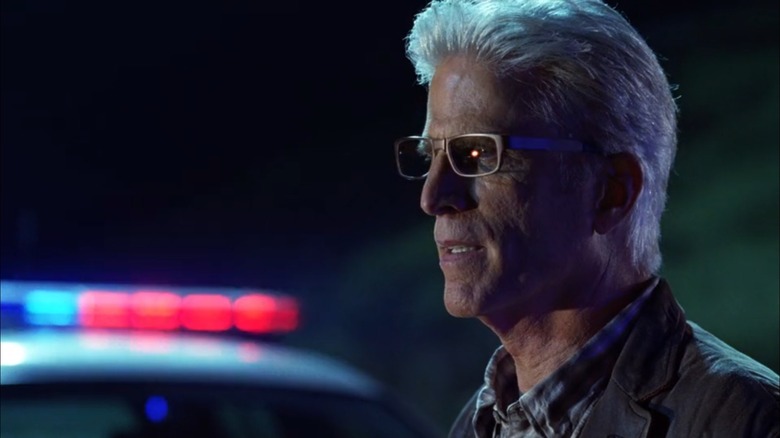
People have long debated whether violent TV shows might have any influence over the perpetration of violent crimes, but the popularity of "CSI: Crime Scene Investigation" posed a different dilemma: Could a crime drama influence how criminals get convicted?
"CSI" first aired on CBS in 2000 and quickly became one of the most-watched series on television in the U.S. A police procedural that revolves around a team of crime scene investigators, the series introduced audiences to the world of forensics, as criminal cases on the show are unraveled by DNA, fingerprints, and cutting-edge technology. Despite being inspired by an episode of a true crime series, however, "CSI" takes liberties with the truth. For example, it's rare for a real-life court case to benefit from the vast wealth of scientific evidence often presented on the show.
Following the series' debut, many legal professionals began to fear the so-called "CSI effect," whereby jurors allegedly become less inclined to convict in cases that rely primarily on eyewitness testimony, as they might lack the detailed forensic evidence that the CBS police procedural series taught them to expect. Even CBS has claimed that the effect is real, citing the "not guilty" verdict in the 2005 trial of Robert Blake as an example of a jury refusing to convict in the face of insufficient forensic evidence. But while prosecutors have certainly feared the impact of "the CSI effect," is there any actual evidence it exists?
Fear of the CSI Effect raised questions for juries
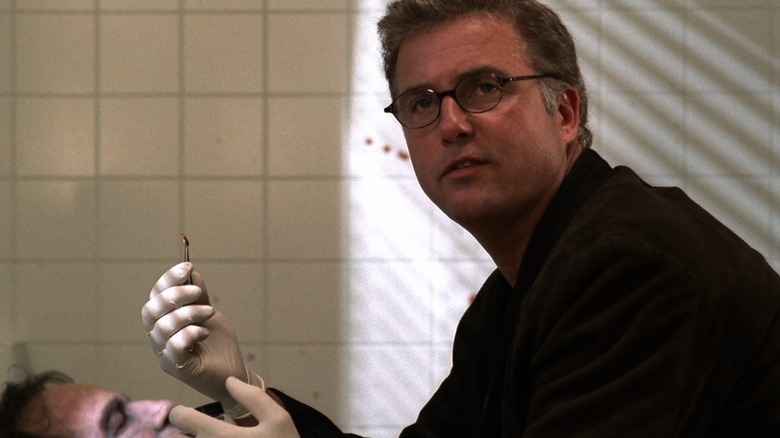
Discussion around the supposed "CSI effect" has spawned a range of opinions. Speaking to CBS News in 2005, "CSI" creator Anthony E. Zuiker called it "the most amazing thing that has ever come out of the series," claiming it meant that "you're not allowed to fool the jury anymore." Conversely, former prosecutor Wendy Murphy said, "When 'CSI' trumps common sense, then you have a systemic problem." However, neither of these arguments are likely to hold up in court. The problem? There's no real evidence for the "CSI effect."
In a study carried out for the National Institute of Justice, the Honorable Donald E. Shelton found little indication that "CSI" was having any impact on court cases. The study surveyed 1,000 jurors, asking about television viewing habits and how they would judge different cases based on differing types of evidence. "There was scant evidence in our survey results that 'CSI' viewers were either more or less likely to acquit defendants without scientific evidence," Shelton wrote.
The study actually concluded that "CSI" viewers were generally more likely to convict on the basis of eyewitness or victim testimony, even without substantial forensic evidence. A similar study published in the Oxford Handbook Topics in Law concluded there was "virtually no empirical evidence suggesting [the 'CSI effect'] is a real phenomenon." So, yes, the incredible popularity of "CSI" and its spinoffs may have prompted legitimate questions about TV's impact on real juries, but the truth is that most jurors are perfectly capable of distinguishing between reality and fiction.