

5 Superman: The Animated Series Episodes That Perfectly Define The Man Of Steel
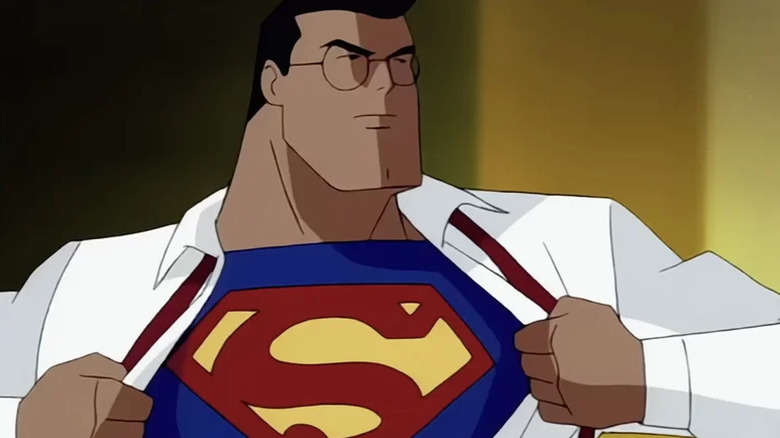
When it comes to the best animated Superman shows out there, none hold a candle to "Superman: The Animated Series." For the best episodes that define the Man of Steel, look no further than this list.
For three seasons between 1996 and 2000, the Man of Steel (voiced by Tim Daly) soared to new heights on the small screen as he defended Metropolis from threats foreign and domestic. In that time, the DC Comics icon proved himself to be just as memorable on the small screen as the Dark Knight had been in "Batman: The Animated Series."
Superman has been around since 1938, and the character has grown and evolved significantly in that time. Much of that is cosmetic, regarding costume changes, new supporting characters, and adjustments to his Kryptonian abilities and weaknesses. But whatever version of the Man of Steel you prefer — the original "Champion of the Oppressed" or the beacon of hope who fights for "truth, justice, and the American Way" — it's his heroism that remains at the forefront of every incarnation.
"Superman: The Animated Series" is a triumph in superhero animation, but largely because it gets the core of the Man of Steel right. With layered villains and a memorable supporting cast that includes Dana Delany as Lois Lane and Clancy Brown as Lex Luthor, this DC Animated Universe installment is perfect for fans looking to better understand who Superman is at heart.
The Last Son of Krypton (Season 1, Episodes 1-3)
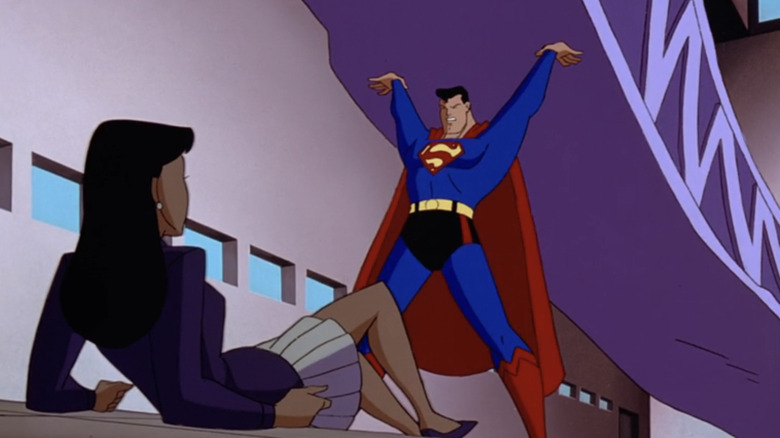
"Superman: The Animated Series" begins with a bang in the three-part "The Last Son of Krypton." A detailed account of the Man of Steel's origin, the journey begins on Krypton as baby Kal-El is rocketed to Earth by his parents, Jor-El (Christopher McDonald) and Lara (Finola Hughes), narrowly escaping the planet's destruction. The narrative then pivots to Smallville, Kansas, where he is raised by Jonathan (Mike Farrell) and Martha Kent (Shelley Fabares), only to venture on to Metropolis, where an adult Clark Kent secures a position at the Daily Planet and guards the city as Superman.
Released on home video as the feature-length "Superman: The Last Son of Krypton," the opening episodes of "Superman" contain all the necessary ingredients to make the character work. The three-parter emphasizes the desperate hopes of his birth parents, the warm Midwestern charm of his adoptive folks, and how both sets influenced his willingness to devote himself entirely to the benefit of others. It also establishes his chemistry with Lois Lane and long-time rivalry with Lex Luthor.
As far as Superman origins go, "The Last Son of Krypton" is among the best. The three-parter lays the foundation for the entire series. It humanizes Superman in ways that most animated interpretations simply didn't, and ultimately merges elements of his two identities, as Kal-El and Clark Kent, into the titular hero. For a crash course in what makes the character, well, Superman, look no further.
Father's Day (Season 2, Episode 15)
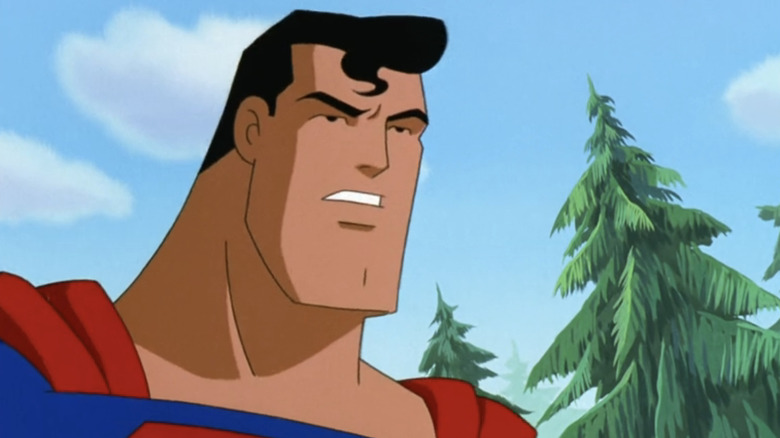
When the Kents visit Clark in Metropolis, things go from bad to worse when Superman is pulled away to deal with Kalibak (Michael Dorn), the wayward son of the alien tyrant Darkseid (Michael Ironside). In hopes to prove to his villainous father that he can take out Earth's strongest defender, Kalibak relentlessly battles Superman as the Man of Steel tries to limit the carnage around him — and save his own father, trapped under debris. Yet, in all of this, the hero's true colors become evident.
"Father's Day" concludes with Darkseid arriving to collect his son before putting Superman in his place, but not before the Big Blue Boy Scout stands up to the warlord of Apokolips on behalf of Kalibak. After spending the afternoon trying to keep Kalibak from inadvertently harming innocent bystanders, Superman pushes back against Darkseid's abuse of him. Although the villain doesn't heed the hero's request, it's another reminder that Superman fights for all who are oppressed — even villains.
Additionally, "Father's Day" once more emphasizes the importance of the Kents influence on the Man of Steel. Without the example of his adoptive parents, he simply would never have become Superman. This is something that live-action shows like "Smallville" and "Lois & Clark: The New Adventures of Superman" always got right — thus, it's no wonder "Superman: The Animated Series" is considered one of the best animated DC Comics shows out there.
The Late Mr. Kent (Season 2, Episode 22)
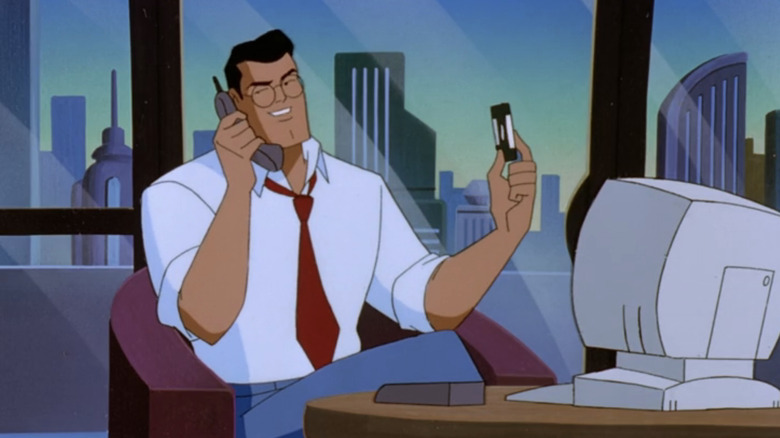
Told entirely from the perspective of Superman's Daily Planet alter ego, "The Late Mr. Kent" is a brilliant neo-noir-style adventure that puts our hero in an impossible situation. After interviewing death row inmate Ernest Walker (Paul Colbert), Clark comes to believe that the man is innocent of the murder he was convicted for. But upon finding evidence proving his claim, Clark is seemingly killed in a car explosion — only you can't kill Superman that easy.
The Man of Steel considers telling the governor everything to earn the convict a pardon, even if it means revealing his secret identity in the process. Fortunately, Lois aids the Man of Tomorrow in discovering the true culprit behind not only Walker's imprisonment, but Clark's supposed murder as well. It's not often that "Superman" gave us entire episodes in Clark the reporter's distinct perspective, but this one firmly emphasizes the importance of not only his human identity, but his role as an investigative journalist.
"The Late Mr. Kent" is a bit of an outlier in the larger "Superman" chronology. It doesn't feature any recognizable supervillains, nor does it offer much in way of action, but it certainly doesn't mince words. The harrowing ending echoes the tone of the character's early "Action Comics" appearances and humanizes the Man of Steel in both a complex and compelling way.
New Kids in Town (Season 3, Episode 3)
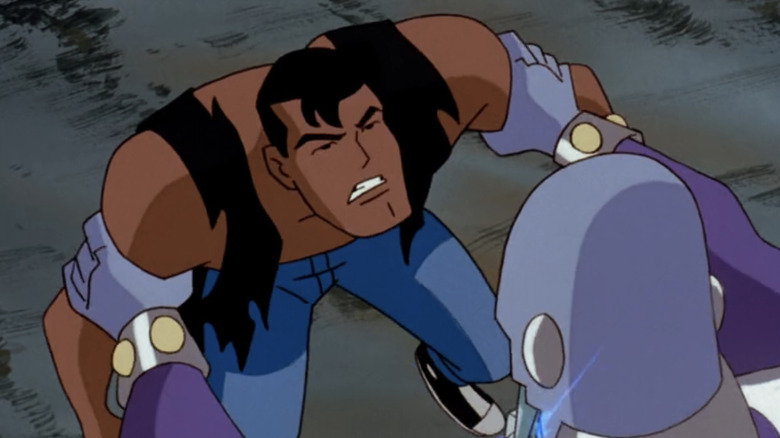
While "The Last Son of Krypton" offered a small glimpse into Superman's life as a teenager in Smallville, "New Kids in Town" further explores this unique period. After members of the Legion of Superheroes travel back in time to stop Brainiac (Cory Burton) from killing a young Clark Kent, the Boy of Steel comes to terms with the responsibility of his vast powers. While not exactly an origin story, it offers some insight into Clark's shift from moody teen to capable hero.
"New Kids in Town" highlights both the enduring legacy of Superman and the vulnerable, Midwestern roots that colored his perspective on truth and justice. Rather than emphasizing Superman's physical capabilities, it speaks to his resourcefulness and strength in the face of evil. Clark's role as an outsider is emphasized as well, resulting in a tussle with a school bully that reveals some hidden arrogance. With the help of his friends and family, Clark overcomes this teen angst just in time.
Although "Superman" never utilized Clark's traditional "Superboy" identity, this is about as close to that part of the comic book mythos as fans got. Just as Tom Welling didn't really wear the Superman suit on "Smallville," this "Superman" episode doesn't really feature the red and blue tights, but that's okay. Young Clark, for all his flaws, proves that he's still Superman where it counts.
Legacy (Season 3, Episodes 12-13)
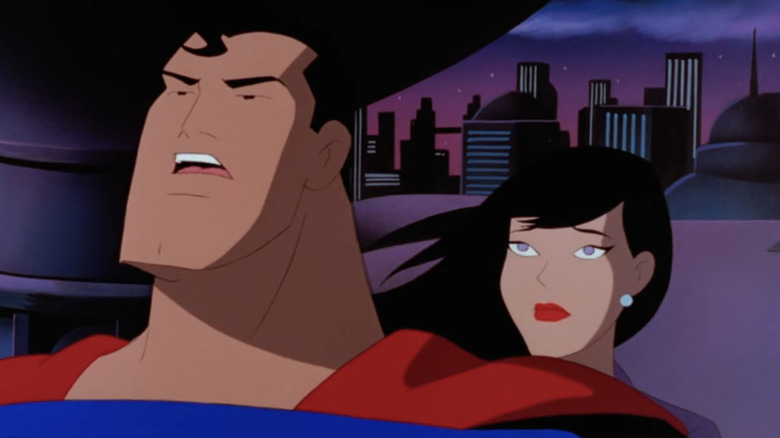
While "Superman: The Animated Series" began with a hopeful three-part origin story, the series concluded with a dramatic and darkly intense two-part finale titled "Legacy." After Superman is kidnapped by Darkseid, the Man of Steel is brainwashed into being the alien despot's pawn. Under the villain's control, Superman wages war on Earth, nearly killing Supergirl (Nicholle Tom) in the process. Upon his defeat by Lex Luthor and the U.S. military, Lois helps Superman recover his memory and escape before he takes the fight to Apokolips.
"Legacy" is a prime example of what happens when Superman's power goes unchecked. Without the love of his adoptive parents or the memory of those he's sacrificed his life for, he becomes moldable to the will of tyrants like Darkseid and the Ed Asner-voiced Granny Goodness. But rather than dwell on yet another "evil Superman" story, "Legacy" concludes with a bittersweet final moment where Superman wonders how he can get the public to trust him again. As Lois encourages him, "One person at a time."
Not only does "Legacy" show Superman's raw power, but it also highlights his willingness to see things through even with the whole world against him. Ending "Superman: The Animated Series" with a story like this was a bold move on Bruce Timm and Paul Dini's parts, but sometimes that's how Superman stories go. What has always mattered most, no matter how dark the Man of Steel's adventures get, is whether he gets back up. Naturally, he always does.