

5 Great Sci-Fi Series That Are Remakes Of Classic Movies
Sci-fi as a genre tends to lend itself very well to the big screen. A blockbuster budget often goes a long way when it comes to sci-fi spectacle. Nevertheless, the genre has a rich history on television. Sometimes, a title that began as a movie can still work when it's adapted for the small screen.
These are five of the best sci-fi series that are remakes of movies — and that word, "remake," is important. Especially in the streaming era, there are tons of shows that are spin-offs of a popular sci-fi film franchise. "Andor" and "The Clone Wars," for example, share continuity with the "Star Wars" films and expand the fictional universe. Other TV series, like "Monarch: Legacy of Monsters," "Stargate: SG-1," and "Alien: Earth" do the same. Filling in narrative gaps or serving as a prequel or sequel is not the same thing as remaking a story.
In a sense, remaking a movie for TV is a more challenging task than spinning a show off because the new series needs to stand on its own. The following five shows certainly benefitted from having recognizable IP and familiar premises, but they succeeded as television on their own terms, rather than as mere extensions of a movie. In some cases, they even surpassed the source material.
Westworld
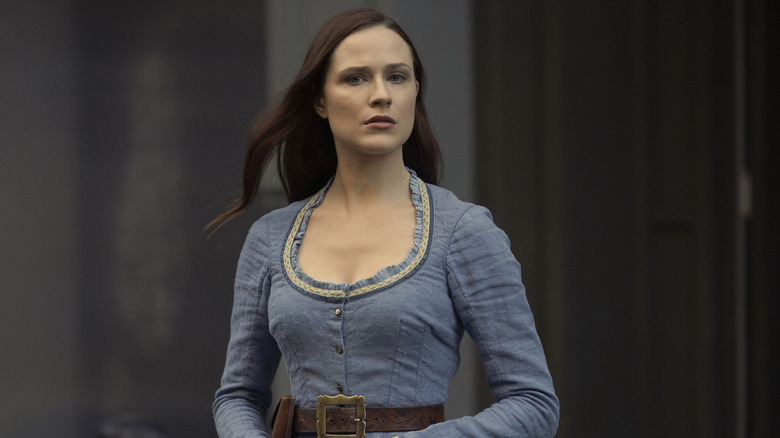
Before Michael Crichton created "Jurassic Park," he wrote and directed a movie about a different theme park gone awry in 1973's "Westworld." A cult classic, the film was about a futuristic resort where guests could experience the Wild West thanks to lifelike cowboy robots — only for things to turn deadly when the androids malfunction. The movie is a fun, but not especially complex story. The same cannot be said about HBO's 2016 TV adaptation.
A mystery-box show that, at, times seemed like it was designed for the express purpose of getting Redditors to come up with fan theories, "Westworld" was extremely nuanced and complex. Here, the robots were the protagonists rather than the flesh-and-blood parkgoers, as the show explored ideas about technology, the nature of reality, and the meaning of life — artificial or otherwise.
Boasting performances from Evan Rachel Wood, Thandiwe Newton, Jeffrey Wright, and plenty of other great actors, "Westworld" was a sensation — at first. It went off the rails in later seasons, after the show left the titular theme park behind while letting the story get overly complicated and frustratingly repetitive. Still, even after an unexpected (but in retrospect inevitable) cancellation after four seasons, "Westworld" remains the most ambitious example of a movie getting remade and radically reinterpreted for the small screen.
Snowpiercer
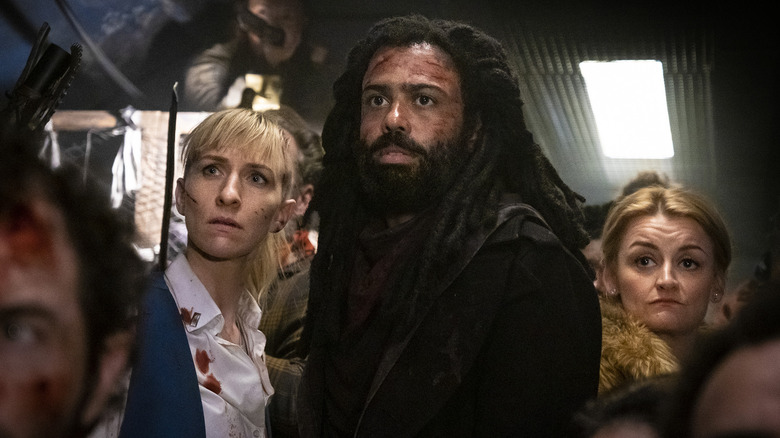
Bong Joon Ho's 2013 movie "Snowpiercer," an adaptation of a French graphic novel titled "Le Transperceneige," is a very cool, very weird movie. Set aboard a train that makes a never-ending journey around a frozen, post-apocalyptic world with the remnants of humanity aboard, "Snowpiercer" is an action-packed metaphor for capitalism and class warfare. The rich are at the front of the train; The poor near the caboose, and as they rebel, they fight their way to the engine.
The 2017 TNT television series is not nearly as heady as Director Bong's movie. How could it be? It ran for four seasons rather than depicting one brutal, thematically rich rebellion over the course of two hours. The upside to this is that the "Snowpiercer" TV show has the space to much more thoroughly explore what life and society on this narrow, highly stratified dystopian locomotive might actually be like. It's a totally different approach from the film's metaphor-first execution, and it's still entertaining.
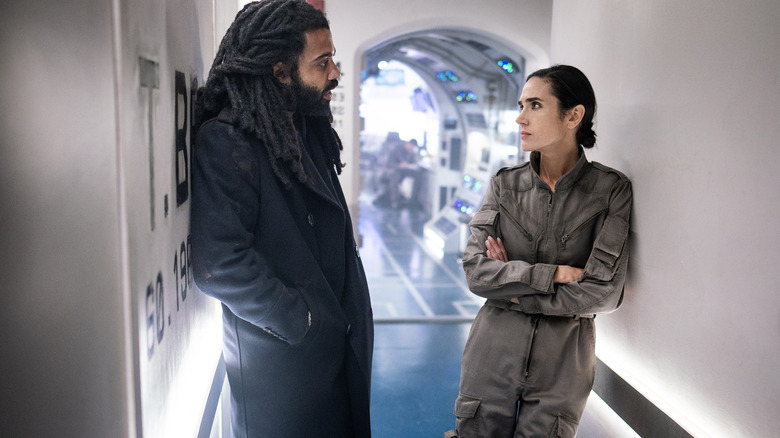
When the series begins, Jennifer Connelly's head engineer, Melanie Cavill, turns to the tail of the train because Daveed Diggs' stowaway passenger, Andre Layton, was a detective before the end of world, and now his skills are needed to solve a murder: Think "Murder on the Orient Express," except the Orient Express is all that remains of civilization. Sean Bean joined the show as the main villain in the second season, as the "Snowpiercer" world expanded, all while still being (mostly) on rails.
Voyage to the Bottom of the Sea
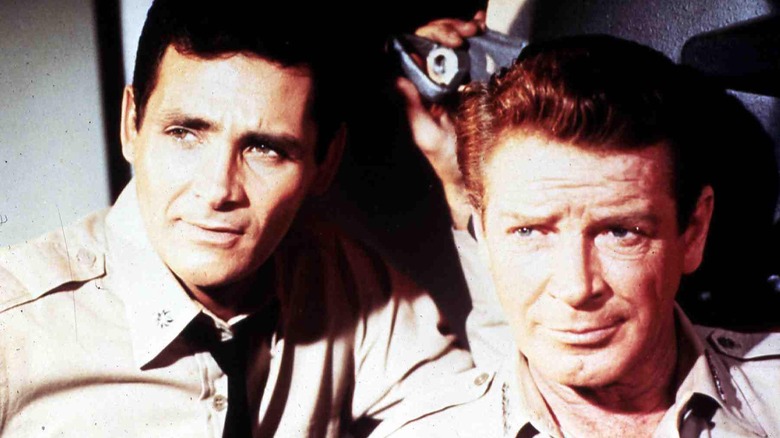
Premiering on ABC in 1964, three years after the feature film of the same name came out in theaters, "Voyage to the Bottom of the Sea" was a hit '60s TV series about a sub-nautical adventure that aired more than 100 episodes over the course of four seasons. Many other attempts to make a show out of a sci-fi movie ended after only one season, like "The King Kong Show," "Planet of the Apes," "Logan's Run," and "Starman."
The small screen adventures of Admiral "Harry" Nelson (Richard Basehart) saving the planet from aliens, monsters, and Communists aboard his futuristic submarine, the SSRN Seaview, benefitted immensely from the movie's existence. Irwin Allen, who directed the film, made a point to reuse as many of the costumes, sets, and even finished special effects sequences from the movie as he could in the show. This helped Allen recoup some of the costs of the film, but it also meant "Voyage to the Bottom of the Sea" had a little more pizzazz than you might otherwise expect from a mid-'60s television program.
The first season was a bit more high-minded than the later ones, as the network wanted less Cold War espionage and more monster-of-the-week fantasy. Allen followed "Voyage to the Bottom of the Sea" with a few other original sci-fi TV adventures, starting with "Lost in Space" in 1965.
Alien Nation
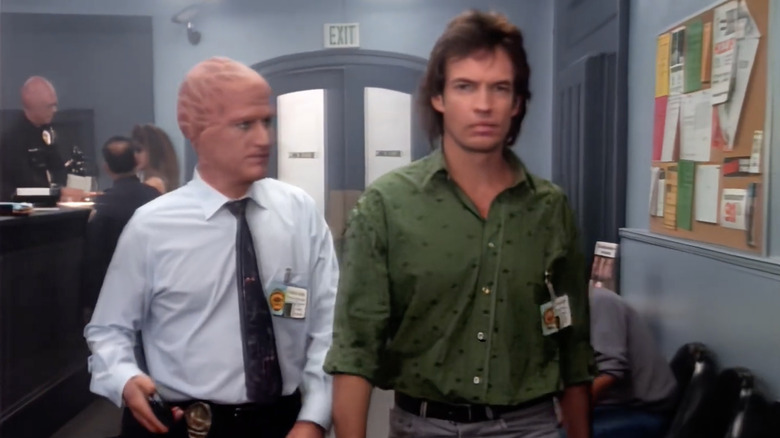
James Caan and Mandy Patinkin starred as a human and alien, respectively, who must work together as cops in the Los Angeles Police Department in the 1988 sci-fi action flick, "Alien Nation." Despite an interesting premise that had a race of extra-terrestrial "Newcomers" attempting to integrate into human society, "Alien Nation" settles into being a pretty straightforward buddy cop drama with just a few genre trappings.
The show, which premiered the following year on Fox with the late Gary Graham and Eric Pierpoint in the lead roles, was a social commentary that was much more interested in exploring the intricacies of assimilation. The Newcomers faced racism and discrimination. They had their own distinct culture, which the series depicted in ways the film didn't have time for, and frequently clashed with human society. Their biology was different, too.
The premise had a ton of potential, the ratings were solid, and the fanbase was passionate, but Fox canned "Alien Nation" after its first season. An executive for the network later admitted they'd made a mistake in doing this. Although canceled too soon, this wasn't the end of "Alien Nation." A television movie, "Alien Nation: Dark Horizon," premiered in 1994 and was followed by additional films.
12 Monkeys
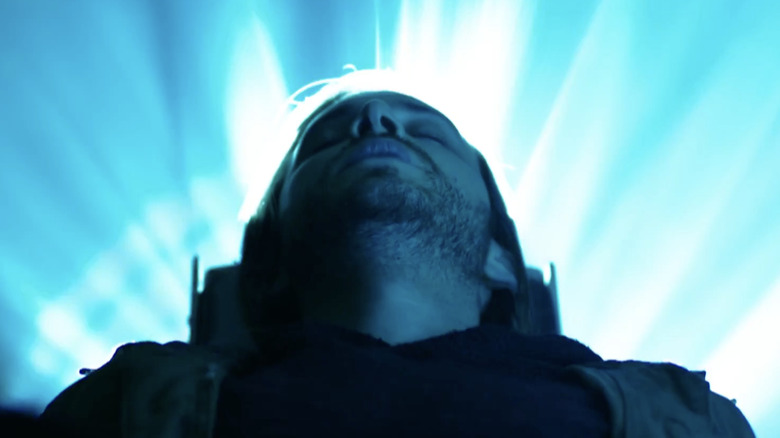
Terry Gilliam's trippy 1995 sci-fi movie, "12 Monkeys," expanded on the themes and ideas of "La Jetée," the acclaimed 1962 short film it's based on. The 2015 Syfy series, in turn, fleshes out — and reimagines — several aspects of the Bruce Willis-led film.
As in the source material, the show follows a man (Aaron Stanford) who has been sent back in time in an effort to stop the release of a deadly virus that all-but-eliminated humanity in the future. There are some big changes, though, like the fact that the series has more time and space to showcase what the dystopian future looks like before sending its protagonist back in time.
Perhaps the most consequential change is that the past and future can actually be changed, whereas the movie and short suggest that time travel is a causality loop. This allowed for some very complicated storytelling, and attentive viewers were rewarded with four seasons of compelling, complex television.
Unlike many ambitious sci-fi TV shows, "12 Monkeys" stuck the landing. Syfy announced the fourth season would be the final one ahead of time, giving the series' creators a chance to write a satisfying conclusion.