

5 TV Shows That Were Based On Commercials
For most of TV history, commercials have served as a necessary evil. The advertisements that interrupt whatever program you're watching are the things paying for the show, after all. Sometimes, though, the line between program and promotion blurs when the commercials become the whole show.
Not all of these series are good — in fact, most of them aren't. The vast majority of ads-turned-shows failed, whether because the crassness of capitalism got to be a little much, or ideas that worked as an entertaining 30-second spot couldn't actually support an episode-length narrative. At best, many are remembered as novelties. There are exceptions, of course: One modern series, in particular, is based on a commercial and has overcame its origins to become one of the most popular and critically acclaimed comedies of its era.
Here are five shows that began not in a writer's room, but in an ad agency. Please note that this list does not include series that were sponsored by advertisers, like 1950s toothpaste-supported variety show "The Colgate Comedy Hour."
Ted Lasso
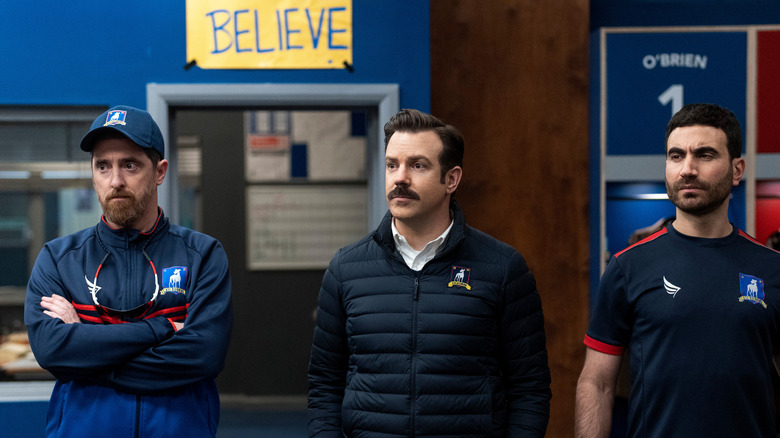
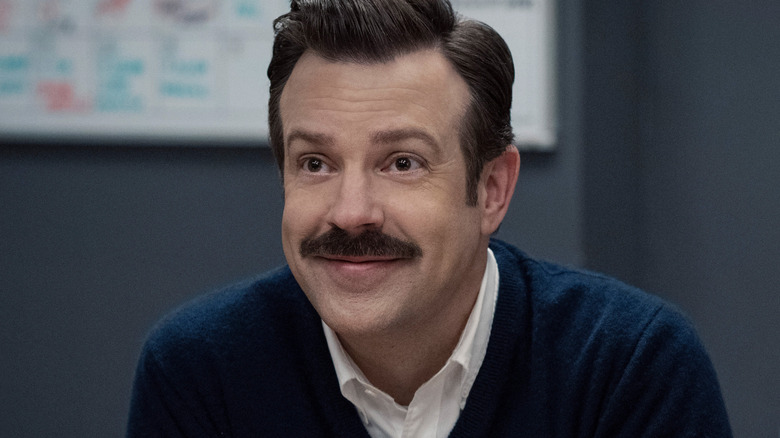
Ted Lasso — an American football coach who finds himself across the pond coaching the other type of football (soccer) — first appeared in 2013 as part of a series of commercials promoting NBC Sports' coverage of England's soccer Premier League. The character, as played by the charismatic Jason Sudeikis, was a fun idea and the commercials were popular, as far as advertisements go.
There was potential for more, and, in 2015, Sudeikis started to explore the idea of a "Ted Lasso" series. With the help of Bill Lawrence, the man behind "Scrubs," the ad campaign became a full-blown show that premiered on Apple TV+ in August of 2020.
"Ted Lasso" is relentlessly optimistic and upbeat, which made it especially welcome when it debuted during the depths of the pandemic. One of the best shows streaming on Apple TV+, "Ted Lasso" was critically acclaimed, too. It racked up plenty of Emmy and Golden Globe nominations, and won several awards. Though the third season was not as well received as the first two, "Ted Lasso" recovered for the fourth season.
See? It is possible to make a good show based on a commercial. You just just gotta "believe."
Cavemen
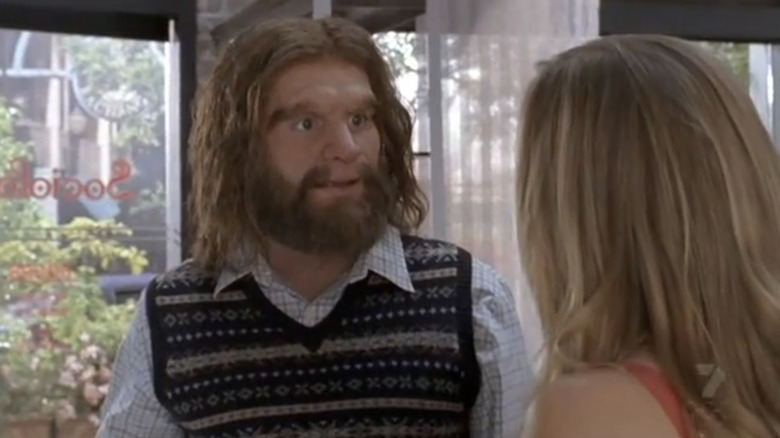
If "Ted Lasso" represents the most successful attempt to turn a commercial into an ongoing series, "Cavemen" is the nadir. The original 2004 advertisements promised that switching to GEICO for car insurance was "so easy a caveman could do it," only for civilized, downright metrosexual neanderthals to take exasperated umbrage at the insulting comparison. TV audiences liked seeing the GEICO cavemen on their screens during commercial breaks — they just didn't like them nearly as much as ABC thought.
The "Cavemen" show, which starred Bill English, Nick Kroll, and Sam Huntington under prehistoric prosthetic makeup, had problems before it even aired. The network had to significantly retool the pilot episode because many critics thought the cavemen were being depicted as an offensive stand-in for African-Americans. The buzz was bad when the show premiered in 2007, and the reviews were worse. While audiences tuned in for the premiere, perhaps out of morbid curiosity, viewership quickly fell off a cliff.
"Cavemen" functionally went extinct when ABC pulled it from the schedule during the 2007–08 Writers Guild of America strike. The network canceled "Cavemen," and the final six episodes of the 13-episode series never even aired in the United States. Nowadays, it's remembered as one of many shows audiences can't believe existed.
The GEICO Cavemen would return to television screens, though. During the 2008 Super Bowl, GEICO ran a self-aware commercial where two neanderthals watching TV criticized the concept of a "Cavemen" series.
Baby Bob
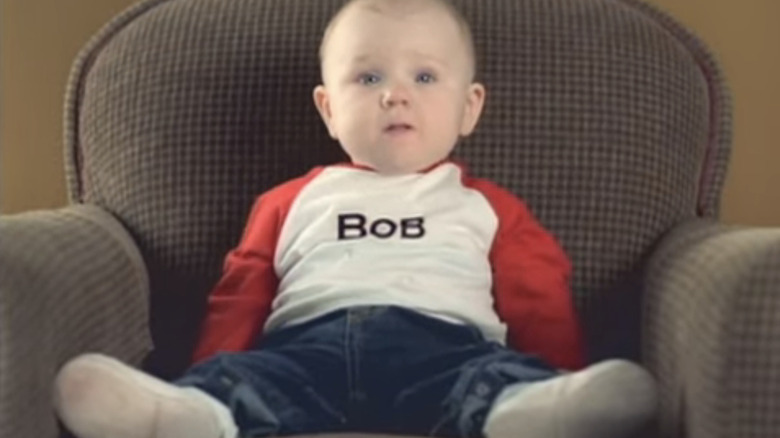
Baby Bob, a character whose whole gimmick was that he was a baby who could talk, is associated with not one, but two, infamous, monumental failures. The chatty child first appeared in a series of popular commercials for FreeInternet.com, an internet service provider at the turn of the new millennium. However, when FreeInternet went belly up, a casualty of the Dot-com bubble, the baby survived. (The bankrupt company ended up owing the ad agency who created Baby Bob $1.9 million.)
CBS bought the rights to Baby Bob and, for a time, used the character as a spokesperson for the network. A sitcom, titled "Baby Bob," premiered on March 18, 2002, but by then, the baby was old news and the public had moved on. Reviews for the show were brutal. CBS ordered a second season, only to sit on it for more than a year before dumping a few episodes in the summer of 2003 and never airing the rest.
Much like the GEICO Cavemen, Baby Bob would return to TV in commercial form. In 2005, Baby Bob shilled sandwiches for Quiznos.
The Steeler and the Pittsburgh Kid
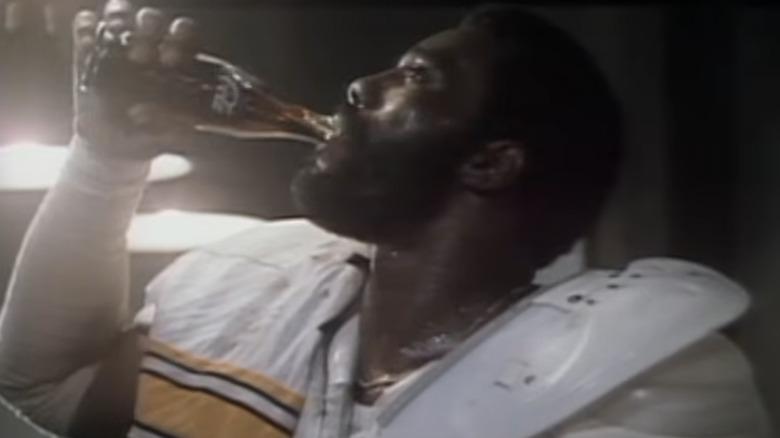
In the pantheon of iconic, famous advertisements, Coca-Cola's "Hey Kid, Catch!" commercial certainly has a place in it. The 60-second spot has Pittsburgh Steelers' defensive tackle, "Mean" Joe Greene, show his soft side after a young fan offers him a refreshing Coke. Greene returns the act of kindness by tossing the kid his jersey to keep as a souvenir.
The commercial first aired in 1979 before gaining an even wider audience when it played during the Super Bowl the following year. Coca-Cola would remake the ad for other countries, including Thailand, Italy, and Brazil, swapping out Greene for local sports stars. They remade it in America, too, expanding it into a full-length TV movie titled "The Steeler and the Pittsburgh Kid." The film followed the kid after he stowed away on the Steelers' plane to Dallas and was taken under Greene's wing.
Greene reprised his role as himself in the movie, which debuted on NBC on November 15, 1981. While child actor Tommy Okon starred in the original commercial, Henry Thomas stepped in for the film. Thomas would star as Elliot in "E.T. the Extra-Terrestrial" the next year.
The California Raisin Show
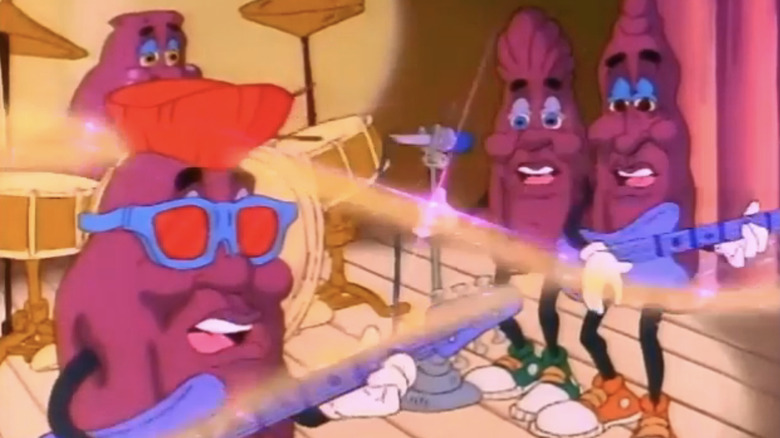
All the California Raisin Advisory Board wanted to do was make raisins "cool." They had no idea that they would create a pop culture sensation in the California Raisins, a group of claymation raisins who sang "Heard It Through the Grapevine" and other Motown hits in a series of commercials starting in 1986.
The California Raisins were so popular, they spawned a primetime CBS special called "Meet the Raisins!" in 1988, and a 13-episode animated series, "The California Raisin Show," which aired on the same network the next year. A cartoon rather than claymation, the TV series wasn't as well-liked as the special or original advertisements.
Unfortunately for the California Raisins, their own success caused them to shrivel up; The California Raisin Advisory Board was spending all the money it was making from increased raisin sales on the California Raisins. The board fell apart in the mid '90s and the California Raisin craze finally ended.
Some food mascots, it should be noted, never even got a chance to headline their own TV show. Fox was developing a series starring Cheetos spokescat, Chester Cheetah, in 1992, but activist groups concerned about the implications of marketing towards children got the show scrapped before it ever aired.