

5 Lessons HBO's House Of The Dragon Can Learn From Game Of Thrones' Final Season
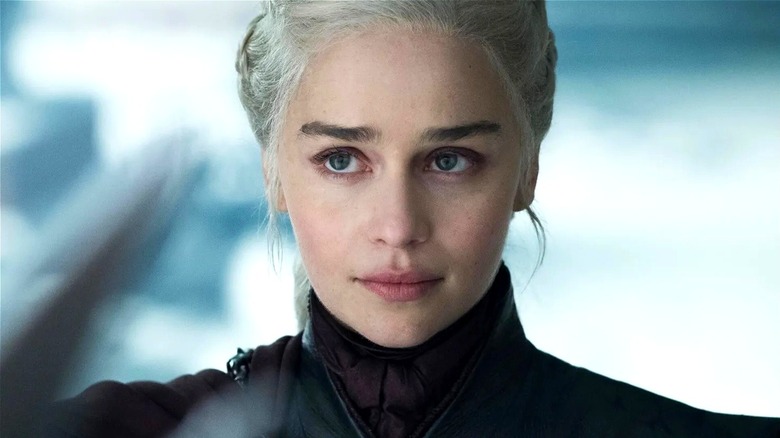
It would be a huge understatement to say that "Game of Thrones" Season 8 fell short of expectations. The biggest show of the 21st century ended with a massively controversial final act and received tons of backlash from fans regarding botched character arcs, questionable plot twists, and an overall story that many felt left the series' biggest threads unsatisfied. As "House of the Dragon" nears its own end with the impending Season 4, HBO has a chance to do right by the franchise with a more cohesive and compelling final outing, but the prequel series needs to be careful to avoid the same missteps that dragged "Game of Thrones" down in Season 8.
Admittedly, "House of the Dragon" has lower stakes. Eight seasons over the better part of a decade is a long time to build up expectations, and the outsized profile of "Game of Thrones" in pop culture almost guaranteed at least some fans would be unhappy. The prequel only has half as much material to wrap up, and "House of the Dragon" has been a bit more polarizing throughout its run. Even author George R. R. Martin himself has criticized "House of the Dragon" for its divergences from the "Fire & Blood" book, though some fans have praised the show's original choices and methodical pacing. No matter which side you fall on, these are five lessons "House of the Dragon" needs to learn from the "Game of Thrones" finale.
Do right by the characters' stories
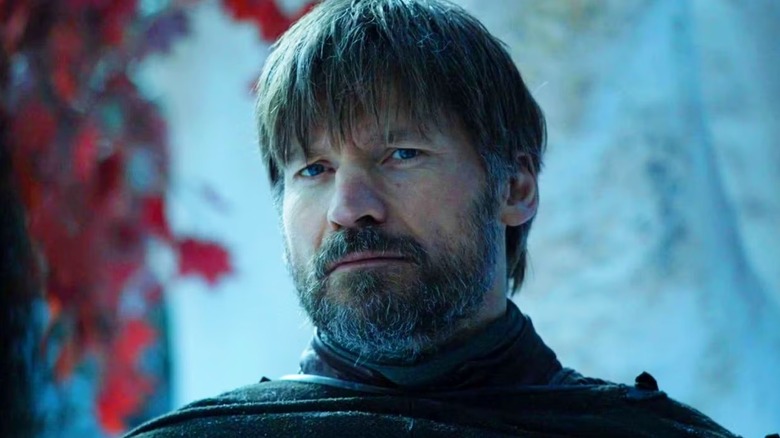
Let's start with the main reason fans were unhappy with the ending of "Game of Thrones" — characters ending their stories in ways that just felt completely random. Whether it was Daenerys' speedrun into mad-queen villainy, Jaime's self-destruction rush back to Cersei, or Bran being crowned king of the realm, Season 8 was filled with big-swing character moments that seemed to reject the years of development those same characters had received. Most of these were less a failing of premise and more a failing of execution. Dany's turn to the extreme dark side is the sort of final jab that could have worked quite well, but most fans felt that the fall was rushed and poorly constructed.
"House of the Dragon" has a chance to craft the final arcs for its main characters in a more natural way rather than pulling the rug out from under its viewers. Crucially, the book it is based on has long since been published, a luxury "Game of Thrones" didn't have. Of course, the prequel series could go ahead and change some of those preestablished endings, as it has changed things before. Either way, "House of the Dragon" Season 3 nudged things in the right direction for some of the stories' final moments to feel natural and earned, particularly where Rhaenyra is concerned. Here's hoping Season 4 doesn't ruin its characters like "Game of Thrones" did.
Make sure we can actually see what's happening
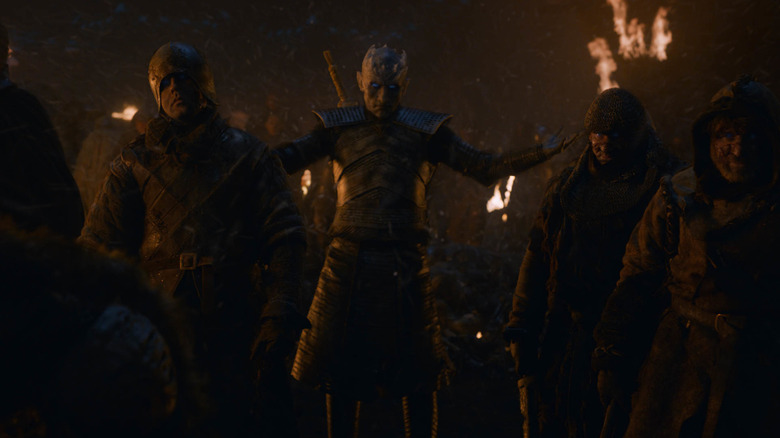
While the biggest critiques of "Game of Thrones" Season 8 mostly revolve around the writing and plotting, the final season also suffered from some baffling production blunders — and no, we're not talking about the coffee cup that was left in a scene by mistake. Most egregiously, the Battle of Winterfell, a full cast-versus-White Walker army showdown eight seasons in the making, wound up being nearly impossible to watch due to how dark it was. This should have been an easy homerun, and while the episode "The Long Night" still features some of our favorite moments from "Game of Thrones" Season 8, it's hard to feel the full impact of such a massive climax when you're squinting at the screen trying to figure out who's who and what's happening.
"House of the Dragon," like its predecessor, has fantastic production design. In fact, it's arguably even better. The costumes, the shot composition, the CGI on the dragons, the practical effects for the battle scenes — the people behind the prequel nail these elements on a weekly basis. Hopefully, that high standard won't lapse in the final season. While better lighting and fewer blunders wouldn't have saved "Game of Thrones" Season 8 from its writing pitfalls, these more mechanical issues helped affirm the narrative that the show was coasting to a stop rather than ending triumphantly. "House of the Dragon" Season 4 has a chance to look and sound every bit as good as a grand finale ought to.
Don't lean too much on the Song of Ice and Fire prophecy
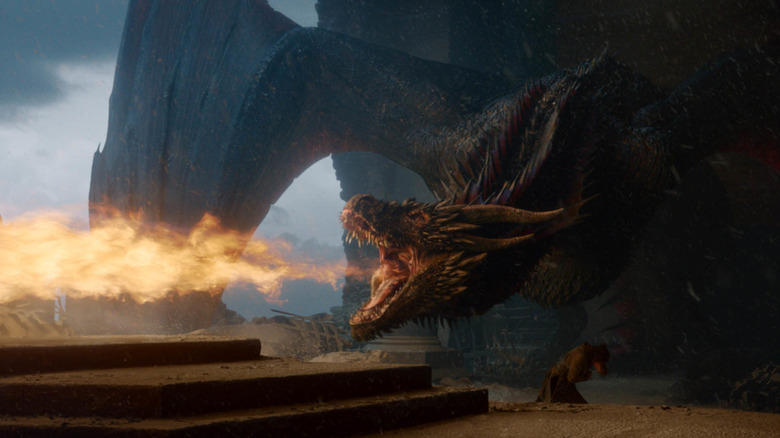
The magic in the "Game of Thrones" universe is often not the centerpiece, but prophecy and eldritch power still drive the story, most famously in the case of the eponymous Song of Ice and Fire, which foretells of a battle between the forces of light and an ancient darkness invading Westeros from the North. Most viewers of "Game of Thrones" and readers of George R. R. Martin's novels assumed that the prophecy of the "Prince That Was Promised" was either referring to Jon Snow or Daenerys Targaryen or both, theories supported by moments like Jon's resurrection and Dany's various prophetic visions. But then, when push came to shove, it was apparently more neat to have Arya Stark save the world with a cool knife trick, effectively killing any hope among fans that the prophecy might be anything more than a myth.
This was anticlimactic, to say the least, and the final season of "Game of Thrones" then went about its business as if it hadn't just erased years of anticipation. Now, "House of the Dragon" is once again hanging its hat squarely on the peg of prophecy — a strange choice, both because the Song of Ice and Fire has nothing to do with Rhaenyra's story in the book, and because we all now know that the whole thing comes to nothing. It feels like HBO is building up to another big prophecy swing, which can only be a letdown given where that thread goes. "House of the Dragon" can still dodge that bullet, either by using blind faith in the prophecy as a sort of bait-and-switch in Rhaenyra's arc or by letting it take a backseat to the remaining political drama.
The cleanest ending isn't necessarily the best ending
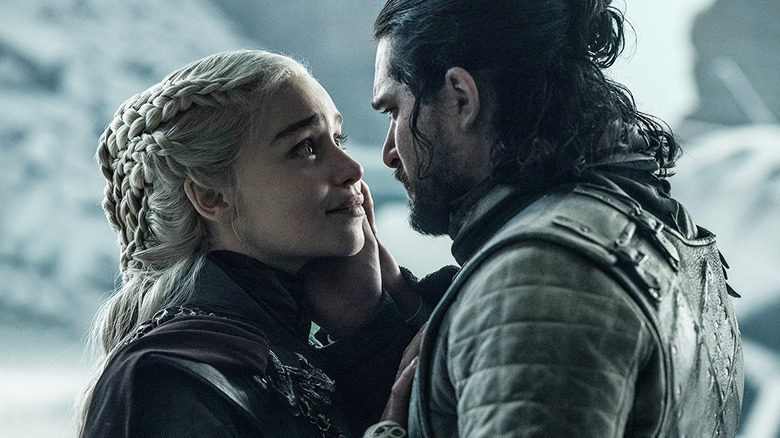
In the wake of "Game of Thrones" Season 8, there was some talk of new shows that would take place after the flagship show in the timeline, most notably a Jon Snow spin-off that Kit Harington ultimately backed out of. HBO ended up moving backward in the timeline instead, with "House of the Dragon" and "A Knight of the Seven Kingdoms" both taking place prior to the original series and adapting other stories written by George R. R. Martin.
There are plenty of reasons for that decision, but part of the difficulty in moving beyond the end of "Game of Thrones" could be that the show wrapped up in an overly clean way, snipping any loose ends. At face value, that sounds like a smart move, giving fans definitive endings for their favorite characters. But, in reality, it actually made the ending feel awkward and less authentic, with arcs like Bran's kingship and Dany's death cutting off any space for fans to theorize about what might have happened next.
The cleanest finale is not necessarily the best one. A bit more ambiguity on certain arcs would have given fans space to continue playing in the world they'd come to care about, and while there's technically some open-ended material with Arya's voyage or Jon's fate, both felt more like removing the characters from the story for the sake of time restraints. It would be wise for "House of the Dragon" to leave a bit of room for interpretation.
Don't sacrifice the story for a few memorable moments
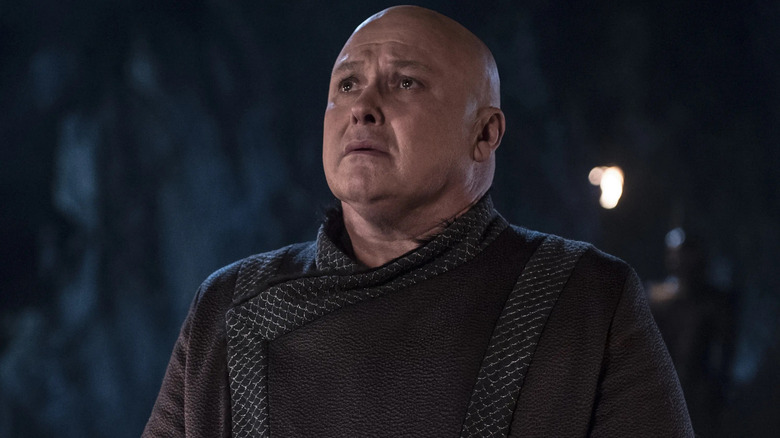
At some point during its run — and different people will point to different fulcrums — "Game of Thrones" started to invest less in slow-burn, methodical storytelling and more in jaw-dropping moments that seemed designed to make the show go viral every Sunday night. Iconic scenes like the Red Wedding and the destruction of the Sept of Baelor became the kind of moments that defined the series.
Some fans began to argue that the showrunners were more interested in shock value than writing a good story. It was clear by Season 8 (universally seen as the worst "Game of Thrones" season) that these memorable moments were working against the larger story. Things like Arya assassinating the Night King, Euron Greyjoy killing Rhaegal, and Daenerys executing Varys are all great ways to get people talking, but they left holes in the show that grew larger in retrospect.
Thanks to "Fire & Blood," we already know that there are likely some banger moments coming in "House of the Dragon" Season 4. The trick will be weaving those into the larger narrative smoothly without making the final season feel like a series of "gotcha" moments. To its credit, "House of the Dragon" has typically been unafraid to lean into story over spectacle, but with a lot of ground still to cover, it remains to be seen if it can dodge the traps that claimed its predecessor.