

The Office: Every Main Character's Ending, Ranked
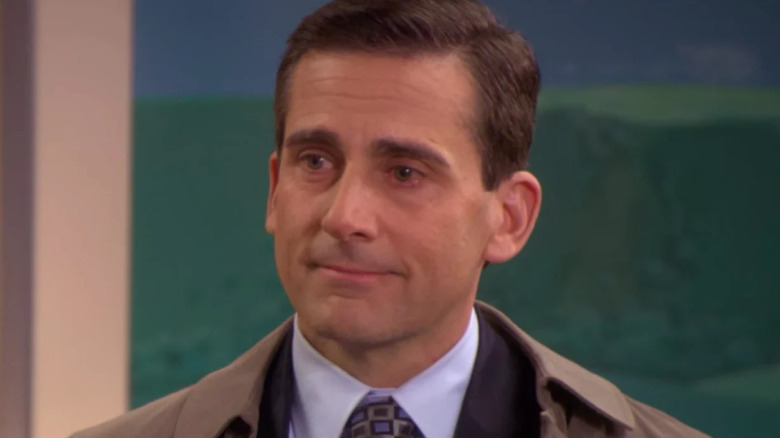
If there's one beloved modern sitcom synonymous with regrettable endings, it's "The Office." Its decline after the exit of Steve Carell's Michael Scott hardly needs to be relitigated or dissected further. Often, however, this discourse regrettably overshadows how well the NBC series landed the plane in its finale, specifically for its ensemble of characters.
This episode was well received at the time, and it's never been hyperbolic to describe it as one of the greatest series finales ever made. This success doesn't just come down to cameos and fan service, but the genuinely poetic and effective character writing on display throughout. Aside from a few characters who are necessarily sidelined or reduced (sometimes uncomfortably) to joke-fodder, every Dunder Mifflin employee met a satisfying end that helped positively shape how fans look at their arc throughout the series.
16. Clark Green and Pete Miller
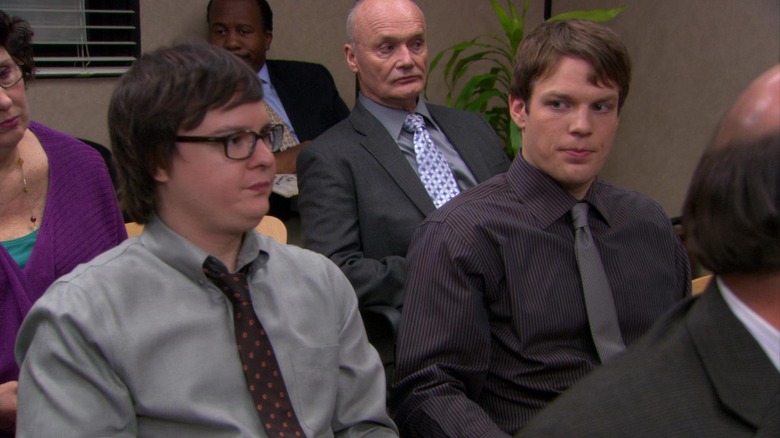
Clark (Clark Duke) and Pete (Jake Lacy) always deserved to have the worst endings in the series. The characters aren't awful, but they didn't add nearly enough in their short time with "The Office" for fans to be invested in their arcs long term. Thus, smartly, the finale mostly ignores them.
Pete dances with Erin (Ellie Kemper) at Dwight and Angela's wedding, so it can be assumed that their relationship is going well. His other big moment from the finale was actually cut. He read his high school yearbook quote to the camera — "I always knew looking back on the tears would make me laugh. But I never knew looking back on the laughs would make me cry."
Clark has even more material cut from the finale. With deleted scenes added back in, there's actually a trackable subplot where his character falls for newcomer Dakota (Dakota Johnson) and declines a future documentary to stay at the office with her. Without them, he and Pete are just ... there.
15. Phyllis Vance
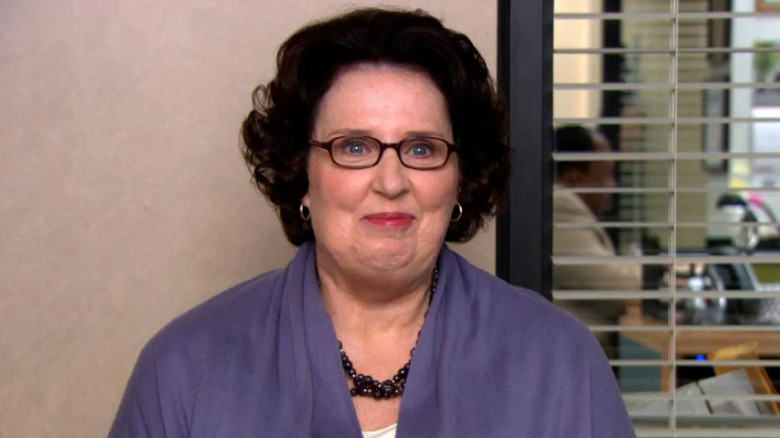
There isn't anything truly terrible about Phyllis Vance's (Phyllis Smith) ending on "The Office," but it's about as interesting plot-wise as Clark and Pete's. (On the other hand, the story of how she got started on the series is pretty neat.)
Though the finale was written to give each character a moment to shine, Phyllis is sidelined completely. She doesn't get a new career or moment of clarity — just a moment with Stanley's replacement ("The Boys" alum Malcolm Barrett) where she smiles about the idea of feeding him until he looks like her old friend. She has a few sweet interactions with Leslie David Baker's "mean old grump," including one where she shows the crew a small sculpture he whittled for her.
In fairness, "The Office" did delete arguably her biggest scene of the episode. As superfans can see in the extended cut of the finale, Phyllis gives a speech at Angela and Dwight's wedding — one in which she drunkenly recounts walking in on the two of them after Toby's goodbye party. It's weirdly kind of touching. Another deleted scene confirms that, after Stanley's departure, she's the longest-employed member of the office.
14. Toby Flenderson
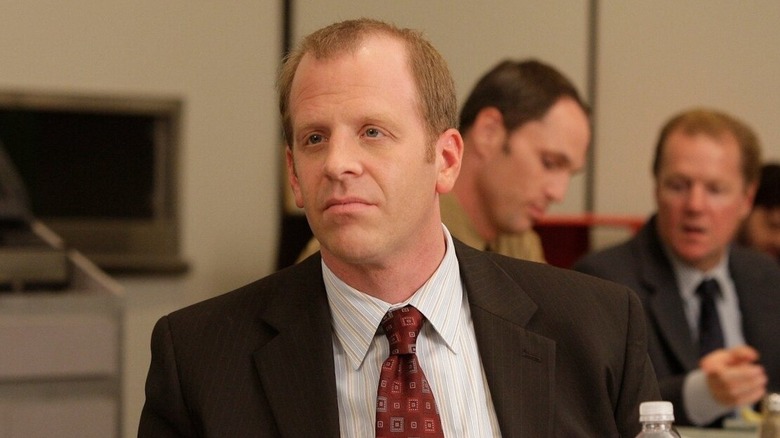
Toby Flenderson's ending is so cruel you'd think Michael Scott himself wrote it. (Ironically, given that Paul Lieberstein was a longtime writer and executive producer on the series, it's far more likely that the actor himself helped shape it.)
At the start of the finale, Toby is the last recipient of Dwight's (Rainn Wilson) fired/retired cakes. It's given to Toby after he attempts to stop Dwight from firing Kevin (Brian Baumgartner). Fans have noted that, canonically, Dwight shouldn't have been able to fire his own HR rep given that Toby works for corporate — but Toby was so bad at his job we're willing to let it slide anyway.
The firing isn't what makes this ending bad — it's that the series feels the need to punish him even after setting him free from an abusive workplace. He's moved in with six other guys in a New York apartment, where he's set out to write the Great American Novel. Maybe Toby's just being frugal, living off his savings while he follows his dream. The show frames it as if he's broke, delusional, and deeply depressed. He cries in Pam's (Jenna Fischer) arms at the wedding.
13. Oscar Martinez
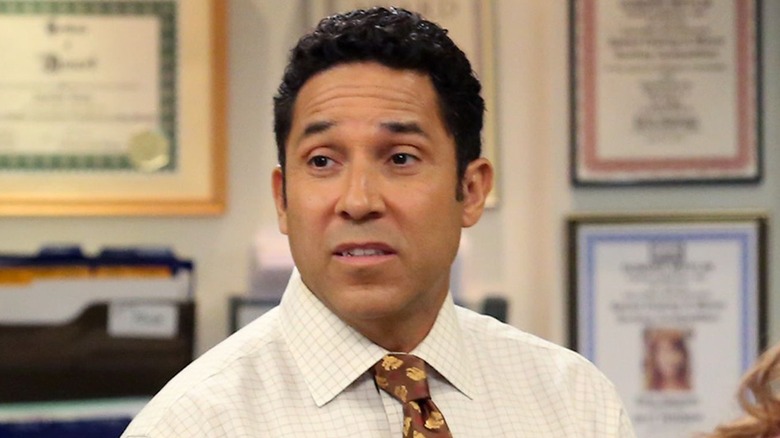
On the other hand, even an extraordinarily happy ending would've been disappointing if it came out of nowhere. Case in point — Oscar Martinez (Oscar Nunez).
After being brutally dumped by Robert "the (state) senator" Lipton (Jack Coleman), Oscar decides to run against Robert for the seat. Oscar had always been politically passionate and intelligent (see "China"), but there was little suggestion he'd ever seriously run. Then again, why shouldn't ordinary people fight to make their voices heard? Either way, "The Office" never gives the result – the spin-off series "The Paper" seems to confirm he didn't win.
His career in politics was short-lived. He eventually moved to Toledo, Ohio, when Dunder Mifflin was acquired by Enervate. He then became an accountant, writer, and Sudoku designer for the Toledo Truth Teller, and is the main connective tissue between "The Office" and "The Paper."
12. Stanley Hudson
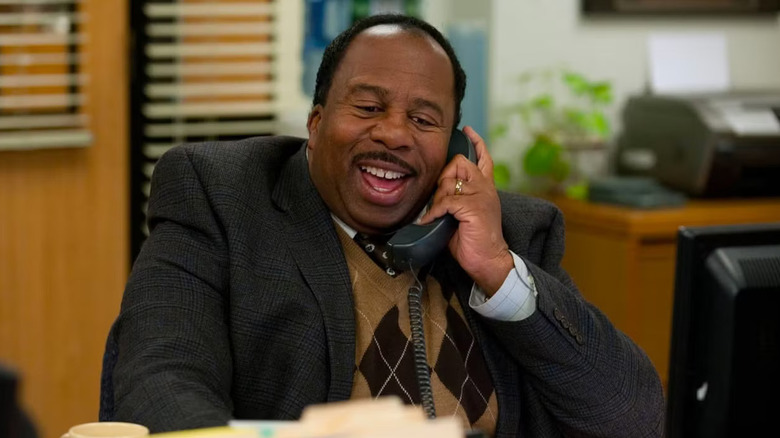
Stanley Hudson spent much of his screen time on "The Office" talking about how much he hated his job, hated his boss, and was looking forward to retiring as soon as possible. At the start of the finale, he gets his wish. His spot on the sales team is filled by the slender Malcolm Barrett, who now gets to enjoy Phyllis' fudge.
Stanley moved down to a small town in Florida, notably the state where former Sabre CEO Jo Bennett (Kathy Bates) lives. It's unlikely the two have hung out or anything. He mostly spends his time carving wooden birds, similar to the small sculpture he gave to Phyllis.
For a brief period of time, Leslie David Baker was attempting to bootstrap his own unofficial "Office" spin-off centered on his character. After COVID-19 and the Hollywood strikes of 2023, he put the project on indefinite hiatus.
11. Kevin Malone
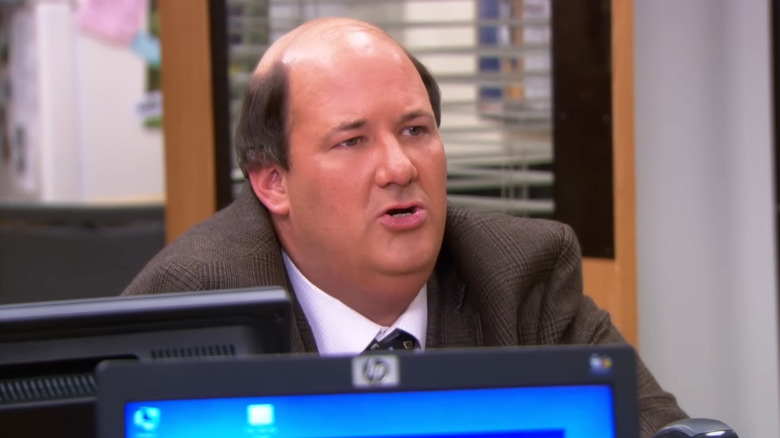
Kevin's firing was a tragic early beat in the finale – but Dwight had a point. As we later learn from Oscar, he was specifically let go because he had invented a new number ("Keleven") to help balance the books when the numbers didn't make sense. Y'know, the type of bookkeeping mistake that could've gotten Dunder Mifflin shut down and Kevin sent to jail.
Fortunately, Kevin landed on his feet — though, in a way that doesn't entirely make sense without the deleted scenes. As they reveal, the documentary made Kevin so popular at his local bar that patrons wouldn't stop buying him drinks. Because Kevin doesn't drink that much, he racked up essentially the opposite of a bar tab, where the owners owed him $16,000 in undrunk drinks. It became cheaper for them to make him a part-owner. Again, the logic here doesn't really hold water, but we'd also believe that a bar getting that much business from a celebrity like Kevin would believably bring him on board, especially if he's going to bartend as well.
10. Meredith Palmer
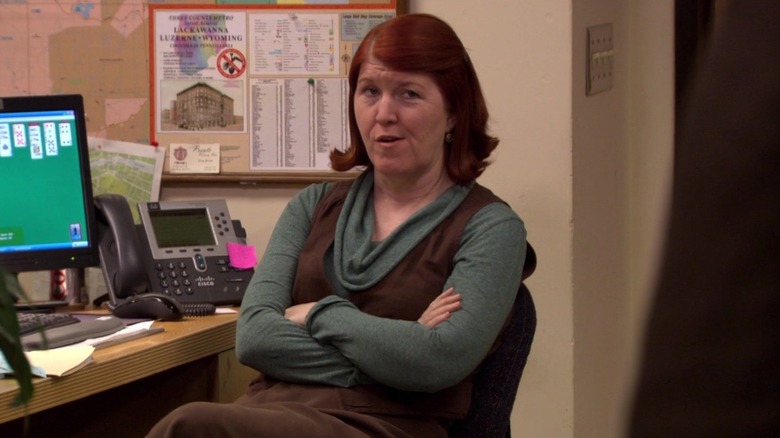
As Meredith Palmer, Kate Flannery was a comedic assassin on "The Office," stealing scenes with an injected line here or there. Her role is much the same in the finale — she has one line of dialogue to establish where she ended up, and it's one of the season's funniest jokes.
The character, often seen drinking, smoking, or neglecting her child (who we also learn in the finale grew up to be a successful stripper, much to her pride), was actually enrolled in school during the documentary. She graduated with a Ph.D. during filming, and is understandably annoyed that the camera didn't think to capture any of that on tape. It's a highlight of the finale that lightly reframes the way you look at the character, while poking fun at the inherently inauthentic nature of the "documentary" itself.
9. Erin Hannon
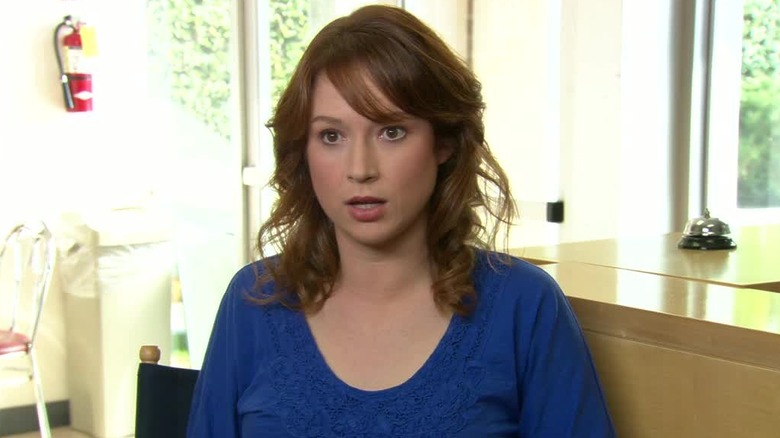
One of Erin's defining character traits is that she was raised without knowing who her birth parents were. She was raised in orphanages and foster care, never adopted into a family of her own. She desperately wanted a mother, to the extent that she believed Phyllis might have been the woman who gave her up when she was a baby.
In reality, Erin's parents were out there looking for her, and were finally able to find her because of the documentary. Played by Joan Cusack and Ed Begley Jr., they show up at the Q&A reunion for the documentary, where Erin happily embraces them (after some initial confusion). They attend the wedding with her, where it seems like all has been forgiven. In a deleted scene, we learn that Erin's parents made the decision to give her up because they were too toxically focused on their careers as puppeteers.
8. Darryl Philbin
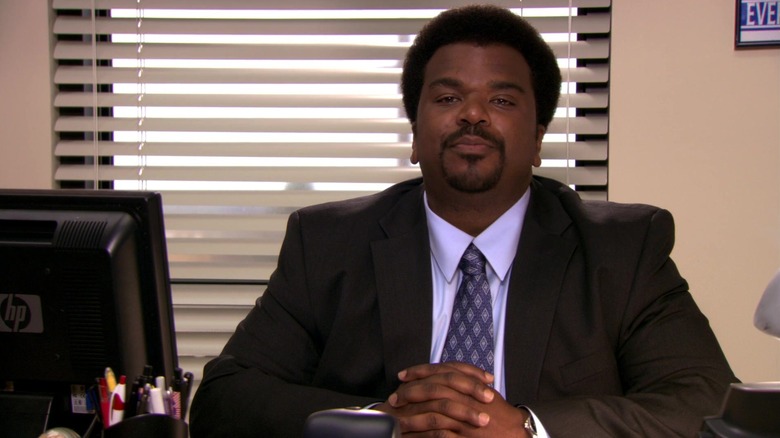
For a series about the workplace, "The Office" gave its most dramatic career arc to Craig Robinson's Darryl Philbin. He began as the foreman of the office's warehouse, pitched his way up to becoming a logistics manager for Dunder Mifflin during the Sabre era, then leveraged his friendship with Jim (John Krasinski) to get a dream job at the sports marketing company Athlead. To do so, he had to leave Scranton — which meant breaking off things with his girlfriend, Val (Ameenah Kaplan).
Season 9 gives him his own goodbye episode in "A.A.R.M.," which is a tear-jerker in and of itself. It shows that, despite his too-cool attitude, Darryl deeply loved the people he worked with and was grateful they wouldn't let him go quietly. In the finale, he gets to be the recipient of the good news that Jim is finally coming with him to help establish Athleap in Austin. A deleted scene implies he and Val still have feelings for each other.
7. Ryan Howard and Kelly Kapoor
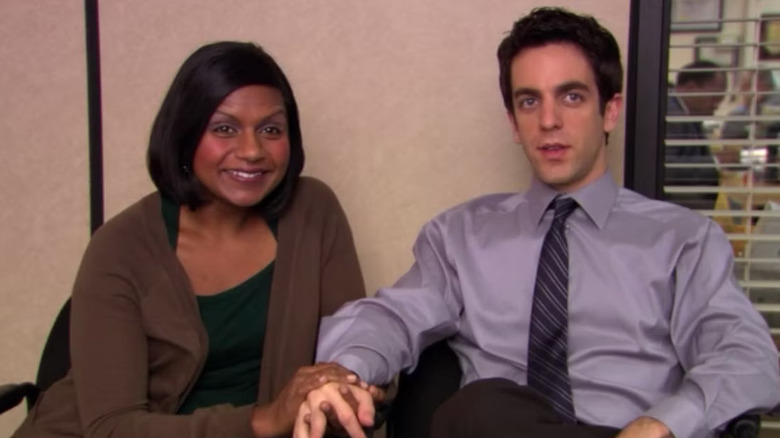
Both B.J. Novak and Mindy Kaling had departed "The Office" for greener pastures by the start of Season 9. The premiere, "New Guys," revealed that Kelly had loudly quit her job to be with her successful pediatrician boyfriend, Ravi (Sendhil Ramamurthy), in Miami. Unfortunately for her, his pediatric practice is in Miami, Ohio (no awkward alligator brunches for her, Stanley, and Jo, sadly). Ryan also moves to Miami, Ohio, for "unrelated reasons." Sure.
They're both invited to the wedding, where Ryan shows up with a baby, the mother of whom abandoned both Ryan and the child (named Drake, thankfully not after the rapper). After staging a medical incident to distract Ravi, Ryan and Kelly impulsively make off and run away from the wedding. Ryan professes that he's "finally mastered commitment" as Kelly proclaims that they'll actually be together forever. It's dark, even more so than Toby's ending, but perfectly fitting for who these two characters have always been.
6. Nellie Bertram
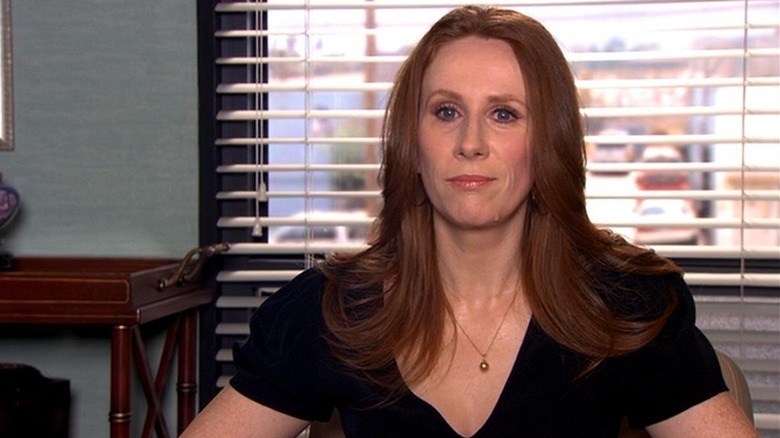
Ryan and Kelly's ending is softened by the fact that it serves a much happier ending for Nellie Bertram. Catherine Tate's character was regarded as a dreadful addition to the series in Season 8, but she eventually became tolerable and occasionally sympathetic. So much so that, when Ravi returns with little baby Drake only to find that Ryan and Kelly have vanished, it's genuinely touching that the baby has fallen into her care.
Nellie's only moments of humanity came when she was confronting her difficulties adopting a child. Agencies had rejected her and Andy (Ed Helms) had humiliated her when she asked for a simple employer recommendation. For all her scheming, she was one of the kinder and better-adjusted people at Dunder Mifflin — and, honestly, who here is going to argue that little baby Drake wouldn't be better off with her than Ryan and Kelly?
5. Creed Bratton
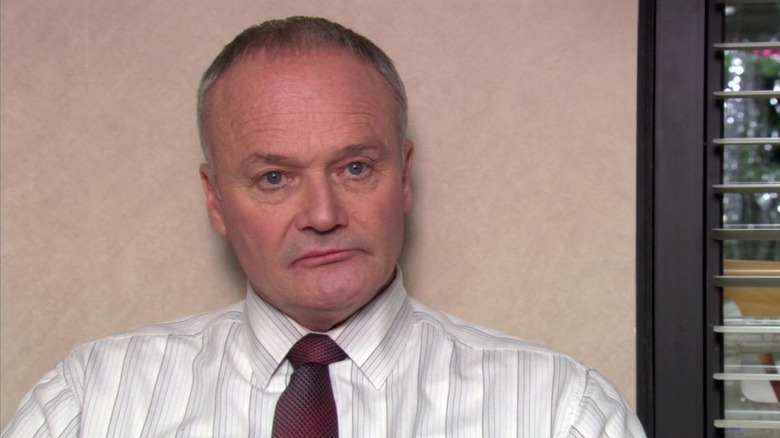
Of the supporting cast, Creed Bratton's (Creed Bratton) ending was the funniest. In its own bizarre way, it was also pretty satisfying and moving too.
When the documentary aired, that much-alluded-to life of crime finally caught up to old Creed. He was forced to go on the lam, likely not for the first time. In an earlier episode, he claims to have stolen his identity from a man named Creed Bratton whom he may or may not have murdered — it's never clear whether these kinds of vaguely troubling anecdotes were real memories or delusions. Creed was for sure a wanted man, however, and seemingly decided to turn himself in at the end of the episode.
At the office, Creed was replaced by Devon White, the character Michael Scott fired all the way back in Season 2. On the "Office Ladies" podcast and in the book "The Office: The Untold Story of the Greatest Sitcom of the 2000s: An Oral History," it's revealed that the real Creed Bratton actually had the idea to bring Devon back. Devon Abner, the actor, agreed, seeing as "Halloween" had already earned him plenty in residuals.
4. Jim Halpert and Pam Beesly
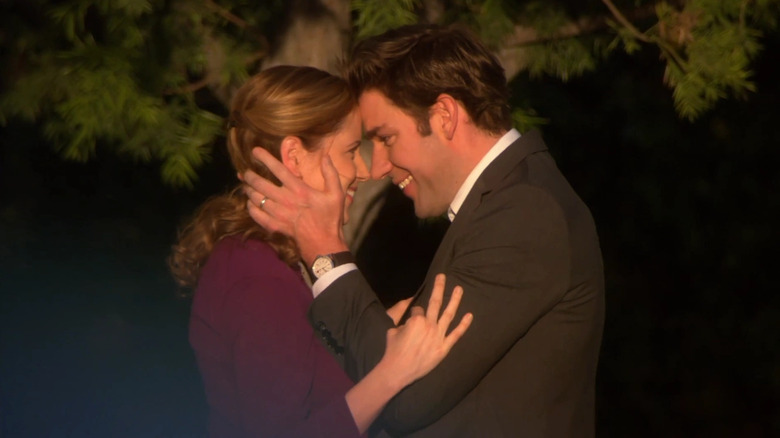
Ask anyone what they hate about Season 9 of "The Office," and they'll say it's Jim and Pam's storyline. As much focus as their ending gets in the finale, it's hard to rank it any lower than this — but believe us, we thought about it.
After a season of manufactured tension and Jim basically being emotionally manipulated into giving up on his dreams, Pam suddenly reverses course so that they can move to Texas with Darryl. The poetry of her selling the house without asking because Jim bought the house without asking is, admittedly, a beautiful touch that helps sell a shrug-worthy end of a frustrating storyline. After all, what exactly made Pam change her mind? Was it seeing the documentary and realizing how unreasonable she was being? Was it the fan reaction, like we see in the Q&A? It's pretty bleak.
Perhaps the series is arguing that Pam needed time to make the decision on her own, without the pressure of Jim having made it for them. Given that this change happens off-screen, it would be hard to swallow — if the moment weren't also working off of a decade of happier memories. Pam answering the phone one last time still gets us — we aren't ashamed to admit that.
3. Michael Scott
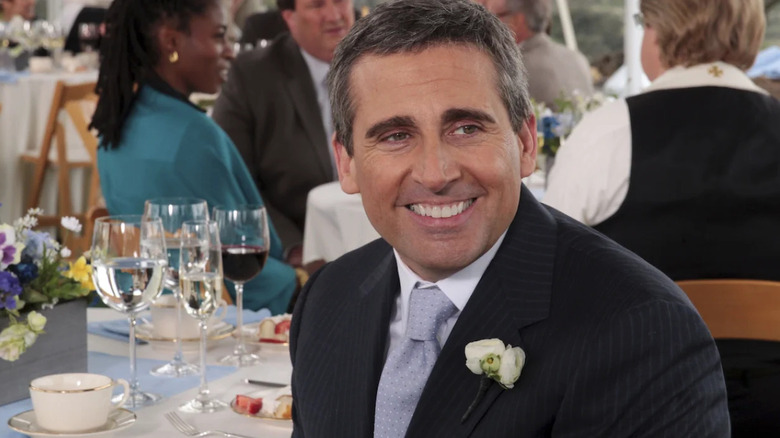
Michael Scott is the only character on this list who didn't make it to Season 9. He might not have lasted the longest, but he still got the perfect happy ending he deserved. (That's what ... never mind.)
At the end of Season 7, Michael proposed to Amy Ryan's Holly Flax and moved with her to Colorado. Despite the attempts of the cast and crew to keep it a secret, TVLine broke the news that Carell and the character would be returning for the finale. He is invited to the wedding by Jim to serve as Dwight's "Bestest Mensch." We don't learn much about his life, only that he and Holly are very happy with their children.
Both of Michael's endings are highlights of the entire series. The original, though somewhat premature for fans of the series, came at a natural point for the character, and was satisfyingly built up over the course of the season. The series finale cameo punches far above its weight class, given Michael only gets two lines.
2. Dwight Schrute and Angela Martin
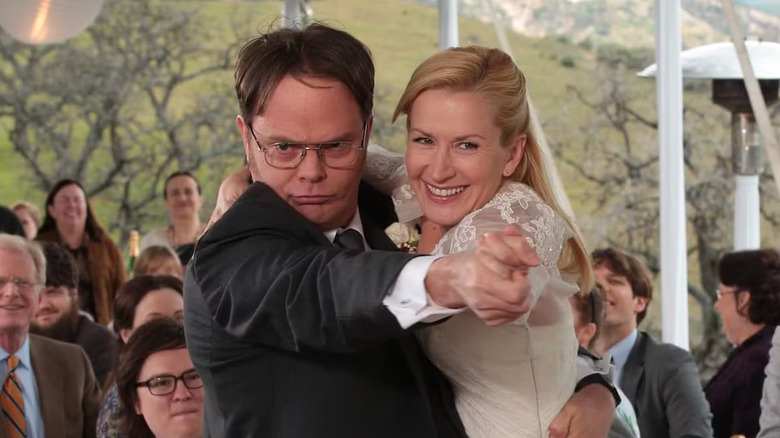
If there's one good thing that came out of "The Office" continuing past Michael's exit, it's Dwight. Out of the entire main cast, he's the only character with significant room to grow by the end of Season 7. He has the sales talent to be regional manager, but not yet the people talent.
Seasons 8 and 9 do a pretty great job of slowly giving Dwight the skills he needs to be the best boss Dunder Mifflin has ever had. He's more competent, focused, and efficient than Michael and Andy, but (by the time he's promoted) possesses real compassion for the people he works with. His egomania has been quelled so successfully that, when he gets the job, there's only one thing that doesn't feel right — Angela.
Their marriage is the perfect way to end the series. Dwight's whole world had been Dunder Mifflin — now, it's Angela, Phillip, and the people he invited to celebrate with him away from the office at Schrute Farms. Even if it strangely counters the original argument of "The Office," that the workplace shouldn't be a person's entire life, it's a final achievement that sticks the landing for what the series had grown into.
1. Andy Bernard
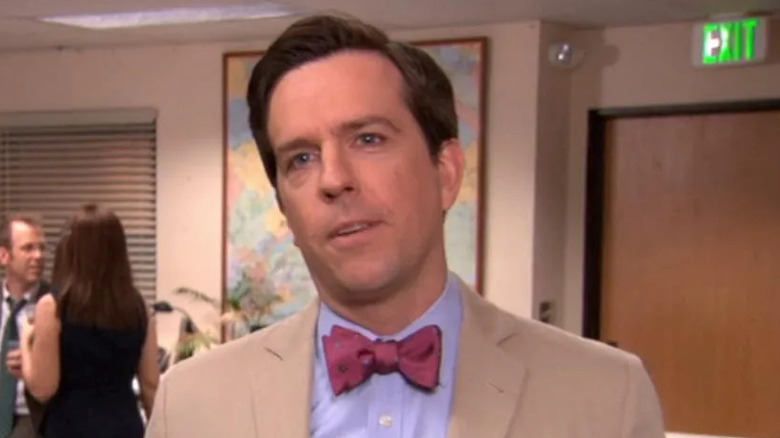
Ironically, "The Office" only decided to write Andy as a nigh-irredeemable failure because the writers needed an excuse to let Ed Helms go be a movie star. Andy had always been delusional and a little narcissistic, but Season 9 throws him overboard.
By the finale, however, his character arc had gotten back on track in a pretty sweet and unexpected way. In the penultimate episode, Andy had embarrassed himself on the in-universe version of "American Idol," which the finale reveals led to him becoming a viral sensation. He got the fame he wanted, but for all the wrong reasons.
In the intervening year, he shockingly managed to take that embarrassment and learn from it — growth that's actually fairly in-line with a character who underwent a soft transformation after his stint in anger management. When he returns in the finale, the office pities him (a lot, to the extent that many deleted scenes are just characters feeling bad for him). They eventually learn that Andy had given a genuinely triumphant, self-aware commencement speech at his old alma mater, a landmark moment for the character that had likely been a longtime dream of his. He works at Cornell full-time, now missing Scranton as much as he used to miss the school.
His bittersweet final line — "I wish there was a way to know you're in the good old days before you've left them" — is the best line in the finale, and has a simple poignancy that's stuck to our bones for over a decade now.