

5 Once-Beloved '90s Sitcoms That Nobody Talks About Anymore
There's a real argument that the '90s should be considered the golden era for sitcoms. It's when they began stepping outside the living room –- both in setting and subject matter –- and into the world. The best sitcoms of the '90s not only continued to showcase stellar casts and writers, but they challenged conventions and pushed the envelope in satire, representation, technical artistry, and cultural commentary. As a result, many sitcoms of that decade stand the test of time.
But one inevitable consequence of having almost too many great options to talk about is that some will be forgotten. There are plenty of '90s sitcoms that had strong multi-season runs with devoted followings but have ultimately slipped from today's pop cultural conversations. Whether dated references cause a show to get left behind or limited streaming options make it hard for viewers to discover or rediscover it, it's not easy for sitcoms to stay relevant. Not every show can be like "The Fresh Prince of Bel-Air," or any other '90s sitcom that gets better on rewatch. But, as TV continues to move forward, there's still space for one or two (or five) nostalgic shout-outs. Here are five previously loved '90s sitcoms that aren't talked about anymore.
3rd Rock from the Sun
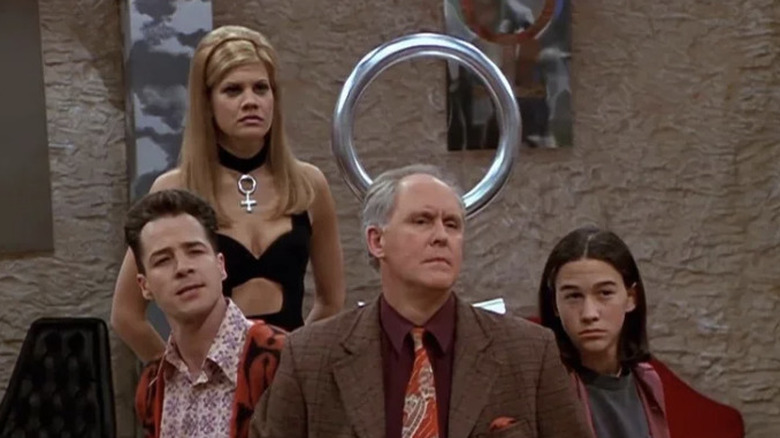
Four aliens come to Earth on a mission to study humans. Over time, they grow to appreciate humanity, while also becoming a real (odd) family. Though the premise wasn't 100% original (it was often compared to "Mork & Mindy"), "3rd Rock from the Sun" struck a chord with audiences at the time due to its unique blend of sci-fi, old-school slapstick, and mid-'90s weirdness. The ensemble cast was led by a theatrical John Lithgow as alien mission commander Dick Solomon. He and Kristen Johnston, who played Dick's sister Sally Solomon, earned a total of five Primetime Emmy Awards between them for their performances.
Harry Solomon (French Stewart), the oddball "uncle" of the crew, and Tommy Solomon (Joseph Gordon-Levitt), the oldest alien posing as a teenager, were standouts as well. Tommy was Gordon-Levitt's breakout TV role, which launched him into tween stardom. As sitcoms of the '00s — such as in "The Office" and "The Big Bang Theory" — would fully embrace awkward characters and situations, "3rd Rock from the Sun" can be seen as an early taste of that flavor.
In a 1997 interview with the LA Times, Stewart described how the cast leaned into their quirky roles. "It's closer to theater," he said. "It's just farce. So it sort of enables us to pump it up and chew scenery, you know, to just really go nuts. And I think from the very beginning, Mr. Lithgow set the pace."
Wings
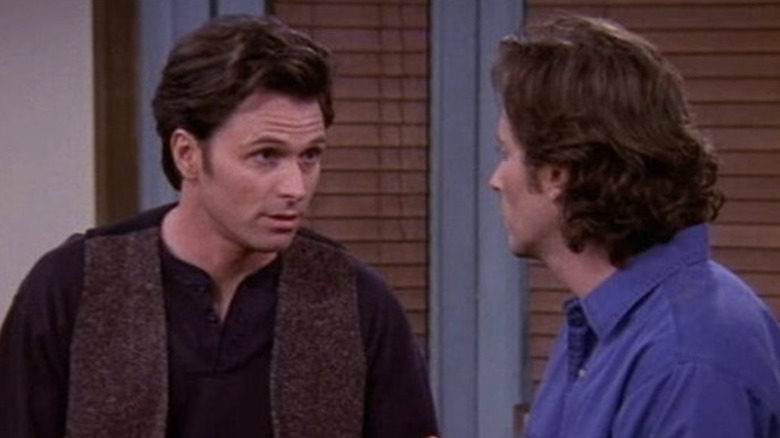
"Wings" — about two estranged brothers who reunite to run a small commuter airport in Nantucket — shares a universe with classic sitcoms "Cheers" and "Frasier," ("Wings" creators David Angell, David Lee, and Peter Casey also created "Frasier" and produced "Cheers.") which might be one reason why "Wings" gets overshadowed. But this witty show had a consistent following that loved the ensemble's chemistry, particularly that of protagonists Joe Hackett (Tim Daly) and Brian Hackett (Steven Weber), and the small workplace setting with eccentric regulars. And for viewers who didn't mind a layover in the same comedic region as "Cheers," "Wings" would air directly after it on Thursday nights from 1990 to 1993.
"Wings" also cleared the runway for a couple of breakout TV roles. One was Tony Shalhoub's Antonio, an Italian immigrant cab driver who became a recurring character by Season 3. The other was Thomas Haden Church's Lowell, dim-witted airport mechanic who stayed on as a regular for the first six seasons.
In an interview with People, Shalhoub recalled receiving some real-life air perks. "All of the airport staff, [they] all were into that show. I'd get an upgrade, [an] extra cocktail...I'd go to a rental car desk, and they'll be like, 'Oh, my god, we love that show. Here, have an SUV.'"
Roc
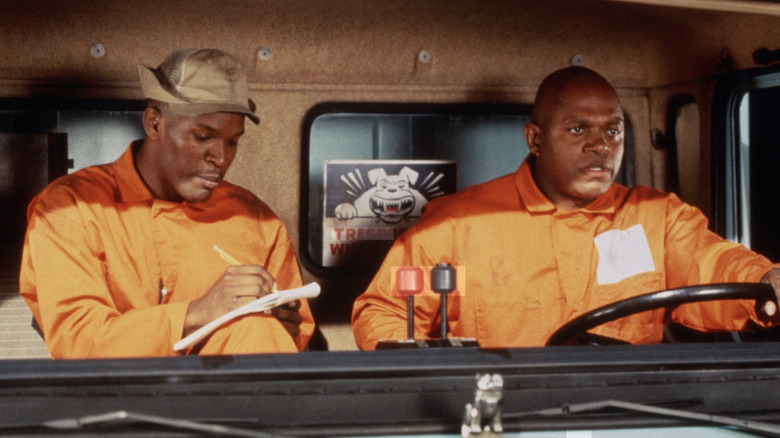
"Roc," which followed Baltimore garbage collector Charles "Roc" Emerson (Charles S. Dutton), used comedy as a way to discuss more serious social issues and the realities of working-class, Black family life. It only aired for three seasons from 1991 to 1994 on the then five-year-old Fox, but many viewers called it an underrated, fantastically written show. It was also lauded for its ensemble cast. Dutton, Rocky Carroll, who played Roc's brother Joey, and Carl Gordon, who played Roc's father Andrew, performed on Broadway together before joining the sitcom. This stage experience led the producers of "Roc" to take a shot at doing a live show format — something no other sitcom was doing at the time.
After doing a live Season 1 episode that performed well, "Roc" made the bold move to broadcast its entire second season (25 episodes) live as a theatrical performance. In 1992, after the season premiere, it was praised for having no mistakes by the cast. And, according to the Los Angeles Times, the premier drew a 34% increase in viewership over the previous season's premiere. When asked if performing live was merely a ratings gimmick, Dutton said, "It's not a gimmick. This is the first time in 40 years that this has been done — [four] actors who are willing to go out on a line in front of a national audience. It's the ultimate challenge for us, and the ultimate complement for my career at this point."
Spin City
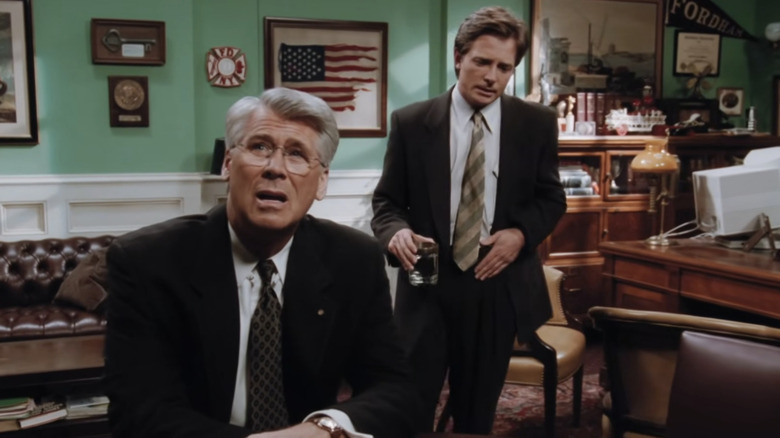
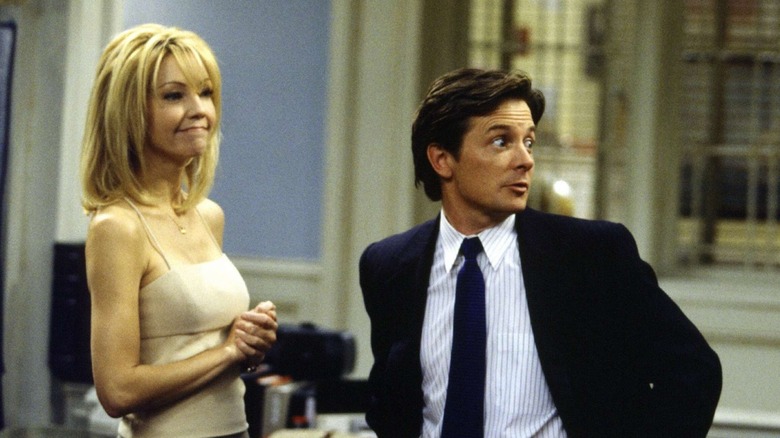
As Michael J. Fox's first starring TV role since "Family Ties" ended in 1989, "Spin City" was his welcome return to an ensemble sitcom. Protagonist Michael Flaherty (Michael J. Fox) is the New York City deputy mayor. His job is to take any bad PR Mayor Winston (Barry Bostwick) gets and "spin" it towards a positive light. Fox's charm combined with the crackling banter of the other cast members earned the show a lot of love over its first four seasons. Fox, himself, received three Golden Globes, two Screen Actors Guild Awards, and one Emmy.
When Fox left "Spin City" after Season 4 due to Parkinson's disease, he was replaced by Charlie Sheen in the lead role as Mayoral Advisor Charlie Crawford for the final two seasons. Heather Locklear also joined in a recurring role as Marketing Manager Caitlin Moore. While they both earned accolades for their performances, including a 2002 Golden Globe win for Sheen, many viewers acknowledged the show didn't feel the same after its tone shifted.
In a 2010 interview, Fox recalled first being approached about the "Spin City" role and how it impacted his career. "It was one of the best [scripts] I'd read. ["Family Ties" and "Spin City"] are the only two comedies I've ever done," Fox said. "When you think about how difficult it is to get a show on the air, I feel tremendously blessed."
Parker Lewis Can't Lose
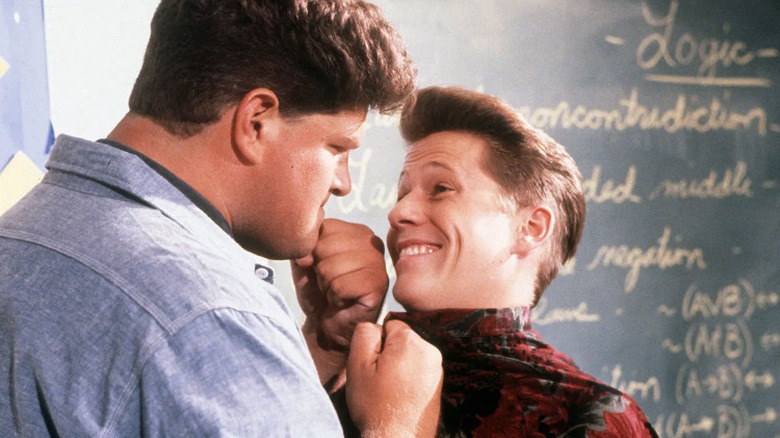
This "Ferris Bueller"-inspired teen sitcom, about a high schooler and his friends outsmarting adults, was considered ahead of its time with its surrealistic narrative style and cartoon-like blocking. Leaving behind the prevalent multi-camera setup, the shots were done using a single camera with fast cuts and no live audience. It also broke the fourth wall to give its protagonist narrator abilities. This would later serve as a heavy influence for shows like "Malcolm in the Middle," "Scrubs," and others.
In a 2018 interview with The Hollywood Reporter, "Scrubs" creator Bill Lawrence credited "Parker Lewis Can't Lose" for its filmmaking choices that enhanced the comedy. "Fun quick cuts, pops back to what's going on somewhere else, and a hard cut to a joke. It flew along," he said. "It took time for nice moments and interpersonal character stuff, but in the comedy it just rocketed through, and that became kinda part of all my half-hours."
The series' experimental '90s aesthetic helped it establish a cult following over its first two seasons, before shifting to a more dramatic tone in Season 3. Many viewers at the time seemed to find Parker (Corin Nemec) likable enough, with his colorful shirts, confidence, and memorable catchphrases. But the show kept itself relevant by being one of the first to engage its audience online through an email list called "The Flamingo Digest."