

5 Once Beloved '70s Sitcoms That Nobody Talks About Anymore
When thinking of sitcoms from the 1970s, the ones that instantly come to mind, among others, are "All in the Family," "Sanford and Son," and "Three's Company." These iconic shows maintain their place in sitcom history, even if some did not age well. But not all of the era's great ones receive the same recognition. Indeed, many sitcoms of the decade have largely been forgotten, such as "Here's Lucy" and "That Girl."
The 1970s, a time of changing social and political landscapes, revitalized sitcoms and started to reflect important topics. As a result, many of them took off and cemented their popularity with audiences. But not all that took off maintained the same momentum forever, and some sadly never had it from the start, even with a dedicated (but small) audience. For whatever reason, there were some beloved sitcoms from the 1970s that never seem to be talked about today. Here is a list of five of those sitcoms.
Here's Lucy
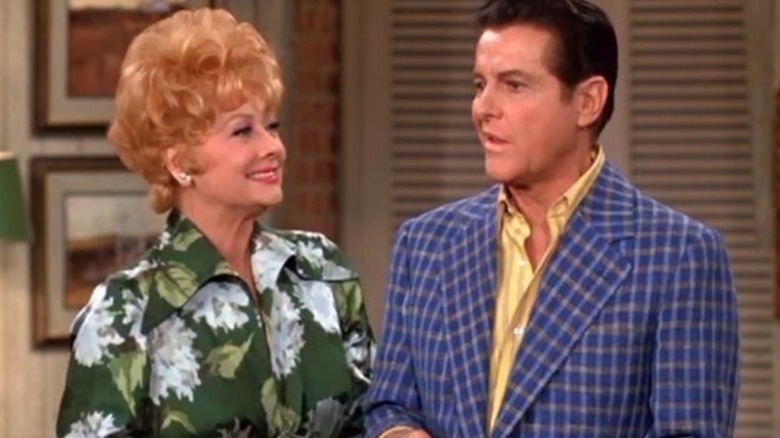
It's no secret that Lucille Ball was a comedic powerhouse. "I Love Lucy" still ranks high as one of the best sitcoms ever. But to only acknowledge one show would be a disservice. "Here's Lucy" lasted for six years on CBS. It starred Ball as Lucy Carter, a widowed working mom raising her teenage children Kim (Lucie Arnaz) and Craig (Desi Arnaz Jr.). Her on-screen children were portrayed by her real-life children with ex-husband Desi Arnaz.
The show never reached the same level of fame as "I Love Lucy," but that doesn't mean it deserves less recognition. At the time of its airing, it was one of the few sitcoms centered on single, working moms. It also featured a plethora of memorable guest stars like Johnny Carson, Vincent Price, Liberace, and Carroll Burnett. "Here's Lucy" ended in 1974 and wasn't syndicated until 1981. Even then, reruns were only aired for a few years. As such, Lucille Ball's third series was largely forgotten. Thankfully, multiple streaming services currently offer it, including Prime Video and Peacock.
Operation Petticoat
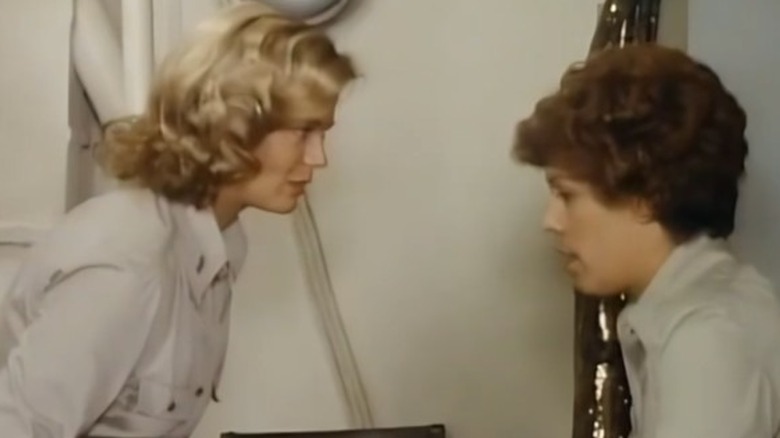
Jamie Lee Curtis' first starring television role was "Operation Petticoat," a war sitcom that aired on ABC for two seasons from 1977 to 1979. It originally centered on the crew of the USS Seatiger, a military submarine. A Japanese air attack forces the submarine and its crew to flee its dock while it was being painted, ending up being the only bright pink sub in the U.S. Navy. Joining the crew are five rescued U.S. Army nurses.
Also featuring talented actors like John Astin and Jim Varney, "Operation Petticoat" used an ensemble cast. The nurses onboard the Seatiger continually got on the nerves of the submarine crew, and their clumsiness led to "I Love Lucy"-style antics. While its use of women as incompetent annoyances is outdated, the show's use of wartime humor and silly premise landed well.
Unfortunately, the second season saw a complete overhaul. 15 of the 18 main cast members did not return, including Curtis and Astin. The writers were also replaced, and the setting was changed from a submarine to a hospital vessel. The dramatic shift proved to be the sitcom's downfall, as the ratings dropped and the series was soon cancelled.
That Girl
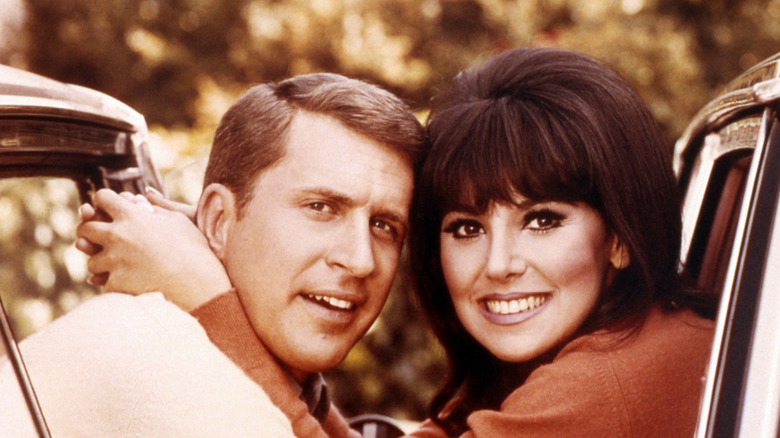
"That Girl" was a groundbreaking sitcom that was created by and starred Marlo Thomas as Ann Marie, an aspiring actress moving to New York City. It was one of the first television shows to center on an independent woman focused on her own career and ambitions, and Ann is often called one of the best female TV characters.
The series premiered on ABC in 1966, and ran through 1971 while second-wave feminism was prevalent. While not a smash hit, it was well liked by audiences. Thomas, who maintained most creative control, opted to end the series so as not to exhaust the premise or have it conform to other sitcom standards.
As such, she chose to not end it with Ann marrying her fiancé Don Hollinger (Ted Bessell), despite network pressure. While the series was groundbreaking, it was often overshadowed by more popular shows like "The Mary Tyler Moore Show," which had a similar premise. As such, "That Girl" does not receive the same recognition it deserves.
Alice
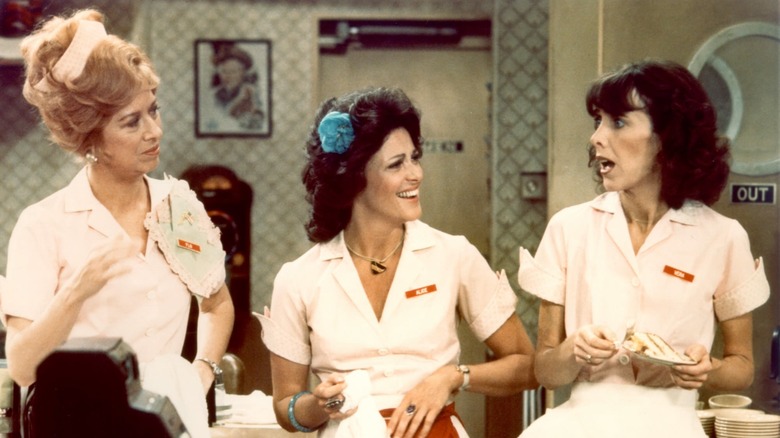
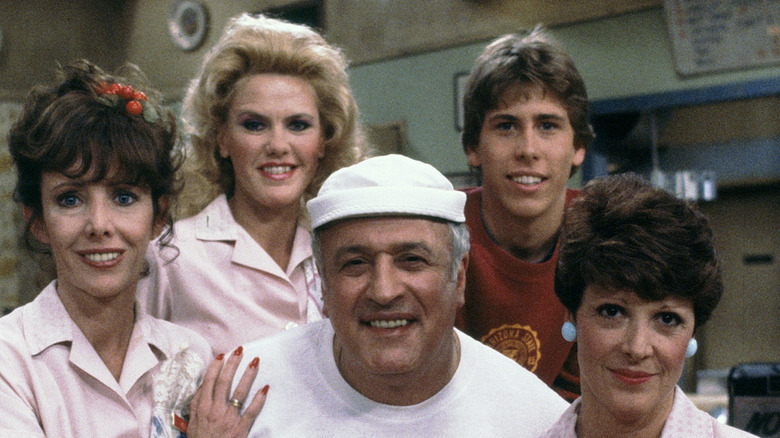
Many people have heard the phrase "Kiss my grits!" but how many know that the phrase originated from the CBS sitcom "Alice?" Based on the Martin Scorsese film "Alice Doesn't Live Here Anymore," the series centered on Alice Hyatt (Linda Lavin), a widowed single mother working as a waitress at Mel's Diner, an Arizona roadside eatery. She and her peculiar coworkers, including Vera (Beth Howland) and Flo (Polly Holliday), work under the diner's owner, Mel (Vic Tayback).
Lasting a respectable nine seasons, "Alice" was at one point the longest-running female-starring sitcom on television. Lavin's quick-witted sarcasm and sassiness were lauded, as were her antics. One of the show's most iconic running gags was dressing as a fedora-wearing mobster named Sam Butler.
By 1983, the sitcom's ratings started declining, so the network decided to conclude the series with Alice receiving a music recording contract and Mel selling the diner. Despite its popular run, the sitcom's spotlight has largely faded. It is currently available for purchase on multiple streaming sites, but sadly not for free.
Quark
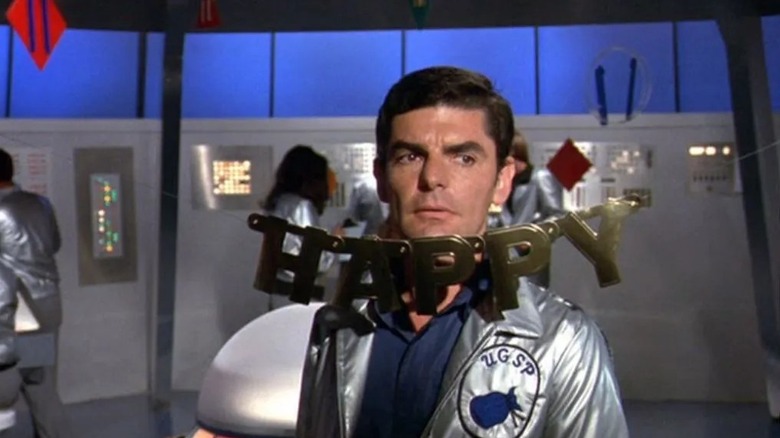
Long before audiences had multiple sci-fi sitcoms like "Star Trek: Lower Decks" and "The Orville" to choose from, there was "Quark." Airing for only one season on NBC from 1977 to 1978, the show centered on Adam Quark (Richard Benjamin), the captain of the crew aboard a garbage ship for the United Galaxy Sanitation Patrol. The ship operates as a trash vessel for spacecrafts, and Quark longed for a more thrilling assignment and adventurous assignment.
One of the first parodies of "Star Trek," "Quark" came out on the heels of the very first "Star Wars" movie. NBC, wanting to cash in on the film's mania, ordered the series. Unfortunately, the sitcom did not land well. Airing on Friday night at the same time as CBS' "The New Adventures of Wonder Woman," it struggled to find an audience. It failed in the ratings and, as a result, lasted a mere eight episodes before being cancelled.