

Twilight Zone Creator Rod Serling Said TV Sponsors Ruined One Of His Early Stories
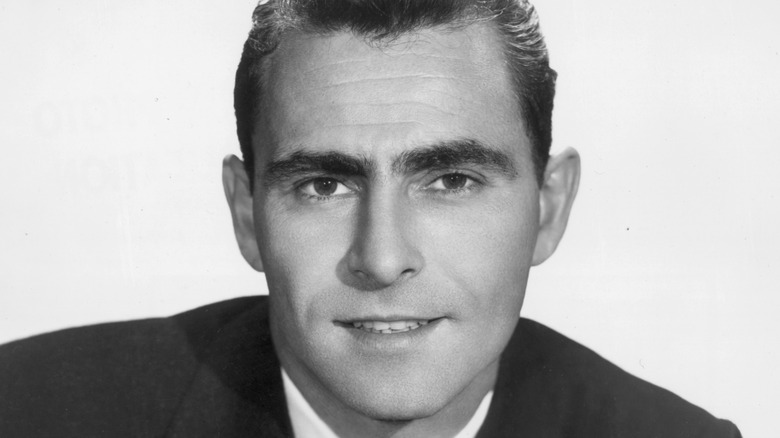
As the mind behind one of the best sci-fi shows of all time – not to mention one of the most progressive — Rod Serling was no stranger to corporate pushback. In one case, this came in the form of a "Twilight Zone" sponsor who simply didn't understand the show. Other occasions were far more insidious, however. These include an incident earlier in Serling's career, when a sponsor watered down a story inspired by the lynching of Emmett Till until its anti-racism message became all but meaningless.
In 1956, Serling wrote a story for "The United States Steel Hour," an anthology series sponsored by U.S. Steel. Titled "Noon on Doomsday," the episode in question is about a prejudiced community that circles the wagon to protect its own in the wake of a killing, much as Mississippi did after the murderers of 14-year-old Till walked free. Serling's initial draft featured a Jewish victim, because he preemptively assumed sponsors and censors would object to the explicit Black-and-white racial allegory.
As it turned out, even that was too provocative; White Citizens Councils in the South threatened a boycott, and U.S. Steel caved. Now, the victim was just some unnamed foreigner, though it was apparently preferred they not be coded as a minority at all. The word "lynch" couldn't be said in the episode, either. The setting was moved to New England, and Coca-Cola bottles were even removed from the set because of the "Southern connotations." Serling later joked, grimly, to Mike Wallace that the powers-that-be would have set it at the North Pole if the costumes hadn't prevented them from doing so.
Serling later tried to tell a similar story, but faced more pushback
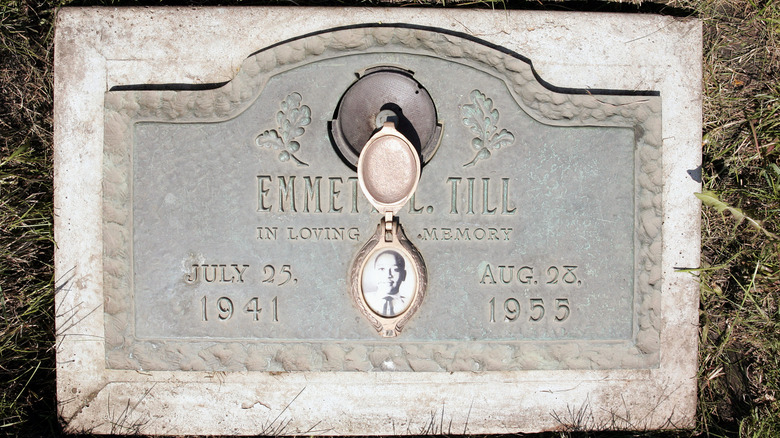
Serling allowed "Noon on Doomsday" to air in this heavily altered form because, as he told Mike Wallace, he thought "it was better to say something than nothing." He seemed to later regret it, however, especially after The New York Times criticized the episode for being so contrived that the message failed to be effective. "Its thesis had been diluted, and my characters had mounted a soap box to shout something that had become too vague to warrant any shouting," Serling said (via RodSerling.com). "The incident of violence that the play talked about should have been representative and symbolic of a social evil. It should have been treated as if a specific incident was symptomatic of a more general problem."
In 1958, Serling tried to tell a story inspired by Emett Till's lynching again, this time on CBS's "Playhouse 90." (William Shatner, who would later lead two "Twilight Zone" episodes, starred.) While his initial draft featured a Black character, the network objected once more. "By the time 'A Town Has Turned to Dust' went before the cameras, my script had turned to dust," Serling said, according to the Dayton Daily News. "Emmitt Till became a romantic Mexican. The setting was moved to the Southwest in the 1870s ... they chopped it up like a roomful of butchers at work on a street."
Despite the heavy censorship, reviewers at the time praised the story's message. Drama students at Ithaca College, where Serling used to teach, performed a reading of the original draft in 2008.