

5 Best '80s Sci-Fi Animated Series, Ranked
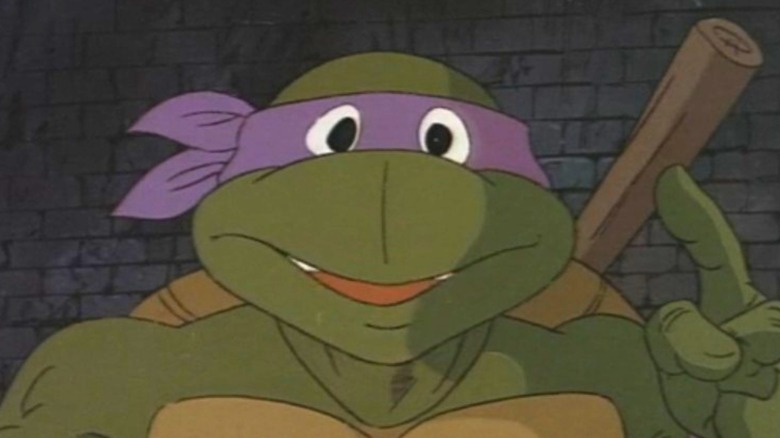
There can be no question that the '80s was a peak era for sci-fi television, and particularly cartoons. Animation was the perfect medium for displaying on-screen technological advancements like CGI, and it allowed creators to merge influences from different genres and cultures, including cyberpunk, steampunk, and anime. '80s cartoons also led to a boom in tie-in toys and merch, and they introduced a lot of kids to mainstream comic book characters. Add to that the rise of consumer tech, like computers and video games, and you had a whole audience of TV watchers primed to embark on spacefaring adventures with their favorite heroes, or fight off the best cartoon villains right from their living rooms.
That said, it can be tough to navigate the universe of sci-fi animated shows from this era. Considering the sheer number of them, it can be even tougher to narrow them down to the best of the decade. Nevertheless, the mission awaits. Here's our pick of the five '80s animated sci-fi shows that we would send to defend the world.
5. Battle of the Planets/G-Force: Guardians of Space
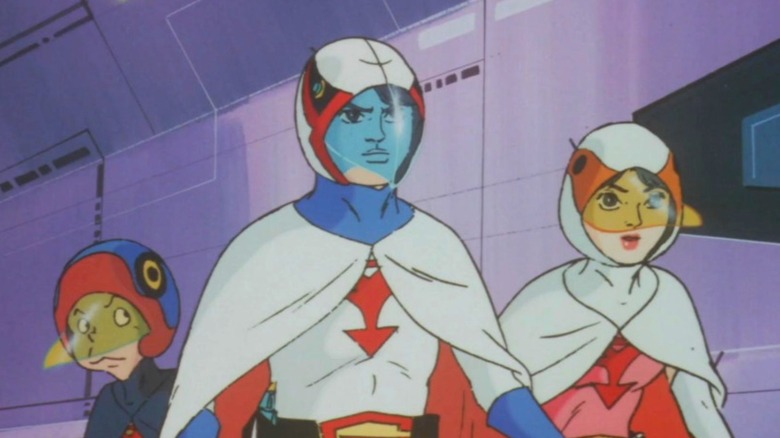
In true sci-fi fashion, this first entry is two shows merged into one. "Battle of the Planets" and "G-Force: Guardians of Space" were English-dubbed versions of the 1972 Japanese anime series "Science Ninja Team Gatchaman." The premise follows a team of five teenage agents who utilize bird-themed uniforms and high-tech gear to defend the galaxy from evil. "Battle of the Planets" was the censored, more kid-friendly version of the story, featuring a lighter tone and less violence. It also introduced an R2-D2-like robot character named 7-Zark-7 and his dog, 1-Rover-1. "G-Force," the darker, more faithful adaptation, ran for 85 episodes, starting in 1986, before eventually becoming the first Japanese anime to land on Cartoon Network in the mid '90s.
This show was an interesting fusion of the power and limitations of '80s animated sci-fi. Viewers were introduced to a team who weren't related to each other, but who were competent, brave, distinct, and young. Their uniforms, vehicles, and abilities would serve as obvious influences for later shows — like the Japanese live-action series "Super Sentai" and the American "Power Rangers." However, the Western TV broadcast limitations that lingered from the '70s led to "Battle of the Planets" looking more like a "Star Wars" copy than anything else. Thankfully, "G-Force" offered a different tone for viewers. Later, in the mid-'90s, there would also be a three-part animated "Gatchaman" miniseries.
4. The Adventures of the Galaxy Rangers
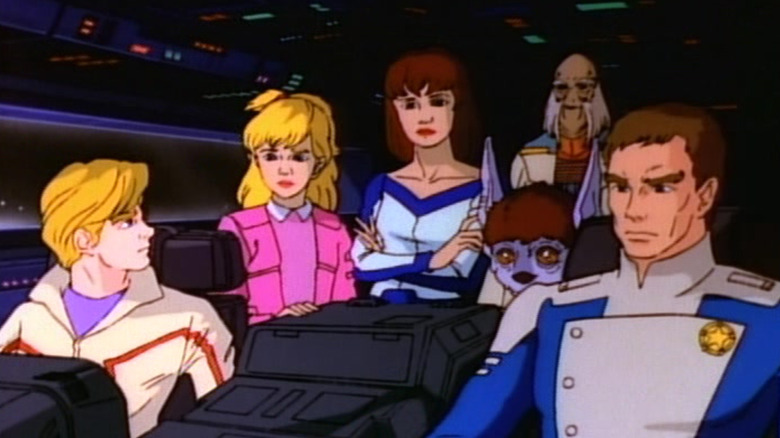
Taking its cues from classic Wild West stories and "Star Trek," "The Adventures of the Galaxy Rangers" was made to be enjoyed with the biggest bowl of cereal you could get your hands on. In this future, while humans have ventured into the cosmos and formed relationships with benevolent alien species, crime is still prevalent. The Bureau of Extra Terrestrial Affairs (BETA) fights space crime on different planets, led by its best team of agents, the Series Five Galaxy Rangers. Using enhanced abilities brought on by brain implants, the Galaxy Rangers defend various colonies from a band of interplanetary outlaws known as the Crown Empire.
Though it only ran for a single season (of 65 episodes) in 1986, "The Adventures of the Galaxy Rangers" is considered to be one of the trailblazers in the medium. Not only did it utilize a more mature, serialized kind of storytelling, but it was also one of the earliest shows to combine hand-drawn animation with 3D CGI. In collaboration with the Japanese studio Tokyo Movie Shinsha, the show used an anime style that wasn't prevalent in American-produced shows. It also cast Jerry Orbach to voice Captain Zachary Foxx, the lead ranger. Unfortunately, an unsuccessful attempt at a connected toy line, combined with tough competition in the morning syndicated time slots, may have worked against the show as it tried to build a wide, mainstream audience. Even today, though, it's counted among the best '80s sci-fi shows still worth a watch.
3. Teenage Mutant Ninja Turtles
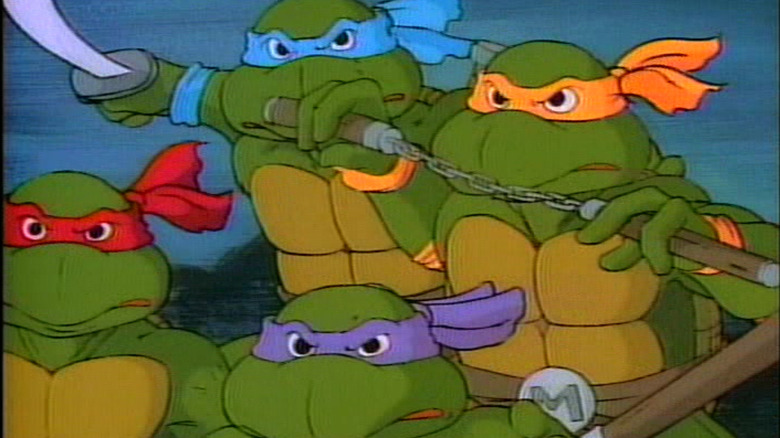
The "heroes in a half shell" have gone through more than a few screen mutations over the years, but the original still holds firm as the the best of the best "Teenage Mutant Ninja Turtles" animated shows. Originating as a violent, gritty, black-and-white indie comic book first published in 1984, "TNMT" was meant to parody the darker superhero tropes of the '80s. But when toy company Playmates Toys approached the creators with the idea to use the IP to create a line of toys, they had to make things a lot more colorful.
The animated series debuted as a 1987 five-part miniseries complete with reimagined turtle characters who would better relate to kids — hence the wisecracking gags and love of pizza. Then, the budding franchise added a big glob of secret ooze via an accompanying toy line that launched a year later. The "Turtles" brand would sell over $1 billion in toys worldwide over the first four years, according to The New York Times.
Of course, selling toys wasn't the only way this series left its mark. As one of the '80s' most notable examples of teamwork, adventure, and sibling banter on screen, "Teenage Mutant Ninja Turtles" was also a fun, influential (and weird) mashup of sci-fi, martial arts, and urban crime fighting. The turtles — who famously lived in the sewers of New York — used their mastery of ninjitsu and high-tech gadgets to battle Shredder, voiced by James Avery. And things got even more weird when it came time to face off with interdimensional beings, like the villainous, disembodied brain, Krang (Pat Fraley).
2. Voltron: Defender of the Universe
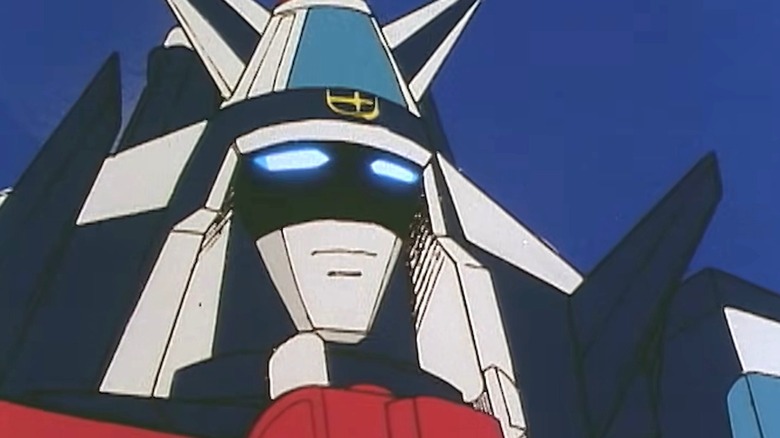
In the grand pantheon of anime-inspired shows featuring teams of heroes who pilot vehicles to fight off evil threats, 1984's "Voltron: Defender of the Universe" was undeniably a fan favorite. An English-dubbed adaptation of the Japanese anime series "Beast King GoLion," this show centered on a team of five space explorers who fly mechanical lions that come together to form Voltron, a giant battle robot. Like each lion falling into place, "Voltron" aligned perfectly with the '80s sci-fi craze, in addition to the rise in consumer tech. It became one of the first shows to be broadcast in stereo sound, too, not only doing wonders for ratings, but also sales in home video sound systems, toys, and other merchandising.
The show deserves praise for giving each team member equal importance, regardless of their differences in gender or other such characteristics. They can handle planetary problems individually for only so long, and in order to thwart the schemes of King Zarkon and Prince Lotor, the pilots must rely on each other to come together and form Voltron. There have since been a number of comic book iterations and animated series reboots — the most recent being 2016's "Voltron: Legendary Defender," a more modernized interpretation of the characters and story that streamed on Netflix until its removal in 2024. The next phase of "Voltron" will take live-action form with a high-budget film, starring Sterling K. Brown and Rita Ora, which is due for release on Prime Video in 2027
1. The Transformers
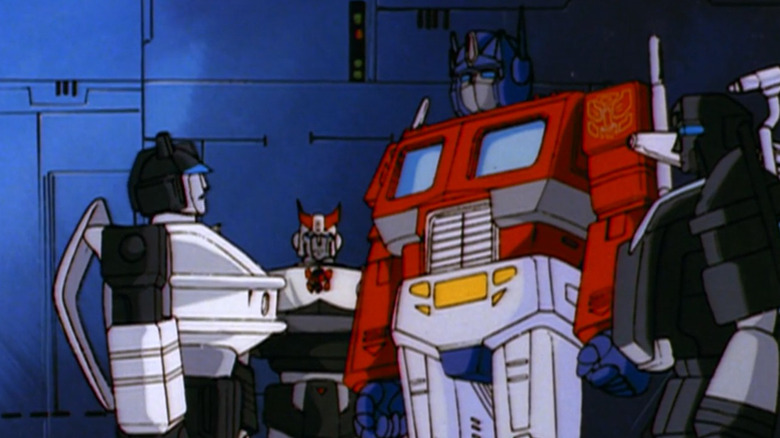
In terms of capturing the synergy of '80s sci-fi TV and toy appeal, "The Transformers" (known today as "G1 Transformers") is tough to beat. Has the merch marketing component of the franchise become more glaringly obvious over time? Perhaps. But that doesn't take away from the genius premise of intergalactic refugee robots from a warring planet called Cybertron hiding out on Earth as modern day vehicles. What kid didn't look at a car, truck, or plane and wonder if it was an Autobot or Decepticon in disguise? The 98-episode run was produced in association with the Japanese studio Toei Animation, which created the series "Beast King GoLion," which provided the source material for "Voltron."
"The Transformers" debuted in 1984 and led to an explosion of interest, both in terms of pop culture and in the world of robotics and STEM disciplines. Part of the credit can go to the show's decision to focus on the robots and not humans as the main protagonists (something the Michael Bay "Transformers" movies would later be criticized for). Most of the credit, though, goes to the writers, who created storylines that featured drama, stakes, and fully fleshed characters, despite the original goal to just sell toys. Optimus Prime (Peter Cullen) would, of course, become one of the legendary TV heroes of the '80s, and he remains one today. Megatron (Frank Welker), meanwhile, was every bit his equal.