

10 Best Dream Sequences In The Sopranos, Ranked
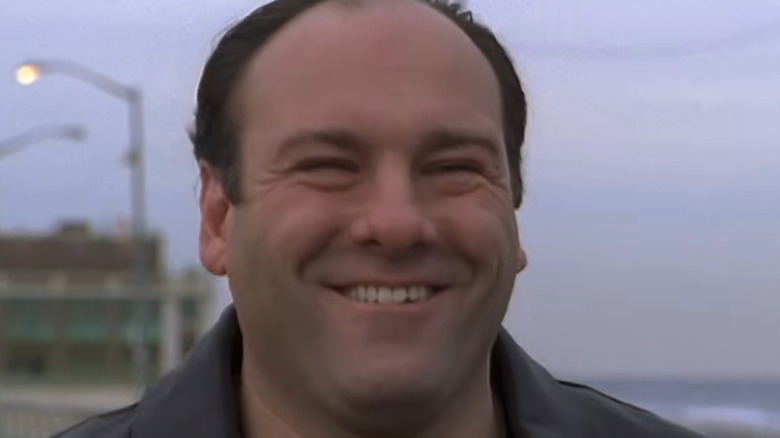
Normally, dream sequences are something of a cheap taboo in storytelling. "The Sopranos" made them high art.
Where most shows would use such scenes as dramatic fake-outs or vehicles to transparently push the plot forward, the HBO series used them to reveal things about the characters that couldn't be showcased otherwise. The range is as audacious as it is impressive. Sometimes, they expose vulnerable emotions that these repressed mobsters aren't allowed to express out loud or fears about themselves that they aren't ready to face. Other times, they tease an almost supernatural connection to something greater and spiritual in nature that incredibly manages to fit perfectly within the series' grounded tone.
We've looked back at "The Sopranos" to remember our favorite dreams and nightmares from its six-season run, and have ranked them based on their impact on the story, how well they reveal the characters manifesting them, and, frankly, how weird they're willing to get. Bear in mind that from this point onward, there will be major spoilers for the entire series. Continue at your own risk.
10. You're Out of the Woods... (Toodle-F***ing-Oo)
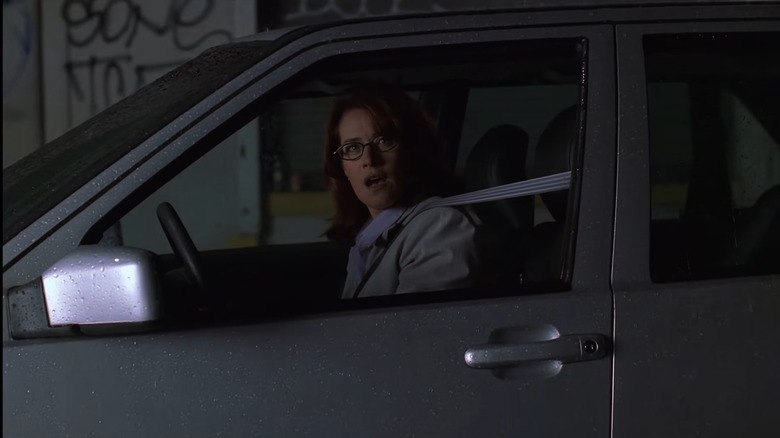
Plenty of antihero shows have had their characters interrogated by fictional psychiatrists. "The Sopranos" has always stood out for having the nerve to interrogate the doctor herself. In Season 2, the audience had more opportunities to psychoanalyze Dr. Melfi (Lorraine Bracco) on the same level as her patient, a transition marked by the first dream sequence to take place in her mind.
Given that Tony's war with Uncle Junior (Dominic Chianese) nearly gets her killed, Melfi understandably bars him from returning to her practice. Tony moves on — she doesn't. After she runs into him by chance, she dreams about Tony having a panic attack while behind the wheel of a car, getting himself into a horrific accident. Dream Melfi drives by the scene — not necessarily horrified or saddened herself, instead seemingly captivated by the scene.
The song, "Optimistic Voices" ("You're Out of the Woods"), seemingly expresses Melfi's relief at Tony no longer being her problem. She feels it was a guilt-induced dream about wanting to abandon a patient; her own therapist wonders if she has feelings for him. This is the closest "The Sopranos" gets to trying to offer a definitive reading of one of its dreams, but either version is deceptively clean. David Chase even told Bracco while filming that this dream, like most, has no real meaning. Yet, it plants a seed of ambiguity in the viewer's brain for when Melfi brings Tony back — whether she actually wants to save or merely study him is up for debate.
9. Tony's Dream Therapy Session (Meadowlands)
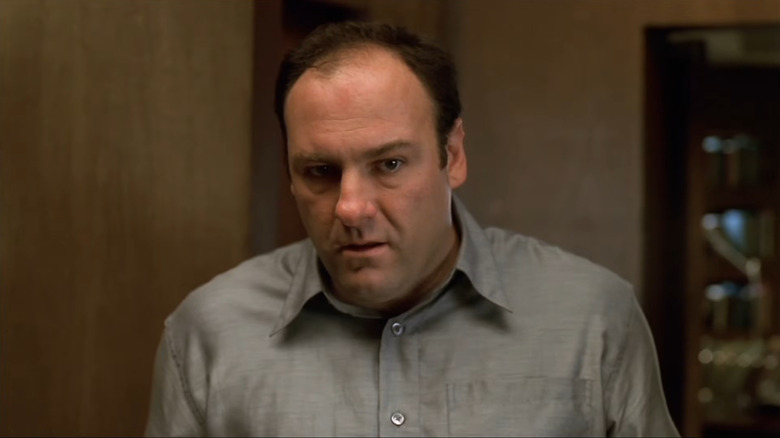
"The Sopranos" needed almost no time to gather the courage for its infamously weird dream sequences. The first one comes just four episodes into the series, and is every bit as confusing, upsetting, and entrancing as anything that follows it.
Tony, growing more fearful by the day that his associates will discover that he's started therapy, has a vivid dream inside Dr. Melfi's office. He sees Hesh Rabkin (Jerry Adler) eerily floating by the window, catches his son, AJ (Robert Iler), spying on him nervously through a crack in the door, and escapes into the waiting room where his capos are waiting for him (Steven Van Zandt's Silvio is unsettlingly in the middle of a lap dance with one of the dancers from the Bing). When Tony walks back into the office, it suddenly serves as the hospital room of a dying Jackie Sr. (Michael Rispoli) — "Thunderstorms... You smell it? It's rain..." (Melfi's dream above notably saw Tony driving in a torrential downpour.) Melfi has transformed into Tony's mother (Nancy Marchand).
The dream serves as the most striking opening scene of "The Sopranos" by that point. It totally disarms the viewer while throwing them headfirst into Tony's deepest anxieties and desires at that moment — his attraction to Melfi, his grief and guilt over Jackie, his fears about how his family (and the family) would see him if they knew the truth. It's basically the most subtle, creative, and memorable "Previously on..." in TV history.
8. Adriana in Paris (Cold Stones)
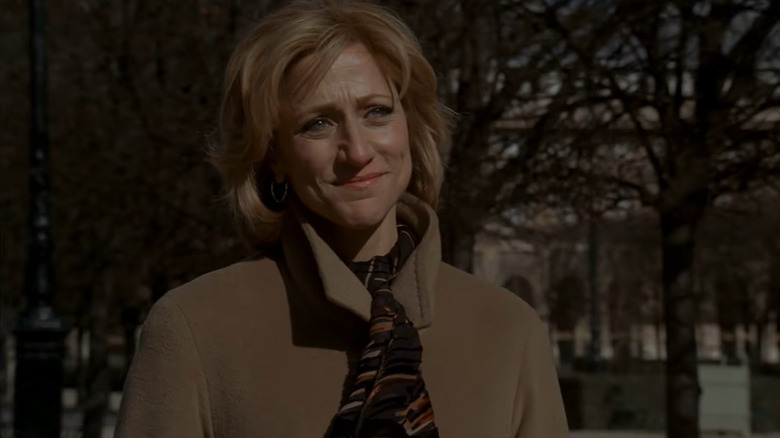
A great "Sopranos" dream doesn't always need to be long or elaborately weird to be effective. Carmela's (Edie Falco) dream in "Cold Stones" lasts less than 30 seconds, making it perhaps the show's shortest dream sequence. It's also more gutting — and damning — than many of the scenes that take place in the real world.
Having won a trip to Paris during a church auction, Mrs. Soprano flees her troubles to Europe, enjoying a relaxing, culture-filled vacation with her friend, Rosalie Aprile (Sharon Angela). She dreams of Adriana La Cerva (Drea de Matteo), whom she believes vanished from their lives after cheating on Christopher (Michael Imperioli). At least, that's what she tells herself when she's awake. Asleep, she imagines Adriana with her in Paris, walking Cosette (a brutal callback to the pet Christopher accidentally killed while high in Season 4). As she smiles at the happy, fashionable Adriana, clearly in her element, a police officer bluntly asks Carmela to remind Adriana that she's dead.
"The Sopranos" teases elements of unknowable, metaphysically transcendent spirituality, especially in Season 6. It's tempting to read this as Carmela getting a glimpse into some kind of afterlife. We'd argue she's actually staring into the abyss that was once her soul. Somewhere in there, she knows all too well that the lie Tony told her about Adriana's disappearance is just that — and that she's willing to lie to herself, too, in exchange for a comfortable, gaudy life that pales in comparison to the pure, quiet beauty she's invading in Paris.
7. Chris' Deli Dream (The Legend of Tennessee Moltisanti)
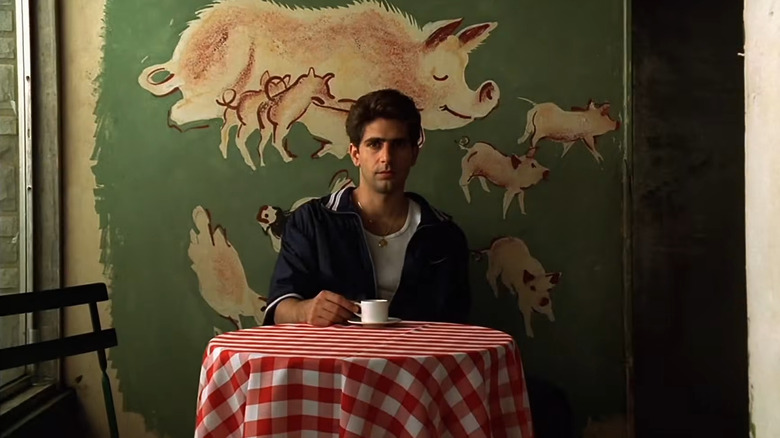
One of the many reasons why dream sequences work so naturally for "The Sopranos" is that they allow the show's hyper-macho characters to be as repressed as they'd be in the real world without alienating them from the emotions they're afraid to express out loud. By the beginning of "The Legend of Tennessee Moltisanti," Christopher has hardly seemed guilty about committing his first murder, having gunned down rival Emil Kolar (Bruce Smolanoff) in the back of Satriale's in the pilot. Of course, expressing any kind of mixed sentiment (as he lightly does that at the end of that very episode, provoking Tony) would have severe consequences.
Thus, Christopher's guilt is tragically kept to his dreams, where Emil apparently visits him every night (that's how it feels to Dream Christopher, anyway). In his dream, Christopher tries to make Emil a sandwich while flatly refusing accountability for what he did. Emil promises retribution, dropping the bullets left inside his body that could incriminate Christopher in the real world. Chris then has to go dig up the body to act on the advice of the man he killed. The body is dug up again in "Cold Cuts" — which is, not incidentally, one of the few episodes where Chris actually breaks down and cries. This dream is terrifying and self-torturing. At the same time, it's probably the last piece of Christopher's innocence — the fear that the life he chose might be a living nightmare.
6. Gloria's Dinner (Everybody Hurts)
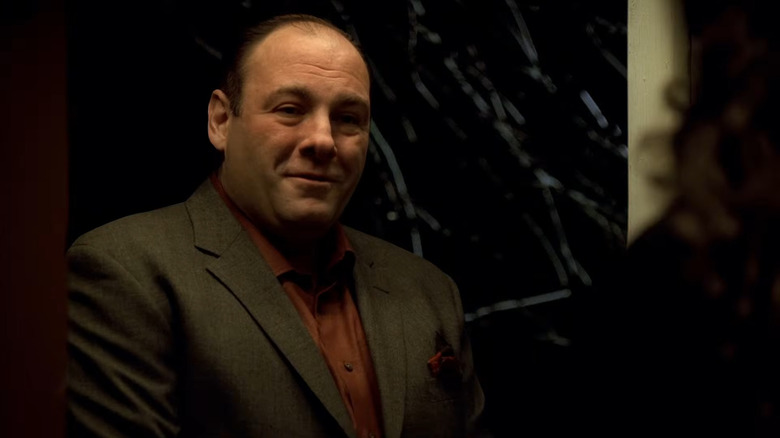
Speaking of nightmares, part of what makes dreams on "The Sopranos" so entrancing is how David Chase and co. render them with all the distress and ambiguous dread of an actual bad dream. Sometimes, they use the absurd imagery of Tony's first therapy dream; other times, they use the supernatural or spiritual imagery of Christopher's dream. Every so often, the show delivers its most chilling sequences without presenting anything obviously out of the ordinary.
In "Everybody Hurts," Tony experiences a similarly guilt-induced nightmare to that of his nephew, though this dream is also brought to us by a free bottle of "French vodka" from Artie Bucco (John Ventimiglia). (The two friends had just parted, with Tony pushing Artie to accept a loan for an investment opportunity in Armagnac.) In dream-land, Tony brings the bottle to the door of Gloria Trillo (Annabella Sciorra), Tony's mistress from Season 3 who died off screen by suicide sometime after her last appearance. When she leaves Tony at the table alone to baste something in the oven (the shadows keep the dish ominous, as does the disconcertingly wet sound design), Tony notices the ceiling above him is starting to crack. Gloria returns and seductively offers to remove a conspicuously long scarf that presumably hides gruesome wounds.
Though we (and Tony) don't see them before he wakes in a sweat, the dream is as haunting as Christopher's. To make things even more eerie, both dreams are set to "You" by the Aquatones" — possibly implying a dark, spiritual connection.
5. The Rottweiler (Employee of the Month)
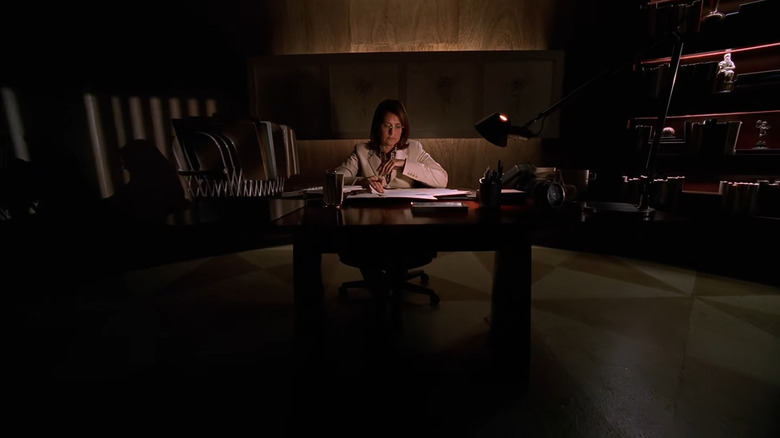
"Employee of the Month" is arguably the most difficult "Sopranos" episode to watch. It's one of the few we'd understand viewers skipping after their first watch, even though it's as powerful as it is harrowing.
Early in the episode, Dr. Melfi is assaulted while attempting to leave her office. Though the police catch the assailant, he's allowed to walk on a technicality. Much of the episode is about exploring how vulnerable, frightened, and angry Melfi feels in the aftermath. This comes to a head in a dream, where Melfi reimagines the scenario (with a vending machine that accepts macaroni as payment). She is once again cornered by her attacker (Mario Polit); this time, however, a Rottweiler attacks him like a guard dog while Melfi watches in awe. Her reaction to him getting violently mauled is mixed with the same fascination with which she observed Tony's corpse on the hood of his car in her previous scene.
That's what makes "Employee of the Month" so important, even if it's isolated narratively. To Melfi, the Rottweiler represents violent protection and retribution — the kind she knows Tony can deliver. Both her selfish interest in Tony and his own violent methods are presented to the audience in the most sympathetic light possible. The audience would completely understand if Melfi had gone to him — yet, when given the opportunity, she pointedly refuses. This episode is a complete, brutal refutation of Tony's compulsive justifications for what he does.
4. The Shadow on the Stairs (Calling All Cars)
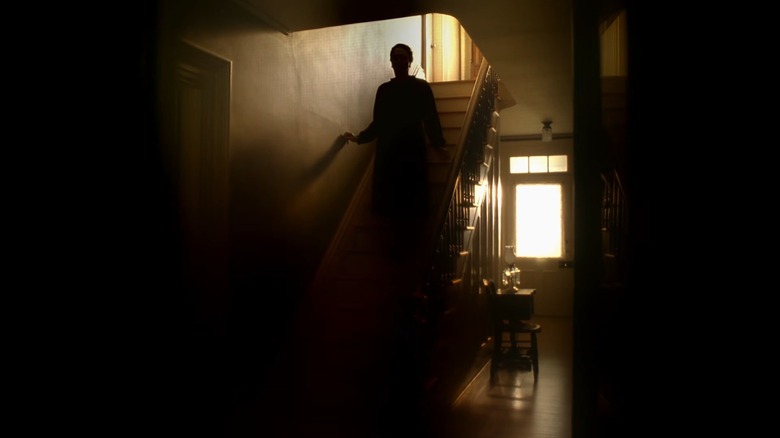
Tony's dream at the end of "Calling All Cars" is quietly the scariest scene in the entire series. Surprisingly, it's the most compelling thing about the episode overall.
At the start of the episode, Tony quits therapy, as he realizes, through Melfi attempting to help interpret a separate dream (Tony sitting in the back of his father's car with Carmela driving and a bald, caterpillar-anointed Ralph sitting in the passenger's seat), that therapy hasn't been yielding the results he wants in his personal life.
Later, after traveling to Florida to resolve a dispute between the DiMeos and the Lupertazzis, Tony has a dream similar to the one from before. This time, Joe Pantoliano's character leads Tony (who suddenly transforms into an Italian immigrant seeking work, just like his grandfather) to a large, white house. Ralph disappears, and Tony opens the door. The last thing he sees is a woman cloaked in black shadows, descending the stairs but stopping midway, as if to dare Tony to enter.
Fans overwhelmingly agree, especially after seeing the rest of the series, that the woman is Tony's mother — and that this dream is a manifestation of his subconscious fear of reuniting with her at the start of his next journey (a spiritual migration, if you will) to the afterlife. Perhaps a part of him even wishes he could approach the gates as a humble mason, instead of the wealthy criminal he's become.
3. The Boardwalk (Funhouse)
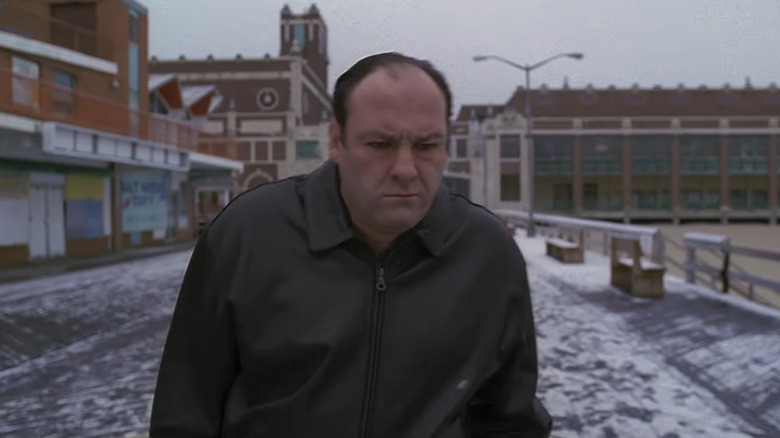
"The Sopranos" Season 2 is all about denial and self-deception. What progress Tony is able to make in therapy is mitigated by his reluctance to face who he truly is and what his actions are costing himself and those around him. At a pivotal moment in his life and career (he's recently taken the top job in earnest, following his ousting of his uncle), he's completely frozen by internal conflict. When he becomes violently ill, rather than him breaking the fever, the fever breaks him.
Tony's dreams in "Funhouse" are what solidified dream sequences as part of the unique narrative language of "The Sopranos." This is the first episode after "Isabella" to focus on a recurring dream, and is the first overall to be brave enough to spend so much time in the absurd and unsettling mind of Tony Soprano. His fever brings him back to the Asbury boardwalk, a New Jersey landmark he surely visited countless summers both as a child and as a father. In Tony's dreams, he imagines it covered in snow.
The best of the "Funhouse" dreams is the one in which Tony talks to a dead fish who, using the voice of Sal "Big P****" Bonpensiero (Vincent Pastore), confesses to collaborating with the feds. It's a rare moment where the audience gets to see Tony directly confront a truth he'd been lying to himself about all season.
2. The Finnerty Family Reunion (Mayham)
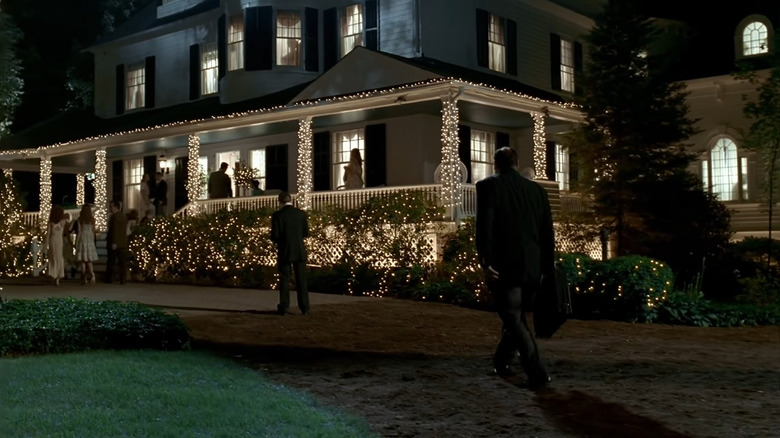
The dream from "Calling All Cars" doesn't fully pay off until an almost equally eerie nightmare in "Mayham." This is during the stretch of episodes at the beginning of Season 6 where Tony (comatose after being shot by Uncle Junior) dreams that he's a simple "Medigan" businessman.
All of the coma dreams are deeply satisfying to dissect, but the best of them come when Tony — attempting to track down the mysterious "Kevin Finnerty" — follows the trail to a family reunion. It takes place at a large white house that bears a resemblance not only to the Shadow's house in "Calling All Cars," but also Uncle Pat's farmhouse in the real world. As we learn in Season 5, that farmhouse had long been a burial site for the family. It isn't a stretch to imagine that it came to represent death in Tony's mind before we first saw it in "Calling All Cars" — and that association undoubtedly got worse after Tony killed Tony Blundetto (Steve Buscemi) on the steps of the farmhouse at the end of Season 5.
And who's there to greet Coma Tony at the reunion but Tony B himself, who attempts to ease Tony inside the house (while forcing him to leave his business behind). Tony sees another woman's shadow in the doorway. The scene is subtly terrifying once you make these connections and understand that, at least in Tony's mind, he's standing at the very gates of Hell he will inevitably return to one day.
1. The Test Dream (The Test Dream)
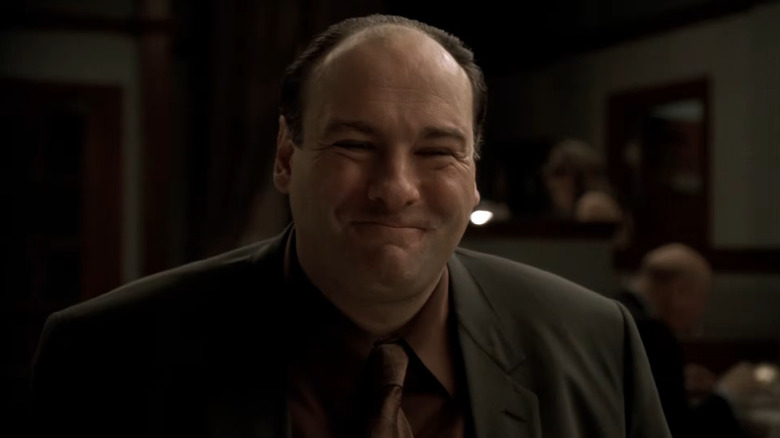
"The Test Dream" is David Chase's nightmarish masterpiece. It's the best dream-centric episode of television, and a standout in the series overall.
It's the only episode of this kind in the series to commit 100% to being unpredictable, unsettling, and, for the most part, unexplainable. Yes, the obvious throughline is that these are stress dreams brought about by Tony's anxiety over whether or not he'll have to take accountability for Tony B. But even in the sequence where Tony is being questioned by a crowd of people after Phil Leotardo's (Frank Vincent) "murder," the dream refuses to stay clear or focused on the problem Tony wants to solve — the appearance of Gloria, a very Lee Harvey Oswald-looking sniper, and a beleaguered Artie as the getaway driver betray other disparate elements of his subconscious leaking in.
Any of the dreams in the episode could make this list and are well worth revisiting in depth. Our favorite — and, indeed, our favorite "Sopranos" dream of all time — is the Soprano-DeTrolio dinner. John Heard's singing, Annette Bening's in-character cameo, the bloody teeth, and baffling non sequiturs, leading to a "Godfather" reference and, eventually, the "shooting" outside. It's just one slice of a 20-minute sequence of vignettes that feels impossibly rich with meaning on its own. As a whole, "The Test Dream" is unlike any episode of TV you've seen outside "The Sopranos," boldly confounding and revealing all at once.