

10 The X-Files Episodes To Skip On A Rewatch
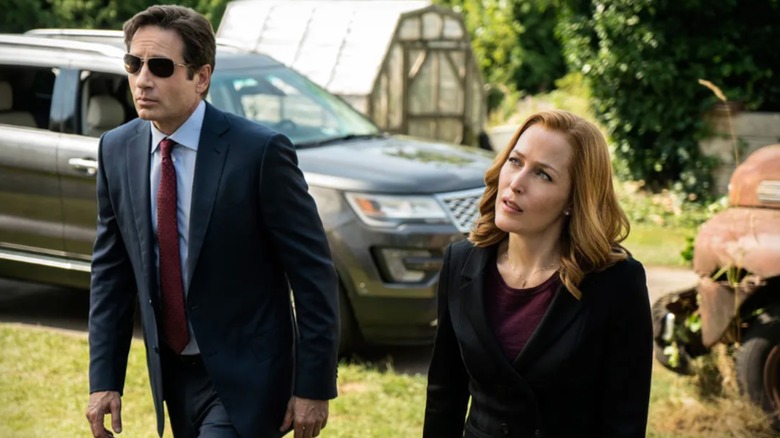
By the time house cats turn homicidal in Boston's sewers, in Season 3 of "The X-Files," even the most devoted fans may be thinking of hitting the skip button. There's no shame in that. A complete rewatch of the beloved sci-fi show runs 218 episodes, after all. Chris Carter's series averaged more than 20 episodes a season during its original run, so a few less-than-stellar episodes are to be expected, even alongside some enduring classics.
Now is as good a time as any to revisit the series that etched Agents Fox Mulder and Dana Scully in viewers' collective minds. In October, the "X-Files" reboot from Ryan Coogler got a Hulu series order, starring Danielle Deadwyler and Himesh Patel as new FBI agents, although no premiere date has been announced. That leaves viewers plenty of time to first revisit the classic stories about Mulder (David Duchovny) and Scully (Gillian Anderson).
The episodes on this list have standalone plots, so passing over them costs nothing in the show's larger scheme of things. And while several have real virtues, like a beloved guest star, a Stephen King writing credit, or one unforgettable dance number, none are essential, and each one arguably interrupts one of the show's stronger stretches. Here are 10 episodes to think about skipping on the next trip through many of the FBI's oddest cases, to discover whether the truth really is still out there.
3
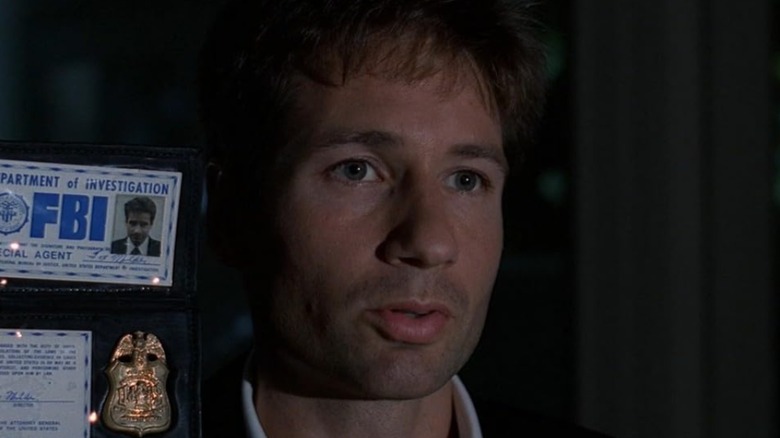
Early in "3," a grieving Mulder files away the case of his partner, who was abducted in the previous episode, and Scully never appears in the episode that follows. Gillian Anderson was on maternity leave when this Season 2 episode was filmed, so the story sends Mulder to Los Angeles, alone, after three killers who drain their victims' blood. He grows close to Kristen (Perrey Reeves), whose motives stay murky until the end.
The episode certainly isn't without its merits: Director David Nutter, for his part, brings to the nightclub scenes a neon-lit vibe that sets them apart from the rest of the early seasons. Duchovny is also convincing in conveying Mulder's numbness. But what the episode sorely lacks is the show's trademark friction between its two leads. Without a gently skeptical Scully to keep Mulder, ever the believer, in check, his theories go unchallenged, and that witty back-and-forth is largely replaced by brooding. Meanwhile, the killers' "Unholy Trinity" rituals, including scripture written in their victims' blood, are arguably more lurid than scary.
The problem with "3" is where it's placed in the second season. This episode is wedged between Scully's abduction in "Ascension" and her eagerly awaited return in "One Breath," two episodes that rank among the show's most gripping. Hitting the pause button on the larger plot for an unrelated case saps the urgency out of the search for her, but viewers who go directly from "Ascension" to "One Breath" get a tighter version of the plot.
Teso Dos Bichos
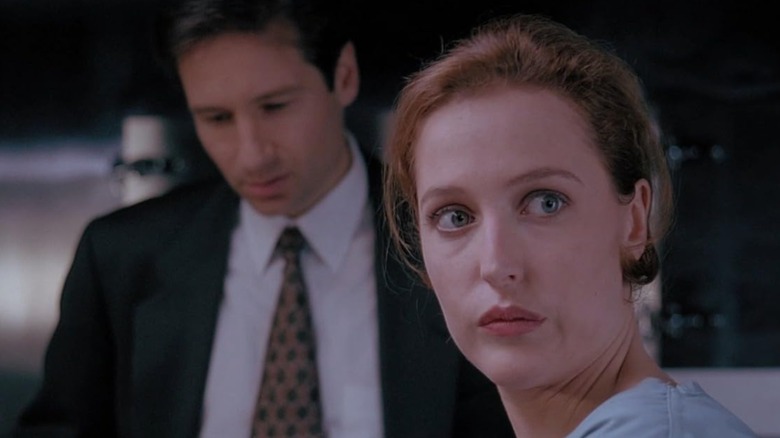
In "Teso Dos Bichos," the people who handled a female shaman's burial urn start disappearing once it's pulled from a dig in Ecuador and shipped to a Boston museum against the local tribe's wishes. While Mulder comes to believe a jaguar spirit is somehow exacting revenge, Scully speculates politics are involved. The answer, which is revealed in the museum's tunnels, actually involves many housecats.
Seemingly inspired by old mummy movies, the script's first half has that same sort of pulpy charm to it. It's the payoff that's the problem. The episode seemingly promises a plot based around a jungle predator, but its eventual feline solution is more adorable than sinister. The episode's human characters also could have been more developed, so when they do disappear, they feel less like real losses and more like plot points to move past.
The timing of "Teso Dos Bichos" makes it an even easier episode to skip. This Season 3 episode comes just after "Pusher," the taut cat-and-mouse thriller that demonstrates the show's writing at full strength. Intriguing as it is at first, "Teso Dos Bichos" feels like a very promising script that could have used another revision to really shine. That's why skipping the episode doesn't cost viewers anything when it comes to character development and the show's grand mythology. Even better: Skipping it lets the season's hot streak continue uninterrupted.
Space
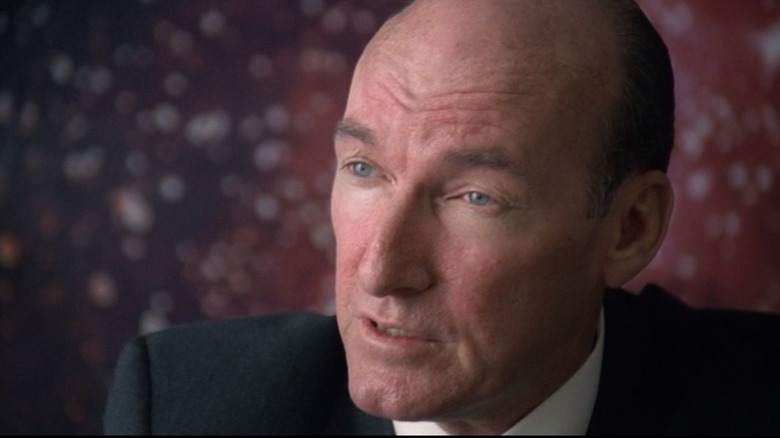
Mulder rarely gets starstruck, which makes his sense of awe around Lt. Col. Marcus Aurelius Belt (Ed Lauter) the most endearing part of this well-meaning Season 1 episode, where a NASA communications commander strongly suspects someone is sabotaging upcoming shuttle launches. The trail eventually finds its way to Belt, a former astronaut and Mulder's boyhood idol, who now oversees launches from the safety of Mission Control. An entity that possessed Belt during a spacewalk years earlier, it turns out, is now using him to wreck the missions.
Chris Carter's script here plays out as an affectionate homage to the space program, and it's hard not to appreciate his sincerity. But the episode's shortcomings become more obvious as the minutes pass. Mulder and Scully, unfortunately, spend much of their time as observers inside Mission Control, watching monitors and listening to radio chatter as the real danger unfolds miles overhead. Ultimately, the two leads observe the crisis more than actually investigating, and by sidelining them, this early "X-Files" episode loses much of the show's trademark tension.
"Space" takes a place in the first season that also doesn't do the episode any favors, coming after "Ice," the Arctic thriller which arguably remains one of the first season's finest hours. That's why jumping from "Ice" to the next case after "Space," the conspiracy-driven "Fallen Angel," only really costs viewers a few minutes of a spellbound Mulder grinning like a kid at a launch.
The Jersey Devil
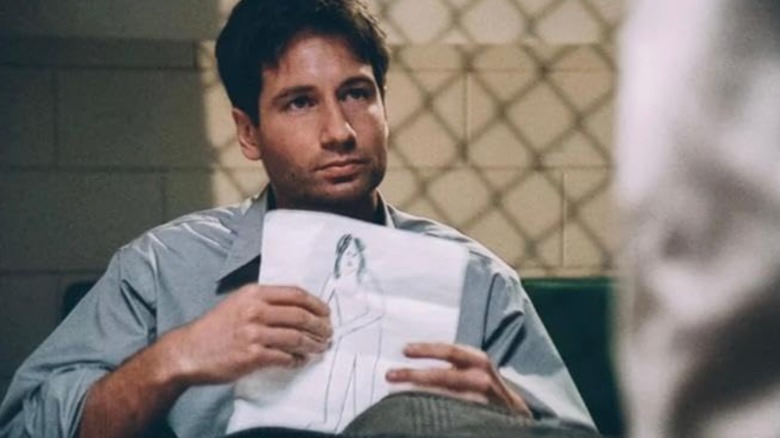
When the mauled remains of a homeless man are discovered near Atlantic City, Mulder thinks of a local legend. The Season 1 episode "The Jersey Devil" sends him into the surrounding woods in search of the creature locals have whispered about for generations. What he finds, it turns out, is closer to a person than a monster: A feral woman (Claire Stansfield) scavenging closer and closer to the city.
The idea certainly held promise, and Mulder's protectiveness towards someone who everyone else wants shot gives Duchovny some terrific material to work with. But at the time, the series was still clearly figuring out how to craft a monster story that delivered both in thrills and emotional payoff. The hunt itself offers few surprises, and the musings about humanity's animal nature are less-than-subtle. Just two episodes earlier, "Squeeze" proved how frightening a human-like predator could be on this show, and the comparison with that episode doesn't help "The Jersey Devil."
Scully is featured in the episode's strongest moments, with more personal scenes that offer a rare look at the life she keeps postponing for the job she's so devoted to. "The X-Files" would eventually thrive on this kind of character work, but here the scenes keep interrupting the hunt, and neither story gains the kind of momentum that it should. Viewers curious about Scully's world outside the FBI get richer glimpses in later seasons, so skipping ahead in the first season keeps the early run of episodes tighter and, well, spookier.
El Mundo Gira
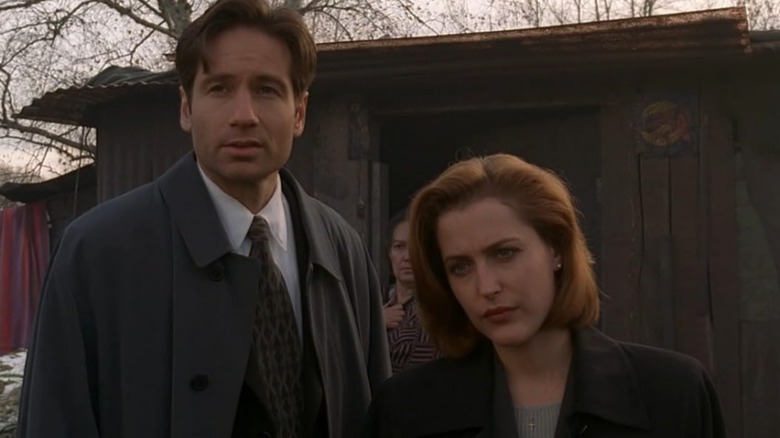
Yellow rain falls on a migrant workers' camp in California's San Joaquin Valley in "El Mundo Gira," and when it stops, a young woman named Maria is dead. Her neighbors blame the chupacabra and point to Eladio Buente (Raymond Cruz), one of two brothers who loved her. Scully blames a fungus that is growing at an abnormal speed, while an immigration agent played by Rubén Blades helps track the fugitive.
The episode's title, which roughly translates from Spanish to mean "the world turns," is a wink at soap operas. The story is told through competing accounts from camp residents, each offering their own different version of events. While it's a playful idea, considering Fox almost rejected "The X-Files" because it wanted a soap opera, the episode itself is also very ambitious, tackling folklore, epidemiology, melodrama, and immigration commentary. None of those themes, unfortunately, get quite enough attention to feel especially meaningful.
While the episode is seemingly earnest in its sympathy for its characters, the story also employs stereotypes that have only grown more glaring with the benefit of time. Cruz brings real anguish to Eladio, and Blades is a welcome presence. Still, like other episodes on this list, "El Mundo Gira" interrupts a solid stretch of the show that could be stronger without this well-meaning detour.
Chinga
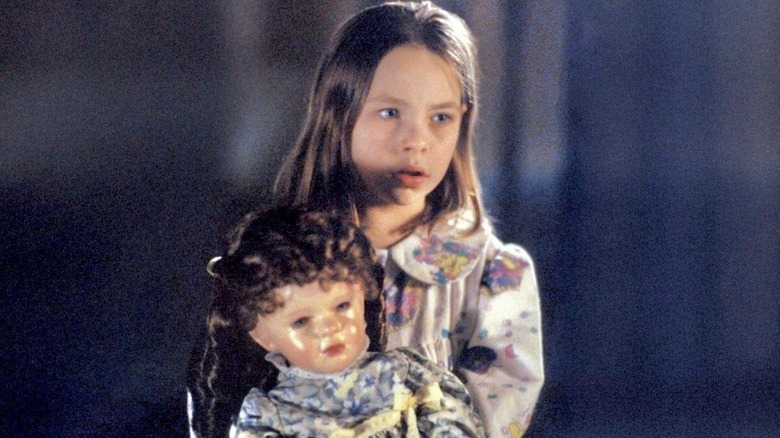
When Scully heads to Maine for a quiet vacation at the start of "Chinga," she realizes the scenic state has other plans for her. In a coastal town, shoppers at a grocery store suddenly start tearing at their eyes. The butcher dies by his own knife. They share a common thread: Polly, a withdrawn little girl, and the doll she carries with her everywhere, which talks right before each attack.
This particular Season 5 episode has a notable credit, with Stephen King joining the writers. His handiwork shows throughout the episode, from the classic Maine setting and small-town gossip to those whispers of witchcraft, all of which give off distinct Stephen King vibes. But "Chinga" unfortunately follows the usual arc of killer doll stories a little too closely, so it lacks enough surprises to stand out. Even loyal King fans may find themselves wanting more here from the master of horror.
Separating Mulder and Scully also doesn't help its cause. Although Gillian Anderson makes the most of Scully, Mulder, who stays behind in D.C., is largely reduced to being on humorous phone calls. Because of that, the case lacks the lively debate between long-held belief and scientific doubt that gives "The X-Files" its vitality. That's why "Chinga" feels like a less-important episode in a season with far sharper stories, including the deeply rewatchable "Bad Blood," which comes just two episodes later.
Agua Mala
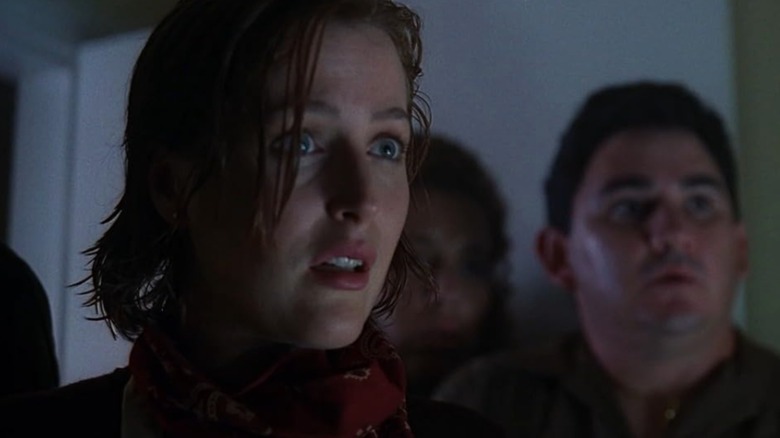
Casting Darren McGavin in the Season 6 episode "Agua Mala" is a nice move, given the show's origins. He starred in "Kolchak: The Night Stalker," a show from the '70s that still holds up today, which Chris Carter named among his inspirations for "The X-Files" in an interview with Smithsonian Magazine. Here, he plays Arthur Dales, a retired agent who formerly worked on the titular X-files. In the episode, Dales phones from his Florida trailer park as a hurricane bears down, worried about neighbors who've gone missing. After Mulder and Scully arrive, they eventually discover a tentacled creature lurking in the water system.
McGavin is a joy, gently needling Mulder with affection, though unfortunately, the episode doesn't give him as much air time as it could. Once the agents become stranded in a condominium complex, the episode shifts into a siege story played partly for laughs. Comedy is often effectively used in "The X-Files," but here, the humor arguably undercuts the dread, so when the creature is eventually visible, it's hard to take it too seriously. Centering "Agua Mala" on a storm-battered building with a monster in the pipes should be an ideal setup for the show, which often thrives in confined spaces, but unfortunately, "Agua Mala" never takes full advantage of it.
Fight Club
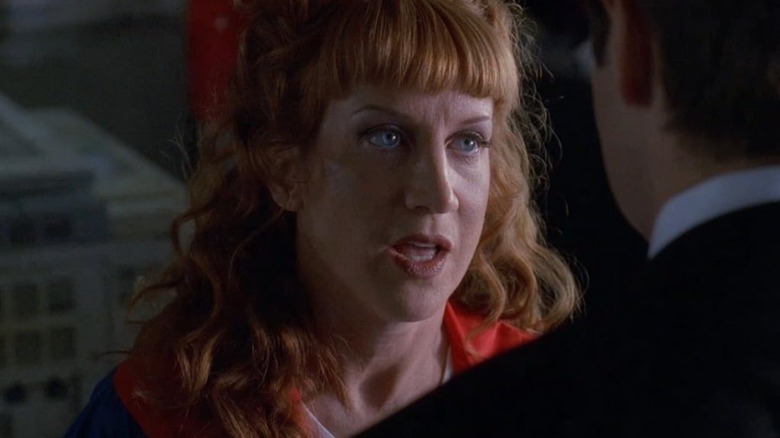
In the first minutes of "Fight Club," a pair of door-to-door religious evangelists come to blows. The gag sets the tone for this Season 7 comedy, in which Kathy Griffin plays Betty Templeton and Lulu Pfeiffer, unwitting half-sisters with identical faces whose moves have landed them in the same towns across 17 states. Whenever the two come near, bystanders erupt into brawls. Both women, inconveniently, have fallen for the same struggling wrestler, Bert Zupanic (Randall "Tex" Cobb).
"The X-Files" certainly had a gift for humor, and by this point, it had produced several funny classics. Chris Carter's script goes for the same kind of laughs here but only lands a few of them. The lookalike agents are a clever touch, cast with Duchovny's stunt double and Anderson's stand-in. Still, the jokes here overall can get somewhat repetitive since they rely on the idea that when Betty and Lulu encounter each other, chaos ensues. The episode also never clearly explains why the sisters cause so much havoc, so the mystery has little payoff for viewers.
As in a few other episodes on this list, Mulder and Scully appear very little together here, and "Fight Club" is weaker for it. Griffin is very committed to pulling off her dual roles, but Betty and Lulu are written so similarly that the contrast of personalities which a twin story depends on never fully develops. It's easy to skip to the funnier episode "Je Souhaite" with a clear conscience.
Badlaa
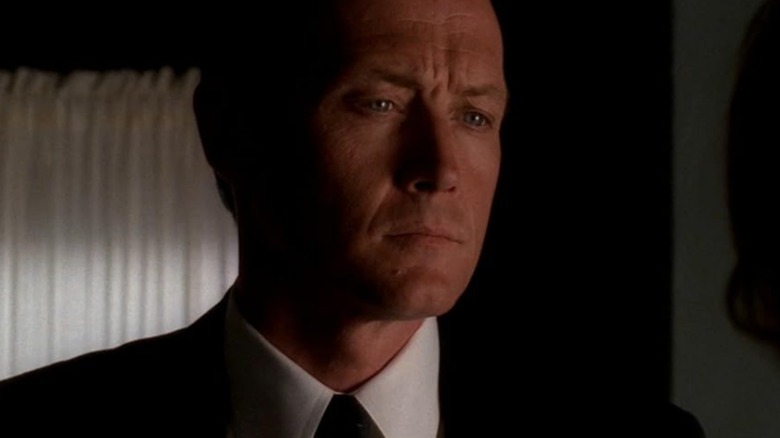
In "Badlaa," a silent, legless beggar (Deep Roy), using a wheeled cart to get around, trails an American businessman through an airport in Mumbai. He then travels to the Washington suburbs, hidden inside the man's body, and once he arrives, starts killing. "The X-Files" was one of several series to introduce a new character when a star left, bringing in John Doggett (Robert Patrick) when Duchovny chose not to continue full-time after his contract ended. Scully works this Season 8 case alongside him.
Scully figures out the beggar's likely motive: A boy who seems to be the man's son was killed in a chemical plant disaster in India. It's a rich motive that could have led to a stronger story, but it isn't explored nearly enough when it's revealed later in the episode. So, for most of the hour, the character comes across more as an exotic menace, and that portrayal arguably hasn't aged well.
The episode's focus on body horror is the other hurdle. While "The X-Files" could be gross in ways that served the story, here, the shock overshadows the plot. The episode's finest moment has little to do with the monster. Scully, who spent the case trying to think like Mulder, admits to Doggett that she can't open her mind the way he does, and Anderson plays that moment beautifully. Scully's struggle to work without Mulder is a poignant thread that runs through the entire season, but there are stronger episodes that arguably handle it better.
Babylon
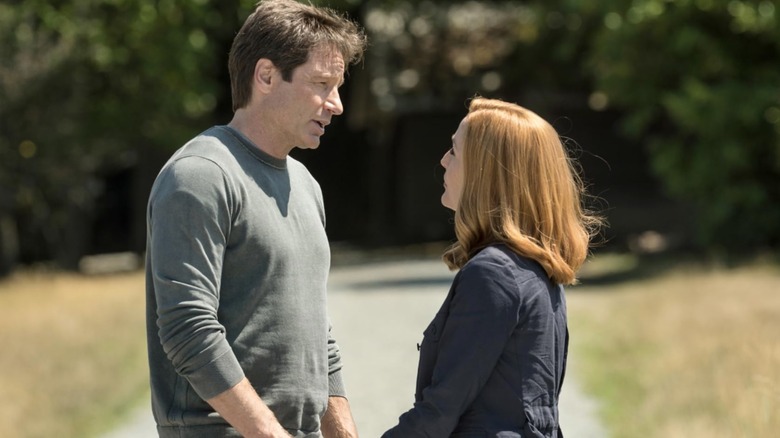
In "Babylon," an episode from the show's 2016 revival season, a suicide bombing rocks a Texas art gallery, and one attacker survives in a coma. To reach him, Mulder and Scully each team with a younger counterpart, the skeptical Agent Einstein (Lauren Ambrose) and the open-minded Agent Miller (Robbie Amell), and Mulder asks Einstein for hallucinogenic mushrooms.
Chris Carter wrote and directed the episode based, at least in part, around the bible's Tower of Babel, and he uses it as a way to explore themes like faith, language, and hatred. "We're still living in a kind of Babylon," he explained to International Business Times. While Carter has admirable intentions, though, the tone is uneven. The episode's sober opening gives way to slapstick, then eventually a religious vision, followed by a walk to pop music. Taken together, that can feel jarring. The dance sequence is entertaining, with a memorable image of Mulder sporting a black cowboy hat, but it's hard to fully enjoy alongside the episode's larger, more serious subject matter.
"Babylon" was also criticized at the time for what some perceived as stereotypical depictions of Muslim characters, several of whom appear as terrorists. Ambrose and Amell are appealing, and their mirror-image pairing with the leads is a smart idea. Viewers who are short on time should look to the episode "Mulder & Scully Meet the Were-Monster," which aired two weeks earlier and proved that the revival series of "The X-Files" is a great watch once it finds its rhythm.