

10 Hit TV Shows From The '60s That Nobody Talks About Today

We may receive a commission on purchases made from links.
The 1960s were a decade that featured a tremendous amount of social change and that cultural revolution was reflected in contemporary television programming. More than just the medium making the leap to vibrant color, '60s shows saw a rapidly evolving sophistication in storytelling and production scale. The best 1960s shows of all time continue to endure beyond the decade, endearing themselves to new generations of fans. However, the sad inevitability is that not every show, no matter the level of popularity during their initial broadcast run, is going to stand the test of time.
Many shows from across the decade, even with lengthy runs and high viewership, just haven't maintained a notable cultural resonance generations on. To be clear, the shows listed here is not an indictment on their overall quality or wholesale dismissal of their legacy. If anything, their inclusion is the invitation for a reappraisal for them to join their more well-known counterparts. Here are 10 hit TV shows from the '60s that nobody really talks about today despite their contemporary success.
My Three Sons
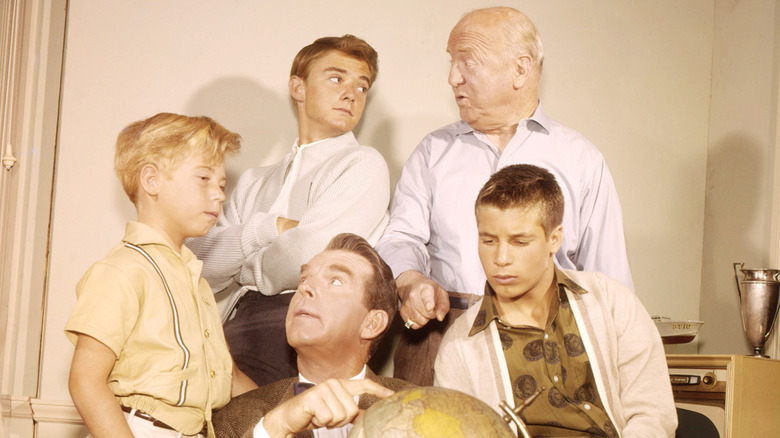
As a precursor of sorts to "Full House," there was the 1960 family sitcom "My Three Sons," starring Fred MacMurray as widowed father Steven Douglas. Helping Steven raise his children is his father-in-law Bub O'Casey (William Frawley), who was eventually replaced by Bub's brother Charley (William Demarest) as the series progressed. The family initially lived in the Midwestern town of Bryant Park before relocating to Los Angeles during its eighth season. As the story advanced, Steven's older sons were married off to begin their own families while the Douglas patriarch married single mother Barbara Harper (Beverly Garland) and adopted her daughter.
"My Three Sons" was a cornerstone in wholesome sitcoms but not as fondly remembered today as its contemporaries "Leave It to Beaver" or "The Andy Griffith Show." This is despite the fact that the MacMurray-led show ran longer than either of those series, running for 12 seasons until 1972. "My Three Sons" got its second wind as a show that switched networks, jumping to CBS for its final seven seasons after starting at ABC. A family sitcom that truly showcased its cast growing up, "My Three Sons" was a television staple for over a decade.
Dr. Kildare
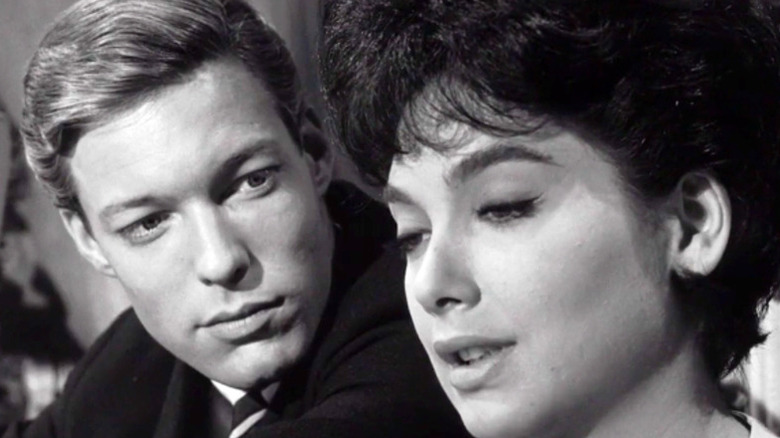
Author Max Brand created the character of Doctor James Kildare for magazine short stories in the 1930s. After being adapted into film, radio, and comic books, Kildare made the leap to television with 1961's "Dr. Kildare." Starring Richard Chamberlain as the eponymous physician, the show starts with Kildare working as a medical intern at Blair General Hospital. Over the course of the five-season series, Kildare is promoted to become a resident doctor at the hospital under the mentorship of Doctor Leonard Gillespie (Raymond Massey).
"Dr. Kildare" set the foundation for medical melodramas like "Grey's Anatomy" and "Trapper John, M.D." to follow. The show also proved to be a breakout role for its star, launching Richard Chamberlain into a prolific film and television career before his passing in 2025. Even at this early stage in his work, Chamberlain proves to be a magnetic presence on-screen as he brings the titular doctor to life. Balancing interpersonal melodrama with life-and-death stakes within the medical field, "Dr. Kildare" is an under-appreciated precursor to subsequent medical dramas.
The Virginian
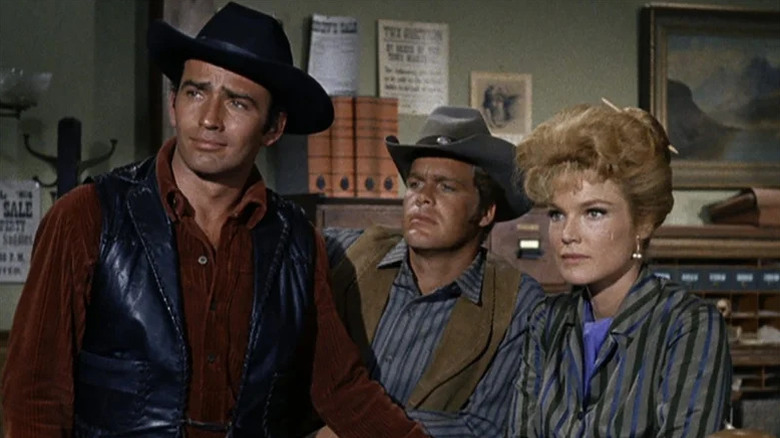
The 1902 novel "The Virginian: Horseman of the Plains" by Owen Wister serves as the loose basis for the 1962 Western series "The Virginian." Set primarily in Wyoming during the late 19th century, the unnamed protagonist (James Drury) is a foreman at Shiloh Ranch known simply as the Virginian. Working under a variety of the ranch owners, the enigmatic gunfighter maintains the peace around the Shiloh property and its neighboring community. The show's final season rebranded it as "The Men from Shiloh," changing its aesthetics to resemble spaghetti Westerns, complete with a new theme song composed by Ennio Morricone.
Though overtaken by "Gunsmoke" and "Bonanza" as one of the longest-running Westerns on American TV, "The Virginian" ran for nearly 250 episodes across nine seasons. This places it as the third-longest Western on NBC, though it's hardly discussed as much nowadays despite its impressive longevity. Compared to its contemporaries, the series maintained a sense of mystery, particularly around its protagonist, and visibly evolved to reflect changing attitudes about the genre. Often left out of being cited among the best Western TV shows of all time, "The Virginian" was a television staple for nearly a full decade.
Petticoat Junction
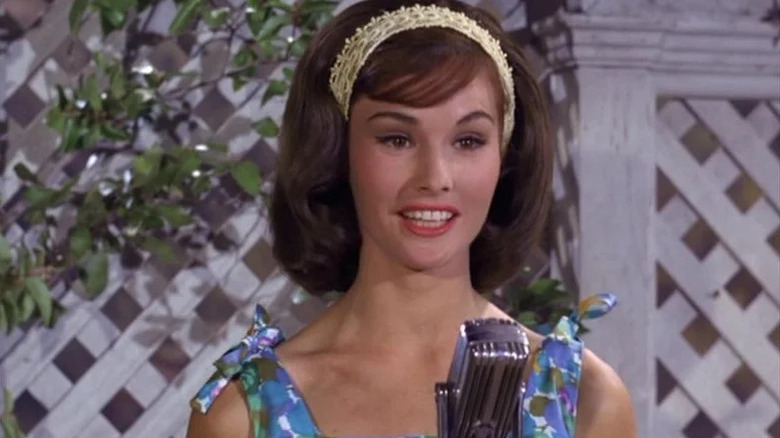
While "Green Acres" is an enduring '60s sitcom classic, viewers today might not know that the show is technically a spin-off. The 1965 series spun off of "Petticoat Junction," another rural-based comedy show that began in 1963. The show centers on the rustic Shady Rest Hotel, set in the southern country town of Hooterville, with the establishment run by Kate Bradley (Bea Benaderet). While running the hotel, Kate raises her three daughters and humors her buffoonish but well-meaning Uncle Joe Carson (Edgar Buchanan).
Boasting one of the top TV theme songs of the '60s, "Petticoat Junction" ran for seven seasons until 1970. The show initially focused on the sort of wholesome country humor that "The Andy Griffith Show" was known for. As the series progressed, it focused more on Kate's daughters and their burgeoning adulthood and relationships, turning to family-centric comedy. Whereas contemporaries like "The Beverly Hillbillies" and "Green Acres" continue to hold cultural resonance, "Petticoat Junction" just hasn't quite had the same staying power.
Voyage to the Bottom of the Sea
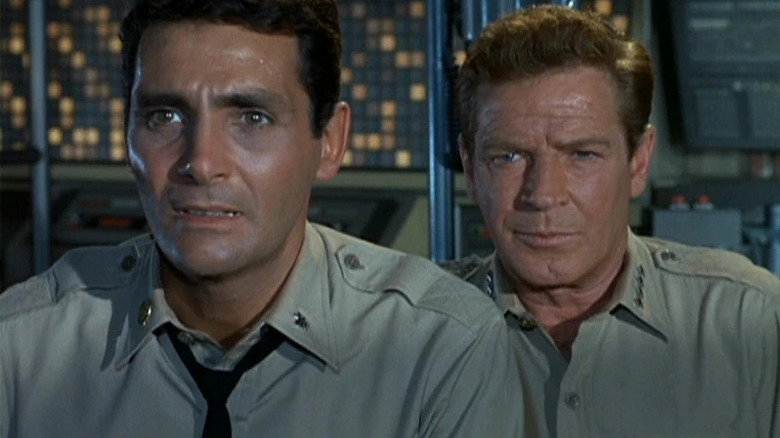
Filmmaker Irwin Allen adapted his 1961 science fiction movie "Voyage to the Bottom of the Sea" with a 1964 television series of the same name. Set in the near-future, the show follows the advanced American nuclear submarine the Seaview and its crew, led by Admiral Harry Nelson (Richard Basehart) and Commander Lee Crane (David Hedison). While patrolling the oceans, the Seaview's adventures go far beyond the Cold War intrigue that it often found itself a part of. This includes defending the planet from extraterrestrial and supernatural threats, all while serving the American military.
"Voyage to the Bottom of the Sea" for over 100 episodes across four seasons, ending its run in 1968. To be sure, it is an incredibly odd series, with the crew of the Seaview confronting everything from aliens to werewolves and ghosts. But that was all part of the series' charm, maintaining the underwater spectacle while getting weird with its nautical potential. Worthy of being among the most underrated sci-fi shows of all time, "Voyage to the Bottom of the Sea" was, at the very least, unrestrained by its premise.
Daniel Boone
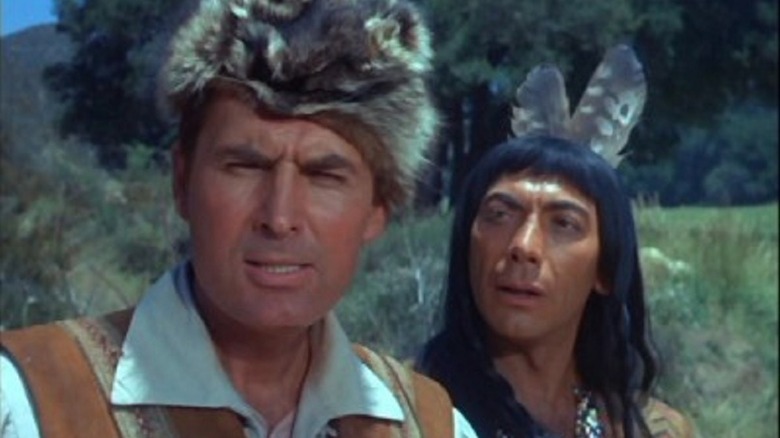
After previously playing historical frontiersman Davy Crockett on television, actor Fess Parker took on the role of Daniel Boone. Premiering in 1964, the eponymous show presented a heavily fictionalized account of Boone's exploits in the 18th century in and around Kentucky. The series focused on the Boone family dynamics living along the untamed frontier, with stories taking place during the American Revolution and its fragile aftermath. Joining in on the adventures was Mingo (Ed Ames), the family's half-Cherokee and Oxford-educated friend in contrast to the more bucolic Boones.
Though Parker's Daniel Boone didn't prove as popular as his earlier Davy Crockett portrayal, the series still ran for over 160 episodes across six seasons. The show played fast and loose with history, when it drew directly from historical accounts at all to weave its narrative. But Parker was a seasoned pro at playing larger-than-life television frontiersmen at this point and shared a good rapport with Ames. A solid if by-the-numbers take on the historical figure, "Daniel Boone" offered a change of pace from other contemporary Westerns and historical adventure shows.
Gomer Pyle - USMC
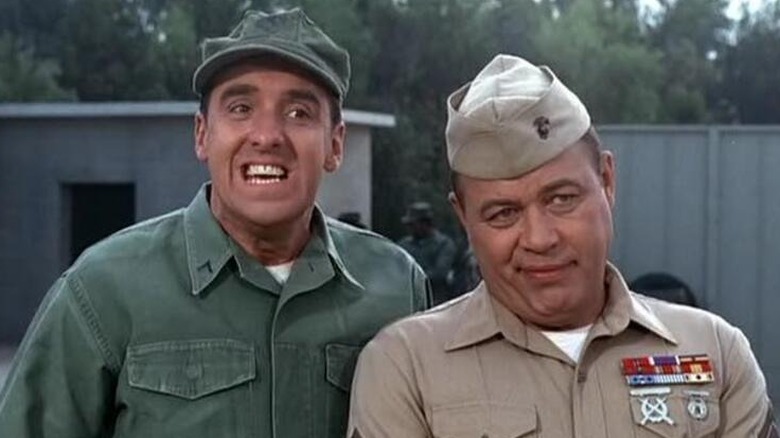
"The Andy Griffith Show" is one of those series that absolutely dominated the '60s with its wholesome depiction of rustic small-town America. This led the show to spawn a spin-off with the military comedy "Gomer Pyle – USMC" in 1964. Jim Nabors reprises his role as Gomer, with his character, as the title suggests, having left Mayberry, North Carolina to join the U.S. Marine Corps. Gomer's good-natured naivete and rurally cultivated outlook provide the bulk of the show's laughs as he interacts with his fellow Marines and superior officers.
"Gomer Pyle – USMC" leans more into screwball comedy than "The Andy Griffith Show" did, accentuated by Nabors' performance. The spin-off proved a hit with viewers, running for five seasons before its eventual conclusion in 1969. In spite of the Vietnam War, the show remained a popular draw, with Nabors himself deciding to end it to move on with his career. In the meantime, "The Andy Griffith Show" underwent a rebranding as "Gomer Pyle" wound down, with the show changing its title to "Mayberry R.F.D." and continuing on into the '70s.
That Girl
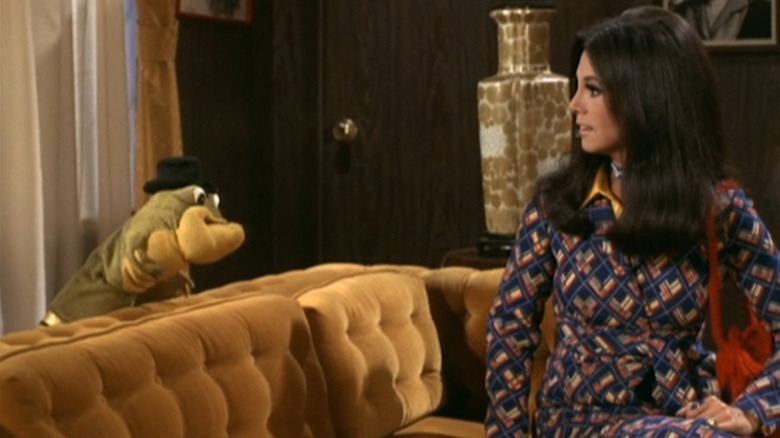
Before "The Mary Tyler Moore Show" and its depiction of a liberated woman making it on her own in the big city, there was "That Girl." Premiering in 1966, the series starred Marlo Thomas as Ann Marie, a young woman who moves to New York City to make the big time as an actor. Ann attends auditions and takes on small jobs to support herself while dating magazine writer Donald Hollinger (Ted Bessell). Often checking in on their daughter are Ann's parents Lew (Lew Parker) and Helen Marie (Rosemary DeCamp).
"That Girl" ran for five seasons, until 1971, producing well over 100 episodes during its run. A lot of the show's appeal came from Thomas' bubbly charm playing Ann juxtaposed with Bessell's more deadpan approach to playing Donald. This on-screen pairing served the series well, culminating in the couple becoming engaged for the show's final season as a happy send-off. Like "Gomer Pyle" before it, "That Girl" came to a close not because of ratings but because of its star, with Thomas deciding to move on with her career.
The Time Tunnel
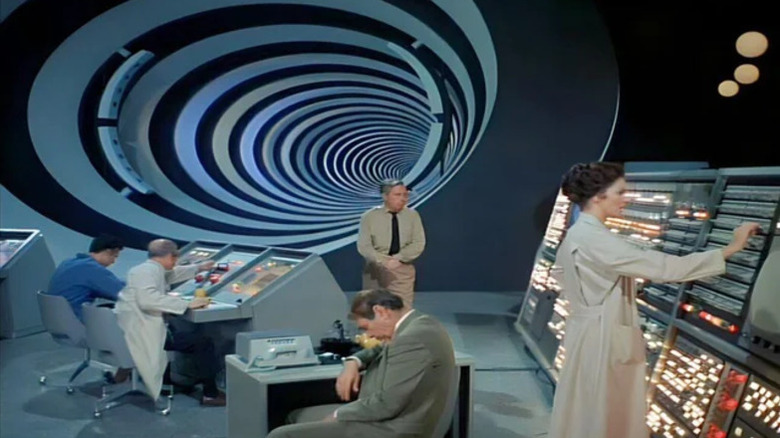
Another Irwin Allen-created sci-fi show was 1966's "The Time Tunnel," a psychedelic time-bending odyssey starring James Darren and Robert Colbert. The show revolves around a top-secret American government project to build a time machine resembling an elongated tunnel. Scientists Tony Newman (Darren) and Doug Phillips (Colbert) are flung through time testing out the machine to prevent federal funding cuts, only to find themselves bouncing across different historical periods. As they search for a way back to their native time period, the duo participate in everything from the sinking of the Titanic to the Battle of the Alamo.
Though it only ran for a single season, "The Time Tunnel" maintained a healthy viewership but it was reportedly cancelled because of behind-the-scenes politics. With its production studio focused on other projects, "The Time Tunnel" was replaced by the new series "The Legend of Custer." Despite its early cancellation, the show lived on in tie-in novels, comic books, and other merchandising reflecting its popularity. Of the main cast, James Darren later appeared in "T.J. Hooker" and "Star Trek: Deep Space Nine" before his death in 2024.
The Flying Nun
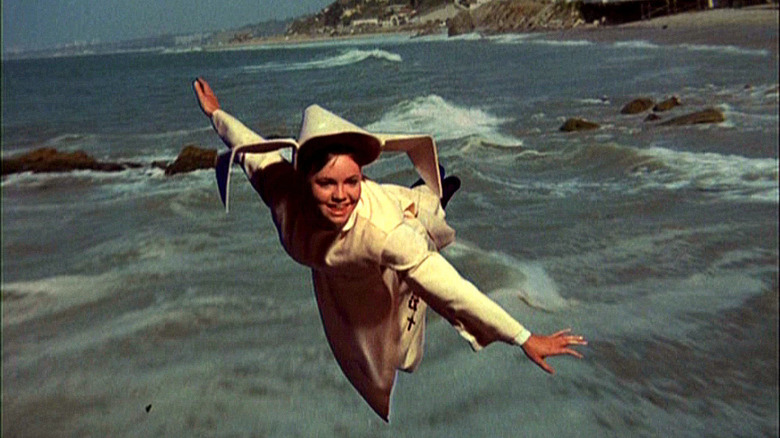
Sally Field is an Oscar-winning actor who started on TV before eventually transitioning to the silver screen. After starring in the short-lived series "Gidget," Field went on to star in 1967's "The Flying Nun," playing the titular airborne Sister Bertrille. Based on the 1965 novel "The Fifteenth Pelican" by Tere Ríos, the show has Bertrille relocate from her home in Chicago to serve at a convent in Puerto Rico. As alluded to by the title, the sister has the unique ability to fly thanks to her cornette, which she uses to help the local community and convent.
While featuring an admittedly ridiculous premise, "The Flying Nun" ultimately ran for three seasons, noticeably longer than "Gidget" had. The series ran from warmer, community-based stories that just happened to feature Bertrille's soaring abilities, to broader slapstick comedy. Like many shows on this list, the series went on to receive its own wave of tie-in merchandising, including novels and comic books. Making the most of its outrageous concept, "The Flying Nun" leaned into genuine sentimentality and compassionate characters to great effect.