

15 Best Police Procedural TV Shows Of All Time, Ranked
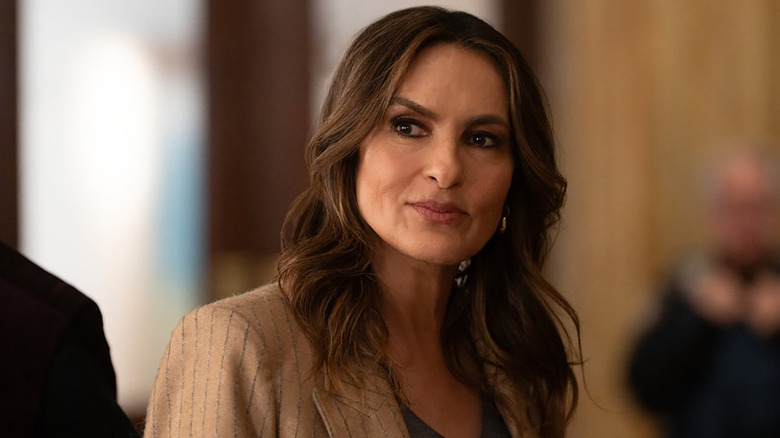
Handcuffs, cups of coffee, flashing sirens, and a fresh, new case every week. For fans of hardboiled genre work, including the promise of truth, justice, and direct engagement with timely issues, there is simply nothing like the best cop shows on TV. The procedural is a specific genre within that field.
Procedurals, a stalwart of TV history from the late 1940s through the present day, offer a strange kind of comfort with their often grisly plotlines. Sparing no details, the police procedural walks us through every step of a crime, showing the viewer how the deed was done, and how the perpetrators will be held accountable. Viewers know and love the template, giving creators ample room to color within or outside of the lines. They also scratch a particular human itch that mystery writers have been exploiting since the days of Edgar Allen Poe: the need for resolution and the trail of how we got there.
If you're a fan of this kind of story, please enjoy our list the 15 best police procedural TV shows of all time, ranked.
15. NCIS
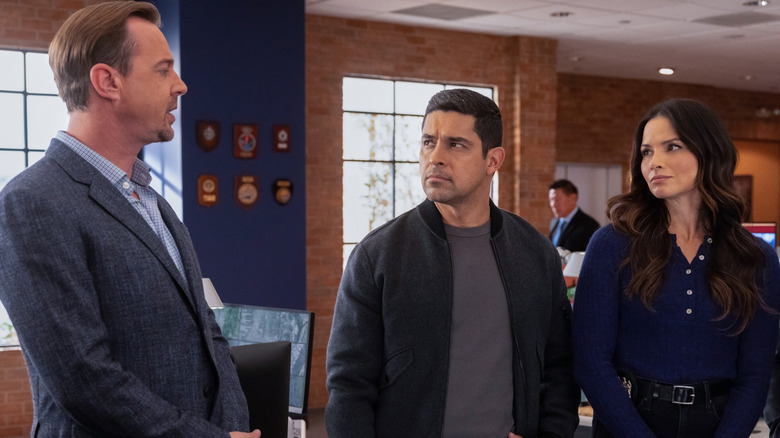
A spinoff of an essential legal procedural, "JAG," "NCIS," which stands for Naval Criminal Investigative Service, debuted on CBS in 2003. Over the 20-plus years since, it's become a cornerstone of the police procedural genre, thanks in large part to its deep and eclectic cast of well-realized characters.
For its first 19 seasons, Mark Harmon starred as NCIS Special Agent-in-Charge Leroy Jethro Gibbs, a taciturn, stern, and highly effective leader. He's great with weapons, better with cutting his team through bureaucratic hurdles, and best at smacking the back of Senior Field Agent Anthony DiNozzo's (Michael Weatherly) head when he gets out of line.
Other notable characters include Pauley Perrette as Forensic Specialist Abby Sciuto (pictured above), a perky-goth lab technician quick to banter; David McCallum as Dr. Donald "Ducky" Mallard, an eccentric medical examiner who likes to speak to his corpses; and the eventual replacement of Harmon, Gary Cole as Supervisory Special Agent Alden Parker, who adds a little more swagger to his leadership style.
14. Criminal Minds
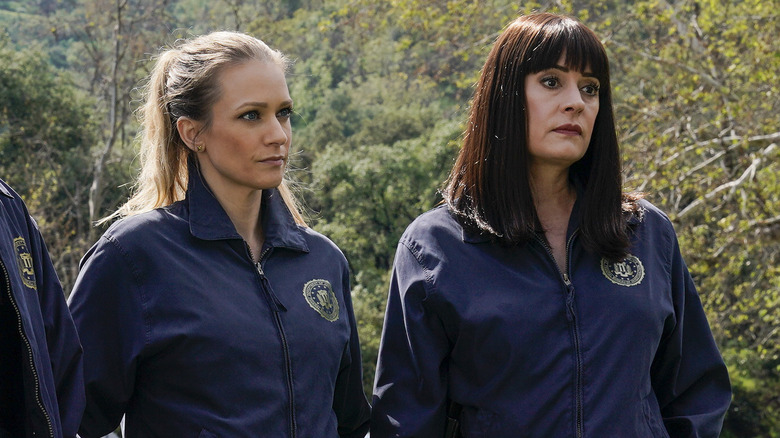
Another CBS sensation, "Criminal Minds" follows a group of FBI criminal profilers in the Behavioral Analysis Unit, giving the show a distinctive "psychological procedural" bent that's appealing in the often plot-driven genre. If you dig the prestige of Netflix's "Mindhunter" and want more drama in that vein, "Criminal Minds" might scratch the itch. Plus, there are so, so many episodes to check out, with more on the way.
The Jeff Davis-created show debuted in 2005, originally starring Mandy Patinkin as Special Agent Jason Gideon, a troubled and traumatized profiler doing his best to keep things professional even as his soul erodes. In real life, Patinkin was having trouble playing the character for long, due to the show's unending violence.
Patinkin told New York Magazine that playing the role was "the biggest public mistake I ever made", so TV veterans Thomas Gibson and Joe Mantegna stepped in as new leaders Aaron Hotchner and David Rossi, respectively. Filling out the ever-changing ensemble cast were Shemar Moore as hot-headed agent Derek Morgan (pictured above) and Matthew Gray Gubler as the eccentric Dr. Spencer Reid. The results remain bingeable.
13. Bones
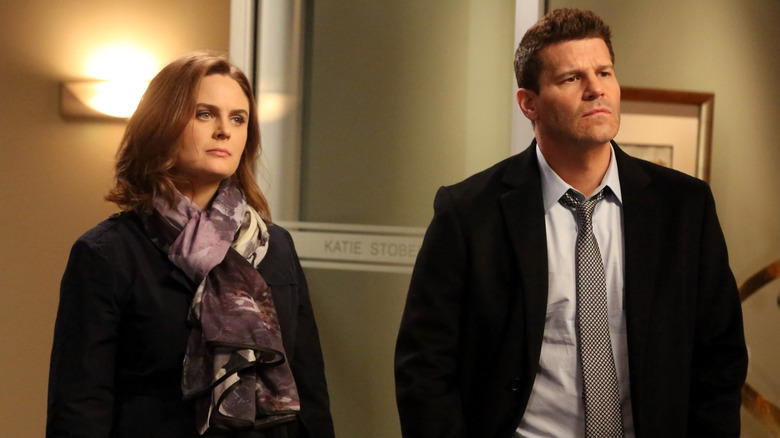
Airing on Fox from 2005 to 2017, "Bones" exudes charm, humor, and endearing character development amidst its often grisly cases, with a dynamic that let its leads work together for 12 years without hating each other.
Created by Hart Hanson and inspired by the life and fictional books of forensic anthropologist and author Kathy Reichs, "Bones" stars Emily Deschanel as Reichs' proxy, Temperance Brennan (pictured above). She's a whiz at her job, using her high IQ and substantial experience with human remains to solve many of the FBI's most puzzling and notorious cases. But with this level of genius comes a level of social obliviousness, much to the chagrin of her odd couple partner, FBI Special Agent Seeley Booth (David Boreanaz). He gives her the titular nickname, "Bones," and spends the series prodding her to come out of her shell — and maybe falling for her, too.
The rest of the ensemble cast earns lovely moments to shine, too, especially T. J. Thyne as Jack Hodgins, an entomologist who regularly puts up a prickly exterior to hide a fundamentally vulnerable center.
12. The F.B.I.
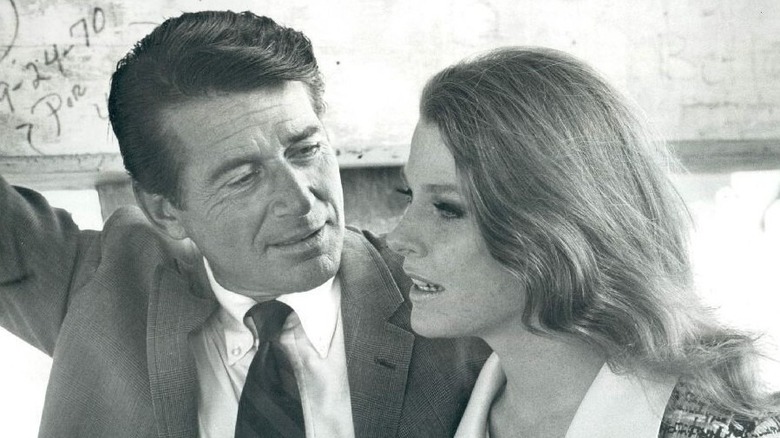
Remember that meme of Leonardo DiCaprio pointing at the TV from Quentin Tarantino's "Once Upon a Time in Hollywood"? In the universe of the film, his character, actor Rick Dalton, is pointing at his own appearance as a guest star on "The F.B.I." And if a show's influence on television history is so powerful that Tarantino needs to reference it (and, by proxy, change the modern memescape), you know it has to make the list.
"The F.B.I." aired on ABC from 1965 to 1974 and followed a group of FBI agents working on a litany of crimes, often inspired by real-life FBI cases. If you've ever enjoyed crime shows that are "ripped from the headlines," you have "The F.B.I." to thank. Beyond this level of realism, the show also turned heads for its frankness when depicting violence and criminal behavior.
All of this took place under the watchful eye of real-life FBI figurehead J. Edgar Hoover, who often impressed star Efrem Zimbalist Jr. (pictured above, left) with his instincts.
11. Elementary
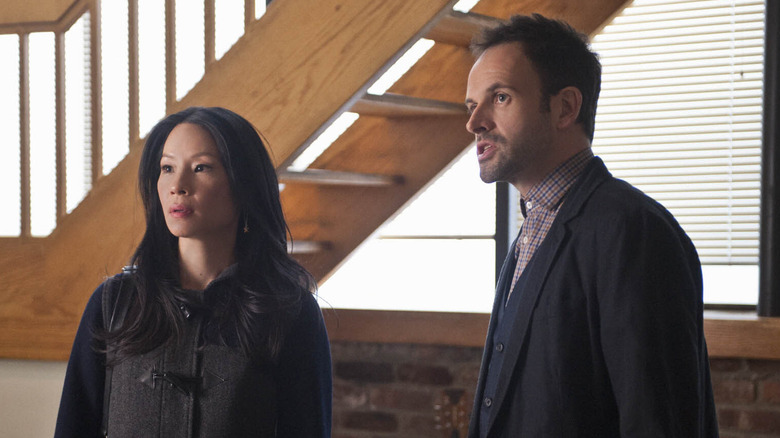
A seven-season CBS wonder, "Elementary" takes the Sherlock Holmes mythology and transports it into a contemporary, New York City-placed police procedural, with routinely excellent results.
Jonny Lee Miller stars as Holmes, who, in this telling, has moved to New York after burning out and going to rehab in London. He's soon recruited by the NYPD to consult on solving crimes, and becomes regularly accompanied by Dr. Joan Watson (Lucy Liu), this series' take on Holmes' regular companion, Dr. John Watson.
Miller and Liu share excellent chemistry, playing their relationship from grades of prickly resentment, to begrudging respect, to a genuine, mutual admiration. They make the show's postmodern remix of many familiar Sherlock Holmes stories and characters easy to dive into, even and especially for those who swear by that other modernization of the character, the one with Benedict Cumberbatch and Martin Freeman. Hot take: judged purely as "a consistently entertaining TV show," "Elementary" is the better work.
10. Adam-12
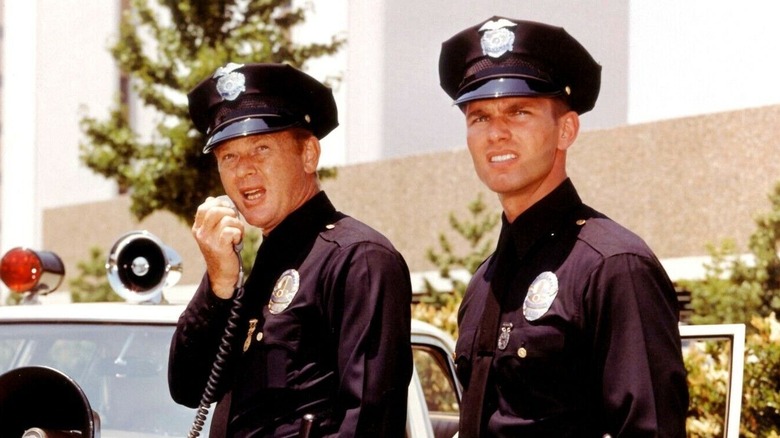
"Adam-12" is an underremembered 1960s-70s police procedural that sought to depict its subjects — in this case, members of the Los Angeles Police Department — with unprecedented realism. The term "procedural" is, thus, particularly apt in describing "Adam-12," as it gave its general TV audience access to many of the most granular parts of police procedure, including then-obscure jargon.
"Adam-12" starred Martin Milner as veteran officer Pete Malloy and Kent McCord as rookie officer Jim Reed (pictured above). Over seven seasons, these officers answered a number of calls ranging from shootouts and terrorist attacks to even mundane traffic stops and petty thefts. As such, "Adam-12" represented a wide breadth of representation of what the police could do, proving that when it's rendered with care, anything can make for interesting drama.
If you dig the original "Adam-12," the reboot series from the early 1990s makes for an interesting companion piece, especially in its attempts to modernize some of the original series' more ignorant tendencies.
9. Hill Street Blues
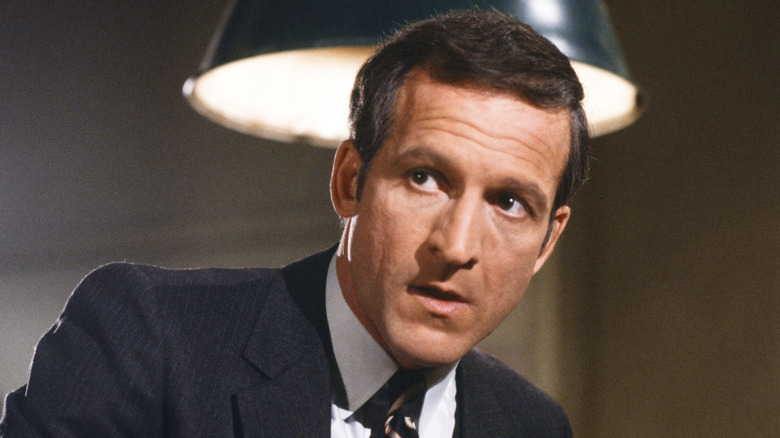
A 1980s classic, boasting an all-timer theme song from incredible TV theme composer Mike Post (whose work you'll recognize a couple of times later in this list), "Hill Street Blues" is a revolutionary top 10 crime drama that altered the grammar of how we describe these shows.
The series, created by Steven Bochco and Michael Kozoll, took the idea of "verisimilitude" and ran with it, providing viewers with an unprecedented level of psychological access to both its police officers and the criminals they were pursuing.
Beyond the show's game-changing writing and performances, its directors and cinematographers also reoriented and disoriented viewers' eyeballs. The crime dramas of television past tended to offer standard shot-reverse shot coverage with clean, discrete transitions between scenes. Not so on "Hill Street Blues." Here, handheld cameras gave everything a sense of visceral immediacy, and frenetic editing made sure the audience was never fully placid. This visual style was instantly influential, especially on many later cop dramas — some of which we've yet to touch on.
8. Law & Order: Special Victims Unit
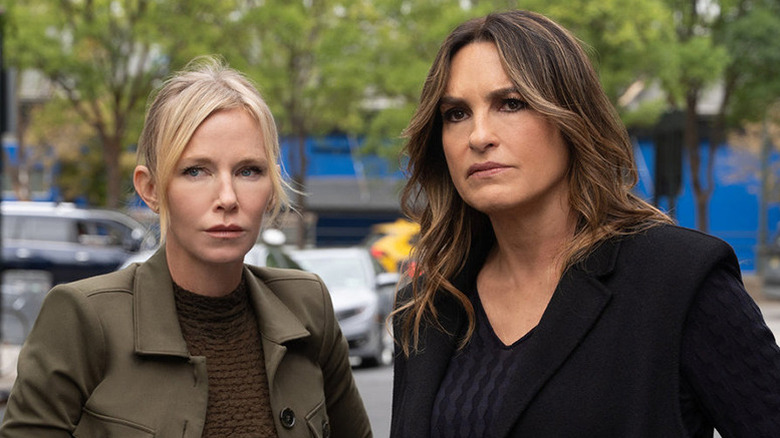
With another Mike Post musical theme, "Law & Order: Special Victims Unit" makes its mark, transcending its status as a spinoff to become something wildly popular with its own distinct identity.
As the opening voiceover from Steven Zirnkilton intones, the Special Victims Unit is concerned with "sexually based offenses, [which] are considered especially heinous." Leading the charge against these offenses for 27 seasons and counting is Olivia Benson, played to perfection by Mariska Hargitay.
Joining Benson in the fight against these most indefensible criminals are remarkable figures like Ice-T as the incredulous and ever-happy-to-explain Fin Tutuola, Christopher Meloni as the hot-headed Elliot Stabler, and Richard Belzer as the sardonic John Munch, whose role didn't actually originate here, but on a show we've yet to discuss.
It's frankly astonishing how grim the subject matter of an average "SVU" episode can get, especially considering how prevalent the show has become in mainstream American culture. All credit due, then, to the show's committed cast and endlessly productive writers.
7. The Sweeney
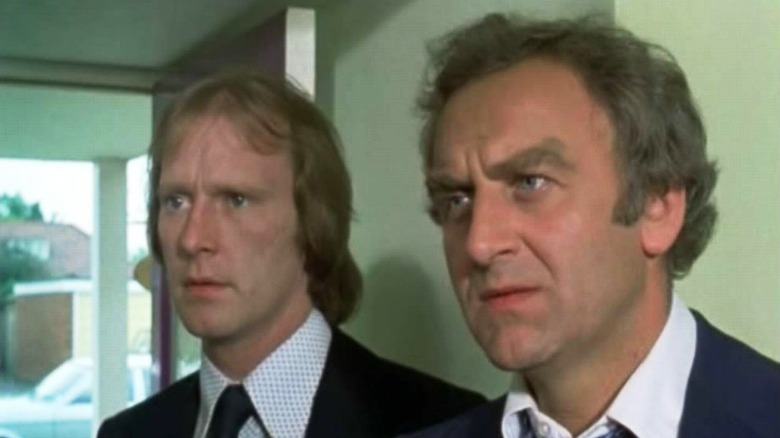
Moving across the pond, we find "The Sweeney," a British 1970s cop drama that originally aired on ITV. The program focuses on the Flying Squad, a specialized subset of the London Metropolitan Police Department. John Thaw stars as Detective Inspector Jack Regan (pictured above to the right), a man tough of head and reliable of heart. His partner is Detective Sergeant George Carter, played by Dennis Waterman, a relatively softer but no less successful agent of the law.
Under the eye of creator Ian Kennedy Martin, "The Sweeney" aimed for realism in every facet of production, from the usage of gritty jargon and Cockney rhyming slang to its location shooting (all on gorgeous 16mm film, giving its directors room for ample agility and experimentation).
In other words, what "Hill Street Blues" was to American television, "The Sweeney" was to the Brits. If you've had your fill of generic-feeling police procedurals, give this one a go, posthaste.
6. Cagney & Lacey
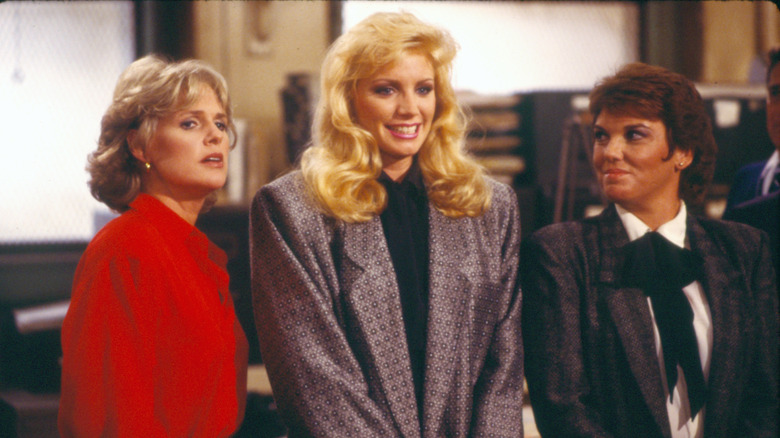
Created by Barbara Avedon and Barbara Corday, "Cagney & Lacey" is an essential work when reckoning not just with crime television, but with feminist ideas, progressions, and limitations, as represented on the small screen.
Beginning with a feature-length pilot in 1981 before airing its regular run on CBS from 1982 to 1988, "Cagney & Lacey" most prominently stars Sharon Gless as Detective Christine Cagney (though Cagney was played by Loretta Swift in the pilot, then replaced by Meg Foster for the first season in a memorable recast) and Tyne Daly as Detective Mary Beth Lacey.
Cagney is a single woman focused on her career with a bit of a softer, more reserved temperament than Lacey, a married, working mom not afraid to ruffle feathers with her brusque attitude. While dealing with the male-dominated New York City Police Department (represented by Al Waxman as their boss, Lieutenant Albert Samuels), the pair solve cases in unique and engaging ways.
5. NYPD Blue
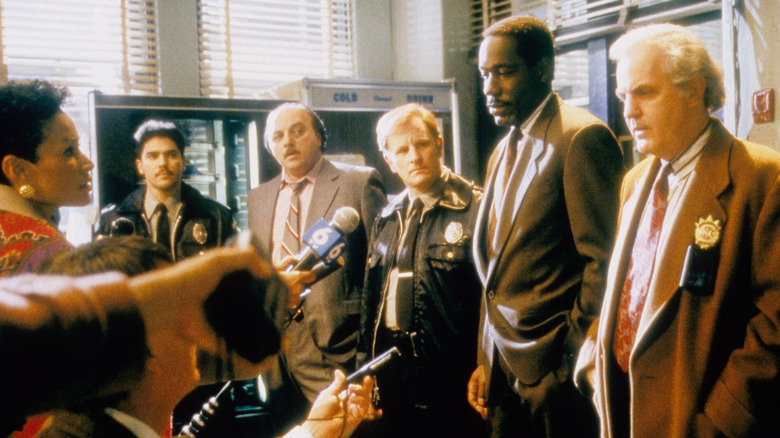
Always controversial, highly acclaimed, and unquestionably influential, "NYPD Blue" is a benchmark of network TV drama, much less the police procedural genre. Co-created by "Hill Street Blues" maestro Steven Bochco and David Milch, who also wrote for "Hill Street Blues," "NYPD Blue" concerned a crew of overworked and overstressed police officers in the Big Apple. With exacting, even excruciating detail, every episode flung its long-suffering detectives into cases that tested them physically and psychologically.
Dennis Franz starred in all 12 seasons, from 1993 to 2005, as the irascible, booze-soaked, and iconic Detective Andy Sipowicz. Other notable members of the ensemble cast that entered and exited over the run include the legendarily difficult David Caruso as Detective John Kelly, James McDaniel as the morally solid Captain Arthur Fancy (pictured above), and Jimmy Smits as the surprisingly vulnerable Detective Bobby Simone.
The show pushed buttons in its pursuit of unvarnished authenticity, depicting strong language, violence, hatred, and even nudity with uncommon frankness. It remains an arresting watch, one that feels impossible to greenlight in the contemporary network television climate of today.
4. Kojak
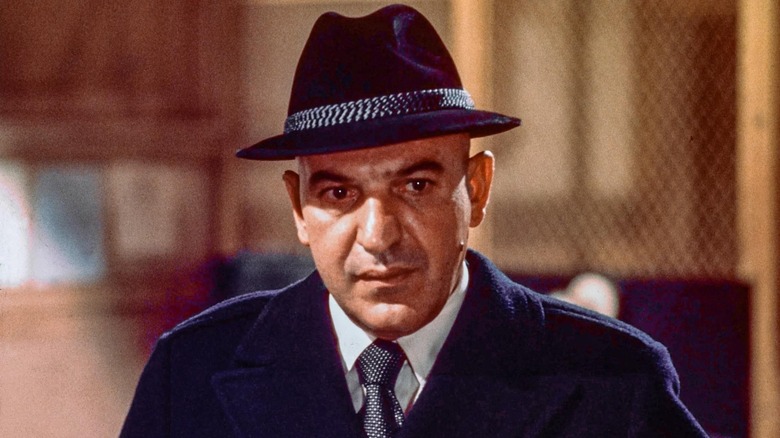
As portrayed by the untouchable Telly Savalas, Lieutenant Theophilus "Theo" Kojak is one of television's great characters, an eccentric New York detective who makes Columbo seem downright quaint. Kojak is grouchy, determined, dresses impeccably, loves lollipops, and keeps asking the catchphrase, "Who loves you, baby?"
But this exquisite, always watchable character isn't the only reason "Kojak" is such a standard-setting police procedural. The show, created by Abby Mann and airing on CBS from 1973 to 1978, dove headfirst into the hot-button issues of the day, including the police's relationship with racism, corruption, and misconduct of the alleged criminals they were trying to bust. It also gave viewers an intimate early look at the off-color gallows humor that went on between officers at the precinct.
Think of it like a well-mixed cocktail — all of the grimy intensity is a strong double shot of whiskey, and the endearing eccentricity of Lieutenant Kojak is the mixer that makes it go down smooth.
3. Dragnet
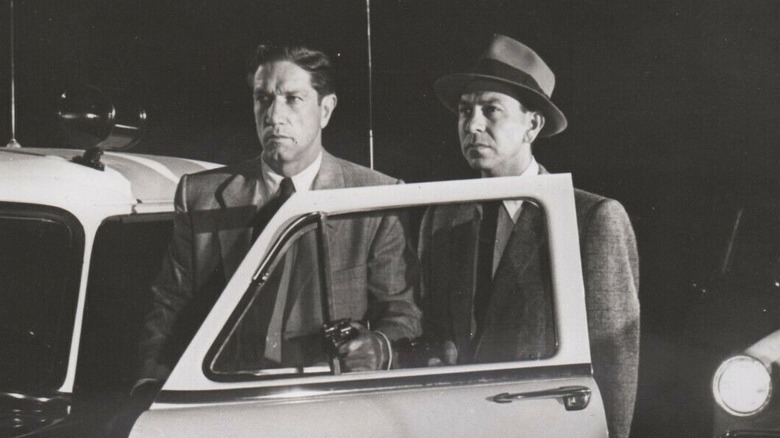
A multimedia franchise that arguably codified every trope and structural facet we know and love about police procedurals, "Dragnet," as typified here by its 1951-1959 NBC series (though its 1960s revival is interesting, too), is proof positive that the word "formulaic" isn't always derogatory.
Created by and starring Jack Webb, "Dragnet" borrowed elements of film noir, gangster pictures, and issue-based docudramas, then created a repeatable, winning brew of television entertainment. Sergeant Joe Friday (Webb) and his longest-running partner, Officer Frank Smith (Ben Alexander), take on a case in the mean streets of Los Angeles, employing tried-and-true police tactics and matter-of-fact interactions to see it to its end.
"Just the facts, ma'am" wasn't just the culturally stickiest catchphrase from the show (though it's technically a misquote; what Friday tended to actually say was "All we want are the facts, ma'am"). It was the modus operandi for the show's writing and filmmaking style; a vow to present boots-on-the-ground police work with straightforward authenticity. It's a choice that's colored the genre to the present day.
2. Law & Order
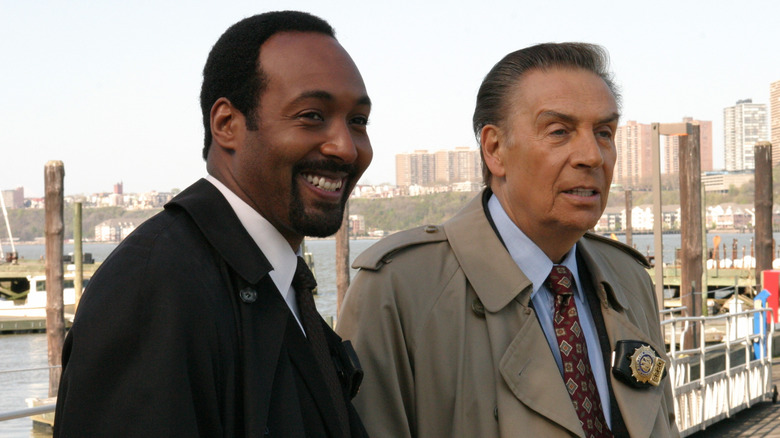
Featuring probably the best television theme song ever from our man Mike Post, "Law & Order" is a landmark procedural in television history. Its influence on popular culture can't be overstated, giving its millions of viewers a working understanding of both police protocol and courtroom decorum — and enough spin-offs that they can be separately ranked, too.
The show's genius and longevity are set up by its voiceover, once again from Steven Zirnkilton: "In the criminal justice system, the people are represented by two separate yet equally important groups: the police who investigate crime, and the district attorneys who prosecute the offenders." Donk-donk!
Creator Dick Wolf's intentions are made immediately clear: "Law & Order" follows cases from beginning to end, from the New York City streets to the judge's sentencing. And with a revolving door of incredible regular cast members like Sam Waterston, Jesse L. Martin, Jerry Orbach (pictured above), and S. Epatha Merkerson, the show remains perhaps the easiest (and oddly coziest) program in history to jump into at any point.
1. Homicide: Life on the Street
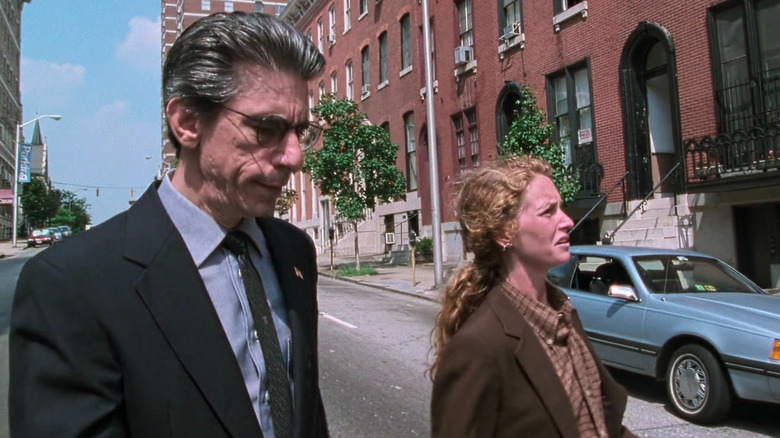
Created by Paul Attanasio and inspired by a non-fiction book by David Simon (who'd go on to create one of the greatest non-procedural crime shows of all time, "The Wire"), "Homicide: Life on the Street" aired on NBC from 1993 to 1999. In this seven-season run (plus a series finale movie that aired in 2000), it more than earned its position as the single greatest police procedural made to date.
In many ways, it's the perfect synthesis of numerous elements from the other shows on this list. It has revolutionary, experimental camerawork and editing, especially in its early seasons, with handheld images jarringly cut together without regard for traditional continuity. It's borderline bleak in its uncompromising examination of both lawbreakers and lawgivers. It strove for a hardened kind of realism that rattles the cage to this day.
Among its many incredible performers (including and especially Andre Braugher, Yaphet Kotto, and Melissa Leo), it introduced the world to the late, great Richard Belzer's John Munch, enhancing the continuity of the "Law & Order" universe — and dozens of other TV properties, too.
For fans of the highest-quality cop shows, who aren't afraid to dive into the heart of darkness, "Homicide: Life on the Street" is a must-watch.