

15 TV Shows Like Game Of Thrones Every Fan Should Watch
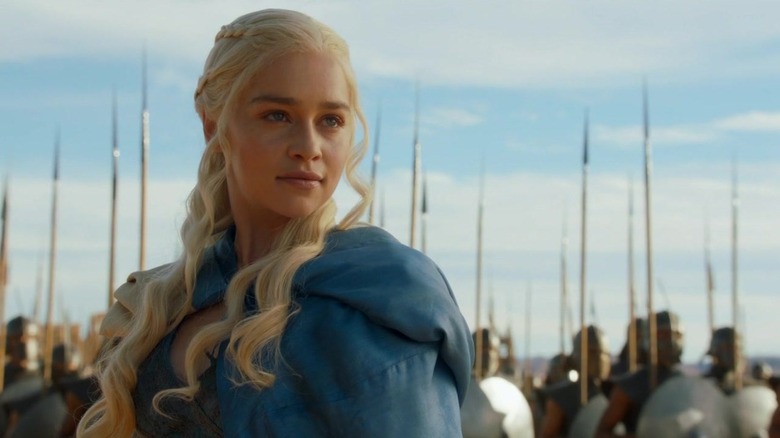
"Game of Thrones" was such a massive success for HBO that nearly every subsequent historical or fantasy show has been compared to "GoT." The cultural phenomenon influenced pop culture for years to come. Though it's been off the air for six years since that divisive, scorched-earth finale, "Game of Thrones" is still very much in the ether. Part of that is due to the two "Game of Thrones" spin-offs, "House of the Dragon" and the more recent "A Knight of the Seven Kingdoms."
"Game of Thrones" set a high standard, but the series isn't entirely in a league of its own, either. Plenty of other shows include historically based stories and lots of fantasy series provide drama, action, and political scheming. If you're looking for something that will fill the void left by "Game of Thrones," here are 15 series that you should watch next.
Rome
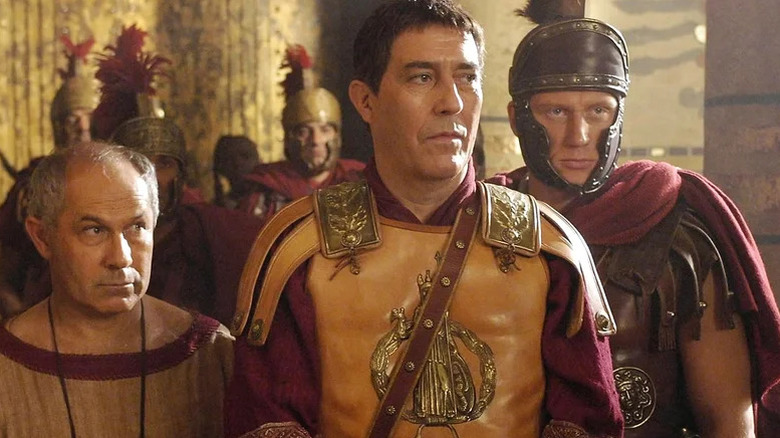
"Game of Thrones" owes a lot to "Rome," the epic HBO show that premiered in 2005. Like "GoT," "Rome" tells a story of political intrigue through the perspectives of the rich and powerful, as well as the common folk. The show follows the rise of Julius Caesar (Ciarán Hinds, who was Mance Ryder in "Game of Thrones") and his battle with the Roman Republic. Two powerless soldiers, Titus Pullo (Ray Stevenson) and Lucius Vorenus (Kevin McKidd), bear witness to these massive political upheavals.
In addition to Hinds, "Rome" also features "Game of Thrones" actors Indira Varma as Niobe, the wife of Lucius, and Tobias Menzies, who plays Brutus. "Rome," which was one of the most expensive shows ever made, features gorgeous sets and intricate costumes, some of the most spellbinding worldbuilding we've ever seen pre-"GoT," and was HBO's first period drama to be filmed outside of the United States. Sadly, the pricey show was canceled after two seasons, but as creator Bruno Heller put it, "The mistakes we made are the mistakes 'Game of Thrones' learned from."
The Last Kingdom
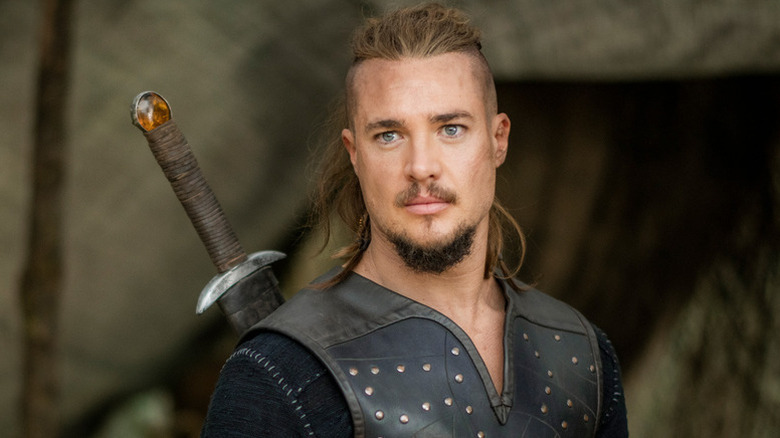
"The Last Kingdom" tells the story of an intrepid hero caught between two worlds. Set in the 9th and 10th centuries, the show follows Uhtred of Bebbanburg (Alexander Dreymon), a Saxon noble who was kidnapped by the Danes and raised as a Viking. As war brews between the Anglo-Saxons and the Vikings, Uhtred struggles to balance his loyalties to the family that raised him and his blood kin.
Based on Stephen Butchard's "The Saxon Stories" novels, "The Last Kingdom" features a compelling protagonist, plenty of ruthless action, and a surprisingly nuanced take on the distinction between heroes and villains. Although the series, which initially aired on the BBC but was later acquired by Netflix, didn't have the same massive budget as "Game of Thrones," its engaging storytelling makes up for any monetary deficit. What's more, "The Last Kingdom" received a stamp of approval from George R. R. Martin himself, who has mentioned it several times on his blog. "The show has a great look to it, all mud and blood and dark age squalor. The writing and acting are both first rate," he wrote.
Kingdom

Though the Netflix series "Kingdom" was a hit internationally, it doesn't get enough love in the U.S. One of the streamer's first Korean productions, the show takes place in 1601 Korea (then Joseon). A brilliant blend of genres, "Kingdom" incorporates palace intrigue, family drama, and horror. Our hero is Lee Chang (Ju Ji-hoon), the illegitimate son of the king, who has recently fallen ill with a mysterious illness. Chang sets out to uncover what really happened to his father, encountering horrors beyond his wildest nightmares. While trying to survive a zombie outbreak, Chang must also outrun his bloodthirsty political rivals.
Like "Game of Thrones," "Kingdom" takes place in a historical setting but adds supernatural elements to the mix. The show's unique premise elevates both genres and creates some clever parallels. Zombie shows have become increasingly popular in recent years, but we've never seen one in this setting. That Chang's fight for survival is two-pronged — he's fighting both zombies and murder-loving politicians — makes the drama even meatier.
Vikings
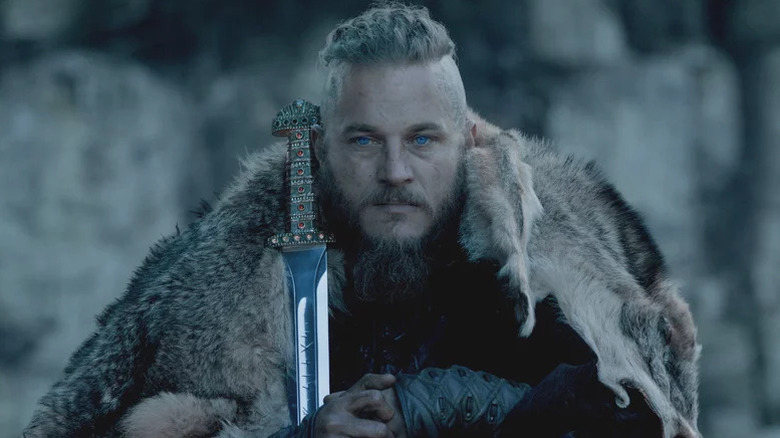
The Vikings have long fascinated history buffs, and the History Channel series of the same name brings them to life in striking fashion. Based on Norse legends, the show follows Ragnar Lothbrok (Travis Fimmel), a humble farmer who rises through the ranks and becomes a noble king. Though grounded in history, "Vikings" blends mythology, spirituality, and legend to create a compelling portrait of Viking life. Both the show's literal narrative and metanarrative center on the construction of myth itself.
This may sound heady, but rest assured, "Vikings" features loads of brutal fight scenes as well. The show is also a sprawling family drama with soapy twists. It transports you to this world of legends that is nonetheless grounded in reality, with stunning visuals and ornate production design. "Vikings" is both fast-paced and patient in its storytelling, emphasizing the brutality of this world but also its penchant for magic and beauty. Despite their brutish reputations, these characters are complex, and their motivations aren't black and white.
Black Sails
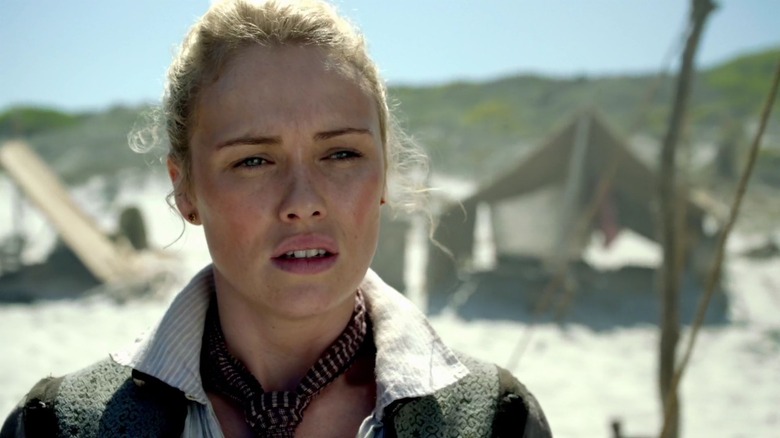
What if "Game of Thrones" was about pirates? Consider that our pitch to get you to watch "Black Sails," Starz's prequel to Robert Louis Stevenson's 1883 book "Treasure Island." Set in the early 1700s, the show follows Captain Flint (Toby Stephens), a pirate who leads his crew in a fight against the British Empire. Flint is dead set on plundering a legendary shipwreck filled with treasure, and he intends to use this pirate booty to defend New Providence Island, a ragtag pirate community, from outside forces.
There aren't many shows about pirates, perhaps because of the logistical difficulties of filming on water, but "Black Sails" proves just how fruitful the topic can be. Our protagonists are swashbuckling adventurers, yes, but they also have hopes and dreams and, at the expense of sounding glib, love in their hearts. Years before "Our Flag Means Death" came on air, "Black Sails" was the original gay pirate show and became something of a queer cult classic due to its depiction of numerous queer pirates. A combination of intriguing characters and ambitious set pieces makes "Black Sails" more than seaworthy.
Tudors
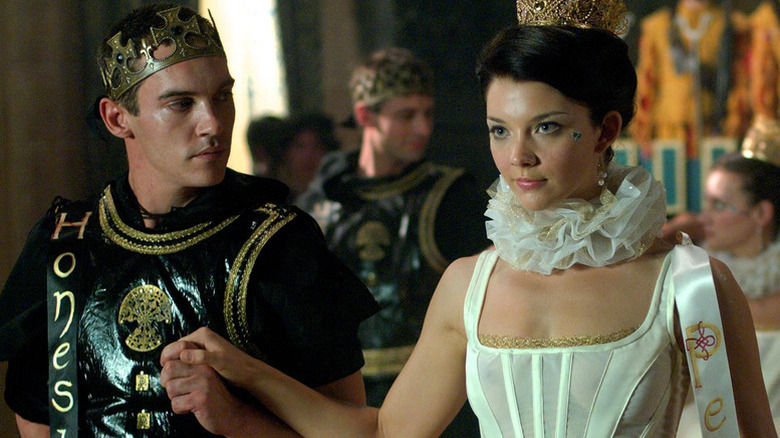
If you've pledged allegiance to House Tyrell or loved the royal musical chairs of "Game of Thrones," Showtime's "The Tudors" might be for you. The series centers on the reign of Henry VIII (Jonathan Rhys Meyers), detailing his relationships with his six wives and the political machinations that constituted his time in power. More of a historically inspired drama than a pure retelling of history, "The Tudors" aims to entertain viewers with salacious plotlines and a cast of actors who are infinitely more attractive than anyone in King Henry's court would have been — especially Henry himself.
Though it sometimes veers into silliness, this period piece is filled with enough juicy drama and social-climbing backstabbers to keep you entertained. "The Tudors" is also quite steamy, as Henry's relationship with women is unsurprisingly a central focus. However, the show's cast elevates it above pure costume fluff. "Game of Thrones" alumna Natalie Dormer plays King Henry's most famous wife, Anne Boleyn, and delivers a captivating performance. Other impressive cast members include Sam Neill, Peter O'Toole, Henry Cavill, Joss Stone, and Tamzin Merchant, who played Daenerys Targaryen in the unaired "Game of Thrones" pilot.
Marco Polo
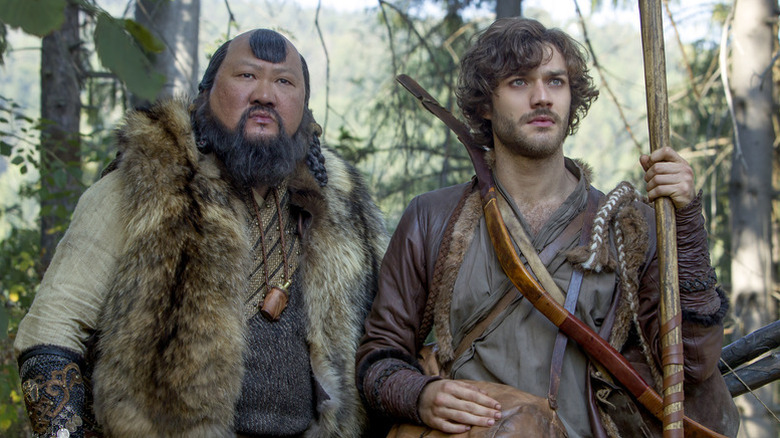
Netflix's experiment in creating a massively expensive period piece may not have ended the way they wanted it to, but the ambitious undertaking resulted in an epic tale perfect for fans of historical dramas. "Marco Polo" follows the exploits of the titular character, played by Lorenzo Richelmy, as he travels to China. The son of an Italian merchant, Marco Polo arrives in the court of Kublai Khan (Benedict Wong), where he's tasked with sussing out the loyalty of Khan's followers.
When it premiered in 2014, "Marco Polo" was the second most expensive TV show of all time, bested in money spent only by "Game of Thrones." However, the show was canceled after two seasons, with budgetary concerns being a likely factor in the decision. One of several Netflix shows that has largely been forgotten about in recent years, "Marco Polo" is worth watching. The show's production design and attention to detail are mesmerizing, and Wong gives a standout performance. The series blends personal and political intrigue, and Polo's illicit affair with the already betrothed Princess Kokachin (Zhu Zhu) adds more juicy drama.
Wheel of Time
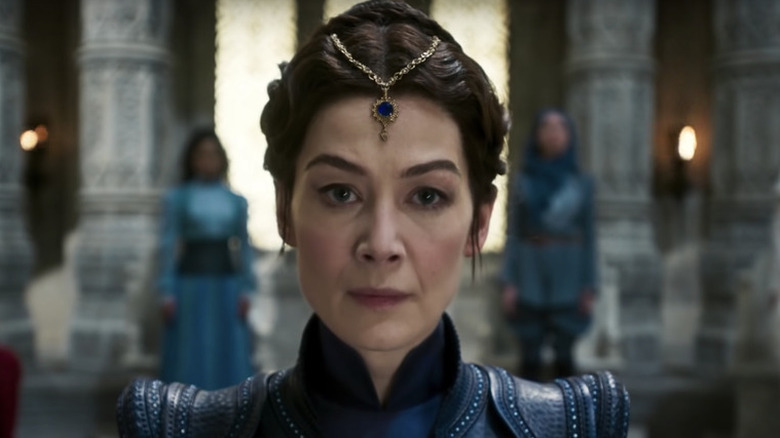
Robert Jordan's "The Wheel of Time" novels influenced many fantasy authors in his wake, including one you're likely familiar with. When Jordan died in 2007, "Game of Thrones" writer George R. R. Martin penned a blog post honoring his late friend, noting that Jordan's blurb on his book may have helped propel Martin's "A Song of Ice and Fire" series to popularity.
Amazon Prime's adaptation of the novels premiered in 2021. Though the series takes place thousands of years into the future, Earth seems to be experiencing another Middle Ages. In this world, women have magical powers, while men are banned from harnessing magic because it makes them go insane. Rosamund Pike plays Moiraine, a member of a powerful group of women known as the Aes Sedai. She sets out on a quest to find the Dragon Reborn, an unknown individual who will either save the world or destroy it. Pike carries the series with her magnetic performance, but the show introduces many fascinating characters that defy genre expectations and distill the novels' most interesting ideas.
The White Queen
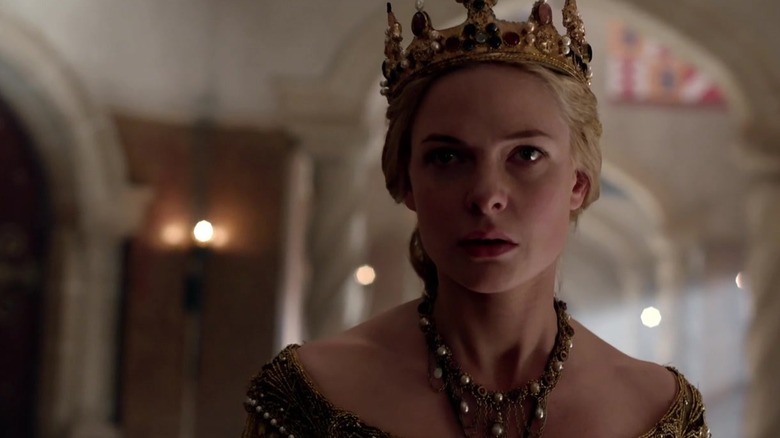
The saying "behind every great man is a great woman" serves as the rallying cry of the BBC series "The White Queen." Though perhaps a more fitting phrase would be "behind a power-hungry man is an even more power-hungry woman." Based on Philippa Gregory's novel series "The Cousins' War," the 10-part drama takes place during England's Wars of the Roses. The story follows the years-long battle for the throne from the perspective of several women who were involved behind the scenes.
Rebecca Ferguson plays Elizabeth Woodville, wife of the York King Edward IV (Max Irons), who has recently taken over for the mad King Henry VI (David Shelley). Elizabeth's family is pro-Lancaster and anti-York, which makes their marriage a dangerous affair. Though the writers care little about historical accuracy, "The White Queen" is a delightful romp through a period that was no doubt much more dour than it appears on screen. There is political intrigue, sex, flamboyant costumes, and even witchcraft — what more could you ask for? As an added treat, the series spawned two spin-offs, also adaptations of Gregory's novels: "The White Princess," which stars Jodie Comer as Elizabeth of York, and "The Spanish Princess," which follows Catherine of Aragon (Charlotte Hope).
Foundation
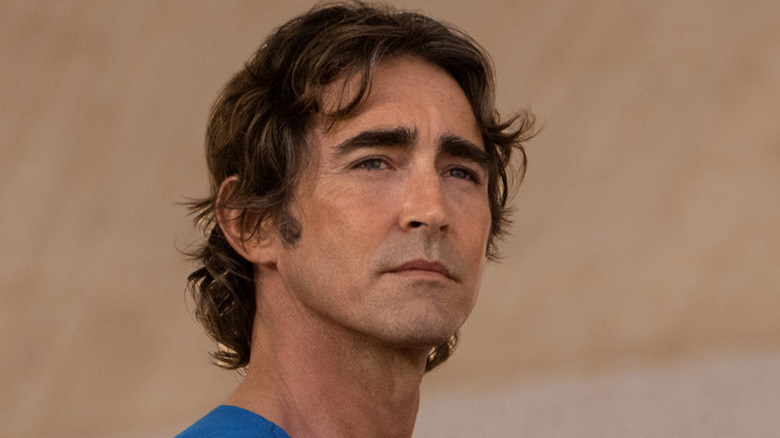
"Foundation" is a little bit like "Game of Thrones" in space. Consider showrunner David S. Goyer's pitch for the series, as told to the Hollywood Reporter: "It's a 1,000-year chess game between Hari Seldon and the Empire, and all the characters in between are the pawns, but some of the pawns over the course of this saga end up becoming kings and queens."
Based on Isaac Asimov's series of novels, "Foundation" takes place in a future time wherein humans have spread across the galaxy. Humankind is ruled by the Galactic Empire, led by Brother Day (Lee Pace), a clone of an emperor from many generations ago. The Empire, who rule from the planet Trantor, are faced with troubling news. According to famed mathematician and psychohistorian Hari Seldon (Jared Harris), society will collapse in a mere 500 years. In response, Brother Day and his fellow clones banish Hari to the distant planet of Terminus, where he establishes the Foundation, which would preserve the ways of civilization. Goyer takes Asimov's ambitious story — previously considered unadaptable — and fleshes out the underwritten characters, creating a sci-fi epic that pushes the boundaries of what television can do.
The Serpent Queen
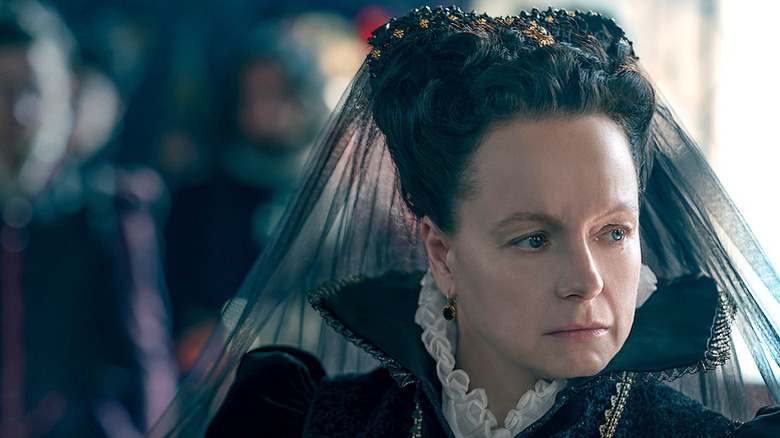
History buffs have long made the connection between Cersei Lannister (Lena Headey) and Catherine de' Medici, the ruthless queen of France who ruled with an iron fist. For those enamored with Cersei's malevolent machinations, look no further than "The Serpent Queen," which stars Samantha Morton as the 16th-century Queen of France. Morton's Catherine de' Medici narrates the story of her rise to power, guarding herself from threats like her daughter-in-law, Mary, Queen of Scots (Antonia Clarke).
The show distinguishes itself from other period dramas through its biting wit, clever editing, and a cutting performance from Morton. The luscious drama and shocking violence are thrilling, and so is the witty dialogue and flashback-style storytelling. In Morton's hands, Catherine is cold-blooded and quietly cruel, but she also derives pleasure from her manipulations. The show's anachronistic moments, including a Patti Smith song that plays at the end of one episode, give "The Serpent Queen" a modern punch, highlighting its playful take on the source material.
Castlevania
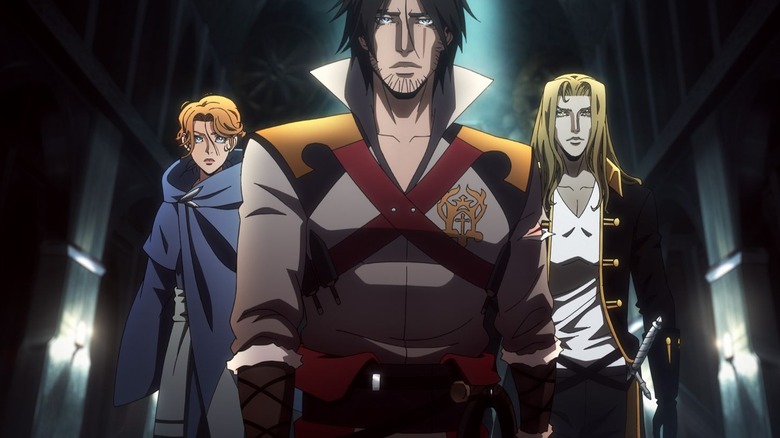
"Castlevania" is technically a vampire show, but it's unlike any you've seen. Based on a Japanese video game series, producer Adi Shankar described the Netflix adaptation as "very much 'Castlevania' done in the vein of 'Game of Thrones.'" Set in Europe during the Middle Ages, "Castlevania" tells an epic Dracula story soaked in blood and steel. The villain in this tale is Vlad Dracula Țepeș (Graham McTavish), a grief-stricken, revenge-fueled vampire who massacred the people of Wallachia after the townsfolk burned his wife at the stake.
Our hero is Trevor Belmont (Richard Armitage), a monster hunter and the last of his clan. He teams up with Alucard (James Callis), the damphir (human/vampire hybrid) son of Dracula, and Sypha Belnades (Alejandra Reynoso), a powerful witch. "Castlevania" is as beautiful as it is entertaining. The animation style harkens back to the games, with deep gothic hues and dynamic movements. The fight scenes are gloriously violent, but gore doesn't stand in for story; the characters are richly drawn, and their backstories give every conflict emotional weight.
His Dark Materials
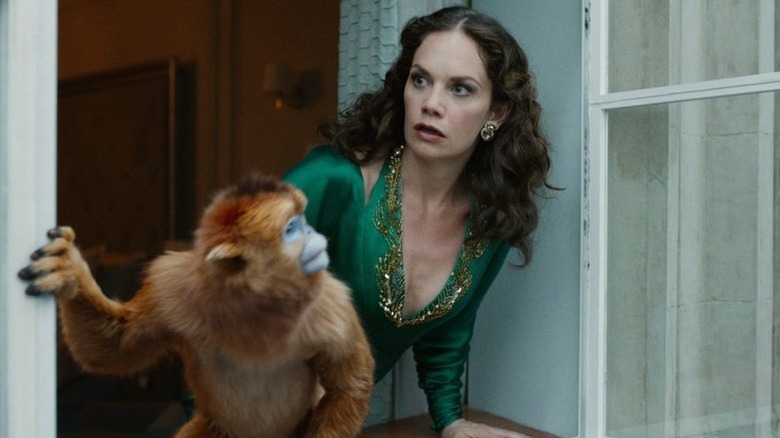
Philip Pullman's "His Dark Materials" trilogy includes some of the most fascinating fantasy worldbuilding we've seen in recent years, and a good adaptation of the series has been a long time coming. After the disappointing "Golden Compass" film from 2007, HBO took a stab at the story in 2019, with magnificent results.
The show takes place in two different universes. In Lyra's (Dafne Keen) world, which has qualities of the early 1900s, humans have soul companions called daemons, which take the form of animals. Lyra, the subject of a prophecy foretelling her part in saving the world, was raised as an orphan, though is later taken in by the powerful, mysterious Marisa Coulter (Ruth Wilson). Meanwhile, in the other universe, which looks much like ours, Will Parry (Amir Wilson) is a teenager still reeling from the disappearance of his father over a decade ago.
It's a brilliant adaptation of the series, and the cast, which includes the wonderful voice actors playing the daemons, is astounding. Wilson's spine-tingling performance is one for the books, and even the evilest of characters are drawn with such care. The show's fantasy elements are mesmerizing and rooted in emotional impact, and Pullman's anti-fascist message comes through loud and clear.
The Witcher
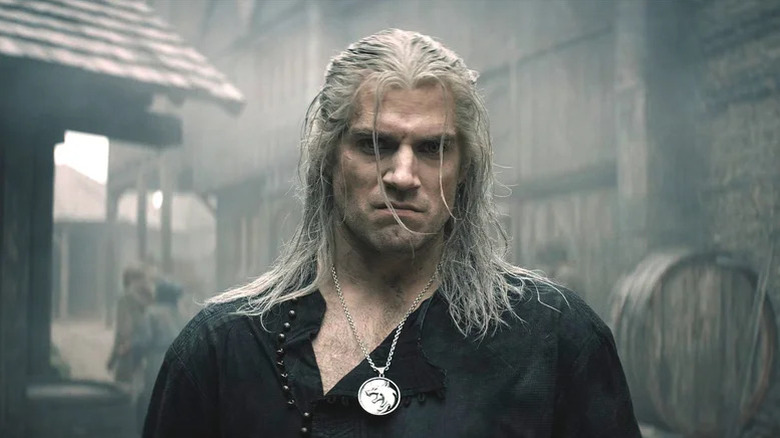
At the outset, "The Witcher" appears to be Netflix's attempt at creating its own "Game of Thrones," in which medieval aesthetics, hunky men, and supernatural elements are paramount. While the show starts out this way, it eventually develops into something more compelling — and sillier — than a pure "GoT" ripoff. Based on Andrzej Sapkowski's book series, which also spawned video games, the show centers on just three protagonists, unlike the sprawling ensemble of "GoT."
Geralt of Rivia (Henry Cavill, who was replaced by Liam Hemsworth in the fourth season) is a monster hunter with magical powers. His fate becomes intertwined with that of part-elf sorceress Yennefer of Vengerberg (Anya Chalotra) and magical princess Ciri (Freya Allan). Though the three characters embark on their own separate quests in the first season, making "The Witcher" at times feel like three distinct shows, they eventually converge. Because of this, the second season improves on the first, and as the show leans into its goofy fantasy tropes, its sense of humor sharpens.
The Borgias
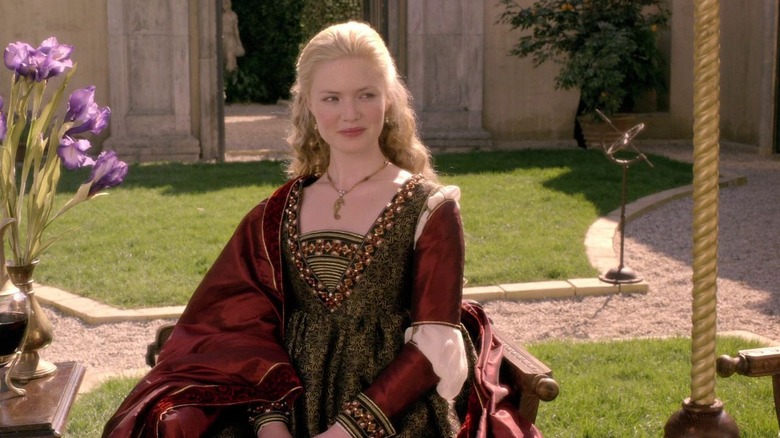
If conniving, scandalous royal families like the Lannisters are your thing, you might get a kick out of "The Borgias," a Showtime series that follows a Lannister-esque family in Renaissance Italy. The show centers on the notorious Borgia family, led by Rodrigo Borgia (Jeremy Irons), who becomes Pope Alexander VI at the series' outset. He rises to this position of power through nefarious, scheming ways, and his unseemly ascension is rivaled only by the exploits of his equally disgraceful family. They include his violent son, Cesare (François Arnaud), who takes after his father, and his beautiful daughter, Lucrezia (Holliday Grainger), his right-hand woman with a reputation for promiscuity.
Just as melodramatic as "The Tudors," "The Borgias" takes the family costume drama formula of political intrigue, sex, and violence to delicious heights, and its unique setting gives it added titillation. The world of the Vatican is a fascinating one to delve into, and the devious characters are just as riveting. Irons gleefully seethes as the corrupt Pope, and his co-stars are each ferocious in their own way.