

10 Best Cartoon Network Shows Of The 2010s, Ranked
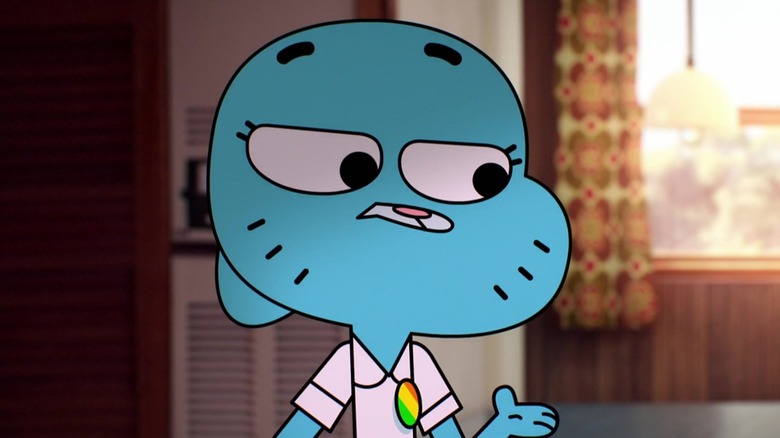
Like many pillars of our world, Cartoon Network is not the same as it used to be, fast eroding along with other family-oriented cable TV channels under the pressures of late capitalist, post-pandemic, streaming-era industry reconfiguration. A network that once prided itself in carrying a profusion of gleefully original and inventive animated series has now been reduced to airing a tiny handful of ongoing in-house productions, virtually all of them franchise-centric, while its former flagships get endlessly rerun and occasionally revived at HBO Max.
The sliver of hope is that Cartoon Network is still Cartoon Network, a brand synonymous with creative ebullience for millions of fans around the world, and one that has managed to bounce back before through sheer artistic will. The late 2000s, lest we forget, were also a dire period for the channel, and they were followed by arguably the strongest and most fertile period in Cartoon Network history — a time when its shows galvanized TV animation at large with quantum strides in experimentation, newfound narrative sophistication, immediately classic characters and episodes, groundbreaking LGBT+ reveals, and as many if not more laughs than in the '90s golden age.
It remains to be seen whether studio suits will allow anything like 2010s Cartoon Network to ever happen again. But, for the time being, the greatest Cartoon Network shows of the 2010-2019 period stand as a testament to the enduring, restorative power of art and imagination in the face of industrial duress, and to the singular ability of animation to channel art and imagination like no other medium. Here is a ranking of the 10 very best.
10. We Bare Bears
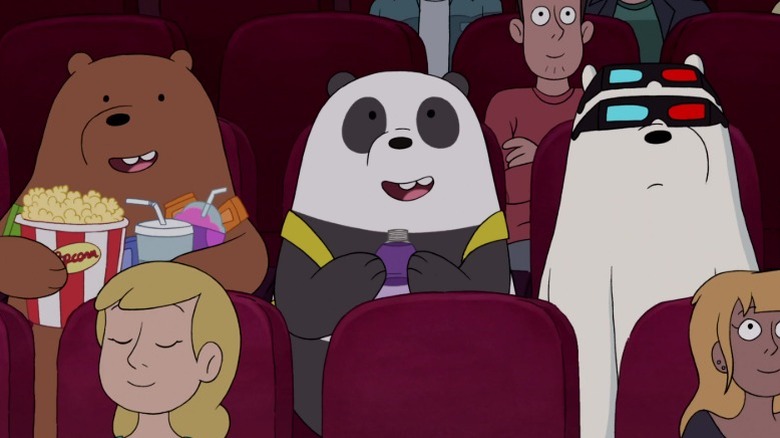
The story of Cartoon Network in the 2010s was a story of soft, wide-eyed whimsy negotiating with increasing real-world sociocultural porosity. The network's most fascinating productions in this period — and arguably ever since — have played out a delicate push-pull between the realization of effervescent fantasy visions full of pep and creativity, and the renewal of the '90s Cartoon Cartoons ethos whereby kid-friendly animated television could be counted on to poke fun, comic-strip-style, at quaint textures of modern life.
In that sense, "We Bare Bears" may not have been the best Cartoon Network show of the 2010s, but it could well be argued as the most Cartoon Network show of the 2010s. This brainchild of current Pixar senior and "Hoppers" director Daniel Chung is all about the power of simple forms: The bubbly character designs, tidy lines, and crisp renderings of a talking-animal-strewn San Francisco have an assuaging low density to them, and the humor and pathos draw confidently from elemental, time-tested ideas. As animated worlds go, it's the epitome of endearing escapist coziness.
And yet, within that just-so aesthetic of comfort, there lie thornier concerns. By following three semi-anthropomorphized bears as they struggle — meaningfully albeit comically — to take part in a nominally cosmopolitan human world, "We Bare Bears" skillfully de-naturalizes contemporary big-city living, and American society more broadly, such that the bears' misadventures become pithy commentary. There's something there about living as an ethnic minority, and about neurodivergence, and about the indignities of late capitalism, depending on where you stand — but it all just breezes by, melded into the immaculate vibes.
9. Summer Camp Island
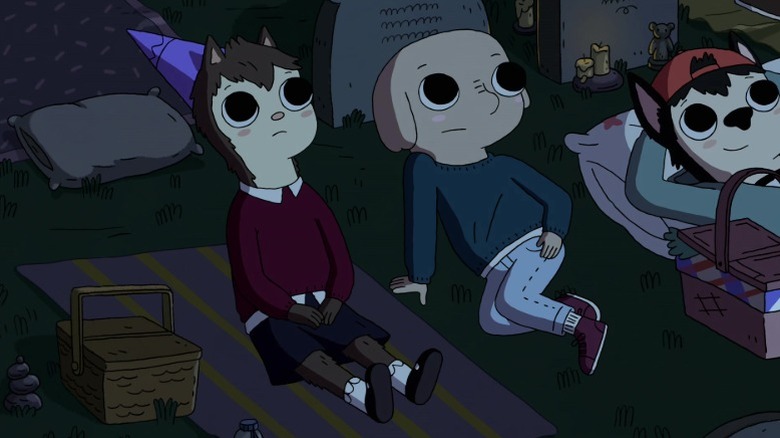
In more ways than one, "Summer Camp Island" feels like the bittersweet twilight of 2010s Cartoon Network as a specific cultural moment — the last hurrah of a kind of earnest, quietly ambitious animated production that would be slowly phased out towards the end of the decade in favor of risk-free, franchise-ready content. It's not for nothing that it only aired a single two-part season on Cartoon Network between 2018 and 2019 before moving over to HBO Max, from which it would be purged altogether in 2022, currently remaining only as a paid Apple TV purchase in the U.S.
This corporate mishandling threatens to eclipse what should by all rights be discussed as one of the decade's foremost triumphs of sweet, comfy, gently moving family-friendly viewing. Expressly intended by creator Julia Pott as a sort of "Gilmore Girls" for kids, with the titular magical camp as a haven to which viewers could escape safe in the knowledge that everything would be alright, "Summer Camp Island" feels like an even cuter and richer — if more wistful and tonally mature — counterpart to "Bluey," in the way that it broaches complex, grounded, indelibly resonant emotional subjects through the framing of warm storybook tales about a bunch of quirky talking critters. Its beautifully artisanal designs, silly yet serious characterizations, utter lack of snark or cynicism, and nonchalant foregrounding of LGBT characters make it a relic when seen in 2026, but even as it was airing, "Summer Camp Island" always felt like a show too good and pure to exist.
8. Regular Show
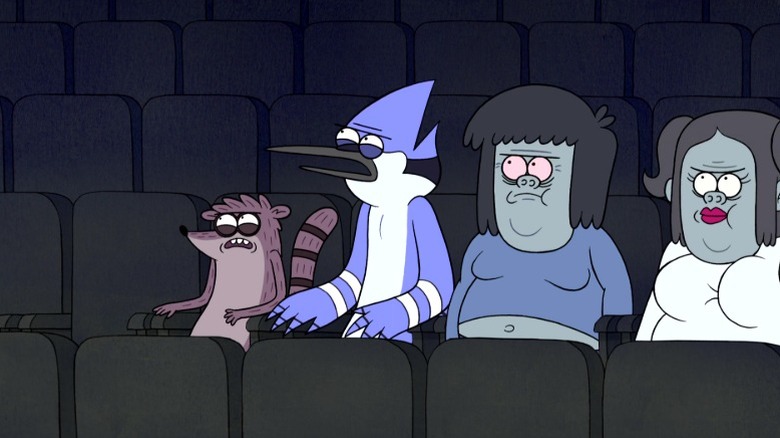
If several of the best offerings throughout Cartoon Network history could be accurately described as kids' shows that adults could also enjoy, "Regular Show" stands apart as the most pristine example in the network's history of a show for adults that could also go over well with kids. In fact, the sensibility of the J. G. Quintel-created series is so clearly geared towards older, more irreverent viewers that, during its original 2010-2017 airing, "Regular Show" frequently ran counter to other shows within the very Cartoon Network renaissance it helped usher in.
The reason this isn't a paradox, of course, is that "Regular Show" is every bit the same paragon of wit, personality, and imagination as its more adorable and sweet-natured network cousins. The very premise is striking for its conceptual sophistication: Mordecai (Quintel) and Rigby (William Salyers), two slacker twentysomething best friends who also happen to be a blue jay and a raccoon, live a dreary blue-collar life as park groundskeepers in what appears to be a narrative low simmer — but instead turns out to be a primordial soup for all kinds of giddy surrealist overstretching.
As the characters' delightfully mundane routine gives way to world-saving adventures in which excitement and absurdist humor amplify each other in a feedback loop, "Regular Show" remains committed to the fundamentally ambling, ramshackle, why-the-heck-not sensibility that makes it a joy in the first place. Ergo, even as it became one of the biggest cartoon blockbusters of the 2010s, it never lost the feel of a discovery to be shared among friends like a treasured mixtape.
7. Young Justice
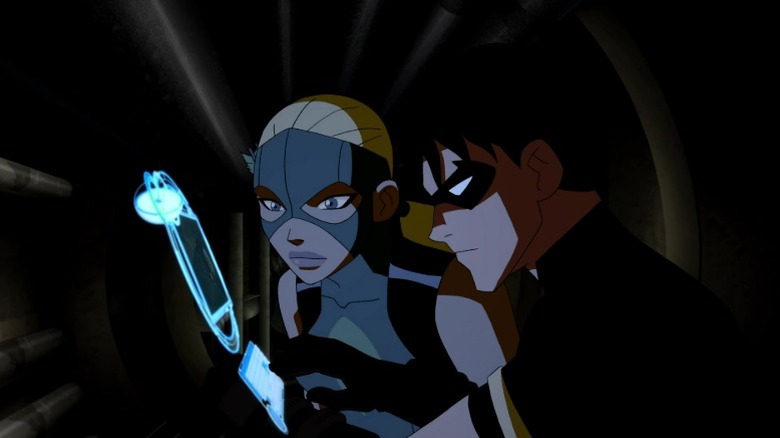
Bruce Timm's "Justice League" and "Justice League Unlimited," with their dense, dramatic, heavily serialized synthesis of DC Comics history into viable all-ages entertainment, changed the landscape of American animated television in the 2000s. Their natural successor in the 2010s was "Young Justice," a show that didn't quite match "Justice League" in terms of sheer depth and impact (talk about a tall order), but still left its mark as one of the best superhero TV shows — animated or otherwise — of a decade chockablock with superhero TV.
The key to the greatness of the Brandon Vietti and Greg Weisman-created series is that, taking after inspirations like Timm's oeuvre and the original 2000s "Teen Titans" show (and in sharp contrast with the complacent goofiness that would take over cartoons and superhero shows alike in subsequent years), "Young Justice" — at least in its original run prior to the Season 3 streaming revival — never caved in to the temptation to be anything but the serious, layered sci-fi drama series that it set out to be.
In an era teeming with reductions of comic book lore to simple mass-appeal blockbuster formulas, it committed to the idea of the titular teen league as an epicenter of charged interpersonal drama — a smart, compassionate space-slash-soap opera in which the stakes of growing up, already emotionally apocalyptic by nature, were made literally so. That its young, somewhat overwhelmed protagonists feel more alive than the flesh-and-blood characters of most 2010s superhero flicks is no coincidence — nor is the fact that "Young Justice" got yanked from the air after just two seasons because it wasn't selling enough toys.
6. Craig of the Creek
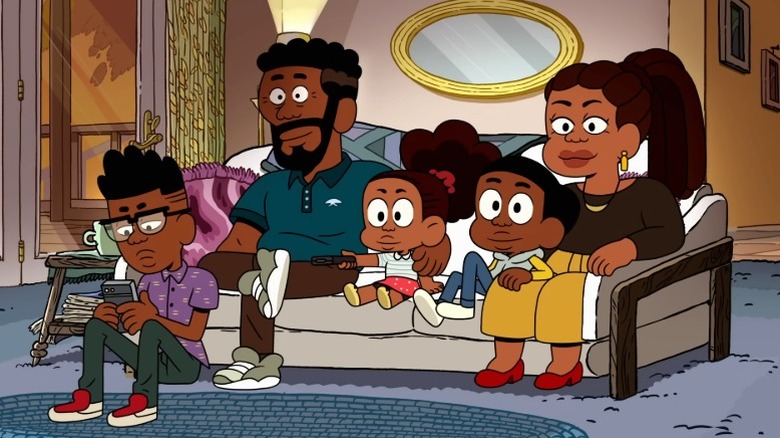
If this were a list of the most underrated Cartoon Network shows of the 2010s, "Craig of the Creek" would belong solidly at the top. The Matt Burnett and Ben Levin-created series is pretty much a perfect children's show across the board: Excellent writing, dazzling fantasy setting, unique characters who talk and act like real kids, deft incorporation of universally intelligible feelings, smart gags and one-liners that can play just as well to grown-ups. Best of all, it's a show where wonder, joy, and curiosity are baked right into the premise; the whole raison d'être of the saga of Craig Williams (Philip Solomon) is that he and his friends are able to will their imaginations into concrete game maps, to be explored and deciphered and transformed.
The unspoken subtext of the cultural reception to "Craig of the Creek" is that, as an all-too-rare kids' toon with a Black protagonist, it never quite got the credit that it deserved, even as it proved popular enough to run from 2018 to 2025 (and made comparable strides in LGBT representation to other, buzzier trailblazers). The cultural specificity that "Craig" makes a point of espousing, in contrast with the default-whiteness of most Western cartoons, almost certainly accounts for why it's rarely cited as a defining animated series of the tens. Yet it's this very specificity, with all its affectionate and witty nods to Black suburban experience and Washington-Baltimore cosmology, that makes the "realism" half of the show's magical realism such a tonic, and such a rich foundation for the Stump Kids' myth-making adventures through the Herkleton woods.
5. Infinity Train
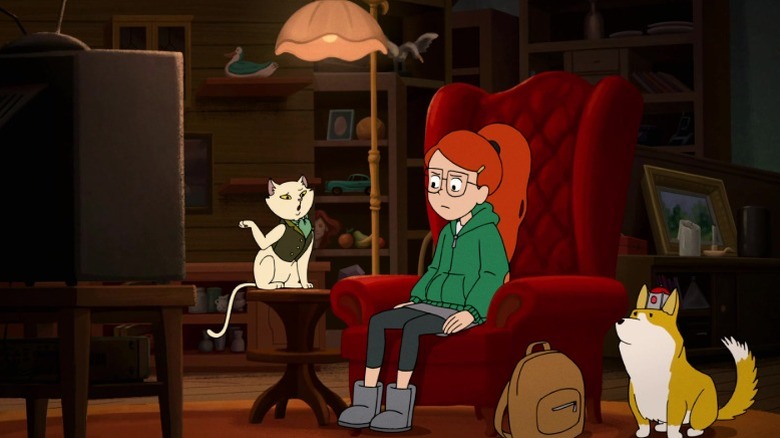
The concept of a train of endless magical wagons, each containing its own mini-world, is such a winning one that "Infinity Train" could just as well have coasted on merely having fun with it. Instead, on top of dutifully exploring its premise for maximum awe and thrills, this Owen Dennis-created anthology series endeavored to be a bastion of American avant-garde animated television.
To this day, the sheer gumption must be seen to be believed: Even in its safer and rulier 2019 freshman season, "Infinity Train" eschews the dramatic couching (its story begins with little to no context and gets explained as it goes along), character design formulas (the cute sidekicks are a stoic realistic corgi and a robotic ball with no facial features), content guardrails (stakes are real, death is a terrifying possibility, outright horror is constantly skirted), and thematic streamlining (you better believe this cartoon will ponder the harsh realities of divorce) of the vast majority of children's television.
In place of those chucked norms, the show offers deeply thoughtful puzzle-box sci-fi adventure, in which the psychology is starker for being splashed across a canvas of cosmic maximalism, and the surreal elements are all the more harrowing and disorienting (and occasionally hilarious) for being grounded in classically disciplined fantasy storytelling. Indeed, in subsequent seasons falling outside the purview of this list (and therefore not counted for this ranking), "Infinity Train" becomes a straight-up masterpiece that would belong high on any list of the most visionary genre shows of the 21st century — so of course it got canceled and then wiped from HBO Max.
4. Steven Universe
The seismic, medium-reshaping phenomenon that was "Avatar: The Last Airbender" in the 2000s created something of a stalemate for children's television animation in the U.S.: Every epic fantasy show now had to contend with a supercharged public notion of what was reasonable to expect from the genre, and yet, paradoxically, "Avatar" had already done everything so perfectly that serialized adventure cartoons seemed to have nowhere left to go without retreading old ground.
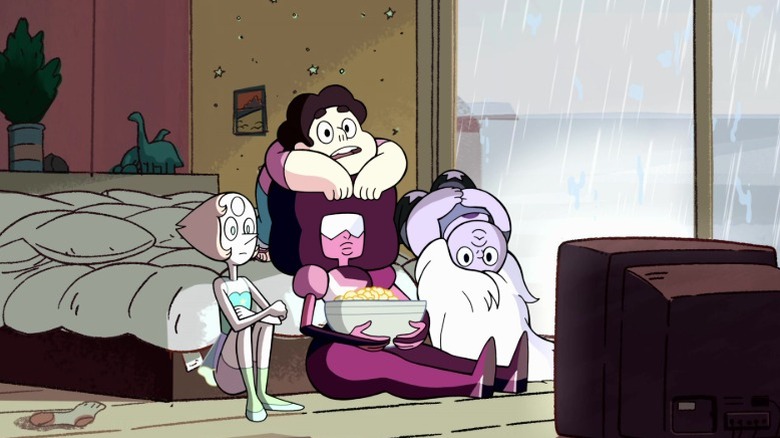
Enter "Steven Universe." At first, Rebecca Sugar's bright-colored, slickly-traced ode to magical girl toons seemed unassuming enough: The zippy 11-minute installments initially focused on Steven (Zach Callison) and the Crystal Gems hanging out around Beach City and handling relatively isolated perils and missions, with inklings of greater ambition and deeper mythology ever-so-slightly suggested under the perky mood-setting. Then, months passed, the stunning consistency of the show's writing and storyboarding won over more and more fans, and the enormity of Sugar's mythological and dramatic vision unfurled before Cartoon Network viewers like a long-awaited hallowed scroll — the most promising ordonnance of epic animated lore since "Avatar."
Needless to say, "Steven Universe" delivered fully on that promise — and did it because, unlike every other serialized animated series that tried sheepishly to be the next "Avatar," it charted a path entirely its own. You'd be hard-pressed to find another kids' show in history that sprang so dauntlessly for such radical depth of character and emotion, or fronted such uncompromisingly progressive epistemology; to do it in the context of a tender-hearted musical comedy that taught kids to believe in themselves was the crowning stroke of genius.
3. Adventure Time
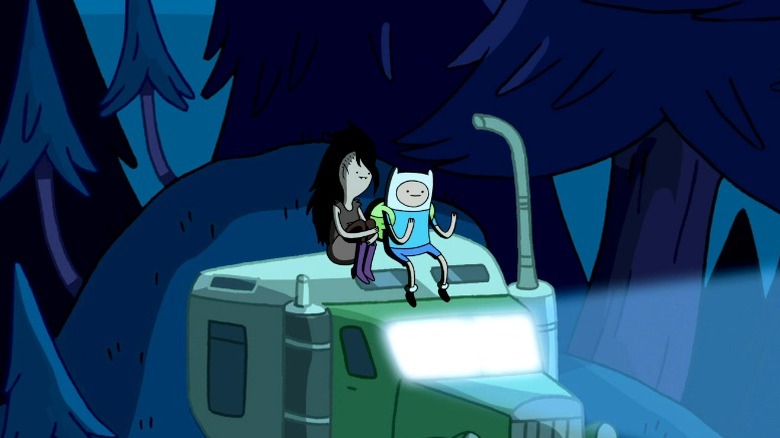
It's easy to forget what a rut Cartoon Network was in at the turn of the 2010s. Network heads were going all in on a dubious live-action content strategy to compete with Nickelodeon and Disney, to largely dismal results. On the animation front, "Foster's Home for Imaginary Friends" had concluded in 2009 after years of picking up the slack from lesser shows, and what little there remained to hold down the fort, from great ("Chowder") to solid ("The Marvelous Misadventures of Flapjack," "Ben 10: Alien Force") to what-even-is-this ("The Secret Saturdays"), was getting canned left and right.
If we're even able to talk about the best Cartoon Network shows of the 2010s today after that nadir, it's largely because of "Adventure Time." With its medieval-RPG-inspired tale of a boy with stick-figure facial features (Jeremy Shada) and a shapeshifting dog with inverted-color doe eyes (John DiMaggio), the Pendleton Ward-created show quite literally inaugurated a new television era — not just for its parent network, but for all Western animation.
So transformative was its effect on the industry that we now barely recall how Studio Ghibli-style cryptic self-sufficiency, free-reed surrealism, tonal melancholia, symbolic density, and image-first filmmaking were no-no's in American cartoons as recently as the late 2000s. It was a paradigm shift that only a work of lavish vision and imagination could shoulder — and, with the strength of its own brilliant slow-burn storytelling to guide it, "Adventure Time" barreled into the mission like Finn himself charging dauntlessly into an invisible maze, knowing only that whatever came of it had to be better than the darkness behind.
2. The Amazing World of Gumball
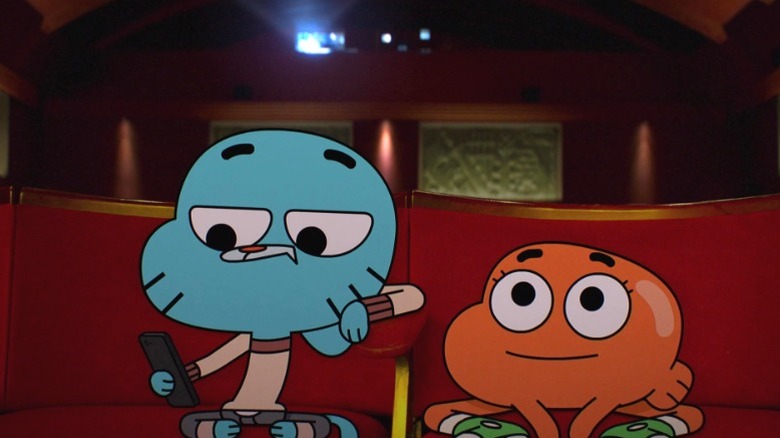
Most cartoons can count themselves lucky if they're able to boast either one of a) fantastic, whip-smart, relentlessly hilarious writing and gag construction, or b) stunning, envelope-pushing animation with its own unmistakable visual logic. A handful of unimpeachable classics — think Chuck Jones, Tex Avery, "Wallace & Gromit," "Ren & Stimpy," golden-age "SpongeBob" — can claim both. "The Amazing World of Gumball" belongs in that rarefied company; it's the most exuberant and well-rounded work of animated comedy that Cartoon Network has ever produced.
The key to the greatness of this Ben Bocquelet-created psychedelic joke machine is twofold: First, it's got a rock-solid foundation of carefully calibrated family sitcom antics that would work excellently even in (full) live action. Second, it's totally and completely unbound. Contemporaneous adult-oriented shows like "Community," "The Good Place," and "Rick and Morty" received rightful praise for stretching the limits of traditional TV comedy, but "Gumball" never met a limit it even so much as acknowledged, except to make a spectacle out of demolishing it.
The same episode, the same scene, and even the same shot could often feature three or four different animation techniques interlocked in a precise comic choreography; the subject of the humor could veer from refined slapstick to existential absurdism to character-specific observation to shockingly incisive sociopolitical satire; the fourth wall could exist in one moment and be gone the next; the plots could ramp up to galactic levels of insanity and then resolve into abrupt anti-narrative silliness. The whole show felt epochal and culminating, like a paean to the animated medium itself as an infinite improbability drive.
1. Over the Garden Wall
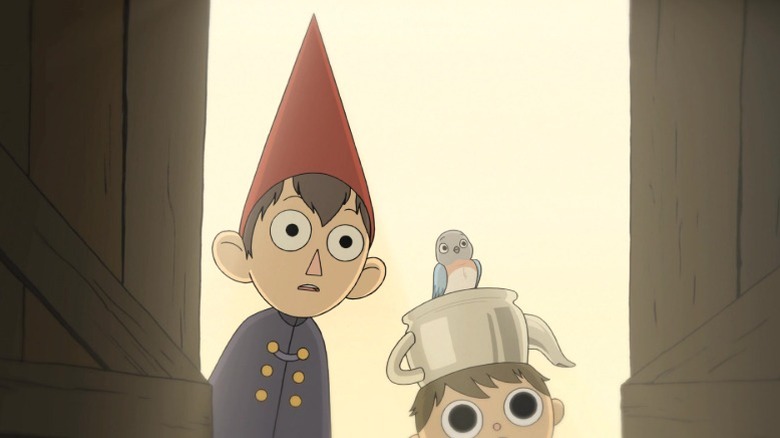
How was "Over the Garden Wall" even allowed to exist? It's wild enough that Cartoon Network would suddenly inaugurate a format it had never tested before, and launch a strictly one-and-done original animated miniseries in the mold of adult live-action television. It's all the wilder that the star-studded series in question would turn out to be the most bracing, magical, courageous masterpiece to grace American kids' TV in the 2010s, across every channel and every medium.
The true wonder of "Over the Garden Wall," though, is that it never once feels like a brave and risky new venture. It's so perfect — so in tune with the fundamental frequency of childhood dreaming — that it barely even feels "made" or "produced." It just is: A set of ten 11-minute tales that begin and end exactly where they must, always leading into the next with the sweep of an adventure lived but not yet quite understood.
To be clear, it was made, lovingly and painstakingly so — as you can tell by the work that creator Patrick McHale and his team of writers and artists put into infusing Wirt (Elijah Wood) and Greg's (Collin Dean) winding journey back home with expert shading, heady philosophy, subtle psychoanalysis, innumerable nods to literature and New England folklore, perfectly-structured mystery and suspense, and more audiovisual detail than can possibly be absorbed in a single viewing. But something about "Over the Garden Wall" just feels ineffable, like it was always here, always a classic, with the years since 2014 having less consolidated a reputation than spread a legend.