

10 Star Trek: The Next Generation Episodes To Skip On A Rewatch
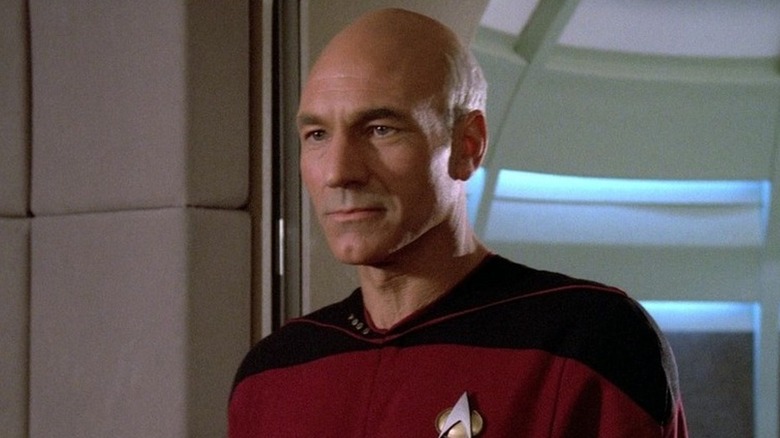
Reviving the franchise on television in 1987, "Star Trek: The Next Generation" now stands as one of the best TV shows streaming on Paramount+. Running for seven seasons, the series provided its own distinct look at creator Gene Roddenberry's idealistic science fiction future. This includes more sophisticatedly conceived stories exploring the human condition against the backdrop of the 24th century and humanity's galactic role as part of the United Federation of Planets. The show also features a strong focus on the various main characters in its ensemble cast, including the Enterprise's latest captain, Jean-Luc Picard (Patrick Stewart).
But as pivotal as "TNG" was in reinvigorating the "Star Trek" franchise, it also has its fair share of forgettable episodes. Unfortunately, not every story in the series stands as a must-watch "TNG" episode, with some installments best avoided entirely. Whether from the show's uneven early seasons or revolving around a head-scratchingly abysmal premise, there are some stories in the show that rank among the franchise's worst. Here are 10 "Star Trek: The Next Generation" episodes to skip on a rewatch, with even completionists hesitating to revisit these stories.
The Naked Now (Season 1, Episode 3)
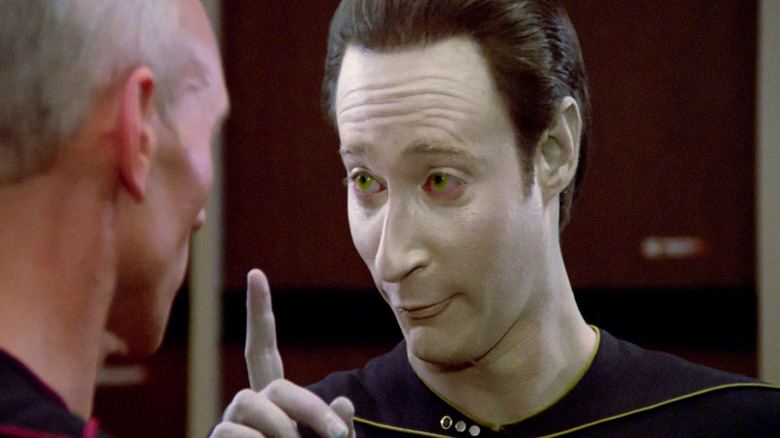
Looking back, "Star Trek: The Next Generation" is admittedly a TV show with a bad first season, with the show struggling to define itself creatively. The show's main characters and their various dynamics are still clumsily coming together and that's evident in the series' third episode "The Naked Now." A sequel to "The Original Series" episode "The Naked Time," Picard's Enterprise is infected by a similar contagion that leaves those afflicted behaving childishly or like they're inebriated. As the crew reverts to their baser instincts, they must recover enough awareness and agency to find a cure before they're destroyed by a nearby collapsing star.
Whereas "The Naked Time" is one of the more memorable "TOS" stories, "The Naked Now" feels like a vastly inferior retread. The episode injects some forced sex comedy, specifically between Data (Brent Spiner) and the Enterprise's chief security officer Tasha Yar (Denise Crosby). Aside from this extended gaffe, all the actors come off as cloying in their attempt to portray their characters as completely uninhibited. Feeling like a failed attempt at self-parody so soon after the show's debut, "The Naked Now" exemplifies the awkwardness of the series' first season.
Code of Honor (Season 1, Episode 4)
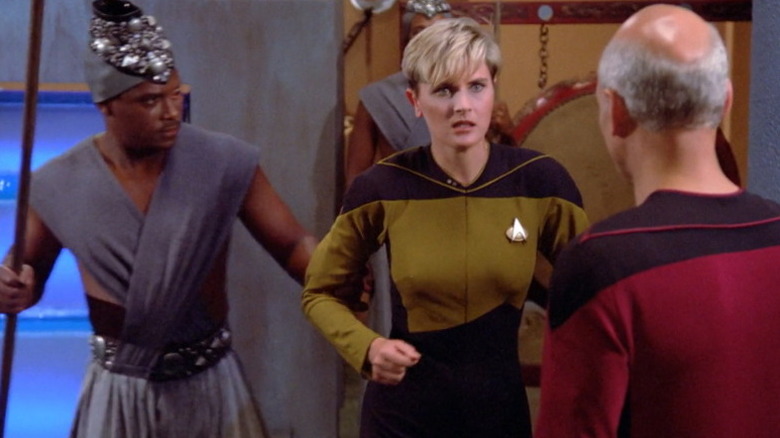
Things only got worse for "TNG" immediately after "The Naked Now" with its immediate follow-up "Code of Honor." The Enterprise visits the planet Ligon II for a vital medication needed by a Federation planet, with the native population model after a stereotypical caricature of Sub-Saharan African society. The leader of the Ligonians, Lutan (Jessie Lawrence Ferguson), develops an unhealthy interest in Yar and refuses to give the medication unless she becomes his latest bride. Kidnapping Yar from the Enterprise, Lutan forces her into a gladiatorial contest against his current partner Yareena (Karole Selmon).
"Code of Honor" is a "Star Trek" episode that has aged poorly, to say the least, and the most flagrantly racist that "TNG" ever got. The depiction of the Ligonians is a notorious franchise moment and would've felt dated even if it had appeared on "The Original Series" 20 years prior. That the antagonistic Lutan falls in love with the Enterprise's most prominent blonde Caucasian woman furthers the reprehensible stereotype. Astonishingly offensive, "Code of Honor" tops the list of episodes that should be discarded from a series rewatch.
The Last Outpost (Season 1, Episode 5)
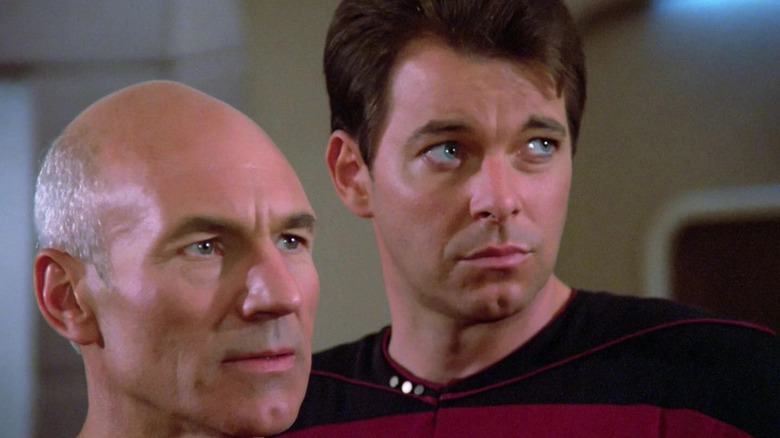
The Ferengi Alliance is one of the first recurring new antagonistic species introduced in "The Next Generation," debuting in the Season 1 episode "The Last Outpost." The story opens with the Enterprise in pursuit of a Ferengi vessel which stole a vital energy converter from a Federation installation. While passing a remote planet during the chase, both the Enterprise and Ferengi ship suddenly lose power, prompting both crews to investigate the planet's surface. As the two landing parties engage in a tense stand-off, they are interrupted by an ancient program that's active after being left by a long-extinct civilization.
It really wouldn't be until "Star Trek: Deep Space Nine" that the franchise figured out how best to use the Ferengi in its stories. As far as "TNG" is concerned, certainly early on, these hostile aliens come off more as annoying than providing a viable threat to the Enterprise. This remains true in the Ferengi's debut appearance, with the enemies feeling clownish and not even the most menacing presence in the episode. For viewers interested in more episodes spotlighting the Ferengi, check out their best episodes in "Deep Space Nine" but give "The Last Outpost" a pass.
Angel One (Season 1, Episode 14)
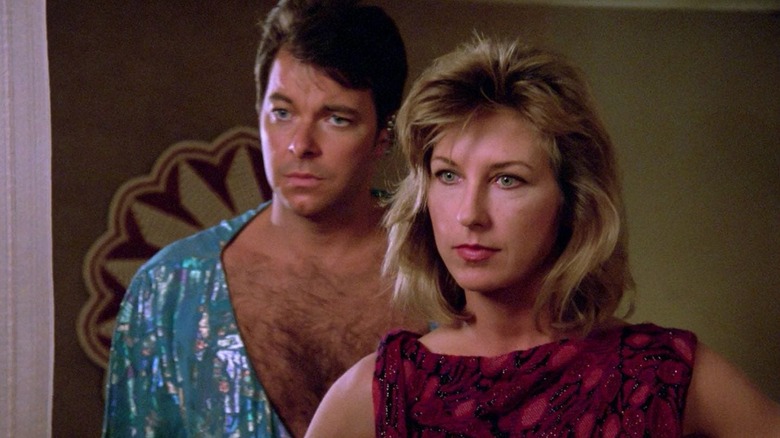
One last weak episode from "The Next Generation" Season 1 is "Angel One," with the Enterprise visiting a planet whose society is run by women. While searching for survivors from a crashed freighter, the landing party discovers that all the survivors are male and hastening the decline of the society's standards. One of the planet's leaders, Beata (Karen Montgomery), takes a strong romantic interest in Will Riker (Jonathan Frakes) as he leads the landing party. Meanwhile, back on the Enterprise, a strange contagion spreads across the ship endangering the crew and forcing the landing party to remain on the planet in the interim.
"Angel One" is just a confusing mess in what it's trying to say about women in power and their roles in modern society, even through a sci-fi lens. The collapse of a women-led society is depicted as an inevitability and one where men serve as a catalyst. At the same time, the women leading this civilization can't help but fall for men of authority like Riker even during a brief visit. Oddly sexist and clumsily handled all around, "Angel One" is yet another series' low point from its first season.
The Child (Season 2, Episode 1)
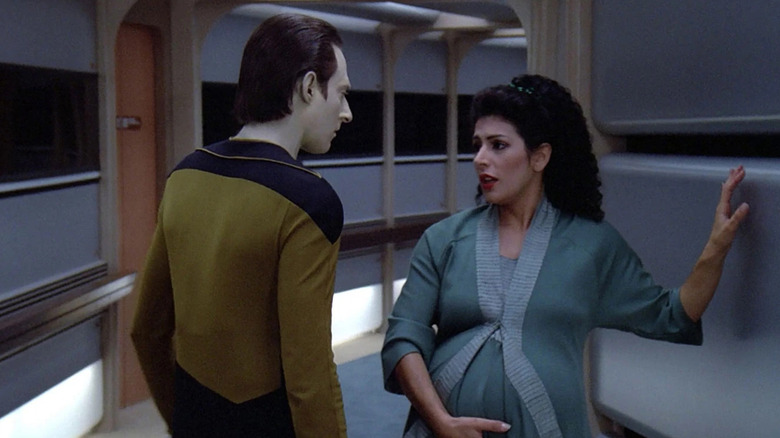
In her role as the Enterprise's counselor Deanna Troi, Marina Sirtis was saved from being fired in Season 1 after the departure of Denise Crosby from the main cast. With her place on the show secure, Sirtis takes center stage for the Season 2 premiere "The Child," with Troi impregnated by a mysterious alien entity. The fetus rapidly develops, leading her to give birth to a child, who similarly ages rapidly. However, as Troi's son Ian (R.J. Williams) affects a store of plague samples that the Enterprise is transporting, he soon dies and reverts to a being of pure energy.
All in all, Season 2 of "Star Trek: The Next Generation" is a marked improvement over the preceding season, but "The Child" is an abysmal premiere episode. The implications of Troi being impregnated, bearing a child, and watching said offspring pass away within the span of an episode are heavy story beats that are executed so haphazardly. Despite being such a monumental development, the story rarely is cited again, even with Troi's character arc moving forward in the franchise. As evidenced by her stronger work today after "Star Trek: The Next Generation," Sirtis deserved better material to work with than having her talents squandered by "The Child."
Up the Long Ladder (Season 2, Episode 18)
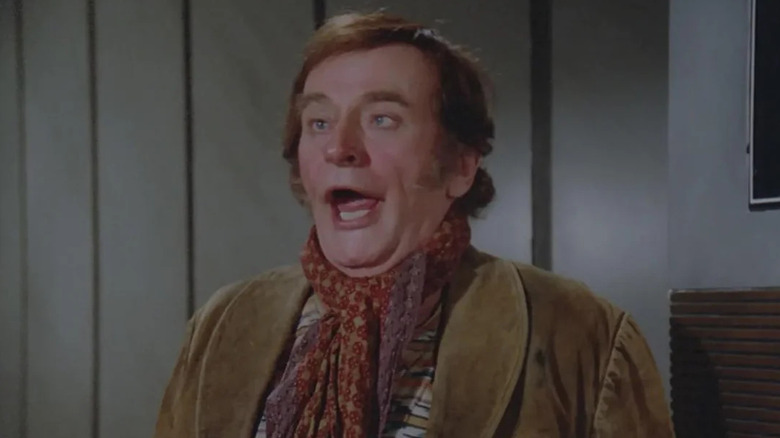
"The Next Generation" wasn't done with cultural stereotypes in its second season either, as exemplified by the episode "Up the Long Ladder." The Enterprise agrees to transport colonists to another planet, with the passengers' culture modeled after bucolic, pre-industrial Irish society. The ship takes these rustic refugees to another colony, which has survived through its constant use of cloning technology to create new generations of colonists. Picard decides to bring these two disparate cultures together, though he initially faces vocal resistance from both sides.
While "Star Trek" has seen all sorts of cultures represented throughout the franchise's history, there is something jarring about the appearance of the space Irish. This first group of colonists are stereotypically depicted as being loud, boorish individuals that would've been out of place in the '50s movie "The Quiet Man." The cloning subplot falls apart too, disturbing but superficial, rather than dwelling on the ethical implications as Riker and Katherine Pulaski (Diana Muldaur) are cloned against their will. An awkward hodge-podge of an episode meshing two incompatible plot threads, "Up the Long Ladder" offers another uneven story.
Shades of Gray (Season 2, Episode 22)
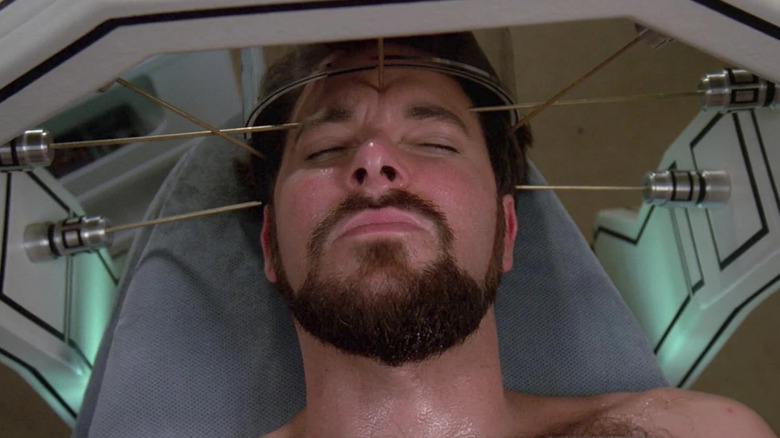
Two seasons in and "The Next Generation" already provides audiences with a clip show in the episode "Shades of Gray." While surveying a planet, Riker is infected by a local plant that carries a lethal neurological virus and taken back to the Enterprise. To save his life, Pulaski hooks Riker up to a machine to keep his neural system active and responsive, leading to Riker vividly revisit his memories while incapacitated. Seeing how different emotions are affecting how Riker's body responds to the virus, Pulaski and Troi trigger intense emotions to save their friend's life.
Most clip shows are episodes that can be skipped without a second thought and "Shades of Gray" is no exception. The installment plays out like Riker's greatest hits but even some of their choices in footage to use are head-scratching ones. This includes an extended montage of Riker's amorous scenes in the first two seasons, awkwardly cutting back to the prone Riker in sickbay. Not even a particularly well-assembled clip show, "Shades of Gray" ends "TNG" Season 2 on arguably its weakest chapter.
Cost of Living (Season 5, Episode 20)
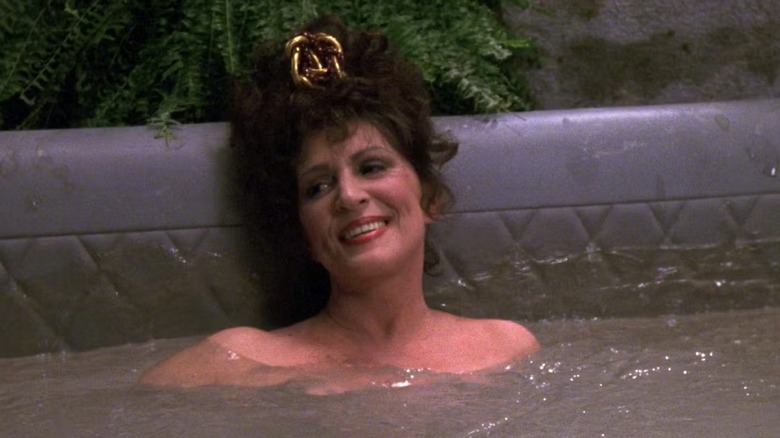
"Star Trek" veteran Majel Barrett left a particularly prominent legacy on "The Next Generation," both by voicing the Enterprise's computer and playing Deanna Troi's mother, Lwaxana Troi. Lwaxana takes the spotlight in the fifth season episode "Cost of Living," preparing to enter an arranged marriage with Picard selected to give away the bride. As she copes with her own anxiety about the impending nuptials, Lwaxana spends time looking after Alexander Rozhenko (Brian Bonsall), the young son of Worf (Michael Dorn). This shared playtime includes an elaborate holodeck program to let Alexander embrace a more free-spirited outlook on life.
The story's focus on Lwaxana and Alexander makes for an overall weak episode, despite Barrett doing the best she can with the material she's given. "Cost of Living" gives the crew a subplot to create a sense of life-threatening stakes, but its secondary status robs it of any gravity or urgency. Finally, the holodeck program that Lwaxana makes for Alexander is just bizarre, including some trippy visuals that come off more as nightmare fuel than whimsical. For those looking for a stronger Lwaxana-centric episode, check out "Half a Life" but give "Cost of Living" a miss.
Sub Rosa (Season 7, Episode 14)
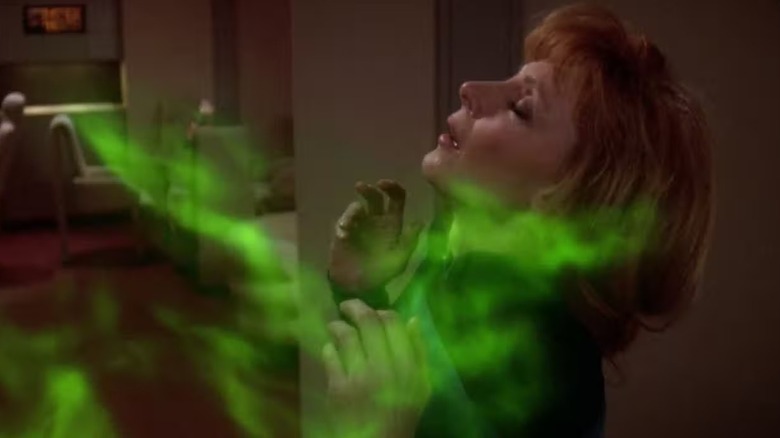
Like Marina Sirtis, Gates McFadden largely deserved better material for episodes focusing on her character, Beverly Crusher. This case is clearly evident with the seventh season episode "Sub Rosa," which has Crusher attend her grandmother's funeral on the planet Caldos IV. While reviewing her estate, Crusher discovers that her late grandma was romanced by a ghostly figure named Ronin (Duncan Regehr). After lighting a strange candle, Ronin appears and strikes up a relationship with Beverly before his sinister true nature is revealed.
Crusher hooking up with the same entity that seduced her grandmother is a couple that we wish we could forget ever happened. Even with the corruptive abilities that Ronin possesses, the nature of this particular relationship carries an enormously icky factor that the story can never recover from. The premise itself couldn't even cut it as a trashy harlequin romance paperback let alone a "TNG" episode after it had overcome its early weaker seasons. A bold experiment that feels completely out of place, "Sub Rosa" definitely ranks among the series' worst episodes.
Masks (Season 7, Episode 17)
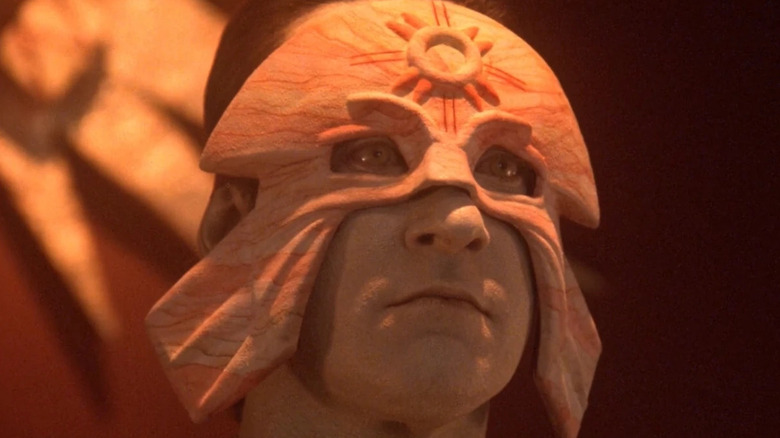
One of the most confusingly executed episodes in "Star Trek: The Next Generation" is the seventh season episode "Masks." The story has the Enterprise encounter a rogue comet, which is eventually revealed to be a vast informational archive. Data is able to decipher strange symbols linked to the archive but begins to exhibit multiple personalities from an entire civilization stored in its database. Picard has to find a way to convince the dominant personality in the archive to relinquish control of Data and the Enterprise in order to save both.
"Masks" offers an interesting enough narrative concept, with Data being overtaken by personas from a long-dead civilization, but doesn't know what to do with it. It's never quite clear what's going on with Data and the archive and Picard's climactic confrontation feels like a tacked-on effort to instill a greater sense of peril. The only real highlight in the episode is the multifaceted showcase that Brent Spiner brings as Data channels several archival figures. "Masks" is another weak episode in the final season of "The Next Generation," signaling an underlying feeling that the show had run its course.