

10 Western Shows That Define The Genre
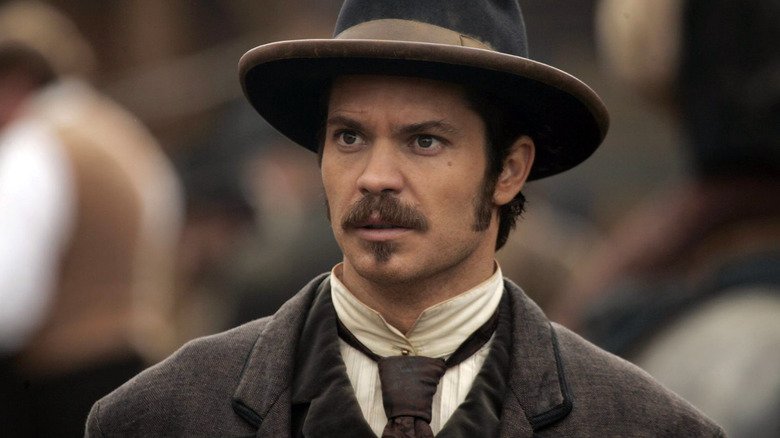
The Western genre has been a staple for American television since the industry's early days, even as its popularity has waned and revived over the decades. Some of the longest-running shows on American TV have been Westerns, as testament to the genre's enduring appeal and timeless qualities. There's just something iconically archetypical about a Wild West gunslinger defending the vulnerable along the frontier that's cemented its place in pop culture. This is something that the television industry identified quickly and capitalized on, producing countless shows in the genre.
After covering the best Western TV shows of all time, this article highlights the medium's most definitive and there is a difference. These shows' inclusion isn't necessarily a measure of their respective quality but how they represented and influenced the genre on television. Each of these series kept interest and recognition of Westerns alive in their own way and their lasting legacy should be celebrated. Here are 10 Western shows that define the genre, celebrating its tropes and signaling what it can be on TV.
Gunsmoke
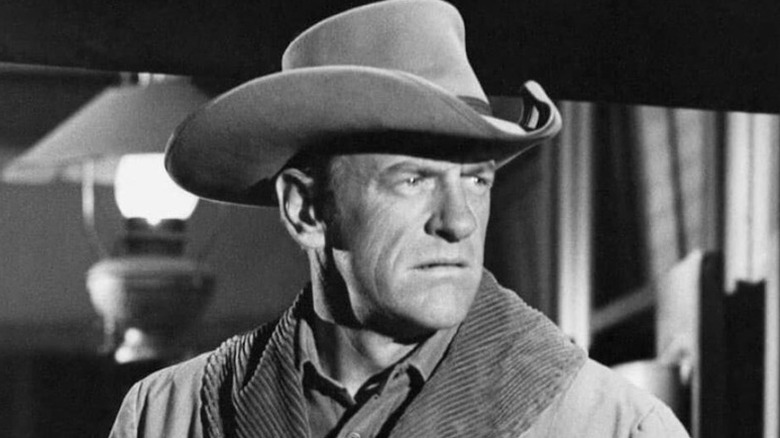
Getting what is arguably the most obvious choice out of the way first, "Gunsmoke" is the longest-running Western in history. Premiering in 1955, the show is set in and around a post-Civil War Dodge City, Kansas which is rife with outlaws and gunslingers passing through. Keeping the community safe is U.S. Marshal Matt Dillon (James Arness), joined by various deputies and other allies in town. As the show progresses, its narrative scope expands to the rest of the townspeople, building out its sense of shared community.
"Gunsmoke" ran for more than 600 episodes across 20 seasons before finally coming to an end in 1975. This made the show a television staple for an entire generation and purveyor of classic Western adventures every week. Arness filled the archetype of the larger-than-life lawman well, bringing a consistent, near-paternal energy to the role that anchors the whole series. The defining television Western and a genre institution, "Gunsmoke" has an enduring legacy that extends beyond its longevity.
Bonanza
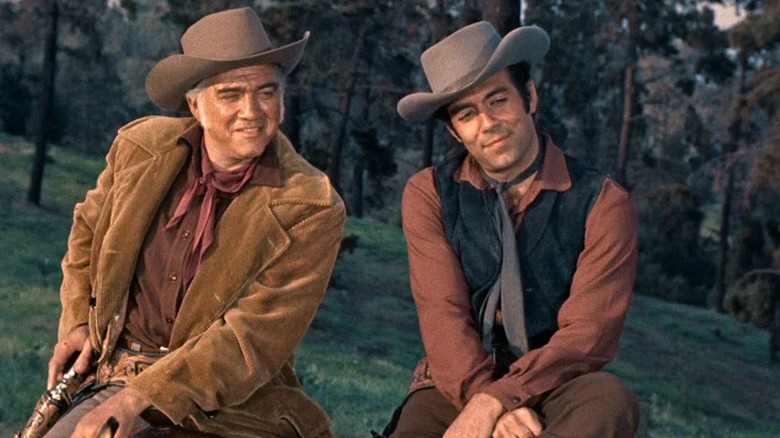
Another long-running Western that boasted a run lasting well over a decade was "Bonanza," which premiered in 1959. The show centers on the Cartwright family, headed by patriarch Ben Cartwright (Lorne Greene), widowed three times, producing a son from each marriage. The family lives on their sprawling ranch of Ponderosa on the border of Lake Tahoe, Nevada shortly after the discovery of the Comstock Lode in 1859. The resulting silver rush brings both friendly and hostile characters alike near the Cartwright's property and the neighboring town of Virginia City.
While action certainly occurred regularly on "Bonanza," it wasn't as readily emphasized as other contemporary Westerns. The real draw to the show was the complicated dynamics between Ben and his three very different sons, with those dynamics informing every major development for the Cartwrights. That level of family drama wasn't as apparent and well-crafted in Westerns at the time and helped fuel the show's success. Running for 14 seasons before ending in 1973, "Bonanza" gave more dimension and nuance to the genre on television.
The Virginian
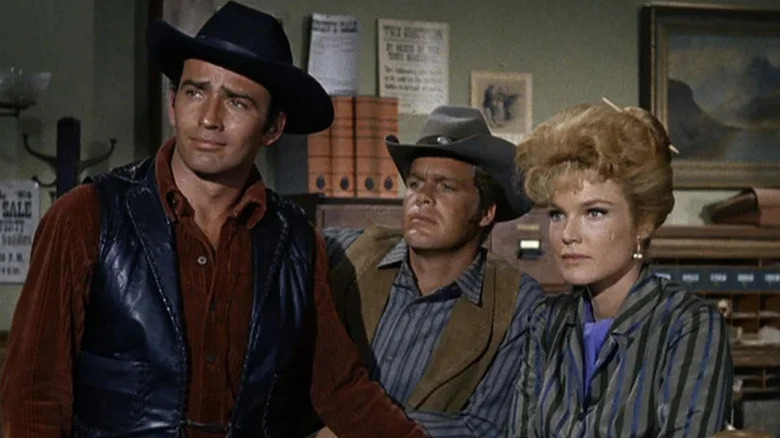
Years before Clint Eastwood popularized the man with no name archetype on the big screen, James Drury did so on television with "The Virginian." Debuting in 1962, the show is set in the Wyoming Territory in the late 19th century, with its titular protagonist's name never revealed to the audience. The Virginian (Drury) is the foreman of Shiloh Ranch, implied to be a Civil War veteran who keeps the peace around the property and surrounding community. Because of his fearless nature, no matter what the odds, and willingness to protect others, the Virginian was well-regarded by the nearby town of Medicine Bow.
Despite running for nine seasons, "The Virginian" is a show from the '60s that nobody talks about today. Still, the series brought unresolved mystery to its narrative, most notably through its stoic protagonist, elevated by Drury's consistently solid performance. This helped distinguish the show from its contemporaries, presenting a protagonist with more ambiguity than "Gunsmoke" or "Bonanza." A long-running but still oddly underrated, "The Virginian" showcased a subtly more sophisticated approach to the genre, delivering its action in glorious color.
The Wild Wild West
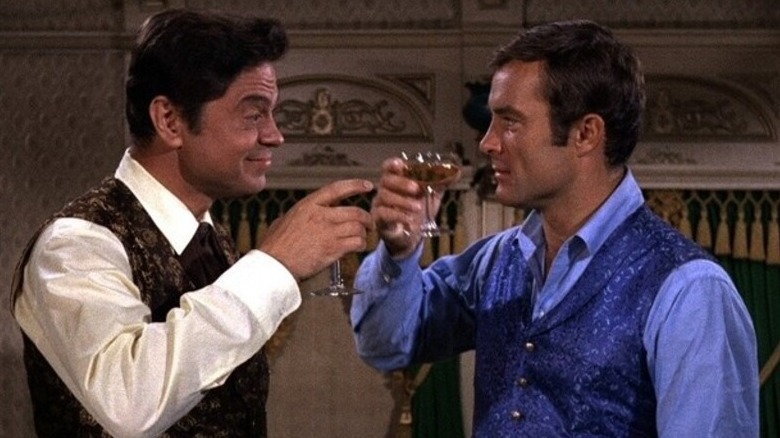
Westerns are incredibly malleable, capable of blending in elements from other genres, playing with tone, and setting stories in locations and eras outside of the norm. One of the earliest weird Western stories on television was the 1965 series "The Wild Wild West," starring Robert Conrad and Ross Martin. The show has 19th century Secret Service agents Jim West (Conrad) and Artemus Gordon (Martin) taking missions along the frontier, traveling cross-country in a tricked-out train car. Along with a set of advanced gadgets, West brings the two-fisted action while Gordon uses his skills as a master of disguise.
One of the best TV shows of the 1960s, "The Wild Wild West" brought an off-kilter but fun energy to the genre. The series capitalized on the spy craze popularized by the James Bond movies while maintaining its period piece rustic setting. The show contained elements of steampunk and other light science fiction sensibilities but also enough familiar Western tropes to keep it from becoming too outlandish. Ignore the 1999 film adaptation and stick with the '60s show, which subtly showcased the range of what the genre could be.
Little House on the Prairie
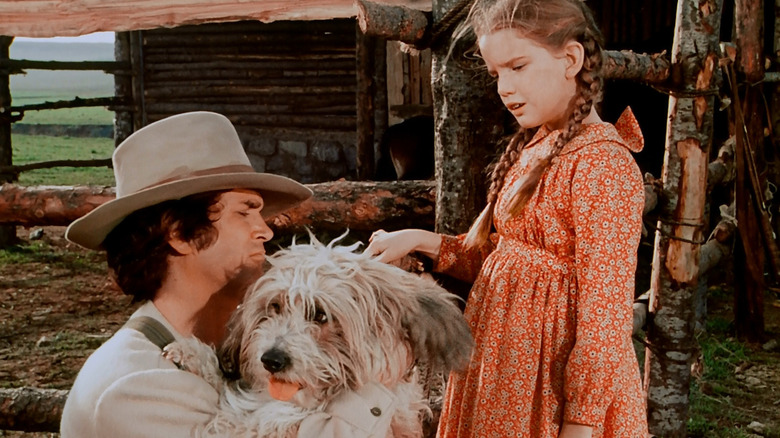
Not every Western show needs to revolve around hardened gunslingers taking on unsavory outlaws across the Wild West. The 1974 series "Little House on the Prairie" brought a much more family-friendly perspective to the genre, relying on coming-of-age drama instead of action as its core appeal. Based on the semi-autobiographical novels by Laura Ingalls Wilder, the show centers on the Ingalls family as they settle in Minnesota in the 1870s. The household is led by married couple Charles (Michael Landon) and Caroline Ingalls (Karen Grassle) as they raise their growing family.
"Little House on the Prairie" is the coziest show on this list, focused on life on the farm and the late 19th century community. This more deliberately paced and domestic perspective on the genre proved a consistent hit with audiences, leading the show to run for nine seasons and five television specials. Decades later, the show's influence still looms large, with a "Little House on the Prairie" remake already renewed for a second season ahead of its premiere. A pastoral take on the genre with an emphasis on family, "Little House on the Prairie" offered a gentler alternative to its more rugged counterparts.
Lonesome Dove
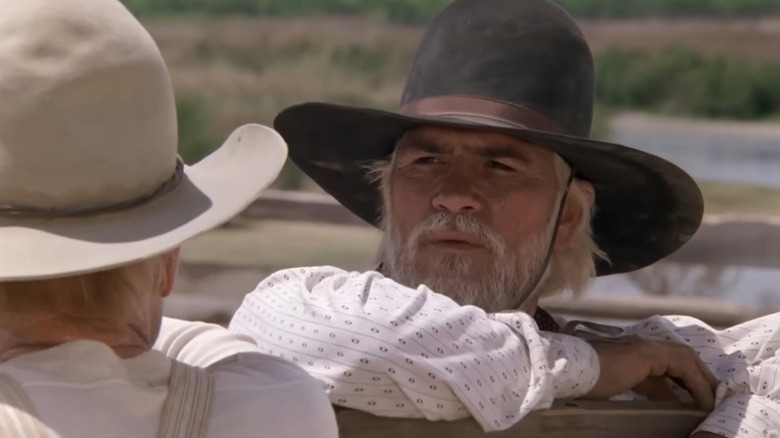
The Western genre was in steady decline when "Lonesome Dove" premiered in 1989, adapting Larry McMurtry's 1985 novel. The four-episode miniseries centers on former Texas Rangers Gus McCrae (Robert Duvall) and Woodrow Call (Tommy Lee Jones), who run a livery in a border town in the 1870s. McCrae convinces Call to join him on a cattle drive to Montana for an opportunity for a fresh start and to break from the ennui of their current surroundings. During the cross-country trek, the duo and their fellow cowboys encounter all sorts of dangers on the long drive, including notorious outlaws and hostile indigenous tribes.
Robert Duvall's "Lonesome Dove" helped revitalize the then-failing Western genre, garnering 44 million viewers during its initial broadcast. Duvall gives one of the greatest performances of his entire celebrated career, depicting a protagonist making one last attempt at greatness in the twilight years of his life. There is plenty of frontier action but with a clearer sense of consequence to the violence rather than playing these beats with a cavalier attitude. Proving that Westerns could thrive on television beyond the genre's heyday in prior decades, "Lonesome Dove" brings a poetic maturity to the Wild West.
Deadwood
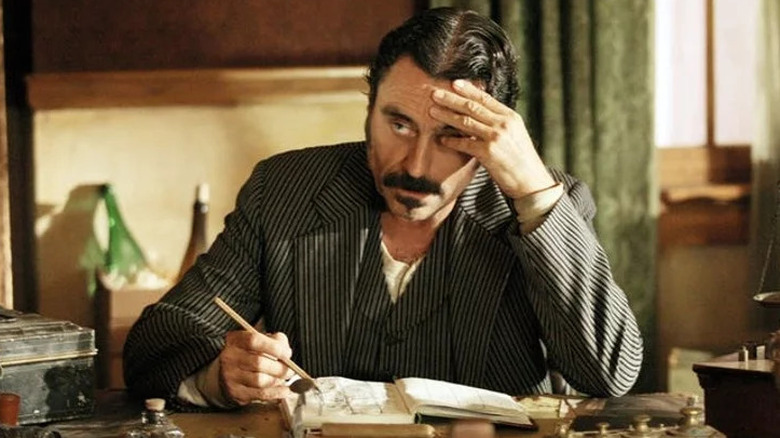
Among the best HBO original series of all time is the 2004 Western "Deadwood," dramatizing the violent history behind its titular South Dakota boomtown. Starting in 1876, the show has former marshal Seth Bullock (Timothy Olyphant) relocate to Deadwood to make his fortune as a retailer for nearby prospectors. The entire community is rampant with lethal, boundless lawlessness, with brothel and saloon proprietor Al Swearengen (Ian McShane) behind much of the town's illicit activities. Frustrated by the constant victimization and exploitation of the vulnerable, Bullock decides to become the town's sheriff, putting him at odds with Swearengen.
"Deadwood" brought Westerns firmly into the expanding era of prestige television, with nuanced characters and tightly scripted plots. Being on HBO meant that the series also didn't need to pull its punches and it frequently depicted the graphic dangers of life on the 19th century frontier. With nefarious figures constantly moving through the town, there are storylines in the series that feel like they're straight out of a bloody crime thriller. These modern storytelling sensibilities help set "Deadwood" apart from its genre counterparts, demonstrating what a prestige Western can be.
Justified
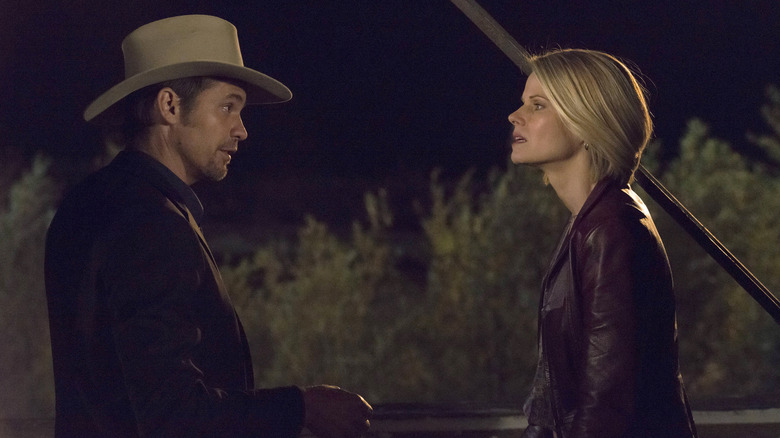
While period piece Westerns are still being readily produced, neo-Westerns set in contemporary times have seen a rise in recent years. Much of this sub-genre's growth is indebted to the FX series "Justified," adapting the work of crime author Elmore Leonard. The show stars Timothy Olyphant as U.S. Marshal Raylan Givens, who is reassigned to his home county in eastern Kentucky. Raylan's quick-draw reputation and no-nonsense attitude places him at odds with several criminal organizations throughout the region, starting with the Crowder crime family.
Led by a self-assured performance from Olyphant and a scene-stealing role for Walton Goggins as Raylan's frenemy Boyd Crowder, "Justified" is an unfailingly cool contemporary Western. The story is very much set in the 21st century but with the classic archetypes and tropes that definitely place it in neo-Western camp. Years later, Timothy Olyphant returned as Raylan Givens for the sequel series "Justified: City Primeval," not losing a step in reprising his role. Anchoring its stylish action with consistently magnetic performances from its two lead actors, "Justified" is arguably the best adaptation of Leonard's work.
Yellowstone
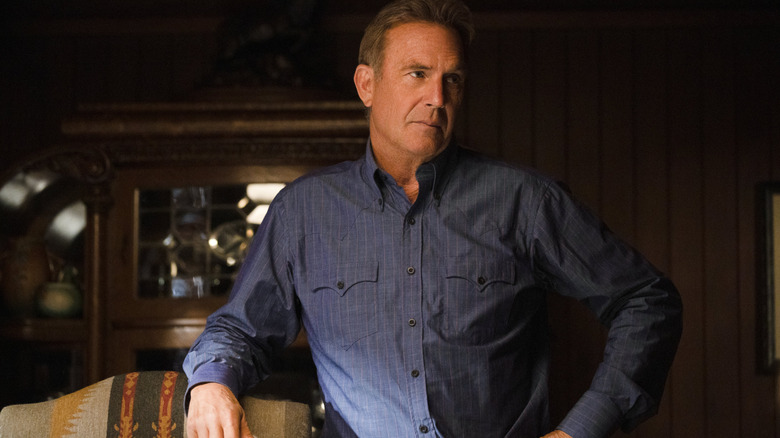
Prolific screenwriter and producer Taylor Sheridan has built his own TV empire over the past several years. The crown jewel in this lineup is the 2018 neo-Western "Yellowstone," following the powerful Dutton family from their expansive cattle ranch in Montana. Patriarch John Dutton (Kevin Costner) contends with all sorts of threats to his family and their interests, from rival ranchers to political enemies with an axe to grind. This is complicated by tensions within the family, particularly involving John's adopted son and aspiring politician Jamie Dutton (Wes Bentley).
"Yellowstone" mixes familial drama with crime thriller action, often veering deliciously over-the-top with its soap operatic plot twists. Like any memorable Western hero, no matter what time period, the Duttons frequently take justice into their own hands and aren't afraid to get them dirty, to the fans' delight. Years after the original series' conclusion, it still continues to produce spin-off series like "Marshals," following shows like "1883" and "1923." Taking neo-Westerns to new heights and expanding itself into a full-on franchise, "Yellowstone" is definitely worth the hype.
1883
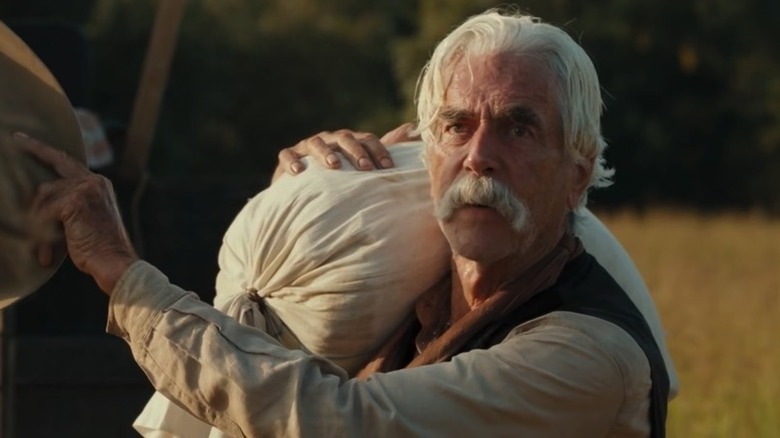
One last Taylor Sheridan show to mention to highlight his role in reviving Westerns of all time periods on TV is the limited series "1883." The 2021 Paramount+ original serves as a prequel to "Yellowstone," detailing how the Duttons eventually settled in Montana in the 19th century. The show has married couple James (Tim McGraw) and Margaret Dutton (Faith Hill) bring their family on a wagon train led by Civil War veteran Shea Brennan (Sam Elliott). Along the way, the caravan endures the grueling hazards of the cross-country trek, from deadly wildlife and disease to hostile factions across the frontier.
"1883" ranks highly among Taylor Sheridan's TV shows, bringing a real grit to its Wild West story. This isn't a flashy show that frequently veers over-the-top with its narrative developments but a grounded and gritty Western. This tougher and meaner approach to the genre makes the prequel the grimmest series that Sheridan has brought to television to date, but that works to its overall benefit. "1883" stands as clear evidence that period piece Westerns can thrive during the streaming era, bringing an unflinching look at the harshness of the west with a solid self-contained tale.