

15 Biggest Changes Game Of Thrones Makes To George R. R. Martin's Books
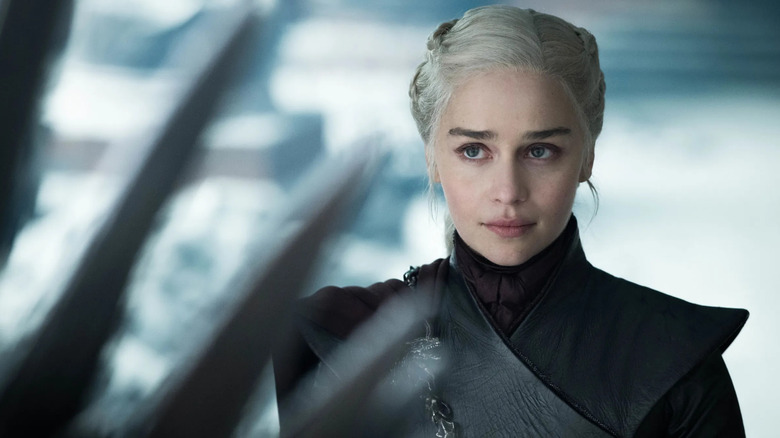
Some of the most memorable storylines and characters in HBO's "Game of Thrones" were drastically different from George R.R. Martin's "A Song of Ice & Fire" books, in good and bad ways. But hey, you can't make a sweeping fantasy series' TV adaptation without breaking a few dragon eggs.
With that in mind, we've gone through the Emmy-winning drama's eight-season run and highlighted 15 times the TV show altered what's in Martin's novels (as they currently stand; he's still writing them). Scroll down to see what made the cut, then make sure to hit the comments to log the book-to-screen changes that grabbed your attention.
Robb Stark doesn't marry for love in the books

The Red Wedding is probably the most notorious plot point in the entirety of "A Song of Ice & Fire," and its appearance in "Game of Thrones" was one of the biggest spoilers kept by book readers while the show aired. Somehow, its tragedy was made all the more horrific thanks to how the show strayed from George R. R. Martin's source material regarding Robb Stark's love interest.
In "A Clash of Kings," Robb marries Jeyne Westerling after he takes her virginity during a one-night stand. Because Robb is not a POV character in the books, HBO took some creative liberties with his love story, introducing an original character in Talisa Maegyr, a Volantene nurse for whom Robb falls. Their connection added some emotional heft to his decision to betray his previous oath to marry one of Walder Frey's daughters. Furthermore, prior to the Red Wedding, Talisa revealed to Robb that she was pregnant, which made her being stabbed to death in the stomach much more heartbreaking; in the books, Jeyne isn't even at the doomed ceremony.
Tywin's mentorship of Arya was added for the show
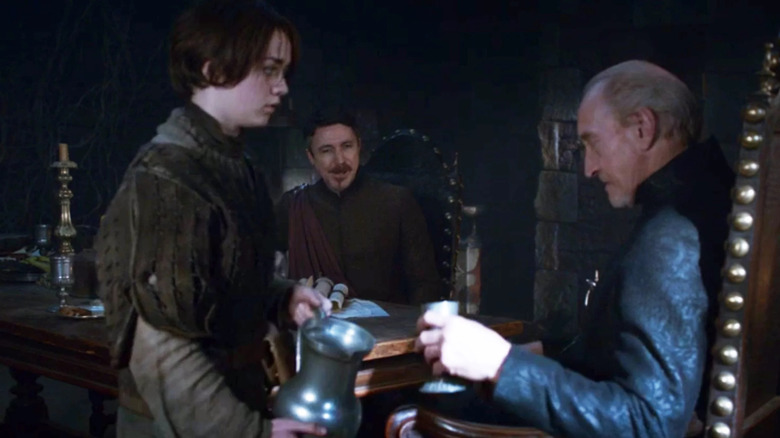
After Tywin Lannister made one of the best character introductions in TV history, the show rightfully took advantage of Charles Dance's dignified and layered portrayal of Jaime, Cersei, and Tyrion's pragmatic-but-cruel father. In Season 2 especially, the show had Tywin stake his claim in Harrenhal, where Arya Stark was in disguise as a short-haired orphan boy by the name of "Arry."
While in the books, Arya has very few interactions with Tywin (beyond wishing she'd asked Jaqen H'ghar to kill him), the show gave them a lot of screen time together by having Tywin randomly choose Arya to be his cupbearer. Though Tywin didn't know her true identity, he admirably recognized her smarts and ability to read, making him somewhat of an unlikely mentor to Ned Stark's naive daughter. In "A Clash of Kings," Arya is chosen as the cupbearer to (supposed) Northern ally Roose Bolton instead — though thankfully for her, he's also unaware of her true identity.
Prophecies from the books go deeper into lore
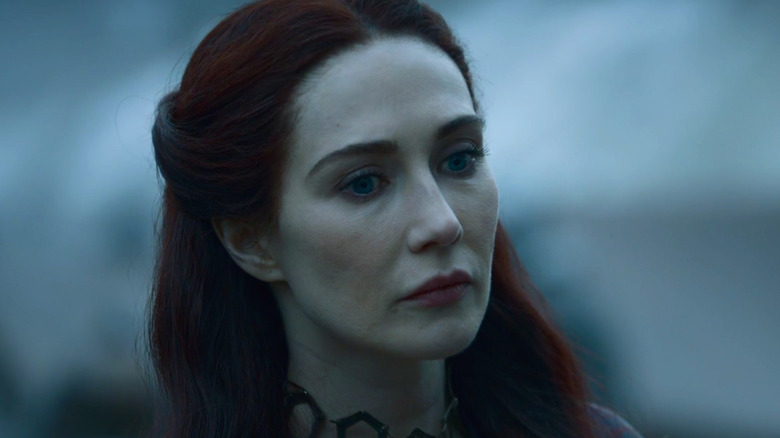
Dreams and prophecies are a major plot device throughout "A Song of Ice & Fire," but "Game of Thrones" made huge changes in adapting these mystical moments for the screen. Among the more notable prophecies from the books is Melisandre's search for a "prince that was promised," foretelling a potential successor to a legendary hero named Azor Ahai that once saved Westeros from White Walkers. Throughout the show, Melisandre posed characters like Stannis Baratheon, Jon Snow, and Daenerys Targaryen as possible candidates for fulfilling the vision.
While the Azor Ahai prophecy ended up just another storyline "Game of Thrones" never fully explained, the books and the show differ greatly on other matters of foreshadowing, as well. Daenerys, in particular, is given a prophecy in the books by the red priestess Quaithe that references characters like Victarion Greyjoy, Tyrion Lannister, and Doran Martell; in the show, Quaithe simply warns Dany that she'll be betrayed. Additionally, Dany's visions in the House of the Undying in Qaarth foretell Robb Stark's death and Jon Snow's true parentage, while in the show, she's only shown a decimated Iron Throne room and her deceased lover, Khal Drogo.
Book Jaime is quicker to abandon Cersei
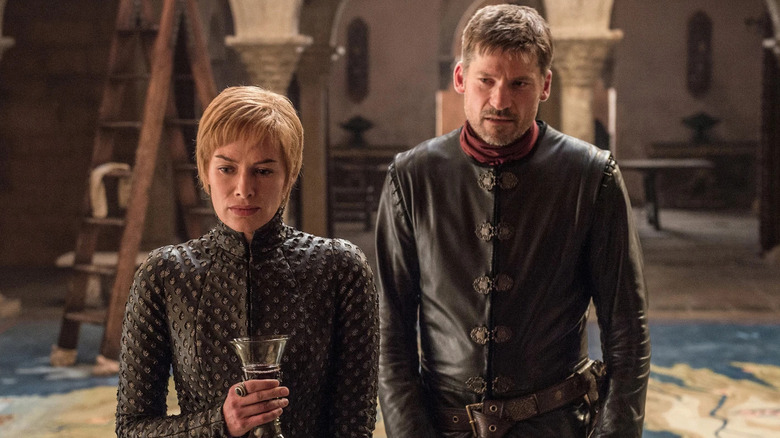
The reveal of the incestuous relationship between twins Jaime and Cersei Lannister at the end of the Season 1 premiere is the first big OMG moment in "Game of Thrones." As the series goes on, Jaime underwent quite the redemption arc after becoming Robb Stark's prisoner, eventually getting freed by Catelyn, and losing his right hand. Meanwhile, Cersei became far more despicable as the series went on, causing Jaime to abandon her at the end of Season 7, only to return to King's Landing to die with her at the end of Season 8.
In the books, Jaime doesn't stick by Cersei's side for as long. In "A Feast for Crows," Jaime leaves King's Landing to help take Riverrun from the Tullys, something he does in Season 6 of the show. While he's there, Jaime receives a letter from Cersei asking him to fight for her in a trial by combat after being imprisoned by the High Septon, but Jaime orders the letter burned. Only time will tell if book Jaime eventually runs back to Cersei's arms, but compared to show Jaime, he has far less patience for his twin's cruelty.
Missandei and Grey Worm are couple goals, but only in the show
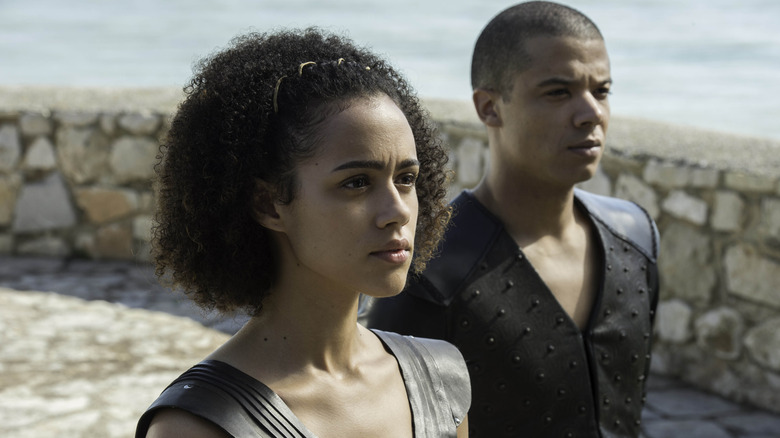
One way the show expands upon material from the books is with the characters of Missandei and Grey Worm, both vital members of Daenerys Targaryen's small council during her reign in Essos. As Missandei taught Grey Worm how to speak English in the show, they fostered a romance in spite of Grey Worm's anatomy, proving to be one of the more wholesome couples in the series. (Admittedly, the bar was pretty low). Eventually, Missandei's execution by Cersei became Daenerys' and Grey Worm's main motivations for their violent siege of King's Landing near the show's end.
Missandei and Grey Worm barely interact, let alone have any sort of romance, in the books. Furthermore, Missandei is only 11 years old in Martin's novels; the character, played by Nathalie Emmanuel, was aged up significantly on the TV series.
Tyrion's first marriage was even more tragic than he thought
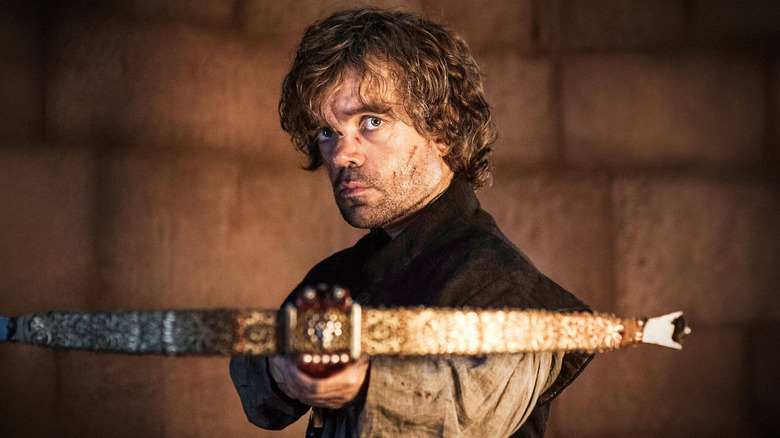
A lot gets lost in translation between George R.R. Martin's books and the TV adaptation, but some discarded plot points leave show-only viewers without important context. In Season 1 of "Game of Thrones," Tyrion regaled Shae and Bronn with the story of his first marriage with Tysha, a young girl with whom the teenage Tyrion eloped. However, after Tywin learns about the union, Jaime told Tyrion that the whole romance was a ruse organized to help Tyrion lose his virginity. As punishment for marrying a commoner, Tywin ordered his guards to have their way with Tysha while Tyrion watched.
However, in the third book, "A Storm of Swords," Tyrion learns a key detail about this incident that is for some reason left out of the "Game of Thrones" Season 4 finale. While freeing Tyrion from his cell, Jaime confesses to Tyrion that Tysha wasn't, in fact, hired to seduce Tyrion; their love was genuine. Enraged, this is Tyrion's primary motivation for confronting Tywin, killing Shae in the process before firing a crossbow bolt into his father's chest while he sits on the toilet.
The Dorne plot features entirely different characters
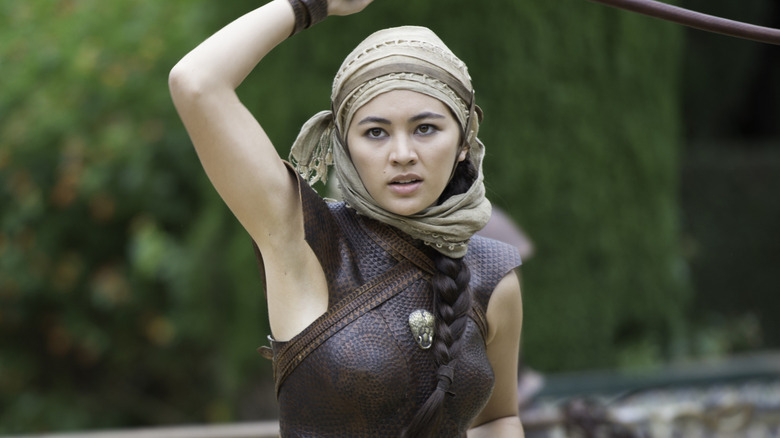
Season 5's Dorne plot represented some of the show's biggest streamlining efforts: The death of Oberyn Martell in Season 4 resulted in a conspiracy against the Iron Throne, spearheaded by Oberyn's lover, Ellaria, and his bastard daughters, known as the Sand Snakes. Sadly, the Dornish characters were severely underwritten and essentially became background characters in subsequent seasons.
In the books, this storyline is a highlight of "A Feast for Crows," mainly thanks to Prince Doran's daughter, Arianne Martell, and her lover, a member of the Kingsguard named Aerys Oakheart. Her misguided attempt to help Myrcella Baratheon ascend the Iron Throne is thwarted, and Aerys is killed, only for Doran to reveal to Arianne that he's been planning an alliance with Daenerys Targaryen.
The Hardhome rescue is a huge show moment compared to the books
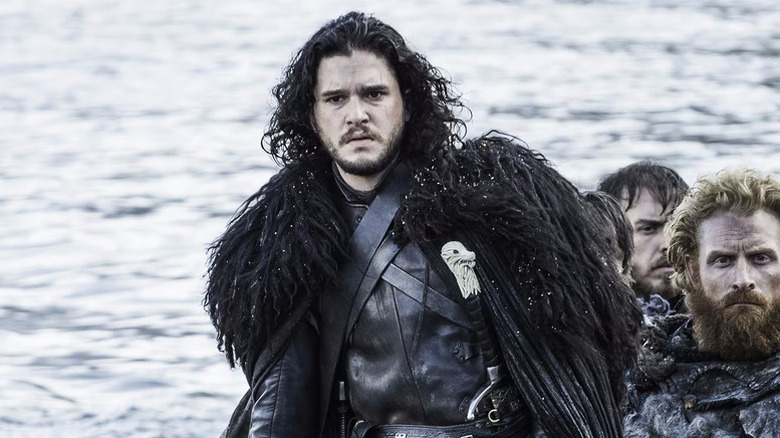
One of the best episodes of "Game of Thrones" is "Hardhome," in which Jon Snow led an expedition to rescue Wildling refugees, only to be ambushed by an army of Wights. The chaos saw Jon Snow kill his first White Walker, learning in the process that Valyrian steel is capable of killing White Walkers. The action-packed episode also introduced the Night King, the silent leader of the Wight army who could resurrect the dead and would go on to become one of the series' big bad guys over the next several seasons. It may come as a shock, then, that the incident at Hardhome is only told secondhand in the books.
In "A Dance with Dragons," a rescue mission at Hardhome is led not by POV character Jon Snow but another member of the Night's Watch, Cotter Pyke. Jon is later informed via raven that everyone has become stranded there in the midst of a Wight attack, but his decision to go himself to help alongside Tormund is thrown off when Jon is mutinied, as depicted at the end of "Game of Thrones" Season 5.
Margaery is a major political player in the show
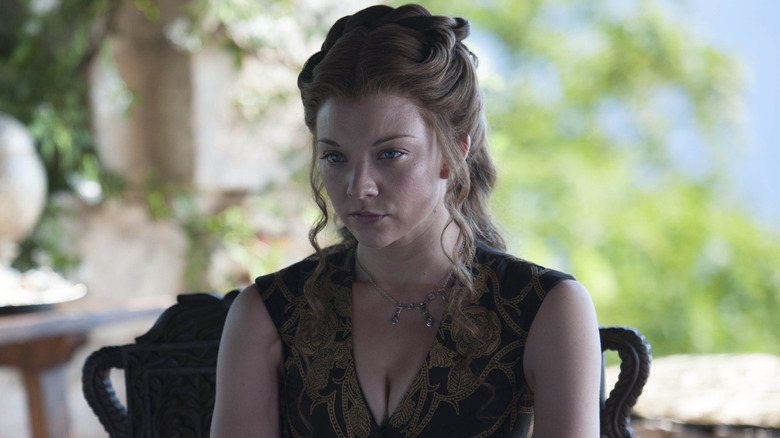
It's hard to imagine a version of "Game of Thrones" without the presence of Margaery Tyrell, whose charm and political savvy made her a prime opponent of Cersei Lannister from Seasons 3 to 6. Initially set to wed King Joffrey, she was present for his assassination and later married the Iron Throne's next heir, Tommen, only to be condemned by the Faith. She then joined the religious sect for her own survival until she was killed in a wildfire explosion planned by Cersei herself.
Though Margaery's fate beyond her imprisonment by the High Sparrow has yet to be revealed in the books , we already know her character arc probably won't be that big of a deal, seeing as she's a much less integral character in the books (beyond Cersei's own irrational hatred of her). Margaery's political smarts mainly played out on-screen through Cersei's POV, so we don't get to see a lot of the really juicy scenes where Margaery "seduces" Joffrey and Tommen or schemes with her grandmother Olenna. It's one of the few big, beneficial changes that the TV adaptation of "Game of Thrones" made.
Barristan Selmy hasn't been killed in the books
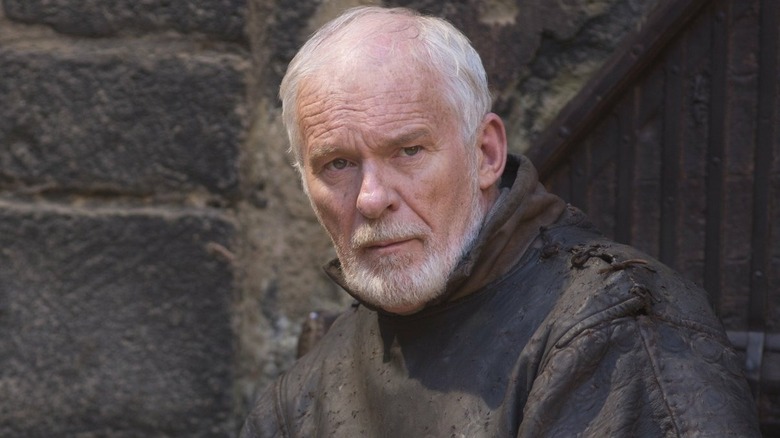
Among the more controversial deaths in "Game of Thrones" was Ser Barristan Selmy's, particularly because it essentially wrote the character out of the show; in the books, he plays a much more important role. From Season 3 onward, Barristan pledged his sword to Daenerys Targaryen, becoming her most honorable and wise advisor, having sworn allegiance to a whole family tree of Targaryen rulers before her. However, he met an unjust fate in Season 5 when he was ambushed in the streets by the Sons of the Harpy, and not even his legendary swordfighting skills were enough to save him from a death that was far beneath him.
In the books, however, Barristan essentially takes over ruling Meereen after Daenerys goes missing, having flown on Drogon's back to escape the attack in Daznak's Pit. He's even a POV character in "A Dance with Dragons" and the impending "The Winds of Winter," but maybe the show simply expedited a sad fate that was already in the cards for the character. Still, would it have killed them to kill him with a bigger and/or better fight?
Show Sansa's Season 5 storyline is a huge departure from book Sansa's journey
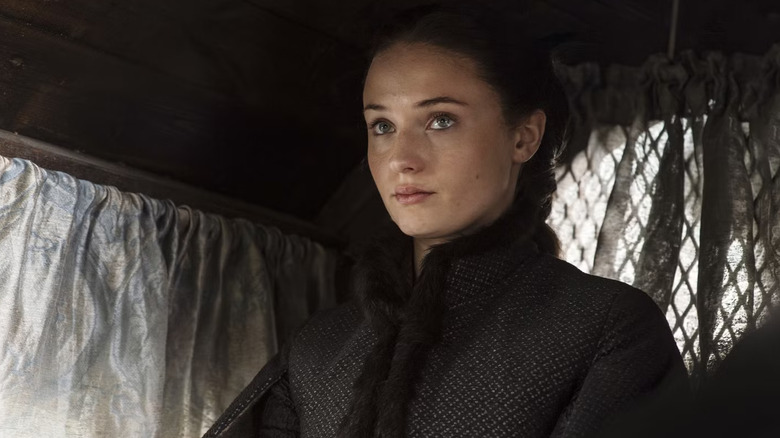
The end of "Game of Thrones" Season 4 mirrored Sansa's journey in the books, escaping captivity in King's Landing and becoming the mentee of Petyr Baelish. However, in Season 5, Sansa's storyline took a massive departure, a move that angered some fans and disappointed some book readers, but ultimately set Sansa up to become one of the best Starks in "Game of Thrones" by the end.
Rather than remain a mentee of Littlefinger at the Eyrie, the show brought Sansa back to her childhood home of Winterfell, where she was married off to Ramsay Bolton. As if Joffrey weren't bad enough, Sansa was subject to even more severe abuse from the Bolton prince. In the books, Sansa's political savviness grows, but the show instead makes her another victim of a cruel man's torture. In the books, that role is reserved for an unseen childhood friend of Sansa's, Jeyne Poole, who is disguised as Arya Stark. Hopefully, the books will echo the show and also see Sansa eventually claim the title of Queen in the North.
Mance Rayder's execution was not what it seemed
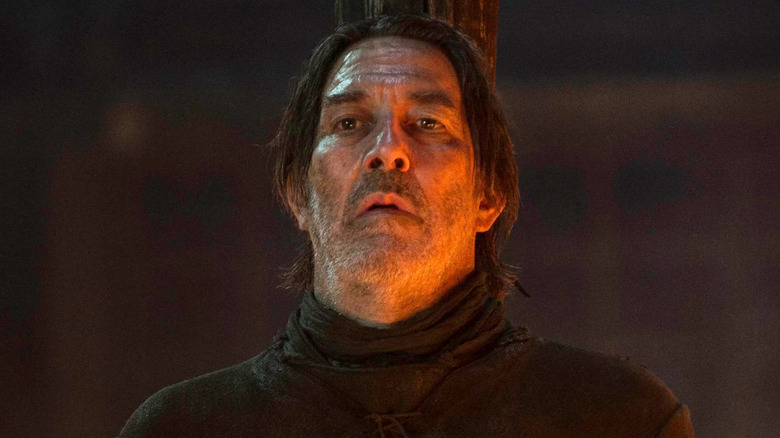
Speaking of "Game of Thrones" Season 5, the show removed one major plot point involving the Wildling king Mance Rayder. After being captured by Stannis Baratheon, Mance was offered to bend the knee or die; he chose the latter. Melisandre burned Mance on a pyre in Castle Black, but Jon Snow shot an arrow at the Wildling to spare him from a more painful death. These events played out mainly the same in the "Game of Thrones" Season 5 premiere, but in the books, Jon Snow discovers that the man who was burned was not, in fact, Mance.
As Stannis' red priestess Melisandre reveals to Jon, the man that was burned was Rattleshirt, another Wildling who Melisandre used magic to make appear like Mance. The real Mance Rayder, in disguise as Rattleshirt, is sent on a mission to rescue "Arya Stark" (actually Jeyne Poole) from Winterfell, and Jon receives a letter from Ramsay right before his sudden death claiming that Mance has been captured. In the show, Mance's execution is just exactly what it seems, to many book readers' disappointment.
Euron Greyjoy is more than just a foul-mouthed pirate
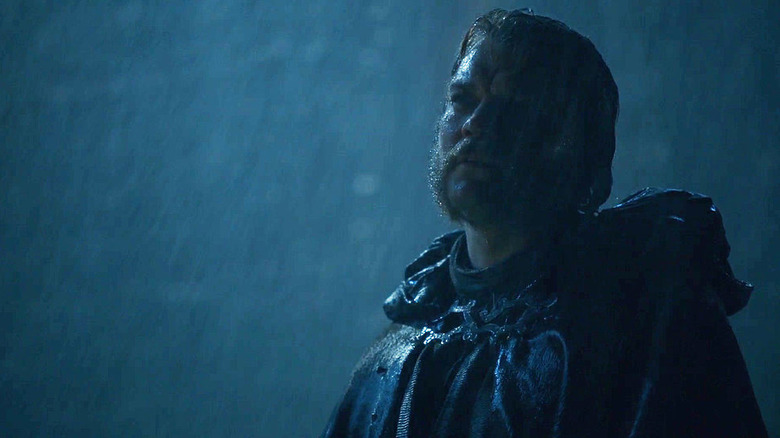
Book readers know just how terrifying Euron Greyjoy is supposed to be. Captain of a ship filled with mute sailors whose tongues he cut out, Euron poses a serious threat to the Seven Kingdoms after assuming the crown of the Iron Islands. He's also in possession of a mysterious horn that supposedly tames dragons, potentially making him an adversary of Daenerys Targaryen. So how come "Game of Thrones" took one of the book series' best villains and made him a horny pirate with a potty mouth?
Euron debuted in "Game of Thrones" Season 6, arriving to kill Balon and assume the throne of the Iron Islands in the kingsmoot, then commanding his army to build him a thousand ships that he can offer to Cersei Lannister (along with his hand in marriage). Euron then just became a chaotic menace who used his ridiculously large fleet to ambush Daenerys' army at several points, including killing one of her dragons in the final season. Euron Greyjoy's death is as anticlimactic as the rest of his character: He was killed by Jaime while King's Landing burned.
A vengeful Catelyn Stark lives
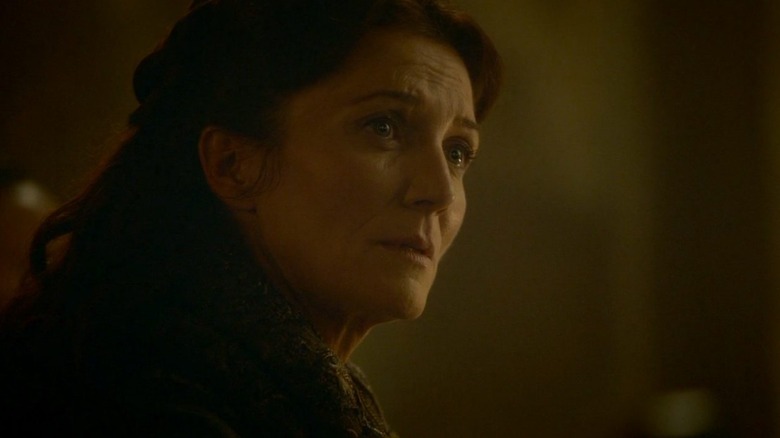
Maybe the most notable change between the books and show for even casual "Game of Thrones" fans is the absence of Lady Stoneheart, AKA the revived Catelyn Stark who in the novels becomes the leader of the Brotherhood without Banners and seeks vengeance on those who betrayed her family at the Red Wedding. Her existence is revealed at the end of the third book, roughly around Season 4 in show terms, but even with all the creative liberties and byways the show took, the character was never brought back to life on screen.
While many fans wonder why Lady Stoneheart didn't show up in "Game of Thrones," series creators David Benioff and D.B. Weiss have said they felt her appearance would've had diminishing returns after Catelyn's impactful death at the Red Wedding. However, even George R. R. Martin has said he thinks she should've been included, which maybe speaks to his plans for the character in "The Winds of Winter" and "A Dream of Spring," assuming they ever get finished. But Catelyn's reanimated corpse wasn't the only major character fully ignored by the show ...
Daenerys isn't the only Targaryen who survived Robert's Rebellion

One of the biggest twists in "A Song of Ice & Fire" comes in the fifth book, when Tyrion's ventures in Essos have him cross paths with Jon Connington, former Hand of the King to Aerys Targaryen. With Connington's hair dyed blue and going by the name "Griff," Tyrion eventually discovers that Jon's supposed son, named Young Griff, is actually Prince Aegon, the son of Rhaegar Targaryen, who is believed to have been killed by the Mountain during the Sack of King's Landing. Assuming this identity is true, Young Griff has a better claim to the Iron Throne than either Jon Snow or Daenerys Targaryen, making him a major late-stage player in the titular game of thrones.
Sadly, Jon Connington and Young Griff were entirely absent from the HBO series. Connington's storyline of being infected with greyscale was instead given to Jorah Mormont, while Tyrion instead met and became an advisor to Daenerys in Meereen. By the end of the fifth book, Young Griff has even set foot on Westerosi soil to begin his conquest before Daenerys, who didn't arrive until the start of the show's Season 7. If George R.R. Martin ever finishes the books, that might clue fans in as to how Daenerys' story was supposed to end versus how it does in the show.