

15 Best Coming-Of-Age TV Shows Of All Time, Ranked
We may receive a commission on purchases made from links.
Television may be the single storytelling medium most perfectly suited to telling tales about growing up. The combination of the lengthy (and potentially years-long) scope, the breadth of possibility for psychological and emotional investigation, and the presence of young actors who actually grow up themselves alongside their characters makes the finest coming-of-age TV shows of all time invaluable capsules of what it is to face the flurry of adolescence.
Below, you'll find a ranking of the 15 best coming-of-age series of all time, limited to English-language live-action series but otherwise open to shows from all time periods and in all subgenres — comedy, drama, fantasy, and musicals all included.
15. Anne with an E
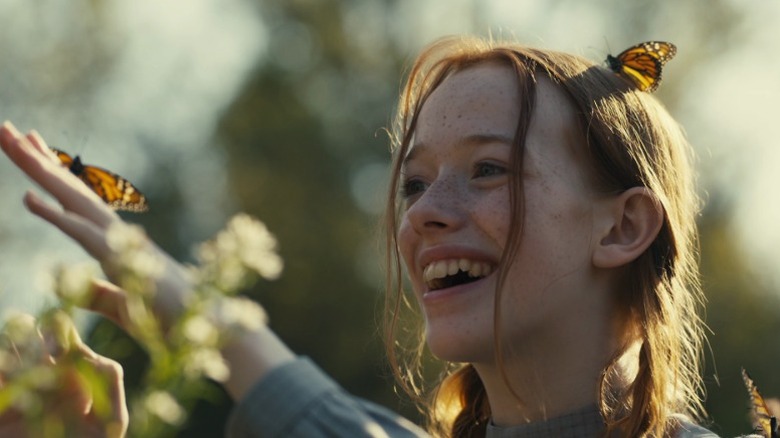
You wouldn't necessarily expect Moira Walley-Beckett, who cut her teeth writing for "Breaking Bad" and went down in television history as the author of its ultra-dark best episode "Ozymandias," to create a sweet, family-friendly take on Lucy Maud Montgomery's "Anne of Green Gables" as one of her follow-up projects. But give a watch to "Anne with an E," and, for all its warmth, it comes into focus as a work of television clearly hailing from the same inquisitive, empathetic, and fearlessly hard-hitting creative place as Walley-Beckett's "Breaking Bad" contributions.
The utterly note-perfect Amybeth McNulty stars as Anne Shirley in this Canadian-produced three-season adaptation of Montgomery's 1908 novel, which retains stringent faithfulness to the spirit of the source material but isn't afraid to update its plotting and sociological purview in numerous bracing ways. Watching Anne grow up and get to know the world alongside her friends in the fictional late-19th-century town of Avonlea is an experience like no other — at once shocking and sobering in the forthrightness with which we're made to face dark period-accurate realities, and brimming with the very same infectious optimism, curiosity, and earnestness that its embattled protagonist brandishes as her superpowers of choice.
14. Boy Meets World
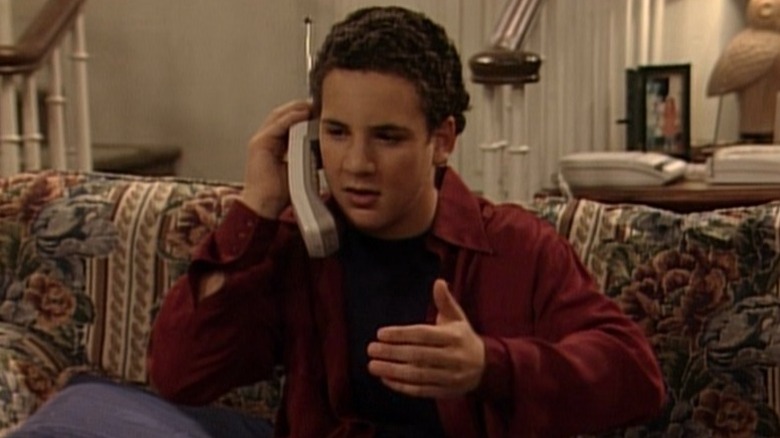
Today, "Boy Meets World" is one of the most iconic and widely-remembered coming-of-age TV series. However, back when it originally premiered in 1993, you'd have been excused for not expecting it to soar that high. Conceived as part of ABC's family-oriented TGIF block, the Michael Jacobs and April Kelly-created series shared the ostensible look and feel of its broad, inoffensive Friday night company on the network schedule, and a different timeline could just as well have seen it consigned to the hall of teen sitcom also-rans.
Instead, "Boy Meets World" endeavored to be sharper, smarter, sadder, and funnier than virtually any contemporary in its demographic bracket, and became one of the best sitcoms of the '90s for viewers of any age. Following the school and downtime adventures of Cory Matthews (Ben Savage) and his friends across seven seasons charting an epic, relatable path from middle school to college, the show mastered kid-appropriate setup-punchline volleying while acting as a generational chronicle of what it felt like to grow up in the '90s, hardships, traumas, anxieties and all.
13. It's a Sin
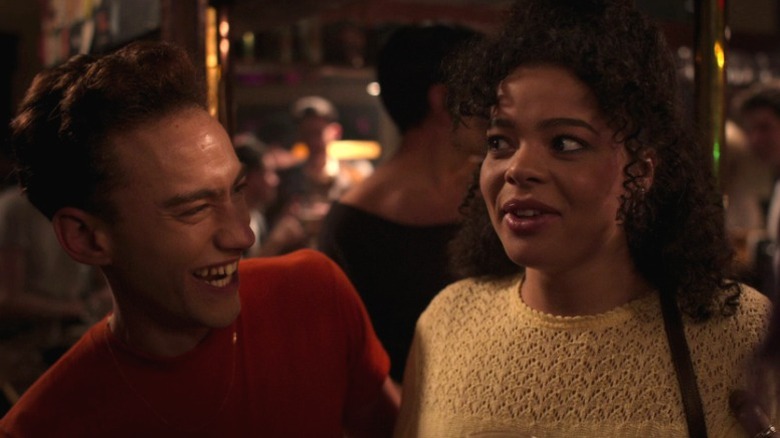
Originally aired on Channel 4 in the U.K. and released in the U.S. on HBO Max, "It's a Sin" is a five-episode series created and entirely written by ultra-prolific "Doctor Who," "Queer as Folk," and "Years and Years" auteur Russell T Davies. Olly Alexander, Omari Douglas, Callum Scott Howells, Lydia West, and Nathaniel Curtis star as Ritchie, Roscoe, Colin, Jill, and Ash, five gay 18-year-olds who all move to London and become flatmates in the year 1981. The series follows ten years in their lives, with each episode jumping forward a few, all the way up to November 1991.
Perceptive, honest, delicately-scripted, and exceedingly well-acted, the show portrays the hardships of British queer existence at a time of immense governmental and societal hostility, and paints a detailed, gut-wrenching picture of life at the height of the AIDS crisis. But what makes "It's a Sin" truly extraordinary is the extent to which it's willing to let its young protagonists be fully and irrepressibly themselves, giving space for their fiery, raucous, avid humanity to bloom in all its colors even as they move into adulthood surrounded by mounting tragedy and bigotry.
12. Degrassi: The Next Generation
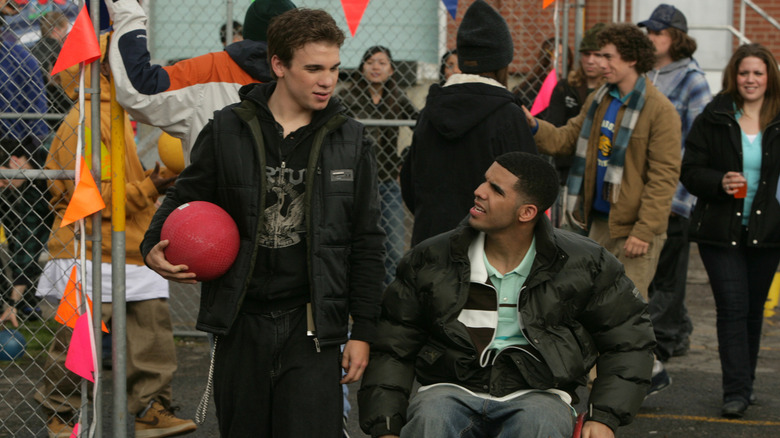
Premiered on 2001 as the fourth show in the "Degrassi" franchise and initially met with mixed reception, the Canadian teen soap "Degrassi: The Next Generation" eventually grew beyond the skepticism to become the longest-running and most popular "Degrassi" show. Even more than that, it became the defining English-language portrayal of teenage life over the course of the 2000s and early 2010s — the one, certainly, in which that subject matter was most decisively sanded down to its true, recognizable essence.
Facilitated by a sprawl of hundreds of episodes and an enormous, ever-rotating ensemble cast, the Yan Moore and Linda Schuyler-created series rejected the shiny sensationalism and twentysomething casting of other 2000s teen drama hits, and angled for plots, scenes, and emotional textures that could be recognizable to teen viewers as something rooted in their own compendium of experiences. What drama and torrid emotion there was came not from explosive "The O.C."-style twists and turns, but from the acknowledgement of raw, unembellished issues of typical teen life, and the accumulation of relatable detail over years of familiarity with the characters.
11. Everybody Hates Chris
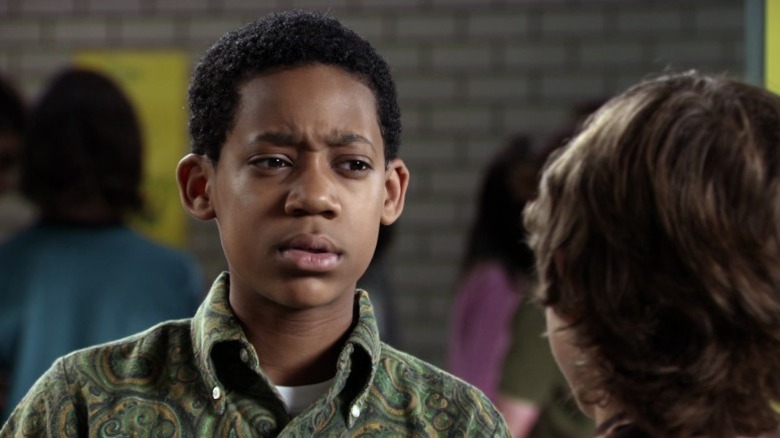
Created by Chris Rock and Ali LeRoi, "Everybody Hates Chris" loosely fictionalizes Rock's teenage years in New York City, moving their story forward a couple of years to offer an account of growing up as a Black kid in Brooklyn in the '80s. A pint-sized Tyler James Williams ("Abbot Elementary") stars as the fictional Chris, the nerdy eldest son of the Rock family — who, when the show starts, have just recently moved to Bedford–Stuyvesant and enrolled Chris in a majority-white public high school in a far-off Italian-American neighborhood.
Featuring an incredible ensemble cast including Tichina Arnold and Terry Crews as Chris' parents, "Everybody Hates Chris" is one of the funniest, liveliest, most innovative sitcoms of the 2000s, and a precursor to the likes of "30 Rock" and "Brooklyn Nine-Nine" in its willingness to embrace the surrealism, elasticity, and rapid joke-stacking of a live-action cartoon. As a coming-of-age series, meanwhile, it's both invaluably sincere and invaluably trenchant, with a merciless outlook on the absurdities of '80s American culture and its entrenched classism and racism that lends unusual accuracy and significance to its tales of canonical teen experience.
10. Never Have I Ever
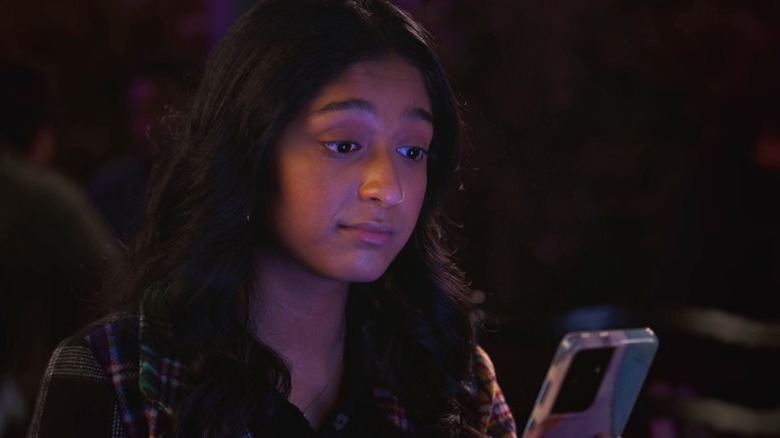
A thin line between chaotic comedy and overwhelming, soul-crushing anguish runs through the typical emotional experience of adolescence, and few shows straddle that line more proficiently than the Mindy Kaling and Lang Fisher-created "Never Have I Ever." Maitreyi Ramakrishnan stars as Devi Vishwakumar, an Indian-American girl from Sherman Oaks, Los Angeles who begins the series as a high school sophomore still reeling from the death of her father Mohan (Sendhil Ramamurthy).
Over the course of four masterfully-written, perfectly-paced, and consistently engrossing 10-episode seasons, "Never Have I Ever" observes Devi's growing-up process in unflinching, often painfully recognizable detail, while balancing it all out with snappy teen-sitcom antics enlivened by the culturally specific standpoints of Kaling and her writing staff. And, in addition to being a deeply moving and layered tragicomic chronicle of one girl's rocky emotional development, offers what may well be the most epic and comprehensive TV account of 2020s American adolescence in all its thorny, bittersweet, and often hilarious realities.
9. My Mad Fat Diary
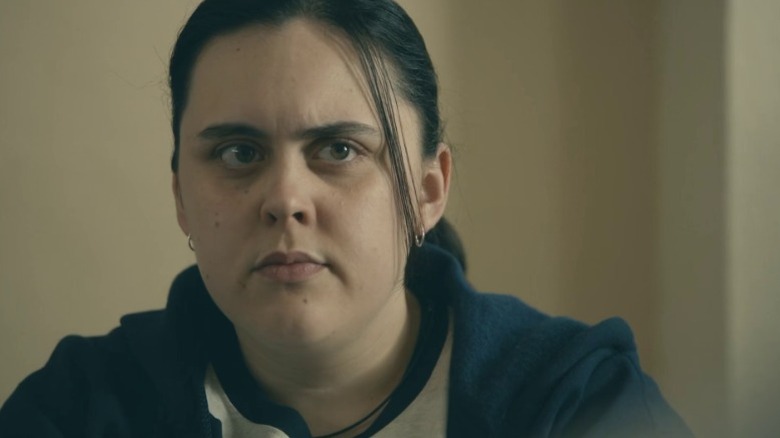
Adapted from the book "My Fat, Mad Teenage Diary" by Rae Earl, the British E4 series "My Mad Fat Diary" charts the '90s growing-up tale of a fictionalized Rae Earl (Sharon Rooney). At the start of the series, she is 16 years old and has just concluded a four-month stint at a psychiatric hospital; the series documents her struggles to fit back in with her childhood best friend Chloe (Jodie Comer) and her group of friends, while initially hiding her mental health struggles from them.
Few television series have ever burrowed as deep as "My Mad Fat Diary" into the specifics of mental illness, and the particular challenges and problems that it poses when entangled with the already-plenty-arduous process of navigating the transition to adulthood. The writing and direction are fully locked in on every vibration of anguish and insecurity in the characters' trajectories, but equally attuned to the grace, wit, and personality that set their lives apart from a one-dimensional angst parade. Rooney, meanwhile, is nothing short of sensational in the main role, aided by the kind of young cast that makes any thought of acting inexperience evaporate by dint of sheer nervy authenticity.
8. Derry Girls
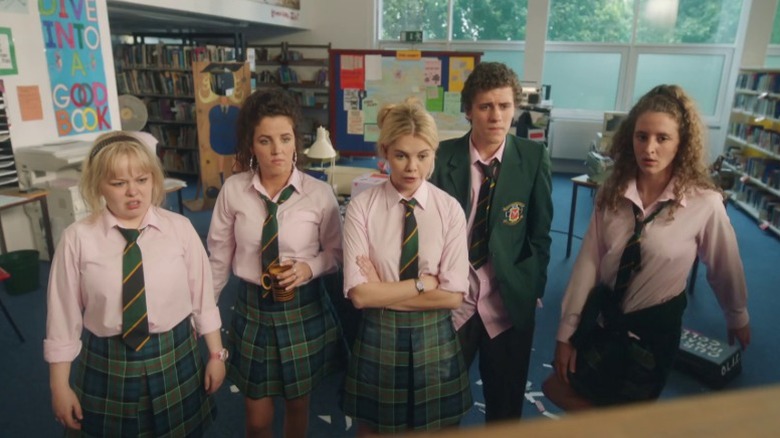
It may be the case that no other out-and-out sitcom is as adroit at utilizing the format in favor of compelling, dramaturgically ambitious coming-of-age storytelling as "Derry Girls." Created by Lisa McGee, the Channel 4 show finesses dark humor to the point of transcendence in its depiction of five teenagers growing up at an all-girls Catholic school in Derry, Northern Ireland during the last few years of the Troubles.
Although the storytelling of "Derry Girls" touches rather intrepidly on all the realpolitik topics that would be revolving around a Derry teenager's view of the world in the '90s, and takes dutiful stock of how the fraught context of the Northern Ireland peace process emotionally and existentially impacts its protagonists, it is somehow, miraculously, the opposite of a heavy show. The caustic wit, nimbleness of touch, and profound understanding of her characters demonstrated by McGee as the sole writer across 19 episodes makes "Derry Girls" an endlessly entertaining and densely hilarious feel-good show first and foremost; it's only after some time spent in the girls' company that you notice what a masterful coming-of-age story it is on top of that.
7. Reservation Dogs
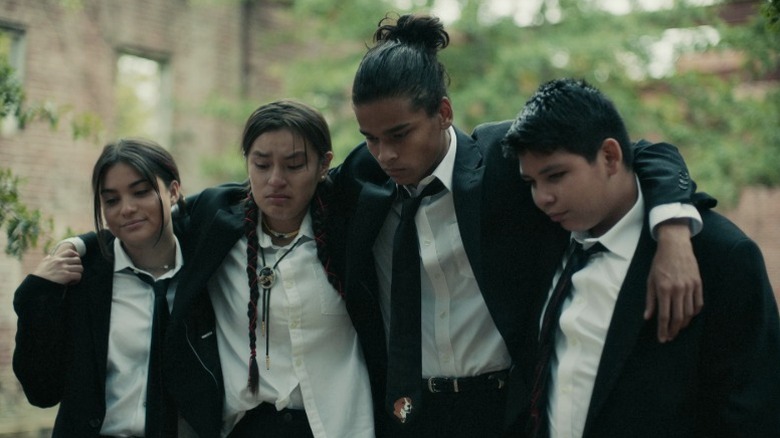
The Sterlin Harjo and Taika Waititi-created FX on Hulu series "Reservation Dogs" earned richly-deserved plaudits for marshaling an all-Indigenous team of writers and directors to craft a lived-in, utterly convention-defying portrayal of contemporary Native American lives. Less frequent has been the show's due recognition as one of the very best coming-of-age shows of all time — a title it managed to cinch beyond any doubt in just three short seasons.
Devery Jacobs, D'Pharaoh Woon-A-Tai, Lane Factor, and Paulina Alexis star as Elora, Bear, Cheese, and Willie Jack, four best friends living in a small town in Oklahoma's Muscogee Nation. Haunted by the recent death of their friend Daniel (Dalton Cramer), they get up to various legal and illegal antics around the reservation in pursuit of money to fulfill Daniel's dream of journeying to California. With freewheeling tonal eccentricity, slow-burning sociopolitical sobriety, and some of the most vivid character writing in all modern television, the series perfectly captures the hard-to-voice rural teen canon event of yearning for new horizons while finding new significance in lifelong entanglements with culture and community. And all four main actors are superstars.
6. Skins
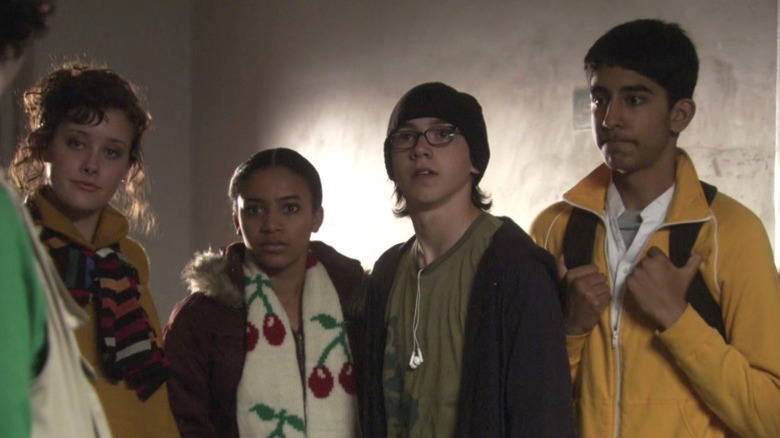
For all intents and purposes, when it comes to teen-centric television, we live in a post-"Skins" world. The Bryan Elsley and Jamie Brittain-created British series operated a de-facto revolution in its genre by fully eschewing convention and prioritizing authentic perspectives: Brittain was 21 years old at the time of the show's premiere in January 2007, and 21 was also the average age of the writing staff, on top of which "Skins" brought in actual teenagers as consultants for many of its plotlines.
This stringently reality-based grounding proved crucial to a series that would become legendary for its unfiltered grit; even the most sensational dalliances with drugs and sex on "Skins" maintained a level of psychological granularity and emotional resonance far beyond anything most teen shows at the time would even attempt. A rotating ensemble of successive "generations" allowed the series to keep zeroed in on the particular existential charge of being 16 to 18 — that ecstatic, terrifying period when adulthood beckons like a door and coils like a trap — and to become arguably the 21st century's most impressive TV launchpad for young actors.
5. My So-Called Life
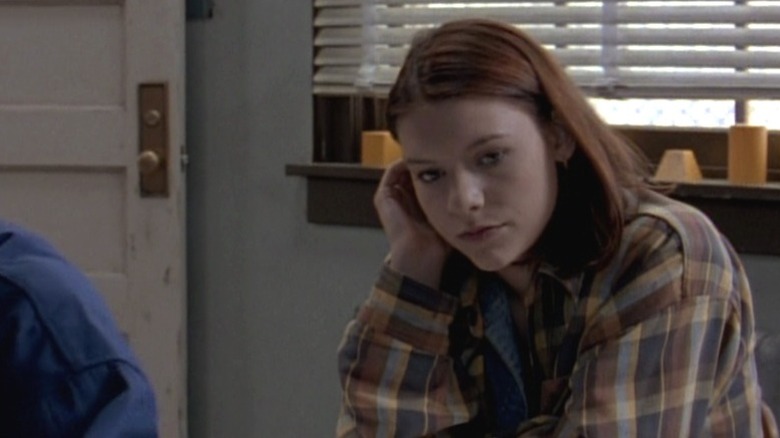
Before Zendaya's history-making wins for the first two seasons of "Euphoria," you'd have to go all the way back to the '90s to find the last time a full-fledged high school drama with a teen protagonist made waves at the Primetime Emmys. Such was the achievement of "My So-Called Life," a single-season ABC series that snagged nods for Writing, Directing, and Lead Actress for Claire Danes: Here was a teen show so self-evidently thoughtful, artful, and finely-crafted that it overrode all negative bias and broke through into the big leagues.
That feat is all the more impressive when you factor in that "My So-Called Life" was far from a hit. Still one of the best TV shows that only lasted one season, the Winnie Holzman-created series structured itself as much like a novel as like a standard network drama, with characters both young and grown-up whose contours and edges were so real, so full of squiggly accuracy, so unlike typical television fare, that their stories felt as compelling and unconstrained as life — a death knell for mainstream ratings, but a boon for the passionate cult following that formed around Angela Chase and her melancholy musings.
4. The Get Down
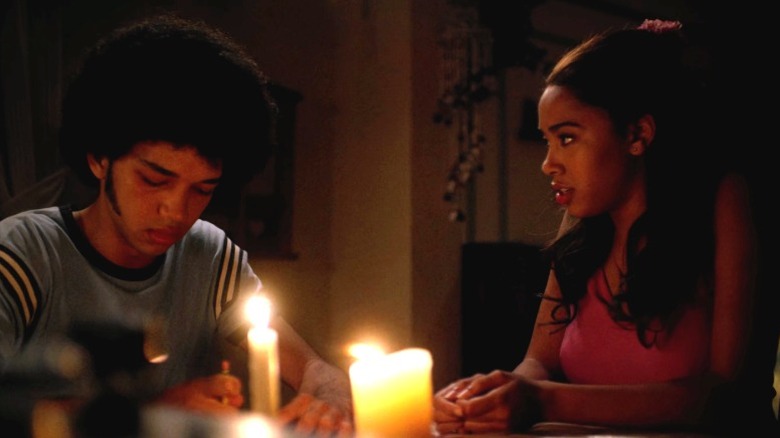
There has been nothing else on TV quite like the cauldron of music, romance, violence, melodrama, street art, and prismatic filmmaking of "The Get Down." Created by Baz Luhrmann and Stephen Adly Guirgis and released in a single two-part season on Netflix between 2016 and 2017, this is a series that somehow manages to sustain the fever-pitch Expressionist maximalism of Luhrmann (who directed the first episode) for the length of 11 hour-long episodes — and hits upon so many moments of sheer audiovisual euphoria in the process that it gets to be almost overwhelming.
Justice Smith stars as Zeke Figuero, a New York City orphan with a passion for poetry and hip-hop who yearns for a breakthrough in the stygian music industry of the late '70s, while maintaining a tender romance with church belter and aspiring disco diva Mylene Cruz (the incredible Herizen F. Guardiola). Although the show's infectiously frenetic editing captures all the shades of complication in Zeke and Mylene's puppy love story, it's also phenomenally attuned to the macro: In its hunger for kaleidoscopic breadth, this is an epic chronicle of life and art in the Bronx at a transformative historical juncture, featuring a host of Black and Latino characters whose quests epitomize the power of young artists to send shockwaves through the world as they charge into it.
3. The Wonder Years
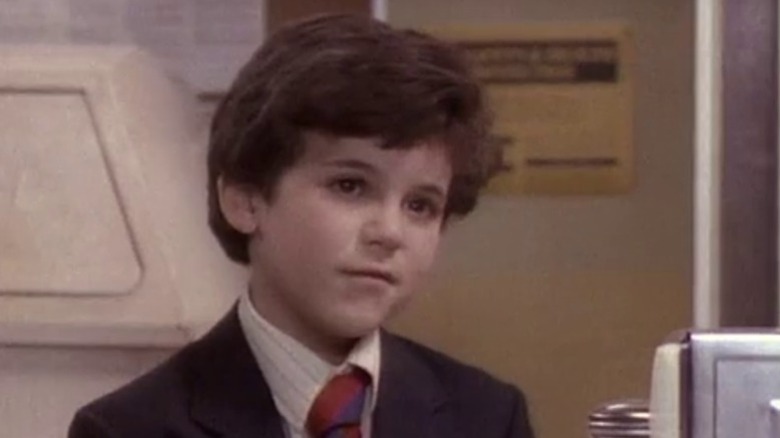
It wouldn't be much of an overstatement to say that "The Wonder Years" inaugurated television comedy as we know it. One of the first and arguably the most influential early U.S. sitcom to be shot in a single-camera format and completely dispense with a laugh track, this Neal Marlens and Carol Black-created ABC classic used the freedom of the film-like shoot to freely incorporate out-there comic ideas, paving the way for all manner of zany, formally resourceful, fourth-wall-breaking postmodern comedy shows of the 2000s onward.
All the more amazingly, "The Wonder Years" did that while simultaneously working as a first-rate character drama about coming of age in a hectic, rapidly-changing world. Kevin Arnold's (Fred Savage) journey from middle school in the late '60s to junior year in the '70s rings so consistently true, so faithful to the political and cultural monsoons of the era underneath the wacky cartoon humor, that the show constitutes a vivid historical record — if not strictly of the real thing, then, at least, of the way it's now conceived of in the American imagination, largely by this series' very doing.
2. Buffy the Vampire Slayer
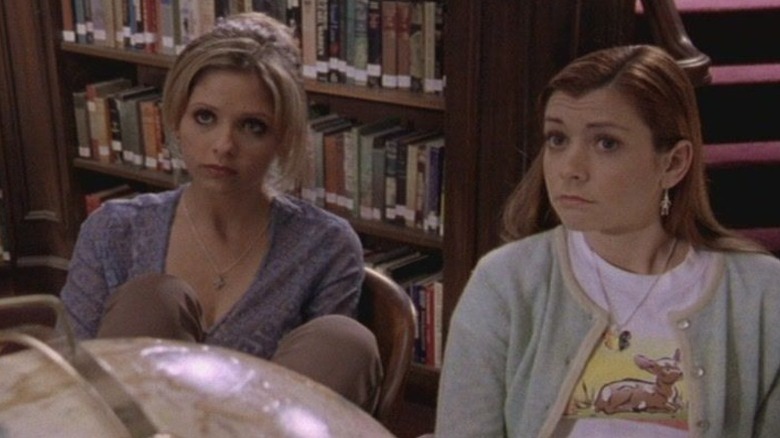
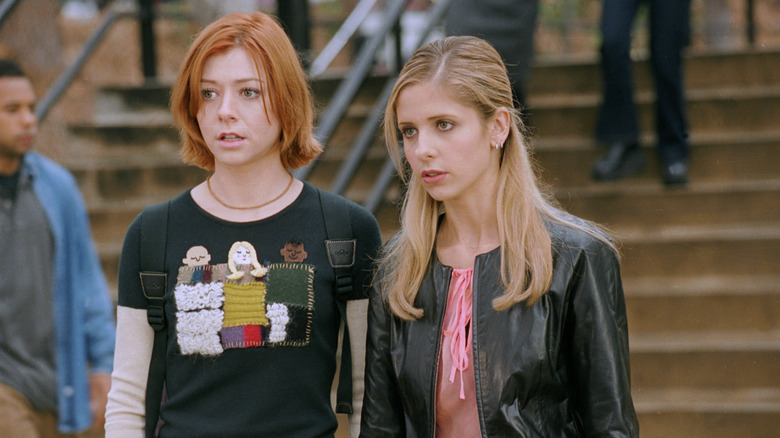
In addition to being the archetypal serialized action-fantasy series of our time and a foundation for all supernatural-themed television of the 21st century, "Buffy the Vampire Slayer" is a darn incredible show about growing up. Although the blockbuster adventure portion of Buffy Summers' (Sarah Michelle Gellar) struggle against the forces of evil was developed with once-in-a-generation care and panache, adding up to maybe the most entrancing and imaginative mythology of any original genre series of the past 30 years, equally indelible was the lore's function as an expression of Buffy's rude awakening into the realm of adult responsibility.
Between teens, tweens, and vampires frozen in youth, every main character on "Buffy" experiences their own version of a journey towards themselves in between gruesome run-ins with the undead, and learns to shoulder the weight of a world in which the stakes of every moment are suddenly revealed as precariously, terrifyingly real. Add in the savvy, pop-deconstructionist skewering of high school tropes, and you've got yourself a canonical masterpiece of teen fiction.
1. Freaks and Geeks
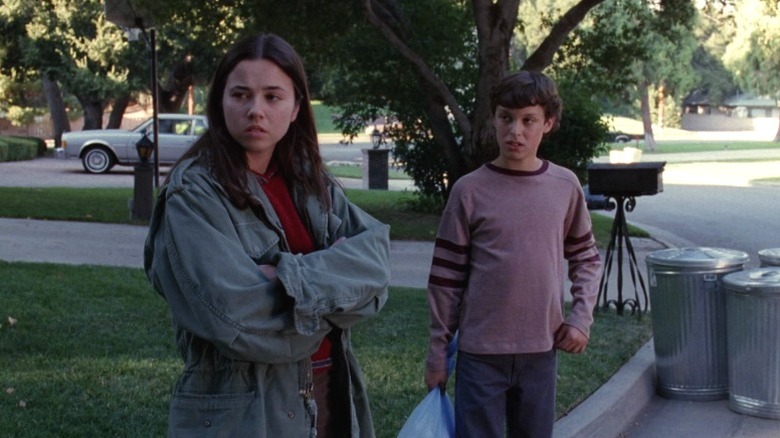
Ultimately, you can't beat the pungent, atavistic simplicity of "Freaks and Geeks," a show that somehow manages to speak simultaneously to emotional minutiae of teenage experience in the '70, the '80s, the '90s, the 2000s, and the present day. That cross-generational appeal has everything to do with the show's auspicious temporal placement, both in-universe and production-wise: It's a series about life at the turn of the '80s, made just as television and American comedy were themselves sliding from the '90s into the 21st century.
But what makes "Freaks and Geeks" an enduring masterwork is not the timing alone: It's the way the Paul Feig-led writers' room takes advantage of that timing throughout the series' one existing season, investing some of the most incisive and deeply-felt television writing ever into a wistful but never rose-colored observation of a year in the lives of eight profoundly-realized characters.
In just 18 episodes, "Freaks and Geeks" pulls off such complete teleportation into the personal universe of Lindsay (Linda Cardellini), Sam (John Francis Daley), and their friends that it feels by the end as though you've lived that transformative year alongside them. No wonder virtually every main cast member went on to become a superstar.