

'70s Television Shows That Could Never Be Made Today
Television in the 1970s embodied the decade's push-and-pull between the old and the new, reflecting changing social attitudes while holding on to classic themes and ideas. Many shows from this era are far from timeless, and while that's not necessarily a bad thing, it means that some of them don't fit within today's TV landscape. We're talking about shows that would have a hard time getting on air at present, even if they were hits back in the day.
Indeed, a few of these shows were — and are — beloved, but their politics don't mesh with Hollywood standards in the 2020s. This isn't a value judgement, but rather an observation about how much things have changed in the last five decades, for better or worse. On the other hand, several of these shows are just too bizarre for words, and their lack of viability as modern TV programs is down to their head-scratching premises. Join us, won't you, as we take a trip down memory lane and discuss the '70s television shows that could never be made today.
Love Thy Neighbour
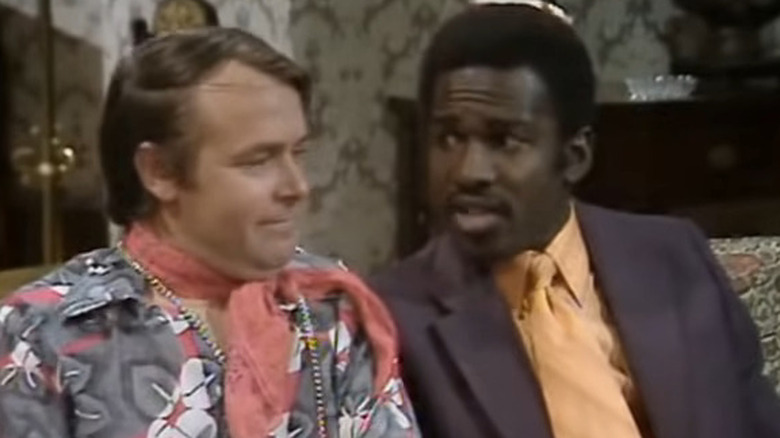
The British sitcom "Love Thy Neighbour" had its critics when it premiered in 1972, and it doesn't come off any better in the present day. The ITV series centers on a white couple and a black couple who are next-door neighbors. Eddie Booth (Jack Smethurst) is a white socialist who is incensed when Bill Reynolds (Rudolph Walker), a black Tory, moves in next door.
Eddie and Bill constantly argue and exchange racially-tinged insults. Eddie has plenty of racist nicknames for Bill and other people of color, and even insinuates that all black people are cannibals. Meanwhile, Bill often refers to Eddie as a "snowflake." Both Eddie and Bill's wives are more tolerant than their husbands, and the two women become good friends.
The creators of the show suggested that the racism was equal on both sides (i.e., there was as much anti-white rhetoric as anti-black rhetoric), and star Rudolph Walker once described it in The Guardian as "a black guy and a white guy being damned stupid." If the show were better written, such as the revered but controversial "All In The Family" — one of Norman Lear's best TV shows — the series could have said something clever about racism in Britain. Instead, it just repeated offensive talking points without much introspection and highlighted the dubious concept of reverse racism. An American version of the show premiered in 1973, but it aired only 12 episodes before being canceled. We can't imagine a show with such a cringe-inducing premise getting made today.
Three's Company
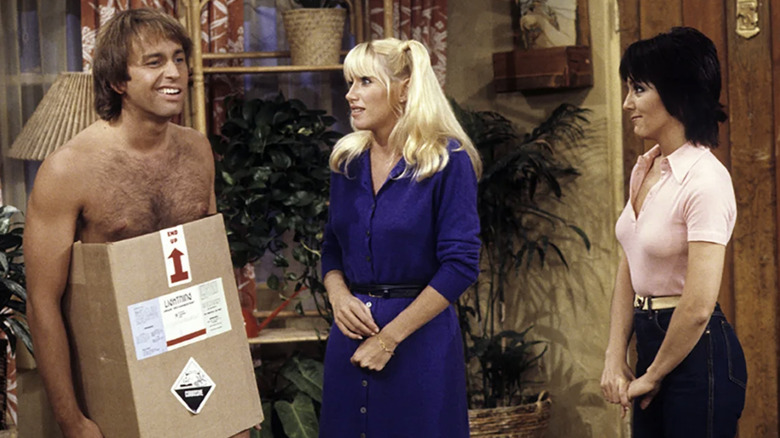
"Three's Company" was one of the highest-rated shows of the 1970s, its farcical premise delighting viewers at the time (and for years after, when the show was syndicated through the 2000s). Though aspects of the show are timeless — pratfalls will never go out of style — the concept wouldn't fly if "Three's Company" were pitched as a TV show in the 2020s. Adapted from the British sitcom "Man About the House," the ABC series follows an unusual roommate situation. After their friend Eleanor (Marianne Black) moves out of their rented Santa Monica apartment, Janet (Joyce DeWitt) and Chrissy (Suzanne Somers) invite a charming culinary student, Jack (John Ritter), to come live with them.
Janet and Chrissy aren't worried about a man living with them, but their conservative, curmudgeonly landlord, Mr. Roper (Norman Fell), takes umbrage with the arrangement, so they tell him that Jack is gay. Jack keeps up the lie for Mr. Roper's benefit, leading to frequent hijinks and comical misunderstandings.
The concept of "Three's Company" doesn't make sense in a modern context. It's no longer risqué for men and women to platonically live together, so the farcical secret would be unnecessary. Moreover, though the only explicitly homophobic character in "Three's Company" is the landlord, who we're not meant to side with, the show's gay jokes wouldn't go over as well today. Pretending to be gay is no longer as amusing, especially as contemporary audiences demand more realistic LGBTQ characters.
Fawlty Towers
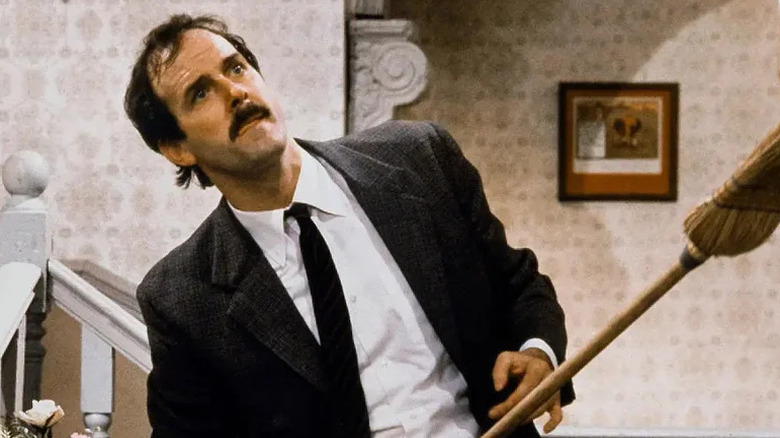
"Fawlty Towers," created by Monty Python member John Cleese and his then-wife Connie Booth, is often considered one of the best sitcoms ever made. The BBC show, which first aired in 1975, follows Basil Fawlty (Cleese), the exceedingly grumpy manager of the Fawlty Towers hotel. Though Basil works in the hospitality business, he seems to resent every guest who stays at his hotel, always finding a reason to be upset with or downright hostile toward them. A conservative, hateful snob, Basil abhors anyone belonging to the lower classes, foreigners, and the sexually liberal.
Basil's snobbishness and bigotry are played for laughs, and the more outlandish his behavior, the harder audiences crack up. One of the most famous episodes of "Fawlty Towers" is called "The Germans," and features the most famous "Fawlty Towers" joke: "Don't mention the war." However, the episode was briefly removed from the UKTV streaming service because it included several racial slurs. Cleese later eliminated these slurs from his stage adaptation of the series.
Though "Fawlty Towers" will probably always be a television classic, these debates about language and censorship indicate that the series wouldn't be made today. Basil often verbally and physically attacks his Spanish waiter, Manuel (Andrew Sachs), because he doesn't speak English well enough, a running gag that would likely make some modern audiences balk. Though his foolishness is self-evident, the prejudiced protagonist of "Fawlty Towers" is the product of a different era.
The Dukes of Hazzard
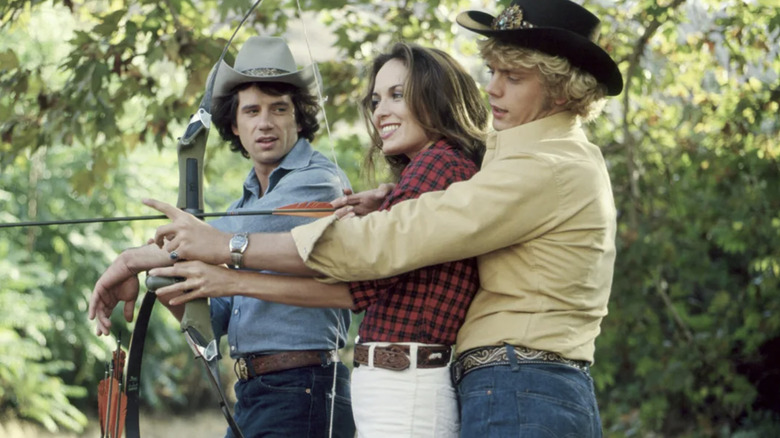
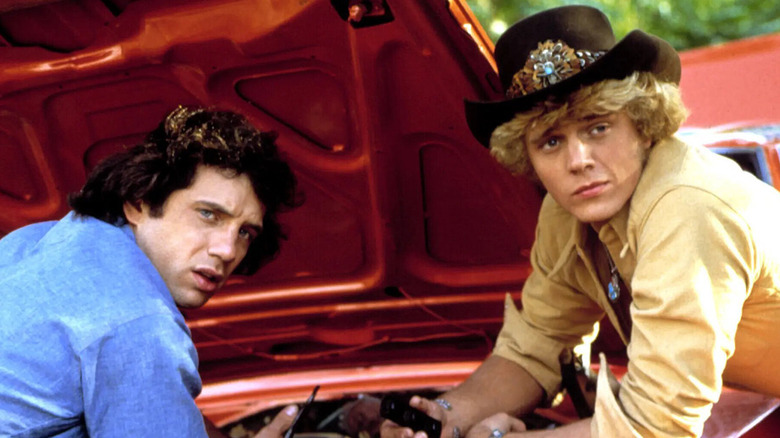
The reason it's unlikely that "The Dukes of Hazzard" would ever get made today is less about the actual content of the series and more about its (in)famous imagery. The hit CBS series, which premiered in 1979, follows two Georgia cousins, Bo Duke (John Schneider) and Luke Duke (Tom Wopat). On probation for transporting moonshine, the so-called "Duke Boys" ride around town trying to evade the local sheriff, generally creating mayhem wherever they go. They live on a farm with their beautiful cousin Daisy (Catherine Bach) and old-timer Uncle Jesse (Denver Pyle).
Contemporary discussions of "The Dukes of Hazzard" often revolve around its depiction of the Confederate flag and other allusions to the Civil War. The Duke Boys drive an orange Dodge Charger known as General Lee (as in Robert E. Lee) with a Confederate flag painted on top. This imagery has sparked controversy in recent years, with TV Land pulling "The Dukes of Hazzard" from syndication in 2015, days after the Charleston church shooting. In 2020, Amazon considered removing the series from IMDb TV (it's no longer available to stream on the platform).
Daisy's skimpy outfits (including her famous "Daisy Duke" shorts) have also rubbed some viewers the wrong way. In 2005, a "Dukes of Hazzard" movie was released starring Johnny Knoxville and a scantily clad Jessica Simpson. It was eviscerated by critics, and it's unlikely that a studio would choose to revive the property any time soon.
B.J. and the Bear
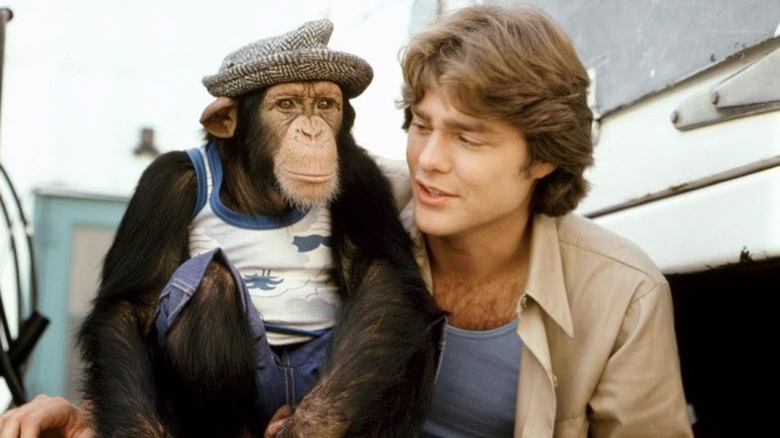
Did you know that at least three 1970s TV shows centered on chimpanzees? "Lancelot Link, Secret Chimp" depicts a world with no humans, only chimpanzees, while "Me and the Chimp" follows a dentist who lived with a chimp named Buttons, and "B.J. and the Bear" is about — you guessed it — a guy named B.J. and a chimp named Bear.
"B. J. and the Bear" is the longest-lasting of these shows, but we can't envision it airing for 46 episodes, much less one, in the 2020s. Greg Evigan plays B.J. McKay, a truck driver who travels the country with his chimpanzee, Bear. Usually, B.J. gets involved in some sort of trouble in whatever town he's passing through, and he's forced to be a hero and save the day. In most cases, being a hero means rescuing a beautiful woman in distress.
There's no way "B.J. and the Bear" would be greenlit if someone proposed it today. For one thing, we're no longer as obsessed with chimps as we were in the 1970s. And if a show about a chimp were to air today, it would probably be a CGI chimp, which would only make it more bizarre. Moreover, the series consistently featured helpless women in need of saving, a plotline that would be hard to swallow for modern viewers. "B.J. and the Bear" was also a product of the trucker craze of the 1970s, a cultural phenomenon that is no longer in fashion.
Makin' It
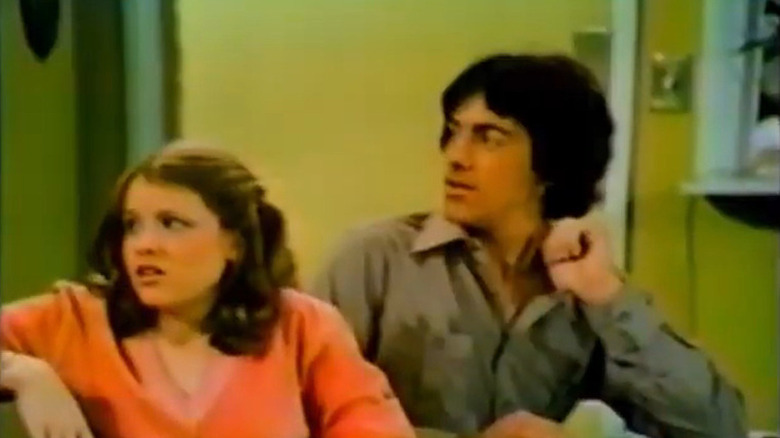
"Makin' It" is the kind of show that could have only been made in the 1970s. Essentially a TV version of "Saturday Night Fever" (John Travolta's sister, Ellen Travolta, appears in the show), "Makin' It" follows Billy Manucci (David Naughton), a young man who resides in Passaic, New Jersey. Living at home with his mother (Travolta) while attending college, Billy works at a local ice cream parlor by day and frequents a disco club called Inferno at night. Most of the series follows Billy as he tries his very best to have a good time and smooth over his family drama.
"Makin' It" didn't last long, and it's not hard to see why. The series premiered in February 1979, at the tail end of the disco era. In fact, the infamous Disco Demolition Night took place that summer, officially marking the end of disco's cultural prominence. "Makin' It" ranked 104 out of 114 shows that season and was canceled after only nine episodes. The show's theme song, however, made it to No. 5 on the Billboard charts.
If "Makin' It" was already going out of style in 1979, it's highly unlikely that it would be cool today. Though nostalgia sells, and "That '70s Show" found success as a groovy sitcom, "Makin' It" has no edge, and it was outdated almost immediately after it aired. There's no bringing this one back to life.
Turnabout
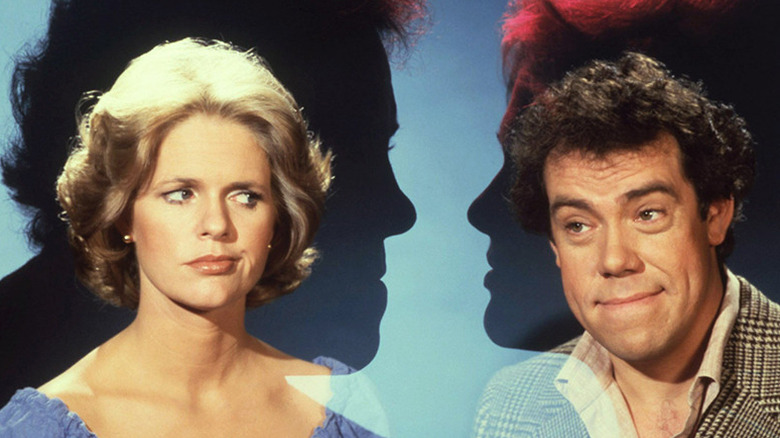
NBC's "Turnabout" is one of those bizarre 1970s shows that you need to see to believe — but you probably never will, because it's been nearly wiped from existence (unless you visit the UCLA library). Based on a 1931 novel by Thorne Smith (which was previously adapted as a film in 1940), the show follows a married couple who accidentally swap bodies.
Sam Alston (John Schuck) is a sports writer married to Penny (Sharon Gless), who works in cosmetics. Penny brings home a statue with magical powers, and the next day, they wake up in each other's bodies. Since they can't figure out how to get back into their own bodies, they attempt to adjust to life in these unusual circumstances. Many surprising antics ensue, including an episode where Sam, in Penny's body, goes to the gynecologist to see if she/he is pregnant.
"Turnabout" only managed to produce seven episodes before it was canceled alongside "Makin' It" and a slew of other TV shows (in January 1979, 36 new shows premiered, and many didn't make it to the fall). Though TV's rapidly changing landscape, and the show's competition, which included "Dallas" and "The Dukes of Hazzard," partially account for the cancellation of "Turnabout," we doubt it would fare any better today. Conversations about sex and gender have become more complicated since 1979, and the show's outrageous premise would have many contemporary viewers rolling their eyes.
Carter Country
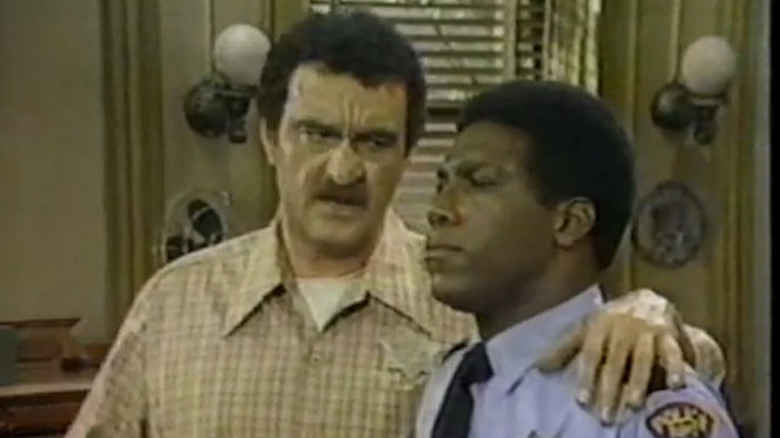
Like many sitcoms, "Carter Country," which aired from 1977 to 1979, traffics in stereotypes. Victor French plays Roy Mobey, the police chief in the small Georgia town of Clinton Corners. Roy is assisted by Sergeant Curtis Baker (Kene Holliday), a well-educated black man from New York City. Apart from the very capable Curtis, Roy is surrounded by Deep South buffoons. Teddy Burnside (Richard Paul) is the town's lackadaisical mayor, Officer Jasper DeWitt (Harvey Vernon) is a racist and member of the KKK, and the station's only policewoman, Cloris Phebus (Barbara Cason), is a boy-crazy bimbo.
"Carter Country" had middling ratings and was criticized by reviewers at the time for its lazy use of stereotypes. One critic even suggested that President Jimmy Carter should sue ABC for its offensive portrayal of Southerners. Indeed, the show paints its characters in broad strokes, though the two leads have more humanity than their bumbling colleagues.
It's hard to imagine a show in 2026 featuring an active KKK member as part of the main cast without depicting that character as the villain. Racism and bigotry were common topics of television shows in the 1970s, and while these are still issues we discuss, the stereotypical characters in "Carter Country" are antiquated by today's standards.
Police Woman
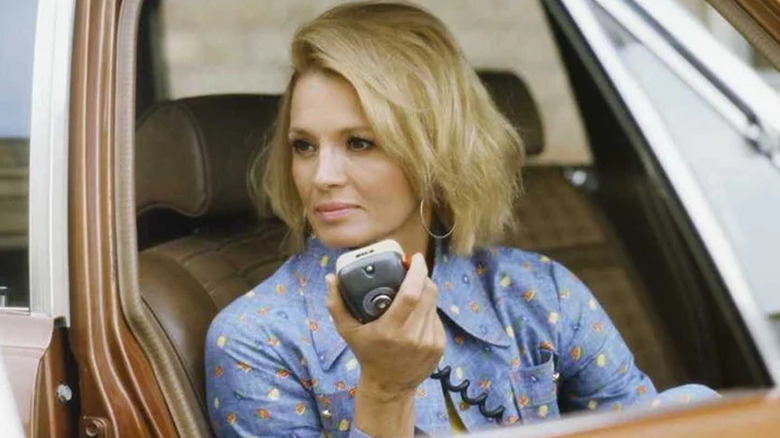
A hit 1970s show that no one remembers today, "Police Woman" was fairly groundbreaking when it first premiered in 1974. One of the first hour-long dramas to star a woman, and in the procedural genre no less, the NBC show follows Pepper Anderson (Angie Dickinson), a police officer working in Los Angeles. Pepper's specialty is undercover work, and most episodes see her donning a disguise to get close to the criminal element.
Though "Police Woman" was popular and influential at the time (Gerald Ford once rescheduled a White House press conference because he didn't want to miss an episode), it's very much a relic of a bygone era, and it would never be made today. For one thing, we live in a post-Olivia Benson (Mariska Hargitay) world where it's no longer unusual to see a woman playing a cop on TV, so the show's titillating premise wouldn't make much of an impact.
The show also objectifies women in a way modern viewers might take issue with. Pepper sometimes gets phone calls while she is in the bath or wearing little clothing. Dickinson revealed in 2023 that she sometimes regrets starring in the show, in part because of the revealing outfits she wore as an undercover officer, in order to pose as a stripper or sex worker. All in all, it's probably a good thing that we've surpassed the need for a show like "Police Woman," though it was fun while it lasted.