

All 8 Seasons Of Outlander, Ranked
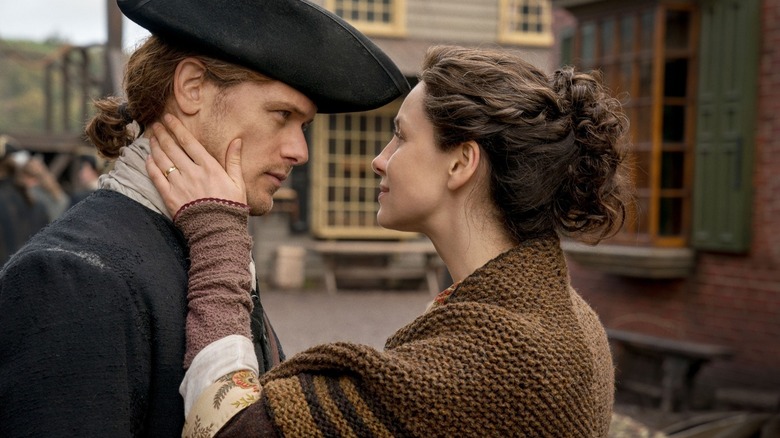
"Outlander" came to an end in May, closing out eight seasons of the time-bending romance between Claire Randall (Caitríona Balfe) and Jamie Fraser (Sam Heughan). And now that Starz's historical drama is complete, we've taken the liberty of ranking every season of the show.
The series, based on the novels by Diana Gabaldon, put its characters through the wringer throughout its run — and fans along with it. "Outlander" was never a saccharine love story, but one that juxtaposed romance with moments of historical turmoil. Along the way, the show deviated from its literary source material significantly, leaving even those who'd read all the book unsure of where exactly it would go next.
Below is our ranking of the show's seasons, chronicling its star-crossed, time-displaced love story in full. But we're sure you have thoughts and feelings on the matter, as well — so make sure to hit the comments when you're done to share how you'd order all the seasons of "Outlander."
8. Season 6
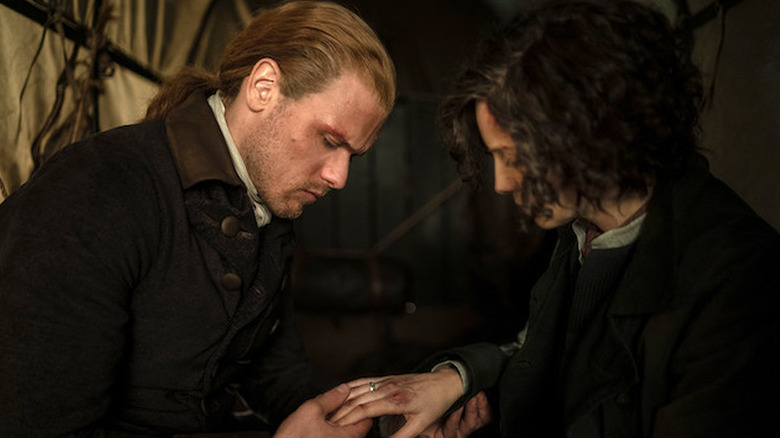
Trauma has always been a fixture throughout "Outlander," but the series' sixth season feels particularly weighed down by it. Coming off a harrowing Season 5 finale, Claire is in an especially bad way for most of Season 6, and she resorts to dosing herself with ether to deal with her demons. The development not only feels out of character for Dr. Fraser but puts a distance between her and Jamie that comes off as forced, which detracts from the show's core. This distance is resolved by the Season 6 finale, in which Claire and Jamie reaffirm their love as she becomes wanted for murder, but the road to get there feels unnecessarily drawn out.
A big part of why "Outlander" Season 6's flaws are so apparent is its truncated length, with a series-low eight episodes. This shorter run came partially as a result of filming during the COVID-19 pandemic. But even with a shortened run, it just doesn't feel like a whole lot happens. This likely is because the narrative needs Claire as its driving force, and her foray into self-destruction as colonial tensions rise throws off the season's momentum. A grim meditation on recovery that really only coalesces by the end, Season 6 sticks its landing... but not much else.
7. Season 4
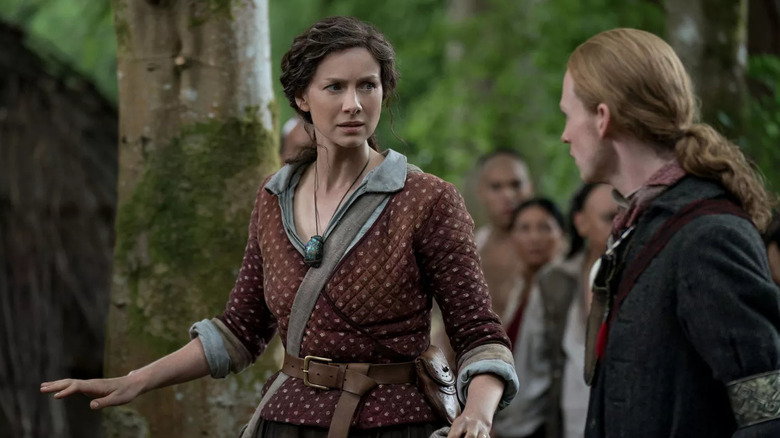
"Outlander" often upped its dramatic stakes by having unsavory figures engage in sadistic acts that, yes, were historically accurate in their cruelty, but also sometimes felt exploitative. Season 4 is replete with this trend as Claire and Jamie relocate to North Carolina, where they are shocked by the horrors of slavery. There, they also encounter the villainous Stephen Bonnet (Ed Speleers), who assaults Claire and Jamie's daughter Brianna (Sophie Skelton) and who becomes a recurring, off-putting presence in the story.
"Outlander" has several fully formed antagonists across its run; Black Jack Randall (Tobias Menzies) arguably is its most memorable. Bonnet lacks Black Jack's nuance, coming off as a shallow, barely developed villain who is manipulatively cruel just for the sake of it. His targets for much of the season are Brianna and Roger, who would eventually grow into a couple to root for, but who in Season 4 haven't reached that level just yet. So Bonnet's obsession with the MacKenzies becomes just time away from the show's more emotionally resonant couple, Jamie and Claire.
6. Season 8
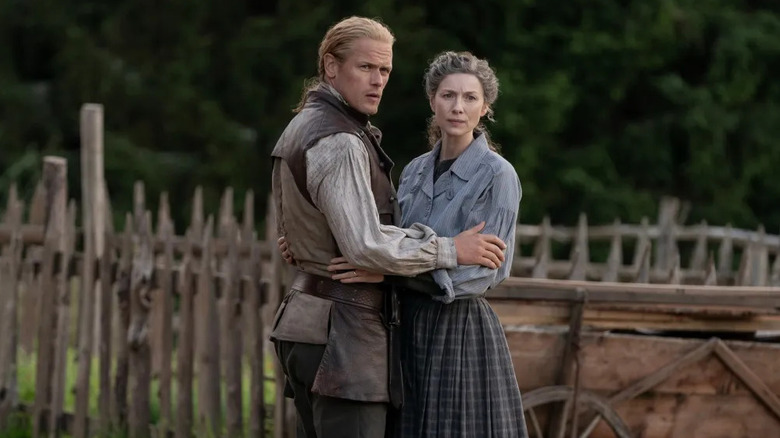
All roads in the drama's swan song lead to King's Mountain, the climactic Revolutionary War battle where Jamie Fraser is destined to die. Of course, there's an entire season's worth of story before we get there, with the American Revolution still in full swing. The preceding season altered major plot elements from the novel, including the survival of Claire and Jamie's daughter Faith, and the eighth and final season continues to deviate from the text, something author Diana Gabaldon publicly criticized. Fans also lodged their complaints with some of the changes, such as "Outlander" Season 8's killing off of major characters like Fergus, who does not die in Gabaldon's novels but does in the series, one of the season's biggest emotional wallops.
At the same time, the American Revolution storyline is starting to lag. We've been in the thick of the revolution for a while and, in drawing out the mystery of Jamie's prophesied death, the moment loses its tension in the prolonged telling.
Your enjoyment surrounding the final season of "Outlander" largely hinges on how much you can accept the alterations to Gabaldon's existing story. (Though the TV adaptation is over, the author's next "Outlander" novel — "A Blessing for a Warrior Going Out" — is expected to be released sometime in 2026.)
A bittersweet close to the sweeping story of a romance spanning time and enduring constant conflict, Season 8 does the job, but its pacing and story payoff could've been better handled.
5. Season 7
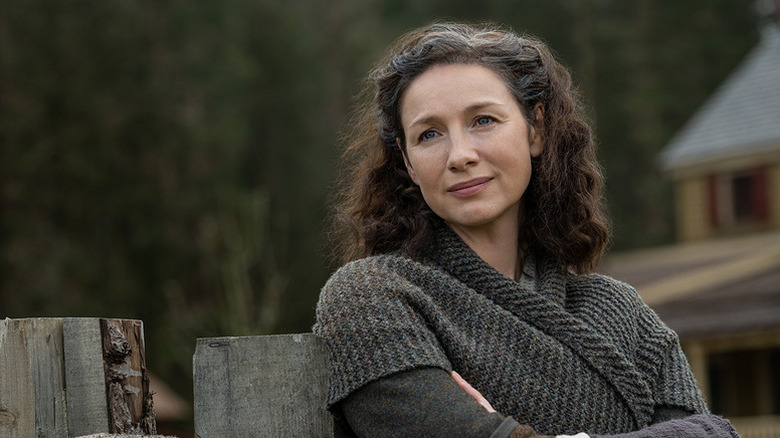
Coming off of the turgid Season 6, the seventh season largely feels like a return to form, but also one with controversial changes for fans of the source material. Like Season 3, Season 7 splits its action among multiple time periods, with Bree and Roger's returning to the 20th century juxtaposed with Claire and Jamie's continuing adventures in the past. The latter narrative includes the full outbreak of the American Revolution, with Jamie joining the Continental Army to fight the British. As the colonies are swept up in a war, Claire contends with the shocking truth that her daughter Faith may not have died in Season 2 as she — and we — thought.
"Outlander" had taken creative liberties with Diana Gabaldon's original story before, but nothing on same scale as Season 7's finale cliffhanger. While this development may be understandably off-putting for purists, the 15 episodes leading up to it are still among the series' most ambitious storytelling. Putting the narrative's two couples in vastly different eras freshens things up, while Jamie and Claire's participation into the Revolutionary War gives the story much-needed focus and stakes. An overall strong season that could've benefitted from a slightly shorter episode count, Season 7 largely stands in fine form.
4. Season 5
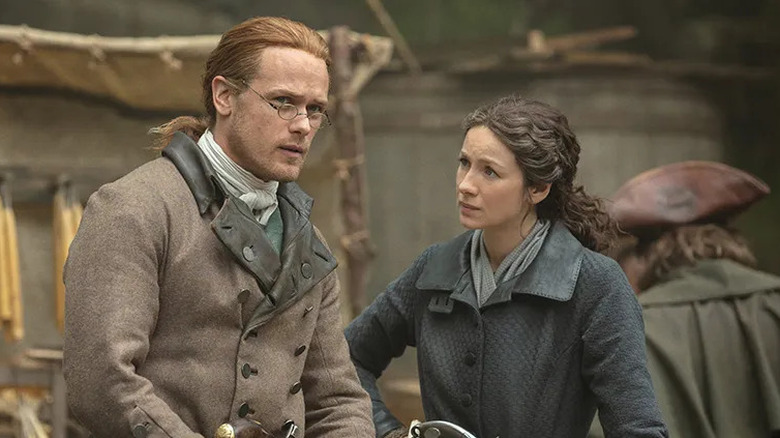
After clumsily bringing Bree and Roger into the past in Season 4, the fifth season does a much better job of balancing the younger couple's story with Claire and Jamie's. With that in mind, there is a stronger focus on family in Season 5, kicking off with Bree and Roger's wedding. This comes as the community of Fraser's Ridge begins to grow and flourish, albeit not without conflict in the form of the Regulators — with Jamie's loyalties and sense of duty torn.
"Outlander" Season 5 feels like a tonal course-correction from the preceding season, offering a cozier look at the Frasers and MacKenzies' domestic lives in Colonial America. Violence and raw interpersonal drama are still present, of course, including the return of Stephen Bonnet; the latter is mercifully short. However, the season ends with an absolutely vicious finale, in which Claire undergoes a harrowing assault, a tonal whiplash compared to many of the preceding episodes.
3. Season 3
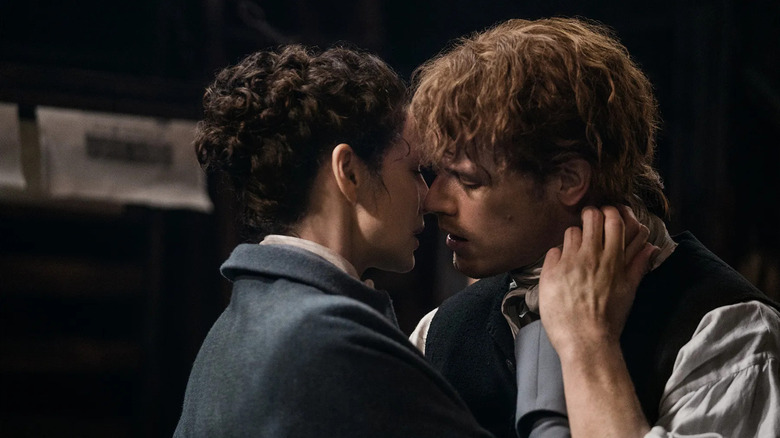
"Outlander" Season 3 is one of the series' stranger seasons, given where it left its core couple at the end of Season 2. For about the first half of Season 3, Claire and Jamie are separated. Claire is back in the 20th century with her first husband, Frank. Her story is juxtaposed with Jamie's, who is still in 18th-century Scotland. He survives the Battle of Culloden, spends time in prison, inadvertently fathers a child, and eventually opens a printshop. Everything builds to Claire's inevitably traveling back in time to find Jamie. They memorably reunite in his printshop where, overwhelmed with emotion, Jamie faints (and so do we).
After spending so much time building up Claire and Jamie as a couple, Season 3 gives them, and the audience, time apart to let everyone reevaluate things. Though Frank's accidental death feels like a bit of cop-out to free up Claire to return to the past, the show takes its time in reuniting its fan-favorite duo. The build-up to the reunion makes the fateful moment feel all the more earned, fueled by Claire's 20th century arc playing out like something of a mystery as she tries to ascertain Jamie's location in history with Roger's help. Mixing historical intrigue with increasingly messy family drama, Season 3 takes a moment to breathe before plunging its reunited characters into a bold, new setting, taking the action to North America where much of the remaining seasons' historical storylines unfold.
2. Season 2
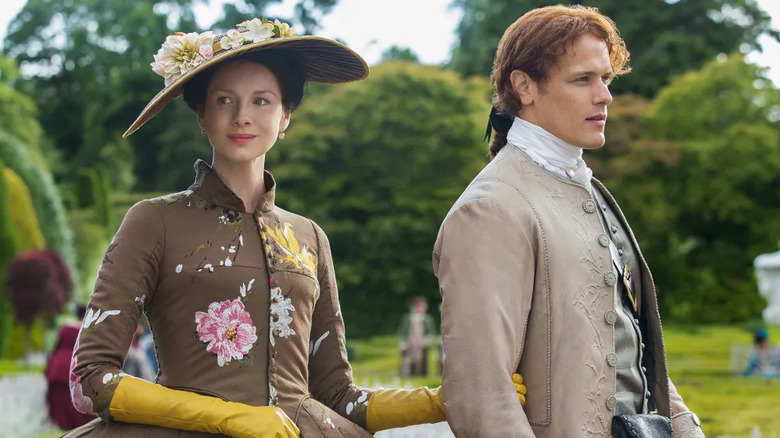
"Outlander" goes bigger and much more emotionally complex in its second season, with Jamie and Claire temporarily relocating to France. As the couple's romance deepens, so too do the dangers they encounter and the sacrifices that they have to make. One of the most complicated choices they face ensures that the hated Black Jack will continue his bloodline long enough for the eventual arrival of Frank generations later, preserving history. The season also brings Claire down to her lowest we've seen her, after the stillbirth of her daughter, Faith. The loss also highlights her hardened resolve to rise from personal tragedy and endure.
A big part of Season 2's appeal is how well-paced it is, even with the new settings and characters that accompany the show's expansion of its narrative scope. Claire's loss of Faith happens right at the season's halfway point, paralleled by devastatingly desperate moves by its main characters as they try to survive their ordeal in France, which sets up their return to Scotland. That informs a tragic inevitability of human carnage that "Outlander" employs so well, this time around the disastrous Battle of Culloden, while setting up an intriguing hook for its subsequent third season.
1. Season 1
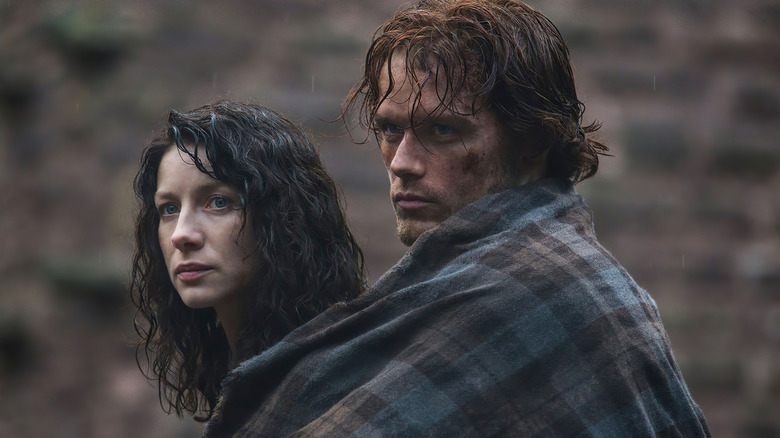
You could make a strong argument that Season 2 is the series' best, but we're giving "Outlander" Season 1 the top spot for its initial wow factor, tonal balance, and romantic approach.
Looking back, we really did have it all with the pitch-perfect inaugural season of "Outlander" and its translation of Diana Gabaldon's fantasy tale to the screen. Sparks fly as soon as Claire meets Jamie after she's inexplicably whisked through time from the 1940s to 1740s Scotland. The show also sets its stakes quite quickly, as the couple faces Black Jack Randall's merciless oppression of the Highlanders — and his fascination with young Fraser, in particular. But seeing the romance form between Claire and Jamie in the face of adversity forms the show's enduring foundation.
"Outlander" makes it clear from the outset that the show is a love story that feels earned with its organic slow-burn regularly challenged by violence. But the tonal balance feels more deftly handled here than subsequent seasons, though Jamie's harrowing encounter with Black Jack in Wentworth Prison tests that notion. The season is also the most faithful to its source material. A showcase for so much of what endeared "Outlander" to fans, Season 1 provides a fantastic first impression that subsequent seasons chased but never quite reached ever again.