

Why Star Trek: TNG Producer Brannon Braga Compared The Show To The Twilight Zone
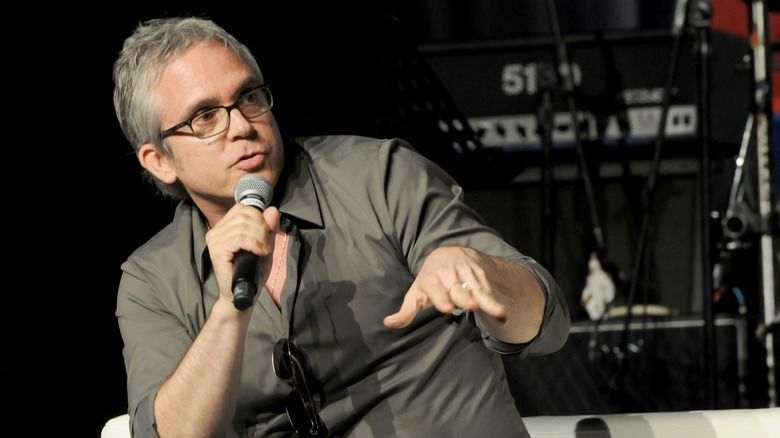
The USS Enterprise never voyaged into the Twilight Zone, but a longtime "Star Trek" writer and producer thinks the sci-fi staple has a lot in common with Rod Serling's classic anthology series.
Brannon Braga, a writer on "Star Trek: The Next Generation" who later co-created "Star Trek: Enterprise," said writing on "TNG" felt like "'The Twilight Zone' — an opportunity to tell the kinds of stories I was really into, which were mind-bending things."
"This was a show where you could do anything," he said in "The Fifty-Year Mission," an oral history of the first half-century of "Star Trek." "You could warp reality, you could tell stories backward, you could do whatever the hell you wanted."
Although the weekly adventures of Captain Picard (Patrick Stewart) and his crew were a little more consistent than the "The Twilight Zone," which was a true anthology series, audiences never knew exactly what sort of strange or innovative story they were in for with each episode. Braga cites "Cause and Effect," a Season 5 episode he penned about a time loop, as an example of something "experimental" like many of the best "Twilight Zone" episodes.
The Twilight Zone and Star Trek were similar back in The Original Series Era, too
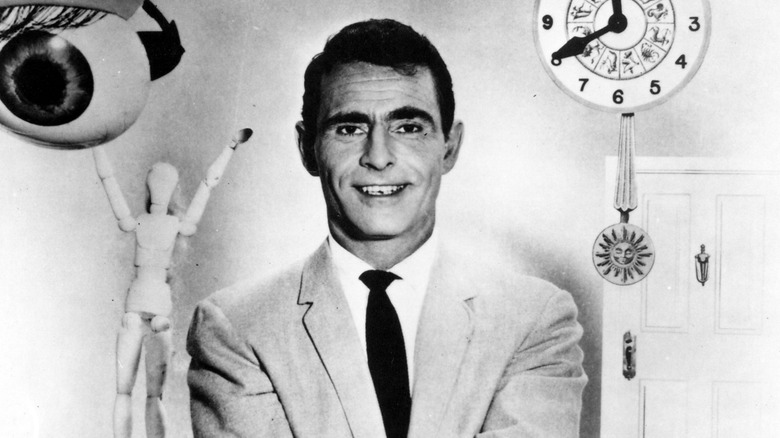
The spiritual similarities Brannon Braga noted between "The Twilight Zone" and "Star Trek" date back to "The Original Series." "The Twilight Zone" premiered on CBS in the fall of 1959 and ended its five-season run in the middle of 1964, a little more than two years before "Star Trek" would debut on NBC in 1966. Both shows were primetime genre fare spearheaded by socially conscious creators who would often use sci-fi settings or tropes as Trojan Horses to discuss issues of the day. Both shows used special effects to create interesting new settings and boasted unique premises in every episode. They even shared some cast, perhaps most famously Captain Kirk himself, as William Shatner starred in two "Twilight Zone" episodes including one of the most famous, "Nightmare at 20,000 Feet."
Rod Serling died in 1975, so he never got a chance to see "The Next Generation." He did, however, largely approve of "TOS."
In the 2011 documentary special "Pioneers of Television: Science Fiction," Serling appears in archival footage saying "Star Trek" "at times sparkled with true ingenuity and pure science fiction approaches." He also said in that same interview that "Trek" was "inconsistent," which, to be fair, could also describe "The Twilight Zone."