

10 Worst Episodes Of The Twilight Zone, According To IMDb
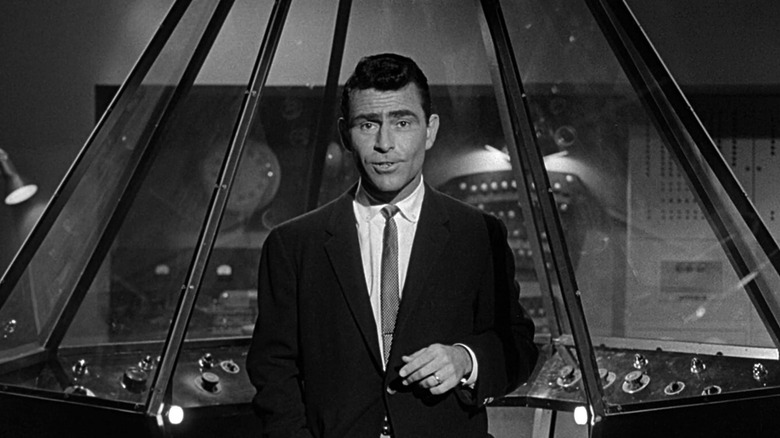
The best episodes of "The Twilight Zone" are transcendental experiences that have gone on to influence pop culture in numerous ways. As TVLine has noted before, this influence extends well beyond the show's individual standout episodes. In fact, Rod Serling's "The Twilight Zone" as a whole is arguably the greatest sci-fi anthology show ever made, and it's without doubt the most influential. You can find hints of the show's themes in so many modern sci-fi adjacent shows from "Black Mirror" to "Severance" that it's impossible to count them all. In other words, this is one of the sci-fi TV shows that define the genre.
Even so, not every single thing about "The Twilight Zone" was top-notch. Like any long-running anthology, its hit-or-miss nature becomes more apparent when viewed episode by episode. In fact, the series includes several weaker episodes that serve as curios, showing what it looked like at its lowest points. Let's take a look at the 10 worst episodes of this seminal series, according to IMDb.
10. The Last Night of a Jockey (Season 5, Episode 5)
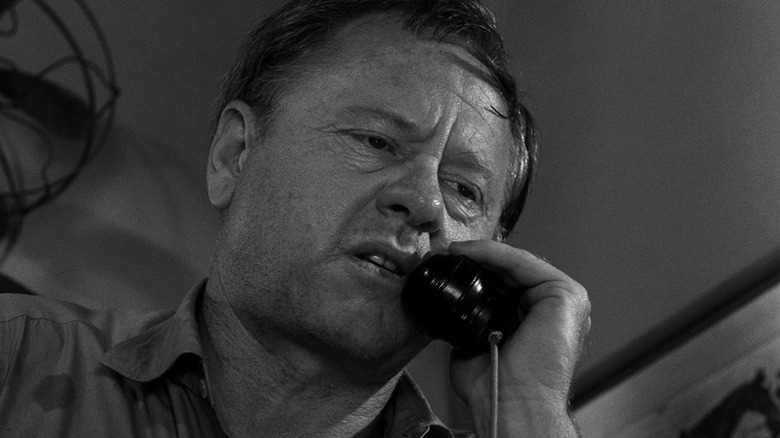
There are many excellent "The Twilight Zone" episodes that revel in delivering great twist endings with moral lessons. And then there's "The Last Night of a Jockey," which asks us the question: What if there was a short guy who wanted to be really tall?
Such is the central premise behind the episode, which features Mickey Rooney as Grady, a disgraced jockey who's been banned from racing due to doping horses, but seems mostly concerned by his five-foot height. When a mysterious inner voice offers Grady a chance to make a wish, he naturally asks to be tall. Two guesses as to whether the wish turns out to be a bit of a monkey's paw.
The episode's shortcomings don't fall on Rooney, whose committed performance as a hard-drinking loser at his wit's end is a far cry from his famously uncomfortable turn as Mr. Yunioshi in "Breakfast at Tiffany's." However, the decision for it to be a Rooney one-man show would require a plot that's actually interesting. Instead, the episode's height play is somewhat uninteresting, and the moral lesson about Grady's suffering being caused by his failure to make a wish that would redeem himself or help the world in some way is the exact same one that the show delivers in much better ways over the course of its run. Still, seeing Rooney stumble around an apartment that's suddenly far too small for him is fun.
9. From Agnes - With Love (Season 5, Episode 20)
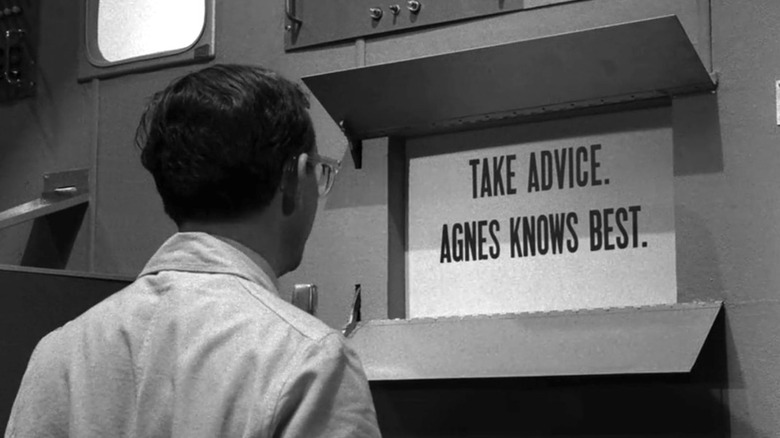
"From Agnes — With Love" sees Rod Serling dabble in comedy, with mixed results. Directed by future blockbuster filmmaker Richard Donner, the episode follows a hapless computer genius named James Elwood (Wally Cox), who's put in charge of a glitchy supercomputer called Agnes. When Agnes learns that Elwood is interested in a colleague called Millie (Sue Randall), it starts distributing hilariously misinformed relationship advice, which Elwood — who's considerably worse with women than he is with computers — eventually obeys without a second thought.
As a series of dating-themed mishaps utterly sabotages Elwood's chances with Millie, Agnes eventually reveals that this was the endgame all along. The final plot "twist," of course, is given away by the episode's title itself.
There's a reason Serling is remembered as a writer of sci-fi and mystery rather than comedy. While there are moments in "From Agnes — With Love" that are perfectly entertaining, it's a decidedly mediocre episode of television — and "mediocre" isn't really a word often associated with "The Twilight Zone."
8. Showdown with Rance McGrew (Season 3, Episode 20)
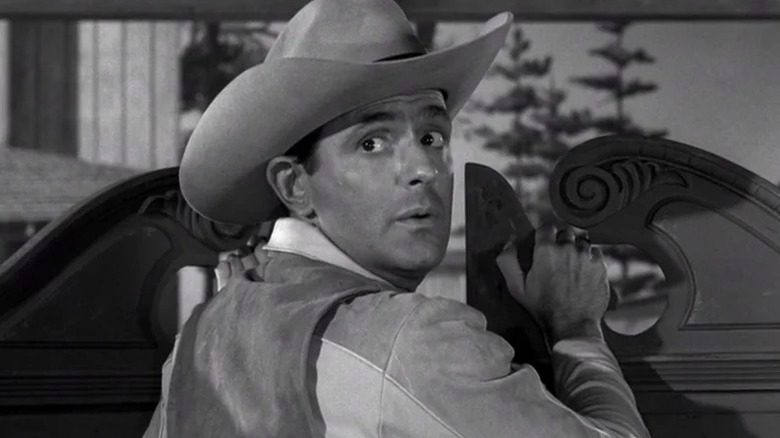
"The Twilight Zone" has masterfully played with the concept of muddying the waters between acting and reality in stories like the Season 1 episode "A World of Difference." The Season 3 twist on the theme, "Showdown with Rance McGrew," makes a valiant attempt to create similar magic, but doesn't quite cut the mustard.
In this episode, we meet Rance McGrew (Larry Blyden), a TV actor who has lent his name and talents to the hero of a Western series. When Rance makes the mistake of questioning the honorable tactics of Wild West gunmen, he soon finds himself in the real Old West, stalked and threatened by none other than the legendary Jesse James (Arch Johnson), who has his own ideas of how Rance's two-bit stories should end.
"Showdown with Rance McGrew" is far from the worst piece of Weird West fiction out there, but it also has very little to say, instead preoccupying itself with the most cookie-cutter of classic "The Twilight Zone" twists that leads to a conclusion with nothing truly interesting to say. The cardinal sin of a show like "The Twilight Zone" is to be uninteresting, and unfortunately, this episode commits that sin many times over.
7. I Dream of Genie (Season 4, Episode 12)
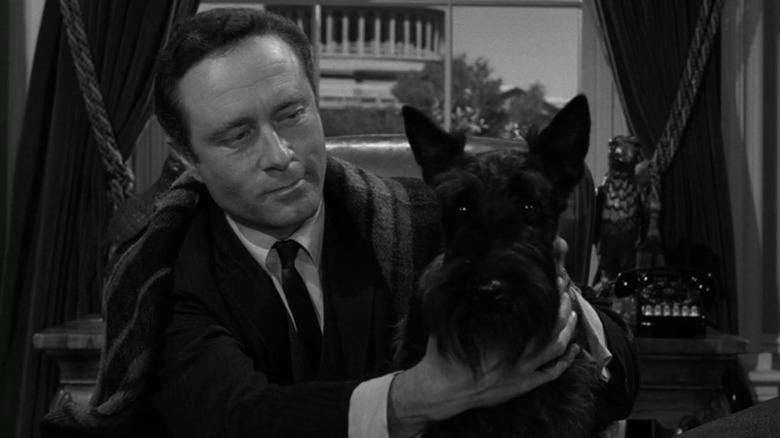
"I Dream of Genie" actually does have a pretty fun twist ending — the exact type you hope for whenever you tune in for "The Twilight Zone." Getting there, however, is a slog.
Another comedic episode, "I Dream of Genie" tells the story of George P. Hanley (Howard Morris), an ordinary office drone who stumbles upon a genie (Jack Albertson) in a lamp. Unfortunately, George only gets one wish. Fortunately, he's a talented dreamer who can imagine his way through several wish-fulfillment ideas that, with better execution, might've had the potential to make this one of the most rewatchable episodes of "The Twilight Zone."
Sadly, George is far from a compelling character, and everyone surrounding him is pretty unpleasant. Even worse, the entire episode is essentially a remix of the far superior Season 2 genie episode, "The Man in the Bottle," which takes its much bolder ideas far further. All of this makes "I Dream of Genie" a lukewarm disappointment by "The Twilight Zone" standards.
6. Come Wander With Me (Season 5, Episode 34)
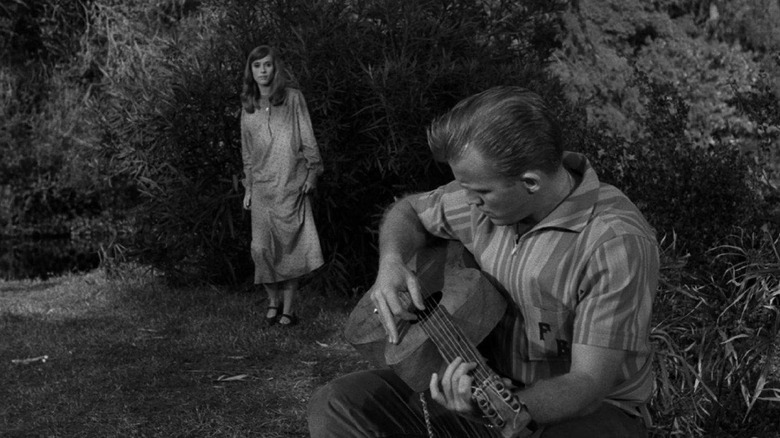
As you might notice, many of these episodes come from the tail end of "The Twilight Zone" — and none more so than "Come Wander With Me," which aired as Season 5, Episode 34 but was actually the last episode in production.
"Come Wander With Me" is a bit of a mess, to put it kindly. It doesn't really bother hiding its twist, either. The story follows a songsmith named Floyd Burney (Gary Crosby), who encounters a woman (Bonnie Beecher) singing a haunting melody. However, the episode constantly sprinkles the events with not-so-subtle hints that we're in a time loop where Floyd either is already dead or is about to die, and a recording of the song adds a new ominous verse with every single event that takes Floyd toward his doom.
It's "The Groundhog Day" mixed with a splash of "Creepshow," in other words — only decades before either. If that sounds like a good time, we regret to report that it's not. The ham-fisted clues about Floyd's umpteenth impending death give away all semblance of surprise early on, but considering how messy and plotless the episode is, it's probably for the best. Floyd might technically be a dead man walking rather than a true "dead all along" protagonist, but this still counts as a ghost story — and the best "The Twilight Zone" Christmas episodes alone prove that the show has done those much better before.
5. The Mighty Casey (Season 1, Episode 35)
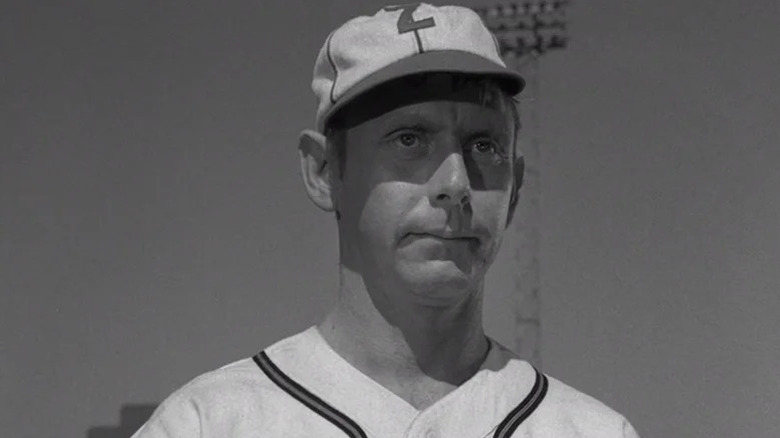
Sometimes, a perfectly interesting-sounding "The Twilight Zone" episode turns out to be a turkey when the execution fails. Other times, you only need to hear the plot synopsis to understand why the episode never worked. "The Mighty Casey" falls firmly in the latter category.
The plot follows a down-and-out New Jersey baseball team called the Hoboken Zephyrs, who decide on a novel Hail Mary strategy: They have a mad scientist named Dr. Stillman (Abraham Sofaer) build them an invincible robot pitcher, Casey (Robert Sorrells). When Casey's true nature is inevitably discovered, Dr. Stillman counters by giving the robot a heart. This turns the erstwhile Tin Man into an emotional creature who soon leaves the sport behind to pursue a career as a social worker.
If that sounds like a particularly weak episode of "Black Mirror," well, that's because it's pretty much what's going on here. Story beats like the artificial Casey's sentience and status as a human being would eventually be explored in shows from "Star Trek: The Next Generation" (where Brent Spiner's Data semi-regularly struggles with similar situations), but the episode ultimately concerns itself with a far more underwhelming twist: That the Hoboken Zephyrs' manager (Jack Warden) is building an invincible robot team heavily implied to be the Los Angeles Dodgers. As an interesting aside, Warden's manager was originally played by Paul Douglas, whose health was failing and who died a day after filming wrapped. Serling personally financed the reshoots of the manager's scenes.
4. The Incredible World of Horace Ford (Season 4, Episode 15)
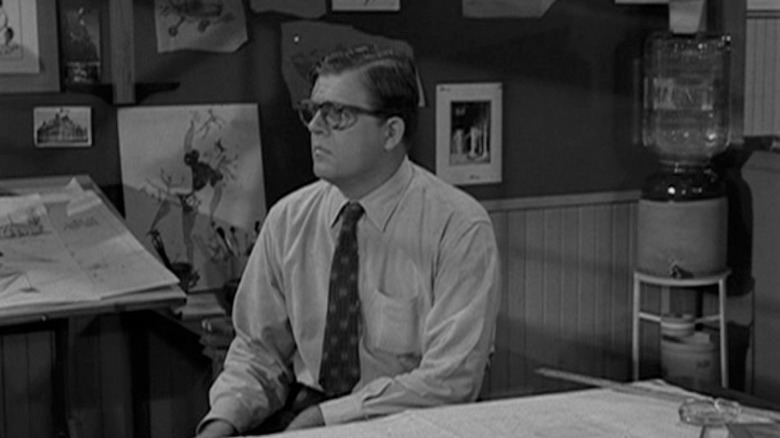
"The Incredible World of Horace Ford" brings a man to his senses through the power of... childhood bullying. That's all that really needs to be said, but let's unpack a bit anyway.
Here, the titular Horace Ford (Pat Hingle) is a toy designer who goes full method in his profession. He's fully immersed in his treasured childhood memories, which causes plenty of trouble for everyone close to him. This changes when Horace decides to walk down memory lane in his old neighborhood and discovers it's still stuck in the past — full of his old friends, who are still children.
Further visits confirm that this isn't just a fantasy, and eventually Horace himself becomes a child once more. Unfortunately, he soon realizes that his so-called friends were abusive bullies, and his memories of a happy childhood are false. This terrifying experience has the effect of causing Horace to grow up overnight and act like an adult from that point onward. The moral of the story here is obviously intended to be that nostalgia can be deceiving, but what the episode actually ends up saying is that sometimes, bullies have to beat you up to bring you to your senses. As "The Twilight Zone" lessons go, let's just say that this particular one doesn't crack the Top 10.
3. Cavender Is Coming (Season 3, Episode 36)
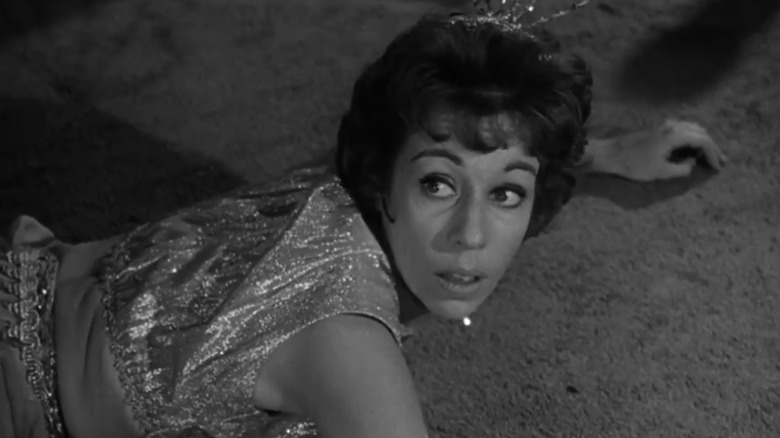
Guardian angels are a tricky subject, and "The Twilight Zone" doesn't make things any easier by making "Cavender Is Coming" yet another comedy episode – one that's far wackier than most of Rod Serling's attempts at chuckle-worthy TV. The end result once again proves that trying to make the audience laugh is an easy way for "The Twilight Zone" to shoot itself in the foot.
Harmon Cavender (Jesse White) is a guardian angel who has to help the clumsy and seemingly unhappy Agnes Grep (Carol Burnett) to a better life. After a bunch of miracles convince Agnes that Cavender is indeed an angel, he proceeds to utterly change her mild-mannered life by turning her into a woman of wealth. However, Cavender is about to find out firsthand that money doesn't equal happiness.
Like many other episodes on this list, "Cavender Is Coming" is a rehash of another "The Twilight Zone" episode that did it much better. The Season 1 episode "Mr. Bevis" is effectively a superior version of the same story, with more edge and the same moral lesson. Meanwhile, "Cavender Is Coming" is well-acted and offers the occasional impressive slapstick moment, but it can't sustain its limited tension and often comes across as an episode of a completely different show.
2. The Bard (Season 4, Episode 18)
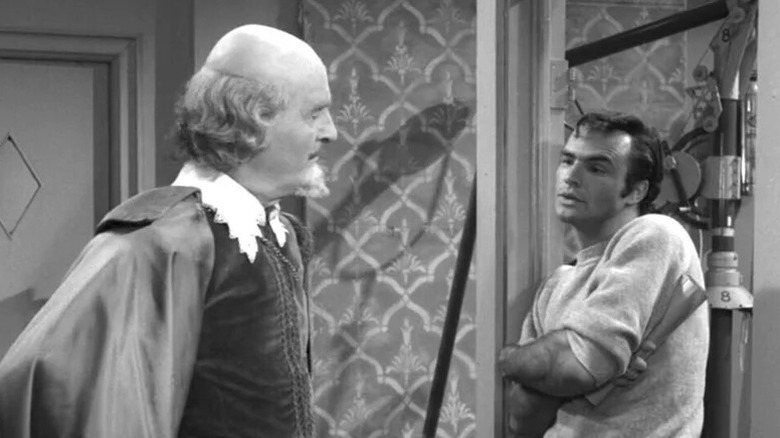
"The Twilight Zone" often deals in lessons that comment on the state of humanity and society. However, direct satire is something the show rarely attempts. "The Bard" shows why this is a good thing.
"The Bard" centers on desperate screenwriter Julius Moomer (Jack Weston), whose clumsy scripts about various fantastical scenarios have failed to attract the industry's attention. Thanks to a mishap with a book of black magic, he acquires a ghostwriter — none other than William Shakespeare (John Williams), in period-appropriate clothing and all. Passing off Shakespeare's script as his own, Moomer soon sells it to a studio, placating the Bard with promises of Hollywood fame. However, Shakespeare is about to find out that even the most famous playwright of all time isn't exempt from studio meddling.
The combination of a fantastical premise and satire of the television industry could have worked in more capable comedic hands. Here, unfortunately, the fun remains unfunny and the satire is too on-the-nose to be truly effective. As such, the episode's greatest gift to the world remains Burt Reynolds – one of the many major movie stars who appeared on "The Twilight Zone" – delivering an obvious parody of Marlon Brando in his role as movie star Rocky Rhodes.
1. Sounds and Silences (Season 5, Episode 27)
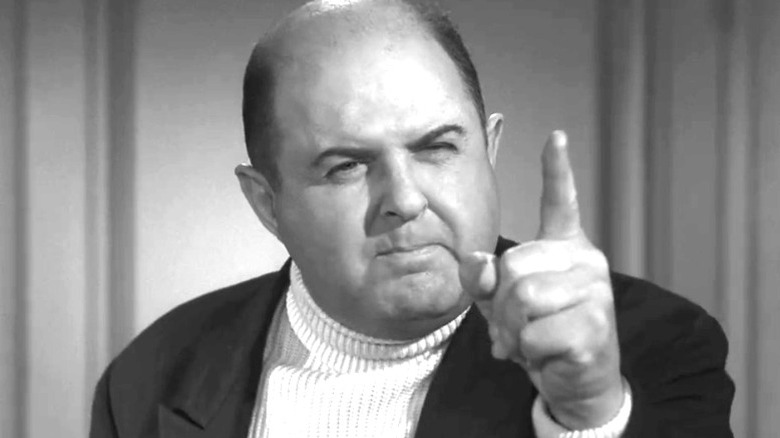
Another Richard Donner-directed Season 5 episode, "Sounds and Silences," has the dubious honor of being the lowest-rated "The Twilight Zone" episode on IMDb.
Roswell G. Flemington (John McGiver) is an unpleasant man who's abrasive toward his underlings, wife, and everyone around him. In return, they consider him an utter jerk, to the point of fantasizing about his death. The episode proceeds to use Roswell's peculiar fascination with loud sounds against him: As Roswell's long-suffering wife, Lydia (Penny Singleton), finally leaves him, he starts hearing even the smallest sounds as deafeningly loud. While he's smart enough to seek mental health assistance and conquer this condition, a final encounter with his wife takes things in another direction, and he goes completely deaf instead. The episode's ending narration reveals that Roswell has been hospitalized and frames it as a case of poetic justice.
There are no real twists here, and the intended moral lesson — the oft-used "The Twilight Zone" fare of unpleasant people getting what's coming to them — comes across as obvious because Roswell is virtually impossible to like and everyone in his life already loathes him. As such, "Sounds and Silences" comes off as a severe misfire, with little for the viewer to be invested in.