

The 15 Best NBC Shows Of All Time, Ranked
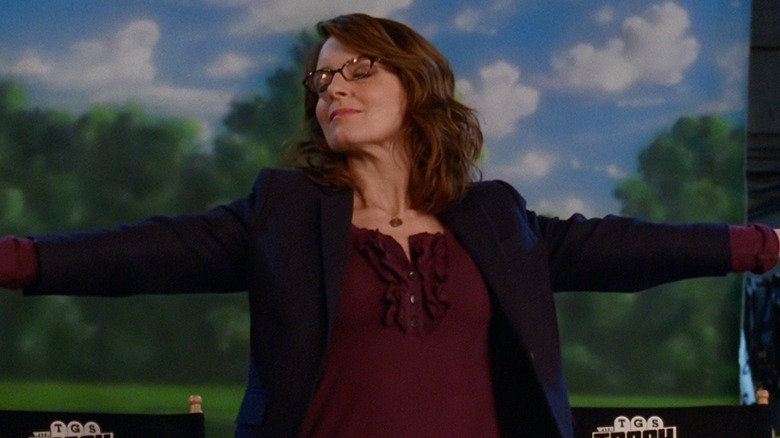
NBC doesn't have to strut about like the peacock that is its mascot — it's a pioneering cornerstone of American television, and as one of the longest-running networks in history, it has more than earned its status over the years.
Unless you've lived a life in the wilderness and never watched TV, NBC has most likely given you good memories at some point. Failing that, most folks have at least heard of programs like "Jeopardy!," which began on NBC before being revived for syndication, or "Little House on the Prairie," which repackaged frontier history, Michael Landon-style. "The Golden Girls" was NBC, as was "Days of Our Lives," yet they don't even make the top 15 best shows of all time from the network.
These are the ones that did.
15. The Tonight Show
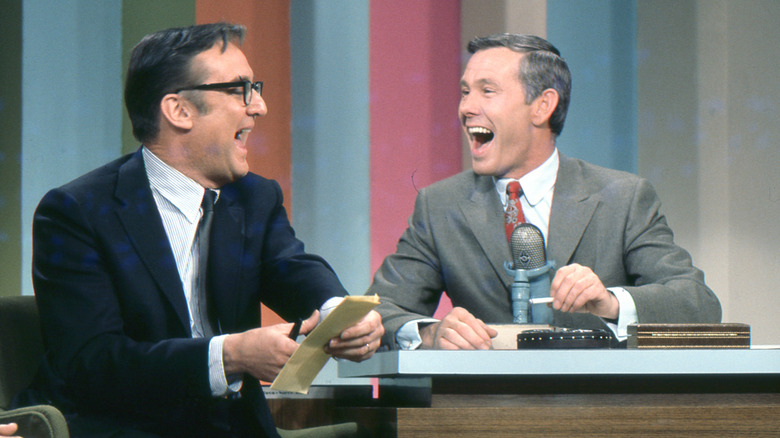
Much of the modern late-night talk show format comes from Steve Allen and the original "Tonight" — the opening monologue, celebrity guests plugging their latest projects while trying to seem like regular folks, audience participation, roaming camera bits, and a house band. Other than an ill-advised excursion into a news magazine format in 1957, "The Tonight Show" has retained essentially the same basic format since Jack Paar took over later that year, adapting to each host's personality.
Johnny Carson, who hosted for 30 years, was nighttime comfort food to more than one generation and the ultimate launchpad for aspiring comedians. Introduced with Ed McMahon's famous "Heeeeeere's Johnny!" Carson would banter with his longtime announcer and sidekick, who affirmed everything he said. Carson created recurring characters for himself like the psychic Carnac, and established the staple bit of animal experts, like the San Diego Zoo's Joan Embery, bringing creatures on to interact with the host.
After Carson, Jay Leno mainly seemed like a predictable, mainstream choice, best remembered for edging out David Letterman and later returning after Conan O'Brien's brief tenure. These days, Jimmy Fallon works with an eye to what might go viral on YouTube.
There's more competition now, but if you want to know where the pulse of mainstream comedy is, "The Tonight Show" has been it for over 70 years.
14. Parks and Recreation
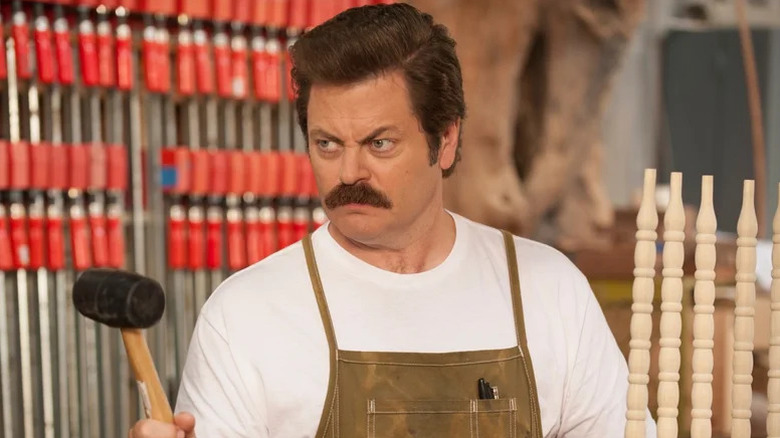
It's semi-conventional wisdom that if a piece of entertainment addresses politics, it alienates half the audience. "Parks and Recreation" got around that by keeping its politics local and character-driven. Leslie Knope (Amy Poehler) eventually develops presidential ambitions, but for now must settle for deputy director of the parks and rec department in Pawnee, Indiana.
Nick Offerman delivered a career-defining performance as Ron Swanson, the department director and a staunchly libertarian man's man. Whether ordering an entire diner's worth of bacon and eggs or asserting he knows more than anyone in a hardware store, Ron rides a fine line between parody and unlikely role model. Aziz Ansari's wisecracking Tom and Aubrey Plaza's sullen intern April became breakout characters and boosted both actors' profiles, yet it was Chris Pratt, playing the immature Andy, who went on to movie stardom.
Underscoring the show's broad political reach, actual politicians from both parties frequently appeared, from Newt Gingrich to Joe Biden.
13. The Fresh Prince of Bel-Air
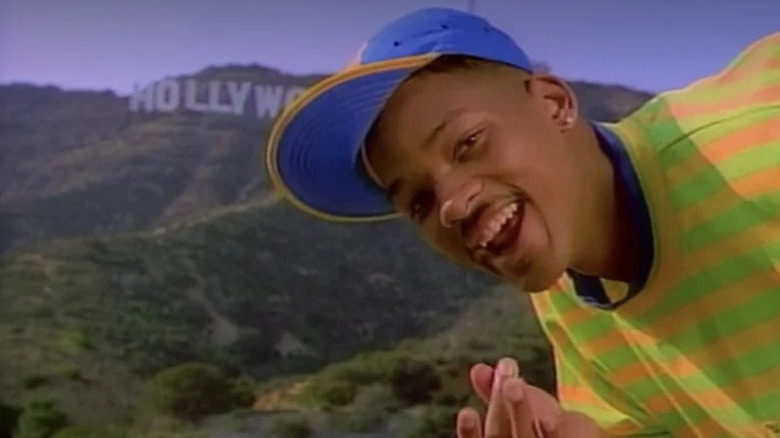
Between his time as a popular, family-friendly rapper and becoming one of the biggest movie stars in the world, Will Smith began the path that would eventually lead to an Oscar with "The Fresh Prince of Bel-Air." Expanding on his Fresh Prince hip-hop persona, it presented him as a fish out of water, sent from Philadelphia to live with rich relatives in Southern California.
Will's street smarts frequently and amusingly clashed with the shallowness of cousin Hilary (Karyn Parsons) and the dorkiness of Carlton (Alfonso Ribeiro), whose endearingly awkward dance became a phenomenon. Will's real-life rap sidekick DJ Jazzy Jeff also had a recurring role as Will's friend Jazz.
Though it seemed based on Will Smith's life, it was actually inspired by that of music manager Benny Medina, as refined by show creators Susan and Andy Borowitz. Smith was just enough of a natural to embody it as if it were his own — though he had virtually no acting experience.
12. 30 Rock
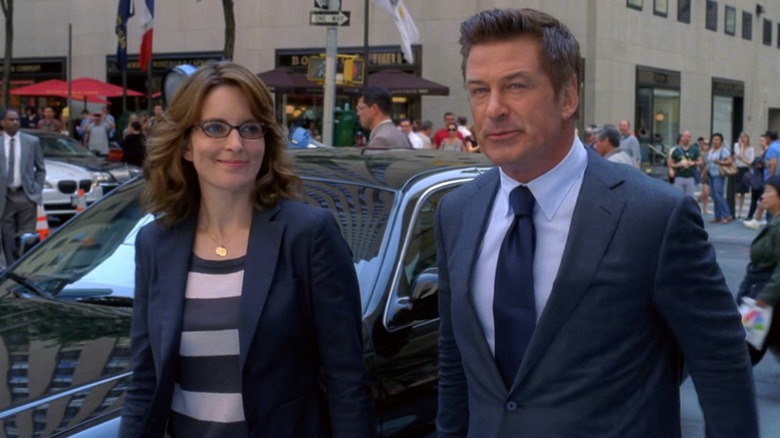
A comedy about the making of a comedy show could have been insufferably insular. But with former "Saturday Night Live" head writer Tina Fey, cast member Tracy Morgan, and frequent host Alec Baldwin, it became a show frequently funnier than the fictional sketch comedy at its center. It remains impressive how much NBC let the show get away with skewering its own corporate politics — or maybe they just weren't paying close enough attention.
The banter between Fey as showrunner Liz Lemon and Baldwin as network executive Jack Donaghy was the dynamic at the heart of the show. She was progressive and creative; he was retrograde and hyper-corporate. They were probably never going to get together, but their chemistry made the idea entertaining to contemplate. Morgan's Tracy Jordan was, like the actor himself, a hilariously unpredictable disruptor, helping to lend the show a sometimes cartoonish tone and surreal sensibility.
Some consider it the best show of the 21st century. Others, the best sitcom ever. This list has, perhaps, a bit more of an old-school bias, but not by a lot.
11. ER
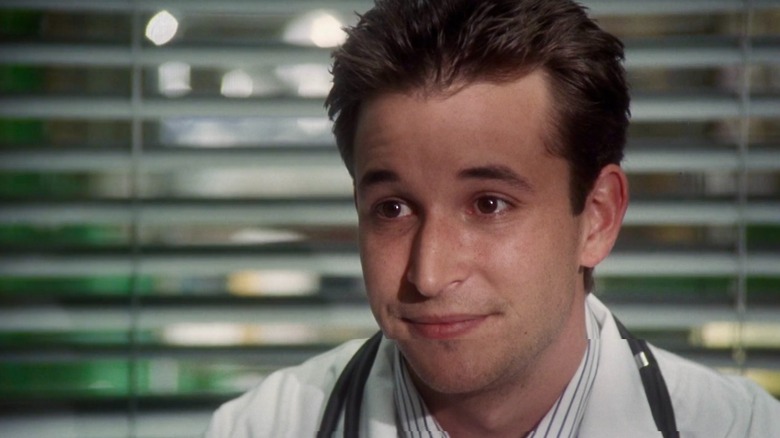
There's always something happening in fast-paced metropolitan emergency rooms. Non-practicing MD and author Michael Crichton originally envisioned the story as a movie, but while collaborating with Steven Spielberg on adapting his novel "Jurassic Park" for the screen, the pair revisited the project and determined that "ER" should be a TV show instead. It became the second-longest-running American prime-time medical drama. With heavy use of Steadicams and a relentless pace, it's the show that taught America what "stat" means, literally and figuratively.
"ER" doesn't talk down to the viewer — it straps them in for a ride and assumes they'll catch up if they can. As if to prove that everyone likes a handsome doctor, the show made stars of George Clooney and Goran Visnjic. Its sprawling ensemble mixed established performers like Anthony Edwards with actors including Maria Bello, Linda Cardellini, and Shane West at different stages of their careers.
The legacy of "ER" continues today, as co-star Noah Wyle made "The Pitt" with fellow "ER" veterans R. Scott Gemmill and John Wells. The HBO Max drama functions as a spiritual successor while using its real-time structure and streaming platform to offer a more intense vision of emergency medicine.
10. L.A. Law
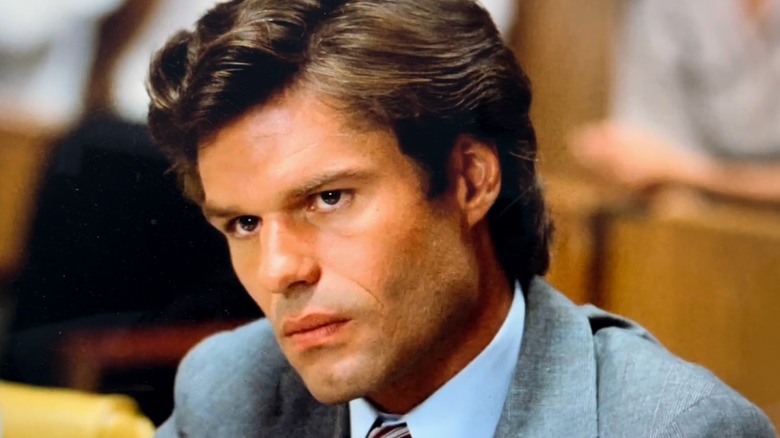
Most popular lawyer shows tend to focus on one lawyer: "Perry Mason," perhaps, or "Ally McBeal." The brilliance of "L.A. Law" was that Steven Bochco and co-creator Terry Louise Fisher brought a cop-show ensemble sensibility to a law firm, as had worked so well for Bochco on "Hill Street Blues." The lawyers at McKenzie, Brackman, Chaney and Kuzak operated like a police unit under the stern but fair mentorship of Leland McKenzie (Richard Dysart), while Douglas Brackman (Alan Rachins) kept a tight grip on the firm's billable hours.
Harry Hamlin as Michael Kuzak and Susan Dey as Grace Van Owen were appropriately pretty leads, but a given episode could just as easily focus on Corbin Bernsen's womanizing Arnie Becker, Blair Underwood's hotshot rookie Jonathan Rollins, Jimmy Smits' passionate Victor Sifuentes, or even Larry Drake as Benny, the firm's developmentally disabled office assistant.
Bochco and later executive producer David E. Kelley liked to insert eccentric touches that became a key part of the show's appeal, such as the mysterious sex technique called the Venus Butterfly. The series could also pivot without warning into shocking drama, like when Diana Muldaur's Rosalind Shays suddenly fell to her death down an elevator shaft.
9. Dragnet
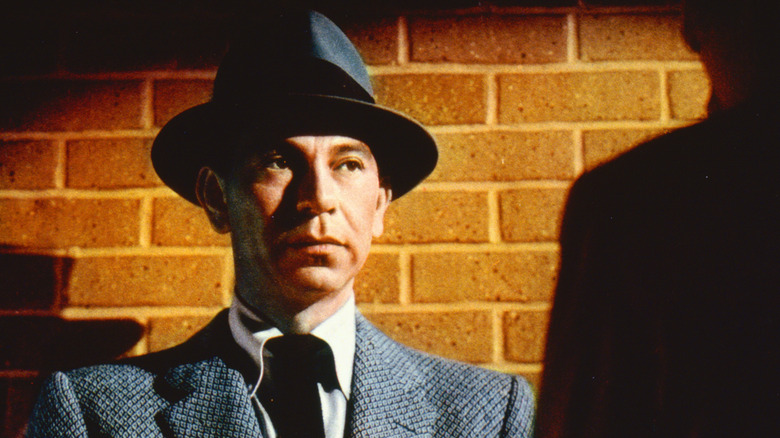
"Dum, de-dum-dum!" The familiar four notes signaled that it was time for Sgt. Joe Friday (Jack Webb) to get tough on crime in Los Angeles. "Dragnet" began as a radio show and moved to TV in the '50s, but it's the 1967-1970 run with Webb and Harry Morgan as Officer Bill Gannon that became iconic.
Webb, who also produced, used actual case files and his contacts in the LAPD to create a realistic, heroic depiction of police work. His deadpan delivery and monotone banter with Gannon became such signatures that they've been repeatedly parodied and imitated on other shows since.
Most of the no-nonsense plots on "Dragnet" hold up today. "Just the facts, ma'am," as Friday never quite said, became a catchphrase despite not being entirely accurate, much like "Beam me up, Scotty." However, Webb's conservative politics have made some episodes age less gracefully, like when he would lecture pot-smoking hippies about the evils of their lifestyle.
8. Miami Vice
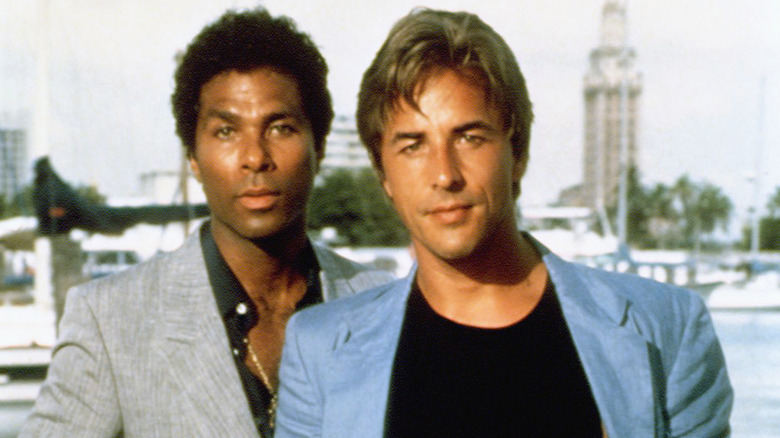
"Miami Vice" changed the face of TV cop shows, which in the early '80s were often amusing mismatched-partner shows. Adopting the visual style of music videos and a gritty, violent tone that portrayed Miami's drug trade and sex-work industry as an unending threat, it made a star of Don Johnson and helped turn several songs featured on its soundtrack into hits. It wasn't just tunes like Glenn Frey's "You Belong to the City" that broke big; even Jan Hammer's synth-driven instrumental theme became a successful single.
The show's palette set the tone for the decade. Pastels and neon were in; earth tones were way out. Shoulder pads, mullets, and T-shirts under stylish sport coats were the look. Edward James Olmos, who previously played a detective in "Blade Runner," began a long string of roles as authority figures playing Lieutenant Castillo, boss to Sonny Crockett (Johnson) and Rico Tubbs (Philip Michael Thomas). Crockett and Tubbs at least nominally maintained the mismatched-partner dynamic popular at the time, in that Crockett was a former football player and Tubbs an NYPD cop who chased a drug-dealing nemesis to Miami. Unlike other TV duos, however, they didn't always get a final moment to laugh about saving the day; episodes would often cut straight to credits the second the action stopped.
7. Night Court
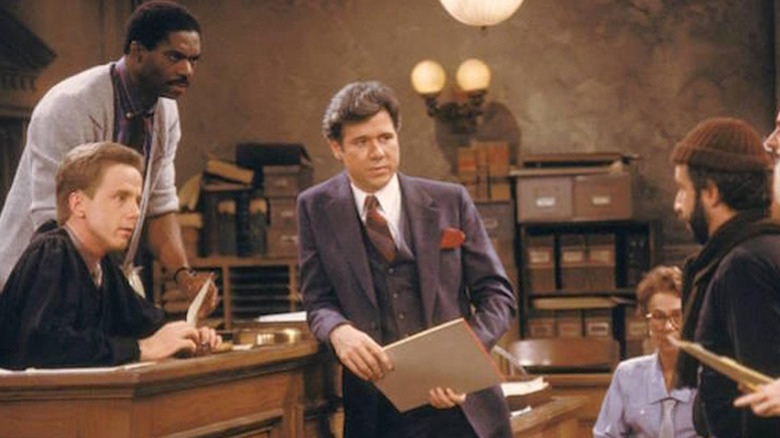
Legal dramas are always popular programmers for networks, but a good spoof of them is a rarity. "Night Court," rather than dealing with life-or-death crimes and heroic last-ditch motions, focused instead on more banal cases. Misdemeanors committed after hours were the focus of this particular courtroom, which gave its employees plenty of time to be their wacky selves. Judge Harry Stone (Harry Anderson) was a cut-up who liked to do magic tricks; prosecutor Dan Fielding (John Larroquette) was a misogynistic, lecherous sourpuss. After a few early cast shifts, the series settled on chronically insecure defense attorney Christine Sullivan (Markie Post), while the towering, bald, UFO-obsessed man-child Bull Shannon (Richard Moll) kept order.
The rapid-fire caseload of "Night Court," most often resulting in $50 fines, allowed many up-and-coming comedians and actors to make the most of small parts as plaintiffs or defendants. Yakov Smirnoff had a recurring role as a Russian immigrant known for his fractured English and signature wheezy laugh, while Brent Spiner appeared as a dopey hillbilly patriarch.
Occasionally, the show ventured into all-out surrealism, with the intrusion of possibly supernatural characters. That anything-can-happen vibe kept the sitcom from becoming predictable and nailed the weird atmosphere of a major metropolis after dark.
6. Cheers
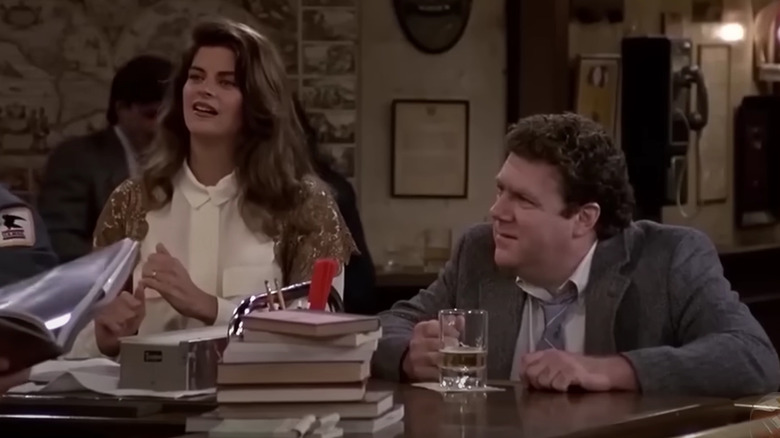
It seems almost too simple a concept to be compelling TV. It's your favorite bar, where everybody knows your name — and in the case of Norm (George Wendt), will yell it out every time you arrive. "Cheers," however, was better than your favorite bar, populated by lovable eccentrics — tough-talking Carla (Rhea Perlman), too-good-for-a-waitress-job Diane (Shelley Long), and trivia-obsessed mailman Cliff (John Ratzenberger) — who almost never actually got drunk.
Presiding over it all was Sam Malone (Ted Danson), a former baseball star and recovering alcoholic whose easy charm made him a chick magnet and a gentle authority figure. His opposites-attract dynamic with Diane kept us guessing for years whether they'd end up together; the arrival of high-strung Rebecca (Kirstie Alley) as the new female lead upended the formula in fresh and often funnier ways.
The show made stars of Danson, Alley, Long, and Woody Harrelson, while giving Kelsey Grammer the character he would carry into leading-man status on "Frasier." Ultimately, "Cheers" proved that if a show creates memorable enough protagonists, it can be set anywhere.
5. The Monkees
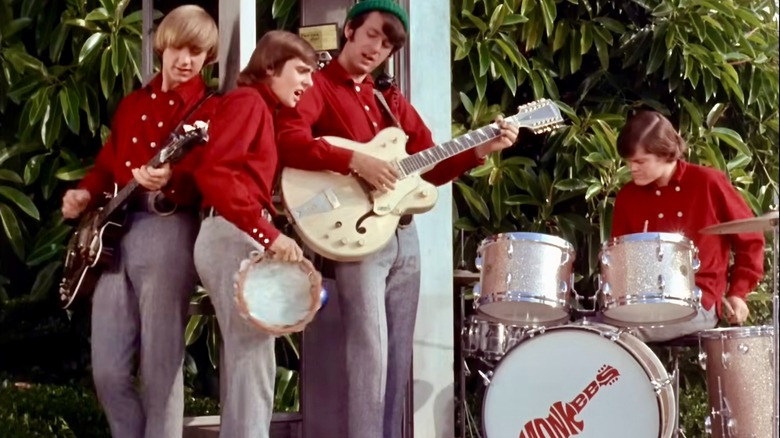
The producers thought they were casting a TV sitcom. Their lasting legacy was that they created a band.
Inspired by the Beatles' movie "A Hard Day's Night," "The Monkees" was a comedy about four young men trying to make it as a band, with surreal musical interludes that would help sell soundtrack albums. Eventually, those albums proved even more popular than the show. Initially, Micky Dolenz, Peter Tork, Mike Nesmith, and Davy Jones primarily contributed vocals while outside songwriters and musicians created much of the music. The group soon fought for greater creative control and the right to perform its own material, proving it was a real band.
It worked because the four had great chemistry and improv skills. After two seasons, the TV show ended, though it resurfaced numerous times in reruns over the years, notably on MTV, as its musical scenes reminded new viewers of music videos. The band continued, initially breaking up in 1970 but reuniting several times thereafter.
Even John Lennon reportedly admired their comedy, comparing "The Monkees" to the Marx Brothers.
4. Seinfeld
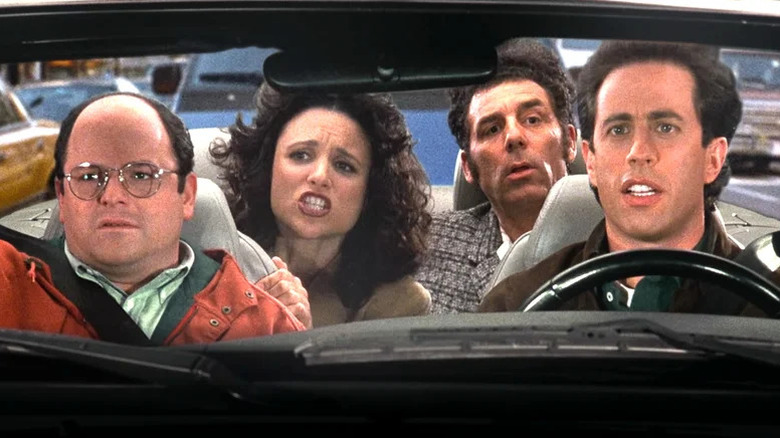
Self-described as a show about nothing, "Seinfeld" was actually mostly about petty grievances. Rather than let the daily irritations and perceived snubs of New York City life go, lead characters Jerry (Jerry Seinfeld), George (Jason Alexander), Elaine (Julia Louis-Dreyfus), and Kramer (Michael Richards) would blow them up into disproportionately huge deals.
Combining showrunner Larry David's misanthropic humor with stand-up comic Jerry Seinfeld's observational comedy, "Seinfeld" the show could devote an entire episode to waiting for a table at a restaurant or getting lost in a parking lot. Alternatively, it could go high-concept with stories about surgical Junior Mints and poisoned envelope glue. At its best, it generated memorable lines that caught on in the larger culture: "Not that there's anything wrong with that," "Yadda yadda yadda," et al.
Jerry Seinfeld's style of humor is often imitated — any comic obsessing over minutiae or asking "What's the deal with..." was probably inspired by him. The show's success proved much harder to clone; only David himself, with "Curb Your Enthusiasm," has really come close.
3. Get Smart
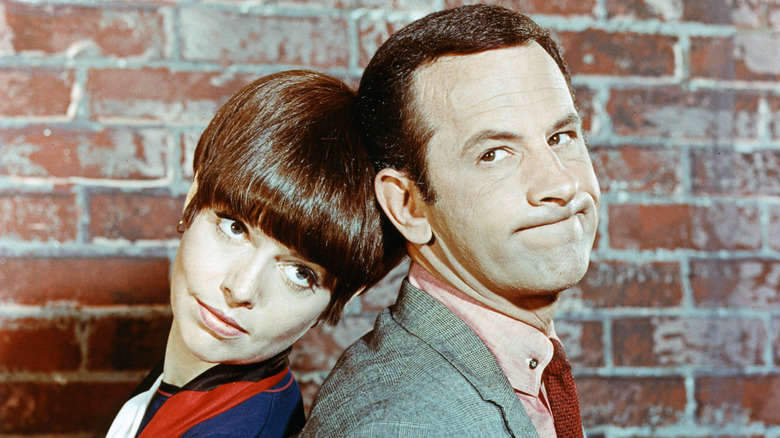
In retrospect, a James Bond parody created by Mel Brooks and Buck Henry sounds like surefire gold, but ABC passed on it, wanting to give bumbling spy Maxwell Smart (Don Adams) a sympathetic mother. Their loss was NBC's gain, to the tune of seven Emmy wins.
Looking as big-budget as the more serious spy shows and movies it was spoofing, the show paired the oblivious Smart with the much more aware Agent 99 (Barbara Feldon). In the role that would both define and typecast him forever, Adams' deadpan nasal delivery made cultural catchphrases out of lines like "Would you believe...?" and "Missed it by that much."
Brooks and Henry clearly had a blast devising ridiculous gadgets like the shoe phone and cone of silence; the credit sequence, with Adams walking through a preposterous number of secret doors, was an unforgettable sight gag.
During the show's run, Brooks directed his feature film debut, "The Producers," and the rest is comedy history.
2. Saturday Night Live
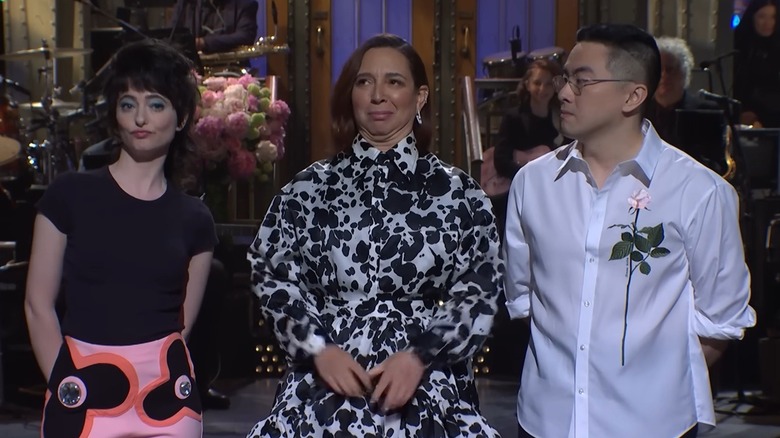
On the air for over 50 years, "SNL" has become a cultural institution and one of the few network shows that the broader culture pays attention to — every president since Gerald Ford has acknowledged the show's impersonations.
Usually cast with both established comedians and younger up-and-comers, "SNL" got attention by being more topical than most sketch comedy shows and embracing the risk of putting comedy on the air live. Combined with a big-name musical guest each week and the news-spoofing "Weekend Update" segment mid-show, the formula has remained pretty much the same regardless of the cast changes over the years. Which cast was the best? Ask most viewers, of any age, and the answer is usually the first cast they discovered.
The cold open is usually political, and fodder for all the news shows on Monday. Other sketches often parody talk shows real and imagined, and periodically a character-based sketch will catch on and spawn a movie, for better ("The Blues Brothers," "Wayne's World") and worse ("The Ladies' Man," "It's Pat"). Alumni frequently go on to movie stardom, from Chevy Chase to Will Ferrell.
Even the folks who complain it's not as good as it used to be are still talking about it. Sometimes every week.
1. Star Trek
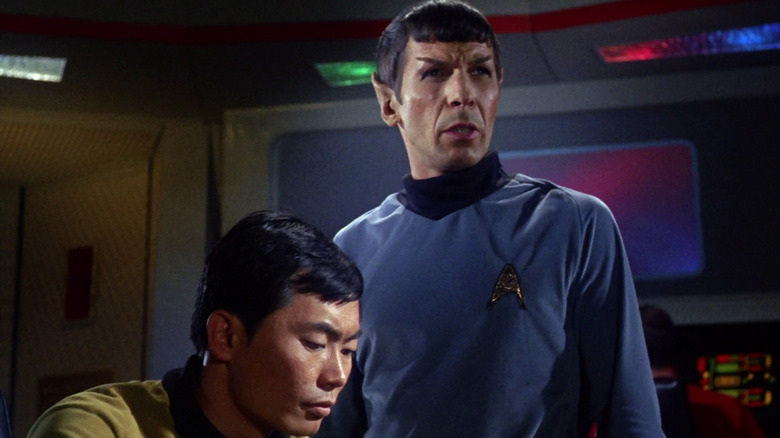
You could travel the world and find countries where nobody has ever heard of any of the other shows on this list. Odds are, however, that they know of "Star Trek." Not bad for a show that narrowly survived cancellation once and was canceled for good the following year. Gene Roddenberry conceived the show as "Wagon Train" in space; these days, anyone pitching a "Wagon Train" reboot might call it "Star Trek" in the Old West.
In the era of the Vietnam War and civil rights protests, "Star Trek" fundamentally offered a hopeful future, with a racially and nationally mixed starship crew that also included a Vulcan officer, Mr. Spock (Leonard Nimoy). Viewers got to see humanity move past wars and nationalism and toward a future where not just nations but whole planets put aside their differences in an alliance of exploration.
For the sake of conflict, there were antagonists in outer space, notably the cruel but honorable Romulans and the deceitful, warmongering Klingons. James T. Kirk (William Shatner) and his crew usually defeated them with brains rather than brawn, however. Roddenberry preferred cerebral stories and morality plays; NBC insisted on action, and the push-pull of these two poles delivered both ironic twist tales and space combat. The show ended after three years but helped establish the modern media-convention phenomenon and launched a franchise of movies and spin-offs that continues to this day.