

15 Most Underrated Episodes Of The Office, Ranked
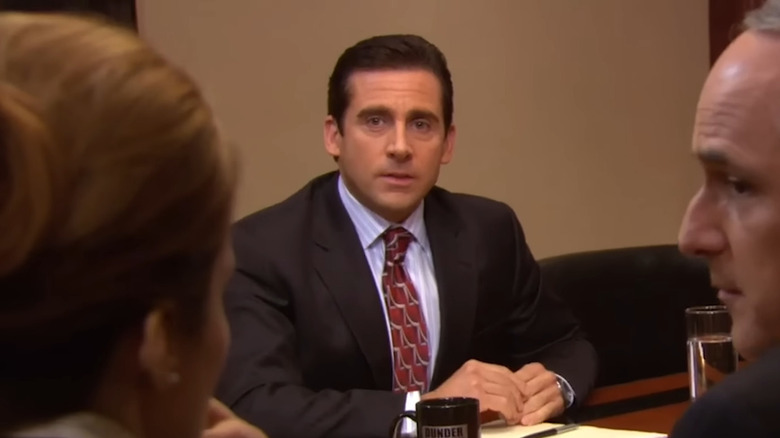
"The Office" is the unfortunate kind of long-running series where the series' highest-highs are about as memorable as the show's lowest-lows. Exceptional episodes like "Dinner Party," "Casino Night," and "Goodbye, Michael" have been picked apart as much as Dunder Mifflin's most embarrassing efforts (we still haven't forgotten "The Farm"). It's hard to think of a sitcom more culturally digested than "The Office" — and yet, in the decade of debates that have taken place since the series finale, some of its greatest episodes remain overlooked.
In searching for the 15 most underrated episodes of "The Office," we found the ones that make rewatches worthwhile — the hidden gems lost in the lackluster later seasons: The under-repeated jokes and gags we'd long forgotten, and the quietly brilliant stories that should've been hailed as masterpieces today. What follows isn't a rebuke of the fan-favorite canon, but an argument for widening it — evidence that there's still more to discover about the "World's Best TV Show."
15. Dwight Christmas (Season 9, Episode 9)
Few fans of "The Office" would expect to see an episode from Season 9 on any traditional "Best Of" list. The final season is almost entirely dismissible and you'd be forgiven for skipping the whole batch on a rewatch. That said, there is one episode hidden in this rough patch that warrants a second look.
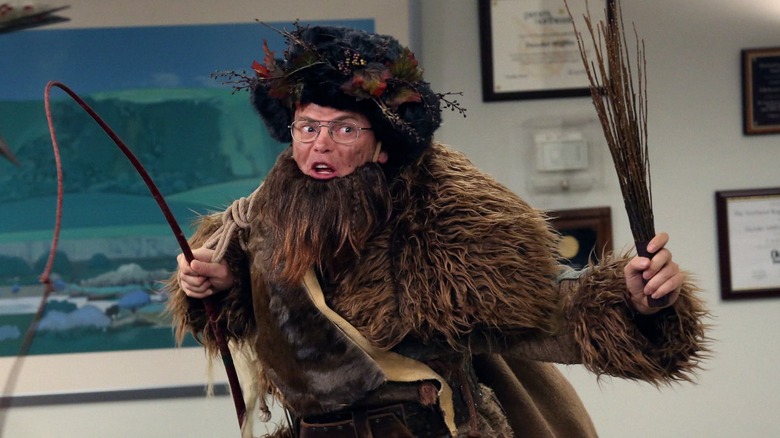
The seventh and final of the series' classic Christmas episodes, "Dwight Christmas" is the only Season 9 episode to introduce a novel character-centric gag that rises to the same level of memorability as the earlier seasons. Given the reins to run Dunder Mifflin's annual Christmas party, Dwight Schrute (Rainn Wilson) is allowed to introduce the office to a traditional Dutch Christmas celebration — which turns out to be just as weird, nightmarish, and hilarious as you'd expect from Dwight after nine seasons.
Dwight as Belsnickel is a real treat, and probably one of the only positive images fans of "The Office" can distinctly attribute to Season 9. Fittingly for arguably the show's worst season, however, "Dwight Christmas" is largely remembered for a controversial (and unnecessary) joke that had to be retroactively edited out.
14. Basketball (Season 1, Episode 5)
"The Office" ended as it began. Like the final season, the first is largely remembered for being relatively painful to sit through (albeit mercifully shorter, with an episode count of just six). Some diehard fans appreciate its darker comedic tone and the grimier, unpolished vibe, as well as the total commitment to the cringe comedy of the original U.K. series. Others, understandably, are more than happy to start their watch-through with the defining Season 2 opener, "The Dundies."
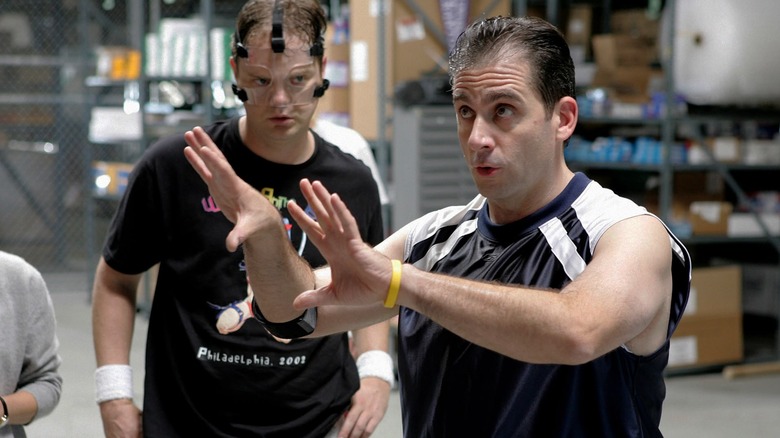
While "Diversity Day" is commonly singled out as the first season's most successful episode, that shouldn't overshadow how fun "Basketball" is. In addition to being one of the best sports-centric episodes in a series surprisingly full of them, this is the first time "The Office" really treats its cast like the ensemble they eventually become. This is also the first episode written and directed by Greg Daniels, the executive producer behind the American adaptation, specifically. "Diversity Day" proved this crew knew how to translate the original "Office" — "Basketball" is where this version really starts to feel like its own show.
13. Chair Model (Season 4, Episode 14)
Written by the Temp himself, B.J. Novak, "Chair Model" is best regarded as an amusing coda to the long-standing on-again-off-again relationship between Michael Scott (Steve Carell) and his former boss, Jan Levinson (Melora Hardin). The latter is not in this episode on screen, (having been last seen in the previous episode, "Dinner Party"), but the specter of their recently doomed relationship haunts Michael as he goes about his grieving process in the most immature ways possible.
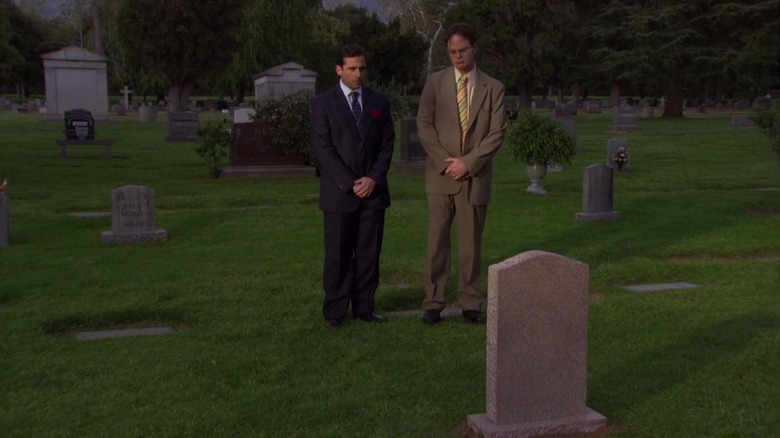
The episode is funny throughout — Michael soliciting the office for numbers, only for Kevin giving him the number of a Wendy's; Jim's fake-out proposals; Michael and Dwight getting carried away and obliviously dancing on the grave of the titular magazine model Michael becomes fixated on. But it was also vital to wrapping up elements of the seasons-long romance in a way that "Dinner Party" couldn't. The former episode communicates Jan's faults and the toxicity of their horrific relationship — "Chair Model" reminds viewers how much Michael has to grow on his own before he's actually ready for the real thing.
12. Michael's Birthday (Season 2, Episode 19)
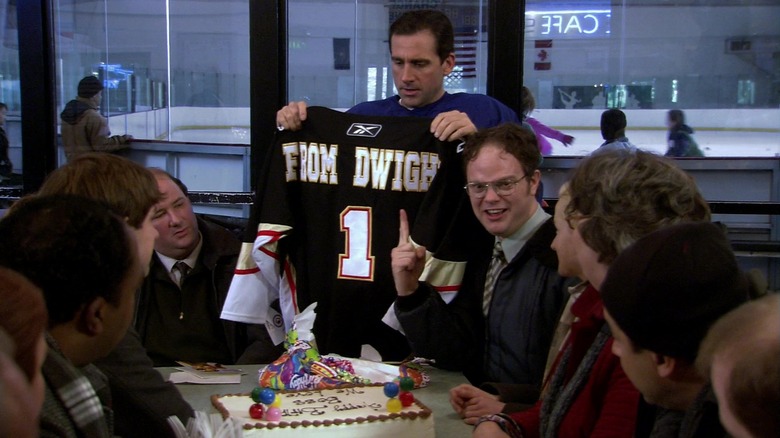
Season 2 stands out to fans of "The Office" for defining how the U.S. "Office" will differ from the U.K. original. As a result, the climactic moments of its overarching storylines are what get remembered — "Casino Night," in particular, is regarded as one of the series' best episodes overall. By contrast, "Michael's Birthday" is decidedly unclimactic. It's so fitting to the central idea of the episode that you wonder if veteran writers Gene Stupnitsky and Lee Eisenberg didn't plan that all along.
This quiet but darkly hilarious episode plays Michael's desperation to have his birthday be an event for the entire office against the undeniable dread of the impending results of Kevin's (Brian Baumgartner) skin cancer screening. That's a tough, uncomfortable premise in and of itself, which sounds better suited for the Bob Odenkirk version of "The Office" on paper. It's a wonder it succeeds at all.
The severity of Kevin's potential diagnosis perfectly distills the oppositional dynamic that makes "The Office" funny. Michael's self-indulgence isn't extraordinary here, except that the audience has to watch him doing skate tricks with the knowledge that one character might be facing death.
11. The Convention (Season 3, Episode 2)
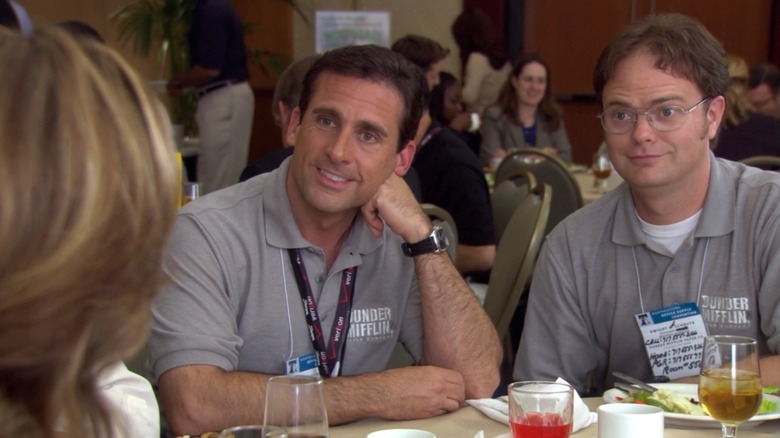
Another unsung classic written by Gene Stupnitsky and Lee Eisenberg, "The Convention" was a brilliant narrative device on behalf of the writing team to bring Jim (John Krasinski) back into the orbit of the Scranton branch at the start of his transfer arc in Season 3. Michael and Dwight team up to attend an office supply convention in Philadelphia, where they reunite with Jim and his new boss, Stamford regional manager Josh Porter (Charles Esten).
The episode is largely remembered as a pit-stop, allowing Jim to reestablish an emotional pull back toward Scranton through his reconciliation with Michael. Jim's climactic admission that he and Michael used to be coworkers and are now friends is quietly one of the sweetest moments in the show — that is, after all, the relationship Michael desperately wants from his employees, summed up in a single, selfless statement from the guy he respects the most. It's also a great bit of texture for Michael's rivalry with Josh/Stamford, which is the engine for the first chunk of the season.
10. Garden Party (Season 8, Episode 4)
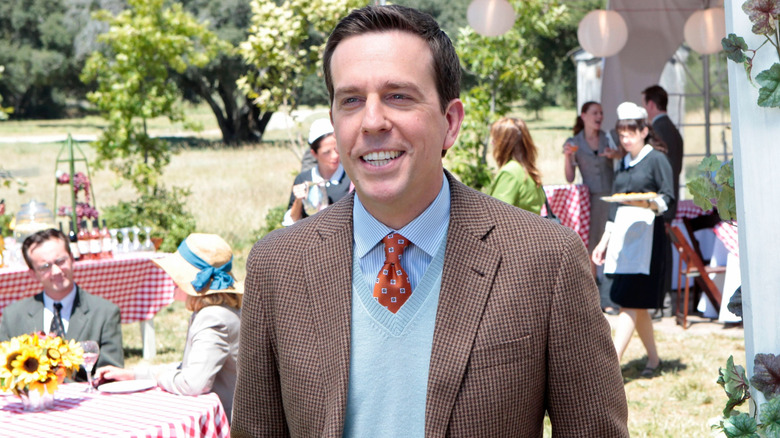
Of the hotly debated episodes in the post-Steve Carrell era of "The Office," "Garden Party" is one of the few that gets consistently defended. We'd argue it's not only defensible, but one of the better episodes in the series' run.
Aside from giving fans a helping of false hope at the start of one the series' worst seasons, "Garden Party" was the first episode to make a real dramatic case for why Ed Helms' Andy Bernard could carry the show in the absence of Michael and Carell. What, at first, seems to be an elaborate party predictably put together to woo his inscrutable new boss Robert California (James Spader) is soon revealed to be Andy's attempt at pleasing his own parents. Of course, he can't help but be constantly upstaged by his brother, played by guest star Josh Groban.
Andy straddles the line between annoying and tragic throughout the entire series. "Garden Party" somehow pulls both aspects of his character together and convincingly pitches them as a reliable gold mine for comedy.
9. The Client (Season 2, Episode 7)
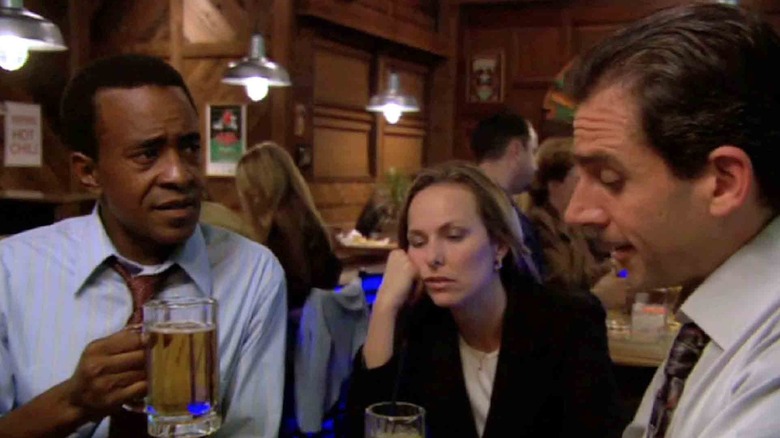
It bears repeating that Paul Lieberstein, the man behind not only regional HR rep Toby Flenderson, but many of the best episodes of the series overall, is one of the major unsung heroes of "The Office." In addition to writing and/or directing such classics as "The Job," "Stress Relief," and "Money," Lieberstein also penned quieter hits like "The Client," a Season 2 episode that is mostly remembered for its "Threat Level Midnight" B-plot and the final moment where Jan and Michael unexpectedly kiss in front of a Chili's.
It shouldn't just be praised as an appetizer for a running gag and an overarching subplot — not when Tim Meadows is bringing his A-game as an ostensibly straight-laced government employee who is surprisingly charmed by Michael. His turn is why it's fun to watch Jan lose control of the meeting bit by bit, bad joke by bad joke, only to be charmed by Michael when he comes through at the last minute. Meadows never returns to the series, yet his performance and Lieberstein's writing made his character one of the best guest stars on the show.
8. Baby Shower (Season 5, Episode 4)
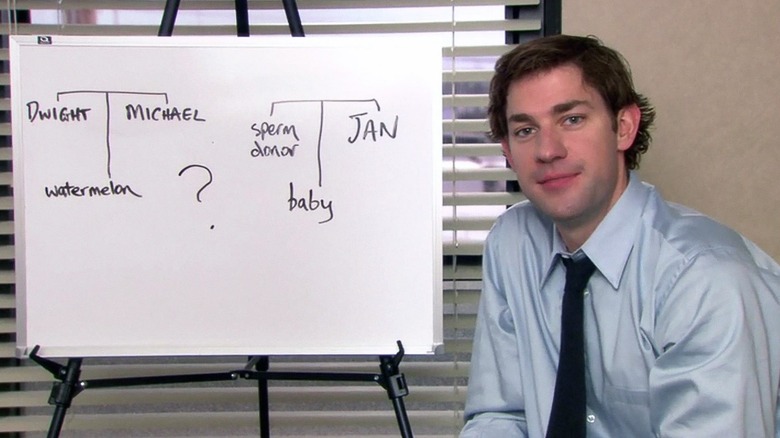
"Dinner Party" may have brought about the official end of Michael and Jan's relationship, but it was "Baby Shower" that finally forced him to move on. At the end of Season 4, shortly after meeting Amy Ryan's Holly Flax (whom Michael would eventually marry) for the first time, Michael learns that Jan is pregnant and decides, for whatever reason, to forgo pursuing Holly to take responsibility for a child that only he believes is his. Somehow.
Jim's graph "explaining" Michael's delusional relationship to Jan's child is one of his funnier talking heads by a wide margin. More than the jokes, however, the episode allows Michael to let go by working with the character growth he'd undergone since "Chair Model." He only stayed with Jan because the two of them were equally desperate to turn dysfunction into happiness — when Michael holds Jan's baby for the first time, on the sound advice of Darryl (Craig Robinson), he realizes how empty and inauthentic trying to fit into Jan's world always was. It's the arc that earns his first tender romantic moment at the end of the episode with Holly.
7. Andy's Play (Season 7, Episode 3)
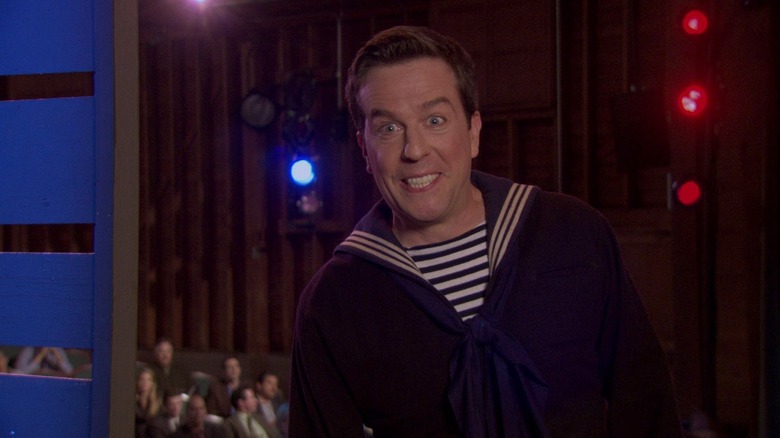
It's a genuine shame that "Andy's Play" is almost never counted among the greatest musical episodes of all time. Ask anyone what should disqualify it and you'll hardly find a definitive answer — plenty of other popular examples rely on unoriginal music ("The Flash") or diegetic musical performances ("Always Sunny in Philadelphia"). It's hard to find any valid reason for this episode to be overlooked (outside maybe the mockumentary format), especially given that it's one of the few musical episodes to be written around the staging of an actual theatrical production.
After years of intrusive singing, Andy is finally given an appropriate outlet to perform, via a community theater production of "Sweeney Todd." Part of the punchline is that Andy and the rest of the cast are kinda great. Where "Garden Party" and many worse Andy-centric episodes have the difficult task of pitching him as the series' anchor, "Andy's Play" reminds us that it's actually pretty easy to root for him in the right (supporting) context.
6. Halloween (Season 2, Episode 5)
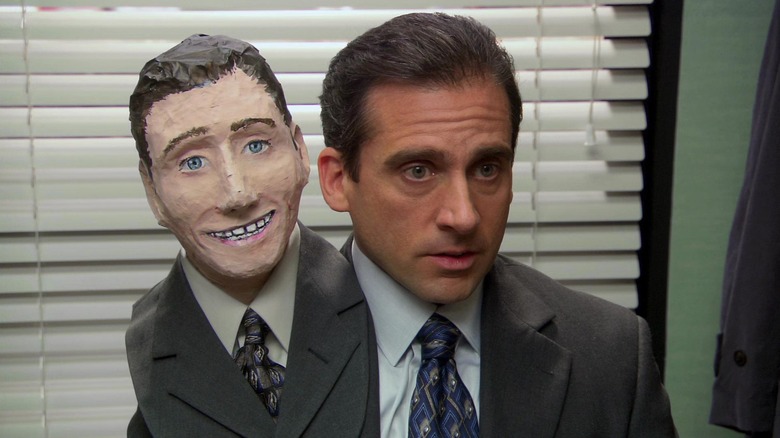
Despite being memorable enough to be directly referenced in the series finale, "Halloween" isn't a particularly popular episode among fans. The holiday has a shakier track record on "The Office" compared to Christmas — shaky being the result of a generous curve bumped up by "Koi Pond" and "Employee Transfer," which are great episodes that just so happen to (barely) feature Halloween. Suffice it to say, "Halloween" is the best Halloween episode of "The Office."
Like "Michael's Birthday," it helps define Michael's antagonistic relationship with his employees outside of the straightforward harassment and offensiveness of the U.K.'s David Brent (creator Ricky Gervais). The comedy isn't that Michael is being intentionally cruel in firing Devon (Devon Abner), but that his dysfunctional avoidance of conflict has forced him to do so while the office and its employees look as ridiculous as possible. In that brutal tension, "The Office" rediscovers the absurd indignity of office culture, without forcing Michael to be unlikable or relying on explicit abuse.
5. Grief Counseling (Season 3, Episode 4)
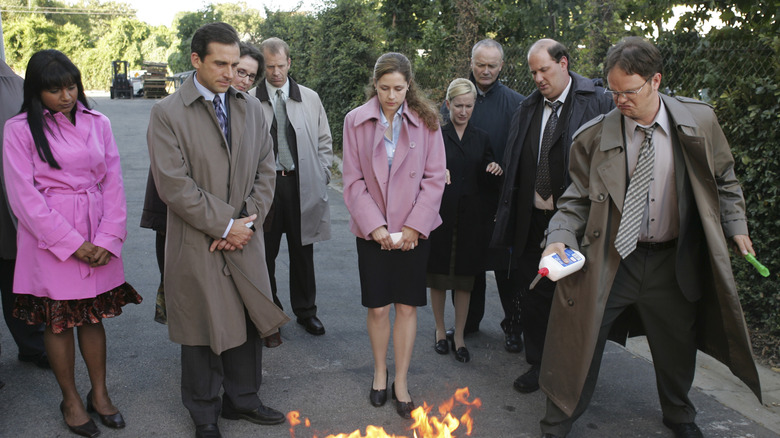
As ubiquitous as "The Office" is, it's rare it gets credit for being as psychological as it is. Michael Scott is one of the most quietly complicated sitcom characters in the history of American television, starting the series as that unlikable and abusive authority figure alluded to above, before patiently growing into an empathetic, redeemed human being deserving of the hard-earned happy ending he receives. (That's what she ... You know what. Never mind.)
That isn't a take you have to retroactively map onto the series to justify, and "Grief Counseling" (an episode mostly acknowledged for one of the best cold opens in "The Office") is a perfect example of why. After Michael learns his old boss, Ed Truck, has passed away, his processing starts with a shrug, builds into performative grief when he believes he can mine sympathy from it, and brilliantly finds its way to genuine existential distress by the end — likely because he realizes, as he fails to convince himself or his employees to care about Ed's passing, that his death might one day receive the same shrug-worthy reaction.
4. Business School (Season 3, Episode 17)
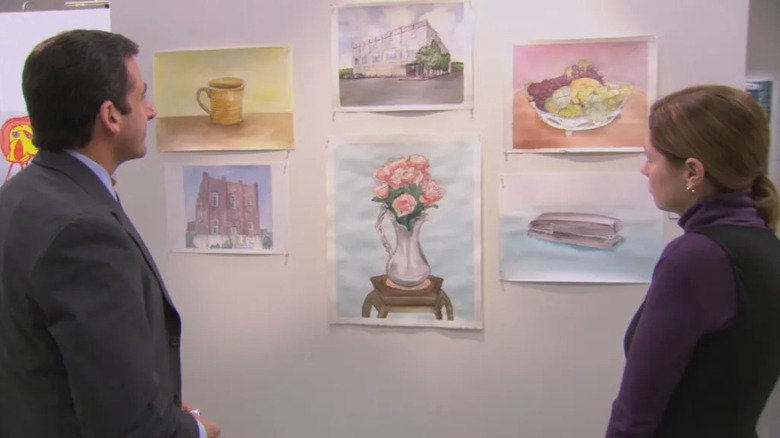
Of the two episodes Joss Whedon directed for "The Office," "Business School" is without a doubt the strongest. Readers will surely be able to guess our favorite moment from the episode — Michael's scene with Pam (Jenna Fischer) at the receptionist's ignored and derided art show is widely seen as a turning point for the character's portrayal in the series. But that isn't the whole story of why this episode excels.
"Business School" is "The Office" in a single episode — a tragicomedy about genuinely unexceptional people trapped in a dead-end job that will never reward them. Oscar Martinez's (Oscar Nunez) boyfriend is as correct about the uninteresting safe-ness of Pam's art as Ryan is about the pressures facing the paper industry. What nobody other than Michael has — what he defiantly holds to in the face of certain obsolescence — is the hope that neither the work nor art should matter as much as your relationships with other people.
"The Office" lost this in the last few seasons. Dunder Mifflin morphs into a place of endless upward mobility, where success is actually worth striving for and where all your favorite characters find the most important people in their lives. "Business School" represents a moment before the series forgot the drag of the workplace is what made small, outside moments like Pam's art show so meaningful.
3. Prince Family Paper (Season 5, Episode 13)
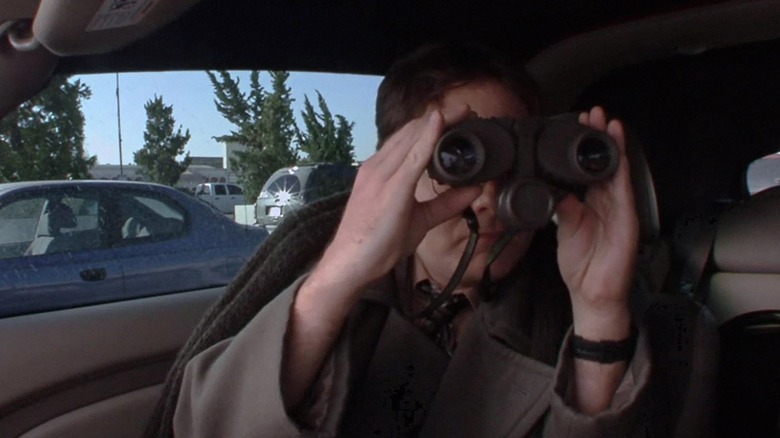
There's an argument to be made that Season 5 is the best season of "The Office" overall. The development of the newfound animosity between Michael and corporate is one of the series' best-handled storyline, and its role in Michael's psychological growth can't be overstated. What makes this story arc so exceptional is how far the writers were willing to twist the knife, week-to-week, in order to force Michael to reckon with how much life Dunder Mifflin was bleeding from him.
Holly's departure in "Employee Transfer" and his own exit in "New Boss" are the most talked-about moments, but "Prince Family Paper" is quietly the most damning one. At the behest of David Wallace (Andy Buckley), Michael is sent to a small, family-run paper company in order to learn how they're undercutting Dunder Mifflin. He ultimately exploits their trust in order to receive praise from a boss that will, in a matter of episodes, hire a senior manager (Idris Elba's Charles Miner) just so he doesn't have to talk to Michael himself.
2. The Deposition (Season 4, Episode 12)
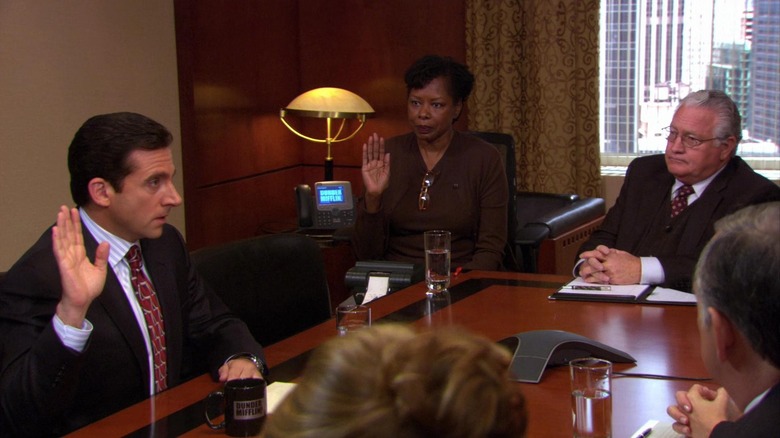
If the rise and fall of the Michael Scott Paper Company in Season 5 is the second-best seasonal arc, the best has to be the slow, hilariously agonizing deterioration of Jan and Michael's relationship in Season 4. Plenty is said about the genius drama of "Dinner Party" and the claustrophobic false hope of "Money," but "The Deposition" is every bit as nuanced, compelling, and difficult to watch — while still delivering some all-time-great jokes in the process.
It's essentially the closest "The Office" gets to a courtroom drama, where Michael plays the role of witness the entire time. The brutal but logical arc the episode takes can only write the relationship into a corner — of course, when pressed, both the love of his life and the company he's given much of that life to will throw him under the bus when financially prudent. It's comically bad luck that both of those buses are leaving the station at the same time.
Where the episode could've maneuvered toward a dramatic, climactic end or a tidier resolution, it instead destroys the two major pillars of Michael's life and forces him to sit with it — in a car, on the ride home, arguing with a woman who doesn't love him about food they can't really afford.
1. Gossip (Season 6, Episode 1)
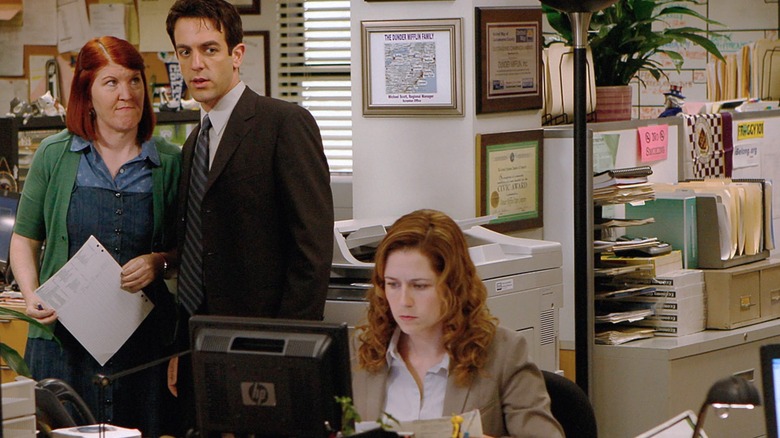
As you can tell by now, great episodes of "The Office" are most often overlooked because they dare to be a little quieter and less dramatic or comforting than the series' well-established high points, usually in the service of landing a smaller and/or more complicated character beat. "Gossip" is not that kind of episode.
Outside of "Gay Witch Hunt," the season premieres are usually the most underrated episode of a given season, and "Gossip" is the most slept-on of the bunch. Michael gets so excited to be in-the-know about Stanley's (Leslie David Baker) rumored affair, he tells the entire office, without even knowing if it's true — then, when he finds out it's definitely true, he spends the remainder of the day spreading false rumors in a magnificently stupid attempt to undo the damage.
For a show with so much going on, it was always exciting to see "The Office" just nail a straightforward situational comedic premise. Of all the episodes on this list, it's the most surprising, refreshing, and amusing on a re-watch, in large part because its best moments haven't been clipped and quoted ad nauseam.