

All 9 Seasons Of The Office, Ranked
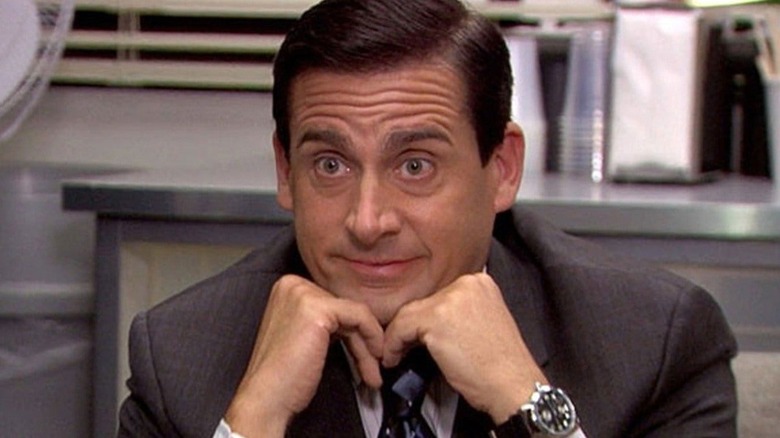
"The Office" has a more complicated legacy than most sitcoms. For the most part, audiences have accepted that the genre at large would be unavoidably hit or miss, succeeding or failing subjectively according to a viewer's tastes at any given time. As much as we love "Seinfeld," plenty of its episodes have aged poorly in the decades since it went off air. But the story of one of the most groundbreaking cringe comedies on TV is a little different.
Greg Daniels' American import of Ricky Gervais and Stephen Merchant's BBC series was a cultural phenomenon, rightfully regarded as one of the most influential television series of all time. Perhaps even more than other classic 2000s comedies like "30 Rock" or "Curb Your Enthusiasm," it shaped the genre's future and paved the way for mockumentary series like "Parks and Recreation" and "Abbott Elementary."
At the same time, either in spite of the standard it once achieved or because of it, "The Office" is also remembered for its disappointingly uneven seasons. The worst years at Dunder Mifflin Scranton were legitimately depressing at points — but when "The Office" was at its best, it produced outstanding seasonal storylines that were as hilarious as they were dramatically compelling.
9. Season 9
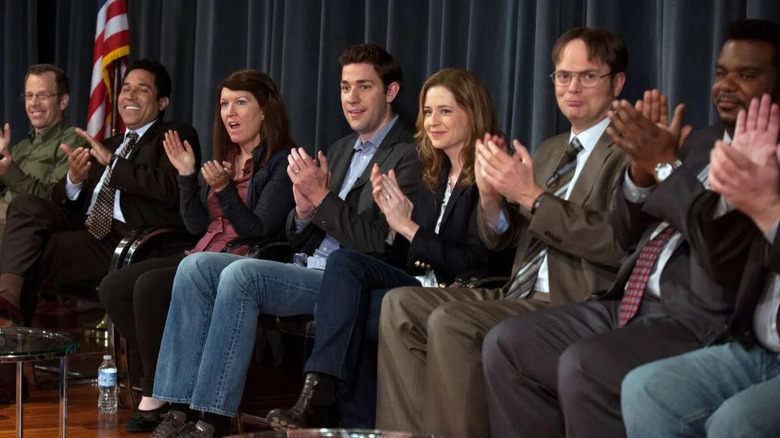
The core issue that plagues the entirety of the final season of "The Office" is a genuinely baffling lack of focus. At a time when the series should be taking stock of what it has built over the past eight seasons in order to use them as a foundation for an organically satisfying finale, the series instead introduces haphazard plot elements that either distract from ongoing storylines or disrupt them entirely.
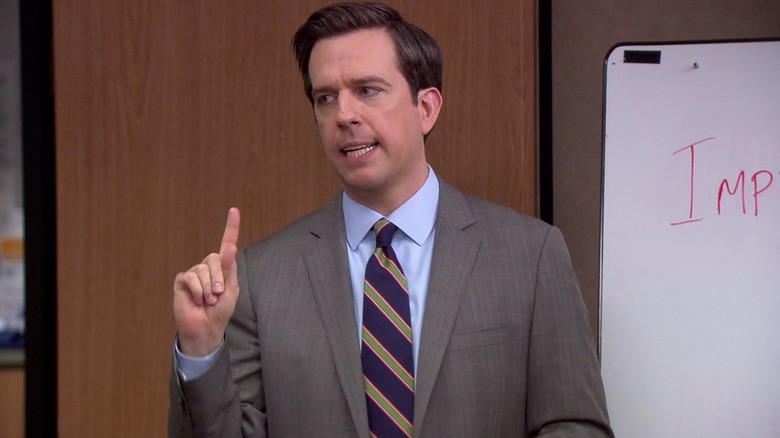
These late-game changes immediately feel desperately self-conscious rather than climatically risky. A season after Ed Helms' Andy Bernard was installed as a load-bearing pillar of the show's ensemble, his storyline collapses under minimal weight in what feels like a controlled demolition (Helms is barely even present, vanishing for eight episodes to shoot "The Hangover: Part III"). Andy's final arc all but admits "The Office" was wrong to trust him with the top job, reverses his growth until he becomes an even more loathsome version of his Season 3 characterization, then attempts to deliver a humbling resolution in the series finale that would've been far more successful if the audience had any reason to root for Andy by that point.
Jim (John Krasinski) and Pam (Jenna Fischer) are treated just as poorly by the writers. Their marriage is threatened by such depressing challenges (Jim's dishonest behavior, Pam's reaction to his distance, the tease of emotional infidelity, a physical assault) that they often feel like they're on a different show. The one saving grace of the season overall is Dwight Schrute (Rainn Wilson), who receives the only successful character arc of Season 9. By revisiting and resolving certain moments from Seasons 7 and 8, "The Office" makes a compelling case that the borderline antisocial salesman could reach his potential by understanding the people around him. He becomes the pillar Andy never was, and is able to carry much of the admittedly excellent series finale as a result.
8. Season 1
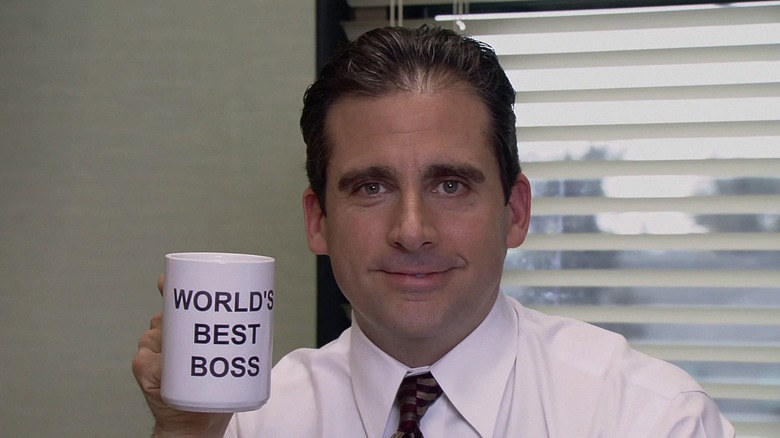
It shouldn't be controversial to state that, of all the seasons of "The Office," Season 1 has aged the worst. This is both because much of the humor feels outdated at this point, and because it bears little resemblance to what the series would become.
The biggest mistake the series made in the first season was trying to have their cake — or, perhaps, their jello — and eat it too. It wants the novelty of an edgy British sitcom with the comfort of a safe American sitcom. In its visual style, pacing, tone, and in some cases its sense of humor, the U.S. "Office" attempted to directly translate the infamously dry U.K. "Office." It's not entirely unsuccessful in this attempt — plenty of the cringe comedy lands, even when it feels alien to the series' later seasons. The second episode, "Diversity Day" (the first episode original to the U.S. version) is so efficient in establishing what kind of comedy "The Office" aims to be that it was adapted as the pilot for the Indian version.
At the same time, the rest of the season is uneven and largely unmemorable. The series is apparently too afraid to give its characters any meaningful, consequential edge — save, that is, for Steve Carell's Michael Scott, whose initial characterization is so devoid of redeeming qualities that his continued employment at Dunder Mifflin strains the credibility of this otherwise grounded portrayal of office life. Especially when you rewatch it after completing the entire series, every character feels lifeless and untextured compared to what they evolve into when "The Office" finally finds its footing. Even Amy Adams, in her slight role as a traveling salesperson, feels underwritten in "Hot Girl" compared to her episodes in Season 2.
7. Season 8
Jenna Fischer might not notice the post-Michael Scott decline of "The Office," but viewers certainly do. Season 8 of the series is actually the worst-reviewed season overall according to Rotten Tomatoes — its uniquely "rotten" score of 44% dives far below the scores received by the first and last seasons. We'd actually argue this harsh response to the series was a bit unfair, if understandable due to the jarring shift from the far superior Season 7.
The key misstep the show makes is, of course, Andy. He wasn't the wrong choice for regional manager at the time. In fact, he was kind of the only choice. The job would have been detrimental to the characterizations of Jim or Dwight. But for the show to fill the vacuum left by Steve Carell and Michael Scott with the pieces they had, they needed to construct the season around a pivot toward genuine ensemble comedy — a deceptively easy feat, given how many episodes Carell's character carried for the better part of the series' run.
When Season 8 scores, it does so as a team sport. "The List," "Pool Party," and "After Hours" make exemplary use of the crumbling Sabre printer empire and James Spader's Robert California as unifying oddities for the ensemble to react to or against. But when Robert (or Catherine Tate's Nellie Bertram) are used as 1-v-1 antagonists in a weak attempt at making Andy's new job the central overarching storyline, the series stumbles hard.
Honestly, it was a critical error to introduce any real challenges for Andy. He was by no means a hated character going into Season 8, but no one expected or wanted him to be Michael. Audiences simply wanted not to be distracted by Michael's absence — by asking them to actively root for Andy as the show's new anchor, the series constantly reminded them of what was missing.
6. Season 6
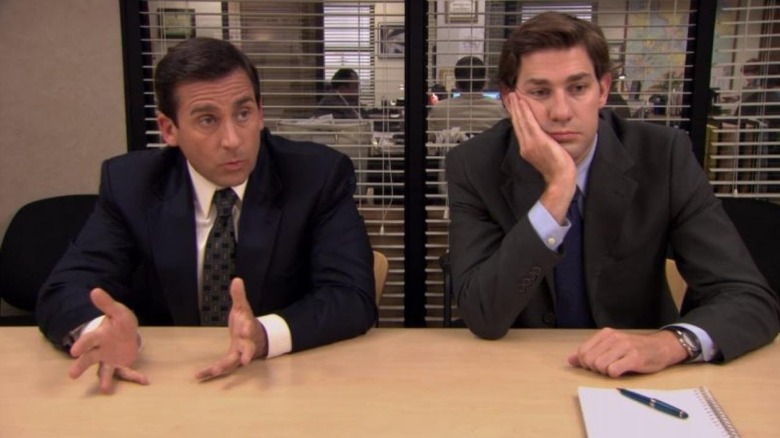
For a show with such drastic distance between its peaks and valleys, Season 6 is the closest thing "The Office" gets to a truly middle-of-the-road season. It's a little all over the place in terms of story and quality, so much so that it's easy to forget how narratively consequential it is.
Season 6 is when Dunder Mifflin finally succumbs to the financial pressures that plagued the company since the series' premiere, resulting in its sale to Sabre (and the introduction of Kathy Bates' amusingly southern CEO, Jo Bennett). It's the same season Jim and Pam finally get married in the two-part "Niagara" event (two of the series most beloved episodes) and have their first child. Jim also earns a significant promotion to co-manager in the second episode, and assumes a new position of responsibility throughout most of the season. All of that mostly works, and it was especially wise on the writers' part to have Jim's tenure as co-manager be temporary and contained to this season alone. Season 6 ultimately feels like his season of growth — but what about Michael?
Jim's promotion is just as much about maturing that character as it is giving an aimless Michael Scott something to do. "The Office" had perfected the characterization of Michael by this point, but had seemingly run out of narrative steam (especially in the absence of Holly Flax, the greatest lever of change in Michael's life in other seasons). The attempts to activate him this season feel chaotic, for better and for worse. His affair with Pam's mother is a massively risky swing that nonetheless lands; his affair with a married bar manager is less bizarre, but so isolated it has almost zero emotional impact. The whole season flirts with a mid-life-crisis vibe encapsulated by "Scott's Tots," an episode so polarizing that fans regard it either as genius comedic storytelling or one of the worst episodes of the series.
5. Season 7
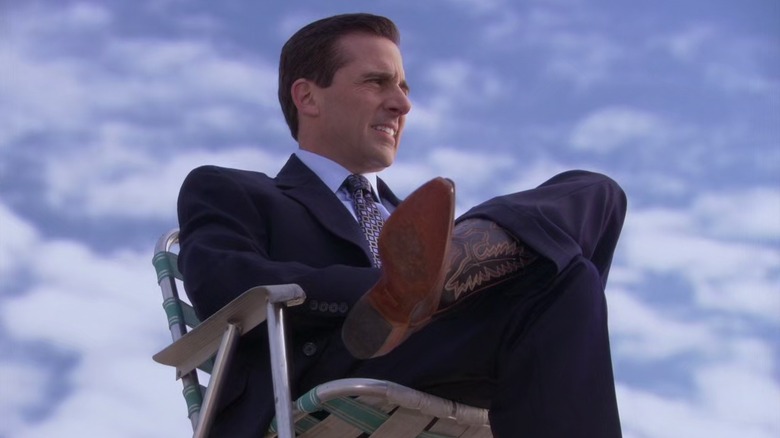
The story of Steve Carell's exit from "The Office" has never been recounted in any comprehensive, official way. Taking over a decade of PR spin, consistent rumors, and second-hand accounts with appropriate grains of salt, it's safe to say the timing of the exit felt somewhat premature. In hindsight, given the aforementioned chaos of Season 6, Season 7 actually feels like a perfect place to end Michael's storyline.
Season 7 is beautifully structured around Michael finally letting go of unrealistic expectations that have held back his growth the entire series, particularly with regard to his relationships and his idea of family. The season's premiere episodes, "Nepotism" and "Counseling," are the closest we get to any kind of confrontation with Michael's actual family, who are implied to have been dysfunctional throughout his life; "Sex-Ed" and "Christening" show him what relationships he actually needs to invest in to be happy, a rare level of clarity for the character that makes the appropriately awkward reintroduction of Holly Flax (Amy Ryan) feel important. The happiness and security he derives from their relationship in the latter half of the season feels both earned and unexpected — moments like Michael learning to laugh at himself in "Threat Level Midnight" or finally rejecting the odious Todd Packer (David Koechner) are some of the season's best, and are examples of the kind of focused sense of climax Season 9 lacked.
After the two-part "Goodbye, Michael" send-off (to many fans the best episodes of the series), Season 7 does noticeably dip. Will Ferrell's Deangelo Vickers is never as funny as he needs to be to justify the focus he draws from other storylines, and the "Search Committee" episodes make for the most underwhelming season finale of the show's entire run.
4. Season 2
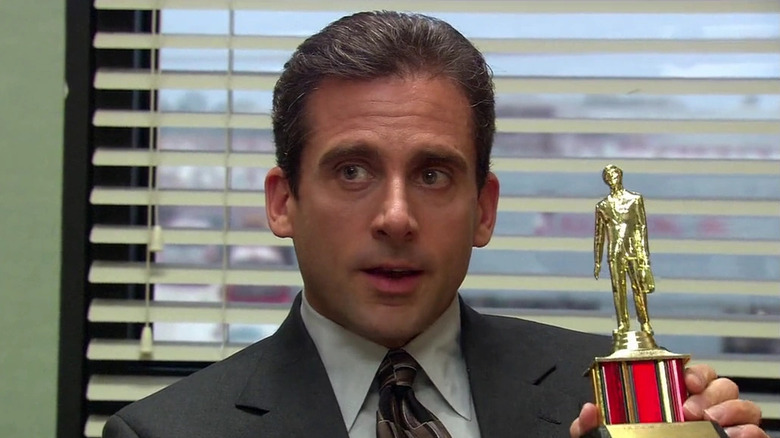
That "The Office" found its voice as quickly as it did is a testament to how adaptive the writers were. Everything that worked from Season 1 is maintained but refined or tweaked where necessary — the visual presentation, for example, is still grounded, but not as depressingly flat or colorless.
The most noticeable change is the cast, in particular Michael Scott. In Season 2, "The Office" quickly discovers how to keep him as the anchor of the series without alienating the audience or overly-softening his traits. The secret to the show's success lies both in Steve Carell's performance and the ability of the newly invigorated ensemble to balance him out. In the first season, the lifeless employees of Dunder Mifflin felt like helpless victims to Michael's unblunted, borderline-cruel and obvious behavior. In the second season, the writers make everyone in the ensemble likeable and interesting, while homing in on the idea that Michael is desperate to be liked by his employees in the same way that a high school outcast is desperate to be embraced by the in-crowd. He's a pitiful class clown, unable to fight the cold, adult bureaucracy of Dunder Mifflin corporate or fit in with the cool kids hanging out outside his lonely office. Without directly reversing any individual characterization, the show ingeniously manages to reverse the emotional dynamic of the entire cast. That shift alone saves "The Office."
Season 2 also sees the series embrace more traditional sitcom storytelling to its own benefit. Jim and Pam's will-they-won't-they relationship goes beyond the British "Office" in terms of focus, escalation, and complexity, and starts to grow into the benchmark sitcom romance it ultimately becomes. The cringe-comedy excels as well — now based on less intentionally offensive social failures and taboos, it finds an accessible comedic register that undoubtedly aided in the show's subsequent growth in popularity.
3. Season 4
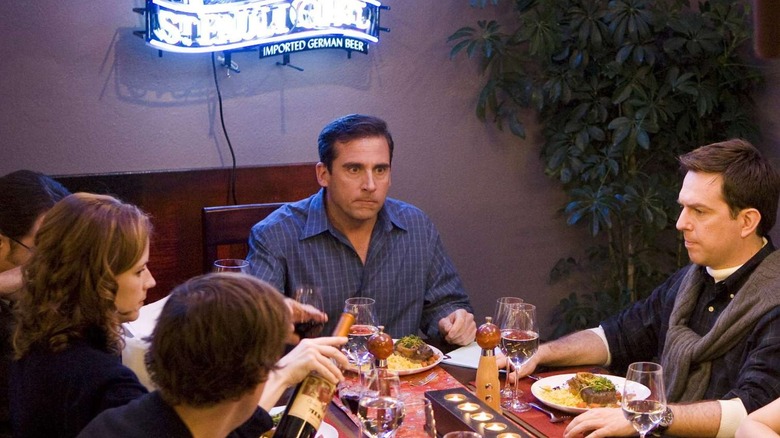
While most seasons of "The Office" are more remarkable with regard to their seasonal storytelling, Season 4 earns a spot in the top 3 simply by delivering some of the best single episodes of the series overall. Despite being significantly impacted by the 2007-2008 Writers Guild of America strike, every episode of this uniquely truncated season manages to be great.
The two-part episodes in the first half of the season could have easily dragged, but are smartly structured so that each part lands as an entertaining episode in its own right. For example, the season premiere, "Fun Run," is essentially one episode focused on Michael dealing with the aftermath of hitting one of his employees with his car, and another focused on his attempt to throw a charity race in her honor. Where the halves of "Niagara" or "Search Committee" melt together, both episodes of "Fun Run" are individually memorable and distinctly funny. The same is true for "Dunder Mifflin Infinity," "Money," and "Launch Party."
The strongest overarching story of Season 4 is Michael's relationship with his former boss, Jan Levinson (Melora Hardin). Their toxic and dysfunctional codependency anchors a season that is subtly about the struggle for romantic maturity — they move in together just as Jim and Pam finally decide to start dating, and as the deeply upsetting love triangle between Andy, Dwight, and Angela (Angela Kinsey) kicks off. In one of the most brilliant structural maneuvers in the sitcom genre, Season 4 drives all this "romantic" tension to the exceptional "Dinner Party" episode, which remains the undisputed peak of the show's episodic writing. The season finale, "Goodbye, Toby," finds a poetic resolution for the season's themes that lands with a level of deft dramatic irony the series rarely employs.
2. Season 3
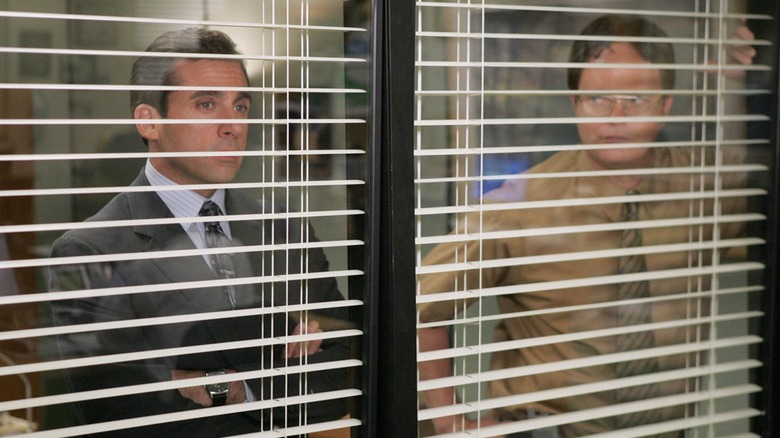
There's a solid argument that Season 3 of "The Office" is, to many fans, the best season of the series. It's hard to dispute this, at least at first glance. On Rotten Tomatoes, it's tied with the second season's score of 100% fresh; on Metacritic, it holds a series-high "universal acclaim" score of 85/100. It earned seven Emmy nominations — the most of any season of "The Office."
We're not going to argue with the facts. Season 3 is without question one of the most beloved and objectively successful seasons of television ever produced, garnering widespread acclaim and transforming "The Office" into a cultural phenomenon. But what often goes overlooked in the show's history is how Season 3 pulled off this feat — not by simply playing to the fresh strengths they somewhat miraculously found just a season earlier, but by subverting them to take the story in audacious new directions.
In particular, the decision to follow Jim to another branch for half the season could have broken the series. Instead, it established a feeling of consequence that allowed "The Office" to differentiate itself as a sitcom with actual stakes. It's a kind of serialized storytelling "The Office" inconsistently employed in later seasons, then scrambled to recover all-too-late in Season 9. When Pam is nearly attacked by a warehouse worker, it feels jarringly out of place and confusing, as we implicitly know a happy ending is on the horizon; but when Jim is nearly attacked by Roy (David Denman), it's an earned moment with real, unpredictable narrative impact.
"The Office" Season 3 is a season of television so consequential, surprising, and entertaining that its greatness is obvious after your first watch. That might make it the #1 season for many readers. For our part, we'd argue that just one other season stands slightly above it — even if you have to really dig into it to appreciate what it does.
1. Season 5
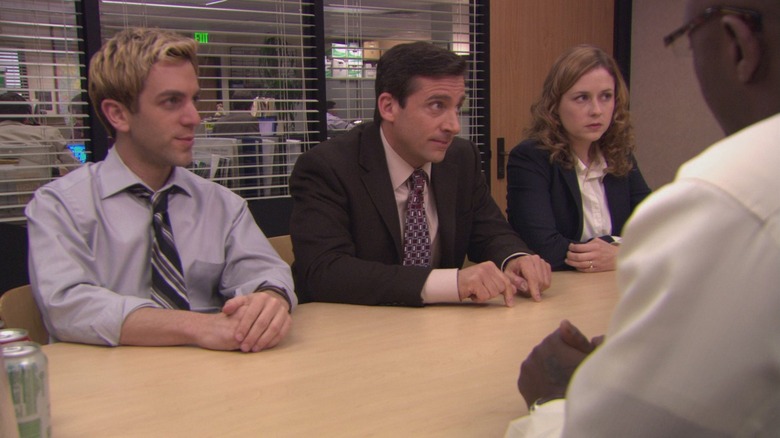
Though it's rarely regarded as the greatest season of the series, there's a reason why Season 5 of "The Office" is the only other season to receive a perfect score on Rotten Tomatoes. Season 2 brilliantly elevated the series as a whole and Season 3 approached its core qualities with inspired ambition — but what Season 5 quietly does better than any season comes down to structure, conflict, and character growth.
At the end of the rather hasty Season 4, Michael Scott has finally become someone capable of handling an adult relationship of any kind. At the start of Season 5, we get to see him grow from an exceptionally effective vehicle of comedy with forgivable flaws into a fully realized character fighting for the life he deserves. In the first "act" of the season — from "Weight Loss" to "Employee Transfer" — Michael and Holly's relationship allows him to experience real, adult connection, only for it to be taken away by the company he's devoted his life to. For the first time, Michael isn't the villain of his own story — it's the office.
The series continues developing that internal conflict in the hilarious two-parter "Stress Relief" and the surprisingly brutal "Prince Family Paper." Finally, the tension between Michael and corporate comes to a head with the introduction of Scranton's impersonal corporate liaison Charles Miner (recurring guest star Idris Elba), Michael's cathartic, justified exit from Dunder Mifflin at the end of "New Boss" (in which he devastatingly cites Holly's transfer as a partial factor), and the founding of the Michael Scott Paper Company. The entire season builds to the seven-episode arc from "Golden Ticket" to "Broke." It is the single best storyline of the entire series, just as complete and effective comedically as it is emotionally. In that way, it exemplifies why "The Office" is one of the greatest sitcoms of all time.