

15 Best Series Finales Of The 2020s (So Far), Ranked
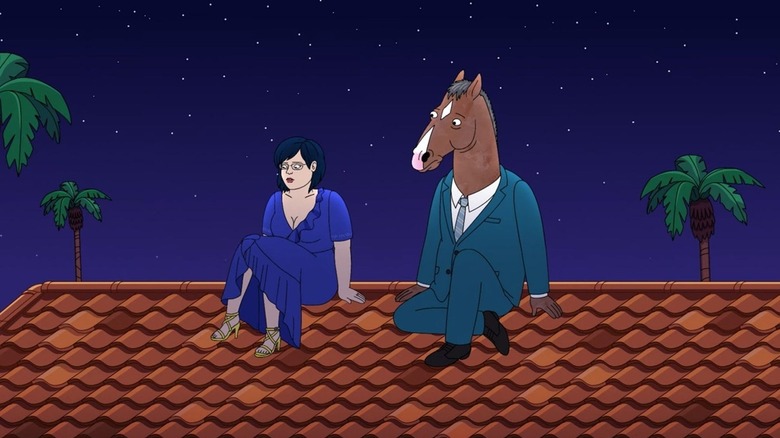
In an age of endless content catalogs and online discourse, television shows in the 2020s either end too soon or go on way too long. Far rarer do we get the space to reflect on how the last few years of the Golden Age of TV successfully brought quite a few of its landmark shows to a satisfying end.
It was impossible to include every single great series finale even in a list this long. Some finales, like FX's "The Bear," still feel too fresh to consider. Meanwhile, we felt it unfair to consider miniseries, though the final episodes of "Adolescence" and "The Curse" are undeniably haunting in their own ways. The episodes that ultimately made the cut wrapped their series up poetically, whether they had to seamlessly transition into a galactic civil war, relitigate a sitcom argument from 25 years ago, or find one last moment of connection in the American Midwest.
15. Life is a Promise (Yellowstone)
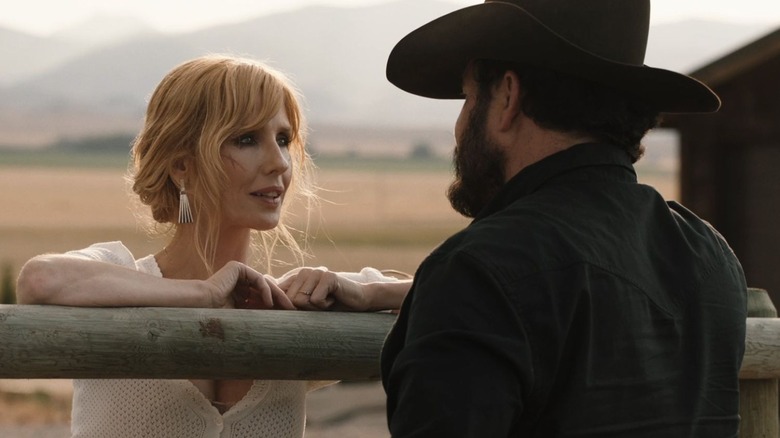
If anyone could manage to turn the unfortunate circumstances of the final season of "Yellowstone" into a launch pad for a franchise, it's Taylor Sheridan. Series star, Kevin Costner, infamously left halfway through Season 5, suddenly forcing the prolific creator-showrunner to finish his neo-Western epic without the cowboy at its center. Intelligently, Sheridan corrals the series to a mostly satisfying end in "Life is a Promise" by focusing on its central themes of family and legacy.
Costner's John Dutton haunts the back half of the season, the series finale included, as "Yellowstone" explores the impact he had on his children and their future. The final showdown between Beth and Jamie (Kelly Reilly and Wes Bentley) isn't just a climax for the two central character arcs filling the void left by John's absence. It's the resolution of his own overarching inner conflict, embodied by two children who wanted to follow in his footsteps. Luke Grimes' Kayce is appropriately the one to end the family's cycle of violence over land, with Sheridan tying his decision to the seven-generation promise set up in "1883."
14. Sleep, Dearie Sleep (The Crown)
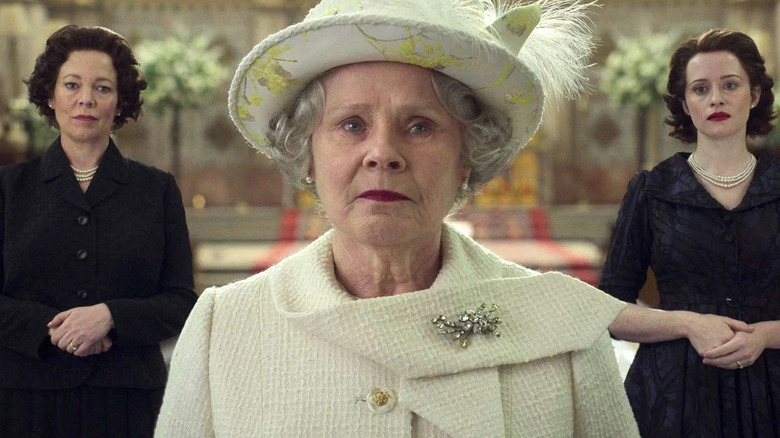
Especially compared to its critically acclaimed first seasons, the final installment of Netflix's "The Crown" was widely regarded as a disappointment. Even so, in "Sleep, Dearie Sleep," Peter Morgan at least delivered a series finale that rewarded fans who remained devoted — all while reacting to history in the making.
The death of Queen Elizabeth II in 2022 — during production of "The Crown" Season 6 — inspired Morgan to shift the focus of his final episode to mortality. As Prince Charles (Dominic West) prepares to remarry, as the young William (Ed McVey) and Harry (Luther Ford) wrestle with their roles in the public eye, Imelda Staunton's aging monarch plans her funeral and questions whether she should finally let go of the throne. As usual, no one can truly understand her predicament but herself. Morgan ingeniously uses this recurring emotional beat to bring back Claire Foy and Olivia Colman as younger versions of the Queen.
It all reminds the viewer of what once made "The Crown" great — particularly the way it humanized historical figures without flattening them. The final moment between Elizabeth and Philip (Jonathan Pryce) brings the romantic arc to a gorgeous, bittersweet end. If you aren't judging it against the real world, it makes for unbelievably moving TV.
13. The Agreement (Derry Girls)
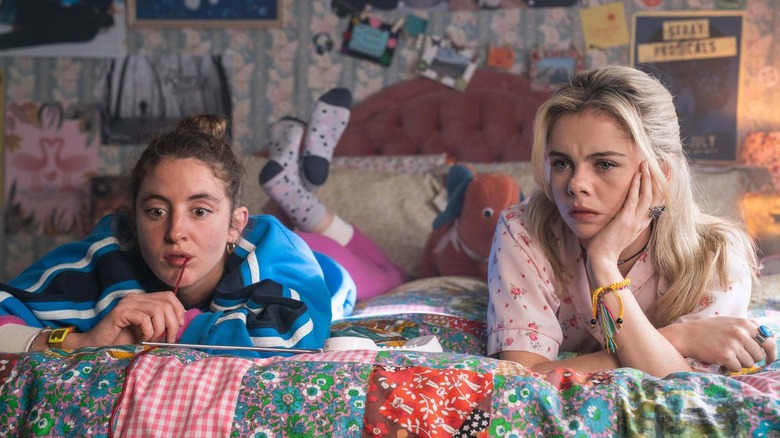
The coming-of-age dramedy, "Derry Girls," flew under the radar for most. Following a group of Northern Irish high schoolers during the twilight of the Troubles in the late '90s, Lisa McGee's Channel 4 series ran for three seasons before ending in 2022.
The series finale, "The Agreement," pleasantly feels like an epilogue. The most dramatic and climactic events in the girls' lives occur in the penultimate episode, while "The Agreement" jumps forward a year to a time when the dust has largely settled. Most importantly, it capitalizes on the series' historical backdrop by erasing the distance between the characters and the political turmoil they're now old enough to play a role in. The finale does this in subtle and overt ways — from including the planning of an 18th birthday party, to having a character's off-screen brother incarcerated for political violence.
It makes the actual "coming-of-age" element of this story feel more important than it normally does in the genre. The weight and wonder of maturity are specific in "Derry Girls," and the final montage tying them directly into history feels earned rather than self-insistent as a result.
12. Dig (Reservation Dogs)
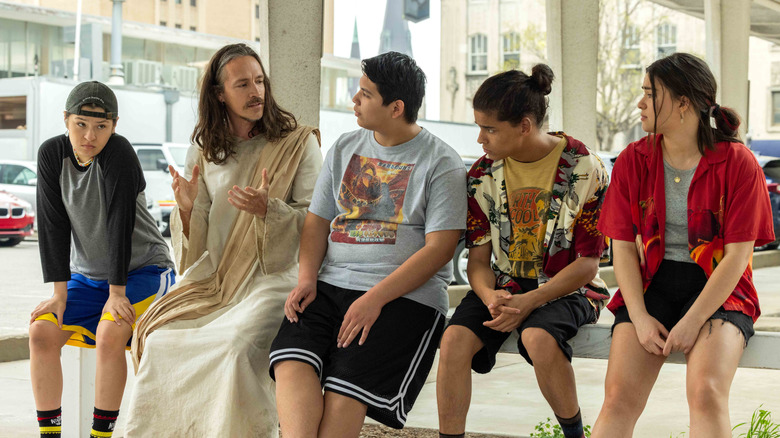
"Reservation Dogs" is the kind of series that will continue to be talked about as one of the most underrated shows of the decade. Even if it was never the awards darling it deserved to be, Sterlin Harjo and Taika Waititi's coming-of-age comedy ended on its own terms at the perfect moment. The broad, overarching goal of the show (taking the Indigenous teenagers it follows from their reservation in Oklahoma all the way to California) had already mostly been resolved by the middle of Season 3.
As such, the finale, "Dig," was free to meditate on what growing up actually meant for these kids. In most coming-of-age stories, maturity means breaking out on your own, venturing out into the proverbial (or even literal) west in search of self-actualization. By focusing the finale on community, "Dig" offers a holistic perspective. For some, growing up is moving on; For others, it's coming home. This is perfectly encapsulated in Bear's (D'Pharaoh Woon-A-Tai) cathartic final scenes, both with Devery Jacobs' Elora and the spirit guide (Dallas Goldtooth) he's finally ready to say farewell to.
11. AGG (Somebody Somewhere)
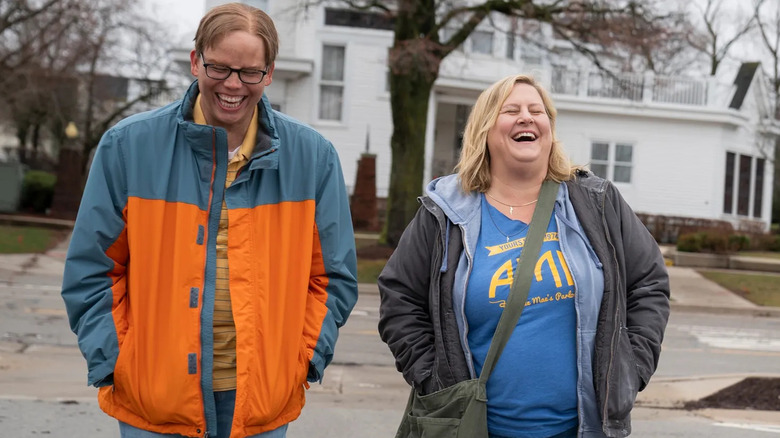
As beloved as "Somebody Somewhere" was among hardcore TV fans (like our readers), it largely flew under the radar among broader audiences. Unlike other series on this list, the show was decidedly unremarkable when it came to plot, right through to the finale — a true slice-of-life comedy-drama about good, complicated people in Kansas. "AGG" succeeds because it holds to this quietly defiant vision (perhaps because it was originally written as a season finale).
The central conflict starts with Sam (Bridget Everett) and Tricia (Mary Catherine Garrison) forgetting their late sister's birthday. There isn't a scramble to resolve this with a big gesture, but a tender acceptance that, as they continue to be present in the lives they have, the grief that once felt vital to keeping her memory alive might fade. A forgotten birthday that would've been a ceremony of mourning is now, unexpectedly, a celebration of two people who are finally able to be there for each other. "AGG" makes these small, radical acts of vulnerability — of letting other people be your "person" — feel as cathartic as any series finale.
10. Us (This Is Us)
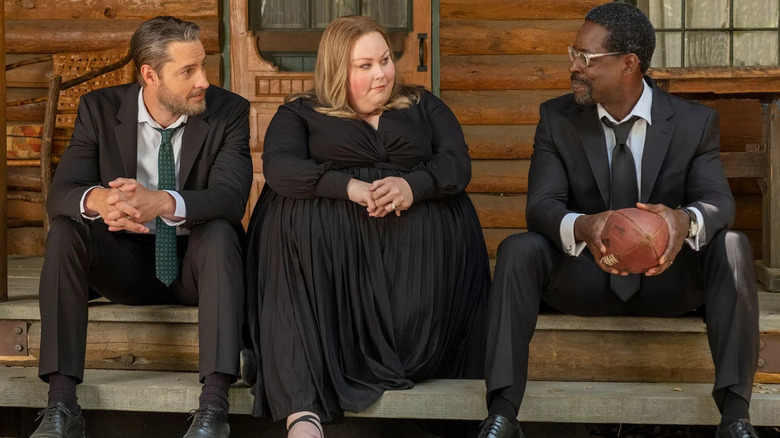
Through to its finale, "This Is Us" was one of the last broadcast dramas to reliably pull in millions of viewers every week. Most impressively, it did so by telling an understated story about the hidden impact people have on each other throughout their lives. "Us" drives that point home, the far more traditionally climactic penultimate episode having already handled the final major plot beats.
Though the setting is (unavoidable spoiler alert) a funeral, the episode is decidedly about life and how to be grateful for it. Kevin's (Justin Hartley) exchange with Uncle Nicky (Griffin Dunne) underscores how far he's come; Kate (Chrissy Metz) gets a pleasantly bittersweet moment of shared gratitude with Toby (Chris Sullivan); and – good god – Sterling K. Brown reminds us one last time why he's the backbone of the series, with a final tear-jerking performance that makes an old answer to "the meaning of life" feel profound all over again.
9. Jedha, Kyber, Erso (Andor)
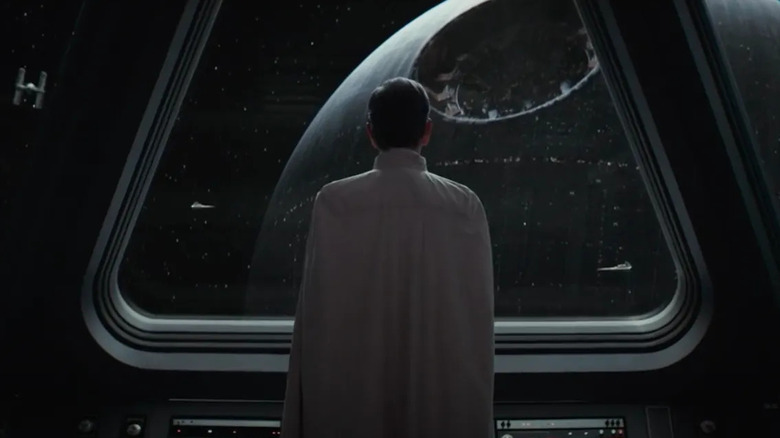
In most circumstances, a two-season series would have such an easy job wrapping up its plot lines that its finale would hardly be notable. The same cannot be said for Tony Gilroy's "Andor," considering the show abandoned its original five-season plan. On its inevitable trajectory toward "Rogue One," the finale shouldn't have been able to do anything game-changing. The fate of Diego Luna's Rebel spy was sealed.
Even so, "Jedha, Kyber, Erso" is revelatory, ending "Andor" with a subtle yet direct challenge to the "Star Wars" universe at large. The destruction of the Death Star — like every major "Star Wars" plot point — is shown to us as the victory of a legend in the making, predestined for glory. The final moments of "Andor" deny that, recontextualizing the win as the result of thankless sacrifices by the many forgotten agitators who helped spark the rebellion.
8. Prisoners of War (Homeland)
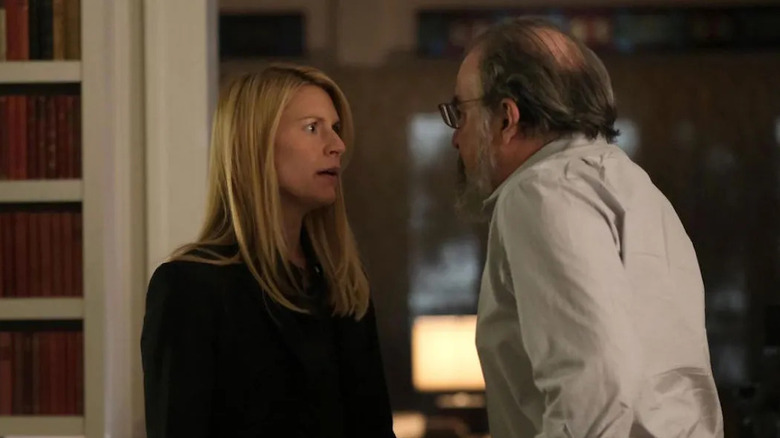
"Homeland" had one of the most unfortunately uneven runs of any prestige drama in the 2010s. As a result, it was somewhat bewildering when the series managed to deliver a near-perfect finale in "Prisoners of War." It's impossible to discuss without getting into its genius twist – major spoilers to follow. The success of the final episode rests squarely on the shoulders of Claire Danes, who is tasked with landing one of the riskiest and most compelling twists in the series.
Having begun the series doggedly trying to reveal covert threats to U.S. national security, Danes' Carrie Mathison fully descends into the role of foreign asset in "Prisoners of War." Story-wise, this kind of direct symmetry in a character arc is bold — but "Homeland" had been in need of such boldness for a while. The finale even finds a way to foreshadow this reversal with an archive "cameo" from Damian Lewis' character. Danes, who won multiple Emmys for this role in its golden age, gives a final masterful performance that encapsulates the desperation and pain of the situation she's been forced into.
7. Happy Ending (Schitt's Creek)
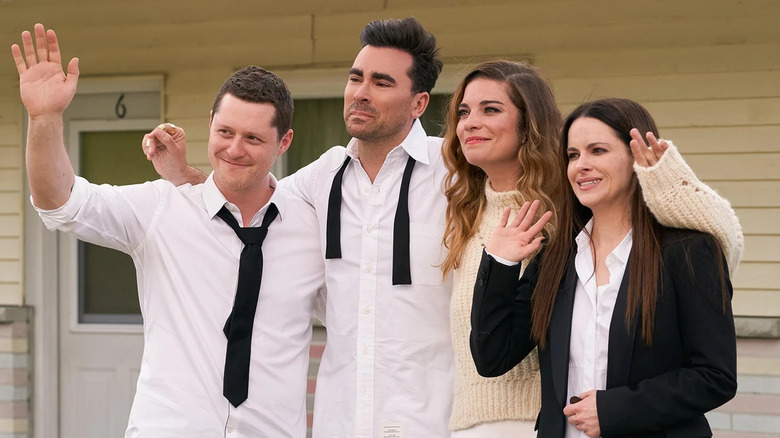
Who doesn't love a good old-fashioned TV wedding? True to the uniquely heartwarming and irreverent tone "Schitt's Creek" had used to become an international hit, "Happy Ending" celebrates how far the Roses have come in a bittersweet finale that delivers everything its name's promise. It's a hilariously poetic way to punctuate a series that revolved around people helping each other love themselves, often by accident.
Stories about selfish people becoming members of a community often see those characters shrink themselves — "Happy Ending" reasserts that one can keep themselves big while inviting others to be bigger. Moira (the late, great Catherine O'Hara) dramatically officiating dressed like the pope is the same gesture as Patrick (Noah Reid) singing his vows, Alexis (Annie Murphy) showing up in a gorgeous white dress, or David's (Daniel Levy) acquiescence to a full-blown Schitt's Creek ceremony. No one had to shrink to be loved.
6. wow (Barry)
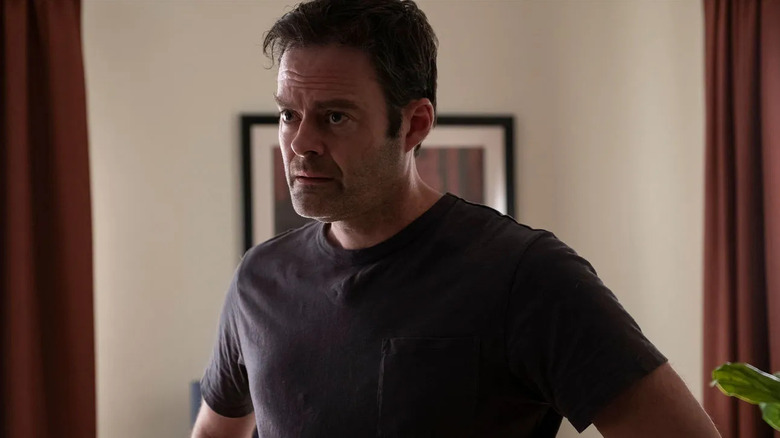
With "wow," "Barry" solidified itself as one of the best HBO comedies ever made. While many shows released in the past decade, like "BoJack Horseman" and "Succession," were as hilarious as they were painful to watch, Bill Hader and Alec Berg's hitman-turned-actor saga committed wholeheartedly to breaking down its genre, becoming darker in the process. "wow" feels like it comes from an entirely different show from the pilot — that's why it works. In life and in "Barry," comedy can be a cloak for shame. There's nothing left to laugh about in the finale, and nowhere left for these characters to hide.
"wow" perfectly completes the show's overarching and unforgiving rebuke of violence. "Barry" always felt aware of the complicated legacy it was carrying. The series ended its run in the twilight of the Golden Age of Television, an era made by semi-mythologized antiheroes whose inner moral turmoil provided texture for the escapist thrills of their violent lifestyles. "Barry" challenged this dynamic more and more as the show went on, committing to a thematic inversion that reached its apex in "wow." The criminal lifestyle Hader's Barry leads is boring, humiliating, and pathetic, right to the very end.
5. No Lessons Learned (Curb Your Enthusiasm)
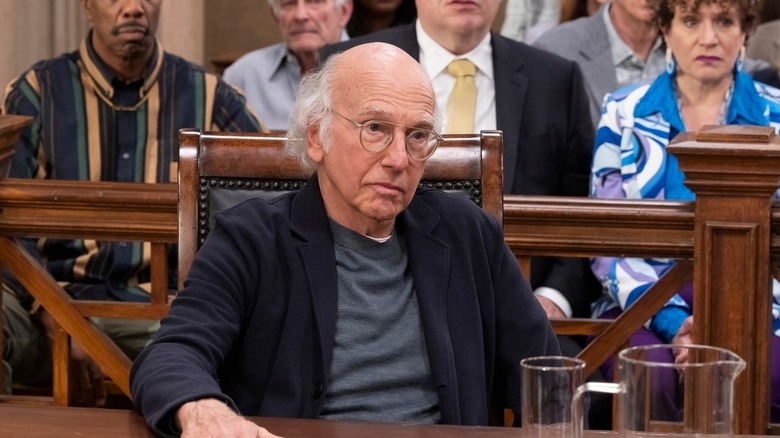
Aside from creating two of the most popular, distinct, and influential sitcoms in TV history, Larry David is also known for crafting one of its most controversial series finales. Master comedian that he is, he recognized that the funniest thing he could possibly do was end his other series in almost the exact same way.
"No Lessons Learned" is a deliberately antagonistic episode in this regard. The Larry of "Curb Your Enthusiasm" goes through the motions of the original "Seinfeld" finale, as though the show itself is using its precious last moments to relitigate an argument that hasn't mattered to anyone in years. It's an unprecedented execution of meta storytelling that feels first-of-its-kind. The only thing that could've made it more perfect is if audiences rejected this finale too. Sadly, it was recognized as excellent throughout.
Aside from turning the script into a spiritual reflection of everything Larry David is in this series, "No Lessons Learned" is just top-notch "Curb" throughout. All the pettiness, chaos, grievances and self-obsession feel just as pointlessly passionate as ever, ending the series' staggeringly long run with a vitality that proved there was plenty still left in the tank.
4. It Was All a Dream (Atlanta)
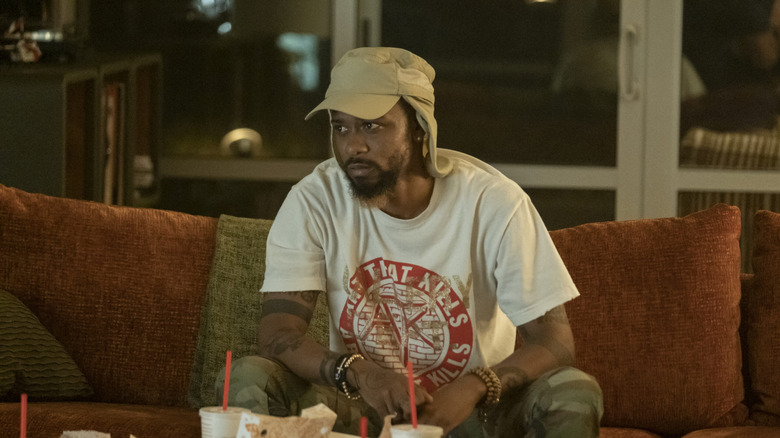
Only "Atlanta" could make shots of "Judge Judy" some of the most meaningful and confounding elements of an all-time-great series finale. "It Was All a Dream," the final installment in the surreal saga of Paper Boi (Brian Tyree Henry's homegrown rap star), has a lot going on. It's all great, perhaps largely because it doesn't make total sense.
The title itself is at least a quadruple entendre, referencing the pilot episode, The Notorious B.I.G.'s "Juicy," a historically reviled trope in TV finales, and the outlook of LaKeith Stanfield's Darius throughout this episode. After marginalizing the character for most of the season, it was a massive structural swing for Glover to hand Darius the keys to the final episode. Turns out, he drives it (and a pink Maserati) better than any of the other characters could.
As much as it changed throughout its run, "Atlanta" was (poetically) consistent when it came to its core character-driven question: Is it possible to achieve your dreams without changing who you are? By framing the finale — and potentially the whole series — through a subjective lens, the show asks the viewer how much that question really matters, so long as you can choose to love whatever life appears in front of you.
3. Nice While It Lasted (BoJack Horseman)
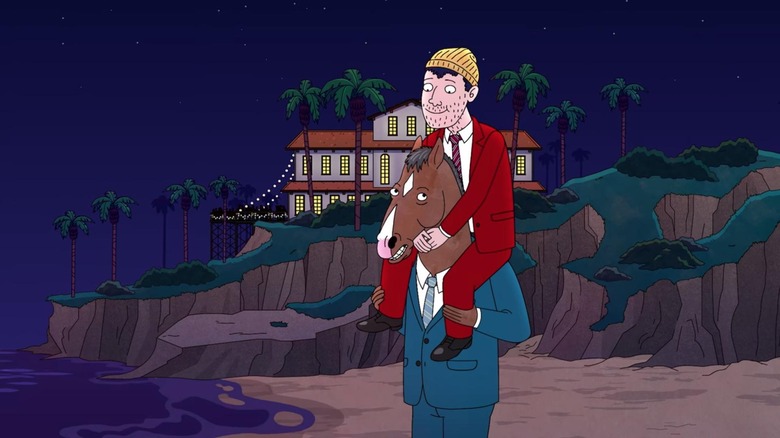
"BoJack Horseman" spent six seasons showing us what happens when self-reflection and accountability try to exist in an industry that deliberately poisons both. The finale, "Nice While It Lasted," gives us a brief, bittersweet glimpse into what might happen if they were given room to grow. In concert with the preceding episode, "The View from Halfway Down," Raphael Bob-Waksberg's Netflix animated dramedy earns the right to have its cake and eat it too. While the former imagines BoJack (Will Arnett) facing a more final, cosmic consequence for his choices, the finale asks him to do the much harder work of actually living with his actions.
It doesn't undo the damage BoJack did. The audience is left with the clear impression that his closest relationships have changed for good. Some are broken beyond repair; Some, changing into something healthier. There are scenes of quiet rejection in the finale that feel strangely uplifting. TV shows about psychologically complex, antiheroic characters struggle to come up with a justifiable end beyond the character receiving mortal punishment. "BoJack Horseman" achieves something more impressive by showing that, yes, some people can do horrible, unforgivable things, be punished for them personally, professionally — and even legally — and still somehow find a way to keep living.
2. With Open Eyes (Succession)
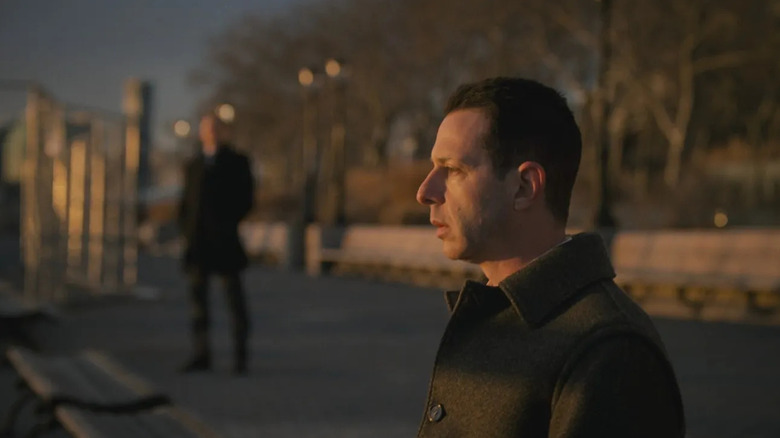
"Succession" began by proposing a clear question-and-answer premise: Who will lead the family's company into the future? Rather than cleverly subvert this long-awaited resolution, the feature-length series finale answers it head on in clear, devastating fashion. The fact that the series kept viewers guessing who would succeed Logan up until the show's amazing final season is an achievement in and of itself.
More than any other episode on this list, "With Open Eyes" is a showcase of the best acting TV has seen in the past decade. Jeremy Strong's final meltdown as Kendall Roy sells a boardroom argument as an epically pathetic, jaw-dropping climax. Creator-showrunner, Jesse Armstrong, and director, Mark Mylod, craft a true corporate epic in "With Open Eyes." It's breathtaking how it's able to explore the full spectrum of emotion "Succession" was able to evoke — the catharsis of finally seeing the three core Roys put aside their selfish desires for a common goal; The inevitable grief when the cold logic of personal ambition wins out anyway.
1. Saul Gone (Better Call Saul)
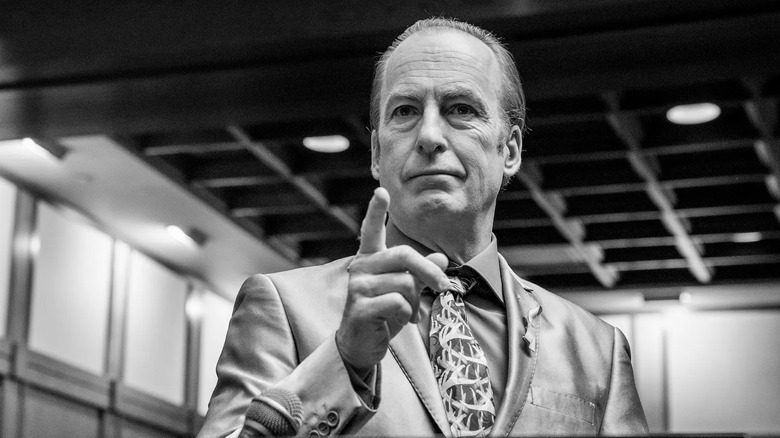
In 2013, "Breaking Bad" brought one of TV's most revolutionary shows to an end with a bombastic, bloody finale. A decade later, its spin-off chose a far quieter ending for its most enigmatic supporting character — and arguably achieved the superior series finale. After years of watching Bob Odenkirk's antihero tragically sabotage the lives of himself and everyone he meets, "Saul Gone" brings "Better Call Saul" to a close with a question of identity and desire.
Writer-director, Peter Gould, uses interweaving past and present timelines (with exciting "Breaking Bad" cameos throughout) to reflect on both themes while calling back to the franchise at large. We also see Saul/Jimmy/Gene in all his identities back to back. As Gene, he gets to relive his criminal glory days; As Saul, he manages to bend the law over his knee one last time to secure a paltry sentence for the crimes he committed. It isn't until he reclaims his identity — and his crimes — as Jimmy McGill that the character experiences true peace for the first time in either series.