

10 Best War Shows In TV History, Ranked
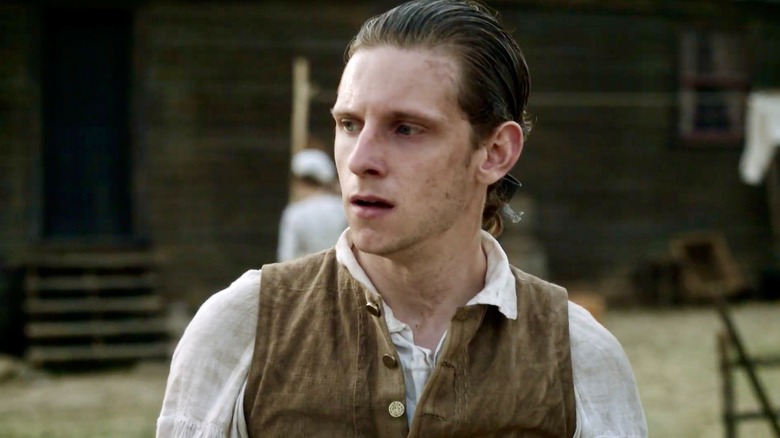
Few television genres are as consistently rewarding as the war drama. Armed with fascinating characters, rich historical settings, political maneuvering, and thoughtful storytelling, these series immerse viewers in conflicts inspired by real events and turbulent periods in history.
Whether following a platoon through the jungles of Vietnam, a band of spies during the American Revolution, or rival leaders in feudal Japan, the shows on this list prove that war stories come in many forms. Often, the most compelling moments occur far from the battlefield, where military leaders, politicians, and spies make decisions that alter the lives of those on the front lines. Heck, one of television's greatest war shows takes place almost entirely inside a mobile army surgical hospital during the Korean War.
Whether you're craving pulse-pounding battle sequences, political intrigue, or a quieter character study, these are the 10 best war shows ever produced for television, ranked.
10. Masters of the Air
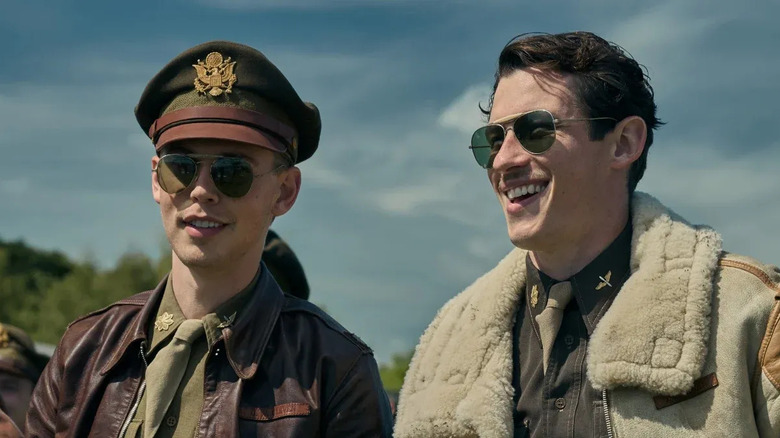
First up is "Masters of the Air," the third installment in Steven Spielberg and Tom Hanks' World War II saga that began with 2001's "Band of Brothers." While not quite as engrossing as its sister series, this underrated Apple TV miniseries nonetheless hits its target with a powerful tale of survival and friendship.
Focusing on the 100th Bomb Group of the U.S. Eighth Air Force, whose members flew perilous bombing missions over Nazi-occupied Europe, "Masters of the Air" follows Gale "Buck" Cleven (Austin Butler), John "Bucky" Egan (Callum Turner), and navigator Harry Crosby (Anthony Boyle) through a pivotal time of the war. Together, these men fly B-17 bombers through horrifying conditions, contending with antiaircraft fire, mechanical failures, brutal weather, and relentless attacks from German fighter pilots thousands of feet above the ground.
Every mission brings fresh danger. Even when the airmen make it back to base, their relief is short-lived, as another assignment is never far away. It's a brutal game of wait-and-see, with every flight carrying the possibility that some of them will not return.
Featuring eye-popping action sequences rendered in harrowing detail, "Masters of the Air" lives up to its predecessors in terms of spectacle. It doesn't soar to the same emotional highs as "Band of Brothers" or "The Pacific," but it's still a damn fine war epic.
9. Das Boot
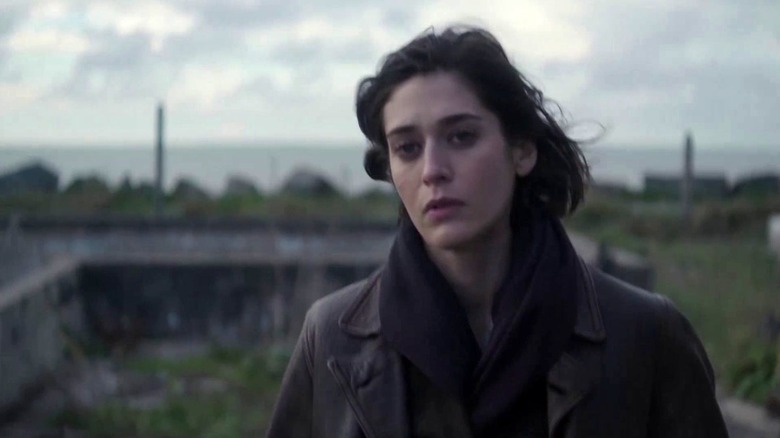
Yes, "Das Boot," the classic 1981 Wolfgang Petersen film, received a television follow-up in 2018. The sequel series expands the original movie's world through several storylines unfolding aboard German submarines and on land during WWII.
Wisely, creators Johannes W. Betz and Tony Saint don't try to replicate Petersen's film. Instead, they cast a wider net that gives viewers several different perspectives on the conflict. In Season 1, for example, the focus shifts between the crew of the U-612, German officers, and members of the French Resistance in occupied La Rochelle. Later seasons introduce new crews, locations, and military conflicts as the war intensifies.
From a production standpoint, the scale is mighty impressive. The submarine sets are convincing, while the sound design and visual effects make the underwater sequences appropriately claustrophobic. The realism leads to high-octane suspense, with plenty of twists and turns along the way.
Bouncing between tense underwater combat and land-based espionage makes for a slightly uneven experience for viewers who prefer more straightforward adventures. Still, that's a minor complaint about an otherwise gripping war series that confidently moves beyond the shadow of Petersen's film.
8. Rome
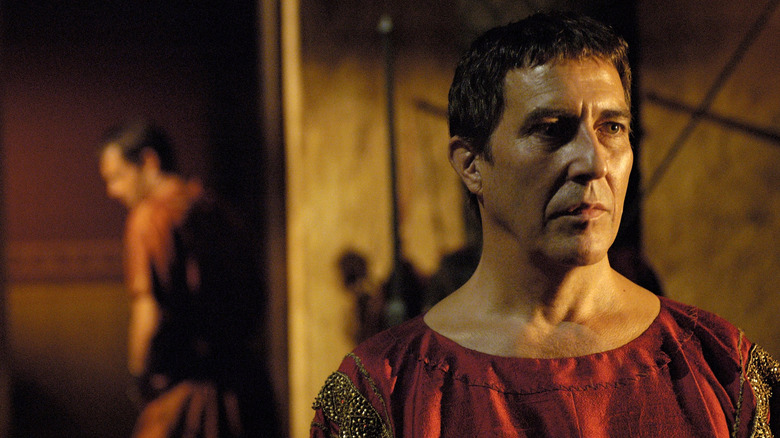
One of TV's great "what ifs," HBO's "Rome" only lasted two seasons before high production costs cut it short, but remains a lavish piece of entertainment on par with "Game of Thrones."
"Rome" begins in 52 BC during the time of Julius Caesar (Ciarán Hinds) and chronicles the end of the Roman Republic and the rise of the Roman Empire. We see historical events such as Caesar's crossing of the Rubicon and assassination through the eyes of two soldiers, Lucius Vorenus (Kevin McKidd) and Titus Pullo (Ray Stevenson), and watch as political rivalries plunge Rome into civil war, violence, and turmoil.
Rather than adhering strictly to the historical record, the show captures the spirit of its era, presenting an evocative depiction of battles, major political events, and military hierarchy. Its recreation of urban life, clothing, and religious customs also gives history fans plenty to nerd out over.
As mentioned, "Rome" proved to be a very costly production, with its first season carrying a budget of roughly $100 million. Unfortunately, its shortened run culminated in a second season that compressed years of history into 10 episodes. Even so, "Rome" remains worth watching for history buffs who like their entertainment served with rich period detail.
7. Tour of Duty
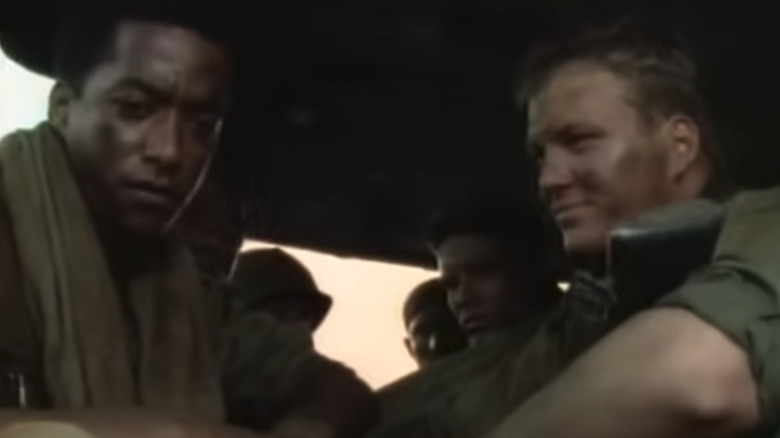
"Tour of Duty" is one of television's standout depictions of the Vietnam War. Premiering in 1987, this gritty saga plunged viewers headfirst into the jungles of Vietnam, where they witnessed the daily lives of an infantry platoon — sans filter. Television has since offered plenty of brutal depictions of the conflict, but "Tour of Duty" was unusually ambitious for its era and still holds up remarkably well despite its comparatively modest budget.
That's because the series is far more interested in its characters than in staging massive battle sequences. Yes, there are plenty of intense firefights, but much of our time is spent following Sgt. Zeke Anderson (Terence Knox) and his platoon, including Lt. Myron Goldman (Stephen Caffrey) and the unforgettable Ruiz (Ramón Franco). Each character offers a different perspective on the war, resulting in compelling moral dilemmas for viewers to chew on.
Creators Steve Duncan and L. Travis Clark also emphasize the rhythms and pressures of military life, from tense jungle patrols and infantry operations to the emotional exhaustion that came with extended deployments.
Overall, "Tour of Duty" maintains a high level of quality throughout its three-season run, even if the introduction of new characters and an increased focus on covert special operations missions during the final season slightly diminish the intimate emotional core that made the early episodes so memorable. It's an excellent series and a compelling look at one of America's most complicated wars.
6. Generation Kill
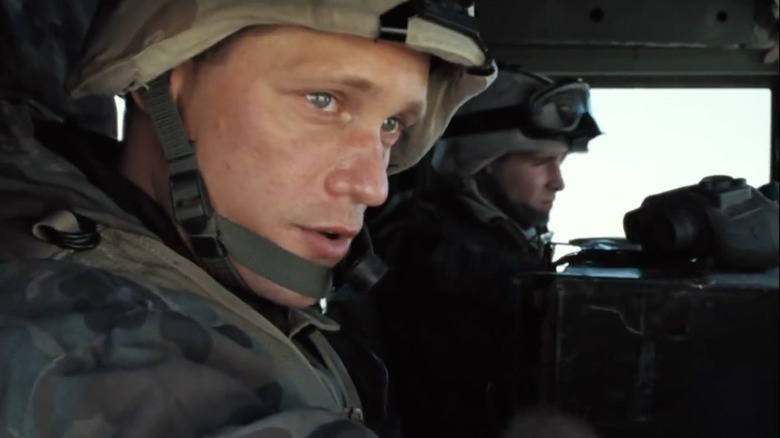
When it comes to portrayals of the Iraq War, few television series are as impactful as "Generation Kill." Based on Evan Wright's nonfiction book of the same name, the series draws from his experiences as an embedded reporter alongside Bravo Company of the U.S. Marine Corps' 1st Reconnaissance Battalion during the 2003 invasion of Iraq. It drops viewers into the middle of combat and lets them experience the trials and tribulations of war.
What differentiates "Generation Kill" from others of its ilk, including "Band of Brothers," is that it doesn't neatly glorify or denounce war. Instead, writers David Simon, Ed Burns, and Wright depict various aspects of the conflict, including the invasion, urban combat, and the often confusing military bureaucracy, while allowing viewers to form their own opinions.
The central characters, led by Sgt. Brad "Iceman" Colbert (Alexander Skarsgård), Cpl. Josh Ray Person (James Ransone), and Evan Wright (Lee Tergesen), aren't superhuman. They're ordinary men forced to make difficult choices in extreme circumstances. They engage in tense, unpredictable gunfights while confronting decisions that test them physically and psychologically.
"Generation Kill" also deserves credit for its attention to firsthand detail, with dialogue often recited word for word as Wright heard it. Its military operations are portrayed with impressive specificity. Although it lacks the nonstop action of many war dramas, all seven episodes offer a strikingly grounded depiction of the Iraq War.
5. Turn: Washington's Spies
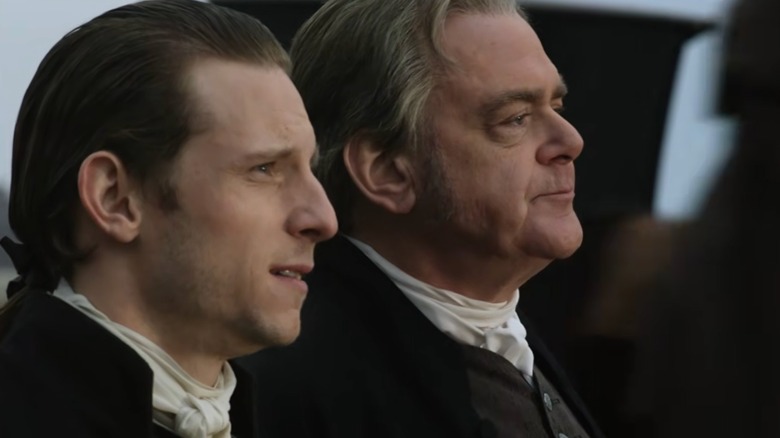
The Revolutionary War doesn't always lend itself to captivating television. Thankfully, "Turn: Washington's Spies" bucks that trend largely because it refuses to adhere to conventional war tropes. Instead, this AMC original plays more like a spy thriller, with much of the drama centered on deception, coded messages, and political intrigue.
There are numerous battles, but the show is more interested in the spy network operating behind the scenes and helping the Continental Army gain crucial intelligence during the war.
The series follows real-life Abraham Woodhull (Jamie Bell), a farmer who reluctantly joins George Washington's spy network, dubbed the Culper Ring. Flanked by Benjamin Tallmadge (Seth Numrich), Caleb Brewster (Daniel Henshall), Anna Strong (Heather Lind), and other notable historical figures, Woodhull is quickly thrust into a terrifying ordeal he's not fully prepared for and forced to adapt to his new circumstances.
Woodhull is no Superman. He's a frightened man who is often in over his head, but he gradually transforms into a hardened operative. Viewers will appreciate the careful handling of his character and the toll espionage takes on him.
History buffs will recognize several major political and military events, though the series compresses timelines and invents relationships or rivalries for dramatic effect. Even with those liberties, "Turn" is one of the best TV shows about American history, shedding light on the people who operated behind the scenes of the Revolutionary War.
4. M*A*S*H
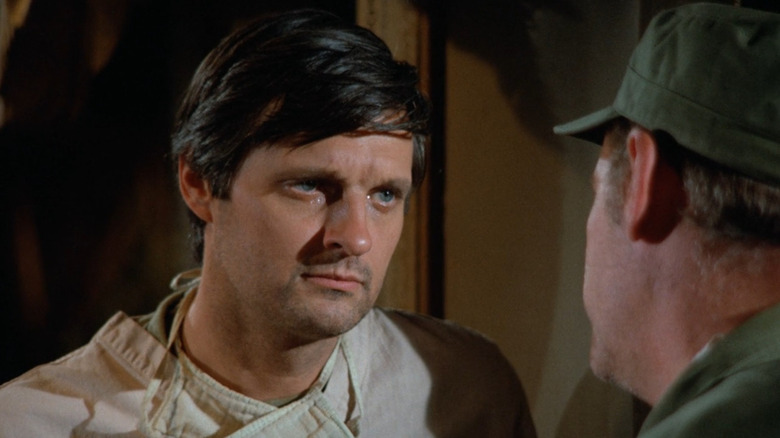
The only comedy on this list, "M*A*S*H" succeeds on two levels. First, it's a hilarious sitcom about surgeons serving during the Korean War. Second, it's a thoughtful, often heartbreaking examination of the human cost of war.
While most war shows focus on firefights and battlefield heroics, "M*A*S*H" homes in on everything in between: the waiting, the anticipation, the homesickness, the boredom, and the emotional toll. One minute, Hawkeye Pierce (Alan Alda) is pulling a side-splitting prank on one of his coworkers. The next, he's desperately trying to save a wounded soldier on the operating table. The series even drew from a real-life disaster on set in one of its storylines.
In many ways, comedy becomes a coping mechanism for the doctors and nurses of the 4077th, giving them momentary relief from the suffering surrounding them.
Featuring an unforgettable ensemble that includes B.J. Hunnicutt (Mike Farrell), Radar O'Reilly (Gary Burghoff), Colonel Potter (Harry Morgan), Margaret "Hot Lips" Houlihan (Loretta Swit), Father Mulcahy (William Christopher), and Klinger (Jamie Farr), "M*A*S*H" remained remarkably consistent across 11 seasons. Despite spanning more than 250 episodes and taking place largely in one location, the series continually found fresh stories to tell. Whether tackling sexism, grief, racism, suicide, or psychological trauma, "M*A*S*H" examined war from a different perspective by focusing on the people working behind the front lines.
3. The Pacific
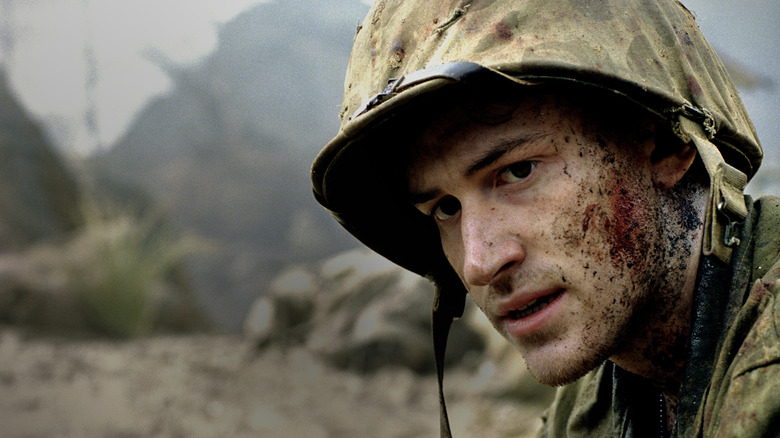
The second installment in Tom Hanks and Steven Spielberg's three-part "Band of Brothers" saga, HBO's "The Pacific" follows Marines through the Pacific Theater, including battles on Guadalcanal, Okinawa, Iwo Jima, and Peleliu. Compared with "Band of Brothers" and "Masters of the Air," "The Pacific" places an even greater emphasis on the psychological impact of war. It's certainly darker than its two counterparts, with gruesome battle scenes and a far more troubled cast of characters.
The series casts a wider net. Rather than follow one unit through the war as "Band of Brothers" did, we island-hop across the Pacific, following different soldiers in vastly different conditions. The best of the bunch is Eugene "Sledgehammer" Sledge (Joseph Mazzello), a young Marine from Alabama who gets his first taste of combat during the bloody battle of Peleliu. His relationship with the kooky Cpl. Merriell "Snafu" Shelton (Rami Malek) is genuinely moving, while his experiences gradually harden him and erode his humanity.
It's the best part of the show.
Other stories, including those involving PFC. Robert Leckie (James Badge Dale) and John Basilone (Jon Seda), are equally enthralling, even if the constant cutting between the characters leaves them feeling slightly shortchanged.
At any rate, "The Pacific" is a devastating exploration of war that builds to an emotionally resonant, though bittersweet, conclusion. It's easily one of Steven Spielberg's best-produced TV shows.
2. Shōgun
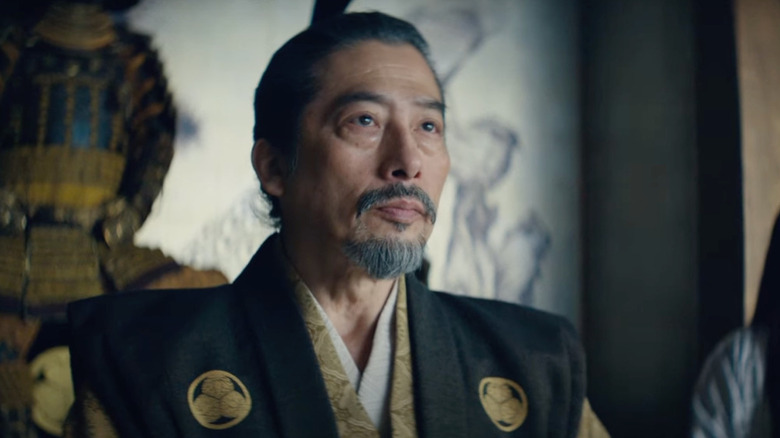
Viewers interested in feudal Japan should definitely check out "Shōgun." Based on James Clavell's 1975 novel, the acclaimed series debuted in 2024 and delivers a remarkably faithful adaptation that soars thanks to its production design and attention to period detail.
Set in 1600, "Shōgun" follows John Blackthorne (Cosmo Jarvis), an English navigator who enters Japan during a state of civil war. Through his eyes, we initially navigate this foreign terrain and learn about its leaders and politics. Before long, however, the series shifts its focus to the powerful figures jostling for control of the nation.
Chief among them is Lord Yoshii Toranaga (Hiroyuki Sanada), the calm and patient mastermind who is always several steps ahead of his competition. Serving alongside him is Lady Mariko (Anna Sawai), who acts as a translator between Blackthorne and the Japanese nobility, as well as the wildly unpredictable Kashigi Yabushige (Tadanobu Asano). Many of these characters are based on real-life figures, lending an aura of weight to the proceedings.
And, as stated, the production is immense, paying careful attention to the customs, etiquette, clothing, and social structures of the period. Toss in breathtaking cinematography that renders its landscapes in vivid detail and a handful of cinematic action sequences, and you have yourself one of the finest television series ever produced.
1. Band of Brothers
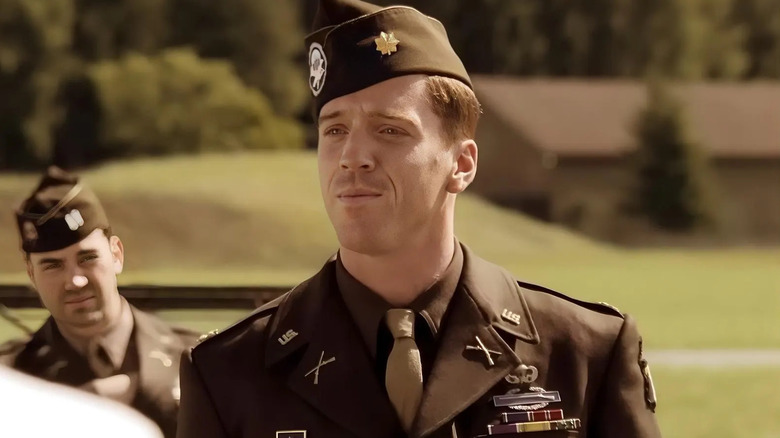
Nothing prepares you for "Band of Brothers." Released in 2001, a mere three years after Steven Spielberg's "Saving Private Ryan," this incredible HBO miniseries chronicles Easy Company, 2nd Battalion, 506th Parachute Infantry Regiment, 101st Airborne Division, during its campaign through Europe in WWII. We see the men go through training, where they deal with a demanding and inept captain (David Schwimmer), jump into hell on D-Day, and battle German forces across the Western Front.
Like "Saving Private Ryan," "Band of Brothers" pulls no punches in its depiction of intense combat. As "The Pacific" would do years later, "Brothers" gives viewers an opportunity to get to know each soldier, making their trials and deaths all the more difficult to watch. We also see the impressive combat tactics deployed by Richard "Dick" Winters (a remarkable Damian Lewis), whose leadership earns him increasing responsibility as the war progresses.
Everything about this series works. A slew of top-tier directors, including Tom Hanks, who also executive-produced, brings WWII to vivid life through immersive combat sequences and intimate character stories. Interviews with the real Easy Company veterans also ground the drama in firsthand experience, reinforcing the tremendous toll war exacts on the soul. It's an awesome entry in HBO's impressive catalog of TV programming.