

15 Best Western TV Episodes Of All Time, Ranked
The Western genre is as much a staple of American television as it is of American film; historically speaking, it could even be argued that TV picked up the baton when Western flicks started slowly going out of style in Hollywood in the mid-20th century. With such a rich tradition, it's no wonder that some of the best TV episodes of all time have come from Western shows.
This list ranks the 15 best individual installments of Western television ever, with original air dates ranging from the '50s to the 2020s, and subgenres ranging from sci-fi to slice-of-life to surreal horror to con thriller. For an optimal viewing experience, a cowboy hat is strongly recommended.
15. Longmire - High Noon (Season 4, Episode 3)
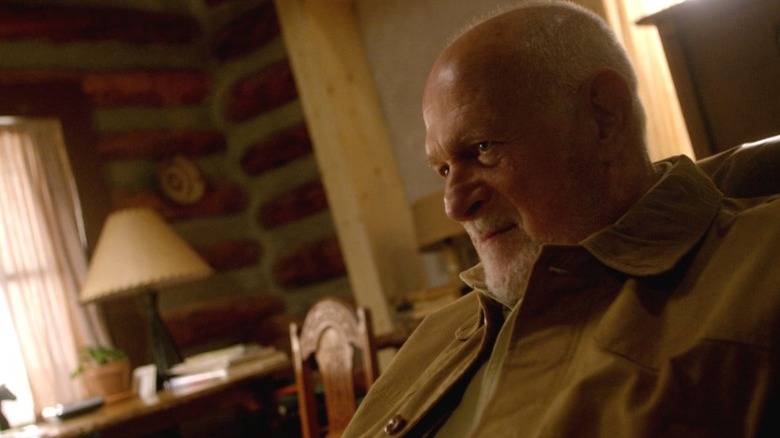
The finale of "Longmire" Season 3 saw Branch (Bailey Chase) discover that his father, Barlow Connally (Gerald McRaney), was responsible for the death of Martha Longmire, leading Barlow to shoot his own son dead and stage it as a suicide.
Season 4 rapidly dives into Walt's (Robert Taylor) search for the truth, and it doesn't take longer than three episodes for that search to reach its gobsmacking climax. In "High Noon," Walt investigates Jacob Nighthorse's (A Martinez) connection to Branch's death — and, when he happens upon the truth, an explosive confrontation with Barlow ensues.
The show's shrewd decision to address the Barlow plot head-on instead of dragging it out makes for a singularly gripping hour; for anyone following "Longmire" from episode one, there's an almost unbelievable intensity to watching "High Noon" power through an entire season's worth of story and resolution. But, even removed from its strength as a narrative rug pull, the episode showcases the most extraordinary writing, acting, editing, and direction ever put forth by "Longmire." It's an hour of action and crackling tension on par with any classic Western flick, and featuring a standoff for the ages.
14. Bonanza - The Crucible (Season 3, Episode 28)
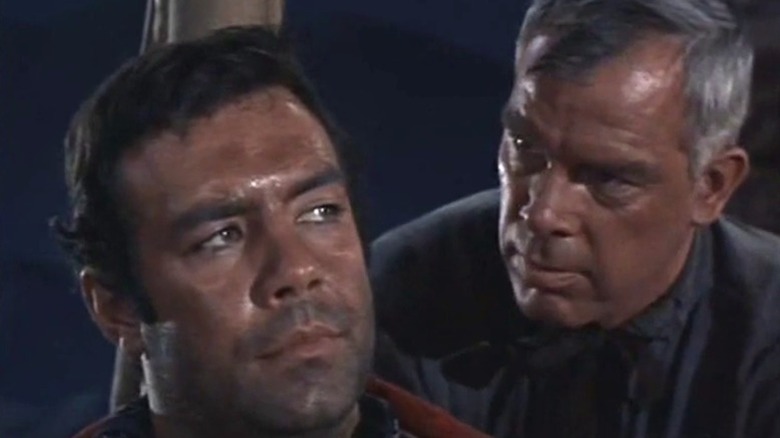
Despite how wholesome and family-friendly it was for much of its 14-year run, there were occasions on which NBC's "Bonanza," one of the Western shows that define the genre, pushed its trademark proclivity for moral meditation and social commentary to the point of genuine abrasiveness. And the most remarkable of those occasions was "The Crucible," a Season 3 episode on which Adam (Pernell Roberts) is robbed in the desert, and must rely on the help of seemingly generous prospector Peter Kane (Lee Marvin).
As it turns out, Kane is a madman who delights in subjugating and torturing Adam, all to test whether an honest man like him can be driven to murder with the right amount of pressure. It's a nightmare scenario that the show explores with shocking forthrightness, taking advantage of Marvin's commanding screen presence to concoct one of the most haunting one-off villains that TV has ever seen. Roberts, for his part, gets an acting showcase that no other episode of "Bonanza" would provide him with, and burns up the screen with his rendition of human psychology at a breaking point.
13. The Good Lord Bird - Hiving the Bees (Season 1, Episode 5)
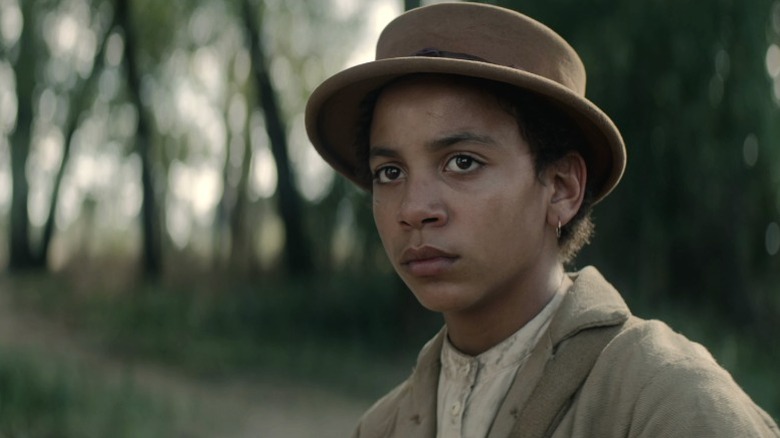
The underrated Showtime miniseries "The Good Lord Bird" fashions John Brown's (Ethan Hawke) abolitionist campaign of the 1850s as a rollicking, fiery, darkly comedic acid Western, culminating in the notorious 1859 raid on Harpers Ferry. But the strongest episode is actually the one right before the raid, on which the show's vibrant ensemble convenes in a Maryland farmhouse and prepares for action. It's an hour of reckoning for Onion (Joshua Caleb Johnson), who finds himself pondering his place in the world while coming face-to-face with his destiny.
Unlike other "The Good Lord Bird" episodes, "Hiving the Bees" is light on action, and consists mostly of talking, planning, and muggy anticipation. And it proves to be one of the best in the great tradition of "stillness before battle" TV installments. There's an almost Robert Altman-esque quality to the way the farmhouse fills up with people fussily walking about and leading their own distinct subplots; it's a setup that puts the show's command of character detail, quaint humor, and refined pathos on full display, carried off by Haifaa al-Mansour in a directorial effort worthy of the genre's great masters.
12. Godless - Homecoming (Season 1, Episode 7)
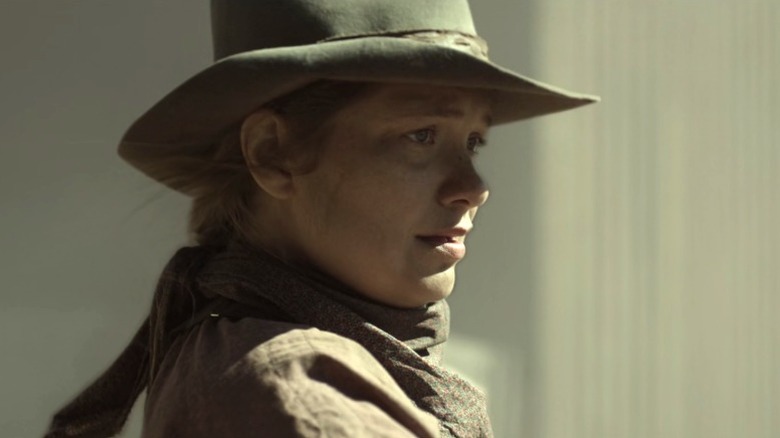
For most of its seven-episode run, "Godless" keeps itself at a low simmer, carefully building the tension of Frank's (Jeff Daniels) pursuit of Roy (Jack O'Connell) so that the stakes are at their highest when he finally arrives at La Belle. This only happens on the very last chapter of this great Netflix show nobody seems to talk about anymore — and, sure enough, "Homecoming" is the moment in which "Godless" transforms from a busy character drama into a proper, full-fledged Western.
As the women of La Belle mount a final stand against Frank and the Griffin Gang, writer-director Scott Frank suffuses every scene, shot, and line delivery with foreboding heat, amping up the genre markers to signify the momentousness of fate. This wonderfully-executed demonstration of the Western's genetic proximity to the classic tragedy is but one of the rewards that "Homecoming" offers to fans of the genre; after six episodes simultaneously honoring and subverting Western tropes by filtering them through the perspective of a fleshed-out female ensemble, the denouement of "Godless" delivers the platonic ideal of a climactic shootout, in which every gun blast puts another point on an enormously compelling story.
11. The Rifleman - Two Ounces of Tin (Season 4, Episode 21)
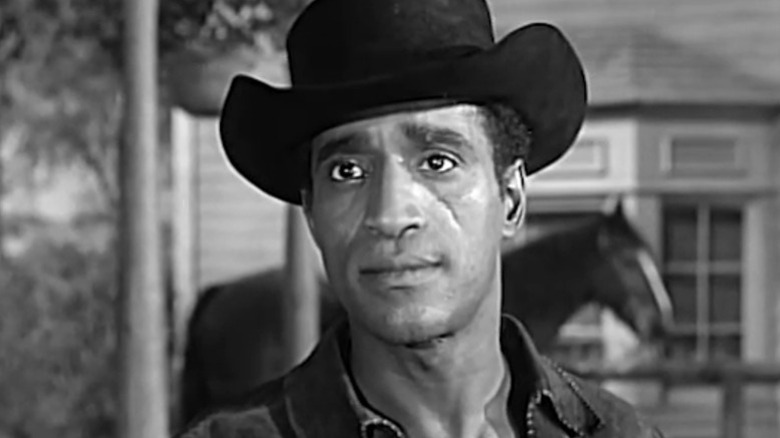
Sammy Davis Jr. counted cowboy-level gunslinging among his innumerable skills, and the 1962 "The Rifleman" episode "Two Ounces of Tin" gives him room to demonstrate as much with the guest role of Tip Corey, a former circus trick shooter turned dangerous gunman. Corey rides into North Fork with a reputation behind him, having recently been responsible for the death of his father's killers; when Marshal Micah Torrance (Paul Fix) and then series protagonist Lucas McCain (Chuck Connors) try to drive him out of town, he puts up an intrepid challenge.
The episode hinges on Corey's insistence that the town marshal's badge be thrown in the dirt, to symbolize the futility of the law that failed to protect his father — a rather prickly and emotionally dense setup (with a surprising amount of quiet commentary on post-Civil-War racism) even before "Two Ounces of Tin" reaches the disarming scene in which Corey has a heart-to-heart with Lucas' son Mark (Johnny Crawford). In that moment, Davis reminds you that he was also a world-class actor, and a 25-minute episode takes on the weight of an entire life wedged in a gun's barrel.
10. Yellowstone - Cigarettes, Whiskey, a Meadow and You (Season 5, Episode 6)
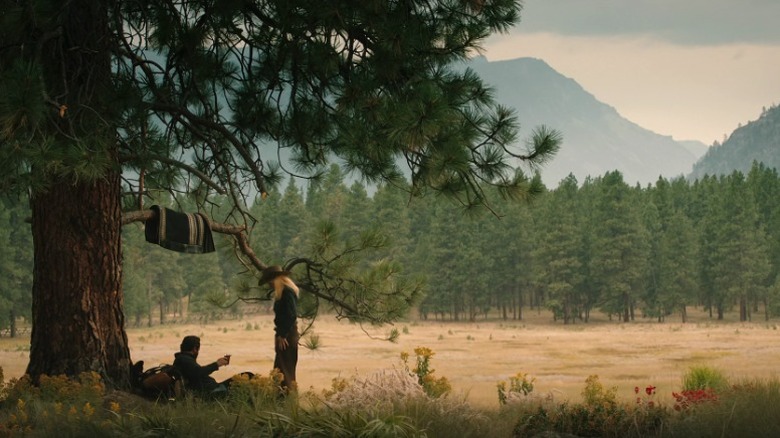
For all the lively, soapy excitement that Taylor Sheridan and his writing team mine from rancher life on "Yellowstone," the show's best episode and most essential addition to the Western canon is one that sidesteps action and intrigue almost entirely. Season 5's slower-paced "Cigarettes, Whiskey, a Meadow and You" clarifies the extent to which, before being his rambunctious 21st-century take on a genre, "Yellowstone" is Sheridan's misty-eyed love letter to a lifestyle.
The bulk of the episode focuses on the Duttons riding deep into the ranch and going about a long day of branding cattle. They take in the landscapes and the elements, bask in the warmth of routine, and have hearty, poetry-tinged conversations about their lives and their hopes for the future — and that's mostly it. The plot needle is moved to some extent, including a Broken Rock subplot that gives welcome centrality to Mo (Mo Brings Plenty), but "Cigarettes..." is mostly an opportunity to stand in the middle of the show's universe and watch as it flows about. And it's gorgeously, unspeakably moving — a sublime interlude that reminds the characters and the viewer of what "Yellowstone" is all about.
9. Centennial - The Massacre (Season 1, Episode 5)
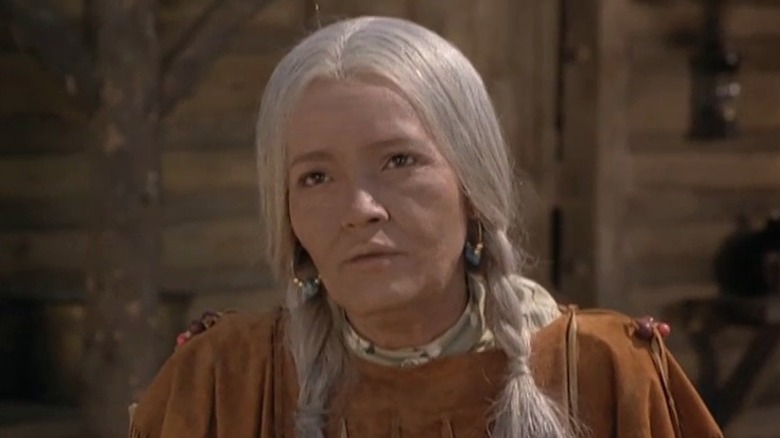
The 1978 NBC miniseries "Centennial" charts the development of a fictional town in Colorado over the course of over 200 years. It's a major TV achievement, and each of its 12 episodes are stunning individual glimpses into a particular crossroads in American history. The most extraordinary is also the hardest to watch: On episode five, "The Massacre," the viewer is reminded of the dimension of brutality and cruelty that Native Americans were subjected to during the Civil War.
"The Massacre" centers on Frank Skimmerhorn (Richard Crenna), a U.S. colonel who believes that all Natives ought to be driven out or exterminated, and commits mass slaughter in an Arapaho community with help from a militia; the slaughter is then followed by a series of farcical legal and political developments that expose the country's systemic disdain for indigenous people. The episode's depiction of these horrors is deeply thoughtful and sensitive, yet unflinching where it counts — a saga of monstrous hate and senseless violence that knows never to sensationalize or make a spectacle of harrowing historical truth, and expounds on an aspect of frontier America that was largely softened or glossed over in media prior to 1978.
8. 1923 - The War Has Come Home (Season 1, Episode 3)
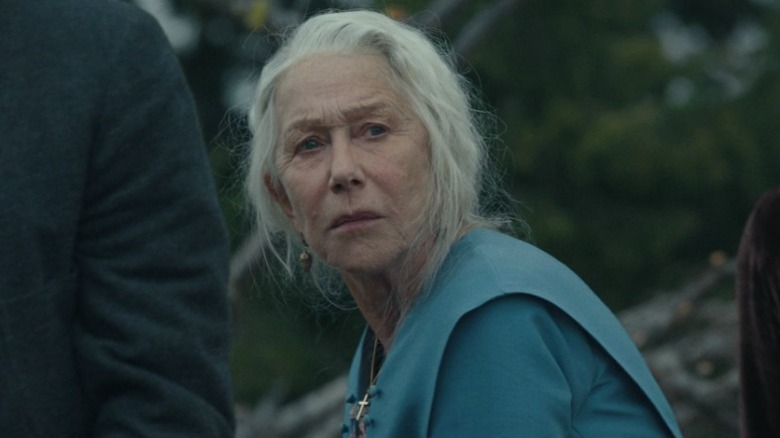
The "1883" sequel series "1923" served up the best episode in the "Yellowstone" franchise with "The War Has Come Home." After a contemplative first half in which the characters ponder the present and the future as the electrical marvels of the Roaring Twenties arrive to Bozeman, the trip back home is interrupted by a confrontation with Banner (Jerome Flynn) and the herders. An explosive, extended shootout ensues, punctuated by nerve-racking action and staggering ensemble exits.
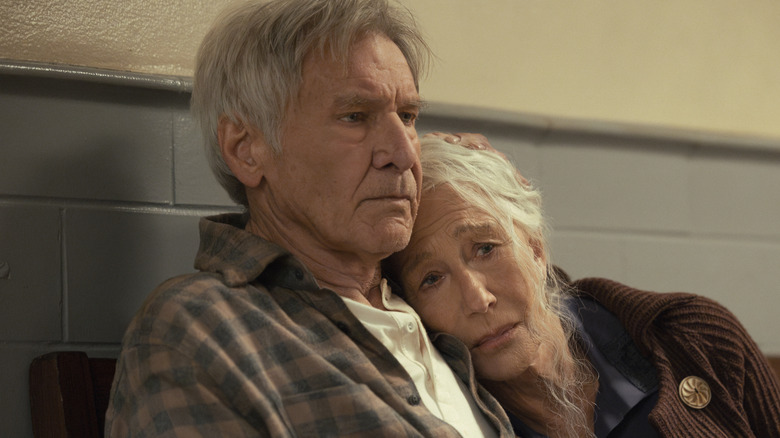
This perfect two-part structure — interspersed with glimpses of Spencer (Brandon Sklenar) and Alexandra's (Julia Schlaepfer) budding romance in Kenya — allows "The War Has Come Home" to accrue a raw power that few hours of television can compare to. When bullets start flying, it's all but impossible not to be glued to the screen in anticipation of what's coming with each new second. And this climax is equally effective as an action-packed finish and as pure drama; indeed, it gives Harrison Ford and Helen Mirren the opportunity to do some of their most impressive work on the whole show, which is saying a lot.
7. The Wild Wild West - The Night of the Puppeteer (Season 1, Episode 21)
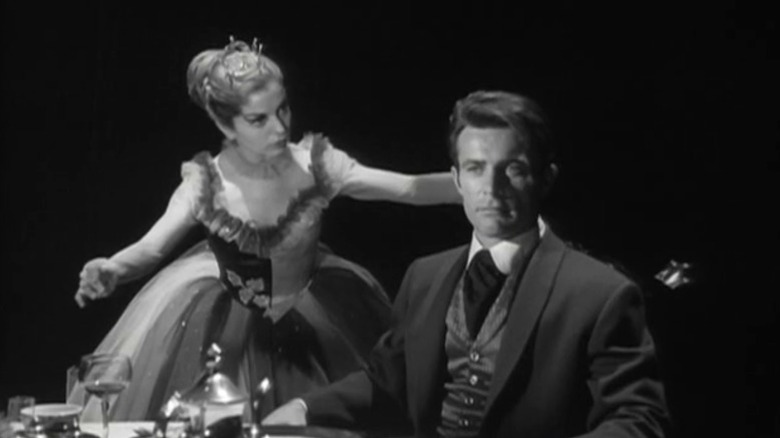
Although younger audiences may think primarily of the infamous 1999 film adaptation when they think of "The Wild Wild West," the original '60s CBS show was actually a fantastic, innovative blend of Western and steampunk sci-fi that helped open up new avenues for both genres. Season 1's "The Night of the Puppeteer" is a case in point: While still firmly a Western story, it incorporates fantastical strangeness and surreal horror with such vigorous abandon that it almost feels like a brush with something forbidden.
The plot follows Secret Service agent protagonists Jim West (Robert Conrad) and Artemus Gordon (Ross Martin) as their investigation into a string of Supreme Court judge deaths leads them to the basement of one Zachariah Skull (Lloyd Bochner). A sculptor once convicted of murder in a trial that the Supreme Court didn't review, he has become a master of human-sized marionettes obsessed with enacting revenge. "The Wild Wild West" tells this spooky story with a stunning degree of creativity and macabre flair, keeping the viewer on their toes as much as the heroes — all while still hewing to Western iconography in twisted, almost Gothic ways.
6. The Adventures of Brisco County Jr. - Bye Bly (Season 1, Episode 20)
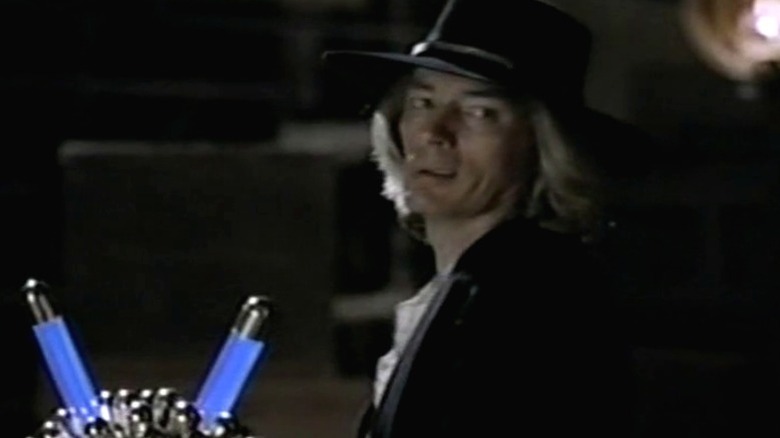
One of the most genuinely one-of-a-kind shows in Western history is Fox's "The Adventures of Brisco County, Jr." This trippy Bruce Campbell vehicle ran for only one season between 1993 and 1994 — but, really, with a story about a lawyer-turned-gunman who is hired in 1893 to stop a nefarious criminal plot involving a magic orb from the future, it's a wonder that it even managed to last for all of its 27 episodes. And, out of those, the best one is the pinnacle of the show's giddy experimentation with genre borders: "Bye Bly."
The 20th episode overall, "Bye Bly" brings to a head the conflict between Brisco (Campbell) and arch-villain John Bly (Billy Drago), who turns out to be a traveler from the future. As reveals about the Orb and its nature pile up, the show's entrancing eccentricity reaches a fever pitch, with sci-fi and Western devices locking together in such airtight, propulsive ways that it barely feels as though they've ever been separate genres. It's a flawless, enormously rewarding de-facto climax to a series that builds up like no other.
5. Lonesome Dove - Return (Season 1, Episode 4)
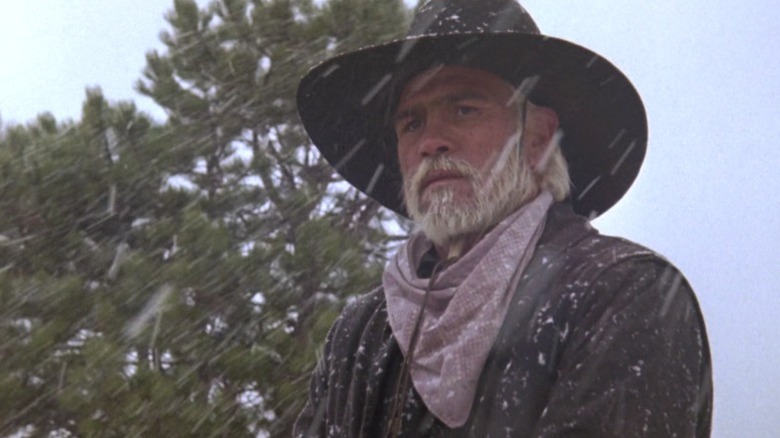
The 1989 Western miniseries "Lonesome Dove" helped revitalize the genre. An epic, handsomely-produced paean to the genre's history that takes its time to deeply ground every character in an authentic sense of place in time, this adaptation of the eponymous Larry McMurtry novel adds up to an impeccable whole across its four episodes; as a whole, it's arguably the best Western miniseries ever made. And part 4, titled "Return," is the one in which the show's greatness really snaps into focus.
After 300 minutes following the arduous effort of Gus McCrae (Robert Duvall) and Woodrow F. Call (Tommy Lee Jones) to drive a herd of cattle all the way from Texas to Montana, "Return" moves several months beyond the drive's conclusion to examine its aftermath, in which Call embarks on a solitary journey to take the body of a deceased Gus to be buried back home. In brutally countering audience expectations while upholding the same delicacy and emotional truth of the whole preceding show, this profoundly melancholy epilogue throws into relief the mastery of patient, deliberate, and ultimately overwhelming storytelling that made "Lonesome Dove" a TV landmark.
4. Justified - Decoy (Season 4, Episode 11)
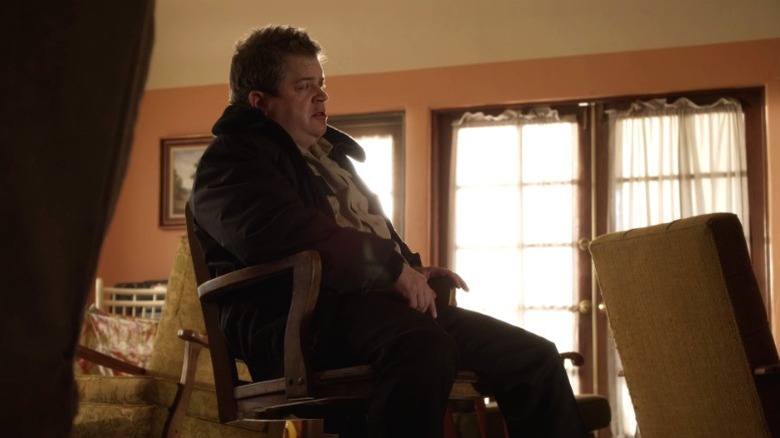
The FX neo-Western "Justified" retained a level of consistency and care across its six seasons that puts it up there with the greats of TV drama, but, even by the series' rarefied standards, Season 4's "Decoy" is just a triumph. Following the tightly-wound battle of wits that ensues when Raylan (Timothy Olyphant) and the marshals are tasked with sneaking Drew (Jim Beaver) out of Harlan, the episode features nary a minute that isn't rife with unbearable tension.
In true "Justified" fashion, this masterclass in suspense is balanced with a litany of incredible dialogue-centric set pieces, which hand out iconic lines and indelible character moments to virtually the entire ensemble while diligently integrating everybody into the many-pronged, relentlessly intelligent storytelling. The head-to-head confrontation between Raylan and Boyd (Walton Goggins) is plenty thrilling on its own, and it's not even the highlight of an episode that also includes Patton Oswalt and Mike O'Malley doing their best-ever work.
3. Gunsmoke - The Gallows (Season 7, Episode 22)
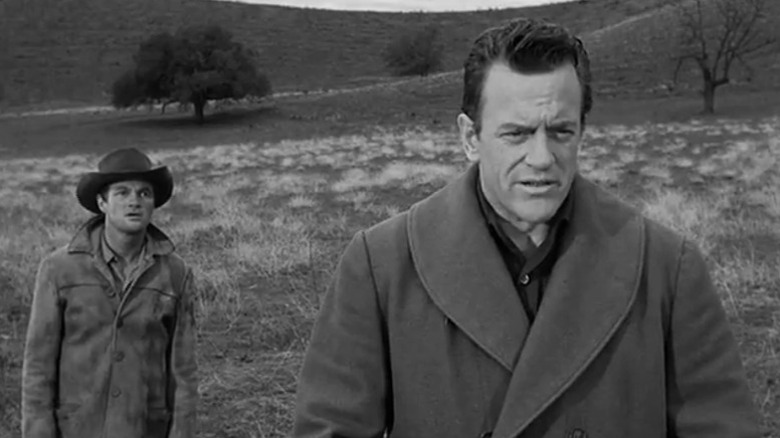
The 20-season, 635-episode CBS behemoth "Gunsmoke" may well be the very best — or at least the most significant — Western TV series of all time. Out of its countless all-timer episodes, one stands out as a watershed creative moment. In a series that became notorious for its willingness to embrace mature drama with complex themes, 1962's "The Gallows" went down as one of the thorniest, richest, most starkly unsentimental yet achingly emotional TV episodes ever produced.
Following the moral crisis that befalls U.S. Marshal Matt Dillon (James Arness) when he is tasked with transporting murder suspect Pruitt Dover (Jeremy Slate) and becomes convinced that he is innocent even as an irascible judge (Joseph Ruskin) sentences him to the capital penalty, "The Gallows" largely unfolds as a two-hander between Matt and Pruitt. The contrast between the two men's deep mutual solidarity and their irreconcilable disagreement about what true justice entails in this life-or-death predicament makes for a classic tragedy, which churns along slowly yet inevitably towards an ending that leaves you speechless.
2. Deadwood - Sold Under Sin (Season 1, Episode 12)
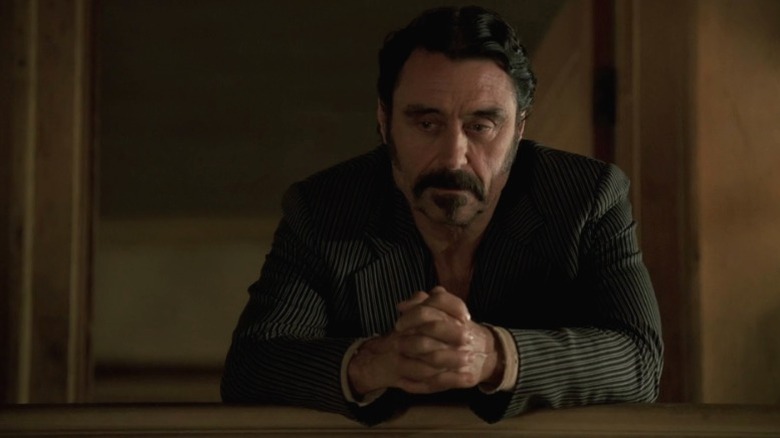
Of the many phenomenal hours that HBO's "Deadwood" offered up throughout its run, the Season 1 finale, "Sold Under Sin," is the most shining example of the heights the show was capable of reaching when it was firing on all cylinders. After a whole season of the titular community trickling slowly towards a sense of institutional organization, the tale of the U.S. Army's inevitable arrival marks Deadwood's absorption, for good and for ill, into the demands of American society.
This irreversible turning point is experienced in ways both concrete and metaphorical by all the characters in the show's dazzling ensemble, who each come to critical junctures of their own — from Doc's (Brad Dourif) desperate pleading with God, to Al's (Ian McShane) pained act of mercy, to the long-awaited consummation of Seth (Timothy Olyphant) and Alma's (Molly Parker) mutual attraction, to Seth's acceptance of the sheriff's badge. It's a feat of climactic resolution and irresolution worthy of a symphony, and it drives home the status of "Deadwood" as TV's great serialized Western drama.
1. Maverick - Shady Deal at Sunny Acres (Season 2, Episode 10)
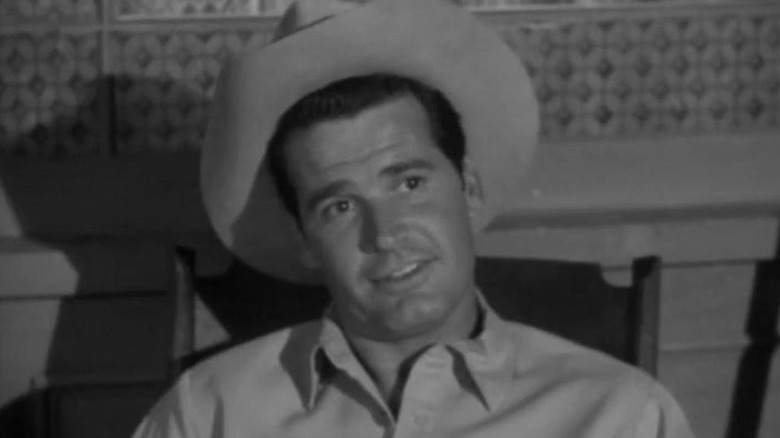
Few shows have ever had more sheer fun with Western conventions than "Maverick," a '50s and early '60s ABC production that starred James Garner as ace poker player and frequent reluctant hero Bret Maverick. Most episodes saw Bret (or one of a series of subsequent co-protagonists) stumble onto adventure while trying to win big in saloons around the Old West, and hinged on the aloofness of a self-sufficient "maverick" using his wits to maneuver through classic genre setups. And, on Season 2's "Shady Deal at Sunny Acres," the wit of both Bret and the show reached nonpareil levels.
"Shady Deal..." tells of how Bret responds when a banker (John Dehner) steals money he deposited from a late-night poker sweep. To fight back, Bret enlists the help not only of his brother Bart (Jack Kelly) but of the show's entire recurring cast up to that point, all of whom join forces in a multi-layered counter-con. Not only is the episode exhilarating for front-to-back "Maverick" viewers as an unexpected cast assembly, but it delivers the single most exciting, brilliantly-wrought, and perfectly-calibrated storytelling feat in Western TV history — all without a single bullet being fired. In nearly 70 years, its talk-based high-wire thrills have barely aged a day.