

The 10 Best Shows Like M*A*S*H

It's hard to compare other TV shows to "M*A*S*H," since the sitcom is in something of a category of its own, on top of being one of the best war shows ever. The series is a half-hour comedy that doesn't look like any other sitcom — more a war drama that takes the stakes seriously, with an irreverent dig at military authority, while still affirming the camaraderie between those in uniform. It requires no suspension of disbelief to accept the seriousness, humor, or the on-location shooting. "M*A*S*H" managed to comment on an ongoing war in the present by depicting one from the past.
Robert Altman's film might have been a touch too cynical for a mass TV audience. By sanding off some of the rougher edges (like eliminating the lyrics to the theme song "Suicide Is Painless," for example), and making lead characters Hawkeye (Alan Alda), Trapper (Wayne Rogers), and later B.J. (Mike Farrell) just a touch less disdainful of everything around them, series creator Larry Gelbart found a sweet spot that resonated with audiences — one only a few shows have managed to replicate. But these ten shows juggled drama, comedy, and heavy topics with the same quality of care as "M*A*S*H."
Trapper John, M.D.
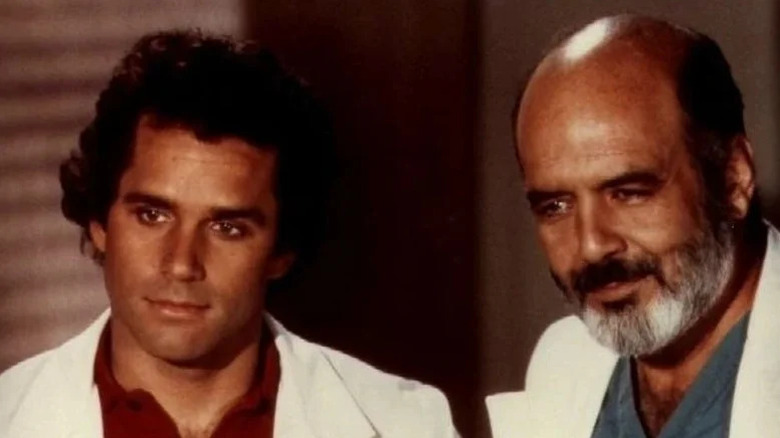
Naturally, a hit like "M*A*S*H" was bound to spawn some successors, but "After M*A*S*H" is considered one of the worst TV spin-offs ever. The more successful spin-off almost nobody talks about was "Trapper John, M.D.," which flashed forward to the then-present day, recast the lead part with Pernell Roberts in place of Wayne Rogers, and portrayed the character a bit more seriously. Now a chief of surgery, he was the establishment rather than a rebel, and the show's tone mirrored that personal growth by being more of a drama. However, Trapper could still bend a rule or two if the situation called for it.
Now a graybeard, Trapper found himself in more of the Potter role, mentoring Vietnam-era military doctor "Gonzo" Gates (Gregory Harrison), a young, handsome, and outspoken guy reminiscent of who Trapper and Hawkeye used to be. With more chill, Trapper found ways to work the system from within, while his Winnebago-living protégée found and dealt with medical mysteries — and trouble — in more conventional, confrontational ways.
As broad and melodramatic as many shows of the early '80s, "Trapper John, M.D." certainly has funny moments. Perhaps funnier in retrospect is the way CBS created an instant "legacy sequel" simply by recasting older and ditching the period setting.
Hogan's Heroes
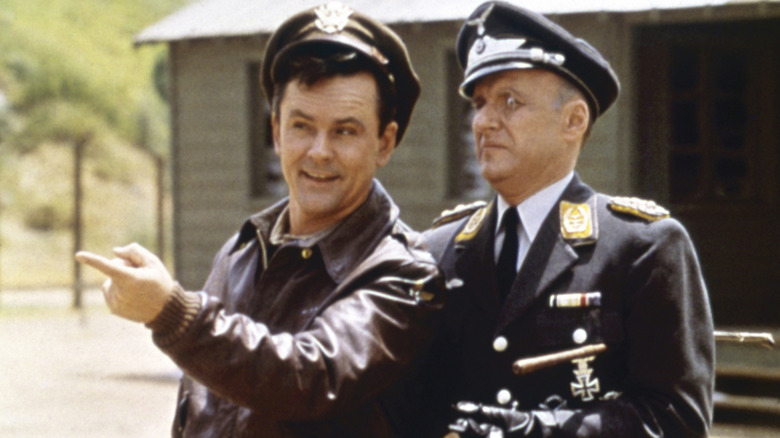
In a vacuum, it seems hard to believe there was ever a popular sitcom about Nazis. Yet "Hogan's Heroes" ran for six years, and featured U.S. World War II veteran Werner Klemperer as German Commandant Colonel Klink. Having fought the Axis for real, he drew on his German heritage to create one of the most famous buffoons on that side.
Avoiding the full nastiness of the Holocaust, "Hogan's Heroes" depicted captured Americans in a German P.O.W. camp, where they constantly outwitted and outsmarted their captors, and used their position behind enemy lines to conduct sabotage operations. It leaned more toward a traditional sitcom vibe than "M*A*S*H" — any actual soldiers as goofy as Klink and Sgt. Schultz would likely have washed out of the Fuhrer's forces. Col. Hogan (Bob Crane) and his men represented the same kind of American ingenuity and irreverence as Hawkeye and friends, helping out Klink and co. just enough to keep suspicion away from the camp.
As in "M*A*S*H," the war itself wasn't minimized — the main characters were simply far from the worst of it. Their anti-authority attitude was even more appropriate and pronounced, though, considering the authority here were the most undisputed bad guys in history.
China Beach
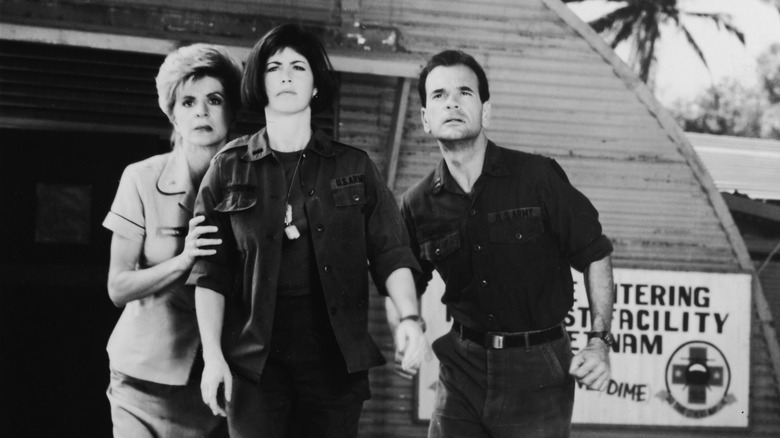
Just as "M*A*S*H" dealt with a medical unit in the Korean War a couple decades after the fact, so "China Beach" did with Vietnam. Reflecting the tones of their respective conflicts — Korea was seen as a victory, and Vietnam wasn't — "China Beach" was more tragic, and major characters could die. Yet it still had that irreverent sense of humor, where those surrounded by death have to either laugh or go mad.
At the center of "China Beach" was Colleen McMurphy (Dana Delany), who chose to go to Vietnam as an army nurse, and initially planned to leave at the end of her term, only to realize war was where she could best help people. Male members of the unit were pranksters just like the "M*A*S*H" gang, like when they'd circle helicopters over the showers when women used them. Robert Picardo, as the amusingly named Dr. Dick Richard, would speed-time his surgeries like it was a competitive sport, using chess clocks.
Michael Boatman, as mortician Samuel Beckett, got much of the gallows humor, spiking the punch with formaldehyde and worrying that constant skin exposure to it was turning him white. Others in the unit did go a little nuts, like shell-shocked Dodger (Jeff Kober). The iconography changed little in 20 years — those helicopters with the red crosses flying in the wounded on gurneys became hallmarks of both shows.
Scrubs
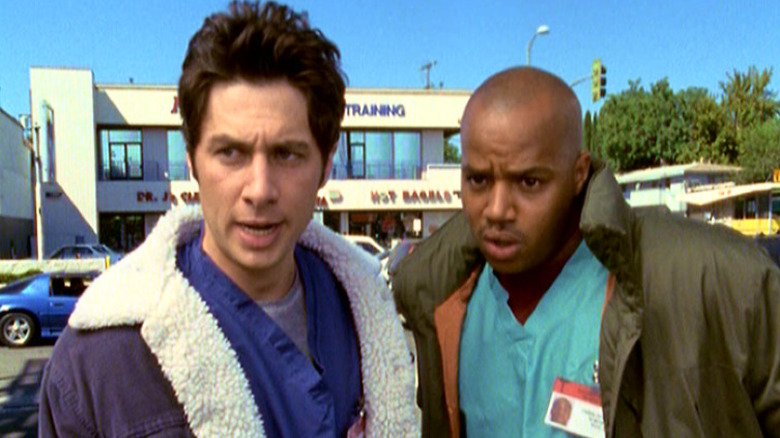
Before Hawkeye and friends became fully qualified surgeons and got drafted, it'd be easy to imagine they behaved a lot like the characters of "Scrubs." Zach Braff's J.D., a dreamer and a woman-chaser, is but an intern at the show's beginning; He and his best friend, Christopher Turk (Donald Faison), have the same kind of ride-or-die friendship that Hawkeye has with first Trapper and then B.J.
While Alan Alda mainly spoke to other characters, however, J.D. does a lot of the talking in his own head, where he's wittier and more in control than in real life. Perhaps without a war to sober their senses at times, guys like Hawkeye and B.J. would have more time for the sorts of wacky interactions that are a daily part of work at Sacred Heart Hospital. Besides, John C. McGinley's harried, arrogant chief of medicine, Dr. Cox, would probably have gotten along with Frank Burns in their shared contempt for those below them.
The A-Team
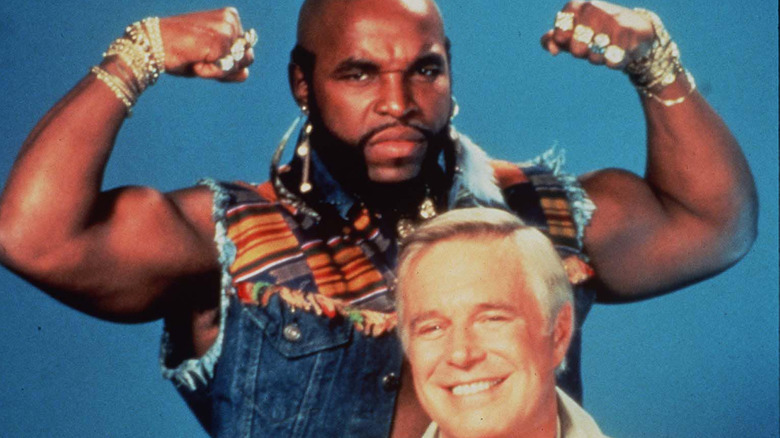
The "crack commando unit" of Hannibal (George Peppard), Murdock (Dwight Schultz), Faceman (Dirk Benedict), and B.A. (Mr. T) were as wacky a crew of military misfits as Hawkeye, B.J., Klinger et al. The difference was that the A-Team weren't doctors, but mercenaries — albeit mercenaries who only worked for justice. Like the "M*A*S*H" crew, they did their best not to let anyone die. Despite all the gunfire, explosions, and car crashes in every episode, "The A-Team" needed to remain a family show, and, with rare exceptions, never killed anyone.
Ostensibly an action drama, "The A-Team" was more over-the-top in its depiction of military matters than "M*A*S*H." Hannibal's frequent glue-on disguises aside, the supposedly undercover A-Team look incredibly distinctive, drive around in a van everyone recognizes, and are friends with celebrities like Hulk Hogan. Yet, somehow, the military police trying to capture them are always two steps behind. Always with a plan and a smile, Hannibal, like Hawkeye, was too darn likable and smart for by-the-book authorities to ever get ahead of him.
Though both shows were safe-for-network TV, "M*A*S*H" and "The A-Team" made kids watching feel like they were getting away with something, watching military-inspired shows with enough humor to connect with all ages. "The A-Team" wore thin with its reliance on formula, but both shows stand as tributes to the unorthodox, out-of-the-box thinkers in every regiment.
Blackadder Goes Forth
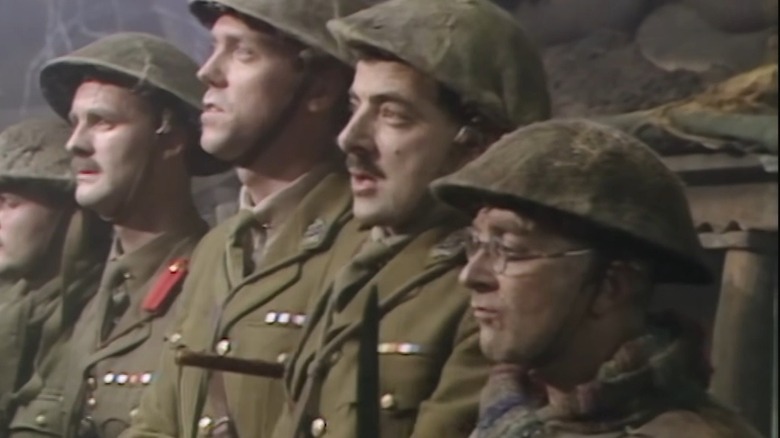
The first three iterations of the British historical satire "Blackadder" mocked successive eras of the British monarchy. The fourth took a wholly different tactic, plunging its generational recurring characters into the first World War.
By American TV standards, "M*A*S*H" was radical for using the Korean War to make points about Vietnam. "Blackadder Goes Forth" used the Great War to directly critique the then-current Cold War, with dialogue suggesting deterrence failed to prevent World War I, implying that the same logic might yet fail to prevent World War III. As with "M*A*S*H," it also became a primary source of information for younger generations about the war it depicted, much to the chagrin of some historians.
Though "Blackadder Goes Forth" relies on broad caricatures — the generals are buffoons, the Captain a sarcastic joke, and privates grinningly oblivious — the series takes on a progressively darker tone as the plot marches on. By the end, major characters prepare to die in a suicidal charge into No Man's Land, as ordered by superiors with no clear plan. War was pointless and barbaric, but the humanity of even complete fools on the frontline was to be valued, and occasionally very funny. It was a masterpiece of tonal balance — and a far cry from the first iteration, "The Black Adder," considered to be one of the worst first seasons of an otherwise great show.
The Phil Silvers Show
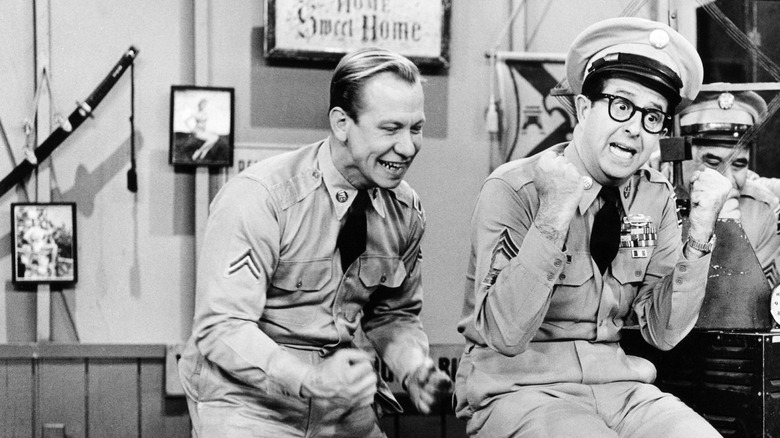
Originally titled "You'll Never Get Rich," and later retitled "Bilko" in reruns, "The Phil Silvers Show" cast the titular fast-talking comedian as Sergeant Ernest Bilko, an army man more interested in gambling and swindling than ever doing actual work. As he was stationed in Kansas rather than Korea, there were no life or death stakes as in "M*A*S*H," but his schemes and wisecracks were similar to those of Hawkeye and B.J.
Bilko was more likely to punch down, though. While he was protective of the recruits in his care, he was not above separating them from their money with various scams, raffles, dances, beauty contests, and the like that all required fees payable straight to him. He'd go after pompous authority figures, as well, like regular adversary Col. Hall, but by the standards of network TV at the time, he was quite the scoundrel. If you liked the comedy in "M*A*S*H," but didn't care for the more serious episodes, "The Phil Silvers Show" hits the mark. It lampoons the military without getting into the politics and human toll of war.
House
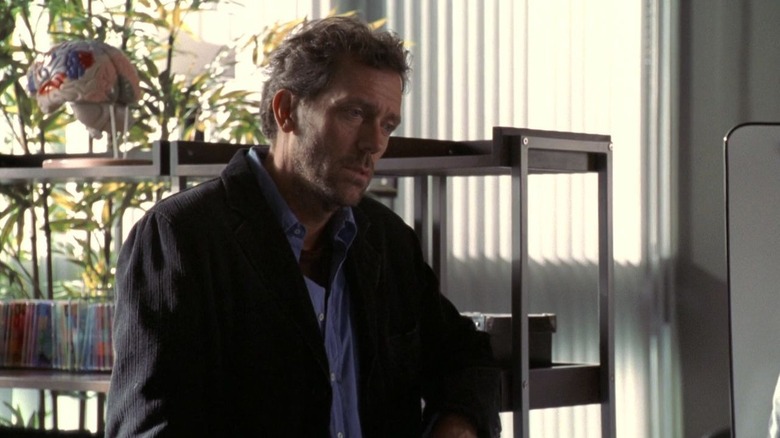
When the "M*A*S*H" team are snarky and irreverent en route to saving patients' lives, they're sympathetic and we root for them. When Dr. Gregory House (Hugh Laurie) does the same, we think he's a rude jerk. He's usually right, though. Bedside manner makes all the difference between these two shows about doctors who march to the beat of their own drum as much as possible, while constrained by a system that also makes them do tasks they dislike.
Hawkeye and friends are stuck in the military, while House is forced by hospital bureaucracy to take on a normal schedule. It's one that forces him to diagnose banal medical cases, in addition to the rare disease mystery of the week that's his specialty. House is absolutely unrepentant about his vices, too. He likes to look at beautiful women, is not averse to his staff breaking and entering, and pops painkillers like candy for his dead leg. We laugh with the "M*A*S*H" team, but we laugh at House's withering insults, delighted not to be on the receiving end.
Star Trek: Deep Space Nine

"Frontier medicine!" exclaims Dr. Julian Bashir (Alexander Siddig, who won the part with a one-word audition) in "Emissary," the pilot for "Star Trek: Deep Space Nine." He believes himself sent to the edge of civilization to heal the natives, who aren't exactly fond of him characterizing them that way. Like the Korean War setting of "M*A*S*H," "Deep Space Nine" is about a stronger military power (the Federation/U.S. surrogate) stepping in to try to peace-keep between totalitarian oppressors (the Cardassians/North Koreans) and their liberty-minded former victims (the Bajorans/South Koreans).
At first, there's an unsteady peace, but by the last few seasons, things devolve into a full-on war with the Cardassians allying with the more powerful Dominion (read: Soviet Union), and Bashir becoming an actual wartime, frontier doctor just as he imagined. As in the "M*A*S*H" unit, the crew of "DS9" is made up of wacky improvisers (Bashir, O'Brien), authority figures both benevolent (Sisko) and uncompromising (Kira, Odo), and alien allies who operate in a gray area (Quark, Garak). There's even Dax, who gender-bends on a whole other level from Klinger.
Both shows are also technically subsidiaries to other parts of a larger franchise. "M*A*S*H" is based on a movie based on a book, while "Deep Space Nine" is a spin-off of a legacy sequel series to a TV series that also spawned movies. Yet many will say these are the finest expressions of their respective properties.
A Knight of the Seven Kingdoms
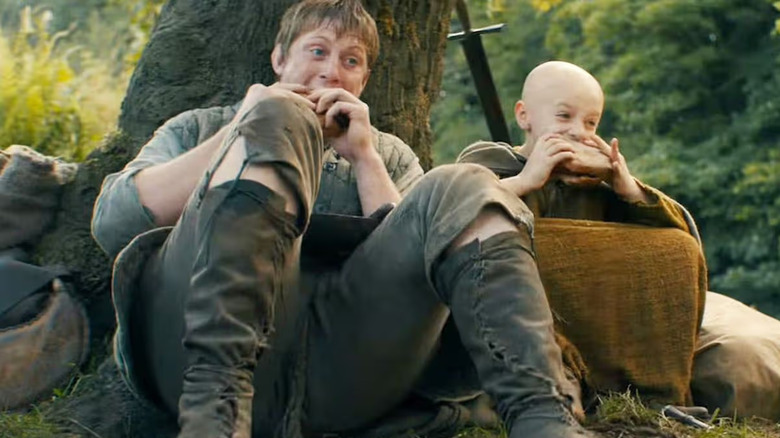
Okay, this one may seem a little out there. "A Knight of the Seven Kingdoms" isn't about doctors, and it's set in a radically different time period (in a fantasy world that doesn't exist). But what it has in common with "M*A*S*H" — and this is the hardest, but arguably most important, part to nail — is tone. Westeros is a miserable fantasy realm where good guys constantly die and/or get assaulted. To set a lighter, comedic series there is like making a sitcom about the Korean War — very risky unless you pull it off.
"A Knight of the Seven Kingdoms" pulls off what "M*A*S*H" did in essentially the same way, by depicting the madness of its setting through the eyes of regular people existing at the ground level. Ser Duncan the Tall (Peter Claffey) is a man just trying to do good and keep his honor in a world that increasingly values neither. Just like a M*A*S*H unit, he can't hope to defeat every enemy, but maybe, if he uses all his talents, he can save some lives in the face of such chaos.