

5 Sitcom Character Deaths That Left Audiences In Tears
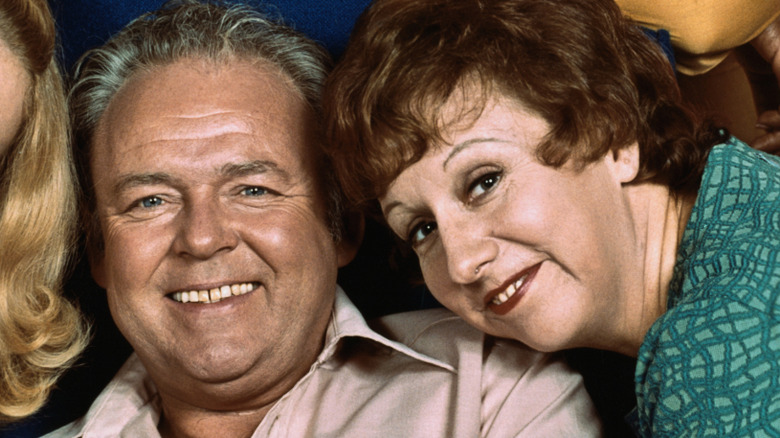
Typically, television audiences watch sitcoms because they want to laugh. Occasionally, though, sitcoms can make us cry — especially when a character viewers have gotten to know and love over several episodes or even seasons passes away.
Killing off a character in a sitcom isn't something that most shows do lightly. Maybe an actor is leaving the show for whatever reason. Perhaps it would be narratively interesting to remove a member of the ensemble. Whatever the case, sitcom character deaths make a big impact precisely because viewers aren't expecting them the way they might in a drama series. In this genre, death comes as a surprise, shaking the comforting normalcy that sitcoms thrive at. It's kind of like in real life, in that way, which might explain why some of these sitcom deaths are even more emotional and affecting than a death in a non-comedy might be.
This list does not include characters who were killed on a show because the actor playing them died. While the deaths of Paul Hennessy on "8 Simple Rules" and Bill McNeal on "Newsradio" were tear-jerking TV moments, the deaths of John Ritter and Phil Hartman were actual tragedies. The creatives behind the shows they left behind made emotional, moving art in the wake of their loss. It's hard to compare these incidents to character deaths where everybody was alive and well behind-the-scenes. Still, the five fictional character deaths below elicited real tears.
Colonel Henry Blake, M*A*S*H
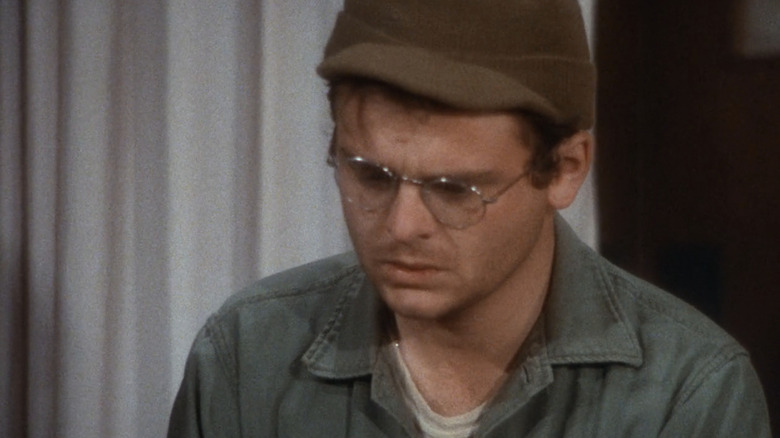
Even though the beloved CBS series "M*A*S*H" was about a war, the characters seemed relatively safe from the fighting. It wasn't until the final episode of Season 3, "Abyssinia, Henry," that one of the main members of the cast became a casualty of the Korean War.
In the 1975 episode, Lt. Col. Henry Blake, the lovable commanding officer of the 4077th, learns he's getting discharged. Behind-the-scenes, actor McLean Stevenson wanted to quit the ensemble series so he could pursue a leading TV role. "M*A*S*H" creator Larry Gelbart let Stevenson break his contract early, but his character would not have a happy ending. After saying farewell, Blake boards a plane for home — a seemingly bittersweet ending, since audiences figured they'd merely miss having Blake on the show. But the end of the episode turns tragic when Radar comes into the OR to announce that Blake's plane was shot down over the Sea of Japan.
It was the first time that a TV show had killed off a major character like this, and the network received thousands of letters in the aftermath of the episode. Some viewers were upset, but the majority, while sad, praised "M*A*S*H" for showing the reality of war, especially as the Vietnam War raged in the real world.
"What they wanted to show was that people that you love die in war," Jamie Farr, who played Klinger, told People 50 years after the famous episode aired.
Edith Bunker, Archie Bunker's Place
Edith Bunker (Jean Stapleton) was by her cantankerous husband Archie's side for nine seasons of "All in the Family." When the spin-off series "Archie Bunker's Place" premiered on CBS in late 1979, Edith was still there, though audiences saw less of her because most of the new show took place not at Bunkers' home but the bar Archie owned. She popped up throughout Season 1, but in the sophomore season premiere, "Archie Alone," audiences learned that Edith had died of a stroke.
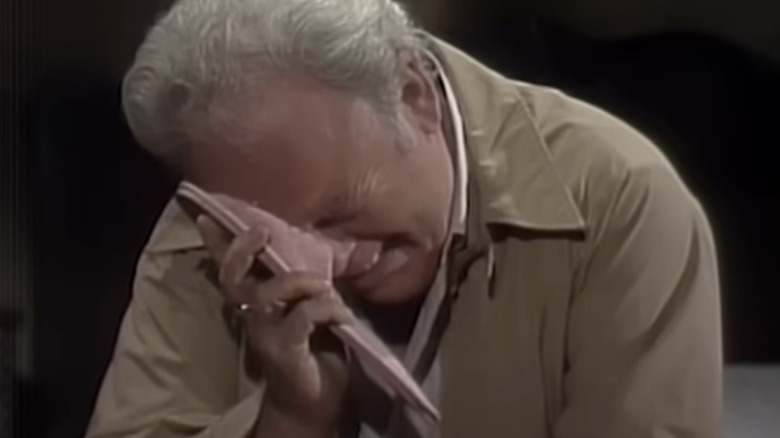
Archie, played by Carroll O'Connor, is handling the loss by being his usual, emotionally stunted brusque self. When he finds one of his wife's slippers, he finally breaks. "You had no right to leave me that way, Edith, without giving me just one more chance to say 'I love you,'" Archie cries.
Behind the scenes, Stapleton was looking to leave. At first Norman Lear, who created "All in the Family," wanted to just have Edith be an unseen character in the spin-off, but O'Connor and Stapleton convinced him that Edith could never simply be absent from her husband's life. Since the two would never get a divorce, the emotional, tragic ending was the only option.
In a 1981 interview with The Christian Science Monitor, Stapleton recalled how Edith's death was emotional for Lear, too. While speaking to Lear over the phone, Stapleton said, "Norman, she's only fiction," before realizing she'd hurt his feelings. "'After a long pause, he said: 'To me, she isn't only fiction.'"
Seymour, Futurama
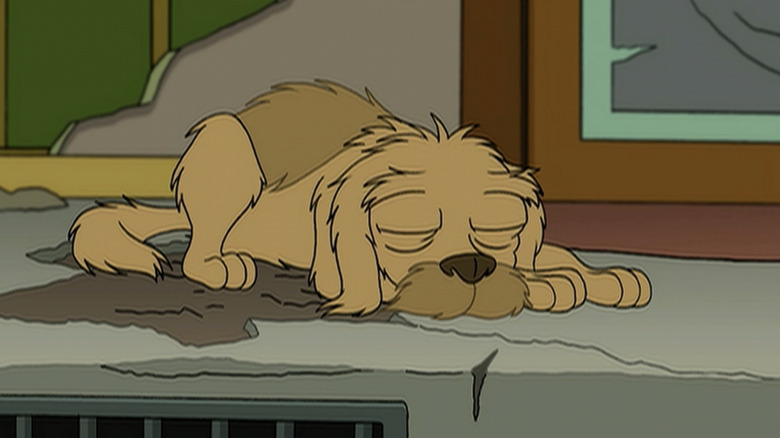
The Fox animated sitcom "Futurama" had some emotional episodes before, but they weren't about a dead dog. In the Season 5 episode "Jurassic Bark," Fry finds the fossilized remains of his pooch, Seymour. Fry's adamant that Professor Farnsworth clone his long lost best friend, but decides not to when he learns that Seymour died of old age. He assumes that Seymour lived a rich full life and probably forgot about their brief time together.
The episode ends with an utterly devastating flashback that shows Seymour waiting for Fry, loyally and patiently, for years until he finally dies. The music, "I Will Wait for You" by Connie Francis, is a big part of the emotional gut-punch.
"I was really interested in the tragedy of it," Eric Kaplan, who wrote the episode, told MEL Magazine. "When people move on, it might be the right thing for them, but maybe not for the people that they're moving on from."
The first of the "Futurama" movies, "Bender's Big Score," would retcon events in a way that made Seymour's story much less sad. (Time travel and an alternate version of Fry were involved.) Still, for anybody who found themselves blindsided by a tragic dog story when they were expecting futuristic robot antics, the heartbreak remains.
"I know a lot of people get mad if you even refer to 'Jurassic Bark,'" Fry voice actor Billy West told MEL. "All you gotta do is show a picture from it and people get upset."
Ben Sullivan, Scrubs
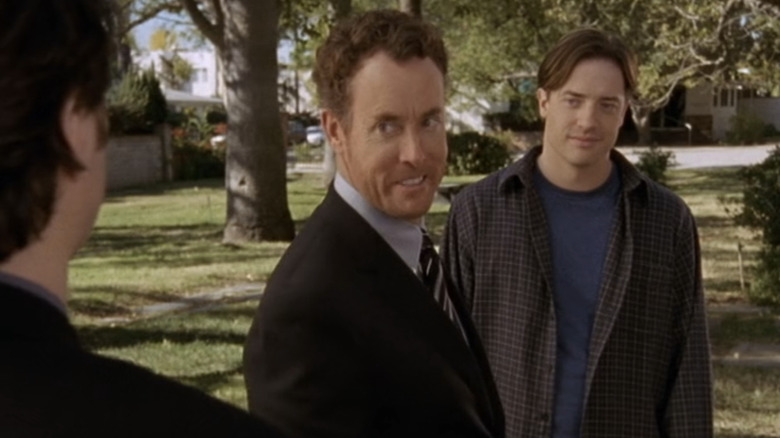
Because NBC's "Scrubs" was set in a hospital, there was more death than you'd find on an average sitcom, and several of the best episodes of "Scrubs" had the doctors of Sacred Heart Hospital dealing with this sad inevitably. In "My Screw Up," the death hit close to home.
Brendan Fraser had appeared twice before as Ben Sullivan, the ex-brother-in-law and still close friend of John C. McGinley's Dr. Cox. In his debut appearance, Ben learns he has leukemia, but he seems to be doing alright when he reappears in this Season 3 episode, though Cox still has him see Zach Braff's J.D. for an overdue exam. After a patient dies in J.D.'s care, Cox is furious, though Ben encourages him to forgive his protégé as they prepare for what Cox — and the audience — think is his son's birthday.
It's only when a somber J.D. asks Cox "Where do you think we are?" that he realizes that the patient who died was Ben and they're at his funeral. He's been in denial, seeing and talking with a vision of his late friend for almost the whole episode. The choice of music, Joshua Radin's "Winter," helps make the homage to "The Sixth Sense" emotionally devastating.
"That was a preposterously ambitious tone shift," McGinley said of the big reveal in an interview with People. At its best, though, "Scrubs" could pull off those big emotional moments in ways that few other sitcoms could.
Marvin Eriksen Sr., How I Met Your Mother
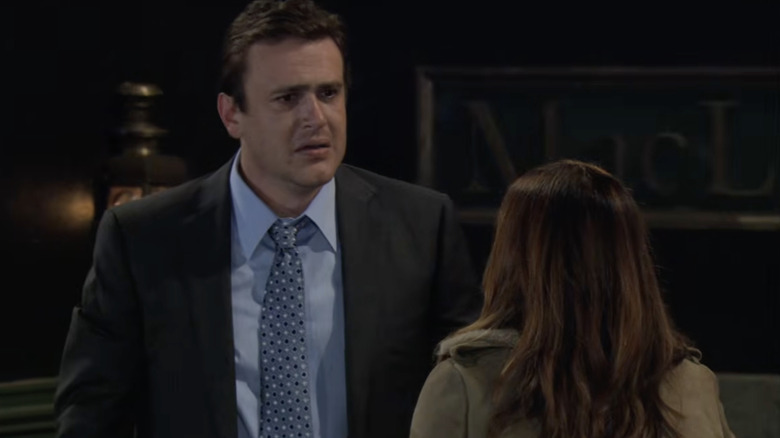
One of the many sad truths about growing older is knowing that, at some point, your parents are going to die. It's inevitable, but that doesn't make it any less shocking when it becomes reality. Marshall, Jason Segel's character in the CBS sitcom "How I Met Your Mother," wasn't ready for his dad to die. Viewers weren't either.
Marvin Eriksen Sr., played by Bill Fagerbakke in prior appearances, dies of an offscreen heart attack in the Season 6 episode "Bad News." His son had spent most of the episode worrying about the results of a fertility test only to be blindsided when Lily (Alyson Hannigan) tearfully tells him he dad didn't make it.
"We've explored a lot of other big mileposts — most of them are pretty happy, some of them are sad," series co-creator Carter Bays told TVLine after the episode aired. "This is certainly one of the saddest, but it felt like something we wanted to see our characters grapple with."
Segel's reaction to hearing the news is an incredibly moving performance and was a genuine reaction. He didn't know what, exactly, the bad news was going to be until Hannigan said her line while filming.
"As the last words of Lily's line — 'he didn't make it' — left Alyson's mouth, I had to look away, as did our director Pamela Fryman," Bays told Entertainment Weekly. "It's our job to watch what happens, but in this case, what Jason and Alyson were going through was so unbearably real."