

5 Best British Sci-Fi Series Of All Time, Ranked
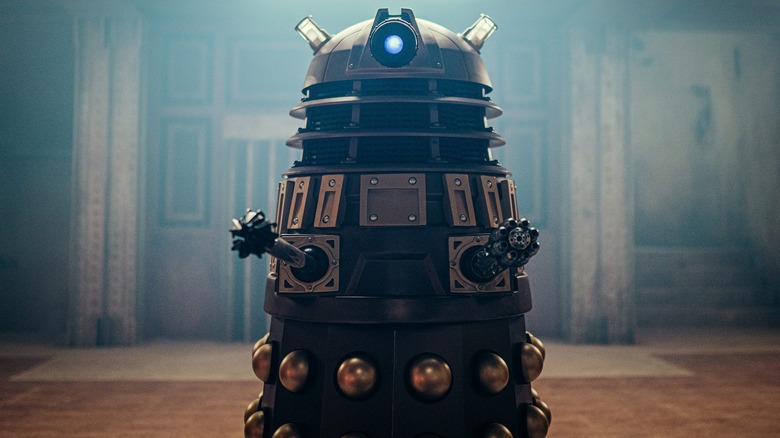
While Hollywood blockbusters have produced some of the most spectacular sci-fi stories ever committed to screen, a few of the genre's smartest, strangest, and most innovative entries arrived in Britain on the small screen. The U.K. has a long history of creating sci-fi shows with loyal fanbases. Often, success comes despite smaller budgets or being limited by the visual effects of the time. In the face of these technical limitations, many British sci-fi series have been forced to dream bigger, crafting more imaginative and intelligent stories.
The influence of British science fiction on television can be felt throughout all corners of the genre. Many of the greatest sci-fi series to come out of Britain have gone on to influence the work of hugely iconic filmmakers, including Ridley Scott. Other British sci-fi series have themselves been remade, revived, or used as a basis for spin-offs to reach new audiences long after the end of their original runs. While the U.S. undeniably dominates the big screen, there is perhaps no American sci-fi TV series outside of "Star Trek" that has achieved the same notoriety, longevity, and fan dedication as the most successful British sci-fi TV series. Since the 1950s, British TV has been pushing the genre towards bold new frontiers.
5. Red Dwarf
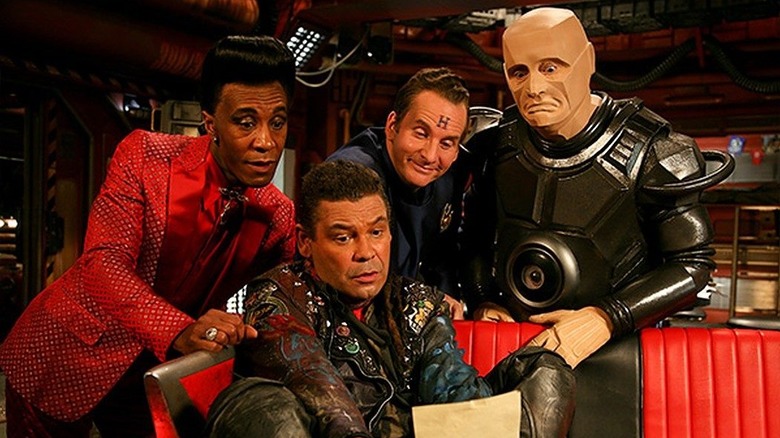
From the upbeat vocals of its theme to the main characters constantly bickering about the universe's absolute irreverence at every turn, it's fair to say "Red Dwarf" is not a typical sci-fi series by any measure. A sci-fi sitcom taking place in deep space aboard a lost mining ship, the series set the space opera genre on a collision course with raucous adult comedy.
Debuting in 1988, "Red Dwarf" gave viewers a new perspective on what sci-fi could be. Despite taking place millions of years in the future and far from Earth, the series felt far more grounded in earthly realities than other sci-fi television shows. There was nothing arch about the dialogue, which was brash and filled with supposedly futuristic expletives concocted for the show, with characters — and fans — frequently referring to each other as "smegheads" (a word the series' creators have always maintained was entirely invented as a stand-in for real swearing and had nothing to do with any real-life slang). The series' protagonist, Dave Lister (Craig Charles), was a working-class technician; the show's crude language and attitude felt faithful to his character, prioritizing capturing the voice of a down-to-earth everyman rather than focusing on sci-fi techno jargon.
"Red Dwarf" originally ran for eight seasons between 1988 and 1999, before it was revived in the 2009 miniseries "Red Dwarf: Back to Earth," which was eventually followed by three new seasons. Most recently, the series returned for a feature-length special in 2020, "Red Dwarf: The Promised Land."
4. The Quatermass Experiment
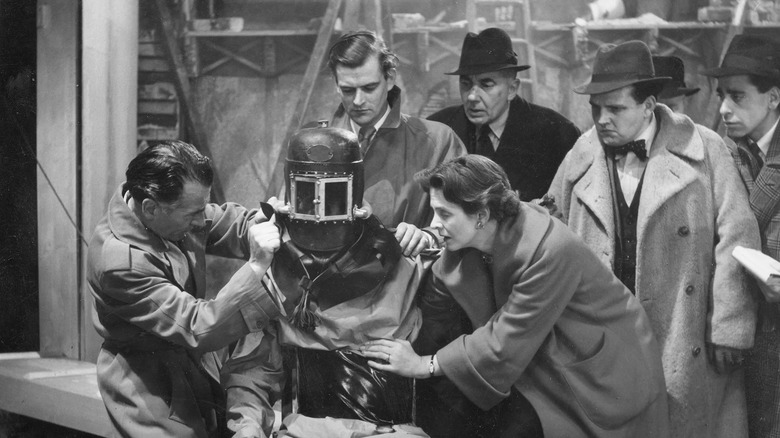
Debuting in 1953, "The Quatermass Experiment" was not a fantastical spacefaring adventure, but was instead an unnerving story about an astronaut who had been subjected to a mysterious alien encounter. The series saw an experimental British rocket return to Earth with two of its three crew members missing. Over the course of six episodes, the craft's sole surviving crew member began to mutate into something terrifying and inhuman. The creature was only stopped by the intervention of Professor Bernard Quatermass (Reginald Tate).
In the years since it aired on the BBC, "The Quatermass Experiment" has been cited as an influence on sci-fi productions including "Doctor Who," Ridley Scott's "Alien," and Stanley Kubrick's legendary sci-fi epic, "2001: A Space Odyssey." The show's long-lasting influence is made all the more remarkable by the fact that most of the original episodes were only ever seen when they were first broadcast. "The Quatermass Experiment" was filmed and broadcast live, a far more common practice at the time it aired. Consequently, only the first two episodes were recorded — part of an abandoned plan to sell the series to Canada — while the remaining four only existed during their live broadcast.
The series, which received various television follow-ups, was adapted into a Hammer horror film in 1955. In 2005, BBC Four aired a live film adaptation, featuring future "Doctor Who" star David Tennant.
3. Blake's 7
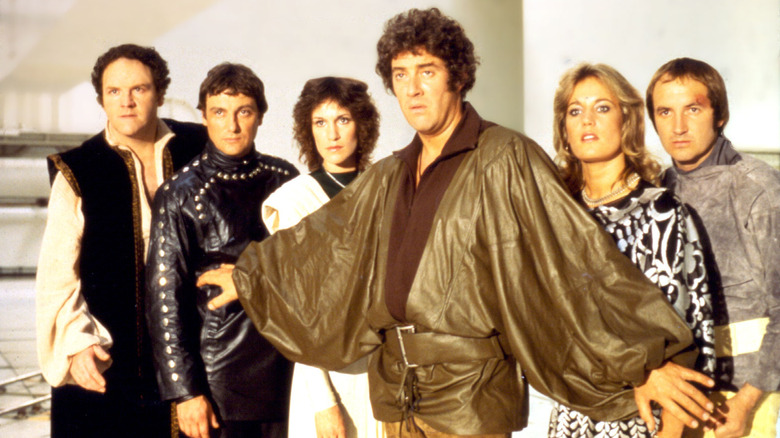
One year after "Star Wars" achieved sensational success bringing a space opera to the big screen, "Blake's 7" brought a new brand of sci-fi to television. The brainchild of Terry Nation, best known for creating the legendary Daleks on "Doctor Who," "Blake's 7" followed a band of political dissidents and escaped convicts, fighting in rebellion against the authoritarian Terran Federation. Led at first by Roj Blake (Gareth Thomas), this band of outlaws traveled the stars in their battle against the Federation, which controlled Earth and many other colonized worlds.
Throughout the series, the cast would change, with Blake himself bowing out as a regular character at the end of the show's second season. After four seasons, the sci-fi series ended on an infamously bleak note as Blake and the entire crew were killed by Federation troops in slow motion at the end of the finale. Since "Blake's 7" concluded in 1981, there have been various attempts at rebooting the series, but none have ever taken off. The series is now once again gearing up for a return to television and things might be looking more hopeful this time around. Multitude Productions, owned by "The Last of Us" director Peter Hoar, has acquired the rights to the series and work is underway on a reboot.
2. Life on Mars
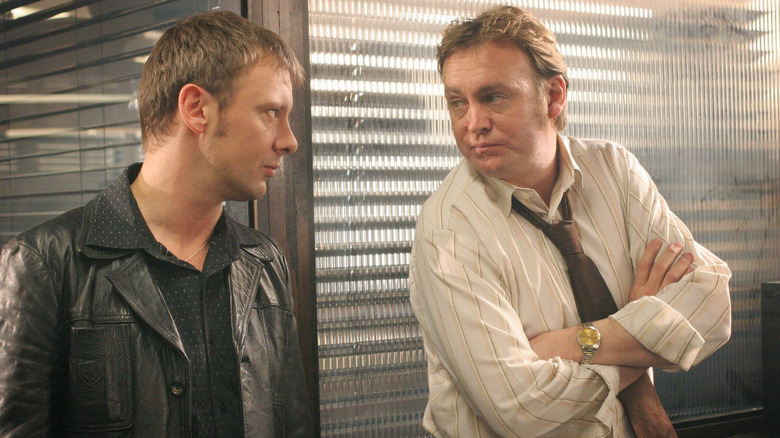
There were no spaceships or aliens in sight on this hit series. In fact, "Life on Mars" refused to fully explain its central sci-fi conceit, but the mystery surrounding this supernatural phenomenon was the driving force behind the show. "Life on Mars" followed Sam Tyler (John Simm), a police officer from 2006 who got into a car accident and woke up to find himself in 1973. Not only had Sam traveled through time, he discovered a new life waiting for him in the '70s. Having been a detective chief inspector in 2006, he was now demoted to a detective inspector and was starting his first day working under the abrasive DCI Gene Hunt.
Jumping from a world of modern policing techniques and political correctness into a world of violent and abrasive cops left Sam reeling and frequently at odds with his DCI. To viewers in 2026, the series' basic presentation of modern policing as more sanitized and free of corruption may feel like a misleading oversimplification, but Sam's struggles to get to grips with his journey through time remain utterly compelling, as do his efforts to unravel the truth of what has happened to him.
The series ended without fully resolving whether Sam was really time traveling. For that explanation, viewers would have to tune into spin-off "Ashes to Ashes" — but the dramatic conclusion to Sam Tyler's story was nevertheless the perfect ending to a series that delivered a surreal blend of sci-fi mystery and police procedural.
1. Doctor Who
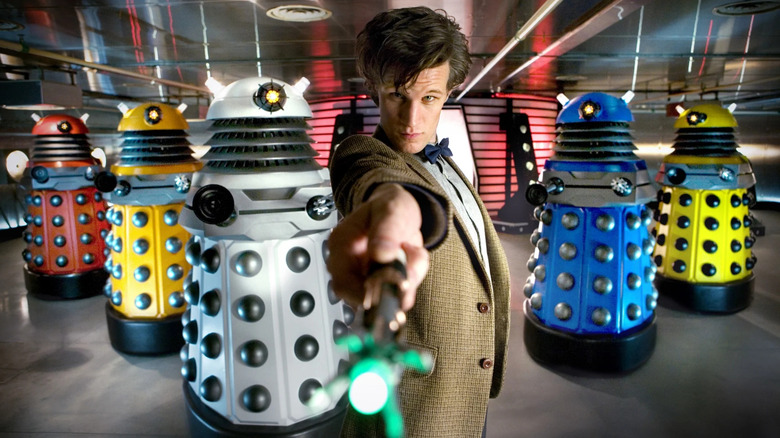
Television's longest-running sci-fi series, "Doctor Who" is the endless adventure through time and space of a Time Lord known only as the Doctor and their human companions. First airing in 1963 on BBC One with William Hartnell in the title role, "Doctor Who" has remained one of the best loved sci-fi series ever since. When Hartnell bowed out of the series in 1966, the show's creators dreamed up a novel idea — as a quirk of the Doctor's alien physiology, he would be able to evade death by regenerating, changing his entire appearance and personality to become an all-new version of himself.
Since 1963, over a dozen different actors have played multiple different incarnations of the Doctor — David Tennant pulled double duty when he came back as the Fourteenth Doctor for the series' 60th anniversary in 2023, having previously played the Tenth Doctor. In that time, "Doctor Who" has also introduced some of sci-fi's most iconic and terrifying villains, including the ruthlessly genocidal Daleks, the chillingly inhuman Cybermen, rogue Time Lord, the Master and, the ultimate jump scares, the Weeping Angels.
Despite facing cancelation — or at least, an indefinite hiatus — in 1989, the series survived through books, comics, spin-offs, and one less-than-well-received TV movie. In 2005, "Doctor Who" returned to television to widespread acclaim from critics, old fans, and new viewers. The BBC is currently looking for a new production company to work on the next era of the series, regenerating "Doctor Who" all over again.