

5 Classic Sci-Fi Shows Better Than Star Trek
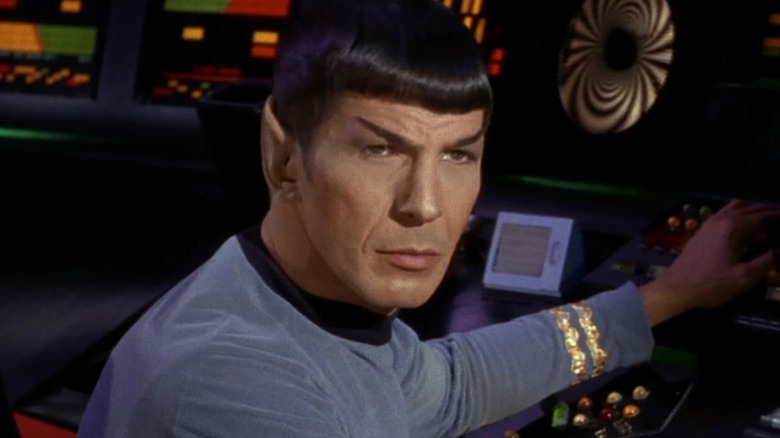
First airing in 1966, "Star Trek" perfectly showcased everything sci-fi TV could achieve, as one of the best shows set in the future, sending the crew of the Starship Enterprise into encounters with strange new worlds, mysterious alien beings and different civilizations. The ingenuity of "Star Trek" has helped ensure the series' longevity via various spin-offs, including "Star Trek: The Next Generation," "Star Trek: Discovery," and "Star Trek: Picard."
While "Star Trek" is undeniably one of the most successful TV sci-fi franchises of all time, other shows are just as good — if not better — at being thought-provoking, imagining alternate worlds, and building universes audiences can fall in love with. Some of television's earliest sci-fi series pushed science fiction in exciting new directions, blending it with other genres, or taking it to such surreal places, audiences were caught totally off-guard. Sci-fi shows like "The Expanse," "Foundation," "Andor", and "3 Body Problem" have given "Star Trek" a run for its money in recent years — but even classic series from the '50s all the way to the '90s were standing tall alongside Roddenberry's vision for the future.
The Twilight Zone
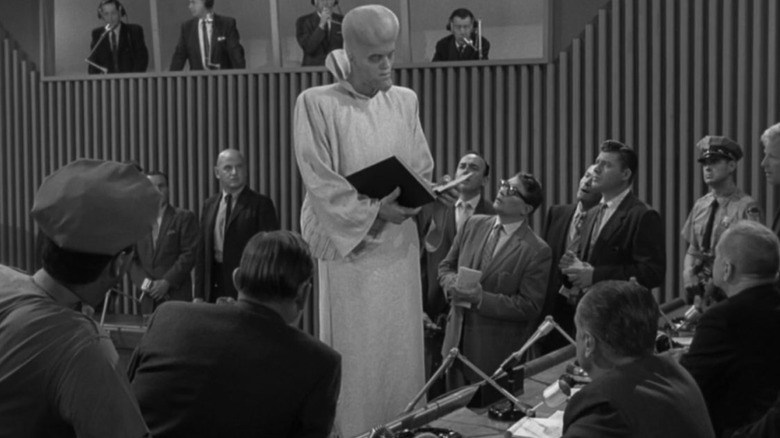
First airing in 1959, "The Twilight Zone" was in many ways the original "Black Mirror," though it pushed even further into the realms of sci-fi and fantasy than that more recent series. Each episode told a standalone story, pitting ordinary individuals against extraordinary occurrences, almost always with deeply disturbing results. There were always moral or philosophical underpinnings to every episode of "The Twilight Zone," leaving audiences with chilling lessons to ponder. The greatest episodes of "The Twilight Zone" still thrill audiences to this day.
"To Serve Man" sees apparently benevolent aliens came to Earth, only for it to be revealed at the last minute that their book, "To Serve Man," is, in fact, a cookbook. In "The Little People," an astronaut is overcome by megalomania upon discovering a society of miniature people, installing himself as their ruler. "Nightmare at 20,000 Feet" told an unsettling story of a gremlin attacking an airplane, and featured future "Star Trek" star William Shatner. Shatner wasn't the only guest star on "The Twilight Zone" who would later appear on "Star Trek," either. Leonard Nimoy showed up in the World War II-based episode, "A Quality of Mercy," Scotty actor James Doohan was in "Valley of the Shadow," and George Takei starred in "The Encounter," a controversial episode concerning an American WWII veteran meeting a Japanese gardener.
Red Dwarf
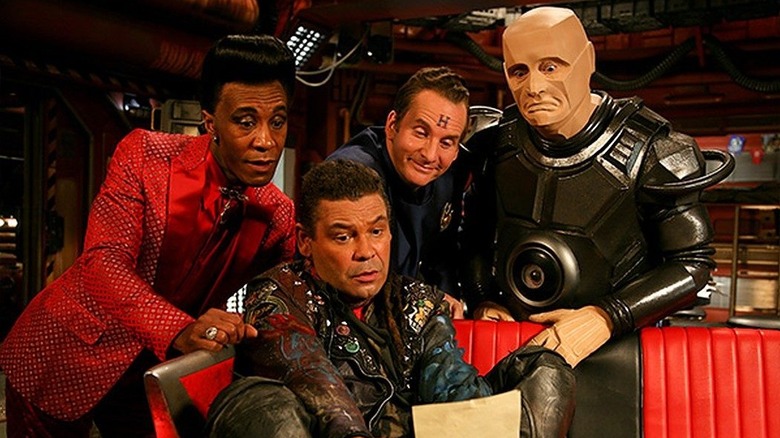
Instead of starring a slick squad of wise and intelligent Starfleet heroes out to explore the final frontier, "Red Dwarf" features a lowly mechanic — who also happens to be the last living human — stuck with the hologram of his insufferable dead roommate, a man who evolved from cats, and a neurotic robot.
This weird sci-fi sitcom, set aboard the mining ship Red Dwarf, originally aired for eight seasons between 1988 and 1999. So strong was the series' fan following that it received a revival in 2009 and a film adaptation in 2020. The show begins when mechanic Dave Lister is put into suspended animation as punishment for smuggling a cat aboard the Red Dwarf, only for a radiation leak to then kill the rest of the crew. Lister wakes up three million years later, the sole survivor of not only the ship, but the human race.
"Red Dwarf" turned sci-fi TV on its head, using its far-future spacefaring setting as the basis for a raucous and irreverent comedy, often bringing more humanity to genuinely fascinating sci-fi concepts. The world-building behind "Red Dwarf" also stood out among other sci-fi shows based around space travel, as it followed a strict "no aliens" rule — all the non-human creatures featured on the show are either created by humans or had evolved from Earth. This further highlighted Lister's isolation as the last human.
The Prisoner
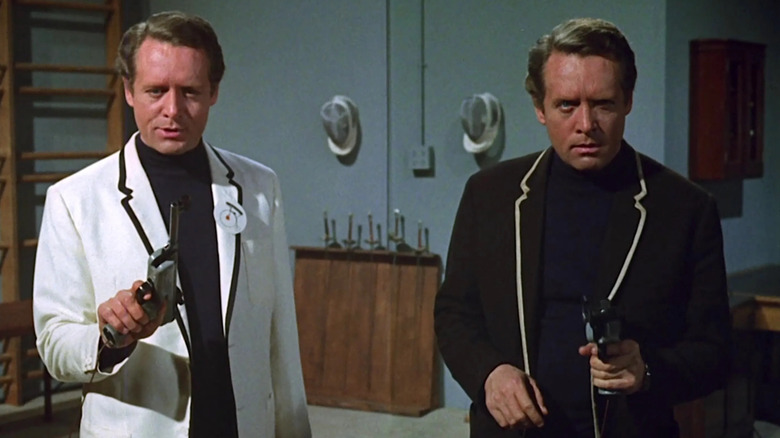
A sci-fi show unlike any other, "The Prisoner" dealt in the absurd and the surreal, luring viewers into a world of abstract allegory and endless mystery. The series follows Number Six, a former employee of the British government — potentially a spy — who has resigned, only to find himself imprisoned in a strange village ruled over by the anonymous Number One. Number Six is held along with other nameless prisoners and endlessly endeavors to regain his freedom, in spite of living under constant surveillance from the shadowy powers that rule the Village.
A strange, dark allegory for the surveillance state and disjointed state of the world during the Cold War, "The Prisoner" was rich in social commentary and hidden meaning. Audiences became so invested in its mystery, that star and co-creator Patrick McGoohan went into hiding when the finale of "The Prisoner" outraged viewers. After keeping audiences guessing the true identity of Number One throughout the series' one-season run, the final episode unmasked the villain, only to reveal Number Six himself — without any further explanation offered. Fans demanded to know more, but McGoohan was tight-lipped. Eventually, he would explain that he viewed it as "an allegorical ending," where the ultimate evil was revealed to be "the evil part of oneself."
The X-Files
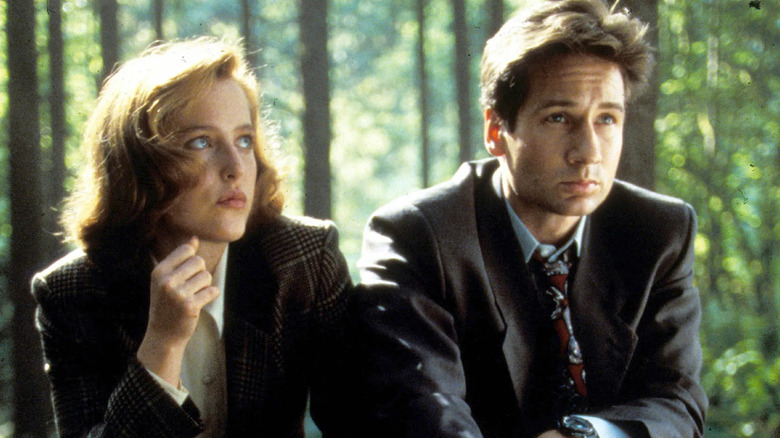
"The X-Files" combined a fascination with supernatural and unexplained phenomena with the trappings of a buddy cop police procedural. The '90s show broke new ground by combining standalone "monster-of-the-week" stories with an overarching serialized narrative — something that has become far more commonplace on television since "The X-Files."
The series follows FBI agents Fox Mulder and Dana Scully as they investigate the so-called X-Files: unexplained and apparently unsolvable cases with connections to paranormal phenomena. At the heart of the story is the contrast between Mulder and Scully. While David Duchovny's Agent Mulder believes in aliens and the supernatural, Gillian Anderson's Agent Scully is a medical doctor with a scientific background who is inclined towards skepticism. Mulder and Scully are left in the dark over the existence of any extraterrestrial or supernatural forces, even if the audience is given a clearer indication that paranormal powers are at play.
Following the release of the movie, "The X-Files: Fight the Future," in 1998, which saw a conspiracy to conceal the alien colonization of Earth being uncovered, the show started to move in a new direction. Extraterrestrial activity became more and more prominent, eventually leading to Scully accepting the existence of aliens. "The X-Files" initially came to an end with Season 9 in 2002. In 2016, Fox revived the show, initially as a six-episode miniseries and then with a ten-episode final full season.
Doctor Who
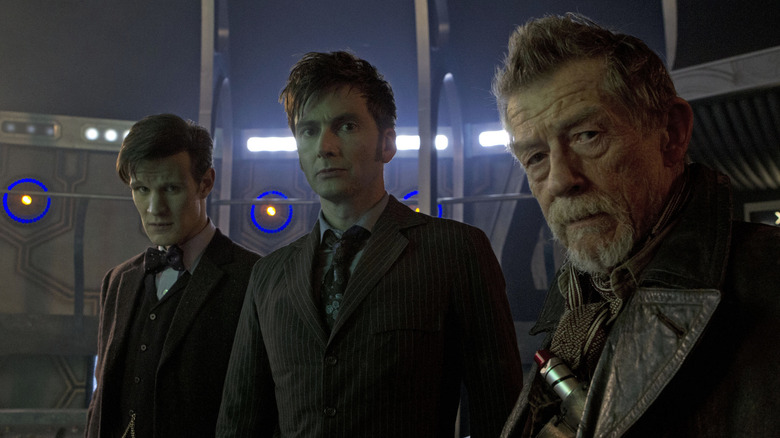
The longest-running — and quite possibly greatest — sci-fi TV series of all time, "Doctor Who" helped define the sci-fi genre for so many reasons. Starting in 1963, the first episode of "Doctor Who," "An Unearthly Child," introduced a doddering and mysterious old man known only as the Doctor, along with his granddaughter and her two school teachers. The Doctor lived in what appeared to be an old police call box, but was in fact a time machine that was bigger on the inside, called the TARDIS (Time And Relative Dimension In Space). With the fantastical ship, "Doctor Who" could tell stories set anywhere in all of time and space.
As the series went on, the Doctor's companions would leave the TARDIS to be replaced by new faces. When original star William Hartnell had to bow out, a genius conceit was added to the mythology — the Doctor's people, the Time Lords, could cheat death by regenerating, changing their entire body. This allowed the Doctor to be recast over and over again again. To this day, "Doctor Who" has maintained its continuity for over 60 years, never having to turn a blind eye to its main character being recast.
All manner of iconic villains have appeared on "Doctor Who," including the Daleks, Cybermen, and rogue Time Lord the Master. The series has explored all extremes of the genre, from hard sci-fi to space fantasy, with absolutely no corner of the imagination beyond the show's scope. "Doctor Who" is a series that can tell any story in any setting, and still do itself justice.