

5 Great TV Shows That Kicked Off With Major Character Deaths
In the world of television, the end of one life can be the beginning of an entire franchise. For at least as long as the small screen has accommodated the murder mystery subgenre, TV writers have understood that one of the flashiest ways to grab an audience's attention is with an early death. These five series below are among the rare few that waste no time in this endeavor, each killing off what might have been a main character in its premiere episodes.
There are no mysteries below — a post-apocalyptic drama, a Western, a black comedy crime thriller, and two of the best superhero shows of the 2020s. Though these five series have little in common, each of them is an example of this uncommon trope done right. The deaths are shocking and impactful because of the extraordinary amount of careful storytelling involved. In at least one case, that storytelling extended beyond the screen to the marketing department, through posters that positioned an ill-fated character as one of the series' stars.
The Last of Us
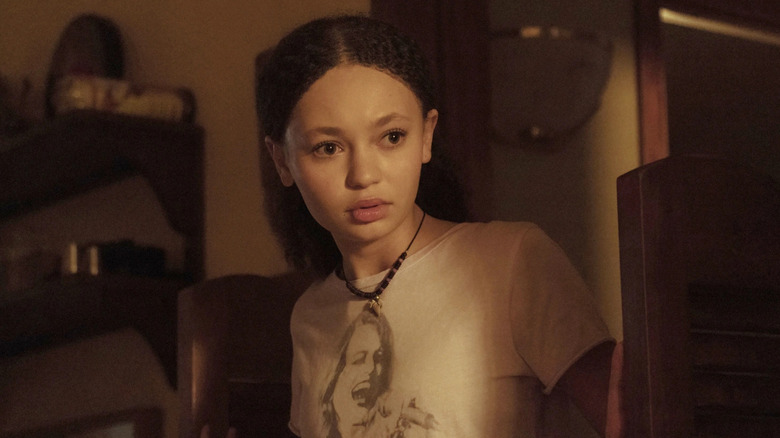
Of the deaths on this list, Sarah Miller's demise in "The Last of Us" was by far the most expected and telegraphed. Fans of the original video games already understood her tragic end as the start of the downward journey of her father, Joel (played in the series by Pedro Pascal). When actor Nico Parker was cast in the role of Sarah, most traditional outlets did not allude to the character's fate but did explicitly confirm that Parker would only be a guest star.
For newcomers to the story, Sarah's death was likely as horrifying a shock as it was in the first game. HBO remade the haunting opening sequence nearly shot-for-shot, right down to dressing Pascal and Parker in costumes nearly identical to what the CGI models wore. While the game has the player take control of Sarah during this initial level, the show writes the beginning of this zombie apocalypse primarily from Sarah's perspective. The effect mostly translates — she feels like an important, protected character, whose vulnerability and innocence make the slow, apocalyptic realization all the more tragic.
Ultimately, in both versions, Sarah and Joel run into a soldier while trying to flee the chaos. The soldier attempts to kill them (presumably to quarantine the area) and manages to shoot Sarah in the stomach before being killed himself by Joel's brother Tommy (Gabriel Luna). Parker and director Craig Mazin emphasize the deeply upsetting nature of her death — Sarah is in extended, agonizing pain, and Joel's attempts to save her are fruitless. No death below sets the tone as viscerally as hers.
Yellowstone
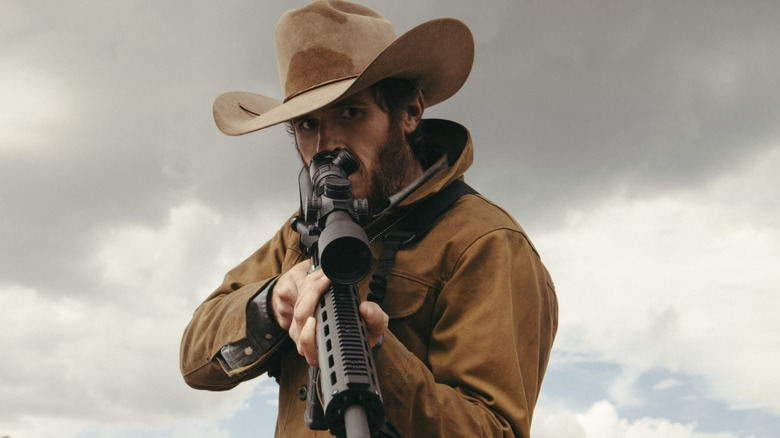
"Yellowstone" has one of the greatest Western TV pilots of all time, kicking the drama into high gear almost immediately with a game-changing death. Lee Dutton, the eldest son of Kevin Costner's imposing John Dutton, is introduced to audiences as the heir apparent to the family's ranch. He's more mature, composed, and settled than any other character on the show — including even John, whose ferocious pride becomes the engine for the series. During a conflict with the Broken Rock Reservation (in the series premiere, "Daybreak"), Lee is shot by Robert Long (Jeremiah Bitsui), the brother-in-law of the wayward Kayce Dutton (Luke Grimes).
From pre-production to marketing, the series framed Lee as a main character. Taylor Sheridan cast Dave Annable in the role, an established actor with a comparable resume to most of the series regulars. (Sheridan even went on to offer him one of the leads in the Zoe Saldaña-led "Lioness.") Annable read (and loved) the script before taking the role and nearly passed due to a scheduling conflict until Sheridan personally called to shake some sense into him. Of course, getting to ride horses and act with Costner in the beautiful Montana natural lands only made leaving the show harder for the actor. He's joked in interviews about lobbying the cast and crew to keep his character around.
Unfortunately for Annable, Lee's character means more once he's gone. His shocking death is what catalyzes the story of "Yellowstone," starting the cycle of bloodshed that doesn't end until the series does.
Invincible
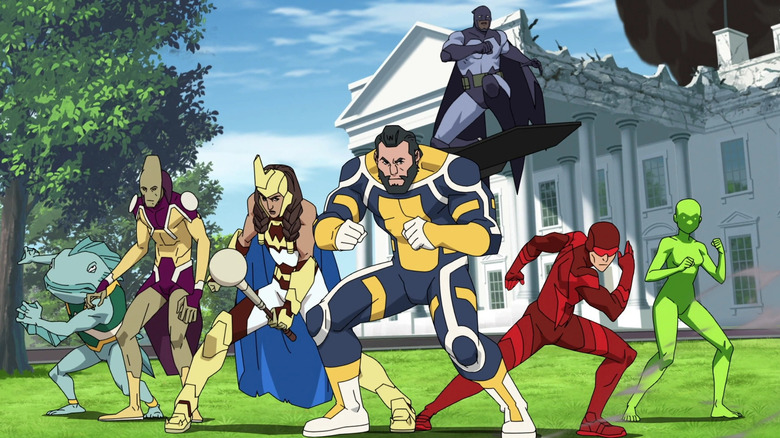
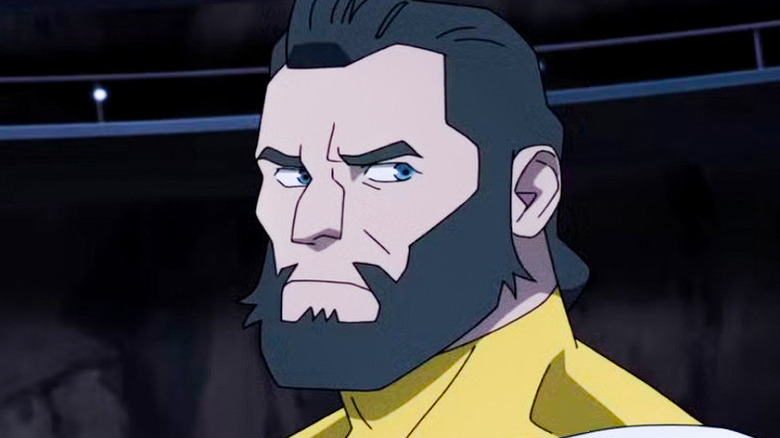
The first episode of "Invincible" is a master class in playing scenes off one another and subverting audience expectations. The Amazon Prime Video series comes out of the gate swinging with a spectacular opening fight sequence between the Mauler Twins and the Guardians of the Globe. It feels like a blockbuster moment compared to the majority of the first season — Jon Hamm is even given a minor cameo as a security guard, like it's a Marvel movie or something. Every frame, voice line, and character choice signals gravitas and traditional heroism.
The team is explicitly pitched as the Justice League in all but name. When you watch them fight in the episode's opening minutes, it feels like you're watching a high-budget update of "Justice League Unlimited." The only person missing is Superman — then J.K. Simmons' Omni-Man shows up. He doesn't just save the civilians in danger, but the heroes themselves as well.
The story shifts to the Grayson family for the rest of the episode, and, by the time the credits roll, you've gotten the sense that the Guardians will be in the background dealing with the adult threats while Mark (Steven Yeun) learns his powers (a la "Young Justice"). "Invincible" interrupts the credits for Omni-Man to lure the entire team to their secret hideout so he can murder them one by one. The heroic framing of the opening is swapped with a blunt, unscored, brutal beatdown that establishes the series' true action style. Further, it subtly sets up the underlying world-conquering subplot, and creates a deeply compelling sense of dramatic irony that the rest of the season sustains.
Fargo
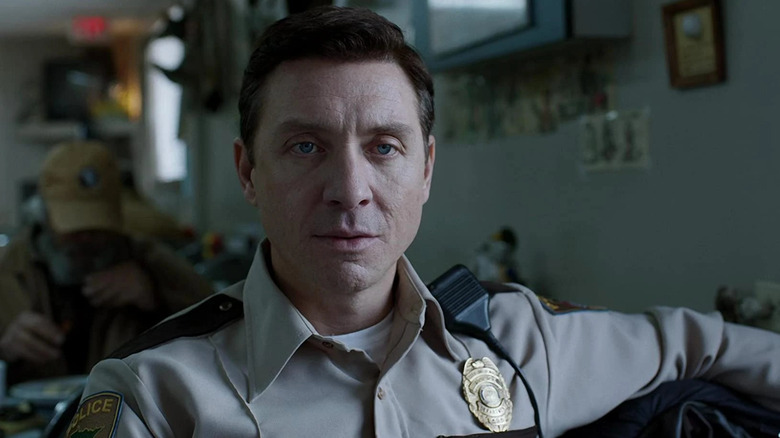
For the first season of "Fargo," Noah Hawley deliberately adopts — and cleverly remixes — numerous elements of the Coen brothers' original film, including the broad structure and character web. He follows the same three-pronged approach to interweaving storylines — law and order, crime and chaos, and an average law-abiding man who suddenly takes a violent step into the wilderness between.
Martin Freeman's insurance salesman Lester Nygaard and Billy Bob Thornton's wandering hitman Lorne Malvo satisfy two of those threads clearly from the outset. As for law and order, the pilot leads us to believe its protagonist will be Shawn Doyle's Chief Vern Thurman. Vern takes charge of the inciting murder investigation in "The Crocodile's Dilemma," with the script exploring his personal and professional life while seemingly establishing his network of supporting players — primarily his pregnant wife, Ida (Julie Ann Emery), his hapless comic foil, Bill Oswalt (Bob Odenkirk), and his capable, reliable deputy Molly Solverson (Allison Tolman). He's by all appearances the quiet, competent, and dignified hero of this story — so, naturally, he is cruelly gunned down by Malvo in order to cover up Lester's murder. Vern's higher-ups unexpectedly pass his title to Bill, brilliantly setting Molly up to be the scrappy underdog at the heart of "Fargo."
Hawley's subversion is arguably even more ingenious and intentional than those above. In an interview with Act Four Screenplays, he revealed his goal was to use the misdirect to introduce a spiritual successor to Frances McDormand's Marge Gunderson without inviting immediate comparison. Molly gets to grow in the background until the exact moment audiences are rooting for her to take the reins.
Daredevil: Born Again
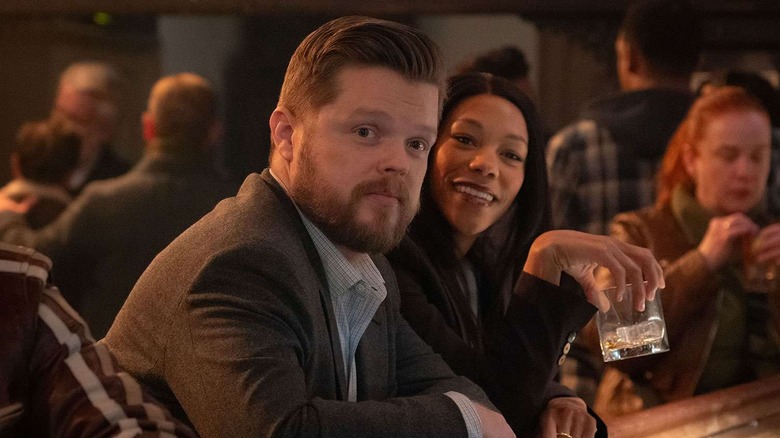
"Daredevil: Born Again" promised fans of the original, beloved Netflix series a reunion they'd waited six years for — then killed it before the opening credits. While the attorneys at Nelson, Murdock & Page are celebrating the retirement of one of their friends from the NYPD, they are stalked and ambushed by Matt's (Charlie Cox) old foe Benjamin Poindexter (the terrifying marksman also known as Bullseye, played by Wilson Bethel in the series). He snipes poor Foggy (Elden Henson), who bleeds out in Karen's (Deborah Ann Woll) arms while Daredevil beats Dex to a pulp on the roof above.
Foggy's death sent shock waves through the "Daredevil" cast and fan base. In the original conception of "Born Again" (which was styled as a soft reboot with only Cox and Vincent D'Onofrio reprising their roles), the character's death wasn't shown. When replacement showrunner Dario Scardapane was brought in, he had no choice but to accept the death as writ — but at the very least chose to do it on camera, after one final Nelson, Murdock & Page moment. Unfortunately, that meant informing a surprised and disappointed Henson that, unlike the rest of the Netflix-Marvel cast, he wasn't going to get to join the MCU in earnest after all.
Ultimately, Foggy's death had the desired effect. Matt was brought to a dark low point that justified the titular rebirth, and the fan fervor helped make it one of Marvel's most memorable TV premieres in recent memory.