

5 TV Shows To Watch If You Like Backrooms
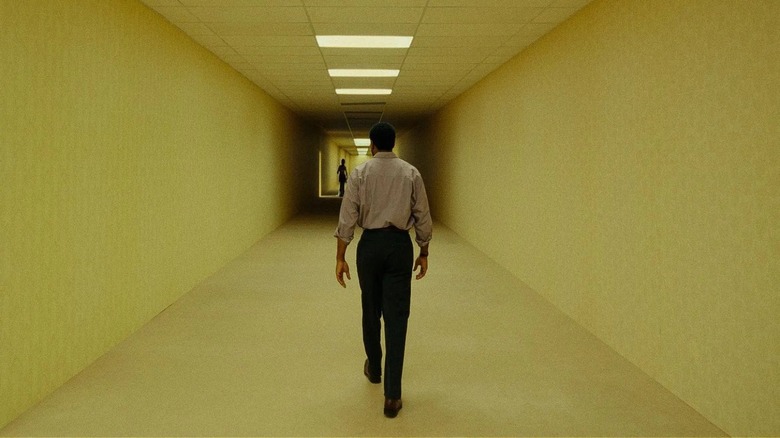
Liminal space horror is all the rage these days, but it makes sense — there's something eerily nostalgic about those types of places, as exemplified in the recent breakout hit film "Backrooms." The unsettling vibe permeates that project, and if you're looking for television shows that give the same feeling, look no further.
The movie, which was based on writer-director Kane Parsons' own YouTube series about the 4chan-coined concept, introduced mainstream audiences to the concept of a liminal space, which essentially can be seen as a transient space that gets us from one place to another but one that also blends nostalgia for the place with an eerie quality stemming from the fact that the space, usually full of people, is empty and something seems off — and usually never-ending. The Backrooms themselves, which at their most basic level resemble an endless maze of an office building, are a great example of generally normal space used temporarily that seems off and hopelessly eternal, but with architecture that feels warm and almost sentimental.
Liminal spaces, when done well, really draw the viewer in — and these five TV shows to watch if you like "Backrooms" showcase some of the best liminal horror vibes on the small screen. Read on to find out which shows noclipped into our list.
Channel Zero
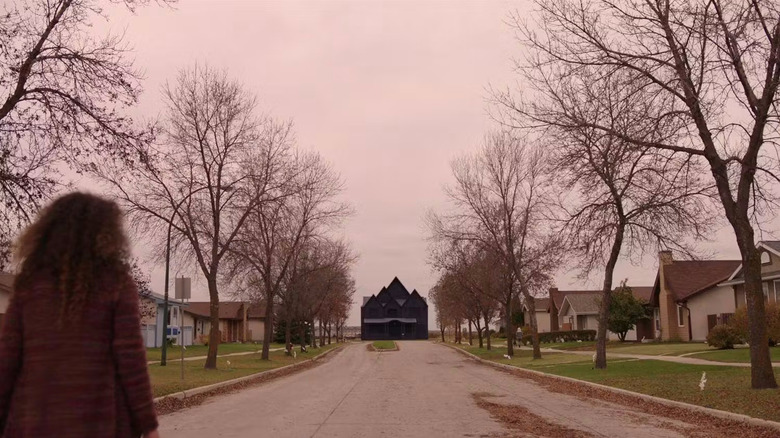
Syfy's anthology series "Channel Zero" is both an underrated television horror gem and an underrated TV show in general. The project has had some really excellent horror highs over its four-season run, and the fact remains that simply not enough people know about the 2016 show. That said, despite its smaller audience, "Channel Zero" has done a great job of crafting compelling season-long stories that stick with even the most seasoned horror fans. Case in point: Season 2, "No-End House."
The whole series is absolutely worth watching, but for us "Backrooms" fans, this is the season to crack into first. It follows a woman and her friends as they explore the "No-End House," what appears to be a haunted house-style attraction but is actually something far more terrifying.
The No-End House functions similarly to the Backrooms, an oppressive space that goes on forever, trapping its inhabitants in the process. The liminal tone is foundational here — but with No-End House, things expand a bit and function more like some of the other versions of the Backrooms that have popped up on the internet that have interactive elements, like instructions written on walls, slides, and puzzles to solve. The No-End House includes various rooms with different horrors inside, giving the never-ending space a ton of anticipatory dread.
Severance
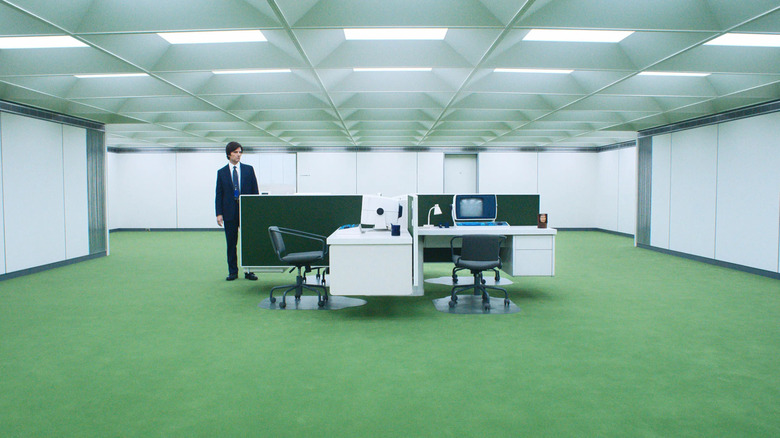
Apple TV's hit sci-fi thriller "Severance" has both a bit of the Backrooms in its plot and some seriously liminal production design — so this one is a must for any true fans. The show follows the employees of a company called Lumon who have gone through a process called severance that splits their consciousness into two halves: One that exists solely inside the workplace and one that exists solely in the outside world.
The psychological (and physical) prison that is the Lumon workplace both functions and looks like its own version of the Backrooms. It's clinical and cold in its sparseness, with a white and grey palette that feels actively hostile, with small bursts of deep blues and greens throughout. The rooms and hallways of Lumon have the endless, sterile feeling of the liminal office spaces within the Backrooms, which have been explored more online than in Kane Parsons' movie (though we do see them in his web series). It feels like the nightmare version of the workplace.
But further still, Lumon doesn't just feel like a liminal space. Based on the fact that the working part of the split employee characters are completely confined to the Lumon office, it is a Backrooms-style place.
Twin Peaks
David Lynch's magnum opus "Twin Peaks" has its fair share of weirdness and unsettling moments throughout, but when it comes to liminality, there's no denying its place in the pantheon of television shows that embody the vibe. The series follows an investigation into the mysterious murder of a Pacific Northwest teenager named Laura Palmer and the aftermath of her disappearance upon the titular Washington town she lived in.
The entirety of "Twin Peaks" is layered with an uncanny and uneasy tone, even the early episodes where the show also plays with melodrama and camp vibes as well. But that unsettling vibe gives the town of Twin Peaks a sense of liminality, especially considering the supernatural forces lurking within the locale. But that said, there's another place within the series that fits the liminal vibe even better.
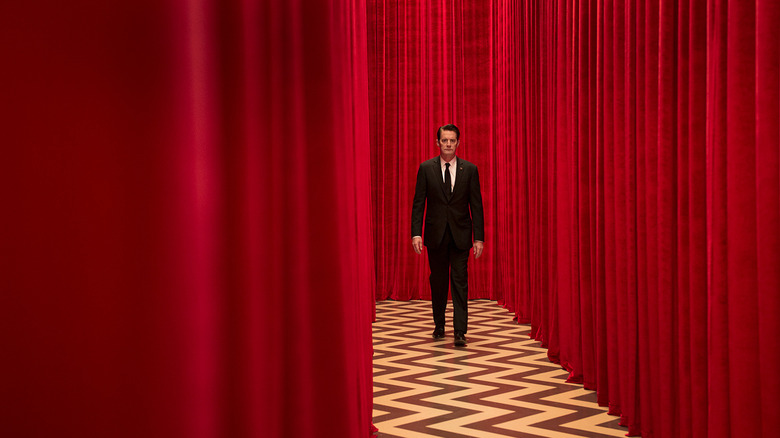
The Red Room — located inside the Black Lodge, a seemingly supernatural space visited in the series by FBI agent Dale Cooper (Kyle MacLachlan) — embodies many of the liminal hallmarks. It's a seemingly endless space decorated with creepy red curtains and zig-zag pattern floors, immediately invoking a feeling of displacement and dread. But within the story, it serves as a transient waiting room for spirits. That means the space not only feels like the Backrooms, but it quite literally fits one of the core liminal space definitions.
The Twilight Zone
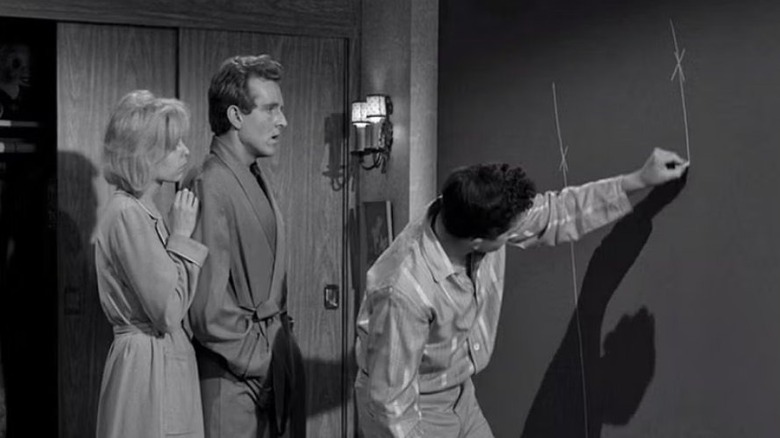
The 1959 horror anthology series "The Twilight Zone" was a masterful examination of the genre, so naturally, they slipped in some seriously liminal vibes along the way. There are several awesome Backrooms-esque episodes throughout the series, but in the interest of giving you the best, here's a couple that are crucial for liminal space lovers.
The very first episode, "Where Is Everybody?", could be one of the most liminal episodes from the series, as it follows a man making his way through a town that appears to be completely absent of any inhabitants. Considering that it aired nearly 70 years ago, the episode feels like it could've even been one of the first depictions of a liminal space as they're referenced today.
Aside from the show's pilot, "Little Girl Lost" is a great example of another liminal episode, in which a young girl ends up in another dimension where she can be heard by her parents but not seen. This one would be particularly fun for fans of the "Backrooms" film because it harkens back to a moment in the movie — one that also occurs in the web series the film connects to — where a character can be heard through a wall but not seen. In any situation, that would cause a feeling of hopeless terror, but when trapped in a liminal space? It would be truly dire, and "The Twilight Zone" exemplifies that dread.
Lost
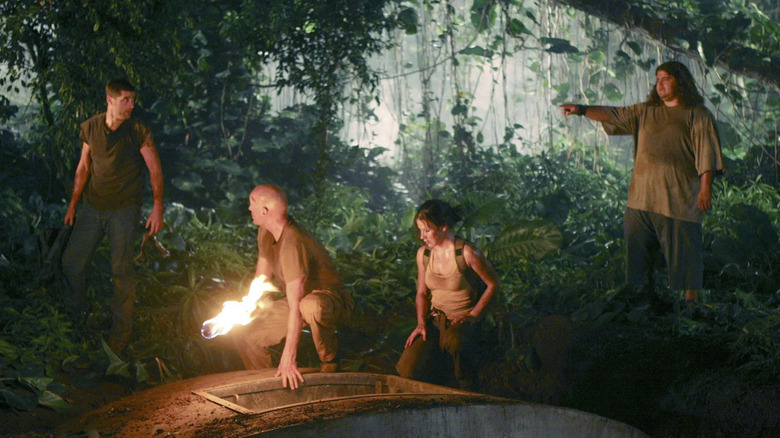
Including the 2004 sci-fi epic "Lost" on this list might seem like a strange move at first — but hear us out on this one, because there's a lot more liminality in this show than you might realize. The iconic series centered on a group of survivors stranded on a mysterious island after a massive plane crash, and the island is exactly where the liminal conversation about this series is focused on.
If you're a "Lost" fan, then you know the island is a crucial component of the series. It's not just a backdrop for the characters to attempt to regain control of their situation — it's also an otherworldly place with something seemingly magical and unexplainable at its core. Those unexplainable and somewhat mythical elements of the island allow it to almost completely evade detection on satellites and maps, keeping it nearly entirely closed off from the outside world like a liminal space would be.
Time also seems to occur differently on the island, where throughout the show we see the present, past, and future represented there seemingly simultaneously but in a way that puzzlingly doesn't overlap. The island itself functions as a liminal space in that it's a transient, eerily vast, largely uninhabited space, but also that the events that happen on it seem mostly affect the world within its confines — and, finally, that it isn't easy to leave.