

10 Best '80s Cartoons Of All Time, Ranked
A lot of animation fans would cite the period roughly spanning from the '60s to the early '80s as a particularly dire era for the medium — a time when budgets ran dry, recycled models and sequences became commonplace, and risks and new ideas went largely out the window. But those same fans would probably cite the '80s as the moment when things began to change, and the modern era of cartoons was effectively born.
In the same way that the creative stagnation of live-action comedy series going into the '80s was soon punctured by shows that redefined what sitcoms could be, the '80s in animation were initially defined by stiff, merchandise-driven animated series that functioned as de-facto toy commercials, only for the decade's latter half to introduce several cartoons that changed the game completely.
Not all of those shows were hits, and some are barely remembered nowadays. But, irrespective of their popularity, the 10 best animated shows of the '80s were turning points for the medium; without their bold swings, we wouldn't have had the embarrassment of riches of the '90s cartoon landscape, nor any of the subsequent creative strides that led us to where TV animation is today. Here are the best '80s cartoons, ranked.
10. The Adventures of the Galaxy Rangers
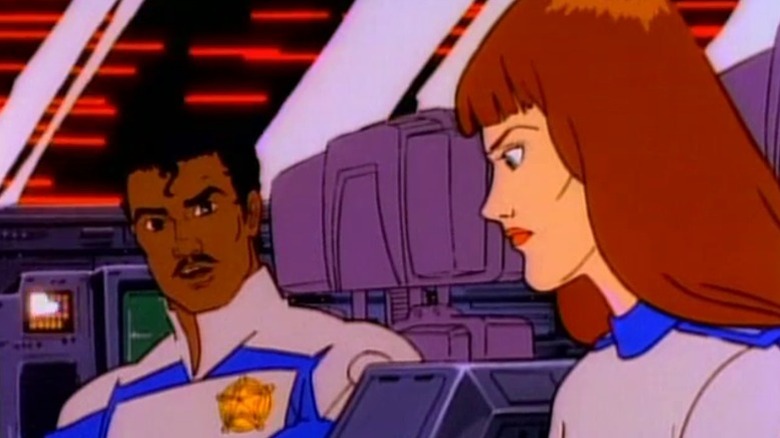
The '80s were chockablock with action-adventure cartoons featuring robots, vehicles, and realistically-designed human characters that could easily be turned into action figures, often to the detriment of quality. But there was one big exception in the form of "The Adventures of the Galaxy Rangers," a series that changed the game by making a point of treating its young audience with respect, and remains as an example of a mostly forgotten sci-fi show that's still worth watching today.
Lovingly animated by Japanese studio Tokyo Movie Shinsha in the style of fluid, detail-rich anime, "Galaxy Rangers" has a premise that might externally look like your average '80s action-figure-excuse plot, but turns out to be anything but: Years after building hyperdrives with help from an advanced alien civilization, humans have spread far and wide around the cosmos, and Earth's official space bureau is now headlined by a division of four superpowered officers.
As evinced by that concept, "The Adventures of the Galaxy Rangers" is a space Western: The domain of humankind's ever-expanding presence in the cosmos is imagined as a frontier peppered with outlaws, while the Crown Empire's tyrannical designs act as an overarching nemesis in between adventure-of-the-week tales. And the show is just about the most imaginative, well-written, and vividly-drawn cartoon in that particular decade-defining style, feature such mature storytelling and such a wide array of out-there genre inspirations that it still feels thrillingly futuristic even when seen today.
9. Dungeons & Dragons
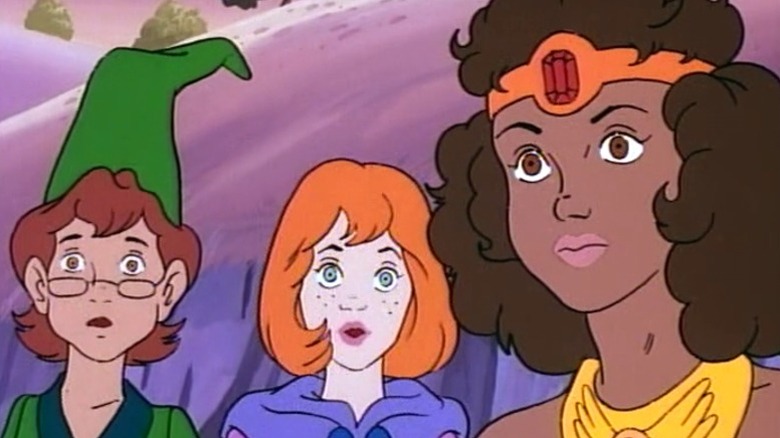
Few shows embody the '80s as thoroughly as CBS' cartoon adaptation of "Dungeons & Dragons." For starters, of course, there's the fact that the '80s were the apogee of D&D-mania, and the series renders much of the game's typical play structure into narrative dynamics that, if you grew up with them, might feel as familiar for having been watched as for having been experienced. Then there's the very essence of the story, which follows a group of kids in a literal make-believe scenario, taking on the roles of wizards and superpowered adventurers while remaining typical Gen X teenagers at heart.
More than anything, though, what makes "Dungeons & Dragons" quintessentially '80s is its existence on an improbable razor's edge between utter corniness and utter brilliance. Following six friends who get whisked off into a magical sword-and-sandal dimension after venturing into the wrong amusement park ride, receive guidelines and personalized weapons from a cryptic Dungeon Master (Sidney Miller), and set out to find a way back home, the series cycles through various one-and-done episodic plots that proudly embrace the reverential genre cheese of a typical D&D session, yet laces them with a disarming level of emotional seriousness and earnest teen drama by constantly emphasizing that these are real-world kids, with real-world-kid anxieties and concerns, who want nothing more than to go home.
8. Garfield and Friends
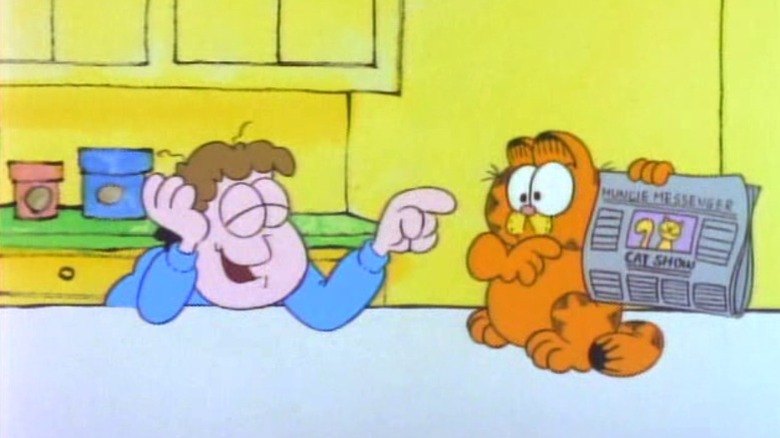
Jim Davis' "Garfield" comic strip was at the height of its popularity in the '80s, and its loose, sardonic, drolly mundane comedy style made it an ideal fit for television adaptations. Over the course of the '80s, CBS aired multiple half-hour primetime specials centered around Garfield (always voiced by Lorenzo Music), several of which took home Emmys; a full-fledged regular "Garfield" cartoon was bound to happen, and it finally did in 1988, when CBS Saturday mornings began to air bundled cartoons adapting both "Garfield" and Davis' other '80s strip "U. S. Acres."
Episodes of "Garfield and Friends," most of them penned by veteran TV and comics writer Mark Evanier, would always consist of three short segments, with the first and last centering Garfield (Music) and his life with Jon (Thom Huge), Odie (Gregg Berger), and company, while the middle segment focused on Orson Pig (Berger) and the other animals at his farm. Across all three segments, "Garfield and Friends" displayed a level of wit and weirdness far beyond the majority of its Saturday morning competition.
The loopy urban adventures of Garfield, Odie, and Jon are largely the centerpiece, porting over and often expanding on the observational precision and the brazen, anything-can-happen spirit of the comic strip; Orson's farm shenanigans, meanwhile, demonstrate the extent to which both Davis and Evanier are able to preserve that same level of comic vigor in a completely different setting, with help from an even more vibrant ensemble of memorably offbeat characters.
7. Adventures of the Gummi Bears
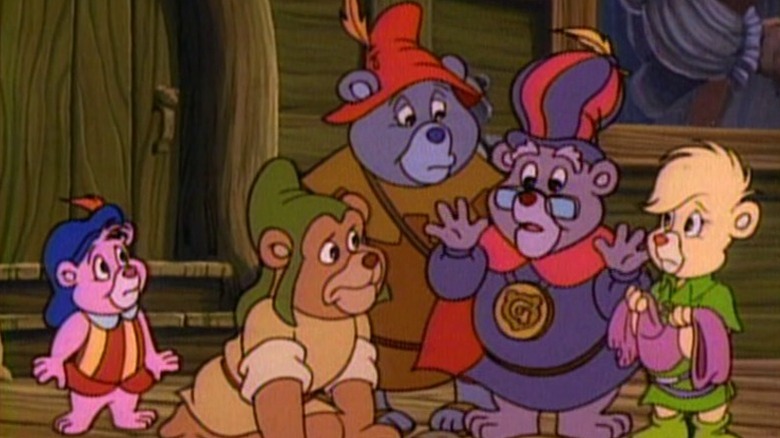
Expressly developed by Walt Disney Television Animation as a kind of "prestige" kids' toon, intended to feature strong enough writing and animation to stand as a proud addition to the Disney canon even as a foray into what many at the time saw as a "lesser" medium, "Adventures of the Gummi Bears" revolutionized the cartoon industry in countless more ways than its fluffy, toddler-friendly, candy-inspired exterior might suggest to those who didn't grow up on it.
A sturdy high fantasy concoction brought off with dazzling artistry by Japan's TMS Animation studio and later by Disney's own Japanese division, "Adventures of the Gummi Bears" takes place in a whimsical medieval realm, in which a clan of six multicolored critters are the last remnants of a legendary civilization known as the Gummi Bears.
With help from a human squire named Cavin (Christian Jacobs, Brett Johnson, David Faustino, Jason Marsden, and R. J. Williams), the six residents of Gummi Glen begin to investigate the rich, magical history of their kind while trying to keep their continuing existence a secret from humans. It's a sprawling, lore-heavy saga that, while still geared to be a jolly time for younger kids, helped introduce a whole generation of TV viewers to the concept of sophisticated serialized storytelling.
6. The Completely Mental Misadventures of Ed Grimley
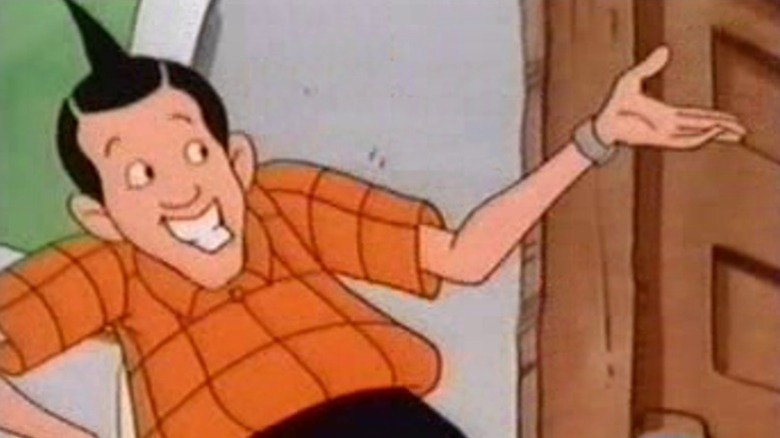
The character of Ed Grimley was developed by Martin Short during his tenure with the legendary improv troupe The Second City, eventually becoming a staple of their Canadian sketch show "SCTV," and then of "Saturday Night Live" when Short joined its cast in 1984. Spurred by Short's and the character's success, Hanna-Barbera produced an animated series based on Ed Grimley in 1988 — and, although it only ran for a single 13-episode season, that was enough to make it one of the most trailblazing cartoons of the '80s.
Every episode of "The Completely Mental Misadventures of Ed Grimley" begins as a humdrum slice-of-life story about Short's pointy-haired eccentric trying to go about an everyday task or activity, and then escalates into surreal madness through a series of absurd plot developments. The joke is twofold: There's the fun of watching the show one-up itself through increasingly preposterous plotting, and the time-tested giddiness of Short translating his motormouth comic routines to voice acting form, perfectly rendered through rough, stretchy, caricature-style animation.
In addition to Grimley's adventures, episodes also include short pseudo-informational segments starring the duo of scientists known as The Amazing Gustav Brothers, and a live-action horror storytime segment hosted by Count Floyd (Joe Flaherty). None of it is supposed to make much sense; to a degree that few '80s cartoons can compare to, "Ed Grimley" sought laughs above all else, and thereby helped move the needle of American animation towards the zany comic experimentation of the '90s.
5. Muppet Babies
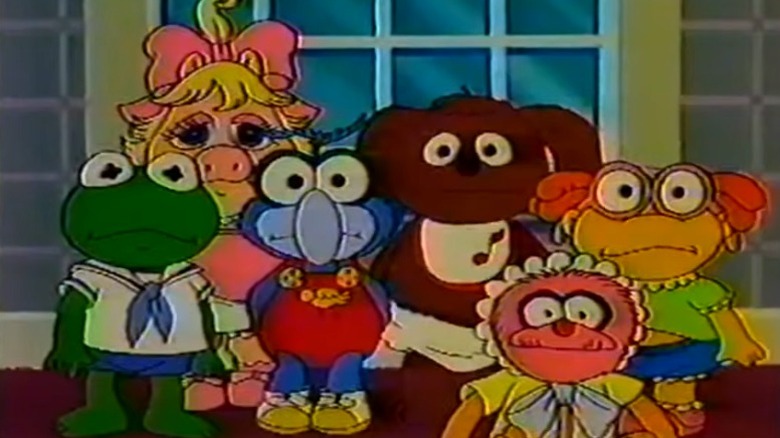
The concept of "baby spin-offs" has become something of a pop culture punchline over the decades — the telltale sign of a franchise that has run out of ways to justify new content. But "Muppet Babies" is the exception that proves the rule. In fact, the unqualified success of this 1984 "The Muppet Show" offshoot is partly responsible for the phenomenon of toddler-centric reimaginings of kids' shows; it's very easy to look at it and infer that baby spin-offs are, in fact, a great idea.
Even as a show aimed primarily at young kids, "Muppet Babies" carries over all the care, cleverness, creativity, and crossover appeal that made the name of its mothership franchise. In fact, it's one of the best "Muppets" TV shows of all time, and stands shoulder to shoulder even with the iconic movie that originally inspired it: "The Muppets Take Manhattan," which first introduced the idea of preschool-aged Muppets in a dream sequence.
Ultimately, the idea to extend the concept of that dream sequence to a full-fledged Saturday morning cartoon proved immensely, improbably fruitful. Following the lives of various baby Muppets in a nursery managed by Nanny (Barbara Billingsley), "Muppet Babies" anticipates "Rugrats" in the way it uses the boundless imagination of toddlers as a springboard for exuberant comedy and adventure. In their mind travels through time and space, the pint-sized Muppets learn lessons, solve problems through teamwork, and find out more about the world — but always in the house style of zany, endlessly witty comedy.
4. Chip 'n Dale: Rescue Rangers
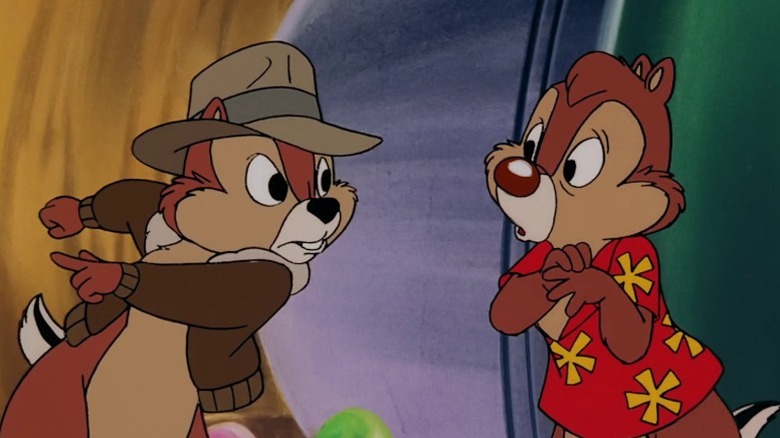
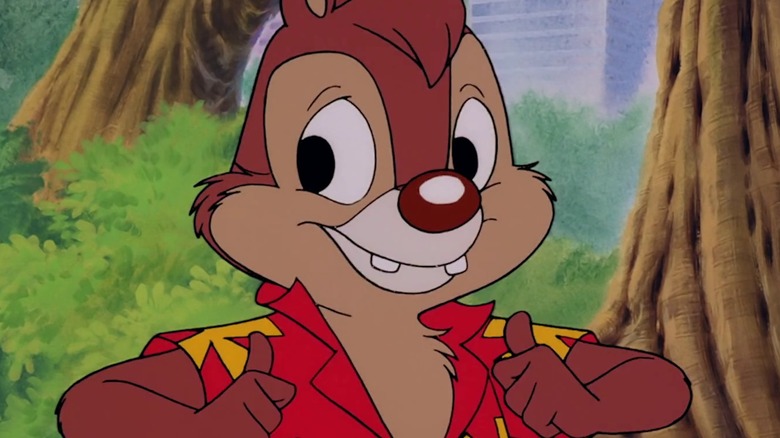
The new era of TV animation started by "Adventures of the Gummi Bears" continued with Disney utterly dominating the field into the turn of the '90s; you will notice that three out of the four shows at the top of this list are Disney productions. For starters, there's "Chip 'n Dale: Rescue Rangers," a series that exemplifies the period's hyper-specific trend of animated series bringing classic Disney characters into contemporary settings — and arguably does it the best out of anyone.
Starring the two chipmunk brothers who had been wreaking havoc in animated shorts since the 1940s, "Chip 'n Dale: Rescue Rangers" imagines Chip (Tress MacNeille) and Dale (Corey Burton) as private detectives with their own agency. Along with Monterey Jack (Peter Cullen and Jim Cummings), Gadget Hackwrench (MacNeille), and Zipper (Burton), they take on cases that fall through the cracks of human law enforcement, and help an array of animal clients solve mysteries while thwarting the nefarious plans of various villains.
Not only did this new iteration of "Chip 'n Dale" boast comedically savvy writing and a cast of perfectly-balanced main players teeming with personality, but its sense of adventure and excitement was a cut above pretty much every other action-centric animated show of the time. Buoyed by some of the crispest, most impressive animation in the whole Disney TV canon, the show epitomizes the studio's late '80s ethos of bringing cartoons into a new echelon of all-out entertainment while still keeping the humor as sharp as ever.
3. The New Adventures of Winnie the Pooh
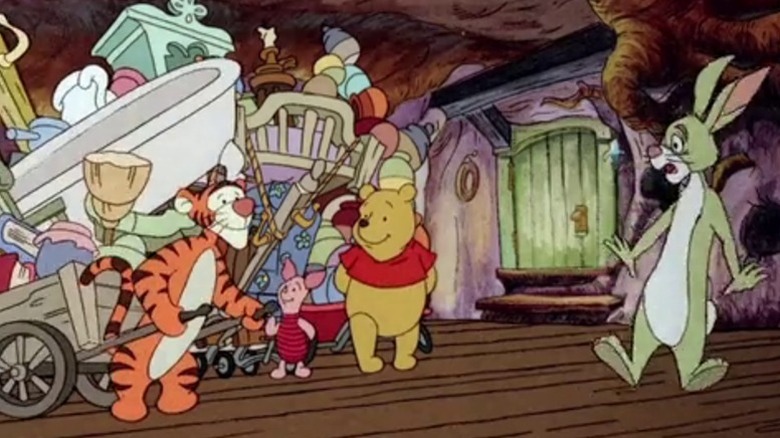
The 1966 short "Winnie the Pooh and the Honey Tree" found an almost eerie alchemy between A. A. Milne's literary creations and the whimsical, wide-eyed sensibility that Disney Animation spent its first five decades carefully honing. It was followed by several other shorts, eventually collated into the 1977 theatrical feature "The Many Adventures of Winnie the Pooh." And, in 1988, Disney took the next natural step and made Winnie the Pooh the protagonist of a full-fledged series of shorts — this time, taking the shape of TV episodes.
Like the character's other Disney outings, "The New Adventures of Winnie the Pooh" features unassumingly phenomenal animation, full of painterly detail and storybook charm that wrap you into a warm hug with their evocation of childhood daydreaming. And, as if its sheer, groundbreaking craftsmanship as a work of TV animation weren't enough, "The New Adventures of Winnie the Pooh" also contains some of the most perfectly-pitched storytelling across the whole Disney oeuvre in the '80s, with an equilibrium of quaint comedy and tenderhearted pathos that the studio had been struggling to recapture throughout the decade even in its theatrical films.
While its resolutely kid-friendly tone has made it less of a cult item among adults compared to other great '80s cartoons, "The New Adventures" is ideal television animation by any criteria. Its 50 episodes ring so timeless that they could just as easily belong to any era.
2. Mighty Mouse: The New Adventures
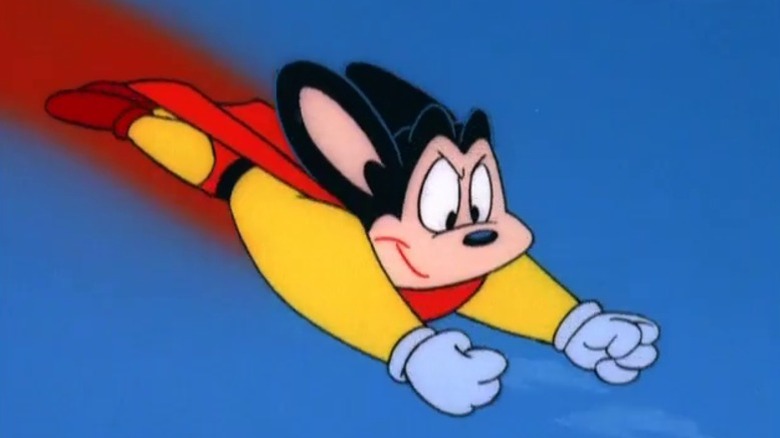
Leave it to Ralph Bakshi to send American cartoons flying into the future. Aired for just two seasons and 19 episodes on CBS Saturday mornings between 1987 and 1988, "Mighty Mouse: The New Adventures" was not a ratings hit or a mainstream hot item by any stretch. Yet the series, produced by Bakshi and assembled by a team of writers and animators who later became fixtures of the '90s cartoon revolution, was so medium-transforming that it sent shockwaves of influence through the whole industry.
For all intents and purposes, "Mighty Mouse: The New Adventures" was the show that invented TV cartoons as we now know them: Zany, stretchy, bustling with movement and ideas, and scripted with snappy zest in the manner of the great theatrical animated shorts of yesteryear. The third and most emblematic series to center the rodent superhero who began headlining 20th Century Fox shorts in the '40s, "The New Adventures" pitches Mighty Mouse (Patrick Pinney) not only as a caped crimefighter, but as the audience's usher in a carnival of comic absurdity.
From parodies of superhero media and other '80s cartoons to freeform gag cascades to fully surrealist outbursts of invention, an episode of "Mighty Mouse: The New Adventures" could be anything and everything depending on the whims of the artists behind it. There was no going back to stodgy, cookie-cutter toy commercial animation after it, and every great auteur-driven cartoon that came into being in the '90s was a direct consequence of that paradigm shift.
1. DuckTales
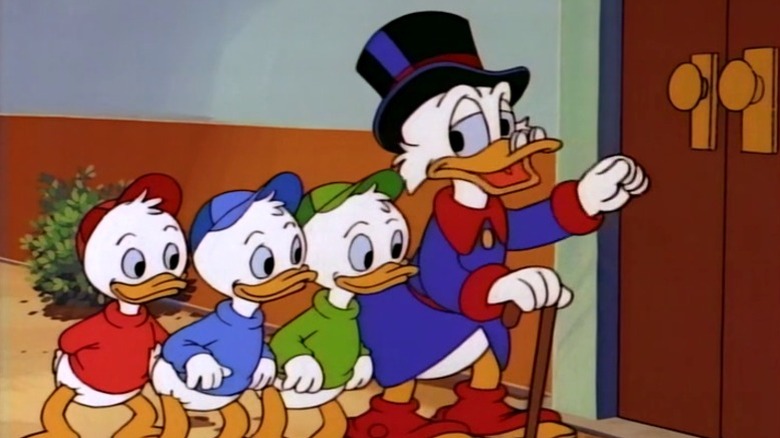
From its all-timer theme song onward, "DuckTales" is a triumph in every department: Storytelling, comedy, character writing, visual spectacle, engrossing lore construction. Despite the absence of Fab Five Disney characters as regulars, the show ultimately went on to define its era like nothing else in its medium, and to become iconic in a way that cartoons at the time just weren't expected to. There's little wonder it has inspired such a long-running franchise, including a 2017 reboot that stands as one of the best animated shows on Disney Plus.
Drawing largely from the works of Carl Barks, "DuckTales" stars Alan Young as Scrooge McDuck. Here, Disney's iconic multiplujillionaire uncle is presented with the opportunity to bring meaning into his life by assuming guardianship over Huey, Dewey and Louie (all voiced by Russi Taylor) while Donald Duck (voiced by Tony Anselmo and rarely seen on the show) is away in the US Navy.
With his near-infinite wealth as both an asset and a frequent source of trouble, Scrooge takes the kids around the globe in pursuit of treasure and adventure while facing various villains from the Disney Ducks comics. These sagas of exploration, danger, and unexpected familial bonding are carried off with thoughtful enough writing and dazzling enough animation to leave even several Disney theatrical films in the dust; it was unheard of at the time for American animated TV to be this dashing and sophisticated, and, even decades later, "DuckTales" continues to be an unqualified hoot for all ages.