

15 The Simpsons Episodes To Skip On A Rewatch
Many will tell you that "The Simpsons" hasn't been good in years, but there are still gems to be found even in the later seasons. Still, with over 800 episodes (and counting), there are some "Simpsons" episodes you should absolutely skip on a rewatch.
Skippable "Simpsons" episodes are very different from ones that are outright bad. Season 9's "The Principal and the Pauper," which contains one of the worst TV show retcons ever, is often cited as the moment where "The Simpsons" started going downhill. However, that's an important episode to watch for that very reason. Plus, in hindsight, it does have some funny moments. A "Simpsons" episode you should skip offers nothing humorous and the show's overall legacy would be better if it was simply forgotten.
Some terrible episodes still have some good moments, and others might reveal something about the Simpson family that'll be important later on. "The Simpsons" may be one of the best animated sitcoms ever made, but it'd be even better if we all just collectively agreed to forget these episodes existed.
So It's Come To This: A Simpsons Clip Show (Season 4, Episode 18)
The clip show — the bane of any TV viewer's existence. You tune in to watch a new episode only to be greeted with a few scenes you've already seen before. Even "The Simpsons" wasn't immune to this phenomenon when it first started out, and the show gave us its first clip show with Season 4's "So It's Come To This: A Simpsons Clip Show." Hey, at least they were self-aware enough to know this was tacky.
Considering you can now watch any episode you want on-demand on Disney+, clip shows have become even more redundant. At least in the old days, you could relive some fond memories. But with streaming, you can just watch "Bart the Daredevil" and "Life on the Fast Lane," rather than settling for brief segments here.
As such, there's really no reason to watch this episode today. You can skip similar clip show episodes, like "Another Simpsons Clip Show," "All Singing, All Dancing," and "Gump Roast."
My Sister, My Sitter (Season 8, Episode 17)
The golden era of "The Simpsons" is generally considered to have ended by the Season 8 finale. However, there are still some episodes that don't hold up well in this era, and one episode you won't mind skipping is "My Sister, My Sitter."
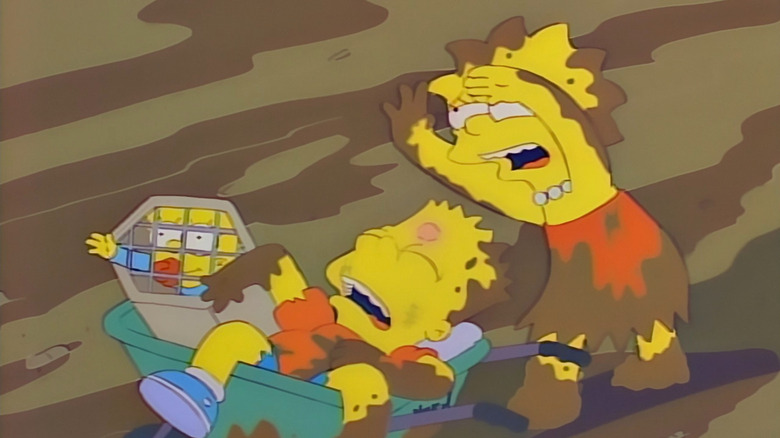
Lisa (Yeardley Smith) becomes a babysitter, so Homer (Dan Castellaneta) and Marge (Julie Kavner) have her babysit Bart (Nancy Cartwright). Honestly, it's a terrible decision on the parents' part, as Bart misbehaves like never before. This leads to him becoming concussed, so Lisa tries to take him to the doctor before her parents find out. Lisa may be one of the smartest child geniuses in TV history, but even she's no match for Bart's mayhem.
It's a really uncomfortable episode, as Bart is just the worst here. The episode extends well beyond their typical sibling bickering and turns Bart into a little psychopath. You just feel bad for Lisa the entire time, who's well out of her depth here. Some fans may not mind the darkness of this story, but for everyone else, it can be a little extreme, especially for golden era "Simpsons."
When You Dish Upon a Star (Season 10, Episode 5)
In its early seasons, "The Simpsons" used celebrity guests sparingly. They'd usually swing by for a bit part, tell a few jokes, and leave. But at a certain point, "The Simpsons" began revolving entire episodes around celebrities, and Season 10's "When You Dish Upon a Star" marks a turning point for the show that's better left ignored.
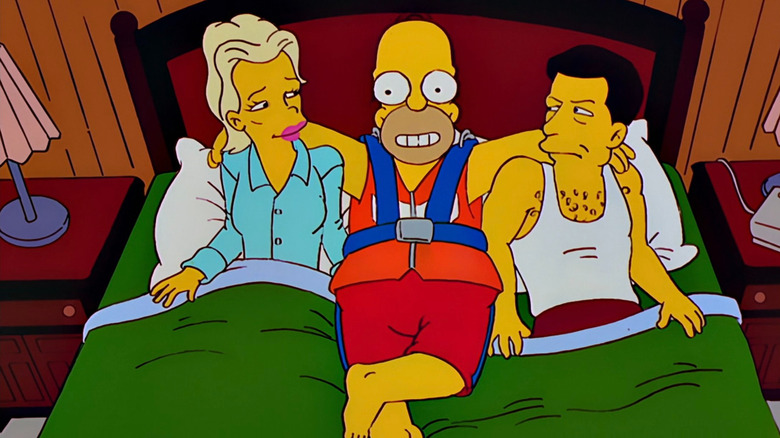
Homer befriends Alec Baldwin, Kim Basinger, and Ron Howard, who have moved to Springfield to get away from the hustle and bustle of Hollywood. Homer becomes their assistant, but he functions more as a glorified stalker. There are also moments that don't make any sense, like Homer claiming he can't read and the entire story ending with a car chase that comes completely out of left field.
"The Simpsons" used to hold celebrities with a certain level of disdain, but then they began getting celebrated, with the satire becoming thinner each episode. Unless you love "Glengarry Glen Ross" to the point where you just have to watch everything Baldwin is in, this one's worth a skip.
Homer Simpson in: 'Kidney Trouble' (Season 10, Episode 8)
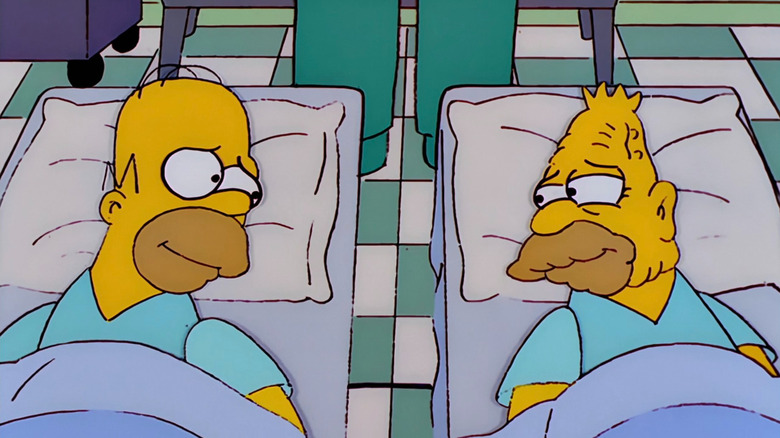
After the golden era, Homer also became more and more insufferable. At first, he was a well-meaning father who just messed up or didn't know how to connect with his kids. But later, he becomes a real jerk. That's best exemplified in the Season 10 episode "Homer Simpson in: 'Kidney Trouble.'"
Grampa Simpson needs a kidney transplant, so Homer offers one of his before running away at the last second out of fear. It'd be an understandable response if Homer wasn't responsible for Grampa's kidneys exploding in the first place due to refusing to pull over so that Grampa could use the bathroom. We suppose Grampa could've just gone in his pants, seeing how he's joked about it before, but we digress.
This is an episode that sees Homer go from a lovable oaf to an unrepentant coward. There are other episodes that see Homer in this mode, but those at least don't have a bizarre third act where Homer boards a ship of lost souls. If you want to preserve the image of Homer as a well-meaning husband, father, and son, don't watch this story.
Saddlesore Galactica (Season 11, Episode 13)
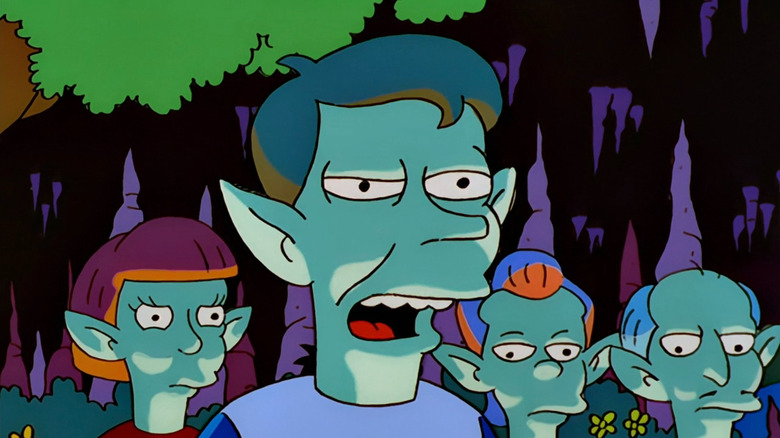
In Season 3's "Lisa's Pony," Homer gets Lisa her own pony to make up for being a bad father, taking a second job to pay for it. By the time we get to Season 11's "Saddlesore Galactica," the Simpsons get a horse to race, then Homer gets threatened by evil jockeys who turn out to be elf-like creatures who eat brains. It's a perfect throughline to show how "The Simpsons" had gone from a zany yet relatable comedy to a bizarre caricature of what it once was.
We've already seen the Simpsons get a horse, and the fact that the episode calls attention to this recycled plot doesn't automatically excuse it. It shows how the writers were probably running on fumes to come up with original ideas, hence the jockey twist. "The Simpsons" writers used to track fan criticism, which probably escalated around this time as the show was displaying signs of going downhill.
Kill the Alligator and Run (Season 11, Episode 19)
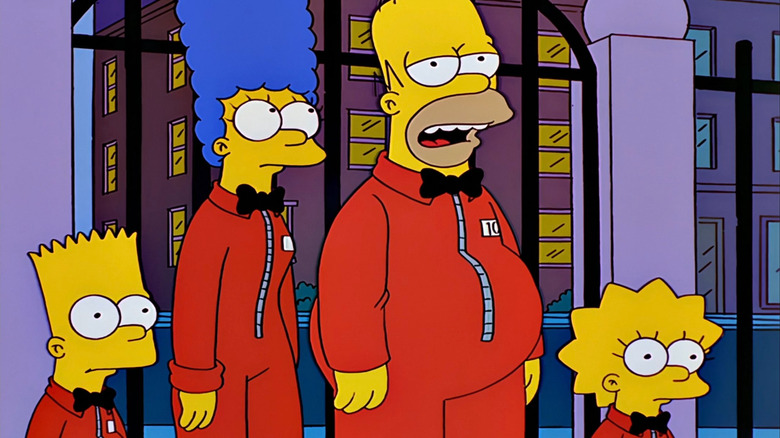
Starting around Season 11, it began to feel like "Simpsons" episodes were actually three or four disparate ideas cobbled together to resemble something of a plot. "Kill the Alligator and Run" perfectly encapsulates this, as it starts with Homer suffering from insomnia, then pivots to the family going to Florida for Spring Break. Finally, it ends with the Simpsons on the run from the law after killing a beloved local alligator.
The entire episode is light on jokes, and then there's the nonsensical resolution, which puts this firmly in skippable territory. Despite the alligator, Captain Jack, seemingly being dead, he's revealed to be alive later to get the family off the hook. This comes out of nowhere and is entirely unearned. It's like the writers realized they only had a minute to get the Simpsons back home somehow, so they had the alligator come back for... reasons.
Homer vs. Dignity (Season 12, Episode 5)
It's hard to say whether there's a single episode where "The Simpsons" formally jumped the shark (the moment where a TV show steeply declines and becomes a shadow of its former self). Some might claim the aforementioned "The Principal and the Pauper" represents that moment, but we'd argue "Homer vs. Dignity" is a far more shameful outing.
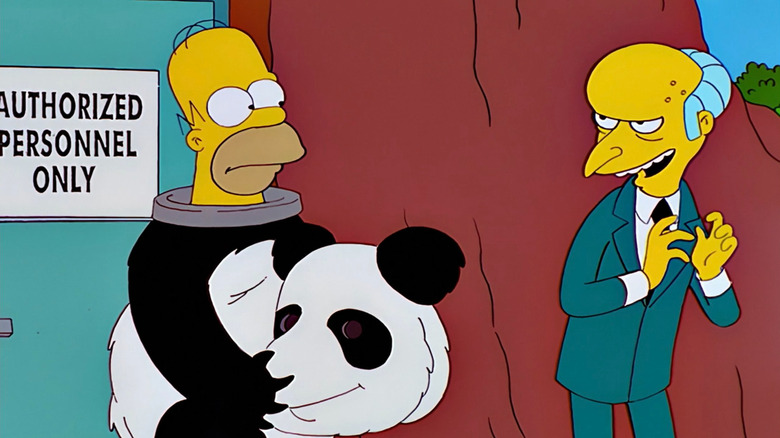
Homer needs money, so he becomes Mr. Burns' prank monkey. As such, he humiliates himself for Mr. Burns' amusement, which culminates in an infamous scene where Homer dresses as a panda and subsequently gets assaulted by an actual male panda.
"The Simpsons" has always skirted with edginess, but it typically had a satirical bent to it. This shows "The Simpsons" skewing into full-blown shock humor, something you'd expect to see on "Family Guy" rather than "The Simpsons." It's a tough episode to watch for more reasons than just the panda scene, but that alone is more than enough reason to avoid it.
The Strong Arms of the Ma (Season 14, Episode 9)
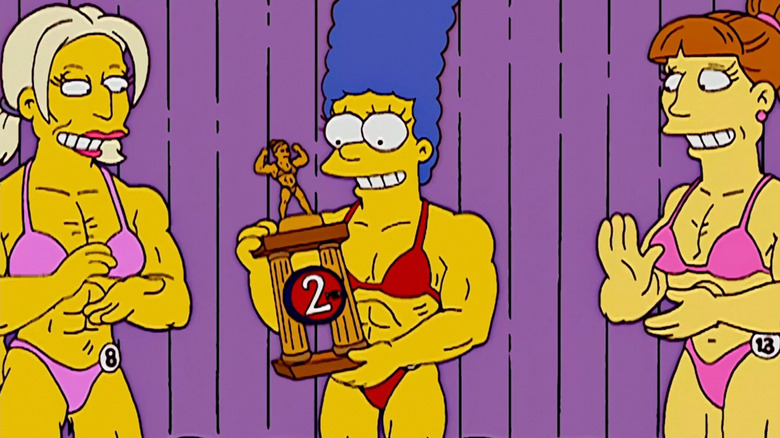
"The Simpsons" was really into the idea of changing Marge's body in Season 14, which also includes the episode "Large Marge," where Marge receives breast implants. That episode is fine, but the one you should skip is "The Strong Arms of the Ma." Marge gets really into working out and begins taking steroids, turning her into an abusive monster.
Like "Homer vs. Dignity," there's a moment that's really off-putting to most fans. After Marge starts bulking up, she grips Homer in bed and forces him to have sex with her. Even when Homer tries to avoid any relations, Marge responds, "I wasn't asking."
Of course, Marge is doped up on performance-enhancing drugs, so it's understandable for her to give this out-of-character statement. But again, it's the kind of shock humor shows like "Family Guy" and "South Park" were more known for that "The Simpsons" had avoided for so long. You'll be better off preserving your mental image of sweet, loving Marge by glossing over this episode.
Co-Dependents' Day (Season 15, Episode 15)
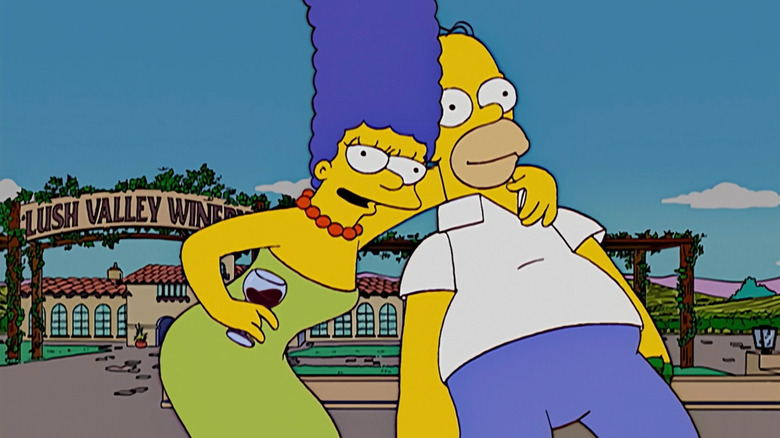
Homer and Marge have had plenty of marital issues throughout "The Simpsons." Typically, Homer messes up, but he makes it up to Marge by the end, and whatever Homer does isn't so irredeemable to the point where you'd want Marge to leave him. That all changes with "Co-Dependents' Day."
Homer and Marge start drinking together, and one night when Homer's driving drunk, he crashes the car. While Marge is passed out, Homer puts her in the drivers' seat so that she take the blame, and naturally, Marge eventually discovers this dishonesty. It's the kind of thing that makes you question whether Homer and Marge truly are one of the best sitcom couples of all time.
Homer's done a lot of despicable things over the years, but this is handily the worst. He effectively gaslights Marge into thinking she drove drunk, and Marge forgives him within a couple of minutes. The problem is that, as a sitcom, "The Simpsons" needs to resolve all of its issues within 22 minutes. But this was something so big and awful that it really required a little more time to get Marge on Homer's side again. The problem with watching "Co-Dependents' Day" is that you never really look at Homer the same way again.
On a Clear Day I Can't See My Sister (Season 16, Episode 11)
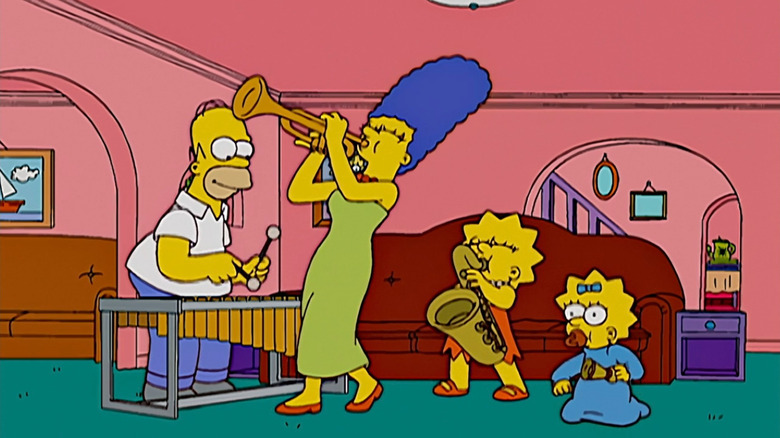
Bart and Lisa's dynamic needs to walk a fine line. They obviously get on each other's nerves, but it still should be clear they love one another. "On a Clear Day I Can't See My Sister" throws all of that out the window as Lisa obtains a restraining order against Bart, forcing him to remain 200 feet away from her at all times.
Much of the episode after that point is basically a montage of Lisa tormenting Bart, effectively kicking him out of the house so that he has to live in the wilderness. To make matters worse, Homer and Marge don't seem concerned that Bart is living outside. It would make more sense for at least one of them to keep an eye on him or temporarily put him up in an apartment or something, just so Bart isn't completely neglected.
And as was common during this era, everything wraps up too quickly and neatly by the end. Lisa allows Bart back into the house without ever really addressing why she was so hurt by his prank in the episode's first act to begin with.
The Boys of Bummer (Season 18, Episode 18)
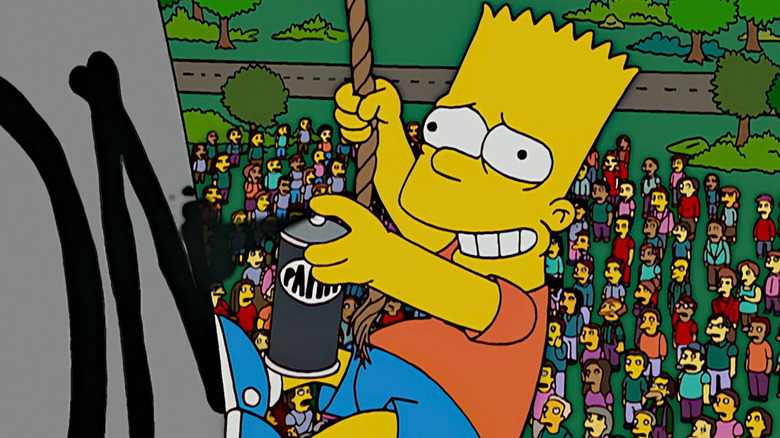
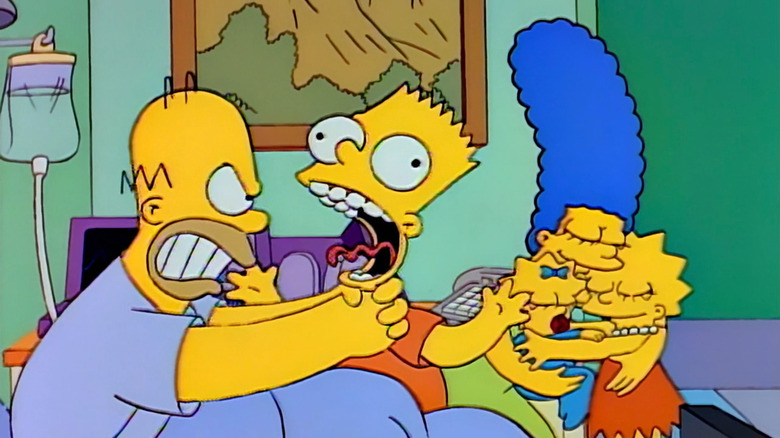
The further you go into "The Simpsons," the more mean-spirited it becomes. "The Boys of Bummer" sees Bart screw up Springfield's chance of winning a Little League championship game. The town's residents turn on him and are particularly cruel, leading to Bart going mad and jumping off a water tower to prove that he hates himself, too.
There could've been another version of this episode where the town turns on Bart to represent the mass obsession with sports and how people can get too caught up in silly games. But all of Springfield goes too far. Even when Bart's hospitalized, there's a quick scene of a mob forming outside his window to mock him. Mobs are a dime a dozen around Springfield, but this one is too mean to make any jokes around.
As it stands, there's no satire here. It's just an episode where adults are unimaginably cruel to a child for no real reason. Even when people come together to make Bart feel better, the story's resolution feels unearned. You don't laugh at this episode — you just wait until it mercifully ends.
Moe Goes From Rags to Riches (Season 23, Episode 12)
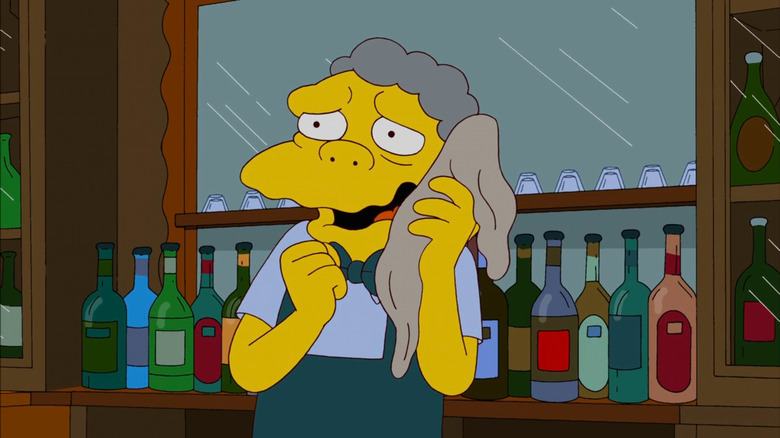
Sometimes, a "Simpsons" episode comes along that just feels like an utter waste of time. "Moe Goes From Rags to Riches" predominantly follows Moe's dish rag (voiced by Jeremy Irons) who's been used in various capacities throughout history. This is mostly an excuse to throw in a bunch of historical vignettes that don't really get much time to breathe on their own before we're onto the next gag.
It's a bizarre episode. On the one hand, it wants to just have a bunch of silly skits, which wouldn't be bad all on its own. But it does try to cram in an emotional center with Moe thinking he doesn't have any friends outside of a dish rag, only to learn he does have friends. The problem with this is that Moe's development gets no build-up, so it resolves very quickly by the end.
For some reason, this episode also has a bare-bones B-plot with Bart having a falling out with Milhouse that also resolves very quickly. It's not just that the central conceit of the episode is strange. It's that the episode doesn't even commit to the strangeness all the way and tries to have standard sitcom beats along the way, too.
Lisa Goes Gaga (Season 23, Episode 22)
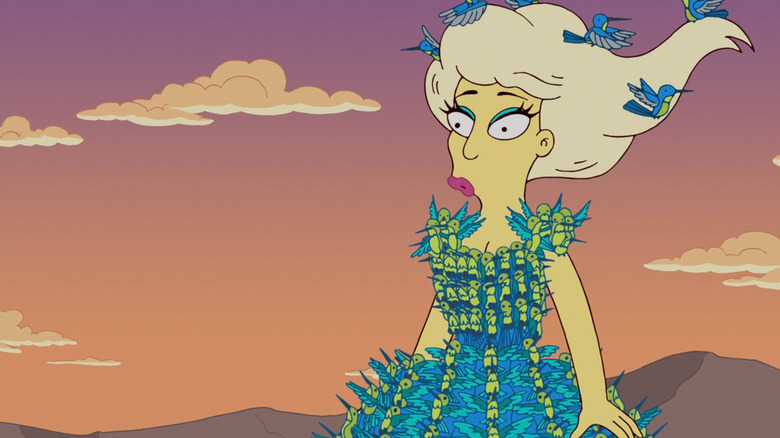
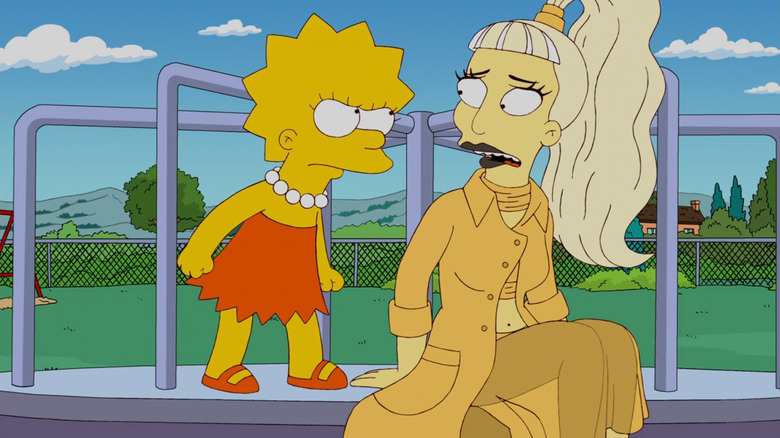
"Lisa Goes Gaga" is one of the most infamous episode of "The Simpsons." It's the lowest-rated episode of "The Simpsons" on IMDB, and it really earns that distinction. Lisa feels bad about herself because she's not popular. This coincides with Lady Gaga arriving in Springfield to boost everyone's spirits, but she dedicates herself to cheering up Lisa, seeing how she's the most depressed Springfieldian of all.
Like "When You Dish Upon a Star," "Lisa Goes Gaga" is emblematic of how "The Simpsons" went from criticizing celebrities (or at least being indifferent about them) to worshipping them. Lady Gaga is treated like a saint. Everyone in Springfield loves her, which is a problem. There are hardly any jokes in the episode, as everyone's comments surrounding Gaga are just uncritical praise.
"Lisa Goes Gaga" is less of a sitcom episode and more of a promotional teaser for Lady Gaga as a person. It pokes fun at her persona and various eccentric costumes, but there's nothing here that hadn't been joked about ad nauseam on social media already. And if you're not a Lady Gaga fan to begin with, you probably won't find any redeeming qualities here.
The Musk Who Fell to Earth (Season 26, Episode 12)
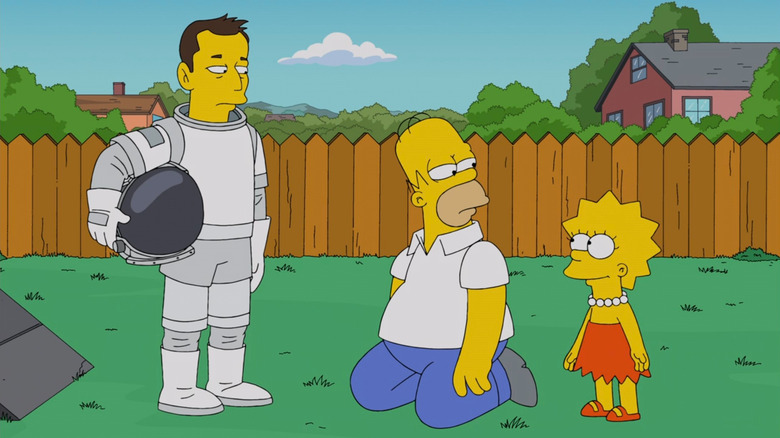
One saving grace you can give to "Lisa Goes Gaga" is that Lady Gaga is at least an actual actor who gives a decent voiceover performance. The same can't be said of Elon Musk and his similar butt-kissing episode "The Musk Who Fell to Earth."
Musk lands in the Simpsons' backyard and immediately strikes up a friendship with Homer, who gives him a bunch of new futuristic ideas. He takes these plans to Mr. Burns to better Springfield, but they wind up costing the nuclear power plant money, so Burns tries to kill him.
This episode exists to be more sycophantic than funny. Lisa has multiple lines about what a great guy Musk is, which feels very out of character for her. Why would Lisa be head over heels for a capitalistic businessman? The episode goes out of its way to justify this by having Musk tell Burns that he's fine with losing money as long as it means the world's a better place, but seeing how Musk is literally the richest person in the world, he obviously cares about making money. And with numerous controversies surrounding Musk since the episode came out in 2015, it's a story that's best left forgotten.
Every Man's Dream (Season 27, Episode 1)
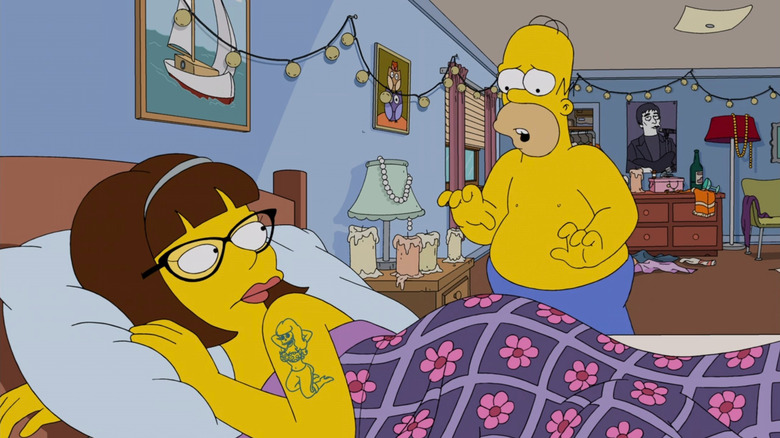
Leading up to the premiere of Season 27, "The Simpsons" promoted the episode "Every Man's Dream" as a game-changer where Homer and Marge split up. In the process, Homer shacks up with a much younger woman, Candace (voiced by Lena Dunham).
Homer and Marge have gone through plenty of marital discord, but this episode promised something much bigger that could threaten to upend the entire show. And then the episode ends with the reveal that everything we just saw was a dream. And then that turns out to be a dream... that turns out to be a tattoo on the back of Hannah Horvath (Dunham's character on "Girls").
No one wants to see Homer and Marge split up, but not committing to the bit feels like an egregious offense. Literally nothing in this episode matters because none of it even happened. It feels so insulting to the viewer's intelligence as "Every Man's Dream" cares more about gimmicks than telling a compelling story.