

15 Best Dexter Episodes, Ranked

When entertainment writers talk about "Dexter," it's often either as an origin story for a certain flavor of antihero or as a cautionary tale about what happens when prestige drama drowns itself in uncomplicated schlock. Rarely do we get the opportunity to celebrate the moments that made Michael C. Hall's conscientious serial killer a television phenomenon.
The best episodes of "Dexter" (mostly from Seasons 1 through 4, before the decline of the post-Clyde Phillips era) know exactly how seriously to take the series' premise. While maintaining a certain underlying self-awareness and a bleak sense of humor to balance the tone, these episodes confront what it would mean for a murderer to have actual concern for their own morality. Where later episodes indulge in vigilante fantasies, "Dexter's" early stories understand that fantasy to be a mask for trauma, isolation, and a deeper darkness that blurs the line between man and monster.
15. Are You...?
Season 7, Episode 1
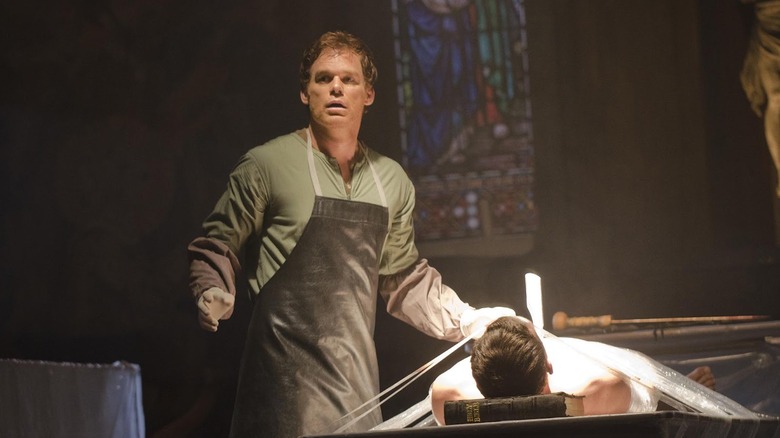
Season 6 of "Dexter" was a real horror show for fans of the series, the only redeeming quality of which was its final moment — Debra Morgan (Jennifer Carpenter) walking in on Dexter mid-kill. It was by far the most interesting few seconds of the season.
The Season 7 premiere restored the audience's faith in the series by immediately prioritizing that conflict. Dexter is initially able to convince Deb that killing Travis Marshall (Colin Hanks' Season 6 villain) was an impulsive, one-time transgression — and though she urges him to turn himself in, Deb agrees to help Dexter cover up the crime. When "Are You...?" isn't splitting its focus to build the less interesting mob storyline, it builds tension out of Deb's inability to reconcile her love for Dexter and what her gut is telling her.
This pace and level of tension were sorely missing from Season 6. But more than being a mere return to form, "Are You...?" raises the stakes of the entire series by introducing a status-quo-shifting discovery.
14. It's Alive!

Season 2, Episode 1
Similarly, "It's Alive!" has such a lasting impact because it dares to upset the stability of "Dexter." Right off the bat, the Season 2 premiere doesn't let the titular character off the hook for what went unresolved at the end of Season 1. Dexter let his mask slip in front of Doakes (Erik King) — as a result, the Miami Metro sergeant has begun tailing him to the point that Dexter can no longer comfortably satisfy his urges. When Dexter does finally manage to shake Doakes long enough to go after a kill, he accidentally lets his target escape.
"It's Alive!" is part of what separates prestige TV from your average drama — this premiere doesn't reset the table for a brand-new story but starts building one from the consequences of what came before. Of course, the masterstroke comes in the episode's final moments. Instead of withholding its biggest potential plot complications for later in the series, "It's Alive!" ends with Miami discovering Dexter's underwater burial site, revealing the existence of the soon-to-be-named Bay Harbor Butcher to the world. It's a bold move that pays off in spades throughout Season 2, making the season overall one of the best things Showtime has ever produced.
13. Truth Be Told
Season 1, Episode 11
As far as penultimate episodes go, TV doesn't get much better than "Truth Be Told." (It's even a half-decent Christmas episode.) Absolutely everything the season has been working toward comes to a head here — Doakes' suspicions about Dexter fully transition from "creepy coworker" to "potential sociopath"; Dexter learns that Laura Moser, his mother, was a police informant who was murdered in a shipping container; and because he only learned this information due to the prodding of the mysterious Ice Truck Killer, both Dexter and the audience become certain that the two killers must share more than a dark hobby.
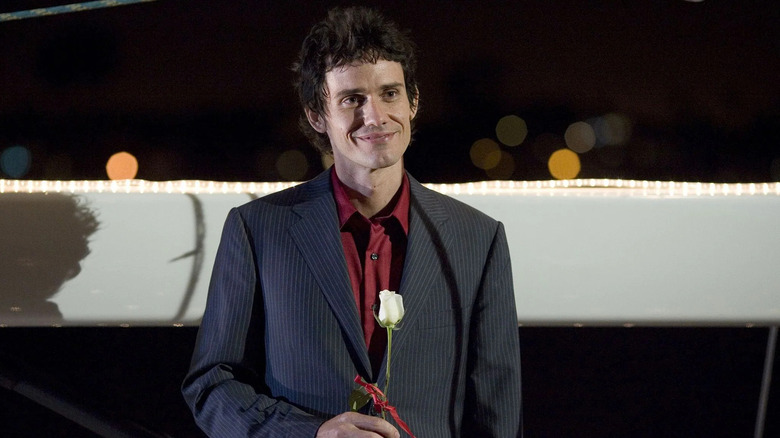
This revelation solidifies as "Rudy Cooper" (secretly the ITK, played by Christian Camargo) takes his relationship with Deb to the next level. He proposes to her on a boat, only to immediately reveal his true identity and subdue her. The first time you watch "Truth Be Told," you know just enough about Rudy to trust that his motivations run deeper than death but remain in the dark enough to be baffled by this act. It perfectly sets up the last round of pins for the season finale to knock down.
12. Argentina

Season 7, Episode 8
Up to this point in Season 7, the whole Ukrainian mob storyline had failed to be consistently compelling beyond the fact that Ray Stevenson was anchoring it. His performance aside, Isaak Sirko still wasn't the villain needed to return "Dexter" to the glory days of the first four seasons. With "Argentina," however, he comes pretty darn close.
Dexter spends much of the episode wrestling with complicated and unexpected romantic feelings. The Deb-Dexter of it all aside, the episode is a solid exploration of what it means to have such intimate connections while simultaneously living life on the fringes. That's where Isaak comes in.
Dexter stalks him to a gay bar, where the two men briefly talk as would-be friends. Isaak finally reveals that he's been hunting Dexter to avenge the death of his lover. In a single scene, Isaak gives shape to the season's overarching theme, while Stevenson makes him one of the most emotionally compelling characters in the entire series.
11. The British Invasion
Season 2, Episode 12
Doakes is arguably the best character on "Dexter" outside the Bay Harbor Butcher himself. The writers made him relentlessly intuitive and morally unshakable — the perfect antagonist for a hero as rigid, cunning, and dangerously deceptive as Dexter Morgan. Naturally, the show could only keep a character like this around for so long without losing the very qualities that make him effective.
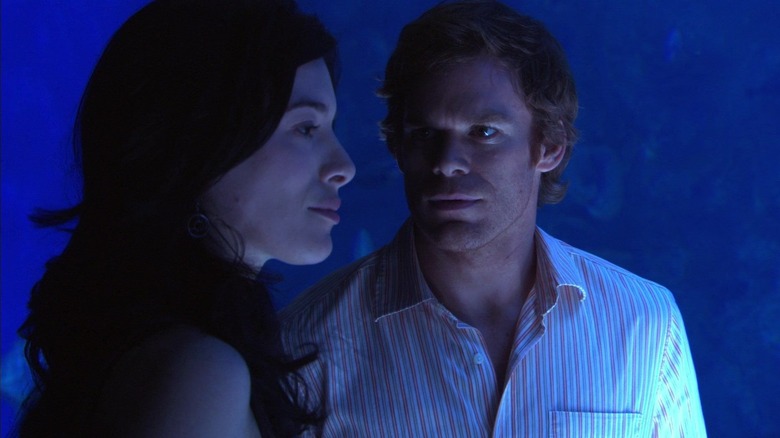
The courage to end Doakes' storyline in Season 2 is commendable in and of itself. In fact, the only reason the episode doesn't rank much higher on this list is the divisive decision to hand his fate to Lila (Jaime Murray). It can't help but feel like the writers are saving Dexter from an interesting conflict, which is a shame given how the season started.
Nonetheless, Doakes' demise in the cabin is still too wild not to appreciate. From start to finish, it's a spectacle-filled finale that builds triumphantly on everything that came before it. In spite of early signs of the series' decline, it's a classic hour of "Dexter."
10. Go Your Own Way
Season 3, Episode 10
Compared with the worst of "Dexter's" later seasons, Season 3 is pretty good; compared with the first two seasons, it's undeniably underwhelming. Jimmy Smits does a tremendous job of elevating a relatively unbelievable character in attorney-turned-serial-killer Miguel Prado, and his best work of the season comes in "Go Your Own Way."
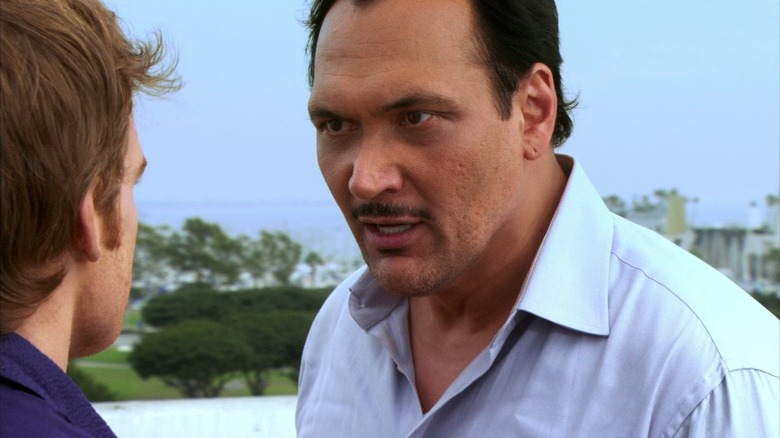
Realizing that his new best friend is doing the bad kind of murder, Dexter takes steps to ensure that he has leverage over Miguel. When Miguel finds out, he confronts Dexter on the rooftop of Miami Metro, where he threatens to throw the full weight of his political power against him. This scene alone is one of the show's best overall — menacing, narratively layered, climactic, and even pretty hilarious. Michael C. Hall's reading of "They said that stain would come out" is startlingly hilarious. Meanwhile, "You got the ring? I got City F***ing Hall!" is one of the best threats in a series filled with them, convincing Dexter that Miguel will have to be dealt with permanently.
9. Hello, Dexter Morgan
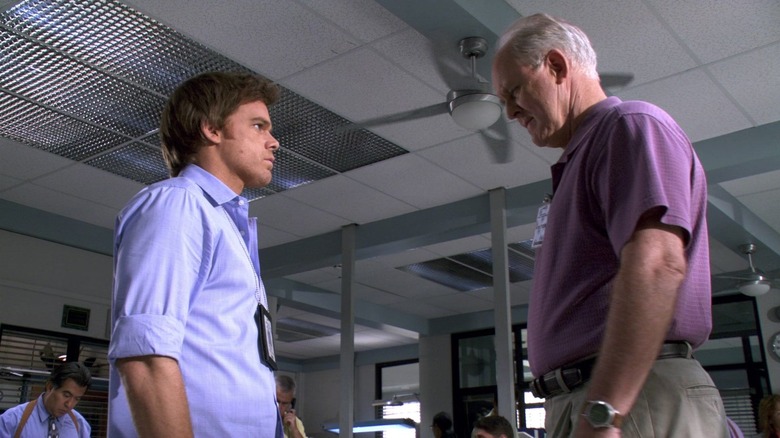
Season 4, Episode 11
"Hello, Dexter Morgan" is best remembered for its final, titular line of dialogue. It's an admittedly great moment. With Arthur Mitchell (John Lithgow) now aware that "Kyle Butler" is not a mere friendly stranger and Dexter attempting to cover his tracks by framing his alter ego as an extortioner, the two play a captivating game of cat and mouse that ends with Arthur gaining the upper hand. He outsmarts Dexter, follows him into Miami Metro, and raises the season's stakes to their highest point with a single line. It's the series' most memorable cliffhanger by a long shot.
The B-plot of the episode is just as jaw-dropping and less talked about. Christine Hill (Courtney Ford) is pushed into revealing to Debra that she shot Frank Lundy (Keith Carradine. Christine's subsequent death is incredibly shocking and feels more earned than it normally gets credit for. Few "Dexter" episodes do a better job of simultaneously paying off one mystery while setting up an even bigger confrontation to come.
8. Dexter (Pilot)

Season 1, Episode 1
The pilot episode of "Dexter" set the boundaries for TV's antiheroes in the 2000s. While shows like "The Sopranos" had asked us to understand and even empathize with murderers before, this episode stakes itself on the idea that viewers would be willing to live inside the mind of a serial killer, one hour at a time.
The pilot quickly establishes Dexter's particular moral code, makes a case for why someone like him might be a necessary evil in this version of Miami, and reassures the audience that the series won't take his twisted logic at face value. It forms a strange kind of trust, promising both that the audience will bear witness to plenty of disturbing, thrilling criminal acts and that they will never be asked to root for Dexter for the wrong reasons.
Stylistically, the pilot also nails the blend of dark comedy and crime thriller, the visual aesthetic of "Dexter's" Miami, and the atmospheric appeal of Dexter's narration. More than anything else, it's Michael C. Hall's career-defining performance that signals the series' prestige ambitions.
7. My Bad

Season 5, Episode 1
For four seasons up to this point, Dexter has insisted that, in spite of his best efforts, he really doesn't feel anything like the rest of us do. Thus, "My Bad" asks what grief would look like on someone like him — the result is strikingly uncomfortable yet unconventionally sympathetic in its portrayal of the universal messiness of mourning.
The early scene of Dexter telling Rita's (Julie Benz) children and their grandparents about her death is a huge risk. The writers could've skipped forward, ignoring the fact that the Season 4 finale established that the rest of Rita's family was at Disney World when she died. Instead, they start Season 5 by putting the audience right in the middle of the myriad pressures Dexter is experiencing — the pressures to feel emotions "correctly," to do the right thing in an impossible situation, and to face his role in Rita's death as much as he can.
The gradual unraveling organically sets the stage for the comparatively disappointing remainder of Season 5. "My Bad" is a strange, sad hour of TV that couldn't come from any other series.
6. There's Something About Harry
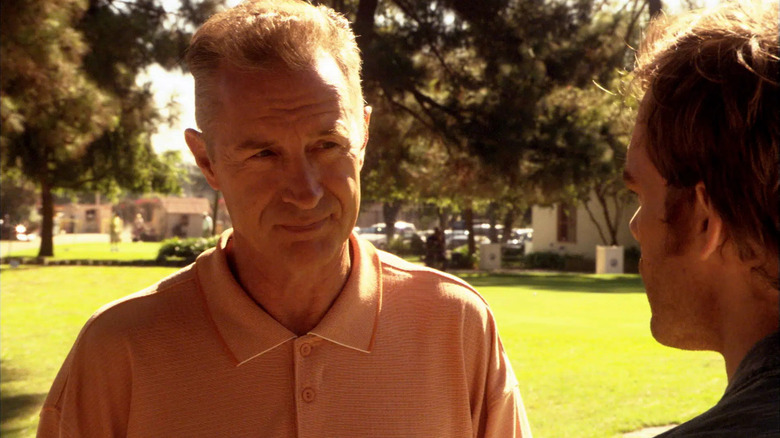
Season 2, Episode 10
We'd argue "There's Something About Harry" is the most underrated episode of "Dexter." Two episodes away from the finale, it gets overlooked in favor of what comes immediately before and after. What it lacks in flash, it makes up for in substance — the main plot is quietly the best-written and best-acted material in the season.
Like most timeless and truly great episodes of TV, "There's Something About Harry" works almost as a short film or chamber play. Dexter has Doakes trapped in the cabin and has devised a morally dubious scheme to neutralize him without breaking his code by framing him as the Bay Harbor Butcher. Trapped, Doakes uses a piece of information about Dexter's late father, Harry (James Remar), as leverage. Thus, Dexter is forced to investigate what actually killed his father, discovering in the process that the very code he's built his life around was itself built on a lie.
Doakes' capture is a moral reckoning for Dexter — "There's Something About Harry" is the climax. Erik King and Michael C. Hall do some of their best work in the series, with Hall earning his first Emmy nomination for his performance this season.
5. Surprise, Motherf***er!
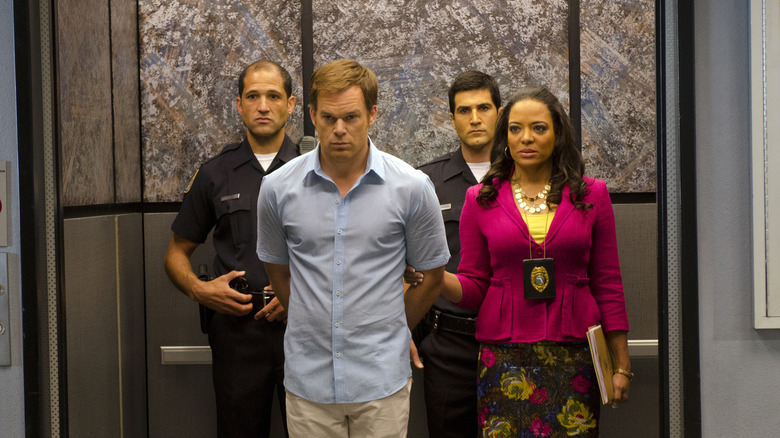
Season 7, Episode 12
"Surprise, Motherf***er!" is the last gasp of "Dexter's" former glory, and it deserves to be acknowledged as such. The Season 7 finale – so named for Doakes' iconic line from Season 1 – works primarily on two levels.
First, the flashbacks to Doakes and Dexter's early friendship are a genuinely powerful device that recontextualizes Doakes' suspicions throughout the entire series. He had enough of the pieces even back then to reasonably imagine Dexter as more than off-putting — but, without hard proof, was forced to push his concerns to the background as the rest of the department, including Maria LaGuerta (Lauren Vélez), fell for the act. It underscores the injustice of Doakes' arc, as well as LaGuerta's guilt over not supporting him.
This supports the second level of the episode: the culmination of LaGuerta's investigation into Dexter, ultimately leading to her demise at Debra's hand. With Deb's act, the series implodes in an intriguing way — even if it steers itself into a corner in the process.
4. Hungry Man
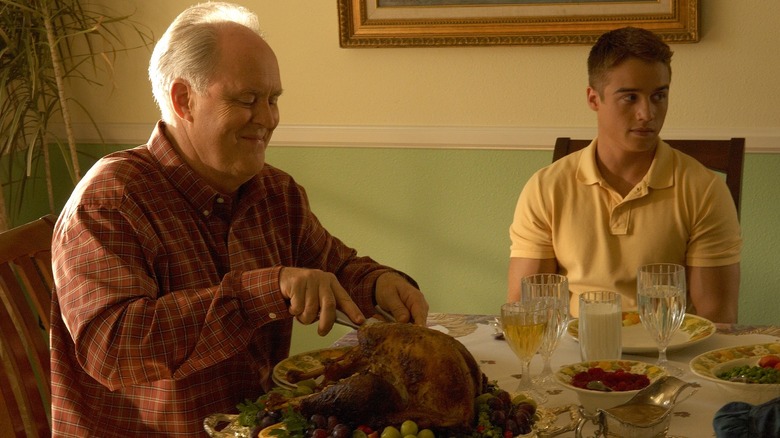
Season 4, Episode 9
"Hungry Man" is where "Dexter's" best season gets deliciously complicated. To that point in the Trinity Killer storyline, Arthur Mitchell had fascinated and perhaps even inspired Dexter. Yes, he was a pathological killer without a moral code, but he had managed to simultaneously build a full, happy life with a community and family. He was everything Dexter was trying to convince himself he could be — at least, on the outside.
In "Hungry Man," Dexter gets a closer look at what the Mitchell family life is actually like. Arthur's generous personality is a facade for all but his most intimate relationships — in reality, his true nature is an open secret within his own home, where Thanksgiving dinner turns violent before the turkey is even served. Throughout the evening, we finally see beyond the tragic image Arthur projects — we see his narcissism and selfishness, the way his children have been individually traumatized by his dominance, and the sad hold he has over the entire house even after bones have been broken. It's a haunting portrayal of abuse, punctuated by Dexter's realization that he might not be the worst father in the world after all.
3. Resistance Is Futile

Season 2, Episode 9
Even though "Resistance Is Futile" doesn't make the same room for tight character drama as "There's Something About Harry," it is the best episode of Season 2. The suspense, twists, and action are all working at full force. You can feel Dexter running out of rope from the moment the episode begins, as the FBI has seemingly begun to clamp down on its investigation into the Butcher case.
As much as the episode count might undermine the tension of Dexter being taken by agents from his house to the station to analyze the blood slides, it's still totally engrossing — and the reveal that the investigation has turned to Doakes is impeccable. This all escalates to the ultimate showdown between Dexter and his wrongfully accused foe, where Doakes' insistence on his innocence robs him of the ability to kill Dexter outright. This weakness creates the exact opportunity to justify Dexter coming out on top.
Season 2 was built around giving the audience the inevitable manhunt the show's premise teases. That "Dexter" was able to completely invert the expected dynamic is what makes the last stretch of Season 2 brilliant.
2. Born Free
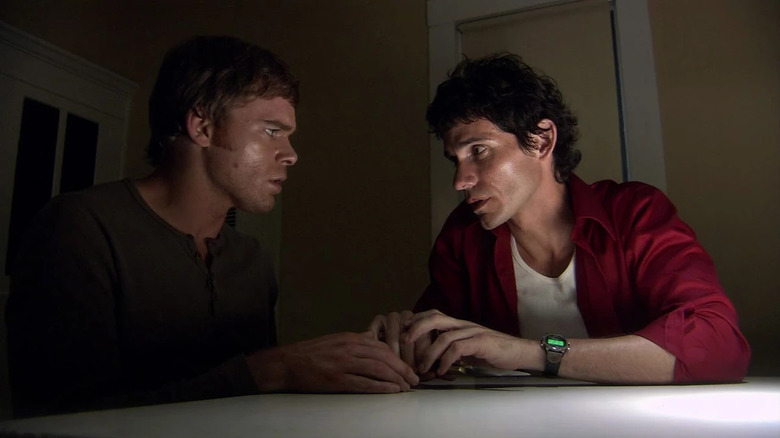
Season 1, Episode 12
The final episodes of "Dexter" Season 1 were carried in part by the dramatic irony created by the "Rudy Cooper" reveal in Episode 8, "Shrink Wrap." The audience had known for several episodes who the Ice Truck Killer was, but was masterfully kept guessing when it came to his motivations. In "Born Free," Dexter realizes that Rudy is actually Brian Moser, his brother — a revelation that changes the series forever.
Brian forces Dexter to choose between a brother who knows all of him and loves his worst qualities and a sister who knows only half of him and can only love what she sees. It's the most heartbreaking and unique dilemma the show confronts Dexter with in its entire run, and neither choice gives him what he wants. Killing Brian might reaffirm his emotional bond with Deb, but it also robs him of his last chance to be truly known by someone else. "Born Free" proves Dexter does have some capacity for emotion — even so, the life he's lived will trap him inside a performance of humanity.
1. The Getaway
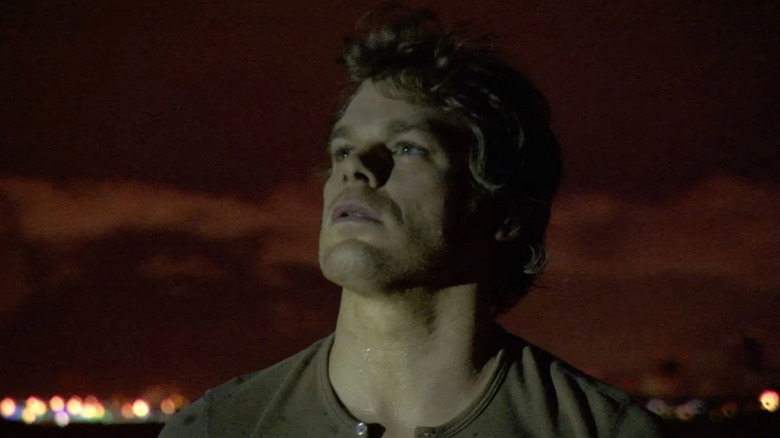
Season 4, Episode 12
Before showrunner Clyde Phillips returned for the franchise's revivals, "The Getaway" marked the end of his original tenure as "Dexter's" greatest steward. In many ways, it could've served as the series' true finale.
There's a reason "The Getaway" has been the consensus best episode of "Dexter" for over 15 years. It effectively answers the question of whether or not Dexter can live up to the series premise of being a morally righteous serial killer with a healthy double life. Of course he can't — as this episode brutally teaches him, a moral code doesn't change the fact that his violent compulsions have consequences. For much of Season 4, Dexter had what he needed to end Arthur legally or lethally. His lust for murder, his need for ritual, and his desire to find renewed faith in his double life are what compel him to keep Arthur alive longer than necessary. It's a costly flaw intrinsic to Dexter's very being — and, fittingly, he isn't the one who has to directly pay the price.
Rita's horrifying and shocking death is the end of "Dexter." It's the moment where the show reaches a natural conclusion, where its "hero" can no longer hide behind delusions of vigilante justice.