

15 TV Shows To Watch If You Like American Horror Story
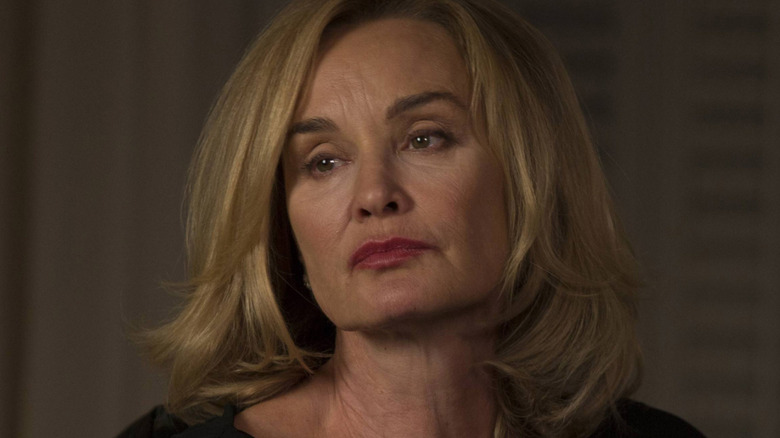
Love it or hate it, "American Horror Story" will be remembered as one of the most important television programs of the 21st century. A year after "The Walking Dead" premiered on AMC, Ryan Murphy and Brad Falchuk proved there was a massive appetite out there for straight-up small-screen horror. They led with the over-the-top sex and gore that defined the genre at the cinema and kept pace with prestige television with a self-aware, campy tone that read as artistically committed rather than classless.
These elements led to a broader revival in horror television, inspiring series that rival "American Horror Story" in consistent quality. For the series below, we selected a wide range of horror titles that reflect the many aspects that drew viewers to "American Horror Story" (especially in its better, earlier seasons). If "American Horror Story: 13" left you wanting more, at least one of these 15 shows will be perfect for your next binge.
Bates Motel
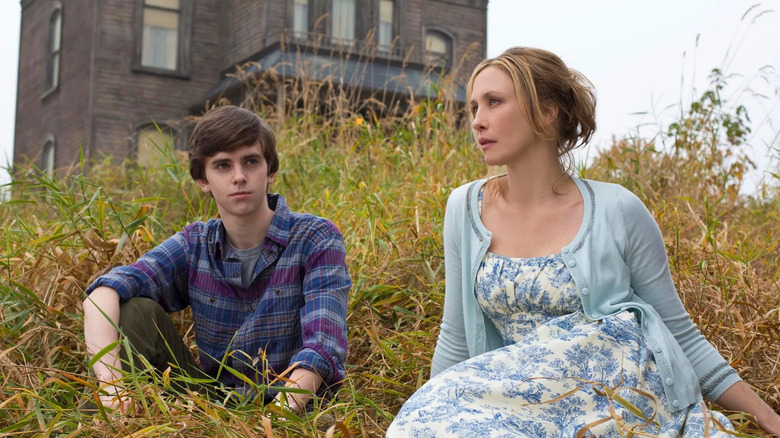
From Jessica Lange's Constance Langdon in "Murder House" to Emma Roberts' Anna Alcott in "Delicate," "American Horror Story" has given horror television some of its most memorable mothers. In "Bates Motel," Vera Farmiga arguably blows them all out of the water as Norma Bates.
Though you see very little of Norma in Alfred Hitchcock's "Psycho," her presence looms large enough through the disturbing actions and psyche of her son, Norman (played by Freddie Highmore in the series, taking over the role from Anthony Perkins). "Bates Motel" offers an answer as to her role in Norman's development, focusing on psychology rather than continuity — boldly, it eschews the time period of Hitchcock's film and Robert Bloch's novels, setting the story in the 2010s.
This is a series for longtime "American Horror Story" fans who miss the grounded suspense of earlier seasons (it did, after all, air on A&E during the post-"Murder House" TV horror craze). It sustains the character drama of Norman and Norma's increasingly codependent relationship for five truly excellent seasons worthy of a binge any time of year.
The Beauty
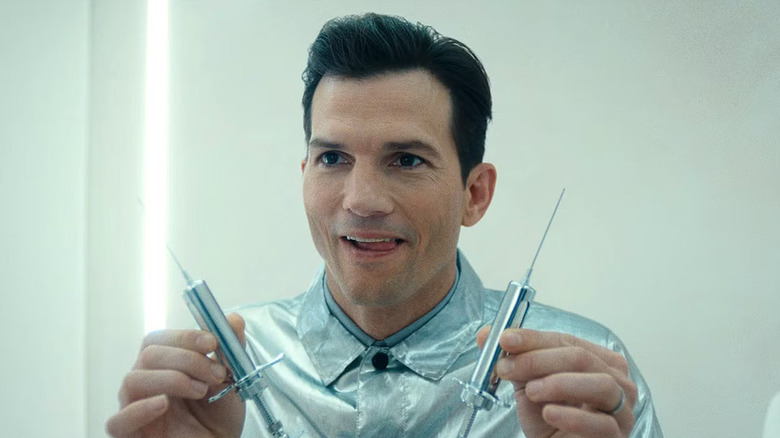
At its best and worst, "American Horror Story" has always been proudly campy, broad, decidedly unsubtle in its social commentary, and obsessed with looks. We say that with a great deal of affection and respect — the FX series has been effective as both a critic-proof TV juggernaut and a launchpad for the biggest phase of Ryan Murphy's producing career because it always delivers a singularly shocking and salacious small-screen experience. If you're looking for a direct successor in 2026, you need to give "The Beauty" a chance.
Murphy's co-creation with his longtime collaborator and protégé Matthew Hodgson is only safe for those still fully on board with his vision. This new FX series is a loose adaptation of Jeremy Haun and Jason A. Hurley's Image Comics series of the same name. "American Horror Story" all-star Evan Peters anchors the show as an FBI agent investigating a mysterious, deadly virus that makes its victims hot before killing them.
"The Beauty" drew unflattering comparisons to "The Substance" (for reasons that get a little spoilery), but was nonetheless an achievement for the Murphy-verse in terms of graphic spectacle. It also carries the anxieties about aging that appear in seasons like "Coven" and "Hotel." As of this writing, it has not been renewed for a second season.
Castle Rock
Another reason why Ryan Murphy's shows prove to be consistent successes is their anthology format. If one season falls flat, the attempt itself might still be enough to bring you back for the next. Other networks and producers took note (which you'll see throughout this list), leading to series like "Castle Rock."
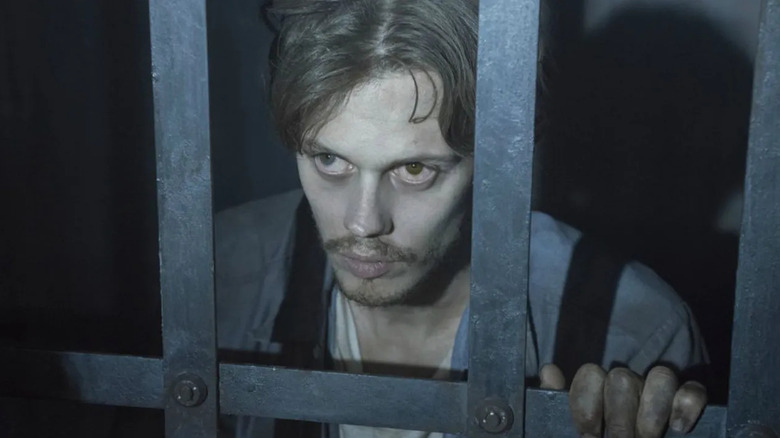
Though it didn't last more than two seasons, "Castle Rock" is still a treat for fans of anthology horror television — and, of course, required viewing for fans of Stephen King. The Hulu series uses the prolific author's novels and mythology to tell new stories with familiar elements, all in the fictional titular Maine town. The first season stars "Roanoke" alum André Holland as a lawyer who is brought to the Shawshank State Penitentiary to meet an inmate hidden beneath the prison (Bill Skarsgård). The second season stars Lizzy Caplan as a young Annie Wilkes, the deranged superfan played by Kathy Bates in "Misery."
If "13" and "Apocalypse" sold you on the idea of an anthology series with a shared universe, "Castle Rock" executes that idea better and faster. Unfortunately, it just wasn't popular enough to get the same runway.
Channel Zero
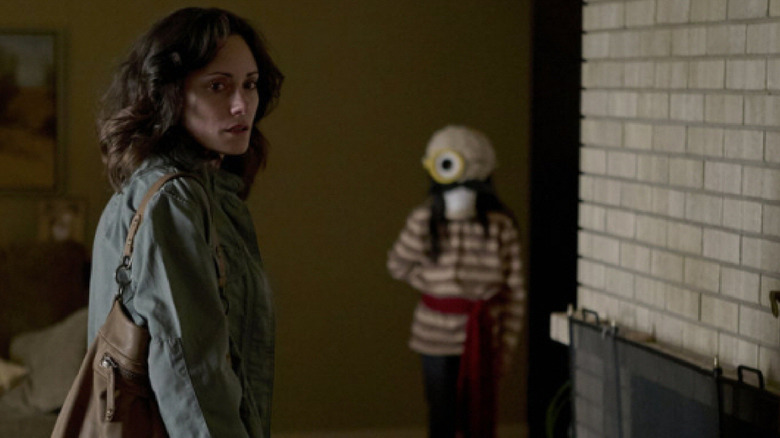
Another anthology produced after the success of "American Horror Story," "Channel Zero" deserves to be remembered on its own merits. It shares the FX series' terrifying atmosphere and character-driven narratives — but while "American Horror Story" always feels like it's throwing back to horror movie canon, "Channel Zero" feels like it's clawing its way toward what comes next. Not incidentally, it pulls its inspiration from the raw canon of internet creepypastas.
"Hannibal" alum Nick Antosca created this show for Syfy, running a lean operation that sustained the criminally underrated horror series for four exceptional seasons. The first season — which is inspired by Kris Straub's popular "Candle Cove" story — is the easiest for new viewers to dive into. For "American Horror Story" fans, "No-End House" will feel the most familiar in terms of its setting and conceit; however, its themes and central idea are entirely unique, and will have horror fans thinking of the work of Jane Schoenbrun ("I Saw the TV Glow"). Overall, each season feels as fresh, distinct, and unpredictable as "American Horror Story" did in its earliest outings.
Dead Ringers
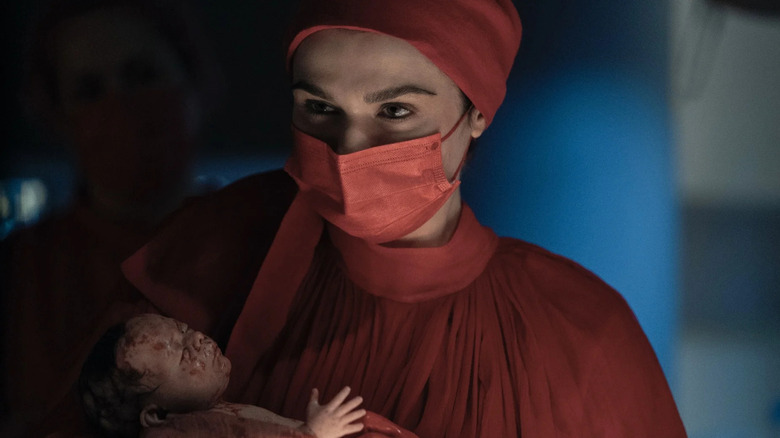
Prime Video's "Dead Ringers" beat "Delicate" to streaming by a matter of months, attacking similar fears surrounding fertility and pregnancy with far greater success. Rachel Weisz stars as successful twin gynecologists who are willing to bend the legal and ethical boundaries of science if it means they can improve the creation of life.
Both "Delicate" and "Dead Ringers" put the experience of pregnancy and the American reproductive health care system on the operating table, attempting to lay bare the real traumas and anxieties they create. "Dead Ringers" does so with more complexity at the character level. It certainly helps that Weisz is captivating in her dual roles, single-handedly portraying the intertwined downward spiral of two people playing God.
As a drama, this is one of the best projects to come out of Prime Video. As a follow-up to "American Horror Story," this is for fans who appreciate the series for its strong performances, social commentary, and complicated protagonists. As far as actual horror goes, it's closest to the psychological torment of "Asylum."
The Fall of the House of Usher
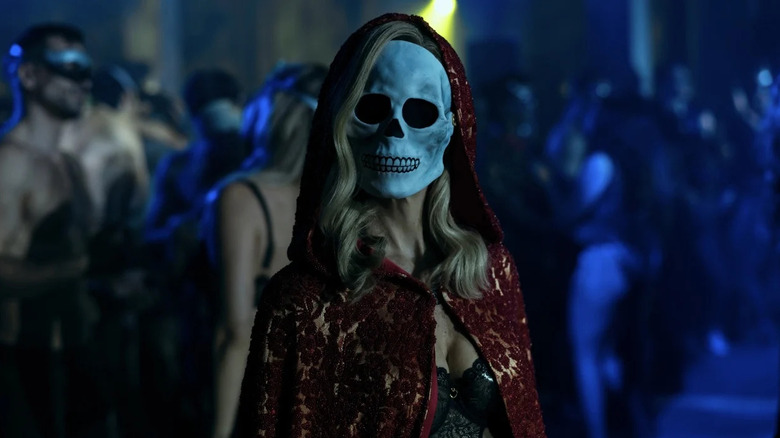
Ryan Murphy and Mike Flanagan are arguably the two most successful horror producers working in television, at least in terms of output, popularity, and consistency of quality. They also approach the genre in very different ways. While that doesn't mean there isn't overlap in the fanbase, it's worth pointing out here specifically that "The Fall of the House of Usher" is Flanagan at his most Murphy.
Released in 2023, this Netflix miniseries shocked longtime fans of Flanagan's work. The showrunner, primarily associated with grim explorations of depression, grief, and guilt, had turned Edgar Allan Poe's writing into a gleefully wicked ghost story. It isn't as campy as "American Horror Story," but it's more explicitly comedic and stylistically embellished than anyone would've expected previously. It was successful on its own terms despite being considered middling among Flanagan's Netflix efforts – and yet, this divisive departure is what makes it a solid choice for "American Horror Story" viewers. If you're a longtime fan who somehow came to this list without ever giving one of Flanagan's acclaimed series a chance, "The Fall of the House of Usher" is actually a perfect entry point.
Hannibal
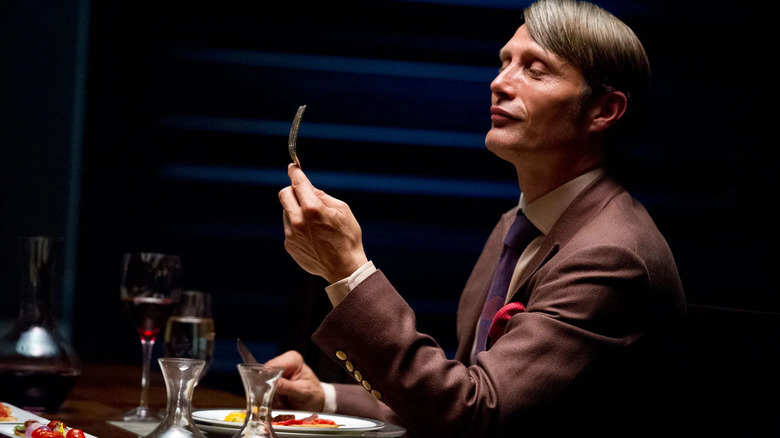
There's a strong argument to be made that "Hannibal" only exists because of "American Horror Story." The preceding series proved that audiences were ready for horror shows with challenging gore and protagonists that crossed the "Dexter" threshold from defensibly violent to disturbingly evil. Bryan Fuller brought NBC a series that was capable of matching the extreme, eye-catching ways that were making "American Horror Story" a hit. In some cases, "Hannibal" wound up outpacing it.
Despite never being as big of a hit and getting the axe prematurely, "Hannibal" sits with "American Horror Story" in conversation for the best horror TV shows of all time. "Asylum" borrows the killer-psychiatrist archetype Thomas Harris' novels perfected. In "Hannibal," that archetype is explored to its fullest extent through the titular character's (Mads Mikkelsen) relationship with one of his patients, criminal profiler Will Graham (Hugh Dancy). (A bonus for "Asylum" fans: Zachary Quinto guest stars in Season 3.)
The only caution we'd offer is that "Hannibal" has a markedly slower pace than "American Horror Story." It often feels like it wants you to feel the discomfort of being trapped in the minds of its central characters.
The Haunting of Hill House
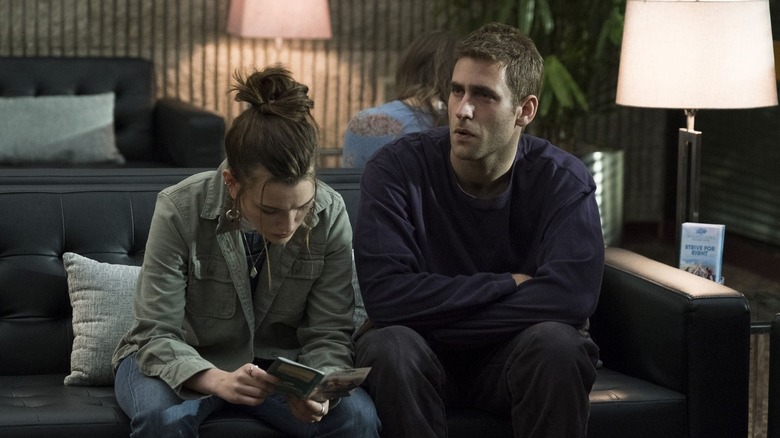
If you're willing to take a chance on a truly great work of TV horror, you should consider Mike Flanagan's breakout effort, "The Haunting of Hill House." The series is thematically close to "Murder House," exploring how a place carries hidden trauma. In execution, however, Flanagan's exploration is so deeply rooted in grief that even his scares tend to pull at your heartstrings.
It was striking at the time for a horror TV show to simultaneously land as an emotionally compelling drama, hence why it wound up defining the public perception of Flanagan's narrative style. This series also positioned him as something of a successor to Murphy, as "American Horror Story" had drifted far from the ratings behemoth it was in the early 2010s. Netflix gave Flanagan a follow-up project and styled it as an anthology in the vein of "American Horror Story" ("The Haunting of Bly Manor"). For whatever reason, the showrunner opted not to continue down this path despite positive reviews, pursuing standalone miniseries instead.
Both "Haunting" series are worth watching for "American Horror Story" fans in want of earnest emotional weight. For fans of horror TV at large, they're a fascinating example of how the genre evolved within a decade.
Interview with the Vampire
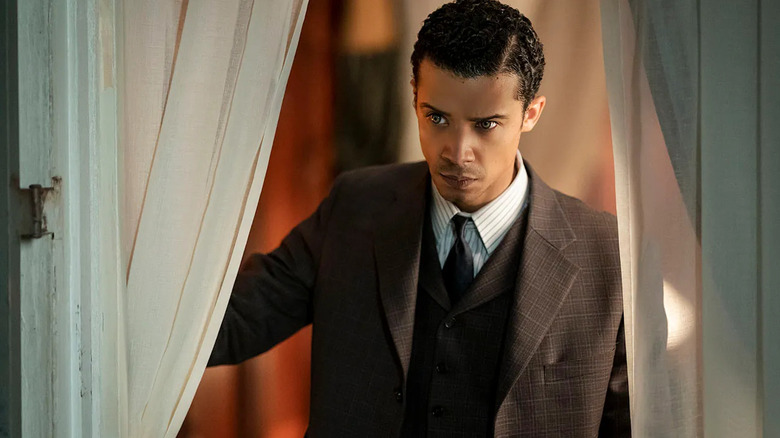
The folks at AMC are quietly running what is likely the most critically consistent horror franchise on television. And, no, we're not talking about The Walking Dead.
Rolin Jones' adaptation of Anne Rice's The Vampire Chronicles series of novels, "Interview with the Vampire," hardly resembles the cold, sexless Brad Pitt-Tom Cruise film from 1994. Here, all that queer subtext is just the text it was always intended to be — and with a level of self-awareness, seduction, and campiness that will have "American Horror Story" fans enraptured. Obviously, fans of Lady Gaga's Countess from "Hotel" will find "Interview with the Vampire" especially entertaining, while the New Orleans ambience will be comforting for fans of "Coven."
"Interview with the Vampire" is sexy, gory, and romantically complex. And, at roughly seven episodes a season, its pacing is closer to the golden age of "American Horror Story." We'll also give an honorable mention to the series' sibling, "Mayfair Witches," which is a fine-ish option for "Coven" fans who have already exhausted other witchy shows.
Lovecraft Country
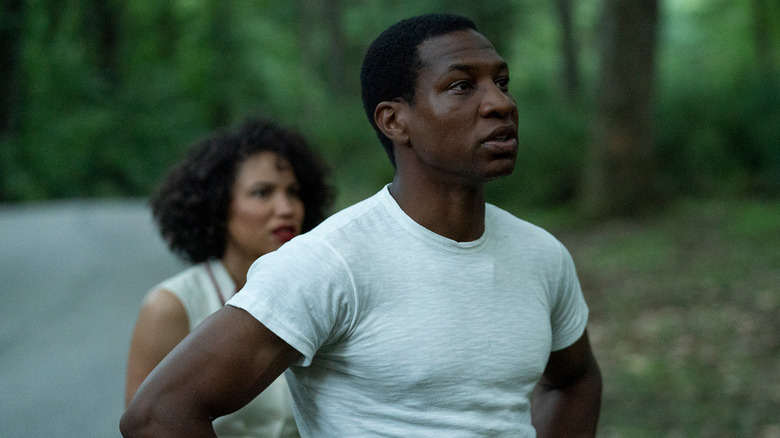
In a perfect world, "Lovecraft Country" would have been the start of a new horror franchise to stand alongside "American Horror Story." Misha Green's HBO series combines the horrors of fiction and U.S. history in a story about Black Americans trying to survive Jim Crow. We'll be upfront about the caveats here — aside from the Jonathan Majors of it all, the show's episodic structure is a gambit that yields uneven results, and it ends with a divisive season finale.
That said, if it were a season of "American Horror Story," it'd easily break the top 5. "Lovecraft Country" hits the same level of gore and special effects work as the flashiest seasons of "American Horror Story." It's more committed than "Coven" in its use of horror to explore racial injustice in America and benefits from a stacked cast that can work with these heavy themes as authentically as they can the genre's pulpy tropes. Courtney B. Vance, who "American Horror Story" fans might recognize from "The People v. O.J. Simpson: American Crime Story," earned his second Emmy win for his work in the series.
Penny Dreadful
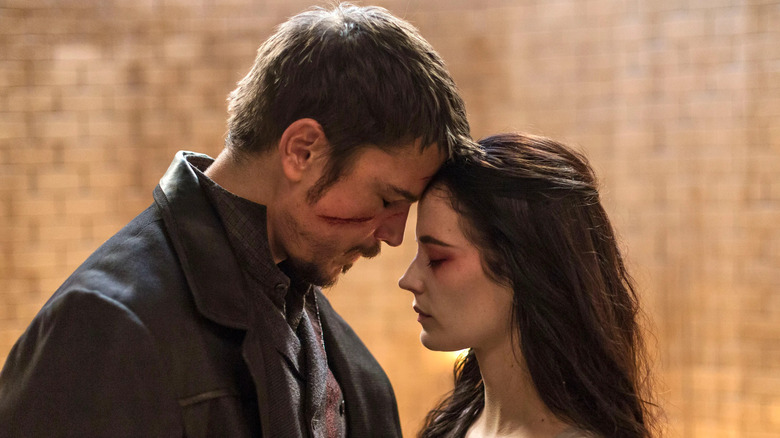
As much as "American Horror Story" pitched itself as too strange for "normal" people, especially in early seasons, it's always been the cool, popular kid of horror television. The real beacon for misfits and outcasts is the oft-overlooked "Penny Dreadful."
We don't just say that because the series only lasted three seasons and failed to reach even a fraction of the mainstream success that "American Horror Story" took for granted. The Showtime drama uses recognizable monsters and rogues from classic literature to explore themes of social and moral isolation, with the characters' efforts to overcome their own pasts manifesting as an existential battle with literal demons. It fully embraces the gothic horror "American Horror Story" occasionally dabbles in and remains one of the best examples of the subgenre working on TV.
"Penny Dreadful" is perfect for viewers who want the strange suspense of "American Horror Story," but with a more grounded, serious dramatic tone. Don't worry — it still delivers on the shocking graphic content fans might be hesitant to lose.
Scream Queens
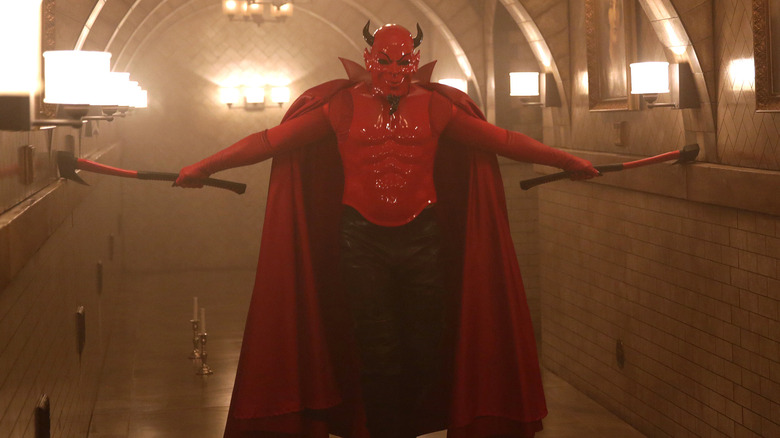
"American Horror Story" is often so over the top that even its scariest moments can snatch an unexpected chuckle. This isn't a dig — to paraphrase Jordan Peele, comedy and horror are so closely related to one another that they might as well be the Tattler sisters. Ryan Murphy and Brad Falchuk's follow-up (with co-creator Ian Brennan) effectively proves this point by perfectly preserving the "American Horror Story" vibe in an outright horror comedy.
It's hard not to imagine the three "Glee" creators pitching "Scream Queens" to Fox as a combination of the musical comedy's irreverent, mean-spirited teen humor and the graphic terror of "American Horror Story." It starts as a sorority slasher about unlikely, uncool pledges trying to survive a campus-stalking serial killer. It parodies horror whodunits while not so subtly satirizing the way colleges can downplay violence on campus — as broad as the comedy can get (behold, the origin of "Senorita Awesome"), the show's smarter than it looks.
If you're reading this list and have yet to see "Scream Queens," go ahead and put it on right now. It's basically a long season of "American Horror Story," right down to the cast, which includes alums Emma Roberts and Billie Lourd. Expect to also see familiar faces from "Glee" and "Monster," a pre-"Top Gun" Glen Powell, and a pre-"Nope" Keke Palmer.
Slasher
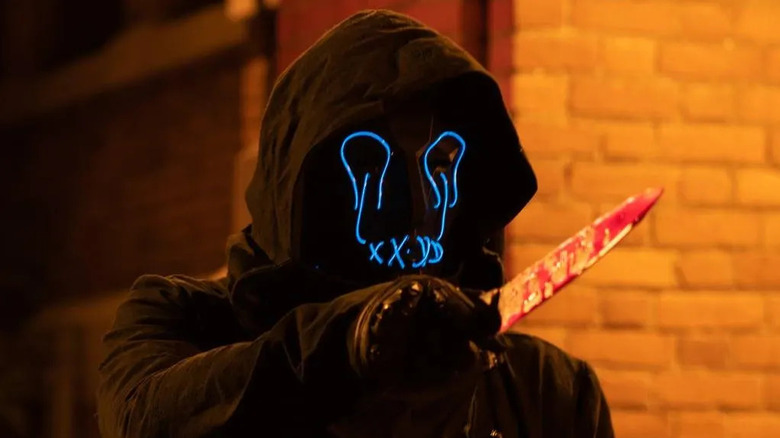
The best way to describe "Slasher" to uninitiated genre fans is it's the "Terrifier" of horror television. While the two projects vary significantly in tone (and, notably, "Terrifier" did eventually reach a level of popularity "Slasher" never did), this relatively unknown Canadian anthology series shares the film series' respectable focus on executing the titular subgenre's tropes, rather than losing itself in prestige ambition. It knows exactly what lane it's driving in, and it's all the better for it — and, for those who really love "Terrifier," it's extraordinarily gory as well.
Each season follows a new group of victims being chased by a different masked killer with an inscrutable motive. The variation the series manages to find without breaking this conceit is impressive — one season is a quasi-camp-slasher evoking "Friday the 13th"; another is a period drama that plays on the legacy of Jack the Ripper. Our advice is to start with Season 4, titled "Flesh & Blood." It's the most fun of the five seasons of "Slasher" and comes closest to the vibe of "American Horror Story."
The Terror
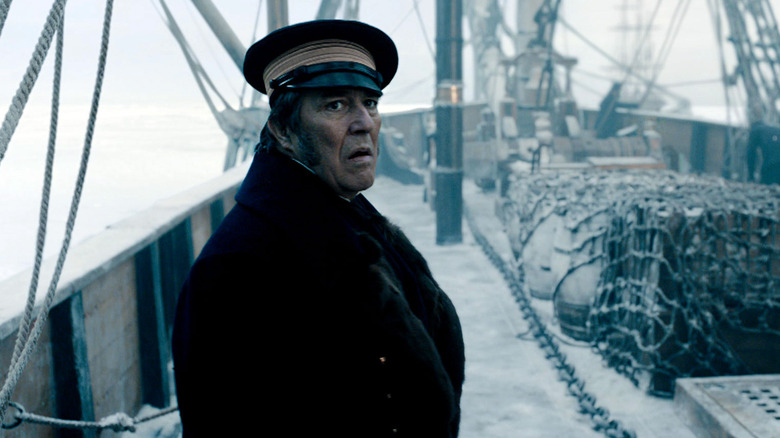
"The Terror" is arguably the best thing Ridley Scott has put his name on since "The Martian." The last anthology series to make our list only has one season that feels thematically connected to "American Horror Story," but all three so far have been so great that any reader looking for a new fright should consider them.
The first season reimagines the real 19th-century Arctic exploration of the HMS Terror and its sibling vessel, the Erebus. Jared Harris and Ciarán Hinds star as commanding officers attempting to keep their stranded crew safe from a mysterious supernatural beast. Season 2, "Infamy," follows a Japanese-American community being tormented by a yūrei spirit as they are subjected to discrimination and internment during World War II; Season 3, "Devil in Silver," tells the story of a sane man trapped in a sinister asylum (incidentally, this is also a great season of TV for fans of FX's "Legion," given that the protagonist is played by Dan Stevens). For many, "The Terror" is still something of a hidden gem and will provide a welcome respite from the camp of "American Horror Story" without sacrificing its ambitious supernatural storytelling.
Yellowjackets
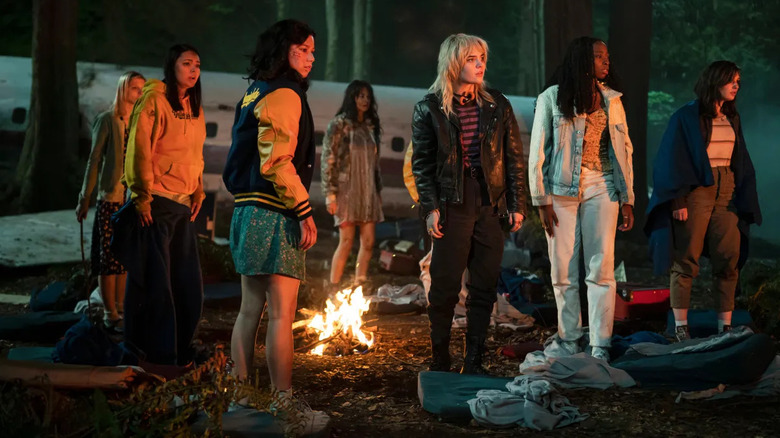
Finally, if you're looking for a surefire crowd-pleaser that has something for every kind of "American Horror Story" fan, "Yellowjackets" is the safest choice. Its vibe is closest to "Coven," "1984," and "Roanoke," but its ensemble cast and split timelines capitalize on so many horror storytelling opportunities that you can find elements of every "American Horror Story" season in it. Otherwise, its core pitch is essentially "Lord of the Flies" meets "Lost."
If you've heard mixed things about the series, it's largely because Seasons 2 and 3 have struggled to live up to its near-perfect freshman outing. Season 1 brilliantly teases out the unraveling of a girls soccer team after they crash-land in the middle of the uninhabited (and seemingly supernatural) Canadian wilderness. Each episode twists the story in a way you can't prepare yourself for, until the season finale pays it all off in a tragically depraved hour of TV that stands among the best of the horror genre. The subsequent seasons are good to great, depending on how much you buy into the characters when the tension and suspension of disbelief falter.