

5 Sitcoms That Had A Supporting Character Who Became The Focus Of The Show
The best sitcoms are driven by characters who have stellar comedic chemistry boosted by writers who are wizards within a specific setting. But some success stories — particularly involving TV protagonists – occur in spite of creative planning. In fact, a number of the most beloved sitcom leads didn't actually start as leads. Whether a member of an ensemble cast had so much screen presence that they couldn't help but rise above the rest, or a one-time guest appearance unintentionally changed the trajectory of the whole show, some of these happy accidents made stars and spurred the series' longevity. Despite their original visions, here are five sitcoms that had side characters who rose to become central characters.
Steve Urkel in Family Matters
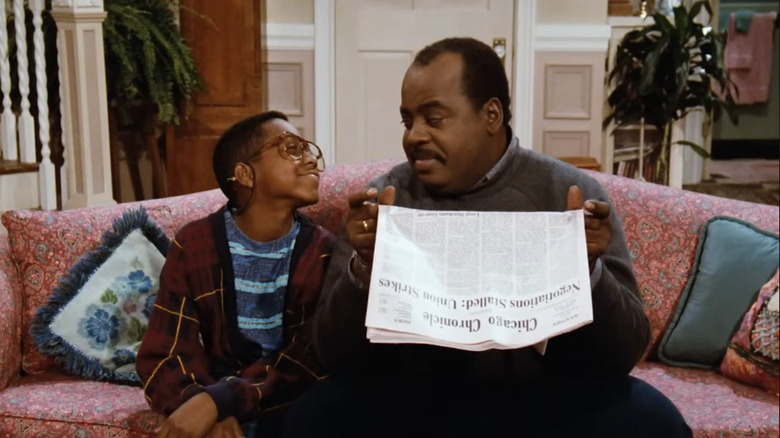
Most people who grew up watching ABC's TGIF (the popular Friday night programming block of family sitcoms than ran from the '90s to the mid-'00s) probably think of "Family Matters" as the Steve Urkel show. But this spin-off was originally conceived for actor Reginald VelJohnson, who plays Carl Winslow, husband to "Perfect Strangers" character Harriette Winslow, played by Jo Marie Payton. William Bickley, one of the creators of "Family Matters", confirmed in an interview with Entertainment Weekly, "[So] we did what was basically a spin-off from 'Perfect,' which was about Reggie, and because Jo Marie was there, we said, 'Okay, we'll team them up,' and that's how it came to be."
But that all changed when Jaleel White's Steve Urkel made a guest appearance in Season 1, Episode 12 of "Family Matters" titled "Laura's First Date." Urkel proved to be an instant sensation, even reportedly inspiring the live studio audience to start chanting his name after just one scene. Urkel would quickly make more appearances before becoming a series regular and eventual central character.
Alex in Family Ties
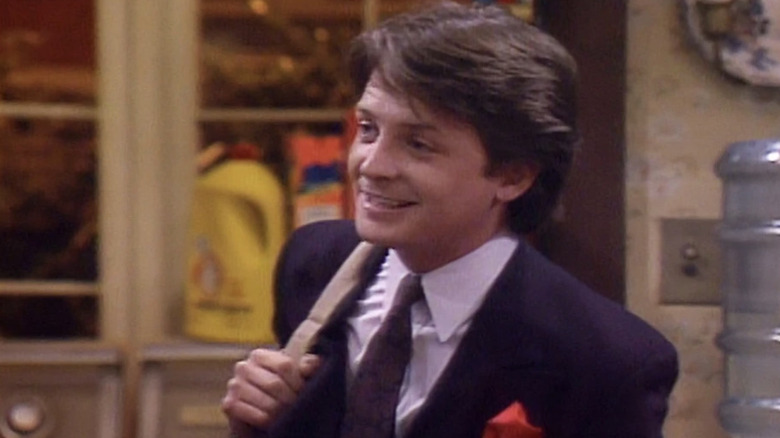
The '80s hit sitcom "Family Ties" was pitched to audiences as an "Odd Couple"-esque dynamic between parents and kids. Only instead of conservative parents with liberal kids, it was the other way around. The focus was supposed to be on the ex-hippie and former Peace Corps activist parents Steven and Elyse Keaton, played by Michael Gross and Meredith Baxter. But when audiences got a load of Michael J. Fox's Alex P. Keaton, the writers tore up the script.
Alex's combination of charm, wit, and style (famously opposite from his parents) rapidly made him a fan favorite and the undeniable protagonist of the show. Interestingly, it almost didn't happen. In a 2007 interview with the Television Academy, "Family Ties" creator Gary David Goldberg described initially wanting Matthew Broderick for the role of Alex. "When we cast Michael Fox, I didn't want him," Goldberg said. "[Matthew] was the first one to read for ['Alex'] and I said what any normal producer would say, 'yes, get him a pen, let's make a deal.'" When the deal with Broderick fell through, and Goldberg met with Fox, the sparks flew. "And [Fox] gives me this little smile, and I'm thinking, 'Matthew who?' It was like 'boom.' He nailed it."
Denise in Master of None
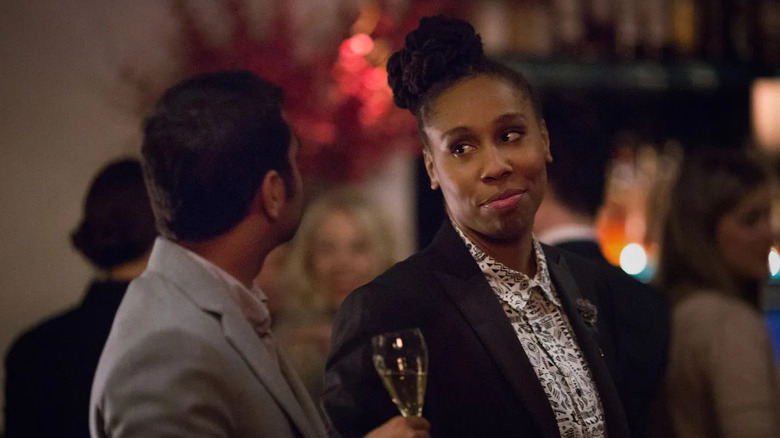
We get it: This one is slightly more of a dramedy than a traditional sitcom. But the first two seasons of Netflix's "Master of None" displayed the comedic talents of co-creator Aziz Ansari. It follows Dev — a protagonist loosely based on Ansari's experiences navigating life as a young, aspiring actor in New York. Like other coming-of-age series, "Master of None" endeared viewers to its heart and the chemistry between the actors. One character fans fell in love with was Dev's confidant Denise, played by Lena Waithe.
Denise, who according to Vogue, was supposed to be a supporting character played by a straight white woman, was immediately re-written as a lesbian after Waithe and Asari met and hit it off. The character's coming-out story was then told in the Emmy-winning Season 2 episode "Thanksgiving." By Season 3, "Master of None" shifts to a more dramatic tone, and Denise officially takes over as the central character, receiving a storyline inspired by the 1973 Ingmar Bergman miniseries "Scenes from a Marriage".
While speculation around the show's changes related to the sexual misconduct allegations Ansari faced in 2018, the actor did state in a 2017 interview with Vulture that he felt he'd exhausted the show's semi-autobiographical identity. "I don't have anything else to say about being a young guy being single in New York eating food around town all the time."
Fonzie in Happy Days
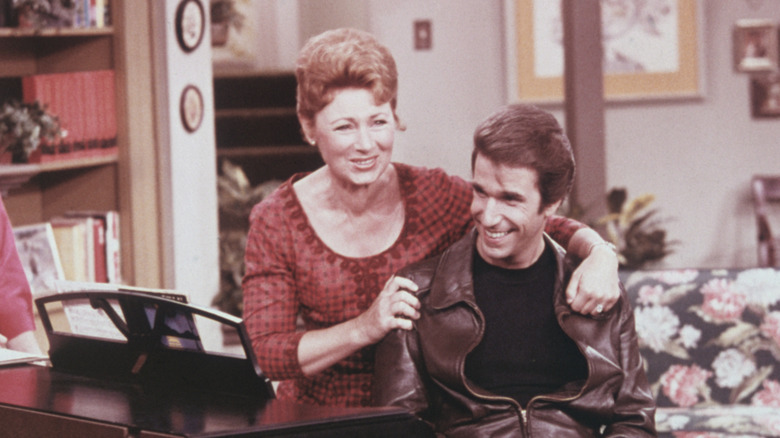
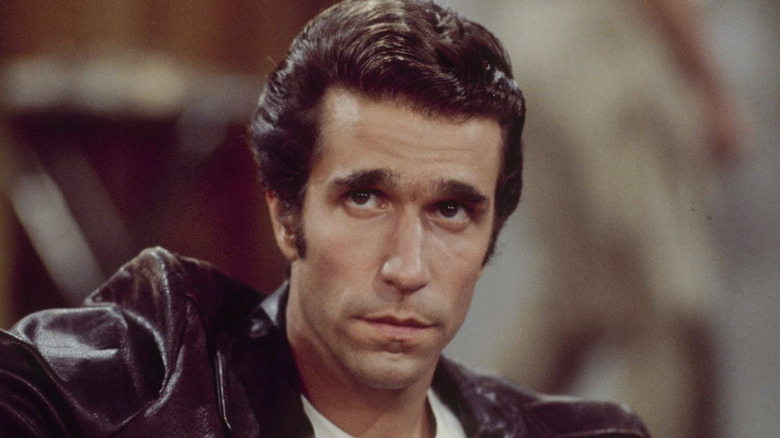
What would "Happy Days" be without The Fonz? Well, the character Arthur "Fonzie" Fonzarelli, played by Henry Winkler, was originally supposed to be a background character representing greasers of the '50s and '60s. He was mainly there as an edgy guy to contrast wholesome protagonist Richie Cunningham, played by Ron Howard. But when The Fonz's swagger-induced popularity shot through the roof in Season 1 (Winkler later claimed he received 50,000 pieces of fan mail per week at one point), producers were forced to spotlight the leather jacket.
By the second season, "Happy Days" was fueled by a rewritten "Fonzie" character who befriended Richie. In a 2024 interview with The New York Times, both Howard and Winkler talked about ensuring the ensemble remained strong, even with the decision to change the focal point. ["We] have a real chemistry here, and we think of ourselves as an ensemble," Howard would tell the producers. Winkler recalled the network approaching him about changing the show's title to "Fonzie's Happy Days," which he quickly shot down. "I said if you do that, it's an insult to everybody I'm working with...Leave it alone."
Whitley in A Different World
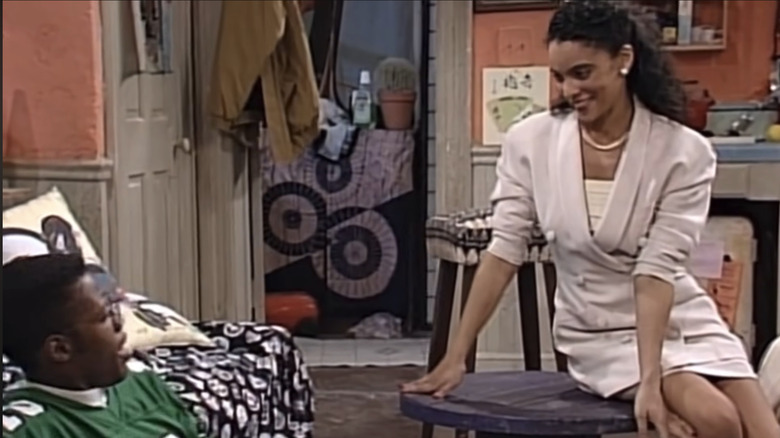
This "Cosby Show" spin-off went through not one, but two focal-point shifts. After Lisa Bonet, who played the original protagonist Denise, left "A Different World" due to her pregnancy, the focus went to its supporting cast members. One of whom was Whitley Gilbert, a firecracker Southern belle, played by Jasmine Guy. As the show also evolved in its second season to tackle social and political subjects, including becoming the first comedy to center student life at a historically Black college, Whitley's star shone all the brighter.
Whitley's energy, quick wit, and flamboyant Southern accent made her instantly relatable to audiences –- even though Guy remembers flying by the seat of her pants. "I didn't know what Black Southern belle was, so I just made stuff up, you know what I mean?" Guy said in an interview with People. "I really thought I made [Whitley] up. And then I met all these Whitleys at Martha's Vineyard... and I was like, 'There really are Black girls like this.'" As Whitley grew into the central figure, so did her on-screen chemistry with Dwayne Wayne (Kadeem Hardison), who would become her partner in the show's romantic narrative.